Link farming happens when a group of websites exchange or buy links to manipulate search rankings. This approach violates Google’s Spam Policy and hurts your site’s long-term authority.
If you’re building links for your site, understanding link farming helps you avoid penalties and focus on strategies that genuinely strengthen your authority.
Key Takeaways
- Buying or exchanging links to manipulate your site’s rankings an result in a Google penalty.
- Check for unrelated links, excessive reciprocal links, thin content, and repetitive anchor text.
- Use SEO tools such as Google Search Console, Ahrefs, SEMrush, and Moz to regularly review backlinks.
- You build trust by earning relevant links through high-quality content and real relationships. These links strengthen your authority and drive long-term growth.
- Manually remove toxic links and, if needed, disavow toxic ones, and submit reconsideration requests if you receive a penalty.
What Is Link Farming
Link farming is a scheme in which a network of websites is created solely to build backlinks and manipulate search rankings. These links don’t build your authority, trust, or meaningful traffic and are often placed without considering relevance or content quality.
How Link Farming Works
Understanding how link farms operate helps you spot them before they damage your site. Here’s the typical pattern:
- Multiple websites with thin or auto-generated content are created primarily to pass link equity.
- A massive number of irrelevant backlinks are added to footers, sidebars, and comments on these sites.
- These sites link to each other in a circular pattern to artificially boost authority.
- Exact-match keywords are repeatedly used as anchor text to manipulate rankings.
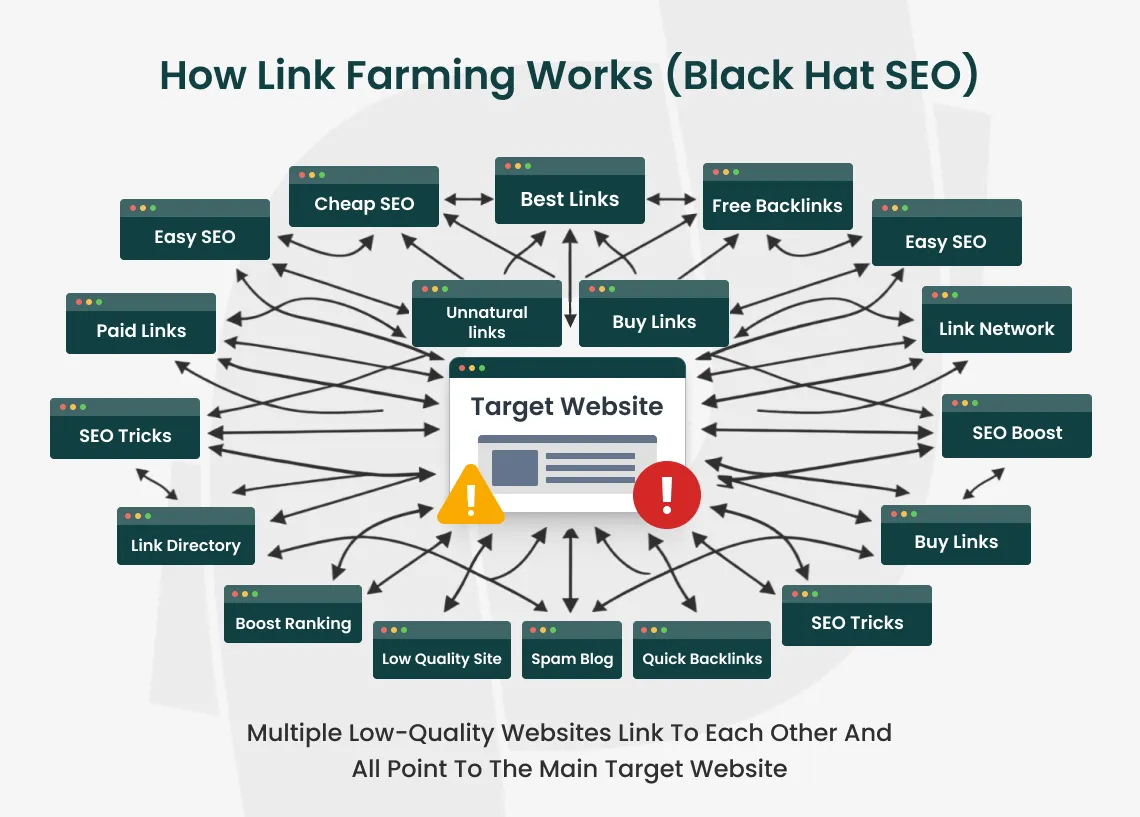
You might see a short-term ranking boost from these tactics, but today’s search algorithms quickly spot and penalize manipulative link patterns.
If you spot these signs in your backlink profile, your site could be involved in link farming. Act early to protect your site’s authority.
How Link Farming Evolved Over Time
Link farming gained attention in the early 2000s, when Google relied heavily on the number of backlinks.
Site owners realized they could manipulate search rankings by building a network of websites that linked to one another.
Google’s Penguin update in 2012 changed everything. It began identifying and devaluing link schemes at scale.
By 2016, Penguin became part of Google’s core algorithm and began running in real time. This meant penalties and recoveries happened faster, and manipulative links were being caught continuously rather than in periodic waves.
Today’s search engine algorithms use machine learning to detect unnatural link patterns instantly, making link farming far riskier than rewarding.
Why Link Farming Harms Your Site
Link farming is classified as a link scheme under Google’s link spam policies. Search engines identify artificial backlink patterns and either devalue those links or lower your site’s ranking.
Risks You Face Right Away
Ranking Penalties:
Your website may face a drop in search results rankings. Recovery from this drop may take months or even years, even after you remove unnatural links.
Drop in Organic Traffic:
When rankings fall, your organic traffic drops too. This slows your business growth and lead generation.
Manual Actions:
Google’s webspam team can apply manual penalties, which appear in Google Search Console under “Manual Actions.” To recover, you must remove or disavow unnatural links and submit a reconsideration request.
Domain’s Trust is Lost Slowly:
When Google detects manipulative links, your website loses trust. Rebuilding trust can take months or years.
Risks You Face in Long-Term
Loss of Growth
Relying on link farms can undo months of SEO progress. Your website loses trust, and your domain can develop a poor SEO reputation that’s difficult to recover from.
Penalties and Recovery Costs
If a penalty occurs, you lose more than your rankings. You spend valuable time and resources trying to restore your site’s trust. This time and money spent on fixing could have been invested in actually building an authoritative site.
Damage to Brand Reputation
Your brand reputation can suffer when it’s associated with link farming. If potential customers discover low-quality links during their research, it may reduce their trust in your brand.
What Google Says About Link Farming
When links violate Google’s spam policies, they get ignored or treated as manipulative. Understanding Google’s guidelines helps you stay compliant and avoid unnecessary risks.
Direct Policy Statements
According to Google, link spam is created primarily to manipulate a site’s rankings in Google search results. It involves participating in link networks to manipulate rankings.
Google classifies link farms as link spam and may ignore or take action against such links under its spam policies.
Quality Rater Guidelines
Google’s Search Quality Rater Guidelines instruct human reviewers to detect unnatural links. Raters check for:
- Links from irrelevant, low-quality sites
- Excessive irrelevant or commercial anchor text
- Widgets, badges, or embedded content are used mainly for linking
- Paid articles or ad content without any proper disclosure
These guidelines show how Google evaluates link quality.
7 Red Flags That Signal Link Farming
Understanding how link farms operate is only part of the picture. You need to recognize them early before they harm your site.
Here are the common signs that indicate link farming:
1. Links from Irrelevant Websites:
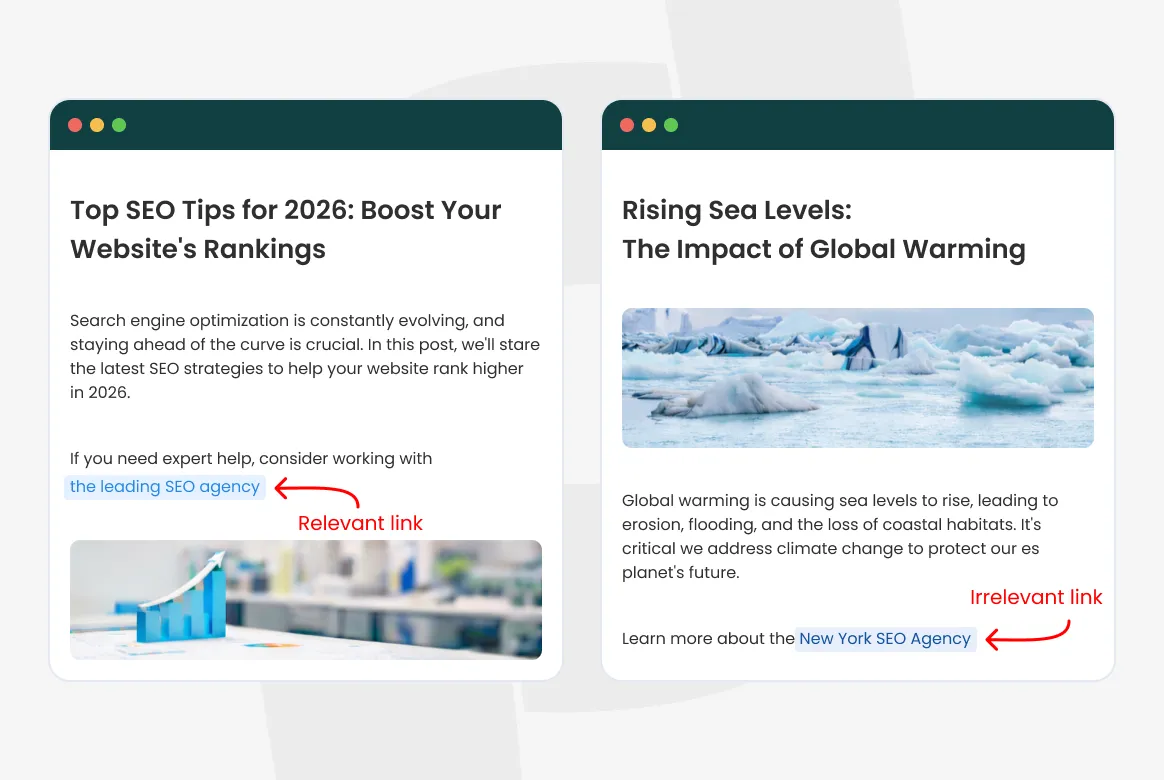
Sites linking to you have no connection to your topic, niche, or industry. In link-farming schemes, websites often exchange or sell links without regard to relevance. As a result, your site may receive backlinks from completely unrelated topics.
The image shows an SEO article naturally linking to a leading SEO agency within the related content. On the other side, a global warming article includes an unrelated link to a New York SEO agency, which appears out of context.
2. Reciprocal Linking:
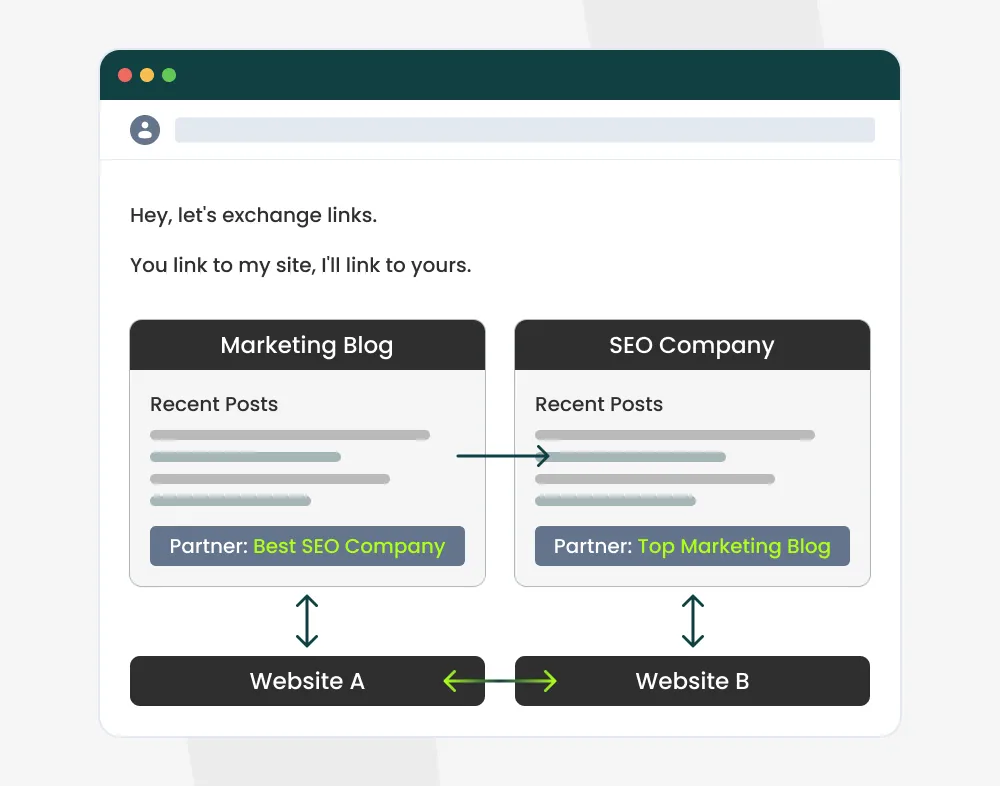
“Let’s exchange links on our websites.” This is known as a reciprocal link exchange, in which two sites agree to link to each other.
When done excessively or between unrelated websites, it can appear manipulative. Genuine editorial links are rarely created through this back-and-forth arrangement.
3. Links Added in the Footer and Sidebar:
Spammy or promotional links are often placed in sidebars or footers. Natural links, however, are usually included within the main content where they add value.
4. Thin, Low-Value Content:
Sites are created with very little or low-quality content with no editorial value. Content should be high-quality and provide value to readers.
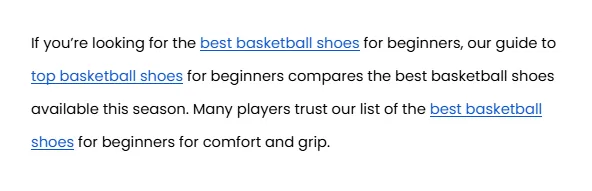
5. Similar Anchor Text:
When most links use the exact same keywords or phrases, it creates an unnatural pattern that can reduce their value.
6. Missing Author and Contact Details:
If a website publishes content under generic names like Admin or shows no author at all and lacks contact details, a social media presence, or an About page, it’s a clear warning sign.
Genuine publishers proudly showcase their contributors. They provide real names, author bios, professional background, and ways to connect.
7. High Metrics With No Real Traffic
Some websites may look strong in SEO tools but attract very few real visitors. When strong metrics don’t match actual traffic, it can signal artificial link building.
Always verify traffic estimates using tools like Ahrefs or SEMrush.
How to Recover From a Link Farming Penalty
You’ve identified the problem, now here’s how you fix it. Recovery is possible with the right approach.
Step 1: Review Your Entire Backlink Profile
Export your backlink data from Google Search Console and third-party tools into a single sheet for review. Then check for unnatural or suspicious links.
You can filter unnatural links manually or use SEO tools to make the process faster and more accurate.
Tools to Audit Your Backlink Profile
You can review your backlinks profile using these tools:
Google Search Console:
Shows the links pointing to your website directly from Google’s data.
Ahrefs:
Provides a comprehensive backlink profile analysis, including referring domains, anchor text, link strength metrics, and traffic estimates.
SEMrush:
Offers backlink auditing tools that identify potentially toxic links and help generate a disavow file.
Moz Link Explorer:
Tracks new and lost backlinks and provides a spam score to help evaluate link quality.
Review each link one by one for:
- Relevance to your site’s or industry’s topic
- Quality of the content and the value it provides to readers
- Natural editorial placements vs. unnatural link placements
- Ability to rank in SERPs and trustworthiness
Filter out unnatural links for further analysis.
Step 2: Manually Remove the Unnatural Link
Contact the website owner or webmaster. Explain that you noticed their site links to yours and politely request removal.
Subject: Request to Remove Link to Our Website
Hi [Name],
We’re currently reviewing our backlink profile and noticed a link to our website on your page: [Their URL].
The specific link appears here: [Specific URL].
Could you please remove this link at your convenience? I would appreciate confirmation once it has been removed.
Thank you for your help.
Best regards,
[Your Name]
Keep a record of your outreach efforts, including their replies and non-replies.
Step 3: Disavow Remaining Unnatural Links
For links you were unable to remove manually, use Google’s Disavow tool. This tool tells Google to ignore certain backlinks when assessing your site.
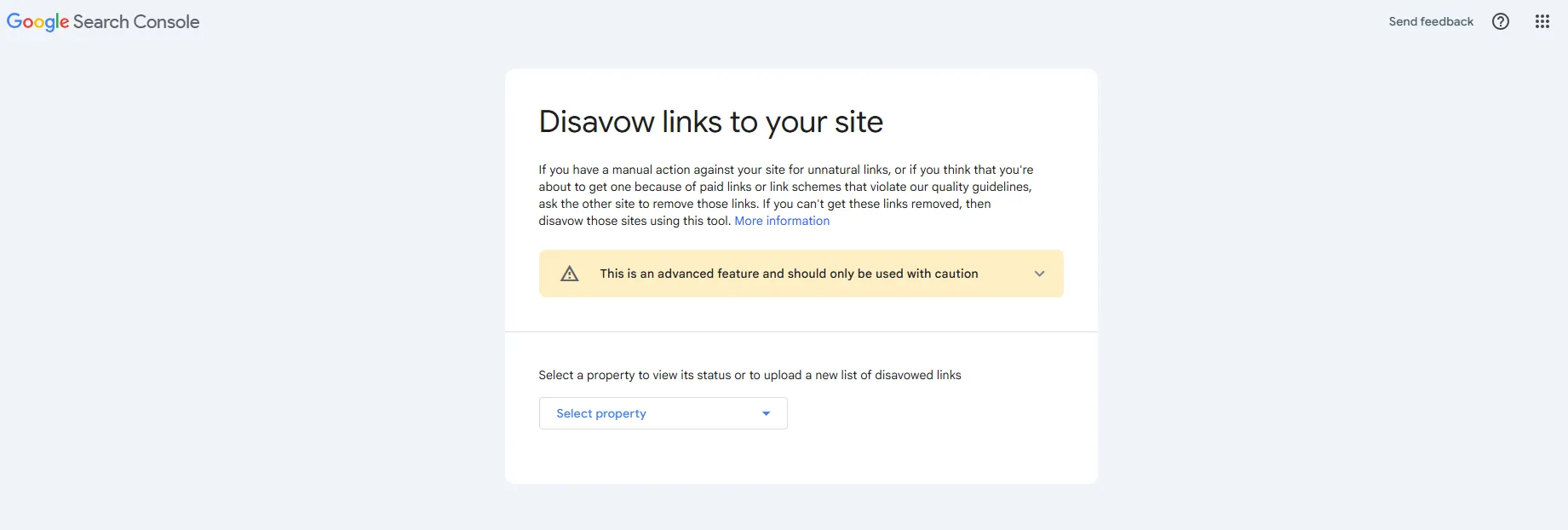
Create a text file (.txt) including the list of all the domains or specific URLs you want to disavow:
In the disavow file:
# Links from known link farm
domain:example-linkfarm.com
This tells Google to ignore all links from that entire domain.
# Specific spam page
http://another-spam-site.com/spam-page.html
This tells Google to ignore only that specific page, not the whole domain.
Upload this file through the Google Disavow Tool (accessible via Google Search Console). Google will review these disavow files when the algorithm re-evaluates your website.
Step 4: Submit a Reconsideration Request
If you have received a manual action report, submit a reconsideration request after removing all the unnatural links from your backlink profile. In the request, explain:
- All actions you took to remove unnatural links
- Proof of your outreach efforts and link removal efforts
- Changes in your link-building practices in the future
Google will review the requests manually. Approval from Google may take some time.
Ethical Alternatives to Link Farming
Instead of relying on risky link farming tactics, focus on these white hat link building strategies that help you earn links safely and build a natural backlink profile.
Create Linkable Content:
Authentic Research and Content:
Create relevant articles, studies, and surveys that are related to your industry. When your content offers useful data or unique findings, other websites are more likely to naturally reference and link to it.
Suppose an SEO agency publishes an original survey with valuable industry data. Bloggers and marketers cite the survey in their articles and link back to it as the source.
Complete Guides:
Publish in-depth guides on specific topics within your industry. When people search for detailed information or data, they are more likely to find your guide and link to it as a trusted resource.
Useful Tools:
Create free tools that solve real problems for your audience. Helpful tools are often bookmarked, shared, and linked to naturally because they provide ongoing value.
Earn Editorial Mentions
Thought Leadership Content:
Publish opinion pieces, industry insights, or trend analysis on your own platform or reputable websites. When your content offers unique perspectives, others may naturally reference and link to it.
Contribute Expert Insights:
Respond to journalist queries through platforms like HARO (Help a Reporter Out). When your insights are quoted, media outlets may link back to your website.
Guest Posting on High-Quality Sites:
Post valuable articles for reputable publications in your industry. Editorial links from trusted sites help you build credibility.
Invest in Building Relationships, Not Quick Trades
Business Collaborations:
Partner with businesses in your industry to co-create content, host webinars, or share valuable resources. Genuine collaborations often lead to natural and relevant backlinks.
Community Engagement:
Participate actively in industry forums, groups, and events. By contributing meaningful insights and support, you build recognition that can lead to organic link opportunities.
Influencer and Expert Outreach:
Connect with influencers and industry experts by offering value first. Share their content, provide thoughtful feedback, or collaborate on projects before requesting anything in return.
White Hat Link Building vs Link Farm
Now you have an idea about why natural link building is a better option and why link farming is risky. Let’s quickly summarize:
| Feature | White Hat Link Building | Link Farming |
|---|---|---|
| Technique | Earn links naturally through valuable content | Manipulate rankings for quick gains |
| Purpose | Build authority and trust | Artificial ranking boost |
| Risk Factor | Low and manageable | Extremely High |
| Google Compliant | Fully compliant | Violates Google policies |
| Long-term value | Stable, long-term growth | No lasting value |
Link farms chase short-term ranking. Ethical link building helps you to build lasting authority and real, long-term growth.
Tracking Sustainable Link Growth
Ethical link building follows natural patterns. Here’s what to look for:
Diverse Sources:
Your backlinks come from different, relevant domains, not repeated placements on the same few sites.
Topical Relevance:
Links are earned from websites related to your industry or subject area.
Natural Anchor Text:
Anchor text appears naturally within the content. Some links use your brand name, while others use descriptive phrases that fit the context.
Real Traffic:
Links actually bring real visitors to your website, not just artificial ranking improvements.
Placements Inside the Content:
Links are placed naturally within the main content, not hidden in footers, sidebars, or author bios.
Final Thoughts
Link farming may promise quick ranking boosts, but the risks are much bigger than the short-term gains. Search engines are getting better at spotting artificial links, and penalties can undo months of hard work.
Strong SEO is built on trust, relevance, and real value. Instead of chasing shortcuts, focus on earning links through helpful content and genuine relationships. It may take more time, but the results last longer.
In the long-term, trust and consistency matter more than quick wins. Choose strategies that strengthen your website and not ones that put it at risk.
Worried about penalties and unsafe link tactics?
Let’s fix your link strategy with a safe, ethical approach that builds authority and long-term rankings.
Can even a few links from link farms hurt my website?
Yes, even a few links might trigger a penalty and can hurt your site’s authority over time.
Where are link farm links generally located?
You’ll find them embedded in content as excessive external links, in footers, within low-quality articles, and in sidebars.
Can I hire a professional to clean link farms affecting my website?
Yes. You can hire an in-house team for yourself or work with a link-building partner experienced in identifying and removing toxic links.
What are the risks of buying a paid link?
Buying links can weaken your site’s credibility and visibility in search results.
How can a link building service agency help me with link farming penalties?
A link-building partner can identify toxic links, clean up your backlink profile, and develop a strategy to earn editorial links that restore your rankings.
What is the difference between Public Blog Network, Guest Posting, and Link Farming?
PBNs are built on expired domains and are privately controlled. They focus on passing link equity to target websites.
Guest posting means writing articles for another company’s website. Done right, it provides value to your audience and builds your authority.
Link farming is a network of low-quality content sites created only to manipulate backlinks.