Links are one of the main ways the search engines decide which page to trust and rank. When other websites link to your page, Google sees it as a signal. But not all links are equal.
Some feel forced or promotional, while others feel natural, genuine, and helpful to readers. The links that feel natural are called Contextual Links.
To understand it, let’s look at a simple example.
Imagine you’re writing a blog post about “making healthy breakfast smoothies.”
Another food blogger writes an article on quick morning meals and adds, “If you’re looking for easy smoothie ideas, this smoothie recipe guide is helpful.”
Now, the words “smoothie recipe guide” are clickable and take the readers to your blog.
This link is considered a contextual backlink because:
- It is inside the paragraph.
- And it helps the readers learn more.
A contextual backlink is like someone recommending your business in a conversation: it feels natural and beneficial, search engines trust it more, and readers are likely to click it.
What you will receive:
- Examples, templates, checklists, SOPs.
- A reliable system to gain real and contextual backlinks.
- Link opportunities that move the ranking.
- Advance tactics to scale contextual links.
What is a Contextual Backlink?
Contextual backlinks are placed within a page’s main content, where they naturally fit and meaningfully add value to readers and search engines.
Placing a contextual link gives readers a clear idea of what they are reading. Additionally, it can also boost the rankings and offer a great user experience.
It means that, for the given search query, your site will appear in their search results.
Contextual Links vs. Non-Contextual Links
Contextual links are preferred because they are within paragraphs, match the topic, help readers, and are usually placed by editors or writers. These links are less likely to trigger search engine penalties.
Whereas non-contextual links are found in headers, footers, and sidebars, they are often repeated across many pages and are less connected to the topic; therefore, they have a lower impact.
Types of Contextual Links
There are mainly three types of contextual links. They are grouped based on how one website links to another.
The three types are:
External:
The links in your content point to another website. These links are used to cite or reference a resource.
Internal:
The links in your content point to other relevant content within your website. It helps the users to find their required content and distributes link equity across your site.
Inbound:
These are the links from other websites pointing to your content. They can improve your site’s authority and referral traffic.
Why Contextual Links Matter
Contextual links matter because they help Google understand the topic, let the readers get a clear idea about the subject, and help gain visitors to your site.
Let’s understand it in detail.
They help Google understand your topic:
Contextual link building works because search engines rank the pages based on how well your content matches what people are searching for. When another website links to your page from the relevant content, it helps Google understand what page is about and why it is useful.
For example, if your content is talking about “Benefits of a healthy diet,” and the other website is talking about “Benefits of a healthy routine,” and it links to you. Your content will act as supporting content for that website.
They make sense to the readers:
When someone follows the link and it matches what they are reading, the destination page feels relevant and helpful rather than random, and they know why they clicked your link.
They send better visitors:
Contextual links bring readers to your website who already care about your content, leading to better engagement and a higher conversion rate.
Age well:
Age well means the link stays useful and relevant over time, not just for a short period.
Because the link is placed inside related content, it continues to make sense months or even years later, even as search engines update.
Suppose you write an article on “How to start jogging for beginners”, in that content, you add a link to “5 simple warm-up exercises”, the link ages well because new beginners will always need warm-up exercises. Even after years, if someone searches “how to start jogging,” they will still benefit from that warm-up guide.
Contextual Link Building impact on HR search visibility
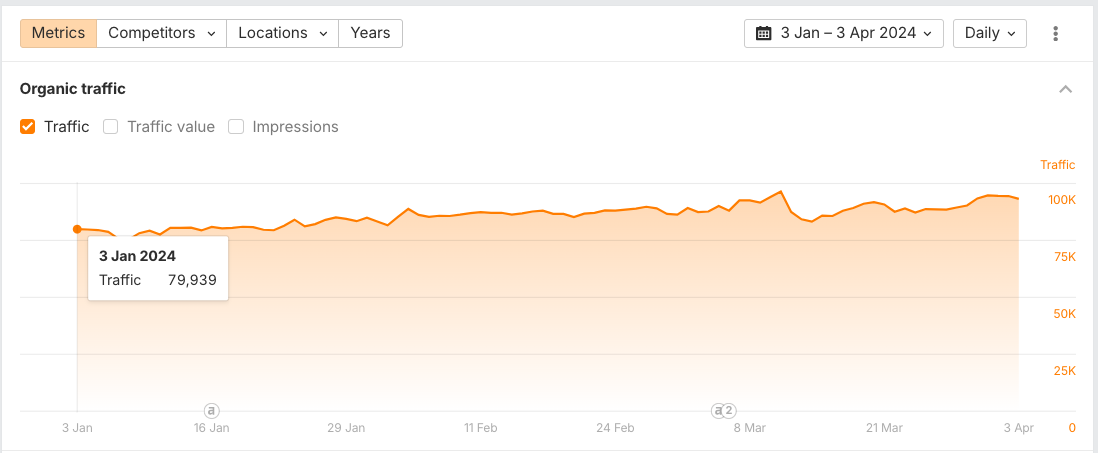
The client is an HRMS software provider offering tools for HR teams to manage hiring, payroll, attendance, and keep employee records.
Challenge: The challenge was low visibility on HR-related search pages, even though the product solved HR related problems.
Our objective was to increase visibility and referral traffic by earning links from relevant HR blogs, not through generic or irrelevant websites.
The focus was on:
- Appearing in places where HR professionals already read and research.
- Driving relevant visitors, not just traffic.
- And supporting long-term organic growth.
Strategy used: Contextual Niche Edits
The campaign used eight contextual niche edits placed on existing HR related articles. Instead of publishing new guest posts, the links were added naturally inside the already published HR articles.
Each link was placed in the relevant paragraph where the HRMS product genuinely helped explain or support the topic.
Results: Based on 90 days of traffic data:
- Growth in referral visitors from HR-related websites.
- Pages moved to the top 5 pages.
- 2 pages position at #1.
- Increase in organic traffic by up to 32%.
How Contextual Backlinks Are Earned
All links are different by nature. Some carry immense ranking power, whereas some barely even work. There are various ways to earn contextual links. Let’s understand them.
Common ways to earn contextual backlinks:
- Create in-depth, link-worthy content (guides, studies, resource pages).
- Guest posting on the relevant websites.
- Link insertions into existing and relevant articles.
- Broken link replacement with better resources.
- Unlinked brand mentions.
- Digital PR.
- Resource pages inclusion.
The Contextual Link Building System
Contextual links are not placed randomly; they are earned through relevance and usefulness.
In this section, you can learn how Contextual links are built in real life using clear, practical steps. Each method mentioned below follows a structured SOP and a sample outreach message.
Natural Backlinks:
Natural link building means that a high-quality site links to you because your content adds value for their users. It supports the content and drive traffic to the linked site. These links have less risk, and Google values them.
Natural Backlinks SOP
Step 1: Plan your topic
The very first step is to plan your topic based on the subjects already being discussed. Find the topics people are already searching in blogs, guides, and other resources.
You can improve the explanation, update the content, and add clear examples to increase the chances that writers will discover and refer to your page.
Step 2: Add value
The second step is all about adding value to your content. You can add original examples, real-world explanations, simply explain the concept, and provide fresh angles and insights.
If your content looks like every other article, it won’t naturally earn links.
Step 3: Structure your content for easy referencing
In the third step, you can organize your pages to make linking easier.
To create a proper structure, use clear subheadings, break your content into paragraphs, and highlight key takeaways.
Step 4: Use Natural Link Wordings
Use the wording carefully, because contextual links always find wordings that match the surrounding content and can link to the relevant content reference.
You should avoid keyword stuffing and promotional wording/anchors. Because the link should feel helpful and not forced. Good links always feel like a part of the explanation.
Step 5: Keep your content updated
Natural backlinks last as long as the content stays accurate, so keep your content up to date.
You can update outdated facts and refresh the examples used to improve the reader’s clarity.
Niche Edits:
A niche edit is when you ask a website owner to add your link to the existing article and update the content.
The articles should be highly relevant to your niche, and your anchor content should fit the topic, which helps readers and improves the article.
Niche Edit SOP
Step 1: Find the Right Article
The first step is to find the correct article. You should look for articles that are already ranking on Google and evaluate the content quality.
If it fits these criteria, consider these pages to be trusted and more likely to pass value.
Step 2: Identify the Content Gap
The second step is to identify the content gaps by reading the article from the reader’s perspective.
You should look for outdated information, missing explanations, or missing resources that genuinely improve the understanding.
A niche edit should solve a specific problem or explain the topic meaningfully; it should not purely exist for SEO. If the added link does not strengthen the content or improve the user’s value, it is not the best option for niche editing.
Step 3: Validate Your Content
Before pitching a niche edit, evaluate your content to ensure it genuinely deserves a placement. The linked page must directly support the surrounding context, provide deeper knowledge, or resolve the unanswered question in the article.
Ensure that your content is topically aligned, easy to understand, accurate, and up to date. Most importantly, it should improve the reader’s experience and not repeat what is already covered.
If your link does not clearly strengthen the paragraph it is placed in, then don’t pitch it.
Step 4: Choose the Correct Placement
The placement of the links is important to consider. Ensure the link is placed in the main content, fits naturally within the content, and improves the reader’s understanding.
You should avoid forcing links into irrelevant sections or adding links just for keywords.
Step 5: Keep the Anchor Text Natural
The words you use for a link should sound natural and fit smoothly into the sentence. They should clearly tell the reader what the linked page is about.
Avoid using too many keywords or sales-focused words, and avoid repeating the same link text. If the sentence feels awkward because of the link, the anchor text is not right.
Step 6: Outreach the Right Way
When reaching out, your pitch should be precise, polite, and personal. Clearly explain why the link fits the content and how it helps readers better understand the topic, not just its SEO benefits.
After sending the message, follow up only once with a polite reminder. Avoid sounding urgent or pushy, as pressure reduces the chances of approval.
Here’s an example outreach message:
Hi [Name],
I really enjoyed your article on SEO Trends. The section on the future outlook was especially helpful.
We recently published a short, updated guide on how AI is changing keyword research. It could add extra clarity for readers in that section. Would you be open to taking a look?
Thanks for your time,
[Your Name]
Safety & Risk Checks
Avoid this at all costs:
- Websites that openly sell manipulative or spammy links.
- Avoid pages that are not related to your niche.
- Forced inserts that don’t add any value.
- Avoid over-optimized anchor text.
Green Signals:
- It shows editorial context.
- The topic aligns with the content.
- It has natural placement.
- It should have reader-first intent.
Guest Posts:
Guest posting means writing an article for another website in your niche. In return, you usually get a link back to your website.
This helps the website get fresh content to gain visibility and a relevant contextual backlink, benefiting both parties.
Guest Posting SOP
Step 1: Identify The Right Website
When writing a guest post, choose websites that are closely related to your niche or industry. Focus on writing helpful, original content that fits the website naturally.
Avoid websites that publish any kind of content without quality checks, have a “write for us” page filled with paid or low-quality posts, or clearly exist only to sell guest posts.
Step 2: Selection of the Topic
You should choose topics that the website’s audience already cares about and that naturally fit with the website’s existing content.
Your links make sense in the article and feel like a helpful reference, not something added by forced placement.
Step 3: Content Creation
Focus on creating fresh, up-to-date, and easy-to-follow content. Use clear examples and practice tips that readers can apply. Avoid using confusing terms and jargon.
Step 4: Placement of the Link
The placement of the links should make sense to readers, and it should cover the terms used in the content more clearly.
Step 5: Outreach Message
When reaching out, explain how your concept will be helpful to their readers and discuss the idea and topic; don’t just ask for the link.
Make your message personal instead of using the same template for everyone, focus on the content quality, relevance, and reader value.
Here’s an example outreach message you can use in your pitch
Hi [Name],
I’d love to write a helpful article for your audience on The Future of Link Building in the AI Era. The idea focuses on practical changes and what marketers should prepare for next.
If it fits, I can also reference our content planning guide, which adds value to the topic. Let me know what you think.
Thank you for your time,
[Your Name]
Step 6: Editorial Approval and Final Checks
After the editor approves and publishes the article, check that it appears on the agreed page. Make sure the link fits naturally, and that the content quality has not been reduced or altered negatively.
Quality and Risk Prevention
What to check before outreach
- Does the site publish regularly real, helpful articles?
- Is the content written for readers, and not just for search engines?
- Are the outgoing links relevant?
What to avoid
- Low-quality guest posts or link farm websites
- Paid link disguised as guest posts.
- Websites that accept content from unrelated niches.
Resource Page Link Building:
Resource page link building means getting your content added to a webpage that shares useful resources for a specific topic or industry. These Resource pages link to high-quality content like articles, tools, guides, blogs, videos, and podcasts.
When your content is included on the relevant resource pages, it helps readers discover it, drives referral traffic, and signals to search engines that your content is trustworthy.
Qualification Criteria
- Make sure the page is active and updated regularly.
- Check that the page’s links are carefully selected and relevant.
- Confirm that your content fits the resource list and adds value.
Resource Pages SOP
Step 1: Find Relevant Resource Pages
You can find your industry-specific resource pages using phrases like:
- Helpful resources for [topic].
- [Industry] resources.
- Useful tools for [problem]
Only choose pages where your content clearly matches the topic and fits naturally with the existing list.
Step 2: Review the Resource Pages Carefully
Before reaching out, check the types of content the page usually links to, such as guides, tools, and studies. Examine the quality of those resources and identify any gaps where your content adds value.
If your content does not clearly improve the list, do not pitch it.
Step 3: Validate Your Content’s Value
Check your content by asking these simple questions:
- Does it answer the reader’s questions?
- Is it up to date, correct, and easy to understand?
- Does it add something missing from the current resource list?
If the answer to these questions is yes, you can move forward.
Step 4: Outreach with Reader Value First
When you reach out, mention the specific resource pages and explain how your content fits there and help their readers.
Present your content as a helpful option, not a demand for a link, and let the editor decide if it fits.
Here’s an example outreach you can use.
Hi [Name],
I came across your resource page listing Top Digital Marketing Tools and found it very useful.
We’ve built a free Headline Analyzer to help marketers write clearer, more engaging headlines. It could be a helpful addition for your readers if you think it fits.
Thanks for your time,
[Your Name]
Step 5: Follow up
If you don’t get a reply, send a polite follow-up after 5-7 days. Keep the message short and respectful. Do not push or pressure. If there is still no response, move on.
Digital PR:
This is the method of creating genuine newsworthy content, such as studies or surveys, and sharing it with journalists or media websites. If they find it useful, they mention it and link to it in their article.
When done correctly, digital PR helps you earn real editorial links based on value, not requests.
Digital PR SOP
Step 1: Create a PR-worthy Asset
Create content that is unique, such as original research, data studies, surveys with clear insights, industry reports, expert opinions, or content linked to current events.
Use simple visuals, like charts or explainer videos, to make the information easy to understand and share.
Step 2: Define the Right Pitch Angle
Your pitch should explain “why” a journalist would care about your content.
Here are the effective pitching angles that include:
- New or surprising findings,
- Current trends, updates, business topics,
- Industry impact, and
- A simple explanation of the complex topics.
Step 3: Identify Relevant Journalists and Publications
Your focus should be on quality, not quantity. Look for journalists and publications that regularly cover your industry or topic and publish expert editorial content. Choose outlets where it truly fits and adds value.
Step 4: Outreach Execution
When pitching, reference their article to show relevance. Share your key insights, data, or findings instead of just asking for a link.
Clearly explain how your content helps their readers and keep your message short and helpful.
Here is the simple message you can use:
Hi [Name],
We recently ran a study and found that 75% of remote workers say they miss office coffee.
We have the complete data and expert commentary available if it’s useful for your coverage on remote work trends.
Thank you for your time,
[Your Name]
Step 5: Follow up
Send only one polite follow-up after 5–7 days. Keep it friendly and relaxed so it doesn’t feel forced. If there is no reply after that, stop following up and respect the editor’s decision.
Step 6: Editorial Confirmation and Link Validation
After approval, make sure the link is added naturally as a reference. Check that it aligns with the surrounding content and reads like a genuine editorial mention, not a promotion.
Editorial Quality Signals
A digital PR link is considered editorial when:
- The journalist adds the link voluntarily.
- A link supports any claim, statistic, or explanation.
- It is placed inside the main content.
- A link is not framed as an advertisement or promotion.
Things to Avoid:
- The links are labeled as sponsored or paid.
- The anchor text is forced, keyword-stuffed, or over-optimized.
- Links that are placed outside the editorial context, such as author bios, footers, and sidebars.
Broken Link Replacement:
Broken link replacement is the process of finding a relevant website that links to a page that no longer exists, and asking the web owner to replace the broken link with your replacement content. This is one of the great methods for gaining contextual links.
Your replacement content should cover the same topic, be more up to date, offer better information, and be easy for readers to understand.
Broken Link SOP
Step 1: Find Broken Links on the Relevant Pages
Identify the pages in your niche linked to the resources that no longer exist (404 errors).
Check resource pages, guides, blogs, or articles in your industry, and use link-checking tools like Ahrefs or SEMrush to identify broken outbound links.
Focus on pages that are relevant to your topic, are indexed by search engines, attract traffic, and are actively maintained.
Step 2: Analyze the Original Link’s Intent
Try to understand why the broken link was added in the first place. Look at the topic it covered, the problem it helped solve, and where it appeared in the content, such as an example or reference.
Broken link replacement works best when your content aligns with the broken link’s intent, not just the keyword.
Step 3: Prepare or Match Replacement Content
Create or use the content that genuinely replaces the broken resource. The replacement content should be on the same topic, include updated information, be more accurate and easier to understand, and help readers in the same context as the previous link.
Step 4: Outreach
The very first thing to do is to contact the site owner or the editor and point out the broken link.
Mention where the broken link appears, explain how it affects the readers, and suggest your content as a possible replacement without sounding pushy.
Here’s a simple outreach message:
Hi [Name],
I noticed that the link to the 2020 Social Media Trends report on your resource page is no longer working.
We recently published an updated 2026 Social Media Trends report that could be a useful replacement if you’d like to review it.
Thanks for your time,
[Your Name]
Step 5: Editorial Confirmation and Link Review
Once you receive the editor’s approval, verify the final placement. Check that the link is live, if it points to the correct page, if it fits naturally within the sentence, and check that the surrounding content is still relevant.
A live link alone is not enough; the relevance and context determine its real long-term value.
Podcast and Interview Pipeline:
A podcast is a show where a host talks about a topic and invites guests to share their ideas and experiences. An interview is when a host or editor asks you questions to highlight your knowledge and opinions.
When you appear on a podcast or in an interview, you are introduced to a new audience. Hosts usually add a link to your website or profile in the show notes or description. These links are natural and editorial, which makes them trustworthy.
It matters because it shows you as an expert, drives referral traffic, and builds brand trust and discoverability.
Podcast Outreach SOP
Step 1: Identify Relevant Podcast and Interview Platforms
Find platforms that genuinely fit your expertise and experience. You can search on Google, Spotify, Apple Podcast, and even on YouTube.
You can use:
- “[Your niche] podcast”
- “[Your industry] expert interview”
Choose platforms that are relevant to your topic, publish episodes regularly, and feature real experts—not random promotions.
Step 2: Prepare Your Value Proposition (Not a pitch)
Be clear about what listeners will learn from you. Before reaching out, define 2-3 unique insights, a real experience, a case study, or a lesson, and the topic that complements previous episodes.
This is essential because the podcast host chooses guests based on their value to listeners, not on the backlink opportunity.
Step 3: Outreach with Insight-first Message
Reach out by showing relevance and your expertise, and not by selling yourself. The best practice is to keep the message personalized, lead with the listener’s value, and keep it short and respectful.
Focus on the value you can share, and avoid asking for backlinks, promoting services, or sending the same message to everyone.
Here’s a simple reach-out message:
Hi [Name],
I really enjoyed your episode on off-page SEO trends.
I work closely with brands on link building and digital PR, and I’d love to share some real-world insights on how off-page SEO is changing and what’s actually working today. I think it could be valuable for your listeners.
Let me know if this sounds interesting.
Thank you for your time,
[Your Name]
Step 4: Deliver Real Value During the Podcast or Interview
Earn the link naturally by sharing your expertise. During your appearance, answer all the questions clearly and honestly, share real and practical examples, and refer to your work only when it supports the topic.
This matters because hosts are more likely to link to guests who educate their listeners and do not promote themselves.
Step 5: Link Placements and Show Notes Verification
After your podcast or interview, verify that the placement of the link appears natural and correct. It should appear in the show notes or description.
Confirm that your name and brand are mentioned, that the link points to the correct page, and that the content explains who you are rather than just a raw link.
The best link types can be: about pages, resource pages, and author profiles.
Step 6: Track and Repurpose
Turn your interview or podcast into long-term visibility by sharing the episode on social media, adding clips or quotes for future outreach, and building a relationship with the host for repeat invites.
Linkable Assets:
Linkable assets are helpful pieces of content that people/website editors want to link to. These include templates, tools, checklists, and guides.
They are high-quality, original, and help users solve real problems. Interactive tools often earn links or are shared by business people as helpful tools.
Asset Promotion SOP
Step 1: Identify a Link-Friendly Topic
Choose topics that people often refer to and share, not just read. Good topics include how-to problems, comparisons, and step-by-step processes.
Step 2: Choose the Right Asset Problem
Match the content format to the problem.
- Repetitive tasks – Checklists or templates
- Calculation or validation – Tools
- Learning a topic – Guides
- Finding or comparing options – Lists.
Step 3: Create High-Quality Original Content
Write in clear and simple language that non-technical readers can understand. Add examples, steps, or visuals to explain better.
Make sure the content is more helpful or updated than what already exists, and avoids fluff and self-promotion.
Step 4: Optimize for Easy Linking
Make your content easy for others to link to. Use Clear headings, simple sections, and clean URLs that explain what the page is about.
Avoid pushy sales messages in the main content. Make sure the page loads fast and works smoothly, especially if it’s a tool.
Step 5: Share Where Your Audience Already Is
Share your assets where your audience already spends time, such as blogs, communities, newsletters, social media, and industry discussions.
The goal is to get people to notice and use your content, not to force them to link to it.
Step 6: Monitor and Improve
Keep an eye on how your asset is performing. If the information becomes outdated or can be improved, update it to keep it valuable and relevant to the topic.
Contextual Link Quality & Safety Standards
When it comes to securing contextual links, small details make a huge difference. In this section, you can learn how to judge whether a contextual link is safe and valuable.
Natural Anchor Placement
The placement of the anchor text should be in a way that it does not look forced. It should naturally convey the content’s meaning.
Here is an example of good anchor text:

And this one is a bad anchor text example:

It is related to Facebook Ads, but the anchor text provides no context and looks spammy to both users and search engines.
Contextual Surrounding Sentences
The content flows when the surrounding texts are relevant. Therefore, you should use descriptive anchors instead of generic text and ensure that the link is placed where it adds genuine value.
Page Indexing & Traffic Validation
A healthy linking page appears in search results (because it is indexed), attracts real visitors and engagement, and looks like it was written for the reader, not for the search engine. It checks whether the page linked to you is visible and in use. Links from hidden or inactive pages offer little trust or value.
Author & Domain Credibility
Author and domain credibility evaluate who published the content. Links from trusted authors and focused websites carry more credibility.
You can determine this by checking whether the page provides strong credibility signals, such as a real author name or brand, a clear topic, and other high-quality content on the website.
A link is considered credible when it comes from a website and an author who actually understands the topic.
For example, a healthcare blog that regularly shares wellness tips and links to your article on basic preventive care.
The site focuses on patient education, the topics match, and it feels trustworthy because it intends to help readers better understand their health.
Quality Checklist
A quality checklist focuses on relevance and placement in high-quality and valuable content that matches your niche and provides value to the visitor.
You can use this table to evaluate prospects. If two or more box checks fail, you should reject that site.
| Checklist Notes | What to Check | Passing Criteria | Failing Criteria |
|---|---|---|---|
| Real traffic | Check the traffic using tools like Ahrefs or SEMrush | 500+ monthly organic traffic | 0 traffic or fake spikes (indicates black-hat tactics) |
| Domain Rating quality | Evaluate the DR along with the link profile | DR supported by clean, natural backlinks | Spammy DR or unnatural link patterns |
| Surrounding text relevance | Read 1–2 paragraphs around the link | Content is relevant to your topic | Irrelevant content or forced placement |
| Natural anchor text | Check whether the anchor text reads naturally | Descriptive and readable anchor text | Keyword stuffing or irrelevant anchor text |
| Page indexing | Search Google using: site:URL |
The page appears in search results (indexed) | The page does not appear (not indexed) |
| Real author | Check for an author bio or About page | Author is identifiable with a real history | No author, fake profile, or empty bio (note: not all sites show authors) |
| Organic content quality | Review content quality and uniqueness | Authentic, original, and well-structured content | Thin or low-quality AI-generated content |
| Spam score | Check spam score using Moz | Below 10% | Above 10% |
If one fails, you can proceed with caution. Whereas, if two fail, you should reject the link placement.
Common Risks & Penalty Triggers
Most link penalties are assigned when the links look paid, forced, or irrelevant. However, if the link helps readers and makes sense, it is usually safe.
Here are some of the risks that you need to avoid:
Over-Optimized Anchor Text
Over-optimized anchor text can be a significant risk because using the same keyword often can make your link profile look spammy or manipulative. Here are some safe rules you can use.
Safe Rules:
- Use descriptive, natural, and human-readable anchor text.
- Surrounding text should strengthen the keyword.
- Use a mix of branded and perfect-match.
Here’s an example of a normal anchor and an over-optimized anchor.
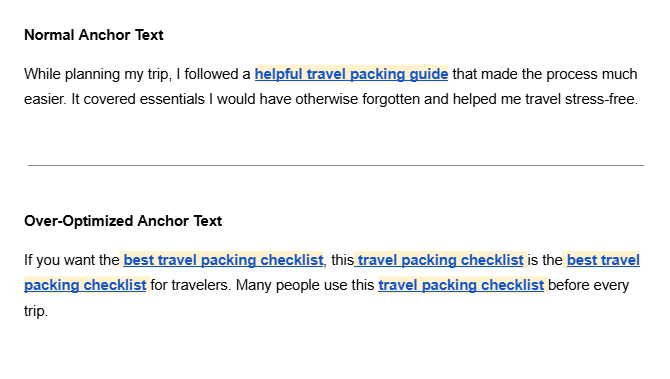
As you can see in the image above, the over-optimized anchors are stuffed in the article, and it looks spammy. In comparison, a normal anchor gives a clear idea.
Sponsored Insertions
Sponsored insertions are the practice of paying a site owner to place a link to your website within their existing content as a contextual backlink. You can use the rel=”nofollow” or rel=” sponsored” tag and disclose it to the search engine to avoid high-risk activity.
These tags might not pass the value, but they benefit in terms of referral traffic.
Here are some warning signals that you should be careful about:
- There are unrelated outbound links.
- You are offered pricing pages for the links.
- Agencies openly provide placements for links.
Bad Neighborhood Risks
Bad neighborhood link building means associating with low-quality, spammy sites that risk Google penalties and harm your SEO.
Search engines don’t trust these sites. Being linked from them can harm your site’s credibility and affect your rankings rather than help, and therefore, it is considered risky.
You should avoid the sites that are linking to:
- Casinos
- PBNs
- Hacked domains
- Link farms
- Spun content blogs
- Adult sites
Link stuffing inside the Article
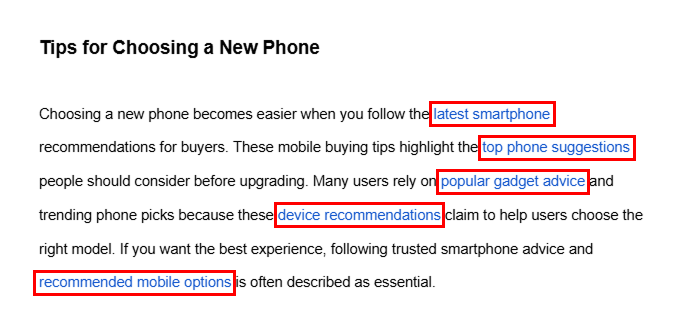
Link stuffing is adding too many links in a single piece of content, even if they don’t add any value to readers.
Too many links can make the content feel forced or spammy. Search engines may see it as manipulation, and readers can lose trust because the content becomes hard to read and less valuable.
Here is an example for better understanding link stuffing.
Velocity Risks
Velocity risk usually means building backlinks in an unnatural pattern. There are some characteristics of velocity risk such as a low-quality site suddenly gets hundreds of links, link growth doesn’t match content publishing, PR activity or brand mentions.
Search engines expects natural growth. But when a site acquires links too quickly, it can lead to penalties.
Understand Google Policies
Now, let’s understand some Google policies. It will help you identify what Google accepts and what it does not.
Google policies are simple: links must be natural, relevant, and provide value to users. If a link is helpful, it is usually safe.
What Google considers good:
- Editorial links inside the content.
- Natural mentions from the relevant websites.
- Links added because your content solved a problem.
What Google does not accept:
- Link placement is done to manipulate the rankings.
- Unnatural anchor text patterns.
- Paid link placement without editorial judgment.
- Link schemes.
How to Audit Your Backlinks Profile
To avoid risks such as over-optimized anchors, link-stuffed in the article, and bad neighbourhoods, it is important to conduct a backlink audit.
It is simply a health check of all the websites that link to you. You can know which links are helping your business and which links can hurt your trust.
Step 1: Exporting Backlinks Data
Exporting backlinks data means downloading a list of all the websites that link to your site.
It matters because you can’t judge the quality of your links unless you see them all in one place.
To do this, you can use tools like Google Search Console (free) and paid tools such as Ahrefs and SEMrush.
These tools help you identify the websites linking to you, the pages where the links appear, and the text used for the links.
Step 2: Identifying Risky Patterns
Every link is different. Some links may look unnatural or manipulative, and Google may ignore them or trust them less.
A risk signal does not automatically mean a penalty. It simply means the link does not look genuine.
Google says links should be earned and not forced. If a link exists solely because of an agreement or payment and is not clearly disclosed, Google may treat it as unnatural.
Step 3: Disavow Links only when:
Disavow links that are spammy, fake, or low-quality because they can harm your website and may lead to penalties from Google.
- Notice spam patterns.
- Injection of hacked links.
- Attracts negative SEO.
Don’t Disavow when:
Most websites do not need to disavow links. Google has already ignored many low-quality and spammy links in its own way.
- Links with a low Domain Rating.
- Link is a scap and harmless.
- Generated using automation.
KPIs, Tracking and ROI (What to Measure)
A KPI (Key Performance Indicator) is the metric you track to see whether your link-building work is successful. These usually include new websites linking to you. Traffic coming from those links, and changes in keyword rankings.
Tracking means using tools like Google Search Console and Ahrefs/SEMrush to check these numbers regularly.
ROI (Return on Investment) Shows Whether the results you get in terms of Traffic, Leads, or Sales are worth more than the Money and efforts you spent.
Primary Performance Metrics
- Contextual links build
- Referral visits from those links
- Target keyword ranking
- Domain traffic growth
- Conversion rate for referral visitors
How to Measure ROI
To measure ROI, you need these simple logics
- Did my keyword rankings improve?
- Did my website traffic improve?
- Did visitors coming from referral links convert into leads or sales?
- Was the cost worth it?
Reporting Template
The Weekly Tracking Table is for the execution team. It mostly tracks the follow-ups and links earned.
| KPIs | This Week | Last Week | Change % | Notes |
|---|---|---|---|---|
| Contextual Links Built | ||||
| Referral Visitors | ||||
| Keyword Ranking | ||||
| Conversion Rate | ||||
| Follow-up (Sent) | ||||
| Avg. DR |
To evaluate the change in %, use the given formula:
Change% = (this week – last week)/ last week x 100
Let’s look at the example:
Example 1: contextual links earned (increase)
- Last week = 4 links
- This week = 6 links
According to the formula:
- Change% = This week – Last week / Last week X 100
- = 6-4/4 X 100 = 0.5 X100
- Result = 50% increase
Example 2: Referral Visitors (decreased)
- Last week = 500 visitors
- This week = 400 visitors
According to the formula:
- Change% = This week – Last week / Last week X 100
- = 400-500/500 X 100 = -0.2 X 100
- Result = -20% decrease
The Monthly Tracking Table should be for the management/clients. It tracks whether the investments made are actually making business money.
| Metrics | Monthly Total | Cost | ROI Signals | Action |
|---|---|---|---|---|
| Contextual Links Earned | ||||
| Referral Visitors | ||||
| Keywords Ranks | ||||
| Growth in Organic Traffic | ||||
| Conversions from referral traffic | ||||
| Cost Per Link |
Tools and Resources Used in this Playbook
As a practitioner and an author, here are the tools I personally use to execute contextual link building effectively.
Ahrefs: For Competitors’ backlink gaps.
SEMrush: For backlink analysis and traffic Check.
AnswerThePublic: To discover topics and questions users search for.
Google Sheets: For tracking links and the outreach process.
Canva: To create charts and simple visuals.
Buzzsumo: For finding journalists and popular content.
Grammarly: To improve content clarity and grammar.
Internet Archive (Wayback Machine): To check old pages and broken link history.
Conclusion
By following this guide, you can now understand how contextual backlinks work, why some links are more trusted than others, and how to build them safely and practically.
This playbook showed you how to build links that fit naturally in the relevant content and what the risks are to avoid. You don’t need to apply everything at once; even using a few principles can help lead to steady improvement.
Get Clear Direction Before You Build Links
If you’re unsure which link-building efforts are worth your time, a short strategy call can help. We’ll review what you’re doing now and explain what realistically fits your goals.
Are contextual links better than directory links?
Yes, Contextual links usually carry stronger relevance signals than directory links; as a result, they often drive better results.
Contextual links are placed within the article/content and are supported by related text. This makes them more meaningful; search engines trust contextual links more because they look like natural editorial references.
Does a nofollow contextual link help?
Yes, even though they don’t pass link equity directly, they help build trust, improve brand visibility, send referral traffic, and keep the content natural and relevant to the topic.
The profile with only dofollow links may look manipulative; so maintaining a healthy mix of link types is important.
How many contextual links do I need?
There are no fixed numbers; it depends on factors such as whether the anchor text sounds natural, the strength of competitors, your current backlink profile, content quality, and the relevance and depth of the topic.
Is link insertion safe?
Yes, Link insertions are safe when done correctly. The anchor text should sound natural; the links should be placed within the relevant content; the page should have real traffic; and the site should not openly sell links.
Are contextual backlinks considered white hat?
Yes, Contextual backlinks are considered white hat when they add real value to the content, help the reader better understand the topic, are placed naturally, follow Google’s guidelines, and are not manipulated or forced.