Your product solves real problems. Your content answers real questions. But when decision-makers search for what you offer, your competitors show up first.
The gap between you and them often comes down to one thing: trusted websites link to them, not to you.
B2B link building closes that gap. It helps you earn mentions and links from the industry websites your buyers already trust. Those links strengthen your authority, improve your search visibility, and put you in front of decision-makers at the exact moment they are evaluating their options.
What You’ll Learn in This Guide
- What B2B link building means and how it differs from B2C
- How to choose your starting point based on your budget and time
- 12 proven tactics with step-by-step implementation instructions
- Copy-paste email templates that get 15%+ response rates
- A prioritization framework so you start with what works fastest
- Your detailed 30-day action plan to get started
- How to measure results that matter to your business
What B2B Link Building Means
B2B link building is the process of acquiring links from industry-relevant websites, such as business blogs, SaaS platforms, industry publications, and software review websites.
These links are called backlinks; they are clickable links on other sites that direct users to your website.
Imagine a business blog writes an article on “Best Project Management Tools” and includes your site as a reference.
When trusted sites link to your content, Google sees it as a signal that your site is worth ranking. That improved visibility puts you in front of potential clients at the exact moment they are comparing options and looking for a solution.
Why B2B Link Building Matters for Your Business
Most B2B buyers don’t make fast decisions. They compare, research, and look for trusted brands for weeks or months. Link building helps you become one of those trusted brands.
You Rank for Keywords That Drive Leads
When you build strategic links to your important pages, such as your pricing or product comparison pages, those pages are more likely to appear at the top of the search results page when buyers search for solutions like yours.
Suppose you sell marketing automation software, and your competitor’s pricing page has 50 high-quality backlinks while yours has 10. When someone searches for “marketing automation software pricing”, they’re more likely to rank higher in search results.
Earning relevant backlinks to your key pages improves your ability to compete for high-intent searches, which often turn into real leads and sales.
You Attract Decision-Makers, Not Just Traffic
Some visitors are just browsing. Others are comparing options and are ready to buy.
When someone discovers your business through an industry publication or SaaS review platform, they’re close to making a decision, and they convert at higher rates than cold traffic.
Imagine you are searching for accounting software and see a company mentioned in a trusted industry article. You are more likely to trust that company than one you find randomly. That is how quality backlinks build trust early.
You Build Trust Before Sales Conversations
B2B buyers typically research for weeks or months before making a decision. When they see your company featured on trusted industry sites during that research phase, you’re no longer just an unfamiliar name. You’re an established business they already recognize and trust.
Suppose A CFO is evaluating expense management software and, over weeks of research, they see your company mentioned in a Forbes article (a leading US-based media brand), a G2 analyst report, and a finance blog comparison.
By the time they reach your website, your brand already feels familiar, which increases trust and improves conversion rates.
You Get Cited in AI-Generated Results
More buyers are starting their research with AI assistants. When trusted industry websites link to you, you are more likely to show up in AI search results.
AI tools like ChatGPT and Google’s AI Overviews don’t just rely on your website. They also consider what trusted sources say about your company.
Suppose someone asks, “What are the best CRM tools for real estate?” AI tools are likely to surface brands that are consistently discussed on real estate websites and industry blogs. If reputable real estate websites talk about your CRM software, AI tools are more likely to recognize and mention your brand.
How B2B Link Building Differs from B2C
Both B2B (Business-to-Business) and B2C (Business-to-Consumer) use backlinks to improve visibility in the search engine results. But the way they influence buying decisions is very different.
| Factor | B2B Link Building | B2C Link Building |
|---|---|---|
| Target Audience | Decision-makers, managers, and multiple stakeholders | Individual consumers |
| Buying Cycle | Long, research-heavy, risk-sensitive | Shorter, emotion-driven |
| Relevance vs Reach | Niche relevance matters more than mass traffic | Broad reach and visibility matter more |
| Authority Impact | High-trust industry mentions influence buying decisions | Social proof and popularity influence buying decisions |
| Page Priority | Focus on bottom-funnel and revenue-driving pages (pricing, case studies, product pages) | Often focus on blog and awareness content. |
| Outreach Approach | Personalized and relationship-focused | Scalable and volume-driven |
What Makes a B2B Link Valuable
Not every backlink helps your business drive growth. Here’s how to identify the right ones:
Industry Relevance
The site linking to you should be related to your industry, business category, or buyer persona.
Simple test: Ask yourself, “Would my ideal customer read this website when researching solutions?” If yes, it’s relevant. If not, skip it.
Mistake to avoid: Accepting links from unrelated sites just because they have high traffic or authority scores.
Trusted Authority
Quality links come from sites that publish useful content, maintain professional standards, and earn reader trust.
You can evaluate these sites by looking at the site’s content quality, how often they publish new content, whether their topics align with your industry, and whether professional writers engage with them.
You can also use free tools like Moz’s Domain Authority checker or Ahrefs to see their authority score (aim for sites with a DA above 30 for meaningful impact).
What is Domain Authority (DA)?
Domain Authority is a metric developed by Moz that estimates how likely a website is to rank in search results based on its backlink profile.
Think of it like a credit score for websites, scored 0-100:
- DA 0-20 = New or low-quality sites
- DA 20-40 = Average sites
- DA 40-60 = Good authority
- DA 60-80 = Strong authority
- DA 80-100 = Industry leaders like Forbes or TechCrunch
Contextual Placement
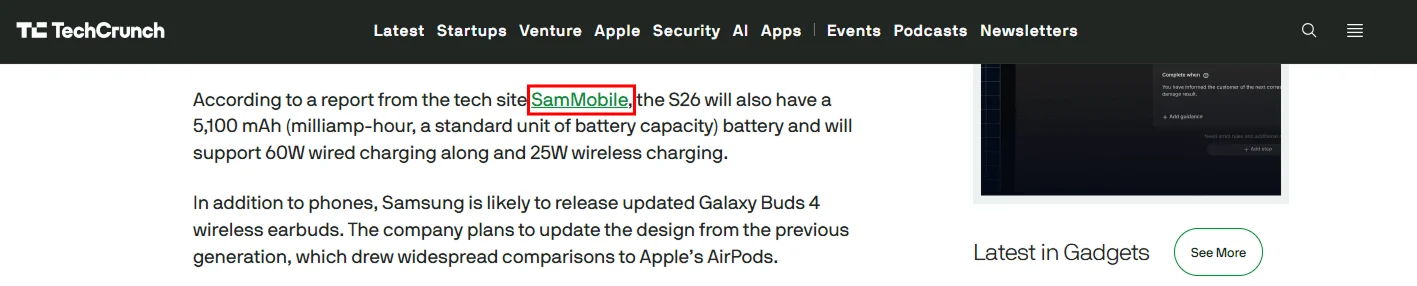
The most important thing is where your link appears on a page. The best links appear naturally within main content where they add value to readers, not buried in footers or sidebars. The surrounding context should make it clear why the link exists and what the readers will gain by clicking it.
Good contextual placement example:
Descriptive Anchor Text
Anchor text is the clickable text in a link. It describes what readers will find when they click it.
Anchor text should be natural, relevant to the content, and fit smoothly into the sentence without looking forced or overly optimized.
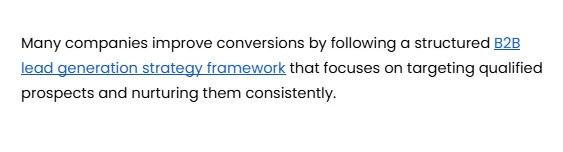
Descriptive anchor text helps both:
- Users (they know what to expect)
- Search engines (they understand what your page is about)
However, avoid over-optimizing. Vary your anchor text naturally to prevent it from looking spammy.
Building Your Strategic Link Building Framework
Strategic link building campaign follows a clear process. Here’s your step-by-step framework:
Step 1: Set Revenue-Focused Goals
Before building links, be clear about the results you want to achieve:
- Which competitors are you trying to outrank?
- What’s your target for monthly qualified organic leads?
Set goals that link directly to revenue. The purpose of B2B link building is to support real business growth, not just backlink numbers.
Step 2: Identify Your Priority Pages
Focus on pages that drive conversions:
- Pricing and comparison pages where buying decisions happen.
- Product or service pages that explain your solution.
- Case studies that show real results and ROI.
These money pages convert visitors into leads. They should be your priority over random blog content.
How to find your priority pages:
Look at your Google Analytics and analyze your top-performing pages. You look for two things:
High traffic, low conversions
These pages may need stronger messaging, clearer CTAs, or more trust signals.
Strong conversions, low traffic
These are strong candidates for link building because more visibility could directly increase qualified leads.
Step 3: Analyze Competitor Link Gaps
If your competitors rank higher than you, then one common reason is that more trusted websites link to them.
Use Ahrefs or SEMrush to find websites that link to your competitors but not to you:
- Enter your competitor’s domain into Ahrefs
- Click “Backlinks” from the left menu
- Apply filters:
- Select Dofollow (these links typically pass value)
- Sort by Domain Rating (high to low)
- Review the list to see your competitor’s strongest backlinks
- Export the backlink list and repeat the same process for 2–3 competitors
- Compare the lists and identify websites that appear multiple times
- Shortlist these sites. They already link to businesses like yours; they may be more open to linking to you as well.
Step 4: Create Linkable Assets
Create content that people genuinely find useful and want to reference or share naturally. Instead of asking for a link without offering any value, you create resources that people find helpful.
Here are some examples of linkable assets:
Original research:
Share unique data, surveys, or industry insights that others can cite.
Comprehensive guides:
Create in-depth resources that cover a topic completely.
Case studies:
Show real results with clear, measurable outcomes.
Free tools:
Offer practical tools that solve specific problems.
Visual content:
Use charts, infographics, or other visuals to make complex topics easier to understand.
Step 5: Create Your Outreach List
Your outreach list should include the relevant industries your target audience trusts.
Here’s how you can prepare the list:
Use a simple spreadsheet to track: website name, contact person, email address, pitch angle, and status. Start with 15–20 strong prospects. Scale once you know what works.
12 Proven B2B Link Building Strategies
Below are 12 proven strategies that B2B companies use to strengthen their authority, attract prospects, and support steady business growth.
1. Business Partnership Links
Start with the companies you already work with, partners, vendors, clients, and integration companies.
The relationship already exists. Trust is established. Showcasing partners builds their credibility and earns you a relevant backlink.
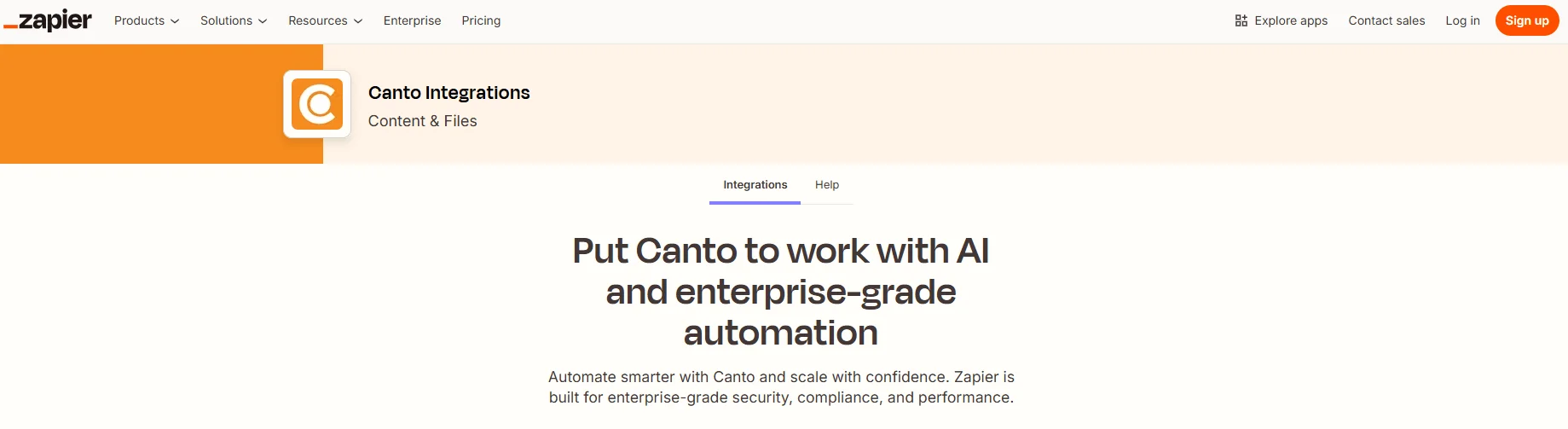
The Image shows how Zapier integrates with Canto, highlighting a real business collaboration.
Integration pages like this often include brand mentions and links.
Step-by-step process:
-
- List every business relationship: existing partners, vendors, clients, and integration companies.
- Visit their websites and check for pages like “Partners,” “Integrations,” “Customers,” or “Resources.”
- See if your company is mentioned or listed. If it isn’t, you’ve found a link opportunity.
- Reach out and request a mention or link.
Subject: Quick question about [Partner/Member] page
Hi [Name],
We’ve been [working together / a member] for [Time Period], and I wanted to check if we could be added to your [Partners/Members/Clients] page on your website.
Happy to provide our logo, description, and link. Would also be glad to reciprocate on our site if helpful.
Let me know what you need from us!
Best,
[Your Name]
- Follow up with a polite message after 5-7 days if there is no response.
- Track the link once it’s live and maintain the relationship.
Why this works:
The relationship already exists, so trust is established. Showcasing partners builds their credibility and earns you a relevant backlink.
Expected results:
If you reach out to 10 partners or collaborators, several of them will likely agree, especially if the link benefits both businesses.
2. Reclaim Unlinked Brand Mentions
Unlinked brand mentions occur when other websites mention your brand, product, or services, but do not include a link to your website.
Reclaiming unlinked mentions means asking websites to turn brand mentions into clickable links.
Steps to find unlinked brand mentions:
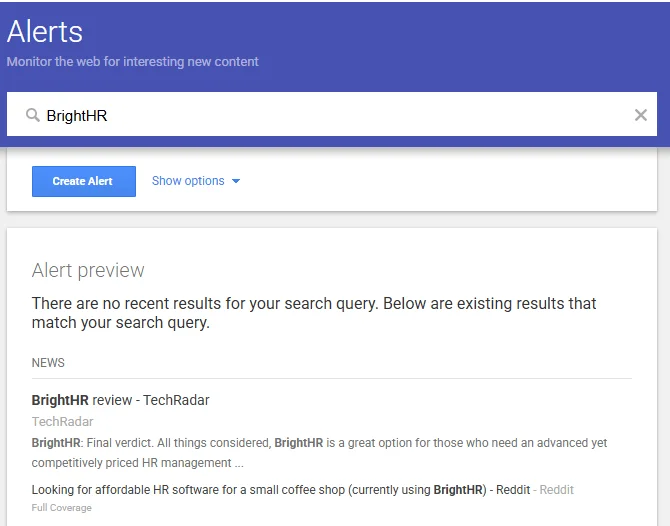
- Use Google Alerts to track mentions of your brand online.
- Enter your company name
- Set frequency to “As-it-happens.”
- Click “Create Alert.”

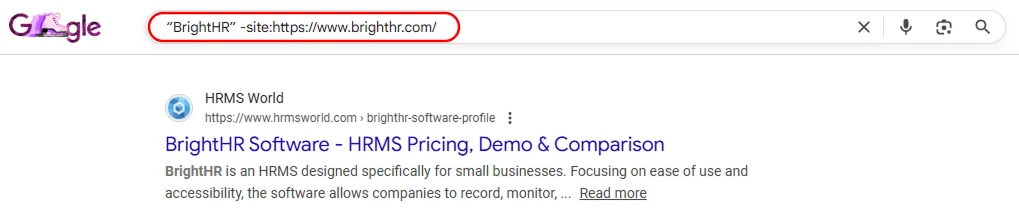
- Use search operators to find existing mentions:
- Google: “YourCompanyName” -site:yourwebsite.com
- This finds pages that mention you, but not your own site

- Verify the mention. Make sure:
- They mention is positive
- The context supports adding a link
- The site is credible and relevant
- Find contact info:
- Look for the “Contact” page
- Use Hunter.io to find email addresses
- LinkedIn search for the author
- Reach out using this template:
Subject: Thanks for mentioning [YourCompany]!
Hi [Name],
I came across your article “[Article Title]” and noticed you mentioned [YourCompany]. Thanks for the mention!
I wanted to reach out to see if you’d be open to adding a link to our website, [YourWebsite.com], so readers can learn more about what we do.
Happy to return the favor if you ever need a quote or contribution on [RelatedTopic].
Thanks!
[Your Name]
Why this works:
They have already mentioned your company and are familiar with your brand. So, requesting a link is a logical next step as it makes their content more useful to readers.
Expected results:
In many cases, about 30-50% will agree to add the link. You can improve your success rate by offering value in return, such as a guest post, a quote, or a promotion.
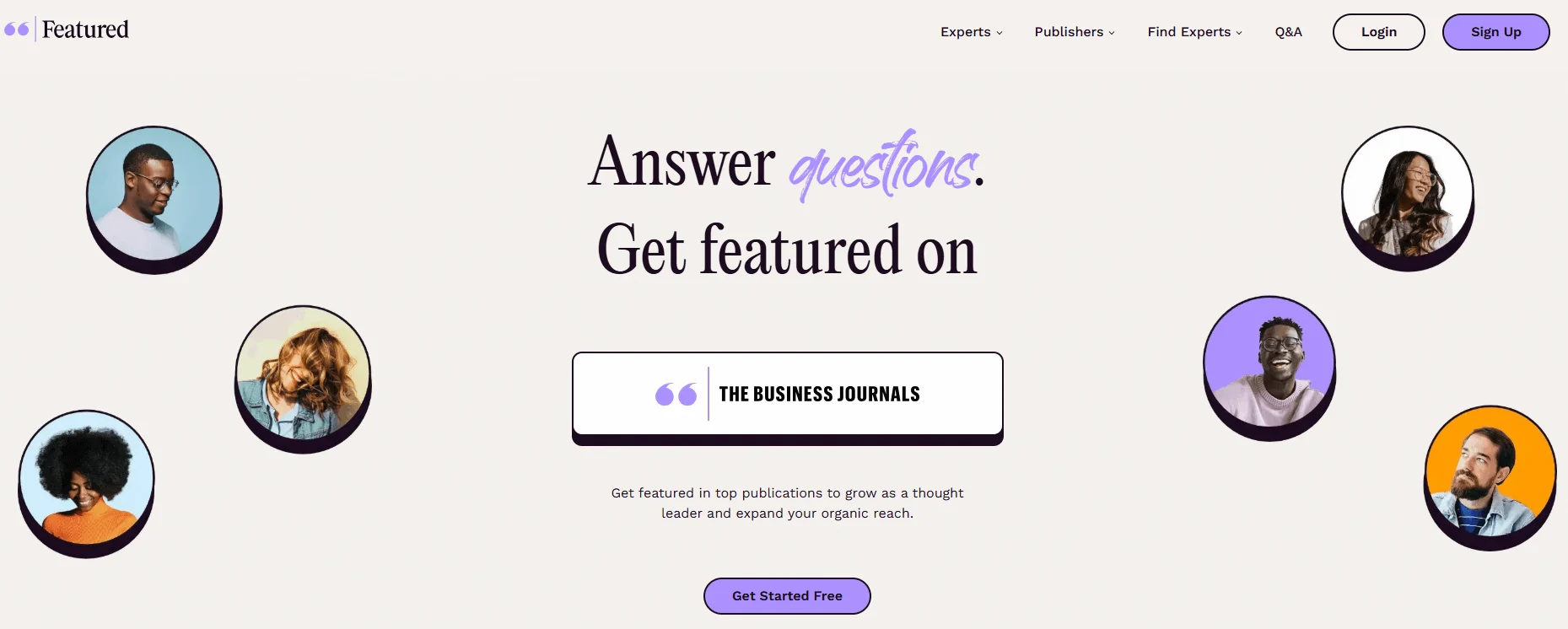
3. HARO Responses
HARO (Help A Reporter Out), now known as Connectively, is a platform that helps journalists find expert sources for their stories.
When you respond with helpful insights, you can earn mentions and links from reputable publications.
How to Get Results with HARO:
- Create an account on the HARO platform
- Complete your profile by adding your name, company, and areas of expertise.
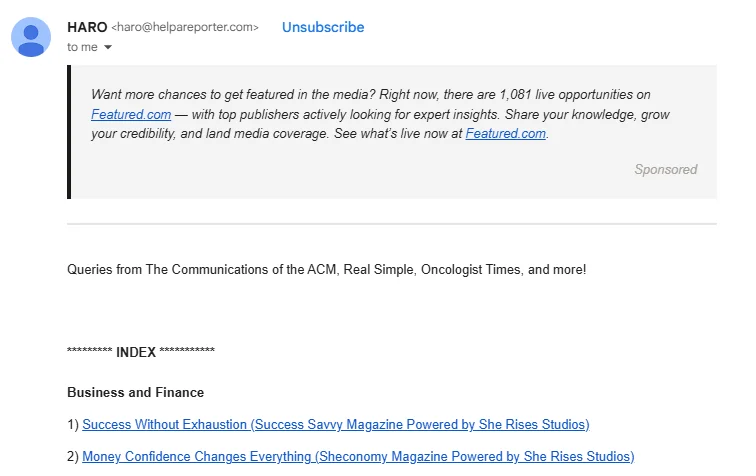
- You’ll receive regular emails with journalist queries in your selected categories (usually up to three queries per day).

- Respond within 2–4 hours, as journalists receive many replies and often review the first few responses before moving on.
- Provide accurate, original, and valuable responses journalists can easily use.
Subject: Re: [Their exact subject line]
Hi [Journalist Name],
I’m [YourName], [YourTitle] at [YourCompany], where we [Relevant Credential].
On your question about [Topic]:
[Your main insight in 2-3 sentences – make it quotable]
Include [Specific example or data point that illustrates your point].
Feel free to reach out with any follow-up questions.
Best,
[Your Name]
Measuring success:
- Track pitches sent vs. published mentions and analyze how many of your responses actually turn into published quotes.
- Results may vary by industry, response quality, and speed. The typical success rate is 5-15%.
- When journalists include your quotes and links to your site, you earn one strong backlink from that publication.
4. SaaS Review Platforms
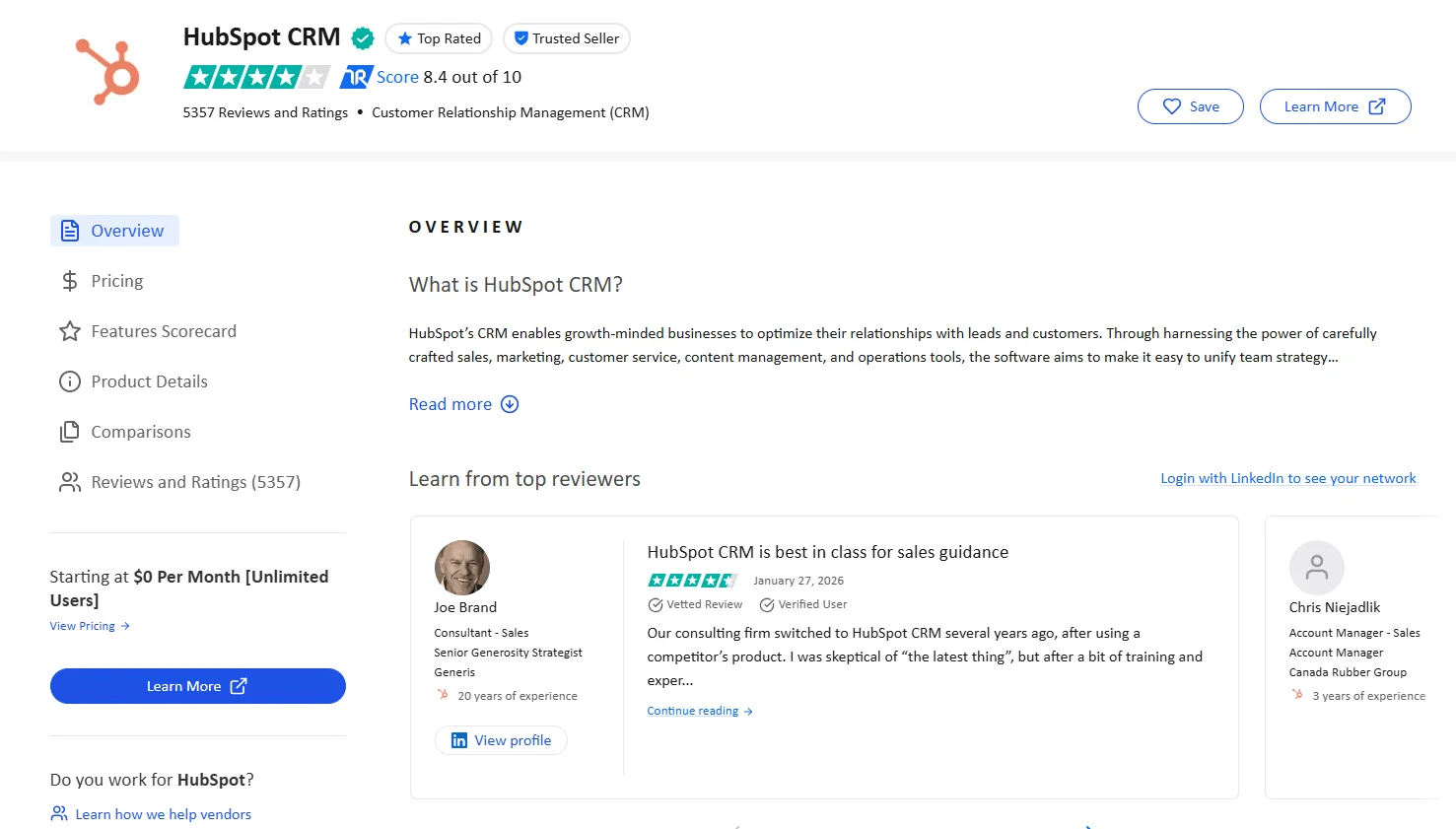
SaaS review platforms matter for product companies because buyers use them to compare options.
For product-based companies, especially SaaS businesses, these platforms are important because buyers often visit them before making a decision.
In simple terms, if your software is not present where buyers are comparing options, you may not even make it onto their shortlist.
Priority platforms by category:
B2B Software (all industries):
If you sell software to other businesses, these review platforms are important because buyers use them to compare options before making any decision.
Specific categories:
- Agencies/Services: Clutch.co
- Enterprise software: Gartner Peer Insights
- Marketing tools: Intercom
- Sales tools: Crunchbase
Step-by-step to maximize value:
- Identify the top review platforms in your industry
You can search for something like “best [your software category] tools” and see which site consistently appears. - Create or claim your company profile
Ensure that you officially create your profile so you can manage information and updates. - Complete your profile
Add accurate details, features, pricing, and screenshots to build trust completely. - Encourage happy customers to leave honest reviews
Ask recent customers for genuine feedback. Don’t try to force them or include a misleading review. - Respond professionally to all reviews, including negative ones
Show your gratitude for the positive reviews, and address negative reviews calmly with polite feedback, as buyers notice how you respond. - Add a link to your website from your profile
Make it easy for the interested buyers to visit your website and learn more.
Email template to request reviews:
Subject: Quick favor – 2 minutes?
Hi [Customer Name],
Hope you’re enjoying [YourProduct]! Quick question:
Would you mind leaving us a quick review on G2? Takes about 2 minutes and really helps other [Industry] professionals discover us.
Here’s the direct link: [DirectReviewLink]
As a thank-you, we’ll enter you into our monthly drawing for [Incentive] and send you our exclusive [Bonus Resource].
Thanks!
[Your Name]
Why this matters:
When someone searches for the term “best CRM software,” the review platforms like G2 and Capterra often appear at the top of the results.
If your product is not listed with reviews, you may miss out on buyers at key decision-making moments. Even if your website ranks, many buyers rely on review platforms before they shortlist vendors.
Expected impact:
- In the 1st month, get listed and optimize profiles on 3-5 platforms to establish your presence.
- In the 3rd month, aim to collect 10-15 reviews across platforms to build credibility.
- In the 6th month, you may see improvements in rankings and receive more demo requests.
- Over time, review platforms can become a consistent source of qualified leads.
5. Broken Link Building
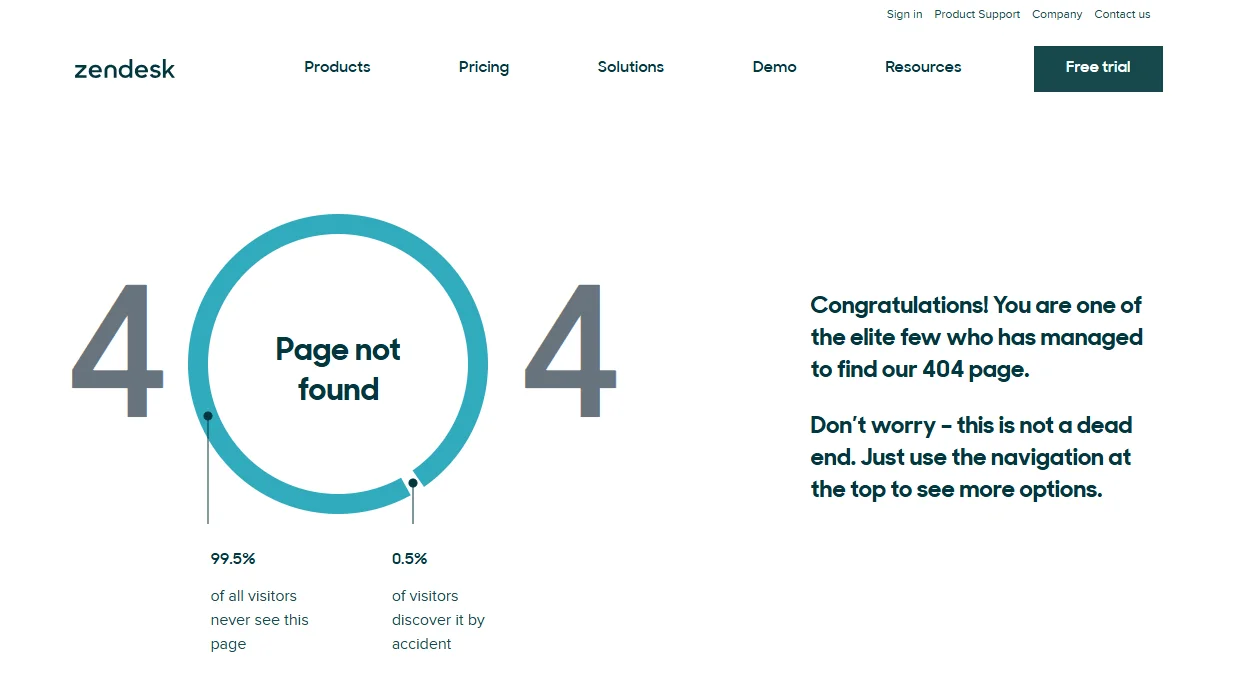
Broken link building is a strategy that involves finding broken links on relevant industry sites. Create content that fills in what’s missing, then reach out to offer your resource as a helpful replacement.
This approach benefits both sides. The site improves its content by fixing a broken link, and you earn a relevant backlink.
How it Works:
Step 1: Find broken link opportunities
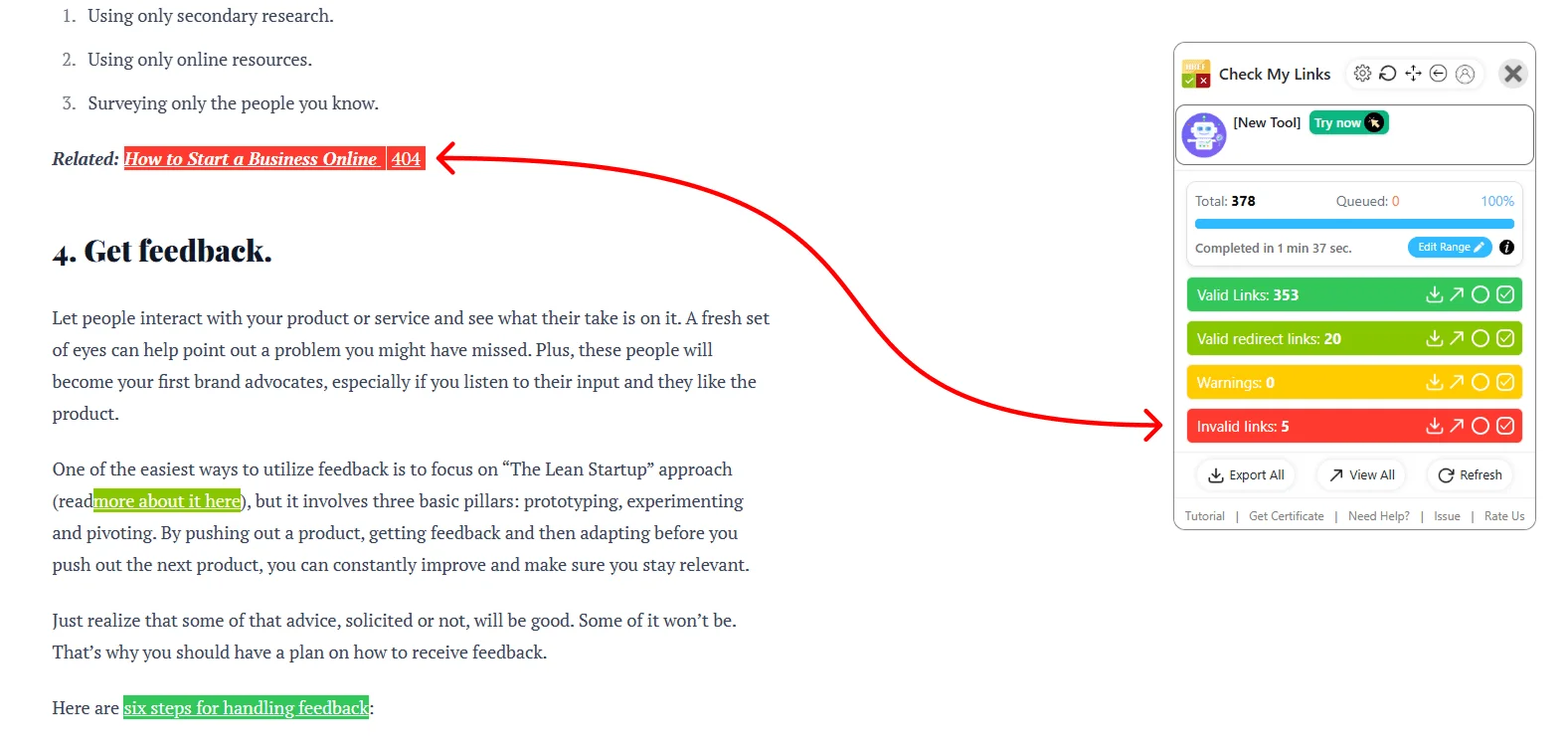
Method 1 – Using the Check My Links extension:
- Install “Check My Links” Chrome extension
- Look for resource pages, link roundups
- Click the extension icon
- It highlights broken links in red
Method 2 – Using Ahrefs :
- Go to the Site Explorer tab
- Enter competitor domain
- Under the backlink profile, open broken backlinks
- Find broken (404 not found ) links on their pages.
Step 2: Evaluate and Create
Check what the broken link was about and ensure it is relevant to your business. If it’s a good fit, use existing content; if not, create a better replacement.
Step 3: Send outreach
Subject: Broken link on your [Article Title]
Hi [Name],
I read your article “[Exact Article Title]” and found it very helpful for [Specific Value].
I noticed a broken link on line X that mentions [Topic]. The link goes to [BrokenURL], which returns a 404 error.
I actually have a comprehensive resource that could serve as a great replacement: [Your URL]
It covers [Brief Description of What Your Content Includes].
Would you be open to updating the link? I’d be happy to suggest any improvements to make it even more useful for your readers.
Best,
[Your Name]
Why this works:
You’re genuinely helping them improve their content. Broken links hurt their SEO and user experience. You’re solving a problem while earning a link.
Expected results:
For every 10 broken-link outreach emails, you can expect 1-3 added links. Most of your time goes into finding the right opportunities.
6. Strategic Guest Posting
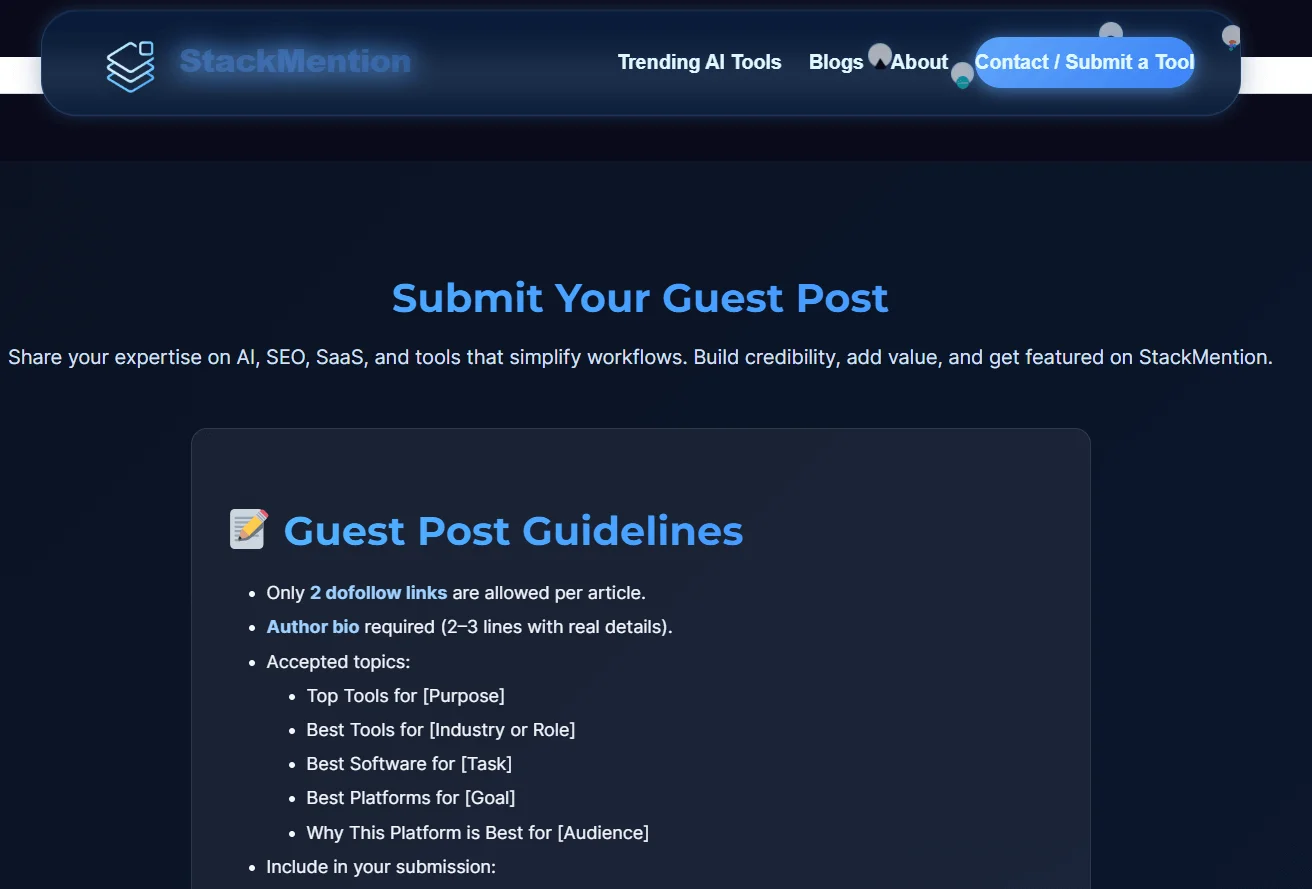
Guest posting involves contributing valuable articles to respected industry publications. In return, you earn a relevant backlink, they gain quality content, and their audience discovers your expertise.
In B2B, the goal is not quantity. The goal is trust, credibility, and relevance.
Focus on publishing on sites your target buyers actually read. One article on a respected industry blog is more valuable than multiple posts on random websites.
Finding the right guest post opportunities:
1. Use Google search variations
You can use these Google search operators to find the best suitable opportunity:
- “[Your industry] + write for us”
- “[Your industry] + guest post guidelines”
- “[Your industry] + become a contributor”
2. Check where competitors publish
Use Ahrefs to discover where your competitors are publishing guest posts.
- In Ahrefs, go to Content Explorer and search using operators like: {niche} “this is a guest post by.”
- Review the results to find websites that feature guest contributions or mention your competitors.
- Visit those sites and check if they accept guest posts or provide contact details.
3. Reach out
Once you find a suitable guest post opportunity, send an outreach email to request permission to contribute your article.
Subject: Article idea for [TheirSite]: [Specific Topic]
Hi [FirstName],
I’ve been reading [TheirSite] for a while. Your recent piece on [specific article] was a great read.
I’d love to contribute a high-quality guest post [Publication 1] that aligns with your content and adds value to your readers.
Would this be a good fit for [TheirSite]? Happy to send a detailed outline if you’re interested.
Best,
[Your Name]
Expected results:
- If you send 10 pitches in a month, there’s a chance 1 or 2 will be accepted.
- When you send 20 pitches in 3 months, you’ll get 3 or 4 acceptances.
- If you pitch consistently for six months, editors may start contacting you.
7. Original Research Publication
Publishing original research is one of the strongest B2B link building strategies. When you share unique data, insights, or survey results, it naturally attracts backlinks from journalists and industry analysts who cite your research.
Instead of promoting opinions, you’re providing facts others can use in their content and to their readers as well.
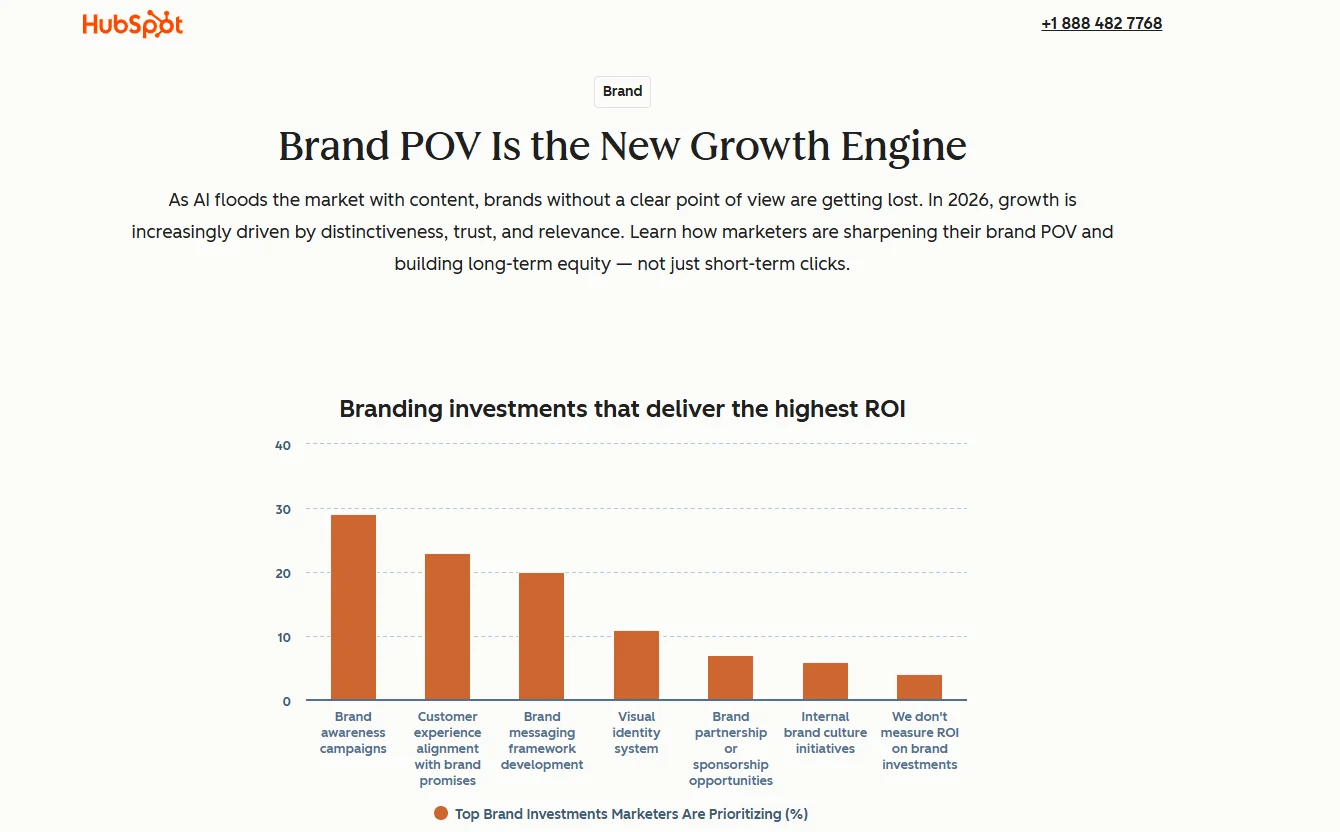
The image below shows the original survey data collected by HubSpot on brand POV. It includes statistics and research findings published to share industry insights.
Here are some examples of original research:
- Industry surveys
- Trend reports
- Data analysis from your product
- Benchmark studies
When bloggers and industry sites need statistics, they link to the original source. If that source is you, you earn high-quality backlinks, gaining trust and credibility for your business.
Step-by-Step process:
Step 1: Choose a Relevant Topic
Relevance matters most in research publications. Pick a topic that your target buyers care about and actively search for.
Step 2: Collect Original Data
Collect original data through surveys, by analyzing customer data (anonymously), and by studying industry trends.
Step 3: Identify Key Insights
Readers are attracted to insights that keep them hooked to the content; they are more likely to read and convert. You can use surprising statistics, trends, or benchmarks that others would want to reference.
Step 4: Publish a Detailed Report
Create a well-structured report with clear data, charts, and explanations that help the readers understand complex topics easily.
Step 5: Create Shareable Assets
Convert your key findings into engaging sources such as visuals, charts, and short summaries.
Step 6: Promote the Research
Reach out to industry blogs, journalists, and newsletters with the most interesting data points.
Step 7: Track Mentions and Links
The last step is to monitor and analyze who cites your research and to follow up on all the unlinked mentions.
Why this works:
Original data is highly valuable. When you share unique statistics, others reference and link to you as the source.
Expected results:
- In the 1st month, you get 5-10 links from the initial promotion.
- For 2-6 months, you can get 10-20 additional links when people discover it.
- In about a year, you can expect 30-50 links from one research project.
- In the long run, you can consistently gain links year after year as the annual reports become reference resources.
8. Resource Page Link Building
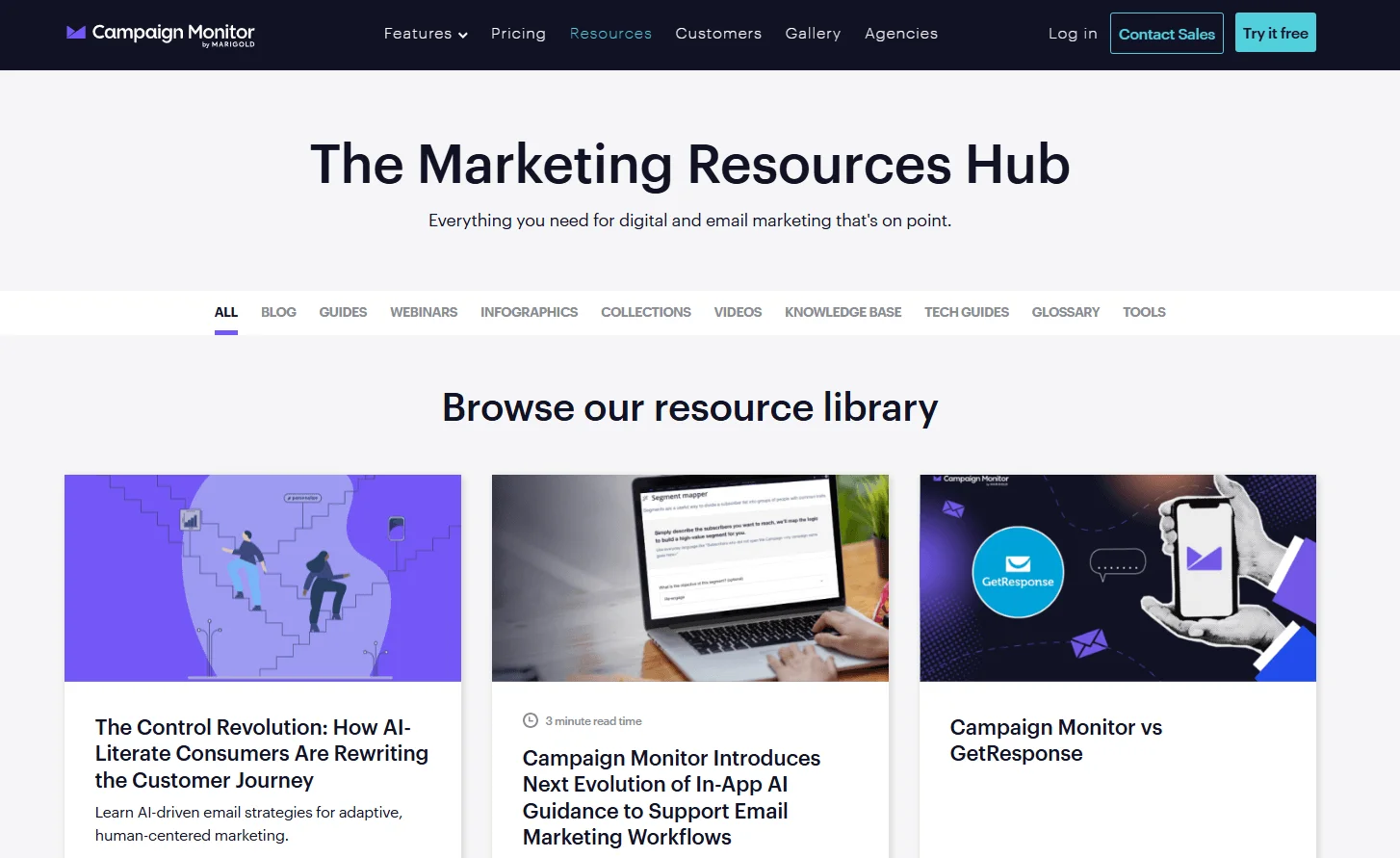
Resource pages are curated lists of useful tools, guides, and references on a specific topic.
Industry websites maintain pages such as “Best Marketing Tools,” “HR Resources,” or “Project Management Reading List” to help their audiences find valuable solutions to their problem.
You should focus on getting your page listed on such curated resource sections. When your content is genuinely useful, editors are more likely to add it to their lists.
How to find resource pages:
Step 1: Find resource pages in your niche
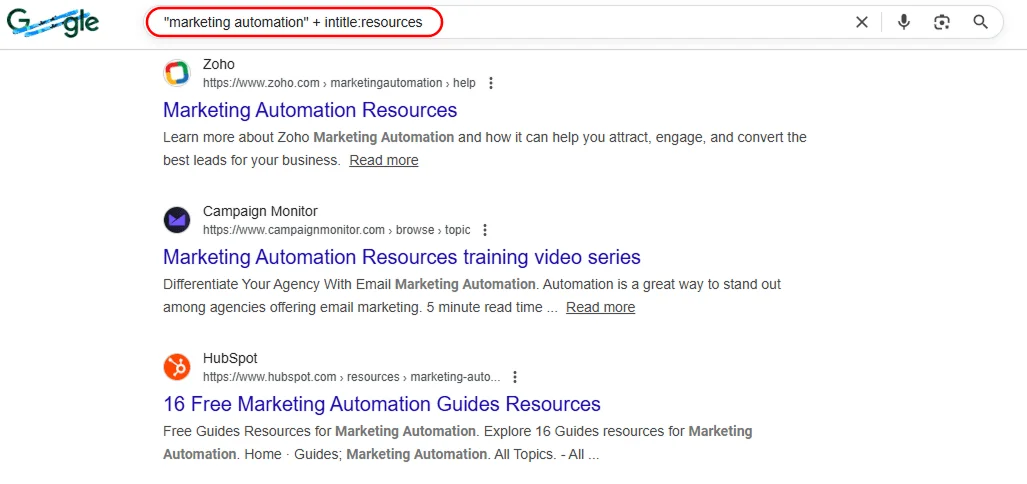
You can use these search operators to find resource pages relevant to your industry:
- “[your industry]” + “resources”
- “[your keyword]” + intitle:resources
- “[your industry]” + “recommended tools”
For Example: “marketing automation” + intitle: resources
Step 2: Evaluate the page
You can further evaluate if:
- The page is maintained regularly (updated in the last 6 months)
- Your content genuinely fits their criteria
- They link to sites similar to yours
- The page has decent traffic
- Links are dofollow (use Check My Links extension)
Step 3: Verify your content fits
Then, after verifying your content, it should:
- Match the quality of other listed resources
- Serve their audiences in the best possible way by providing what they need
- Your content should fill a gap they currently have
- The page has decent traffic
- Serve something better than or different from the existing listings
Step 4: Send personalized outreach
Personalization plays an important role because editors get dozens of emails, and to stand out, you don’t need generic pitches but an actual message that shows your expertise.
You can share your resource and explain why it would be a helpful update for their readers.
Some websites have a “Submit a Resource” or “Suggest a Link” form. If your content fits, using these forms makes your outreach much easier.
Subject: Suggestion for your [Topic] resource page
Hi [Name],
I was researching [Topic] and came across your resource page at [URL]. Really helpful collection. I especially appreciated [Specific Resource They Listed].
I noticed you include resources on [Specific Subcategory]. I recently created a comprehensive guide that your audience might find valuable: “[Your Content Title].”
It covers [specific value proposition] with [unique angle – original research, templates, case studies, etc.].
Would this be a good fit for your resource page? Happy to provide any additional information or make improvements if needed.
Best,
[Your Name]
Why this works:
You are helping them maintain a resource by providing content that adds value to their users. It’s mutually beneficial. They get a valuable resource, and you get a relevant backlink.
Expected results:
- For the resource pages, the success rate is 10-20% for quality outreach
- Time per successful link is 1-2 hours (including research)
- It is best for niche industries with active community resources
9. Testimonial Link Building
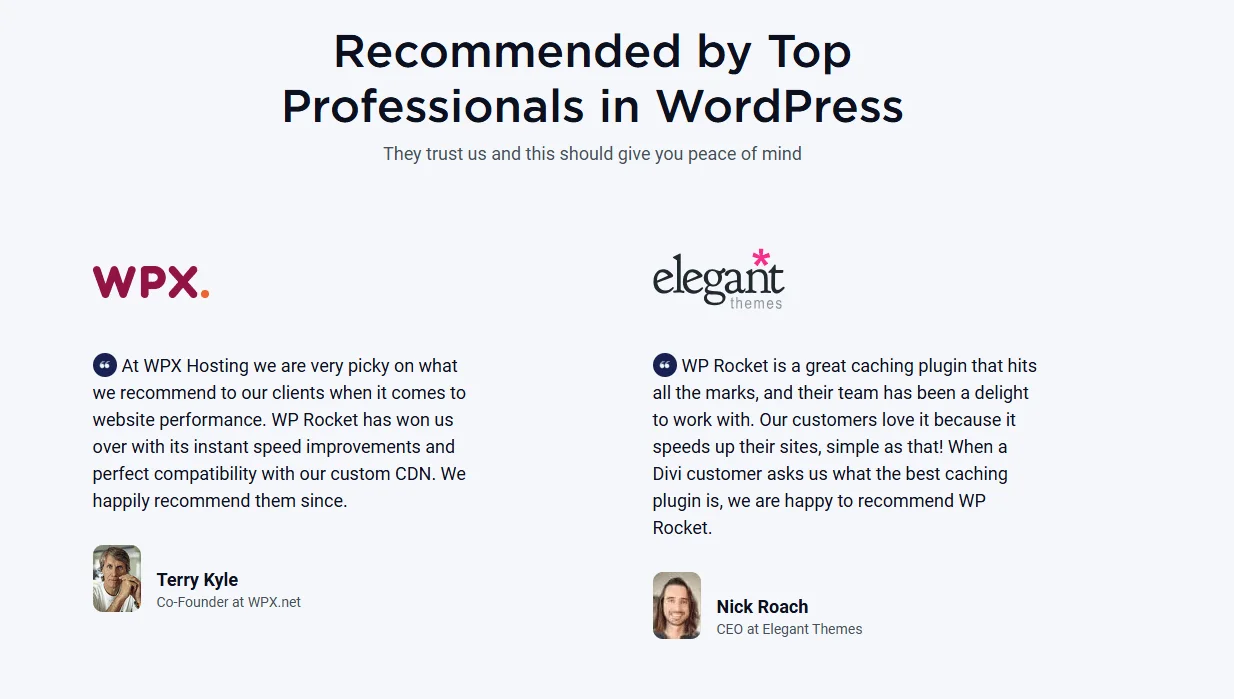
Testimonials usually serve as proof of your expertise; they show how you helped your clients.
You should provide genuine testimonials for tools and services you actually use. Most companies showcase testimonials on their websites and include a link to the customer’s site.
Businesses value authentic feedback. When you provide a testimonial, they often link back to your website to highlight your credibility.
Step-by-step process:
Step 1: Identify the tools or services your company genuinely uses and benefits from.
Step 2: Verify websites for opportunities to feature testimonials, case studies, or customer spotlights.
Step 3: Write a short, specific testimonial showing measurable results or clear benefits.
Step 4: Submit your testimonial and politely request a link back to your website.
Here is an email template you can use:
Subject: Customer testimonial for [TheirProduct]
Hi [Name/Team],
I’ve been using [TheirProduct] for [TimeFrame] and wanted to share how valuable it’s been for our team at [YourCompany].
Here’s a testimonial you’re welcome to use on your website or marketing materials:
“[Your Testimonial]”
— [Your Name], [Your Title]
[Your Company Name]
Happy to provide:
– Company logo
– Professional headshot
– Link to our website: [YourURL]
– Any additional details you need
Feel free to edit for length or clarity. Thanks for building such a valuable product!
Best,
[Your Name]
Why this works:
- It is a Win-win scenario because they get social proof, and you get a quality backlink
- It has a high success rate because you’re providing value
- It helps you build relationships for potential future collaborations
- The links are contextual and natural
Advanced variations:
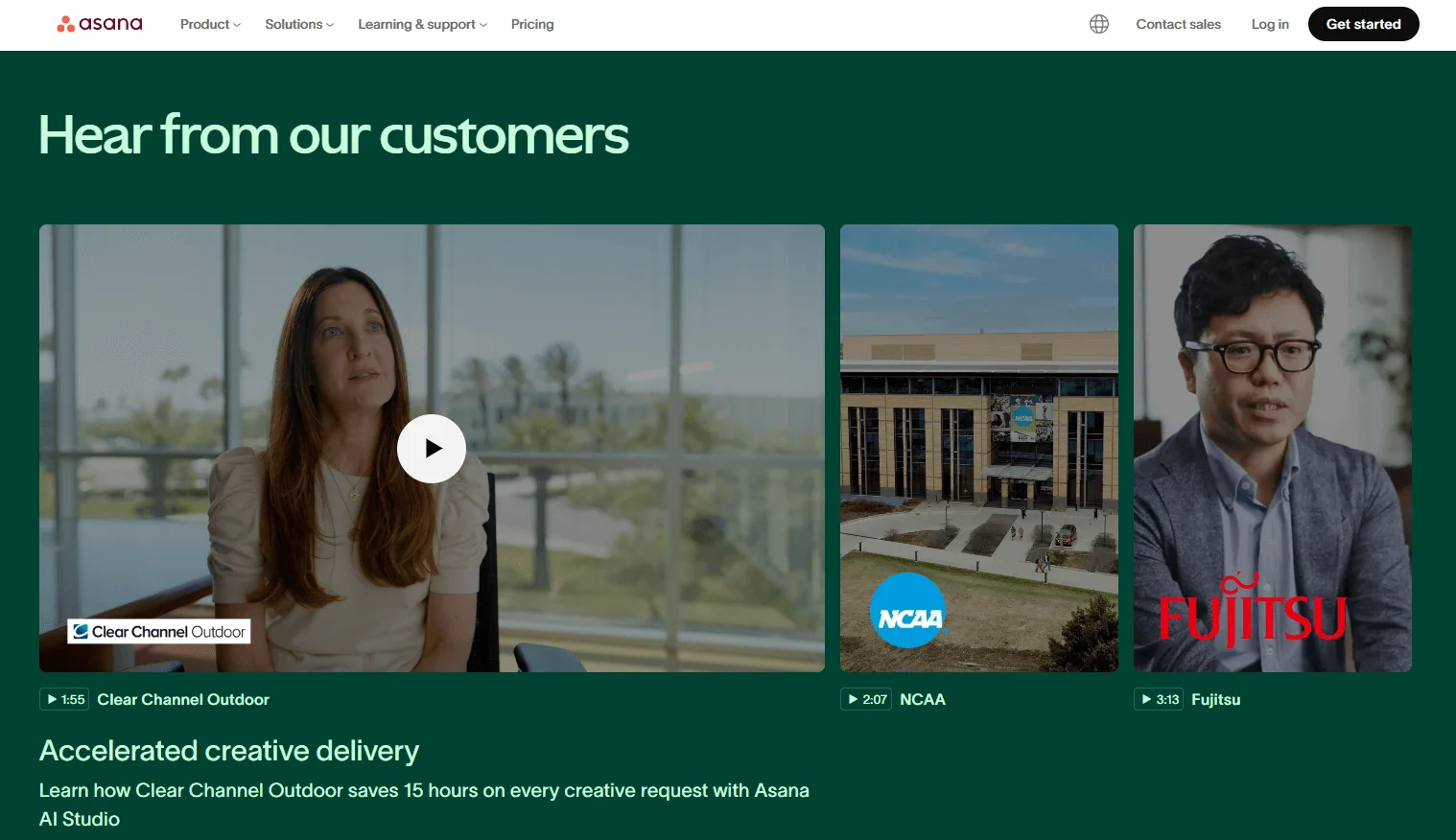
Video testimonials offer greater value; you can record a 30-60-second video. Many companies prioritize video testimonials and give them better placement (often on the homepage).
Expected results:
- In the 1st month, you can identify 15 tools, send 10 testimonials, and get 4-6 links.
- The success rate is 40-60%, much higher than that of cold outreach.
- You can usually get a quality of DA 40-70.
- It also strengthens vendor relationships.
10. Podcast Guest Appearances
Appearing as a guest on industry podcasts helps you gain visibility and reach a new audience.
Most podcasts publish show notes on their website and include a link to the guest’s company.
When you share insights, experiences, or expertise, you build trust and credibility while earning a relevant backlink.
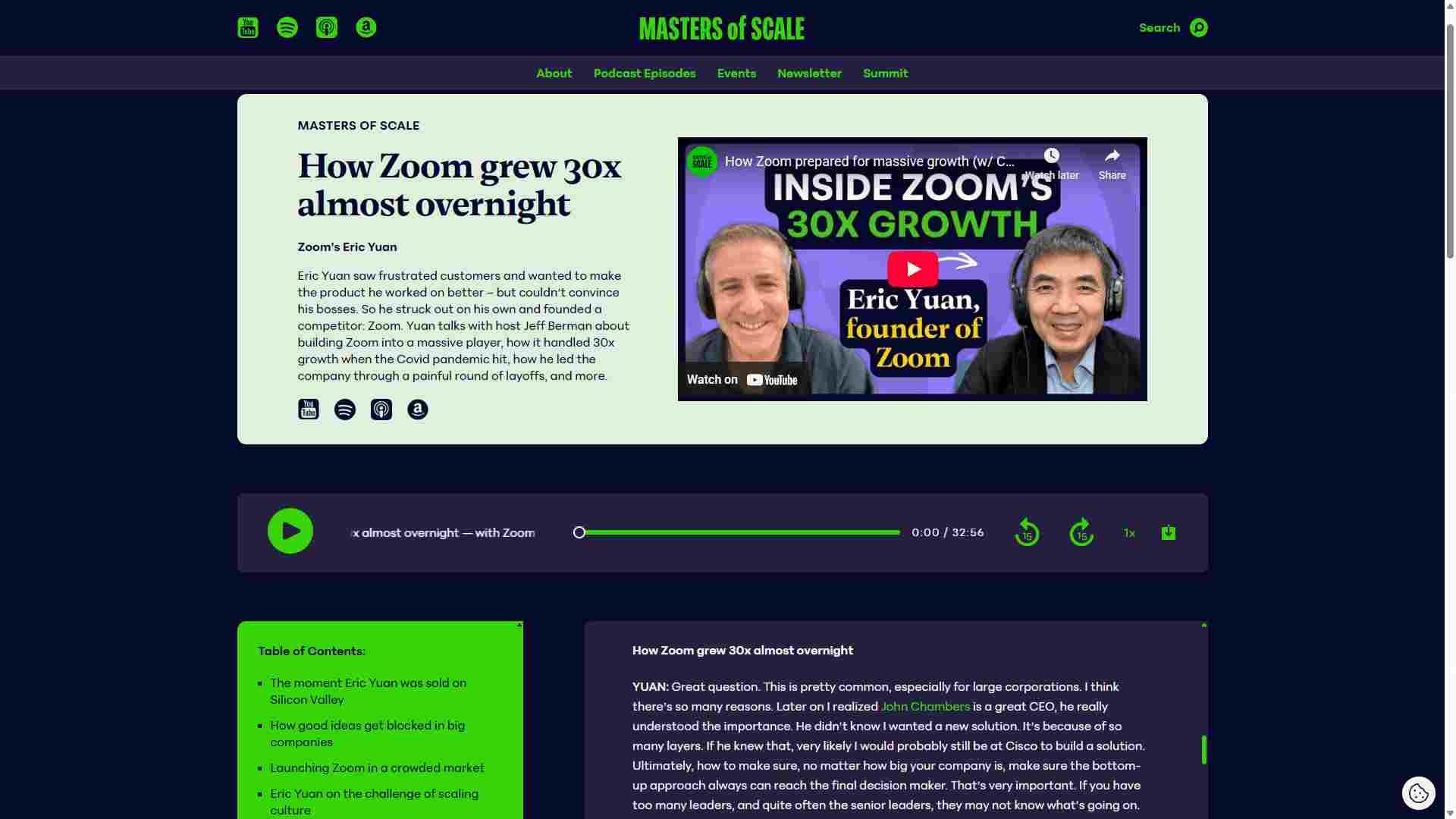
In the above image, the Masters of Scale podcast page features a guest episode with detailed show notes and a link.
Step-by-step process:
Step 1: Find relevant podcasts using a Google search
Start by finding relevant podcasts in your niche. Look for podcasts that:
- Interview experts in your field
- Target your ideal customer audience
- Have a consistent publishing schedule
- Include show notes with links
- Engaged audience with reviews and comments
Step 2: Pitch a clear topic idea that benefits their audience
You can use this pitch template to share your views and to provide them with something valuable.
Subject: Guest idea: [Specific Topic] for [Podcast Name]
Hi [Host Name],
I’ve been listening to [Podcast Name]—your episode with [Recent Guest] on [Topic] was particularly insightful. The point about [Specific Insight] really resonated.
I’d love to discuss [Specific Topic That Fits Their Show] on your podcast.
Quick background: I’m [Your Title] at [Your Company], where I [Relevant Credential/Achievement]. I’ve also [Additional Credibility – spoken at X, published at Y, etc.].
Here’s a recent interview I did if you want to see my style: [Link to Previous Interview/Content]
Would this be a good fit for your audience? Happy to work around your schedule.
Best,
[Your Name]
Step 3: Deliver valuable insights during the episode
When you are invited as a guest, mention something specific, like “We actually created a free calculator that helps with this. I can send you the link for the show notes.”
This ensures you get links to your priority pages, not just to your homepage, while keeping the link placement natural and relevant.
Why this works:
- It builds credibility and thought leadership
- It helps to earn links from trusted industry sites
- It helps you reach your targeted audience
- Helps to strengthen brand visibility
- Show notes help to create permanent backlink pages
- It strengthens relations with hosts
11. Niche Edits
Niche edits is a link building strategy where you add your link to an existing, relevant article rather than creating a new guest post.
Instead of publishing fresh content, you identify articles that rank in your industry and request a contextual link addition. The link is placed naturally within the content where it adds value.
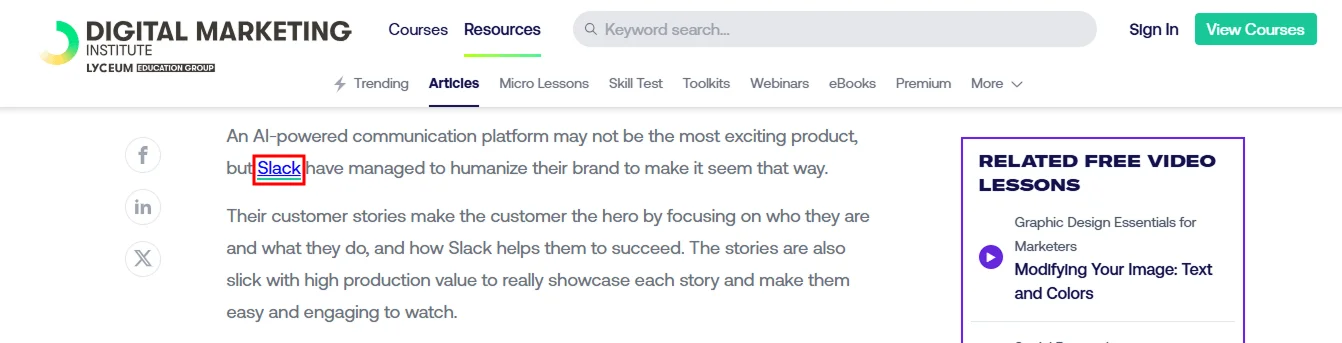
In the image below, you can see a digital marketing blog that mentions Slack, with the link naturally added to the relevant paragraph so it flows smoothly with the existing content.
Step-by-step process:
1. Identify the relevant articles in your industry that are already published and are ranking using search operators or using link building tools.
Let’s see how to use Ahrefs Content Explorer:
- Search for a relevant topic or keyword
- Filter by “Referring domains 20+.”
- Look for articles that are published 1-3 years ago (old enough to be updated, recent enough to be maintained)
2. Find the ideal placement by reviewing the content, and choose a section where your link strengthens the information, adds proof, or gives readers something practical. In short, identify a place where your content adds value for the readers.
3. Contact the site owner or editor with a short, personalized message. Clearly explain where your link fits and how it improves the article for their readers.
Subject: Quick suggestion for your [Topic] article
Hi [Author Name],
I was reading your article on [topic] and found it incredibly helpful
I noticed you mentioned [concept] but didn’t link to a resource that shows [specific example/data/tool].
I recently published a detailed guide that covers exactly this: [Your URL]
Would you consider adding it as a reference?
Best,
[Your Name]
Why this works:
This strategy works because:
- The page is already indexed and is trusted
- It has built trust and receives sufficient traffic
- It may already be ranking for the target keywords
- The link is placed within relevant content
- The link can pass a value immediately
- It’s a faster way than creating new content
12. The Skyscraper Technique
The Skyscraper Technique is a link building strategy that involves finding popular content in your industry that has earned many backlinks.
You create a better version and reach out to everyone who linked to the original, offering your superior resource.
Instead of starting from scratch, you improve something that’s already proven to attract links.
Step-by-step process:
Step 1: Find High-Performing Content in Ahrefs
Use Ahrefs Content Explorer to find high-performing content in your niche with many high-quality backlinks.
- In Ahrefs, go to the Content Explorer tab
- Search for broad topic keywords
- Filter out the results
- Sort by: “Referring domains” (high to low)
- Export top 20-30 results
Step 2: Understand Why It Works
Analyze why the content earns links, examine its structure and depth, review its data usage, and identify any missing or outdated information you can update.
Step 3: Create a Better Version
Create a more detailed, updated, clear, and well-structured version that provides insights, examples, and practical value.
Step 4: Identify Relevant Linking Websites
Identify websites that linked to the original content and review which sites are relevant and interested in improved resources.
Step 5: Reach Out
Reach out to those websites, explain your improved version, and highlight the added value. Politely suggest replacing or adding your link.
Use this outreach email:
Subject: Quick suggestion for your [Topic] article
Hi [FirstName],
I was researching [Topic] and came across your article “[Article Title]”, in which you mentioned [Original Resource Title].
That’s a great resource, I’ve referenced it myself in the past.
I wanted to reach out because I recently published an updated guide on this topic that might be an even better fit for your article:
[Your URL]
It includes:
– [Specific Improvement 1 – e.g., “2026 data and statistics”]
– [Specific Improvement 2 – e.g., “Step-by-step templates”]
– [Specific Improvement 4 – e.g., “Expert interviews”]
Would you consider linking to it in your article? I think your readers would find [Specific Benefit – e.g., “the updated templates particularly useful”].
Either way, thanks for putting together such a helpful resource. I’ll be sharing it with my network!
Best,
[Your Name]
Step 6: Promote Your Content
Boost your chances of getting links by promoting the same content through your own channels to increase visibility and trust.
- Share it on your social media channels to reach your audience and increase engagement.
- Email your subscriber list to drive early traffic and shares.
- Submit your content to relevant industry sites where your audience spends more time.
- Share it in LinkedIn groups related to your niche and discussion topic.
- Post in relevant Reddit communities where the discussion aligns with your topic.
Why this works:
People linked to the original content because it was valuable. Your improved version gives them an even better resource to link to. You’re not asking for a favor; you’re helping them provide better value to their audience.
Strategy Comparison: Quick Overview
| Strategy | Success Rate | Difficulty | Best For |
|---|---|---|---|
| Partner Links | 60-80% | Easy | Relationship-based opportunities |
| Unlinked Mentions | 30-50% | Easy | Easy link opportunities |
| HARO | 5-15% | Easy | High-authority links |
| Review Platforms | 90%+ | Easy | SaaS/Product companies |
| Broken Links | 15-25% | Medium | Niche relevance |
| Resource Pages | 10-20% | Medium | Industry visibility |
| Guest Posting | 10-20% | Medium | Authority and traffic |
| Testimonials | 40-60% | Medium | Relationship-based |
| Podcasts | 20-30% | Medium | Thought leadership |
| Niche Edits | 15-20% | Medium | Existing content |
| Digital PR | 5-10% | Hard | Brand authority |
| Skyscraper | 8-12% | Hard | Competitive keywords |
Measuring Results That Actually Matter
Not every metric delivers real business impact. Focus on the numbers that truly drive meaningful results, not the ones that simply look impressive.
Input Metrics (What You Control)
These measures your efforts and consistency. However, they don’t guarantee results; they can only influence them.
Outreach Activity to track weekly:
- Emails sent per week
- Follow-ups sent
- HARO responses submitted
- Guest posts pitched
These numbers show whether your outreach is working smoothly and consistently.
Output Metrics (Early Results)
These metrics show whether your efforts are delivering initial results.
Links Earned:
- Total new backlinks this month
- Unique linking domains (more important than total links)
- Average domain authority of linking sites
- Response rate (emails that got replies)
- Success rate (replies that became links)
These metrics indicate early signs of progress or movement in the right direction before rankings improve.
Impact Metrics (Business Results)
These metrics show how your link building efforts are driving real business results.
Rankings:
- Priority keyword positions (track weekly)
- Number of keywords in positions 1-3
- Number of keywords in positions 4-10
Traffic:
- Organic traffic to priority pages
- Total organic sessions
- New vs. returning organic visitors
Conversions:
- Demo requests from organic
- Trial signups from organic
- Form submissions from organic
- Conversion rate of organic traffic
Revenue:
- Qualified leads from organic search
- Closed deals from organic
- ROI: (Organic revenue / Link building cost)
In simple terms, you can say that inputs show your efforts made, outputs show the progress, and impact shows the revenue.
Common B2B Link Building Mistakes to Avoid
Even strong strategies can fail when mistakes are made. Below are the 5 common mistakes you should completely avoid.
1. Buying Links
Avoid buying links, as it violates Google’s rules and can lead to penalties. Google can detect paid link schemes, and the risk of losing rankings for months is not worth the short-term benefit.
Buying links mostly involves paying directly for a backlink, exchanging money for link placements, publishing sponsored posts without disclosing sponsorship, or using the link market to acquire links.
Solution:
Earn links by creating valuable content, building relationships, and sharing your expertise in ways that genuinely help readers.
2. Chasing Volume Over Quality
Many teams try to collect as many backlinks as possible, even if they come from irrelevant and low-quality sites.
Solution:
A few trusted, industry-relevant links that are far more valuable than dozens of weak ones. Prioritize quality over quantity to achieve stronger rankings and better business results.
3. Generic Mass Emails
Using generic mass email templates can snatch your chances of being selected. Many people use the same template for each outreach just by swapping the name. Doing this lowers the response rate by 1-3%.
Solution:
Personalize every outreach email you send to stand out from the crowd. Reference the recipient’s recent work, an industry trend, or a mutual connection.
Here are the response rates while using generic and personalized emails.
The numbers:
- Generic mass emails get 1-3% response
- Personalized emails get 15-30% response
4. Ignoring Existing Relationships
Many businesses focus on cold outreach instead of making the most of their existing relationships.
Solution:
Start with the relationships you already have before moving to cold outreach.
List every business relationship (partners, vendors, customers, associations). Are you listed on their websites? If not, ask. The success rate is 50%+.
5. Expecting Instant Results
Link building is a steady and consistent process, so it takes time. Rankings don’t change overnight. Quitting after seeing no movement in Month 1 is a common mistake.
Solution:
Set realistic expectations. Build sustainable processes. Track your early wins, links earned, and response rates before expecting big shifts in rankings or traffic.
Final Thoughts on B2B Link Building
B2B link building is not just about improving rankings. It’s about influencing buying decisions.
Business buyers research carefully. They look for trusted sources, expert opinions, and proof before making a decision. When respected industry websites mention and link to you, it strengthens your credibility long before a sales conversation begins.
Strategic links build authority, reduce doubt, and support revenue growth. Focus on relevance and value, and your link-building efforts will support real business outcomes, not just search visibility.
Want to build authority in your industry and attract high-intent B2B buyers?
The right link-building strategy can position your company where decision-makers are already looking. If you’re ready to turn links into real growth opportunities, let’s map out your next steps.
What pages should I build links to?
You should prioritize revenue-driving pages, such as pricing, product, and comparison pages, along with strong educational content.
Can I do this without expensive tools like Ahrefs?
Yes, you can start with free tools like Google Search Console and basic competitor research. Paid tools help you scale faster, but you don’t need them to get started.
How long will this actually take me each week?
It all depends on your path:
- Bootstrap can take 2-3 hours/week
- Growth stage can take 5-8 hours/week
- For scaling your business, 10+ hours/week, or you can hire help
Which tactic should I start with?
You can start with wins to build momentum:
- Partner/relationship links in Week 1
- Unlinked brand mentions in Week 1-2
- HARO responses are ongoing from Week 1
These require minimal tools and have the highest success rates.
What if nobody responds to my emails?
You can check your:
- Open rate (use email tracking). If it is <30%, your subject lines need work.
- Response rate (if opens are good but no replies, your pitch needs work).
- Relevance (are you contacting actually relevant sites?).
Start with 10 emails, measure results, iterate based on data.
How do I find email addresses?
You can try this sequence:
- Check the site’s “Contact” page
- Use Hunter.io, it has a free trial with $25/month
- LinkedIn search for the person
- Try common formats such as firstname@domain.com