A backlink is a link from another website to a page on yours. When a blog, news site or industry publication links to you, Google reads that link like a friend vouching for you: proof that your page is worth referencing. Backlinks from trusted, relevant sites are one of the clearest signals that help a page rank.
Backlinks remain a core ranking signal in Google’s algorithm, and sites with strong backlink profiles also show up more often as sources in AI search tools like ChatGPT Search, Perplexity and Google AI Overviews.
Google’s original PageRank system was built on one simple principle: not all backlinks are equal. A link from an authoritative site like Forbes or Wikipedia passes more ranking value than a link from a low-quality blog.
What You’ll Learn:
- What backlinks are and how they work in reality.
- Why link equity is more important than link volume.
- The difference between dofollow, nofollow, and other link types.
- How backlinks influence AI search visibility in 2026.
- Practical ways to earn high-quality links.
What Is a Backlink?
A backlink, also called an inbound link, is a clickable link on someone else’s website that points to your page. The site that hosts the link is the “referring domain”, and the page receiving it is yours.
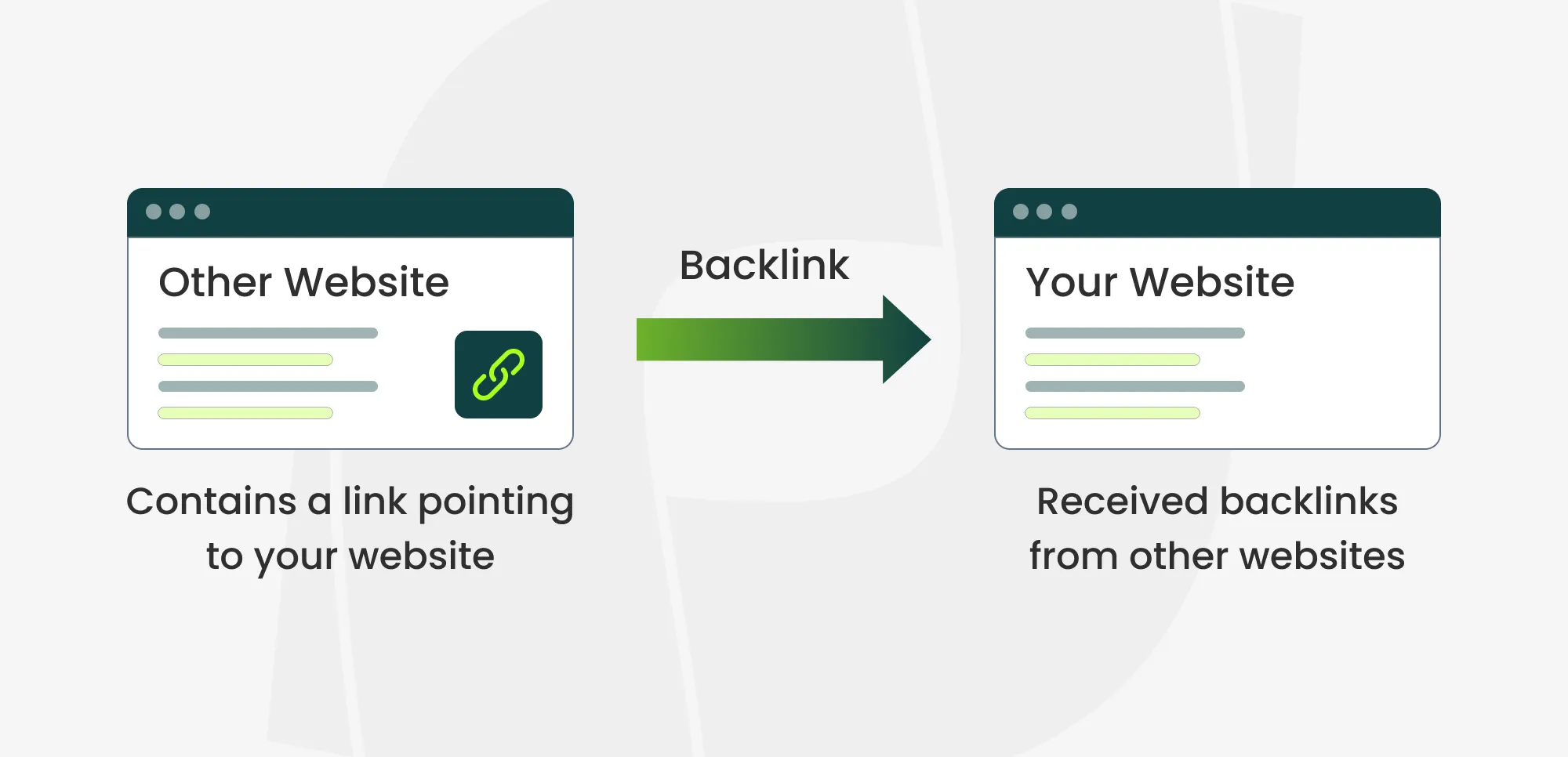
Search engines treat each backlink as a trust signal. The more quality links you earn, the more authority your site gets. A Backlinko analysis of 11.8 million search results found that the top result on Google has 3.8x more backlinks than the pages ranking in two through ten.
In AI search, backlinks do a second job: they signal credibility to language models that decide which sources to cite.
How Backlinks Actually Work
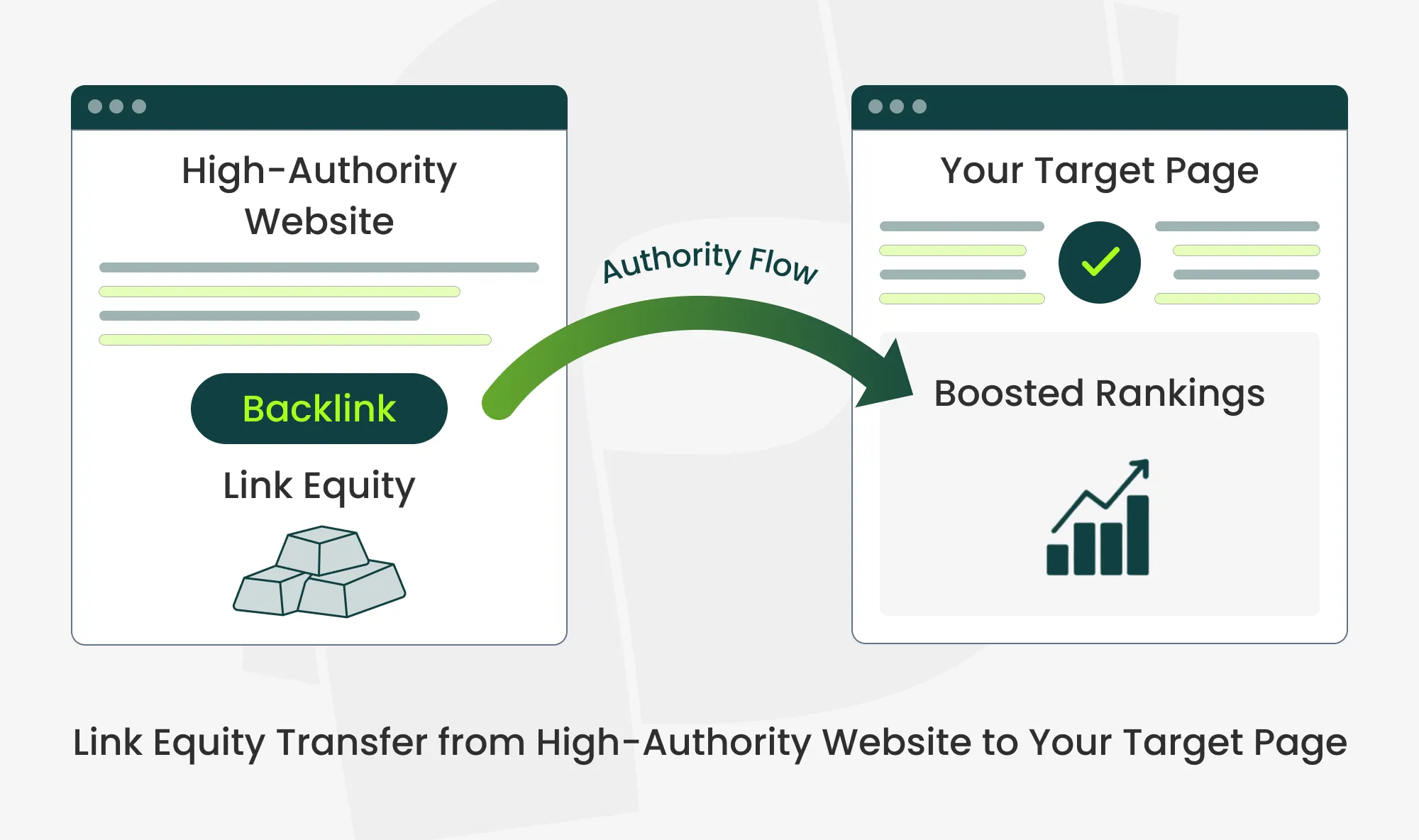
Backlinks work because the web is a network of recommendations. When site A links to site B, it tells crawlers, “this page has something worth referencing.” Search engine crawlers follow those links to discover pages, map how sites relate and spread authority across the web.
When your page earns a backlink, four things happen in order:
- A crawler discovers the link on the referring page.
- It follows the link to your page and indexes the connection.
- The search engine evaluates the referring site’s authority, relevance, and trust.
- A share of that site’s authority flows to your page through the link, strengthening your page’s ability to rank.
Every link doesn’t carry the same weight. One link from a respected industry publication moves rankings more than dozens of links from unknown blogs.
Google’s John Mueller has said that one strong link from a major site can be worth more than hundreds of weaker ones. Check Google’s Search Central documentation for the official guidance on links.
That’s why the goal shifted from “get as many links as possible” to “earn the right ones.”
Why do backlinks matter for SEO?
Backlinks are important because search engines use them to evaluate trust and authority. Pages with strong backlink profiles consistently outperform pages without them in organic search results.
Here are three core reasons your site needs quality backlinks:
They Improve Your Rankings
The relationship between backlinks and Google rankings has been well-documented. An Ahrefs study of over a billion pages shows that 66.31% of all web pages have zero referring domains, and most of those pages receive no organic traffic.
Pages that keep earning links from new, unique websites rank higher over time.
They Drive Referral Traffic
A backlink also sends people to your site, not only ranking value. Someone reads an article they trust, sees your site mentioned with a link and clicks.
As visitors already know a little about you, they’re more likely to buy, sign up, or take action than someone who visits randomly.
They Accelerate Indexing
Google doesn’t browse the internet by hand; it uses automated bots called crawlers that follow links from page to page. When other sites link to yours, those bots find your pages faster. With no links pointing in, Google may take weeks to find a new page on its own.
For a new website, a few good links from established sites get pages discovered far sooner than waiting.
Backlinks and AI Search: What Changed in 2026
AI search tools like Google AI Overviews, ChatGPT, Perplexity, and Gemini don’t just show a list of links. They generate answers and cite sources.
Whether your content is cited as a source depends on how trustworthy it appears online. Backlinks play a major role in this, along with factors such as relevance, topical understanding, and brand signals.
A Semrush study of 1,000 domains reports that domains with higher backlink authority earn more mentions in AI-generated answers.
Visibility gains show up once a site crosses a minimum authority level. A handful of weak links won’t move the needle, so build a solid foundation first.
Brand mentions matter just as much. An Ahrefs study of 75,000 brands found that branded web mentions correlated more strongly with AI Overview visibility than backlinks alone.
Links still matter, but they work best alongside brand recognition, and that combination is what AI systems reward.
Relevance beats volume. Links from related sites raise your odds of AI citations; piles of links from unrelated sites don’t.
What counts isn’t how many links you have. It’s where they come from.
Pro Tip:
AI platforms split one question into sub-questions and pull answers from separate sections of a page. So each section should answer one idea clearly on its own.
Types of Backlinks You Should Know
Links aren’t created equal. Knowing the various types of backlinks tells you which to prioritize and which to ignore.
| Attributes |
What it Does |
SEO Impact |
|---|---|---|
| Dofollow |
These links pass authority signal to the targeted pages. | Strong. This is the standard and most valuable link type. |
| Nofollow (rel=”nofollow”) | Tells search engines not to count the link as an endorsement. | Moderate. Google has treated nofollow as a “hint” rather than a rule since 2019. |
| Sponsored (rel=”sponsored”) | Marks paid or sponsored placements. | Low direct SEO value, but it drives traffic and brand awareness. |
| UGC (rel=”ugc”) | Tags user-generated content such as comments and forum posts. | Minimal SEO value; useful for community engagement. |
Beyond these attributes, where and why a link was placed matters even more.
Editorial links are placed in an article because the writer found your content worth citing, and they carry the most weight. A journalist linking to your research inside a relevant paragraph sends a far stronger signal than a link buried in a sidebar or footer.
Guest post links sit in a gray area. Contributing real expertise to a reputable publication earns a valuable link; a guest post written only to plant a link on a low-quality site gets discounted fast.
Directory and profile links won’t move rankings in competitive markets, but they still help local businesses with consistent listings. Treat them as a baseline, not a strategy.
For the order to build them in, see how small businesses earn links.
What Makes a Backlink High Quality?
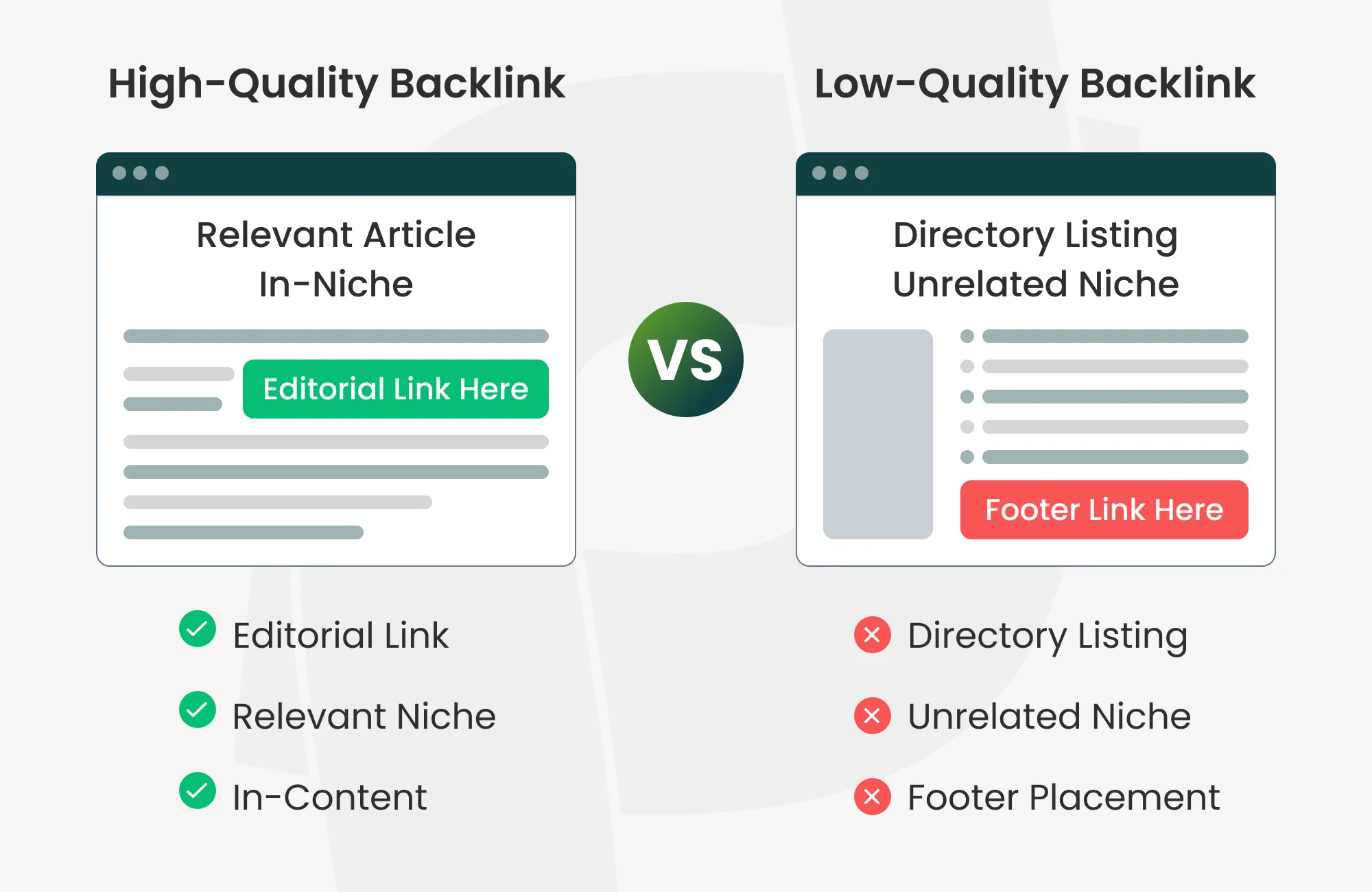
Five factors separate a backlink that builds real authority from one that does nothing or, worse, looks like spam.
Relevance
A link from a site in your industry carries more weight than one from an irrelevant domain, even if that irrelevant site has a higher authority score.
A productivity blog linking to your project management software is worth more than a recipe site linking to you. Google weighs how closely the linking site matches your content, not only its authority.
Authority of the Referring Domain
Links from well-known and trusted publications carry more weight, such as major media outlets, university research papers, and respected industry platforms.
Domains with strong backlink profiles also earn more AI-generated citations, according to the same Semrush study on AI visibility.
Placement on the Page
Links placed inside the main body content get more weight than links in footers, sidebars or author bios.
That’s why contextual links, placed inside text about the same subject, are the most valuable backlinks you can earn.
Anchor Text
Anchor text, the clickable words of a link, tells search engines what the linked page is about. A healthy mix includes brand names, partial keywords and generic phrases.
Repeating the same exact keyword across many links looks manipulative and invites penalties.
Unique Referring Domains
A referring domain is a separate website that links to you, and it’s what people usually mean by “backlink domain.” Ten links from ten different websites do more for your authority than fifty links from one site, because each domain is a separate endorsement.
The Backlinko study cited earlier found that the number of unique referring domains correlated more strongly with rankings than the raw backlink count. For a deeper look, compare referring domains vs backlinks.
How to Check Your Backlink Profile
You can’t improve what you don’t measure. Enter your domain in link management software like Ahrefs, Semrush or Moz, then check these four things.
Total Referring Domains
Count referring domains, not total backlinks. One site linking to you 50 times counts as one referring domain.
The number of referring domains shows you how broad your backlink profile is.
Authority Distribution
Check what share of your links comes from quality sites versus low-authority ones. A healthy profile is mostly mid-authority links with a smaller set of top-tier editorial placements.
Anchor Text Breakdown
If more than 10 to 15% of your anchors use the same keyword phrase, treat it as a red flag.
Natural profiles mix branded, generic and descriptive anchors.
Toxic or Spammy Links
Links from link farms, irrelevant foreign directories or sites with no real content can hurt you. Most SEO tools flag potentially harmful links, and our guide to toxic backlinks and when to worry explains which flags deserve action.
Google’s disavow tool exists as a last resort. Spend your energy earning better links, not obsessing over bad ones.
How to Earn Backlinks That Actually Help
Knowing what makes a good backlink is one thing; earning one is another. Below are four reliable methods, and the 12 strategies in our deep dive cover the rest.
Create Content Worth Referencing
Linkable content gets skipped more than any other method. Original research, proprietary data and useful tools attract links without outreach, because editors need something to cite. One data-backed study earns more links than 20 generic blog posts.
Add something no one else has: survey results, industry benchmarks, calculators, templates or original analysis. These “linkable assets” keep gaining links for months and years.
Earn Editorial Mentions Through Outreach
Outreach means pitching journalists, bloggers and editors who cover your industry when you have research or a perspective their readers need. Relevance decides results, so a short, targeted pitch beats a generic template. The full process, from prospecting to follow-ups, lives in our guide to SEO outreach that builds links.
Bulk emailing hundreds of unrelated sites doesn’t work. A pitch to 20 well-matched publications outperforms a template sent to 500.
Fix Broken Links on Relevant Sites
Find pages in your niche that link to resources that no longer exist (404 errors). Create or update your own page on the same topic. Then message the site owner about the broken link and suggest your page as the replacement.
Broken link building works because you’re solving the site owner’s problem, not only asking for a favor. Success rates for reclaiming broken links vary widely depending on your niche and outreach quality, and the links you earn are relevant and editorial.
Contribute Expert Commentary
Platforms like HARO, Qwoted and Help a B2B Writer connect journalists with expert sources. Answer queries in your area with clear, specific, quotable responses. Published answers usually include a backlink to your site.
Generic answers get ignored. Journalists spot filler instantly, so give a real insight.
Common Backlink Mistakes to Avoid
Four mistakes waste the most link building effort.
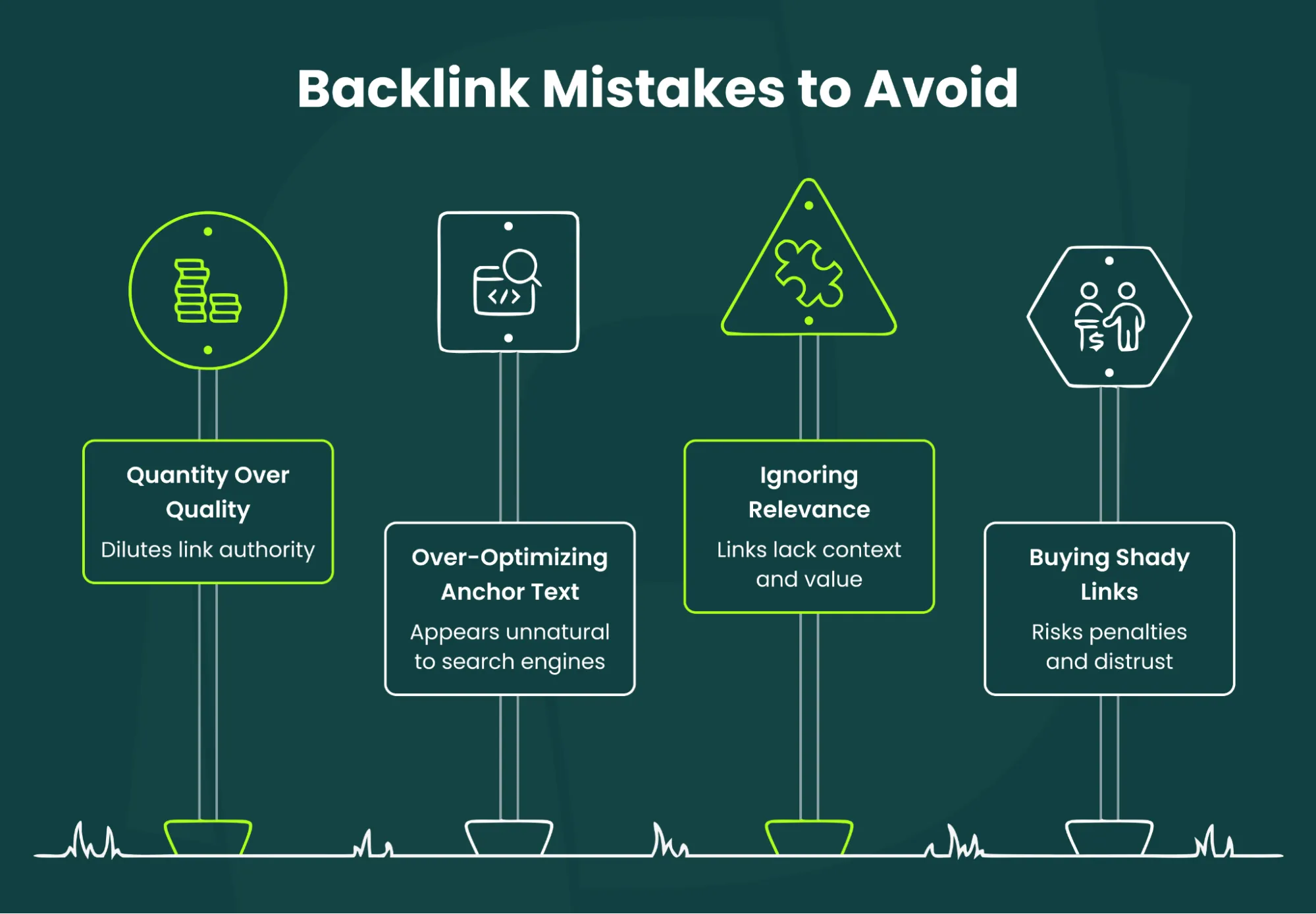
Chasing Quantity Over Quality
Fifty links from random, irrelevant sites won’t help. Five links from respected, relevant publications will.
Google weighs link quality, and AI systems are even pickier about which sources they trust.
Over-optimizing Anchor Text
If every backlink pointing to your pages uses the same keyword phrase as anchor text, search engines see it as manipulation.
A natural backlink profile mixes branded names, partial-match keywords and generic phrases like “this resource.”
Ignoring Relevance
A DR 80 link (Domain Rating, Ahrefs’ 0 to 100 score for backlink strength) from an unrelated site sends a weaker signal than a DR 40 link from a relevant niche publication.
Context beats volume.
Buying Links From Shady Sources
Google’s link spam policies target paid link schemes. The risk is real: a manual action can wipe out your traffic overnight.
Invest in earning links through content and relationships instead.
Build Links That Compound Over Time
Backlinks aren’t a one-time project.
Sites that grow steadily treat link building as an investment: they publish content that earns links, nurture relationships with editors and target gaps where competitors already have authority.
This week, pick one page on your site and ask what would make another writer want to cite it.
Over time, your backlink profile becomes an advantage competitors struggle to copy.
Want to understand how backlinks can actually grow your rankings?
Get a clear, simple strategy to start building high-quality links that drive real traffic.
Frequently asked questions
How many backlinks do I need to rank on Google?
There’s no fixed number; it depends on your industry’s competition, your domain’s authority and the quality of your content. In low-competition niches, a few strong editorial links push a page to page one.
Competitive terms like “project management software” or “best CRM” need far more referring domains from authoritative sites.
Are nofollow backlinks worthless?
No. Since 2019, Google has treated nofollow as a hint, so nofollow links still influence rankings in some cases. They also drive referral traffic and visibility, and a nofollow link from a major publication still puts your brand in front of a large audience.
Do backlinks still matter in 2026?
Yes. Backlinks remain a core ranking signal in Google’s algorithm and now influence AI search visibility too. What changed is the emphasis: quality, relevance and editorial context matter far more than raw link count.
What’s the difference between a backlink and an internal link?
A backlink comes from an external website to your site, while an internal link connects two pages on the same site. Both matter for SEO, but they do different jobs. Backlinks build outside authority; internal links help search engines understand your structure and spread authority across your own pages.
Can bad backlinks hurt my site?
Yes. Links from spam sites, link farms or unrelated domains can lead to algorithmic devaluation or manual actions. If you spot a sudden wave of suspicious links, such as hundreds from gambling or pharma sites you’ve never worked with, monitor it in Google Search Console. In extreme cases, use Google’s disavow tool.
How long does it take for backlinks to affect rankings?
Backlinks usually take a few weeks to several months to affect rankings. Google has to crawl the linking page, evaluate the link’s context and recalculate your page’s authority. Links from frequently crawled, high-authority sites register faster than links on rarely updated pages.
What is a backlink domain?
A backlink domain, or referring domain, is the website that hosts a link pointing to you. SEO tools count each domain once, no matter how many links it gives you. Growing the number of unique, relevant referring domains is a stronger goal than growing total backlinks.