Link Building Service for Plumbers to Grow Local Visibility
Outreach Desk’s link building service for plumbers earns backlinks from the four kinds of sites that link to plumbing companies: association directories, trade press, suppliers, and local sources. Warranty networks and property managers send you jobs, but they never link to your site.

Association and directory listings
Plumbing trade and supplier placements
Reporting split by source and market

4.9/5
Trusted by agencies
and brands worldwide.
Avg DR
40–75
Campaign Dashboard
DOMAIN RATING
+15 points
ORGANIC TRAFFIC
4,100 → 21,500
PAGE 1 KEYWORDS
+29 keywords
PLACEMENTS
58 unique domains

Calls From Search
+62% in 6 months





Service Overview
The Channels That Send You Work and the Ones That Link to You
Most of your plumbing work comes through somebody else’s channel. Almost none of those channels link to your website.
Home warranty networks and property managers send plumbers out every day. That’s good revenue, but it isn’t link building. Old Republic Home Protection describes its service provider program as a way to get more business and cut advertising costs. They pay for jobs, but dispatch networks don’t publish contractor listings homeowners can search, and search engines can follow.
Four kinds of sites do link to plumbers: association directories, plumbing trade press, local business and community sites, and suppliers or neighboring trades. The PHCC (Plumbing-Heating-Cooling Contractors) Association’s Find a Contractor page shows how it works. Anyone can enter a zip code and see nearby members, closest first, no login needed. You can’t buy your way in. If you qualify, the listing follows.
A backlink is one site vouching for another, like a supply house recommending a crew they’ve stocked for years. So if someone offers a home warranty backlink, they’re selling something that doesn’t exist.
Three things define plumbing link building done right:

Channel Separation Stated Up Front
Build relationships with people who can publish a link, separate from those who only send work.

Qualified Listings and Trade Coverage
You earn placements on member directories and in the plumbing press through standing rather than buying them month to month.

Local and Supplier Authority Per Market
You build community, press, and supply-chain links city by city, so multi-market operations can see where authority lands.
Buying Links
Can you buy backlinks for plumbers?
Paying for the work behind plumbing backlinks is fine, but paying a site for a ranking link breaks Google’s spam policies.

What Your Money Pays For
Your budget covers research, outreach, and writing the piece an editor reviews. The editor still decides whether it runs and where your link sits.

What Google Calls Link Spam
Google’s spam policies name buying or selling links that pass ranking credit. A paid placement must be tagged sponsored or nofollow, and then it passes no ranking credit.

Offers to Walk Away From
Bulk plumber link packages, guaranteed DR jumps, and private blog network links are sold as shortcuts. The risk lands on your domain, not the seller’s.

One Question That Sorts Sellers
Ask to see the exact page your link will sit on before you pay. If a seller can’t show it, there’s no editor behind it.
How We Work
How Your Plumbing Link Building Campaign Works
A plumbing campaign runs six steps, from a channel audit through placement, and we report everything that lands back to you.
Your campaign starts by sorting what you already have into two piles.
One pile is the relationships that send you work: warranty networks, property managers, the adjusters who call you after a burst pipe. The other is the ones that could publish a link. A supply house, a general contractor, a chamber, a trade body you already belong to.
Separating the two changes what the campaign aims at. If you’ve bought links before, your strategist also reviews what already points to your site, so nothing new gets built on a risky base.
Next, your strategist decides which pages need authority. For most plumbing companies, that’s the service pages and the city pages.
A water heater page and a sewer line page compete for different searches and need different sources. Some of the pages worth linking to don’t exist yet, and that’s often where the work starts.
The listings worth having are the ones you qualify for. Association membership is the clearest example. It opens a directory entry the public can search, and no competitor can pay their way past it.
Your strategist checks which bodies you already belong to, which ones your work would qualify you for, and what each one actually publishes. Your team handles open directories that take anyone with a credit card separately, and honestly. Some are worth having as a floor. None of them is authority, and your report will say which is which.
Trade press and suppliers both need a reason to publish you, and the reason is the work itself. The plumbing trade press runs bylined pieces from people who do the work. That means readers engage with a story about a job you solved, while a company profile often fails to attract the same attention.
Suppliers and adjacent trades deserve their own mention. Distributors, general contractors, restoration firms, and property managers already talk publicly about crews they trust. A mention on a supply house site is a link most plumbing companies never think to ask for.
Every market you work in has its own set of sites willing to link. Chambers, neighborhood associations, sponsorships, local press, and community groups all count, and they behave the same way in plumbing as in any other local trade.
These land faster than association and trade work, which is why they usually produce the first movement you see. If you work more than one metro, this runs separately in each. A sponsorship in one county does nothing for a crew ninety minutes away.
You see what landed, where it landed, and which of the four source types produced it. Results come split by metro when you work more than one. We also report the pitches that editors decline. The trade press turns down most of what it receives, and a report showing only wins tells you nothing about where the effort went.

Expected Results
Outcomes Plumbing Link Building Service Delivers
When your membership and your local standing turn into listings and coverage, the authority builds on a site you own.
Ranking for the Searches That End in a Callout
“Plumber near me” rankings depend largely on local signals, including links from relevant local organizations.
Chambers, sponsorships, community groups, and regional press all feed this. City terms usually move first, because they face the least competition of anything you’re chasing.
The result: your company competes on searches that produce phone calls, rather than broad terms that never fill a schedule.

A Listing Someone Reaches Without Being Sent
Your memberships and credentials already exist. What they usually aren’t is visible anywhere a homeowner looks before choosing who to call.
A searchable member listing and a trade byline put that standing in front of someone comparing three companies. A certificate in the office does not.
The result: the standing you already have starts working during the search, rather than just during the sales call.

Links From the People Who Already Vouch for You
Distributors, general contractors, and restoration firms already work with plumbers they trust, and their sites already mention companies like yours.
Once you have published commentary and a member listing, those mentions get easier to ask for. The relationship is already there, so it’s a conversation rather than a cold pitch.
The result: a base of supplier and trade links that keeps working after a campaign ends, because you earned those links rather than renting them.

The One Channel Nobody Can Switch Off
A dispatch network can drop you, change its fee, or route your calls elsewhere next quarter, and you’d have no say in it.
Placements on directories, publications, and local sites point to a domain you own. They keep working for you whether or not any single relationship survives.
The result: the visibility you build stays yours, which is the difference between an asset and an arrangement.

Client Success Stories
What Clients Say About Our Plumbing Link Building Service
Reviews from plumbing companies that turned memberships and local standing into search visibility.

4.9/5 

5/5 
Rating on Google



We had plenty of industry relationships, but almost none of them were helping our website. Outreach Desk helped us turn those existing connections into real placements, from supplier mentions to association listings. Market-by-market reporting also made it easy to see what was happening in each service area. It felt like Outreach Desk built the link building campaign around how our plumbing business actually works.

Owner
Residential Plumbing Company

We were tired of getting vague reports about ‘industry links’ without knowing where those links came from. Outreach Desk gave us specific sources and showed every placement. They focused heavily on our drain and sewer pages instead of pushing everything to our homepage. We started seeing more visibility around our local service searches, which is exactly where we wanted the campaign to work.
Marketing Manager
Drain & Sewer Company

Our biggest challenge was covering multiple markets without treating every city the same. Outreach Desk separated our campaign by metro and built local, trade, and supplier links for each market. We could see which sources were producing and where. The process felt much more transparent than other link building services we had tried, and the placements stayed on sites we could actually see value in long term.
Owner
Multi-Market Plumbing Company
Service Framework
Investment, Timeline, and Deliverables
You’re buying individual placements, each one a link a real editor or directory agreed to publish. Your business earns those placements through its existing standing rather than renting them by the month.

Markets and Service Area
One metro needs a different scope than a company covering four across two states.

Work Mix
Residential service, drain and sewer, commercial, and new construction pull from different sources and different publications.

Existing Standing
Companies already holding association membership or long supplier relationships start from further ahead.

Campaign Duration
Most companies see ranking movement within 3 to 6 months, with placements compounding well beyond 12 months.
Directional pricing
Plumbing link building pricing depends on scope. Every campaign is scoped to your markets, work mix, and existing standing, so you pay for what your business needs, rather than a generic package. Every placement sits on a site with 1,000+ monthly visitors from search. Sites are also scored 40 to 95 on Domain Rating, a 0 to 100 strength score from the tool Ahrefs. You get a detailed proposal after your strategy call, scoped to your markets and your work mix.
What You Get
Every Placement, Every Source, Every Market Reported
You see which of the four source types is producing results, and which market it’s producing them for.
Live Placement Reporting
Every placement arrives as a link you can open, with its source and the page it points to.
Source Type Tracking
You see whether directories, trade press, local work, or suppliers are landing, so you can shift effort toward what’s producing.
Per-Market Reporting
Results come split by metro, because a sponsorship in one county does little for a crew working ninety minutes away.
Channel Notes
Each relationship is marked for whether it can publish a link at all, so nothing gets counted twice as work and as authority.
Our Approach
A Channel-First Approach to Plumbing Authority
You get placements from sources that publish a link, named before the work starts, reported by source and by market.
| Factor | GENERIC LOCAL SEO AGENCIES |
 |
|---|---|---|
| Channel Honesty | Dispatch networks and vendor lists counted toward "link building". |
Work channels and link channels separated first, because only one of them publishes a link. |
| Source Selection | "Industry sites" promised without naming a single one. |
Named directories, publications, suppliers, and local sources, given to you before work starts. |
| Memberships | Treated as a badge for the website footer. | Mapped first, because membership decides which directories are open to you. |
| Link Types | Bulk directories, profile links, and free blog pages sold as diversification. |
None of those. Anyone with the same budget has them by Friday. |
| Pricing | A package price for a link count, with no sources named. | Scoped per placement, and every site clears the same bar: 1,000+ monthly search visitors and DR 40 to 95. |
Who We Help
Plumbing Businesses We Support
Whatever you fix and however many markets you cover, we build the authority that matches how customers actually choose a plumber.

Residential Service and Repair
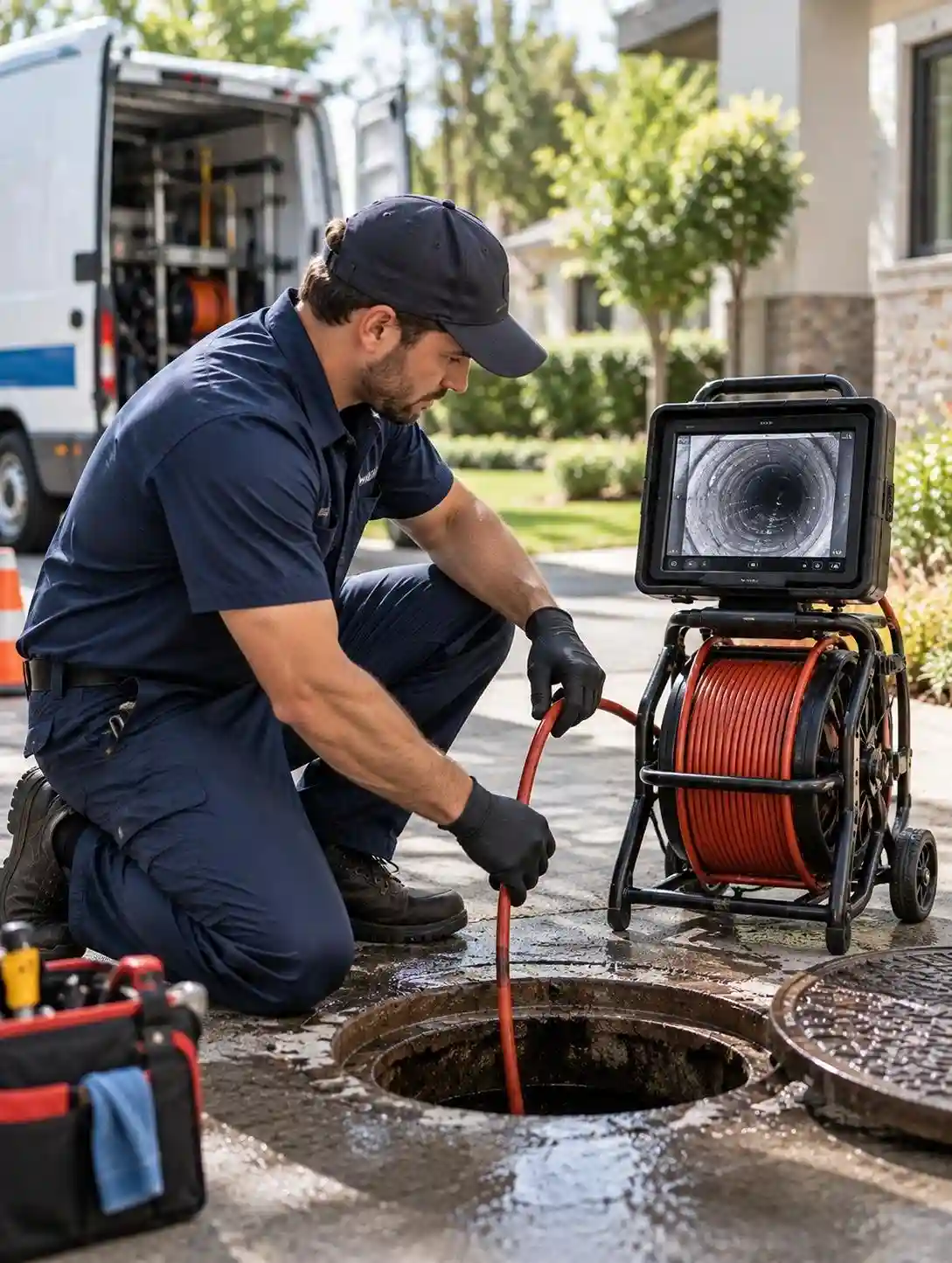
Drain and Sewer Specialists
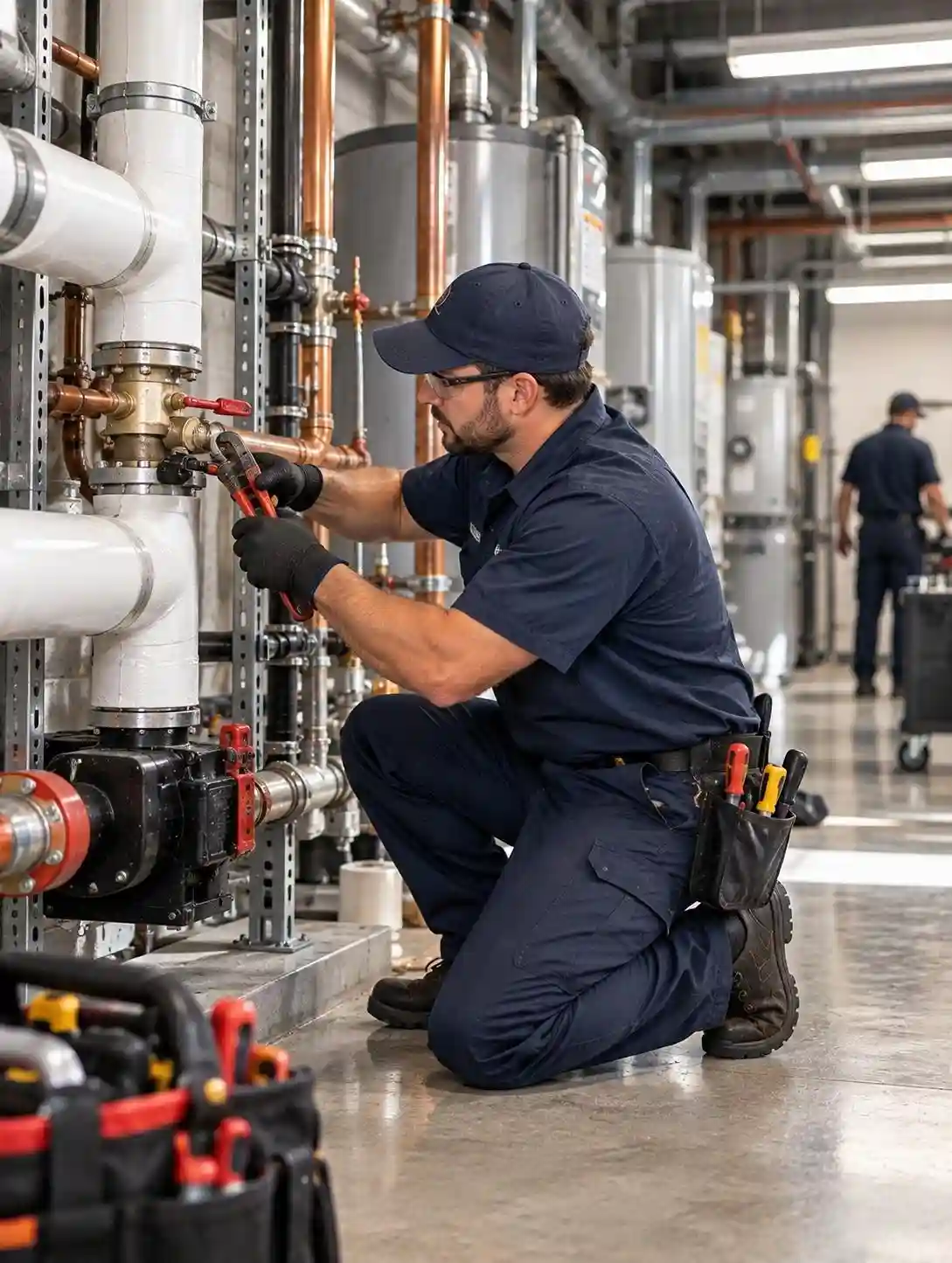
Commercial and Multi-Family Plumbing
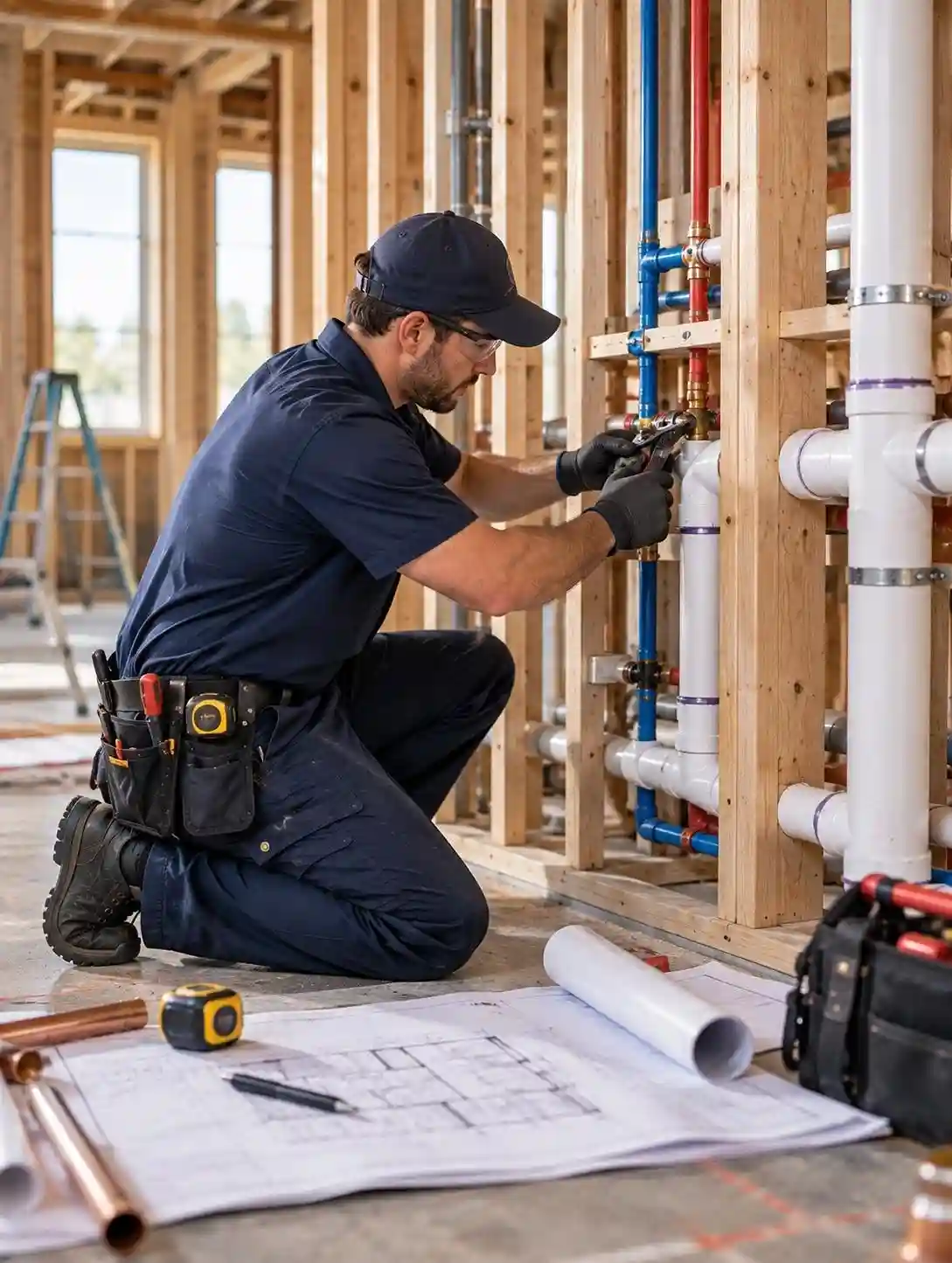
New Construction and Remodel

Water Damage and Restoration Plumbing
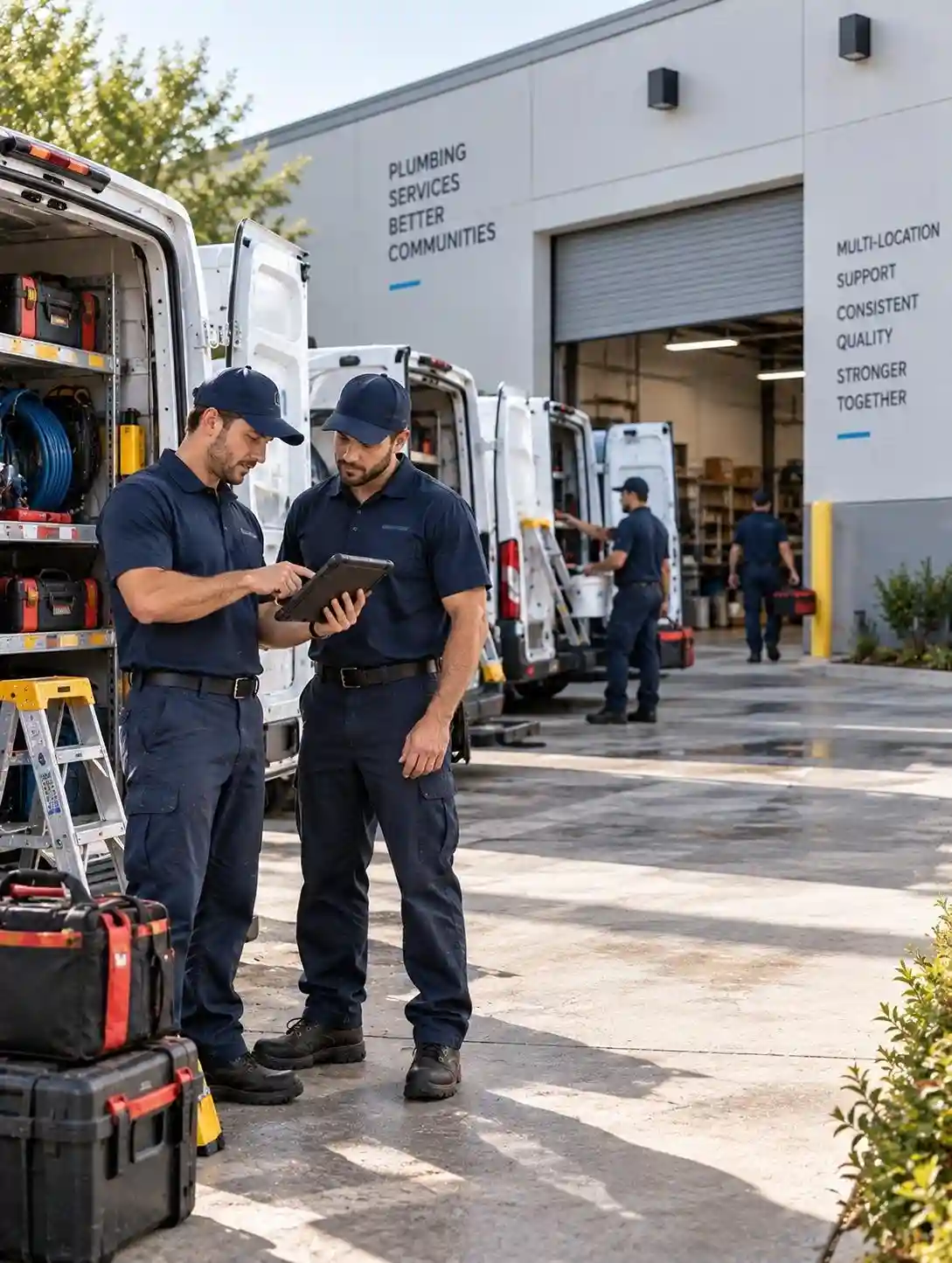
Multi-Market Operations
Contractors vs Companies
Do plumbing contractors and plumbing companies need different backlinks?
Yes. Backlinks for plumbing contractors come from the builders, general contractors, and manufacturers on the job, while plumbing companies running service vans earn theirs from local and association sources.
Mixing the two wastes outreach, because a neighborhood blog won’t feature your rough-in work and a builder won’t link your drain cleaning page. General trades follow a similar split, covered in our link building service for contractors.
New Construction and Commercial
Builder and general contractor pages that credit their trade partners, plus project features in regional construction press. Water heater and fixture brands with installer locators add one more door if you hold their certification.
Residential Service Companies
Association directories, chambers, neighborhood sponsorships, and local news on a cold snap or a water main break. These feed your service pages and city pages.
Companies Doing Both
Run two tracks: contractor pages pull from builder and supplier sources, service and city pages from local ones. Your report keeps the two apart so you see which one is moving.
Common Questions
Frequently Asked Questions
Get answers about where plumbing links come from, what membership does, or how pricing works.
A general agency runs the same playbook across every industry it serves. A dedicated link building agency vets every publisher and plans anchor text placement by placement, because links are the whole job.
That focus matters more in trade industries like plumbing, where publisher relevance and local credibility carry more weight than raw authority scores.
No, and nobody else can either. Those networks dispatch jobs; they don’t publish contractor profiles with outbound links. Old Republic’s own service provider page describes the value as more business and lower advertising costs, which is exactly what it is.
It’s a good revenue channel and a nonexistent link channel. If an agency tells you otherwise, ask them to show you the page the link would sit on.
Four types. Association and member directories, where your membership is the gate. The plumbing trade press, which publishes bylined pieces from people doing the work.
Local business and community sources in each market you serve. And suppliers, distributors, and the trades you work alongside. You get the specific list for your company before any outreach starts, rather than a category description after the invoice.
No, but it opens a door that would otherwise stay shut. The PHCC Find a Contractor search, for instance, lets a homeowner enter a zip code and pull up nearby member companies.
That listing isn’t for sale at any price. If you’re already a member, your campaign starts further ahead. If you’re not, the other three source types still work, and your strategist will tell you whether joining is worth it for your market.
Different trade, different sources, and a different argument. Link building for electricians centers on licensing as the credential that gates placements. The HVAC version focuses on seasonal and emergency demand.
This page is about telling apart the channels that send you work from the ones that publish a link, because plumbing runs on more middlemen than either. If you do both plumbing and HVAC, your strategist will say which fits.
Some of it, yes, and the local layer is the honest place to start. Joining your association, claiming your listing, and asking two suppliers for a mention costs nothing but time.
What’s hard to run in-house is trade press pitching and sustained outreach across markets, because both need volume and a reason for the editor to say yes. Most companies see movement within 3 to 6 months once the work is consistent, and consistency is where in-house efforts usually break.
Yes, more than most people expect. The clickable text pointing at your site tells a search engine what the page is about, so fifty links all reading “best plumber in Denver” look engineered rather than earned.
Real editorial links use varied, natural wording, which is what you get when a real publication writes about you. Your report shows the wording used on every placement, so nothing gets built into a pattern you’d later have to unwind.
Cost depends on the markets you work in, the mix across service, drain, and commercial work, and whether you already hold association membership. Placements sit only on sites meeting fixed quality standards: real search traffic, real domain authority, not built for size or price.
Volume and scope change. Quality standards don’t. Detailed proposal comes after strategy call, scoped to your business. For a general market picture, backlink costs vary widely.
Yes, but not through rankings. Under Google’s guidance on qualifying links, a link marked sponsored or nofollow tells Google it shouldn’t pass ranking credit.
A sponsorship link on a youth league or neighborhood site still sends local visitors and puts your name in front of people near you. Count it as local marketing, not authority.
No fixed number exists, because the plumbers already ranking in your metro set the bar.
Look up the referring domains (the count of separate sites linking in) for the three companies in your local map results, using a tool such as Ahrefs or Semrush. Close that gap with relevant local and trade sources rather than chasing a total.
No. Reviews on your Google Business Profile are a separate local signal, and they don’t link to your website.
Reviews help you win the call once you appear in map results, while backlinks help you appear in the first place. You need both, and neither replaces the other.
Ready to Find Out Which of Your Channels Can Publish a Link?
Get the map before you commit to anything: which listings are open to you, which publications take your kind of story, and what the work costs.
Bring your service area, your memberships, and any links you’ve bought before. Prefer the phone? Call +1-917-695-3109.
4.9/5
Trusted by agencies
and brands worldwide.