Link Building for Interior Designers That Builds Authority
Your design firm earns the Houzz recognition, lifestyle publication features, and local visibility that turn a strong portfolio into new client inquiries, whether you work residential, commercial, or both.

Houzz and best of Houzz recognition
Lifestyle publication features
Residential and commercial visibility

4.9/5
Trusted by agencies &
businesses worldwide.
Portfolio Authority Score
90/100
Campaign Dashboard
PUBLICATION FEATURES
lifestyle + shelter press
HOUZZ & AWARD RECOGNITION
Best of Houzz eligible
LOCAL RANKING WINS
“city + designer” terms
ORGANIC TRAFFIC
2,900 → 8,100

Publication Placements
8 Live





Service Overview
Why Interior Design Runs on Portfolio, Not Just Licensing
Interior design sells more on visual proof than credentials.
Interior design sells on visual proof, not credentials. Most states skip licensing for residential design. Clients ask “do I like your work,” not “are you certified.” That puts portfolio, recognition, and visibility ahead of paperwork.
Houzz drives that recognition. Clients browse before-and-after galleries and reviews there before contacting anyone. Best of Houzz recognition works as real third-party proof, unlike a basic directory listing.
Features in Elle Decor, House Beautiful, Veranda, Domino, or Dwell reach buyers already primed to hire. That credibility beats any paid placement. Commercial work shifts the weight. Hospitality, healthcare, and corporate spaces touch health and safety codes, so NCIDQ certification and ASID or IIDA standing carry more trust there.
Most firms treat this as an afterthought: plain website, generic listings. Firms building real Houzz proof, real features, and real local authority stand out.
Three things define interior design link building done right:

Houzz and Award Recognition
Best of Houzz placement and genuine profile authority on the platform where a large share of residential clients search for a result-driven interior designer.

Lifestyle Publication Features
Coverage in Elle Decor, House Beautiful, Veranda, and similar outlets, reaching the audience already primed to hire a designer.

Credential Authority
NCIDQ and ASID or IIDA standing built into your profile for commercial and contract work where formal credentials carry real weight.
How We Work
How Your Interior Design Link Building Campaign Works
A portfolio-first workflow built around Houzz authority, lifestyle publication outreach, and credential recognition where it matters.
Your campaign starts with understanding how your firm wins clients in interior design services.
Your strategist reviews whether your practice is primarily residential, commercial and contract, or a mix, and audits your current Houzz presence, publication visibility, and local search position accordingly. Residential work gets assessed against Houzz and local competitors. Commercial work gets assessed against professional credential visibility and discoverability to the buyers who commission that kind of project.
Your team builds out your Houzz presence properly, since a thin or inactive profile leaves real opportunity on the table.
That includes optimizing your project galleries, pursuing Best of Houzz recognition where your work qualifies, and making sure reviews and profile completeness reflect the actual quality of your portfolio.
Your team pitches your best projects to lifestyle and shelter publications with the story angle editors want.
Elle Decor, House Beautiful, Veranda, Domino, Dwell, and similar outlets get evaluated for fit based on your specific style and project scale. A generic pitch gets ignored. A pitch built around what makes a specific project genuinely interesting to that publication’s readers gets a real look.
For firms with commercial or contract practice, your team builds authority around the credentials that matter most in that space.
NCIDQ certification recognition and ASID or IIDA membership visibility get built into your profile. Commercial buyers, hospitality groups, healthcare facilities, and corporate clients weigh these credentials more heavily than a residential homeowner typically does.
For firms with residential practice, your team builds the local authority that supports “city plus interior designer” search visibility.
Local press coverage, community involvement, and genuine local design features all factor in, alongside the broader Houzz and publication work. Local search remains a meaningful discovery channel for residential clients even with Houzz in the mix.
You receive a monthly report covering Houzz performance, publication placements, local ranking movement, and credential-related authority where relevant to your practice.
The report reflects your actual practice mix rather than a generic one-size view, so you see where your visibility is building and where the remaining opportunity sits.

Expected Results
Outcomes Interior Design Link Building Service Delivers
When your portfolio is properly visible where clients look, your best work turns into new inquiries instead of sitting unseen.
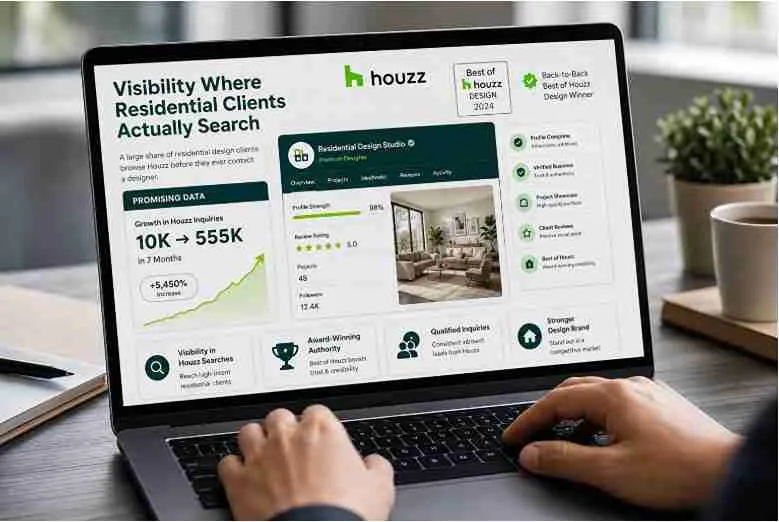
Visibility Where Residential Clients Search
A large share of residential design clients browse Houzz before they ever contact a designer.
A strong, properly built Houzz profile with Best of Houzz recognition puts your work in front of exactly this audience, at exactly the moment they’re evaluating who to hire.
The result: One residential design firm built out its Houzz presence and earned Best of Houzz recognition for design in back-to-back years. Inbound inquiries from the platform became one of its most consistent lead sources.
Features in the Outlets Your Clients Already Read
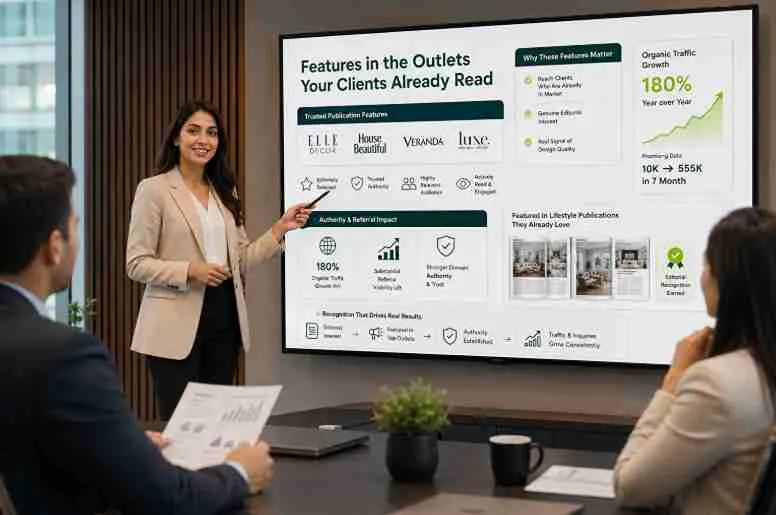
A feature in Elle Decor, House Beautiful, or a similar outlet reaches an audience already primed to hire a designer, not a cold audience that needs convincing design matters.
The result:
These features carry weight for a reason. Publications choose what to run based on genuine editorial interest. That makes a placement a real signal of design quality, not a bought mention.
Firms earning coverage in regional lifestyle publications gain something a paid ad never buys: a third party vouching for the work. That referral trust compounds. Each new feature adds to a portfolio prospects can verify on their own, before they ever call.
Ranking Where Homeowners Search Locally
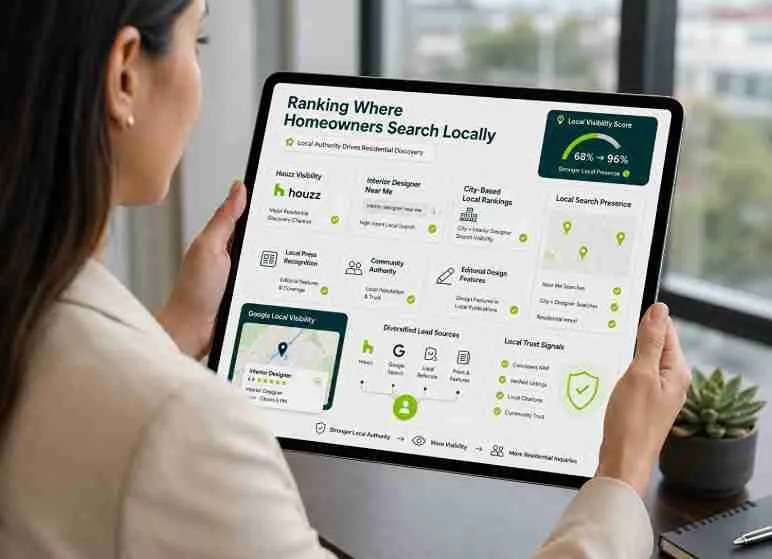
Even with Houzz as a major discovery channel, local search still matters for residential design clients searching “interior designer near me” or “city plus interior designer.”
Genuine local authority, local press, community recognition, and design features specific to your market support stronger local search visibility alongside your broader Houzz and publication presence.
The result: Residential firms building local authority alongside Houzz and publication work see a steadier, more diversified inquiry pipeline instead of depending on a single discovery channel.
Authority for Buyers Who Weigh Credentials Differently
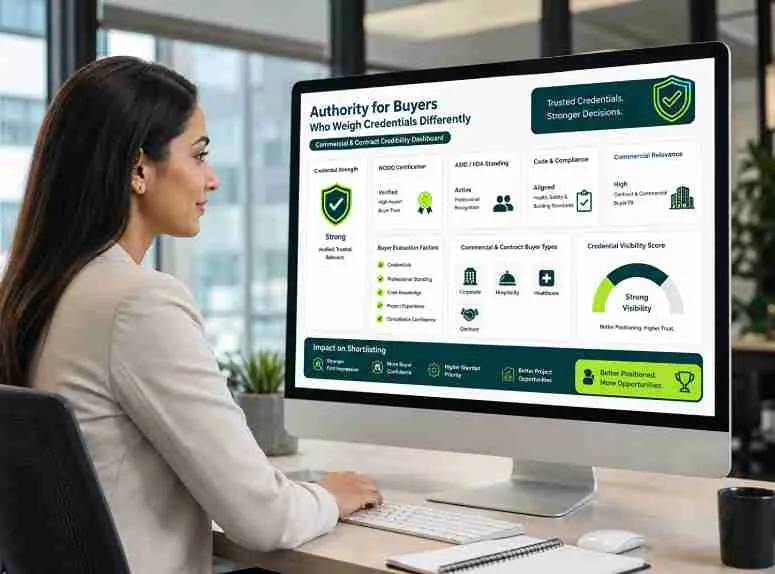
Commercial and contract clients, hospitality groups, healthcare facilities, and corporate offices, evaluate designers differently than a homeowner does.
NCIDQ certification and ASID or IIDA standing carry real weight in these decisions, since commercial spaces often involve health and safety code considerations that residential work doesn’t. Building visibility around these credentials speaks directly to how this buyer evaluates a firm.
The result: Firms with strong credential visibility are better positioned when commercial and contract buyers research and shortlist design firms for a project.
Client Success Stories
What Clients Say About Our Interior Design Link Building Service
Verified reviews from design firms that turned strong portfolios into real visibility, recognition, and new client inquiries.

4.9/5 

5/5 
Rating on Google



Our Houzz profile had been sitting mostly untouched for years even though our project galleries were genuinely strong. Getting that properly built out and earning Best of Houzz recognition changed our inbound inquiries more than anything else we tried.

Principal Designer
Residential Interior Design

As a commercial and hospitality-focused firm, our NCIDQ credentials had never been used as part of our marketing. Building that into our visibility strategy made a real difference in how seriously we’re taken during the vendor selection process.
Principal
Commercial & Contract Design

Getting featured in a regional lifestyle magazine was something we’d wanted for years and never had a real strategy for. Having a team pitch our best projects properly got us there within the first year.
Owner
Residential Design Studio
Service Framework
Investment, Timeline, and Deliverables
Every interior design link building campaign is scoped to your practice focus, target publications, and market reach. Here’s what shapes your investment:

Practice Focus and Reach:
Residential-focused firms need a different scope than commercial or contract firms working on larger, multi-market projects.

Houzz and Publication Ambition:
Pursuing Best of Houzz recognition and top-tier lifestyle publications requires more intensive outreach work.

Portfolio Submission Readiness:
Campaigns covering multiple publication pitches and award submissions scale beyond a single project pitch.

Campaign Duration
Most firms see initial recognition within 3 to 6 months, with authority compounding well past 12.
Directional pricing
Investment scales with practice type, scope, and ambition. Residential firms chasing focused Houzz and local visibility sit at one end. Commercial and contract firms pursuing top-tier publications and broader credential authority sit at the other, since that work needs deeper outreach and longer campaigns. You get exact numbers on your strategy call, with a proposal scoped to your practice and target publications.
What You Get
Every Feature, Every Award, Every Inquiry Source Reported
Full transparency on your Houzz performance, publication placements, and local visibility, scoped to whether you work residential, commercial, or both.

Live Publication Features
You see every lifestyle publication placement with the outlet, the project featured, and the authority and visibility it adds.

Houzz Performance Tracking
You see your Houzz profile performance, award submission status, and any Best of Houzz recognition earned across categories.

Local and Credential Authority Split
You see reporting broken out by local ranking impact and credential-based authority, scoped to your practice type.

Inquiry Source Reporting
You see how your campaign connects to inbound inquiries across Houzz, publications, and local search.
Our Approach
A Portfolio-First Approach Built for How Design Clients Choose
You get Houzz authority and real publication features scoped to your practice, not generic local SEO that misses how design clients decide.
| Factor | Generic Local SEO Agencies |
 |
|---|---|---|
| Houzz Strategy | No specific attention to Houzz profile optimization or award pursuit. |
Houzz profile built out properly, with Best of Houzz recognition pursued where you qualify. |
| Publication Tier | Generic local directory listings and basic local press, if any. |
Outreach scoped to the lifestyle and shelter publication tier that matters here. |
| Credential Use | No use of NCIDQ or ASID and IIDA standing as authority sources. |
Credential visibility built for commercial and contract buyers who weigh it heavily. |
| Practice Type Strategy | One generic approach applied regardless of residential or commercial focus. |
Strategy scoped to Houzz and local for residential, credentials and publications for commercial. |
| Portfolio Use | Portfolio treated as website content only, not a link-earning asset. |
Portfolio actively turned into publication features and Houzz recognition. |
Who We Help
Interior Design Practice Types We Support
Whatever your practice focus, we build the Houzz, publication, and credential authority that matches how your specific clients find and choose a designer.

Residential Interior Design

Commercial & Contract Design

Hospitality
Design

Healthcare & Institutional Design

Home Staging & Styling

Kitchen & Bath Design
Real Results
Results From Our Interior Design Link Building Campaigns
See the traffic, ranking and authority gains from recent campaigns.
Common Questions
Frequently Asked Questions
Get clear answers on Houzz strategy, publication pitching, and credential authority across residential and commercial work.
Houzz matters more for interior design than in most design fields. Platform built around exactly what interior design clients need: before-and-after galleries, pro directories with reviews, and its own recognition system (Best of Houzz).
A large share of residential clients browse Houzz before ever reaching out to a designer. That makes a strong, properly optimized Houzz profile one of the highest-value pieces of authority available to a design firm. We treat it as a core part of our link building strategy, rather than an afterthought behind traditional link building.
Not necessarily, and that’s part of why portfolio-based authority matters so much in this field. Most states don’t require a formal license to practice residential interior design, so the trust question clients ask is usually about taste and track record, not credentials.
NCIDQ certification and ASID or IIDA membership matter more for commercial and contract work, where health and safety code considerations raise the credentialing bar. If your practice is primarily residential, Houzz recognition, publication features, and local authority typically carry more weight than a formal credential would.
It depends on your practice type, project scale, and design style. For firms with strong, distinctive residential work, that can include national outlets like Elle Decor, House Beautiful, Veranda, Domino, and Dwell.
For most firms, respected regional lifestyle and home publications are realistic and valuable targets. Your strategist maps the publication tier that actually fits your portfolio rather than pitching every outlet the same generic story.
Less so than for residential firms, though it’s not entirely irrelevant. Commercial and contract clients, hospitality groups, healthcare facilities, and corporate buyers evaluate designers differently. They typically weigh professional credentials, portfolio scale, and industry reputation more than a consumer-facing platform like Houzz.
Your strategy shifts accordingly toward NCIDQ and ASID or IIDA credential visibility, trade publication authority, and the discoverability that matters when a commercial buyer is researching and shortlisting firms for a project.
Yes, though the two professions sometimes overlap. Interior design and architecture are distinct disciplines, even when the same firm offers both. Architecture involves structural and code-driven work, typically requires formal licensure, and often competes through publication tiers like Dezeen and ArchDaily plus AIA award recognition.
Interior design is a more purely aesthetic, portfolio-driven purchase, with Houzz and lifestyle publications carrying more of the weight, and formal licensing plays a smaller role, especially in residential work. If your firm does both, we can scope a campaign that covers each discipline appropriately rather than treating them as one undifferentiated service.
The cost of interior design link building depends on where your firm sits. A residential practice chasing Houzz recognition and local visibility runs leaner than a commercial or contract firm pursuing national publications and credential-based authority, since that work takes heavier outreach and longer runway.
Your strategy call gives you real numbers, built around your practice type and submission-readiness. Check our service pricing breakdown for baseline tiers before that call.
Ready to turn your portfolio into real visibility and new client inquiries?
Get a senior strategist to review your Houzz presence, identify your strongest publication and award opportunities, and build a strategy that fits how your clients find you.
4.9/5
Trusted by agencies
and brands worldwide.