Link Building Service for Restaurants That Fill Tables
Your restaurant earns the city dining coverage, food press placements, and local authority that turn a search into a booking, whether you run one room or a group of them.

City dining coverage and roundups
Food press and writer placements
Per-location reporting

4.9/5
Trusted by agencies
and brands worldwide.
Average DR
40 to 75
Campaign Dashboard
DINING COVERAGE PLACEMENTS
city roundups + food press
PARTNER AND SUPPLIER LINKS
producers, events, community
LOCAL RANKING WINS
“city + cuisine” terms
ORGANIC TRAFFIC
5,200 to 14,300 visits

Local Authority Score
89/100





Service Overview
Why A Dining Roundup Beats A Generic Directory Submission
Restaurants are among the few local businesses with dedicated city editorial coverage, so a roundup placement delivers both a link and direct bookings. Consider who reads a "best new restaurants" list: diners deciding where to eat, not researchers. Google treats the placement as a publication vouching for you; readers treat it as a recommendation. No directory achieves both; most achieve neither.
New-opening roundups, restaurant weeks, patio lists, holiday guides, and year-end lists each have a pitch window closing before publication. That’s why timing is critical.
Review platforms are a separate category: Yelp, TripAdvisor, and Google Business Profile influence whether a diner chooses you, but rarely affect rankings, since they don’t pass link authority. Suppliers form a quiet third source: roasters, bakeries, farms, and distributors publish stockist pages documenting their relationship with you.
Three things define restaurant link building done right:

City Dining Coverage
Placements in the roundups and "best of" lists your city already publishes, where a link and a booking arrive together.

Food Press and Writers
A real angle earns coverage from the publications and reviewers who cover dining in your market.

Partner and Supplier Authority
Listings on the sites of the producers, events, and community organizations your restaurant already works with.
How We Work
How Your Restaurant Link Building Campaign Works
Build your workflow around your city’s dining media calendar, the writers covering your market, and partners you already buy from.
Your campaign starts by mapping the dining media that covers your city.
Your strategist identifies which outlets run roundups in your market and which writers cover your cuisine and price point, and when each publishes. We’ll also pull the backlinks of the restaurants ranking above you, because their coverage shows you which doors are open.
A single independent room and a ten-location group don’t get the same map. One needs depth in one city, the other needs coverage across several.
Your team pitches your restaurant into the roundups and “best of” lists your city publishes.
That means knowing each outlet’s calendar and hitting the window before it closes. A new-opening list needs you early. A patio roundup needs you in spring, not in July when the piece is already live.
The pitch has to carry something real: a new chef, a menu change, a genuine story about the room. Editors often skip a generic one.
Your team works the publications and reviewers who cover dining in nearby cities.
Regional food press, national dining coverage, and independent food writers all take pitches. They’re weighing what makes a restaurant genuinely interesting, not what a marketing team wants said.
Your strategist matches you to the outlets that would plausibly cover you, instead of pitching everyone the same story.
Your team turns the businesses you already buy from into placements.
Local roasters, breweries, bakeries, farms, and distributors publish stockist pages, partner lists, and “where to find us” directories. If you’re serving their product, the relationship already exists, and the listing is usually a conversation rather than a pitch.
These are some of the easiest genuine links a restaurant can earn, and most operators have never thought to ask for one.
Your team gets your restaurant onto the local calendars that publish and link.
Fundraising nights, charity dinners, food festivals, market days, and community events all sit on organizer websites with event pages. Host or support one and your name and link land on a site that’s unmistakably local to Google.
You receive a monthly report covering live placements, source mix, local ranking movement, and per-location results where you run more than one room.
The report reflects your actual footprint rather than a blended average, so you can see which locations are building coverage and which are behind.
Expected Results
Outcomes Restaurant Link Building Service Delivers
When your restaurant appears where people look for somewhere to eat, coverage does the ranking work and booking work simultaneously.
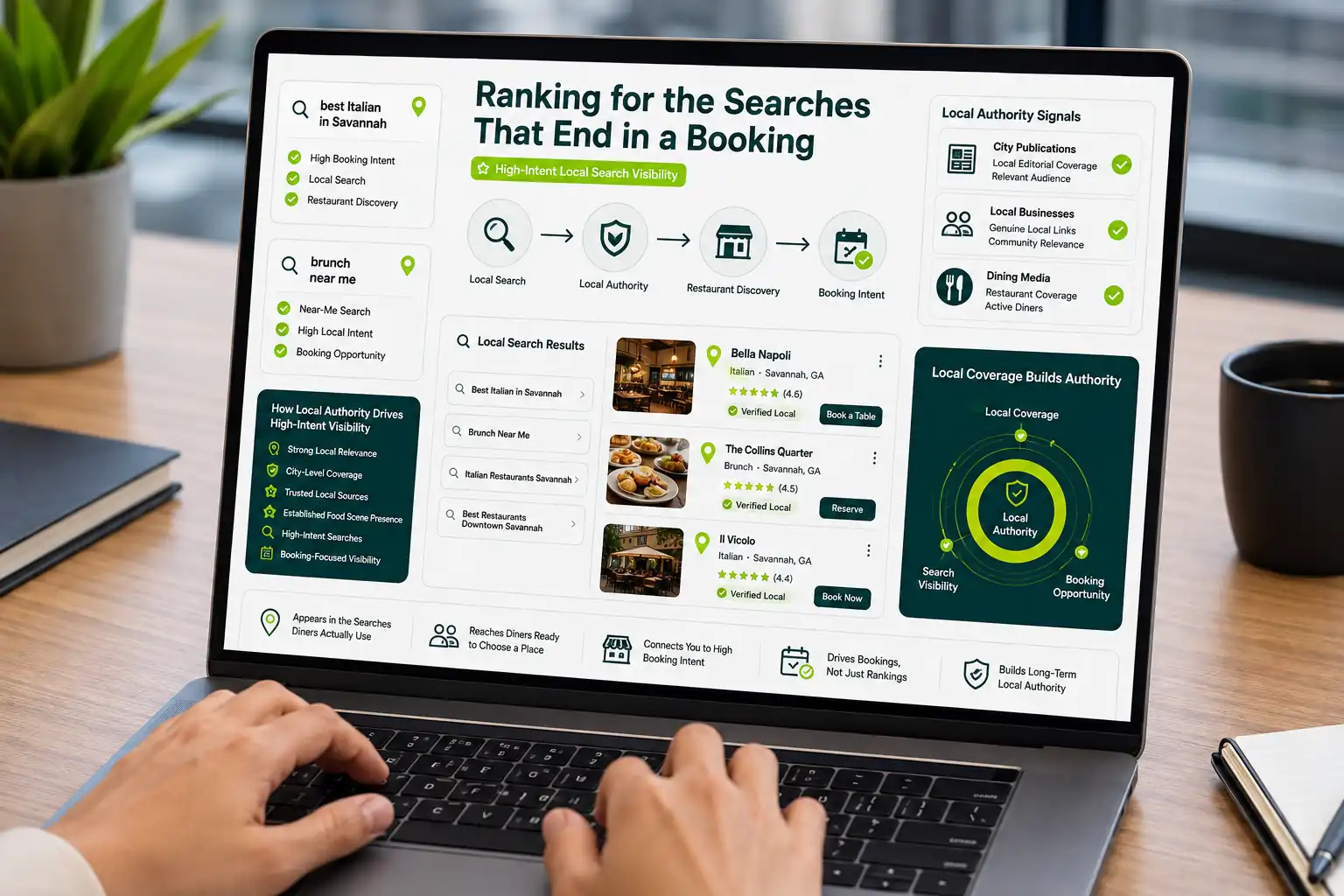
Ranking for the Searches That End in a Booking
Searches like “best Italian in Savannah” or “brunch near me” are where booking intent lives, and you win them largely through local authority. Google reads links from your city’s publications and businesses as evidence that you’re an established part of that food scene.
The result: Restaurants building genuine local coverage compete on the searches that fill tables rather than on broad terms that never did.
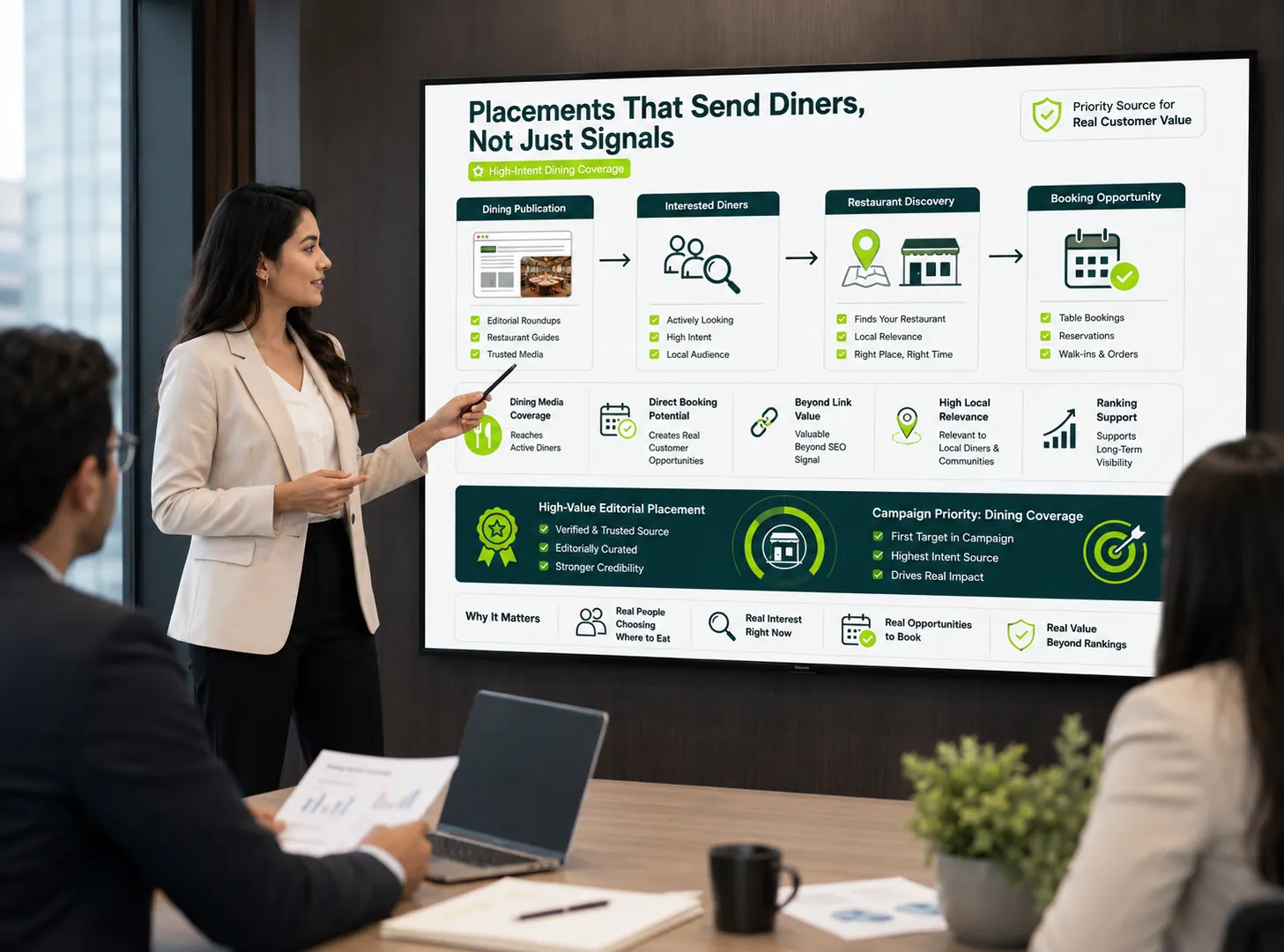
Placements That Send Diners, Not Just Signals
A dining roundup placement reaches people actively choosing where to eat, which no directory listing does. That’s why this source is worth more than its link value alone suggests, and why it’s the first thing your campaign goes after.
The result: Coverage placements produce direct bookings alongside the ranking benefit, so the campaign returns value before rankings have finished moving.
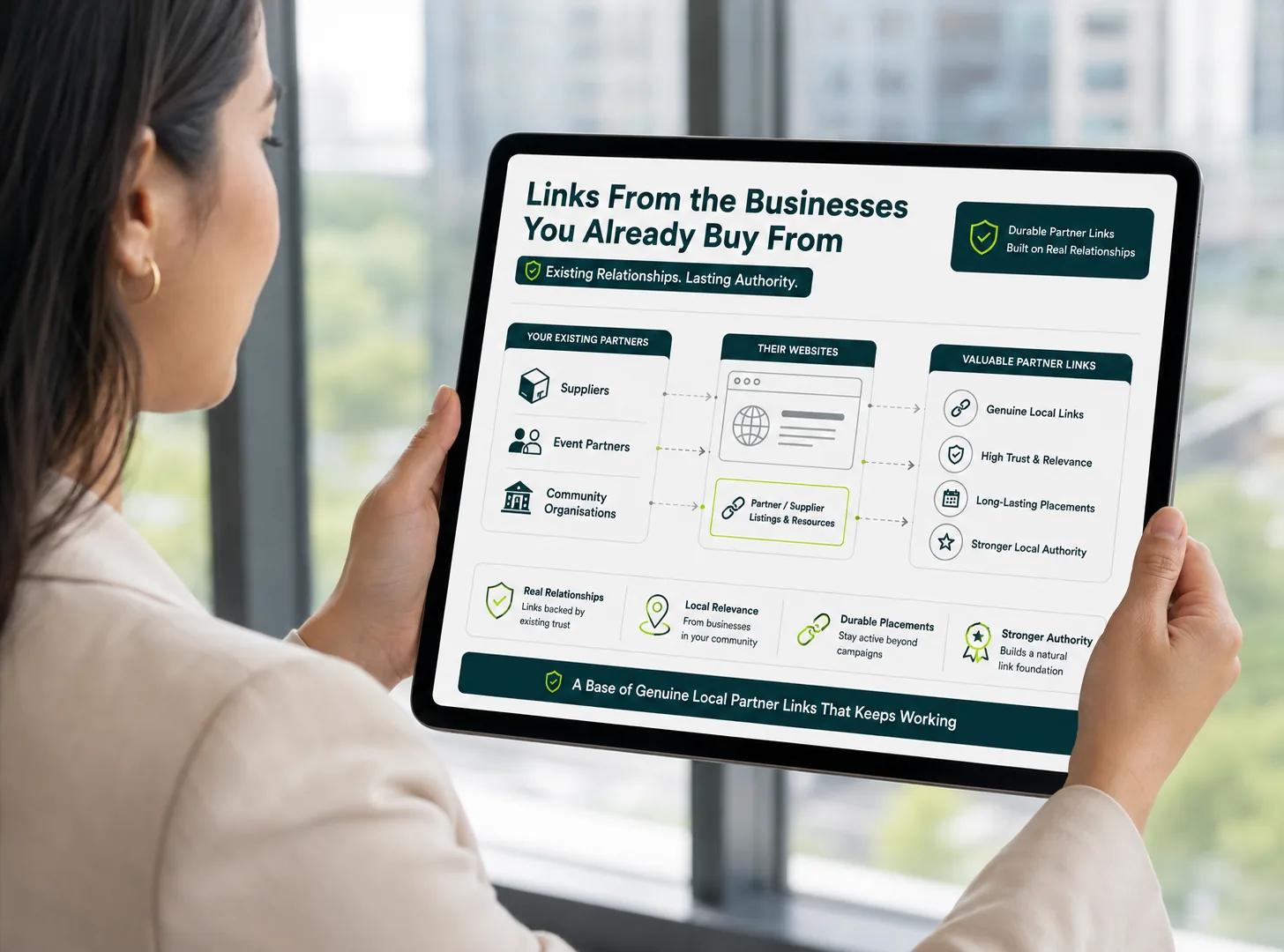
Links From the Businesses You Already Buy From
Your suppliers, event partners, and community organizations all run websites that publish partner listings.
Because the relationships already exist, these placements are among the most durable a restaurant earns, and they don’t disappear when a campaign ends.
The result: A base of genuine local partner links that keeps working long after the placement date.
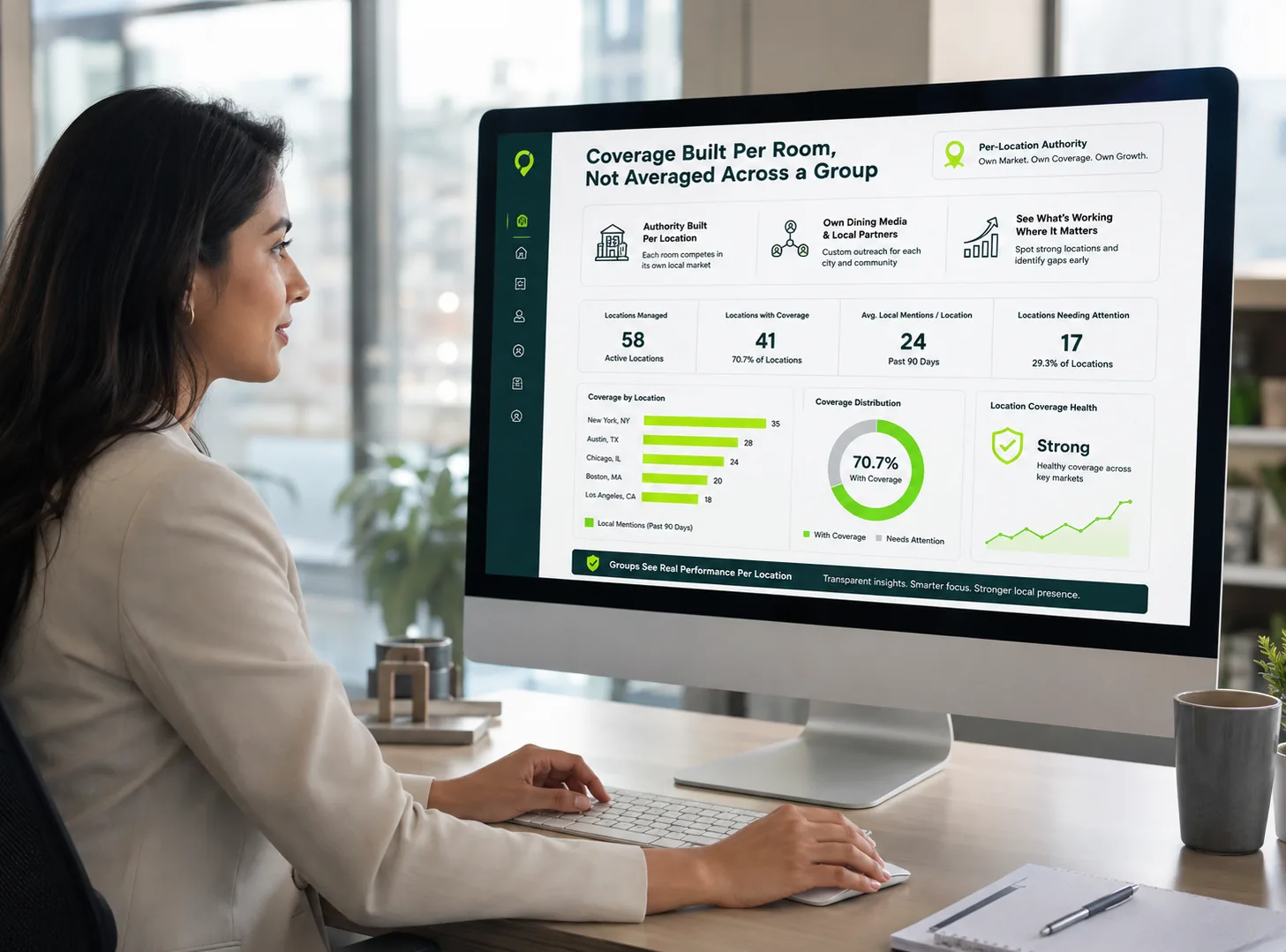
Coverage Built Per Room, Not Averaged Across a Group
A group needs local authority across every city it operates in rather than relying on one national profile. Per-location work means each room competes in its own market, with its own dining media and its own local partners.
The result: Groups see which locations are earning coverage and which need attention, instead of one number that hides both.
Client Success Stories
What Clients Say About Our Restaurant Link Building Service
Verified reviews from restaurants that turned city dining coverage and local partnerships into search visibility and booked tables.

4.9/5 

5/5 
Rating on Google



We’d been in the neighborhood for years, but it never occurred to us that our city’s dining roundups were something we could actually pitch for, not just hope to get noticed by. Getting us placed in one of those lists made an immediate difference in bookings, not just search.

Owner
Independent Neighborhood Restaurant

Our roaster and our bakery supplier both had partner pages we didn’t even know existed. Getting us listed on those, alongside the local food press work, increased how often we appeared in branded searches and cuisine-related searches.
General Manager
Fast Casual Restaurant

With four locations, we’d tried generic SEO before and got one report that told us nothing useful. Having coverage broken out by city, and pitches timed to each market’s own dining calendar, showed us exactly where we were behind and got two locations real local press in one season.
Operations Director
Multi-Location Restaurant Group
Service Framework
Investment, Timeline, and Deliverables
Restaurant link building is priced by room count, dining competitiveness, coverage type, and campaign duration. All four shape your investment:

Rooms and Markets
One independent restaurant needs a different scope than a group operating across several cities

City Competitiveness
A dense metro dining scene takes more work to break into than a smaller market.

Coverage Ambition
National food press placements take more pitching than local roundups and community listings.

Campaign Duration
Most restaurants see ranking movement within 3 to 4 months, with coverage compounding across a full year of calendars
Directional pricing
Independent, single-room restaurants typically fall at the lower end of the investment range, focused on city dining media, supplier partnerships, and local community coverage. Multi-location groups and restaurants in competitive metro markets pursuing national food press sit at the higher end to match that broader scope. You’ll get a detailed proposal after your strategy call.
What You Get
Every Placement, Every Room, Every Coverage Source
Full transparency on live placements, source mix, and local ranking movement, split by location when you run more than one room.

Live Placements Reporting
You see every placement with the source, the dining media or supplier relationship behind it, and the authority impact it drives.

Coverage Source Mix
You see which sources are producing, so effort shifts toward dining media, suppliers, or events depending on what’s landing.

Per-Room Reporting
You see results split by location because a roundup in one city does nothing for a room three states away.

Calendar Visibility
You see which roundups, guides, and pitch windows are coming up next for your city, so you know what’s queued before that window closes.
Our Approach
A Coverage-First Approach Built for How Diners Choose
You get placements in media your customers already read, tailored to your city and calendar, with relevant editorial coverage.
| Factor | GENERIC LOCAL SEO AGENCIES |
 |
|---|---|---|
| Dining Media | No awareness that city food coverage exists as a source. | City roundups and "best of" lists worked as the primary placement type. |
| Review Platforms | Yelp and TripAdvisor listings sold as link building. | Profiles kept in shape, with ranking work done where authority actually passes. |
| Supplier Network | They never consider suppliers. | Roaster, brewery, farm, and distributor partner pages worked as warm placements. |
| Timing | Work starts whenever the contract’s signed. | Pitches timed to each roundup’s window before it closes. |
| Success Metric | They deliver volume of links as the headline number. | Placement quality, coverage you earn, and ranking movement in the markets you serve. |
Who We Help
Restaurant Types We Support
Whatever you serve and however many rooms you run, we build the dining coverage, press, and partner authority that matches how your specific diners find you.
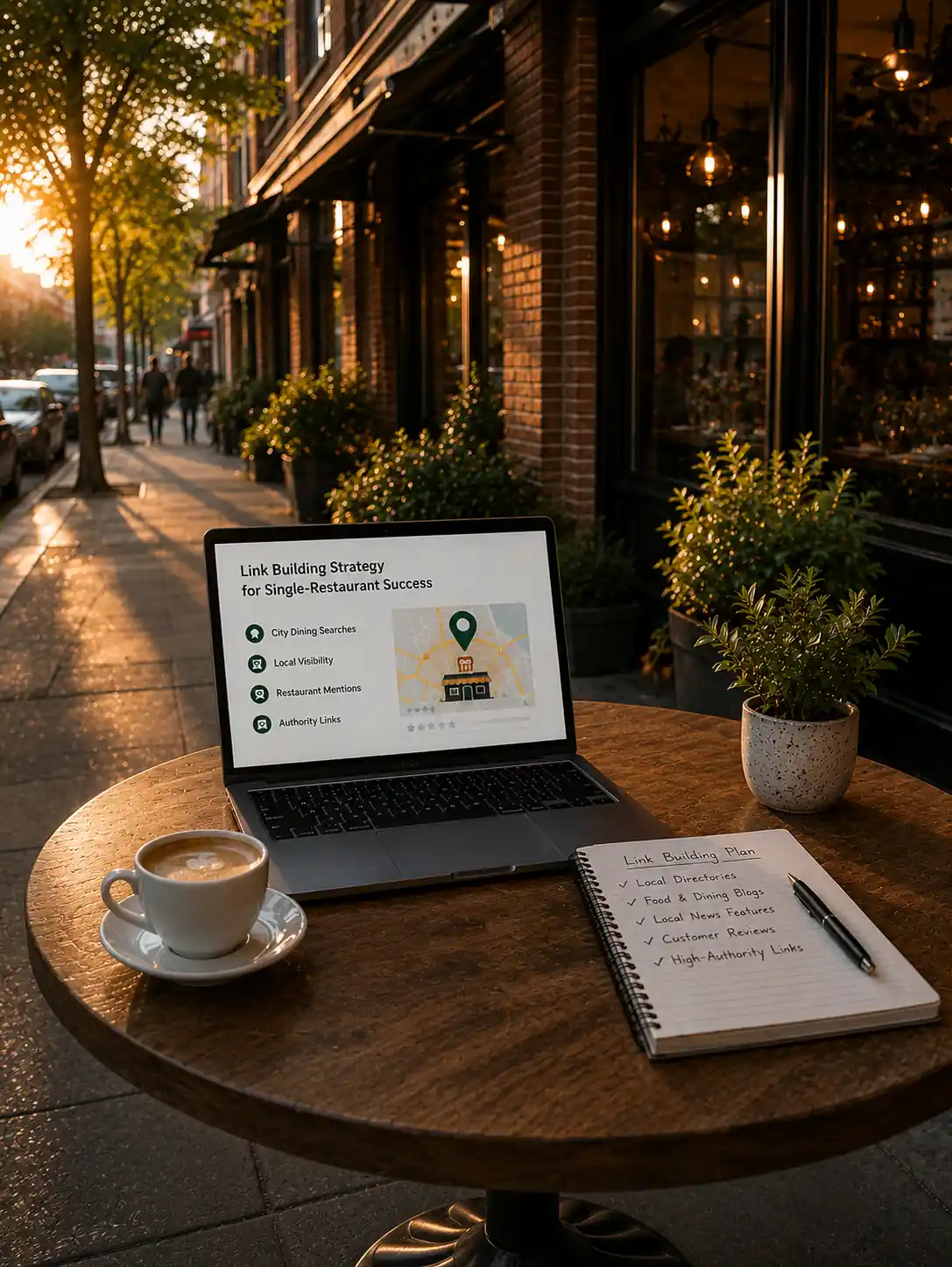
Independent Single-Site
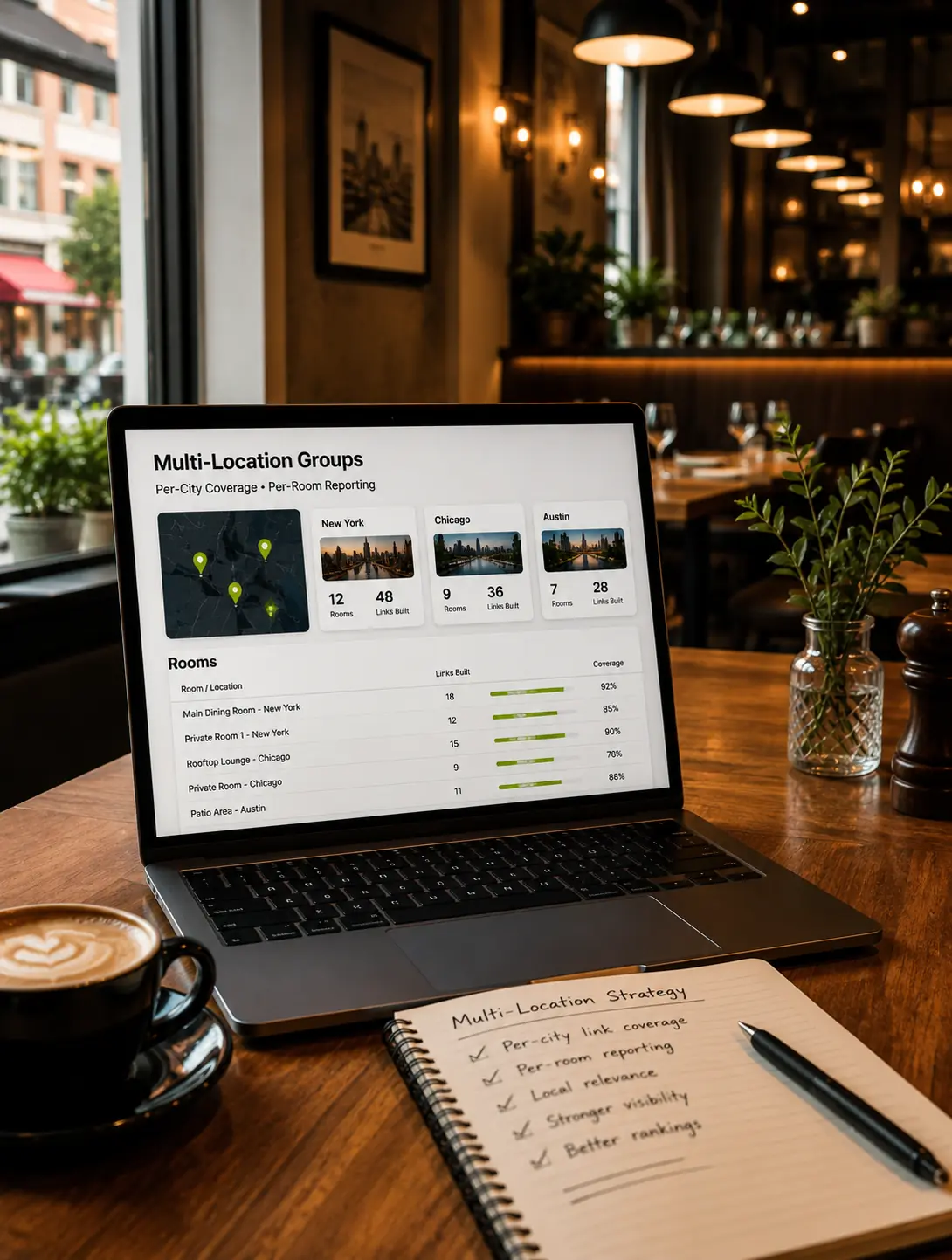
Multi-Location Groups
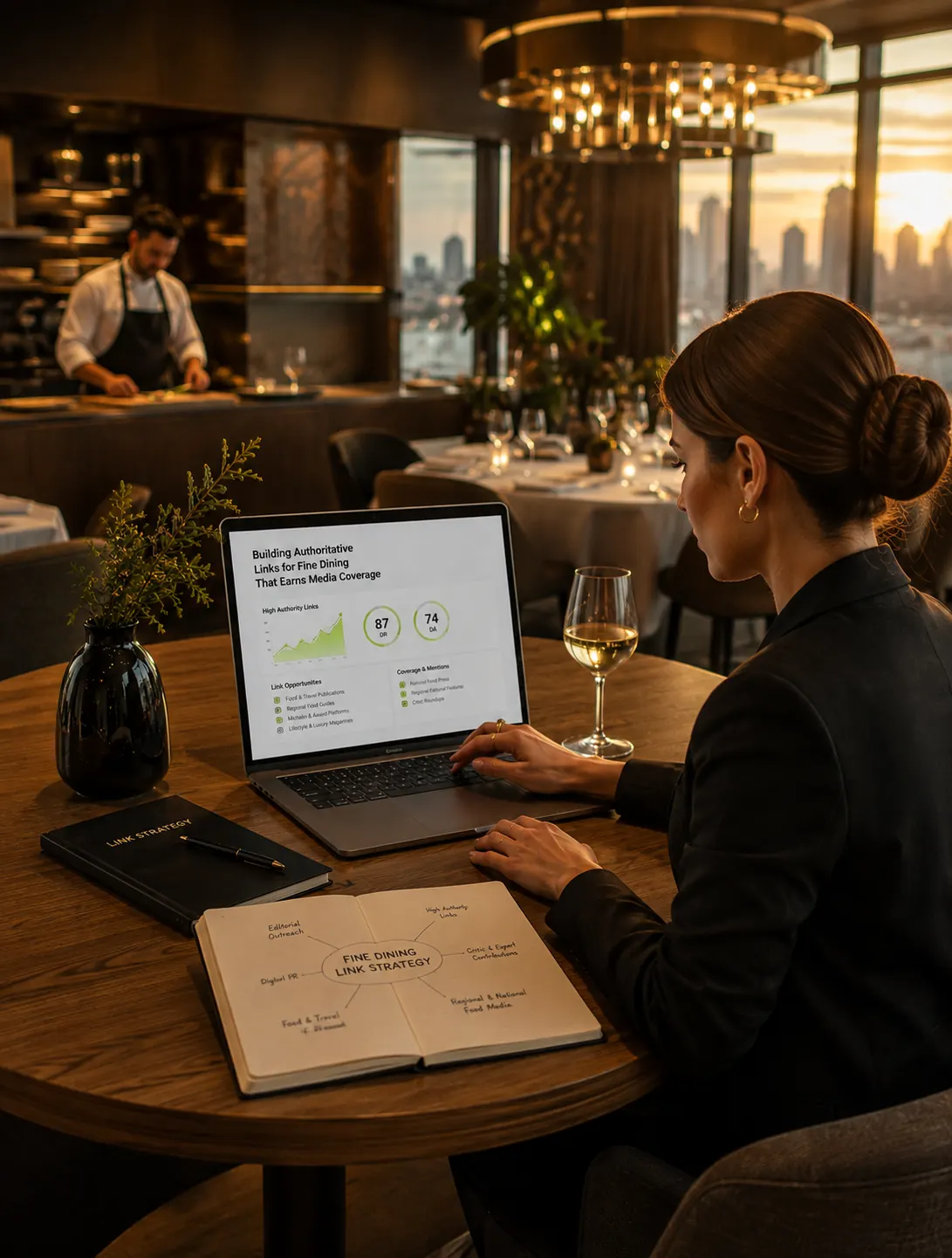
Fine Dining
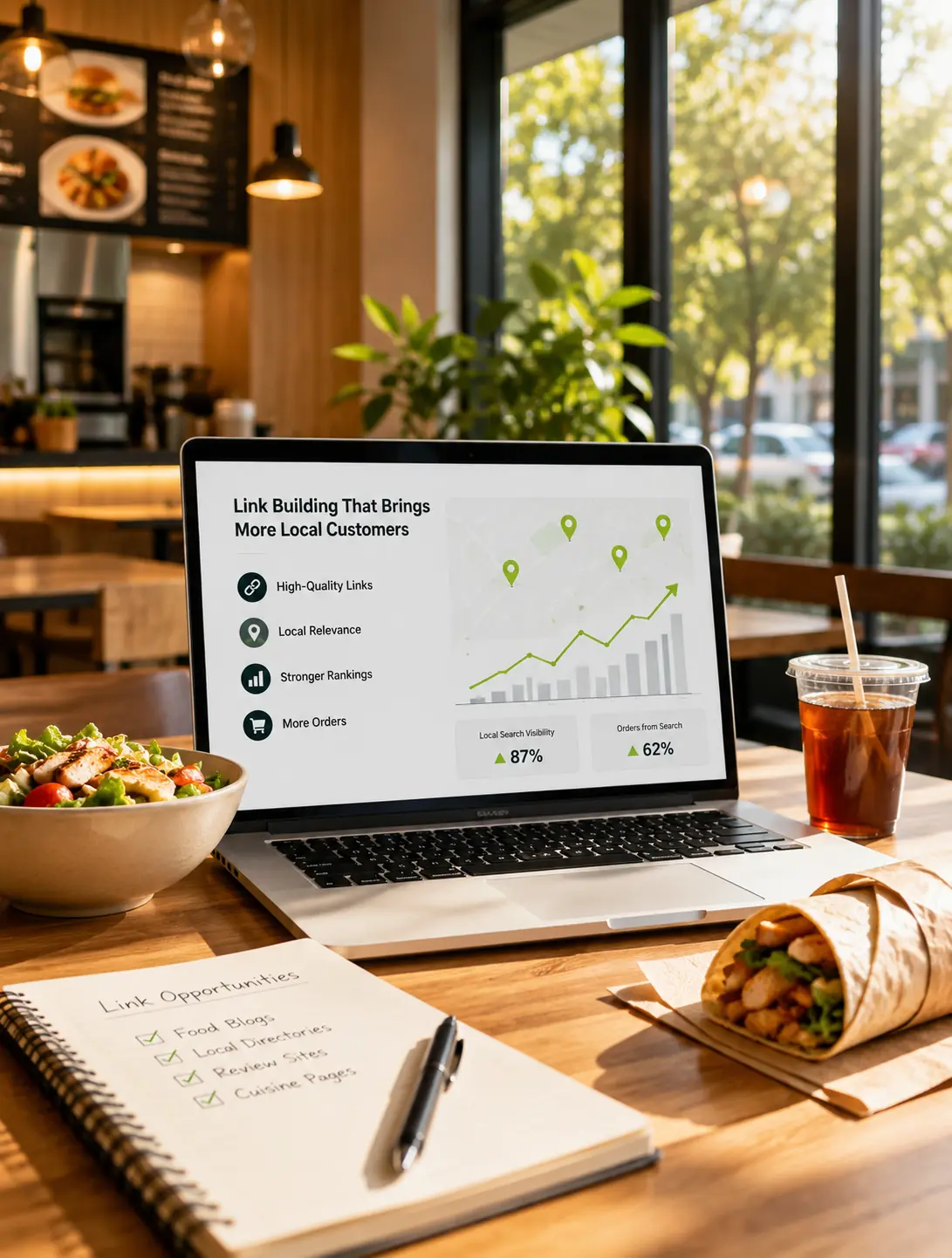
Fast Casual and Quick Service
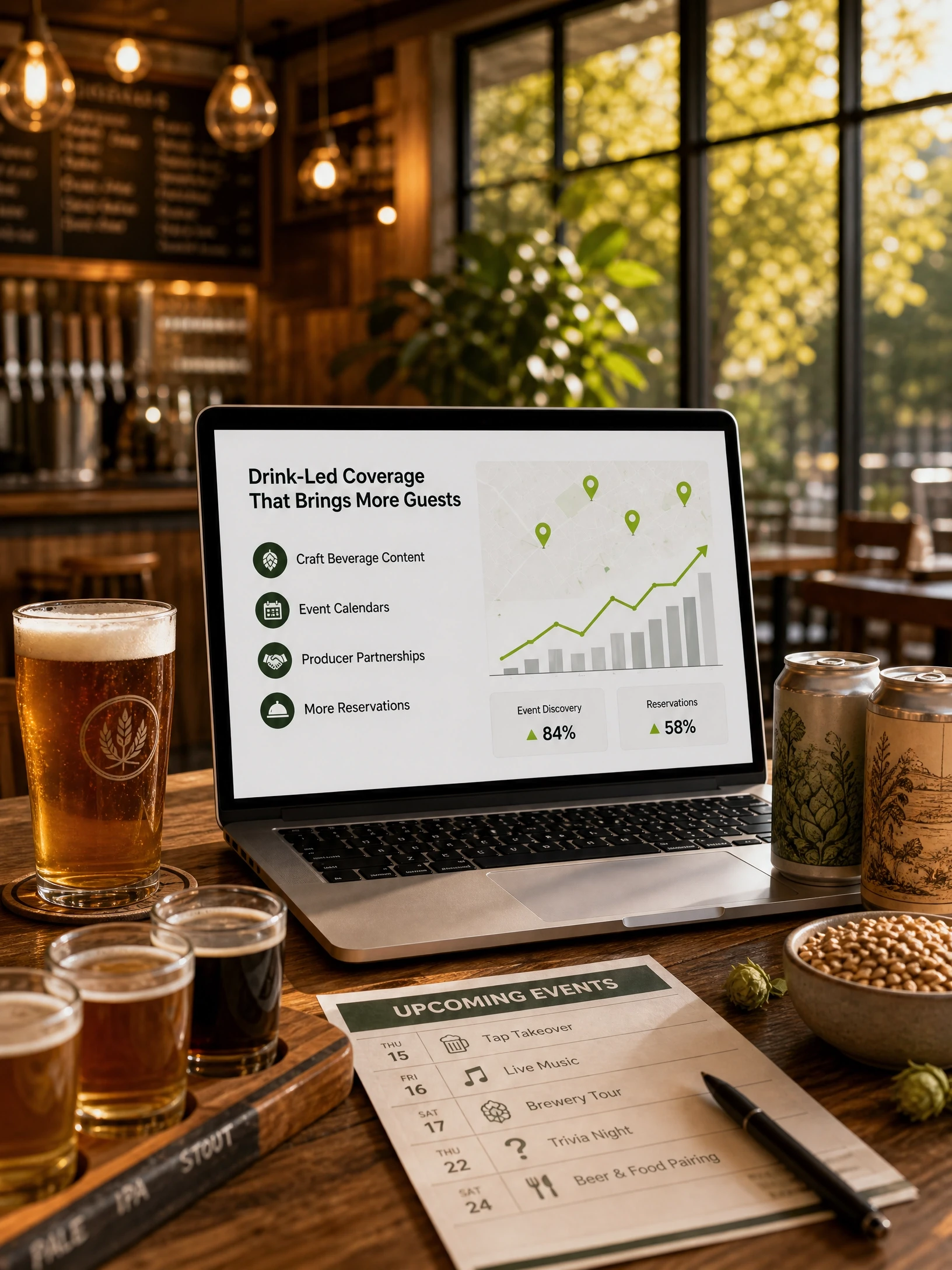
Bars and Breweries
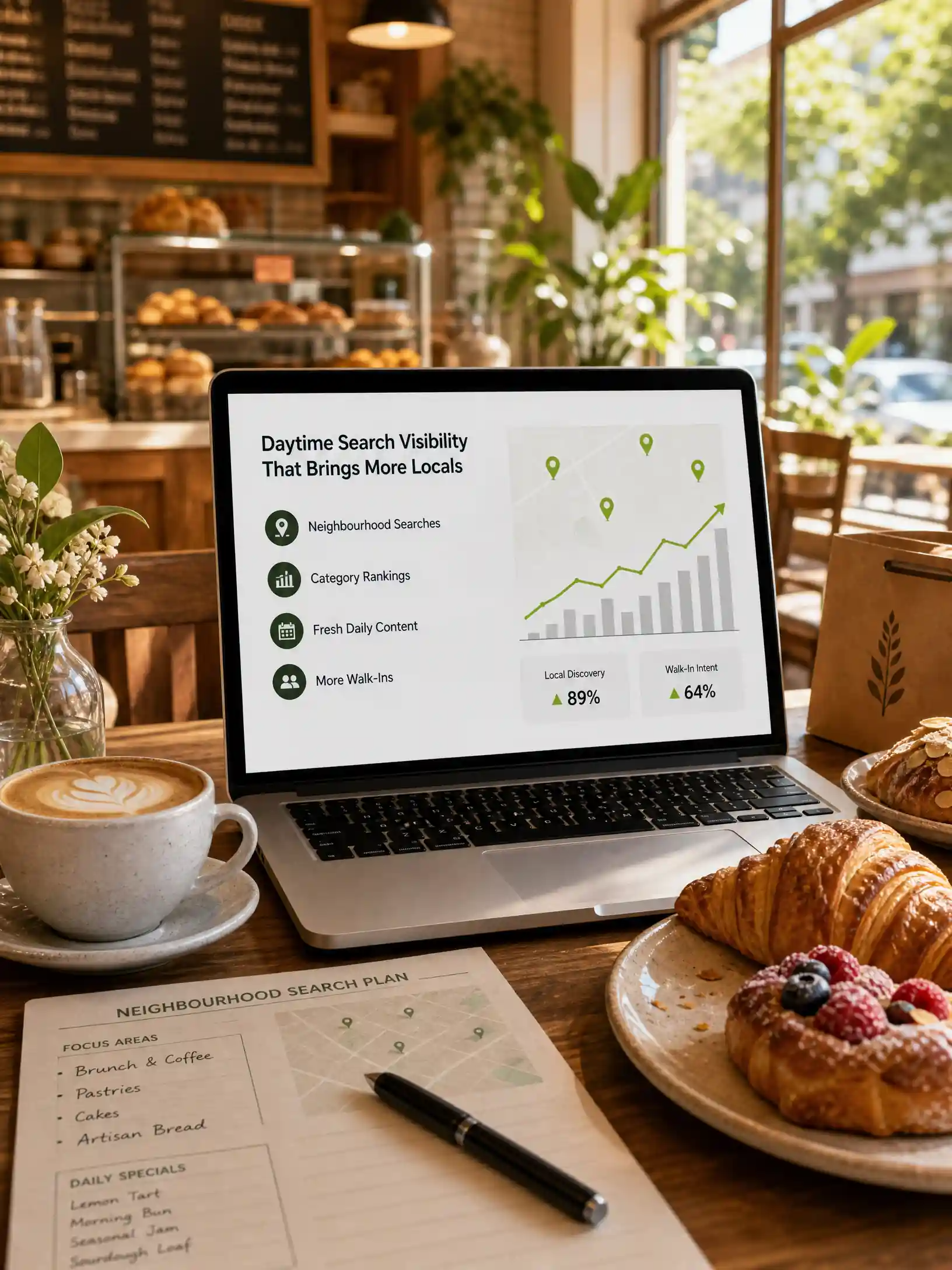
Cafes and Bakeries
Real Results
Results From Our Restaurant Link Building Campaigns
See the traffic, ranking and authority gains from recent campaigns.
Common Questions
Frequently Asked Questions
Straight answers to the questions restaurant businesses ask most before a campaign starts.
They matter a lot for how diners choose a restaurant, but those profiles largely don’t pass link authority. That’s why the ranking work happens on editorial and partner sites instead.
Keep them accurate and well-maintained because that’s what a diner sees. Just don’t expect them to move where Google ranks you. That’s a different job in a different place.
Yes, and the supplier and community sources are genuinely reachable if someone on your team owns the relationships.
Where most restaurants stall is the dining media calendar, because it takes tracking which outlets publish what and when, and pitching months ahead while running service. That’s the part that tends to slip, and where dedicated support for link building usually comes in.
Expect ranking movement in three to four months, with coverage compounding across a full year of your city’s dining calendar. Dining roundup placements are the exception, because those can send diners the week they publish. That’s the one part of this work where the return doesn’t wait for rankings.
Six sources, all of which connect to how restaurants really operate: city dining media and “best of” roundups, regional and national food press, food writers and local reviewers, suppliers and producers you already buy from, event and fundraising calendars, and verified local directories. What you won’t get is a hundred generic directory submissions. Most restaurants have already paid for those once.
Each room gets its own city map and its own reporting line. A roundup placement in one city doesn’t do anything for a location three states away, so per-room work is scoped and reported separately rather than averaged. Supplier and national press work often covers the group, while dining media is genuinely per-city.
Cost scales with how many rooms you run, how competitive your city’s dining scene is, how far your coverage ambition reaches, and how long the campaign runs.
A single independent restaurant sits toward the lower end of the full pricing range, while multi-location groups chasing national food press in competitive metros land toward the higher end.
Ready to appear where people decide to eat?
Get a senior strategist to map your dining media calendar, identify qualifying roundups and partners, and build a timely campaign.
4.9/5
Trusted by agencies
and brands worldwide.