Link Building for Architects That Builds Real Design Authority
Your firm earns the design publication features, AIA recognition, and project visibility that win commissions, whether you’re competing locally for residential clients or regionally for institutional work.

Design Publication Features
AIA and Award Placements
Local and Regional Visibility
 4.9/5
4.9/5 Trusted by agencies
and brands worldwide.
Average DR
40 – 75
Campaign Dashboard
DESIGN PUBLICATION FEATURES
Dezeen, ArchDaily tier
AIA AND AWARD PLACEMENTS
Chapter + regional
LOCAL RANKING WINS
"city + architect" terms
ORGANIC TRAFFIC
3,100 → 9,100

Campaigns Managed
80+





Service Overview
Why Architecture Firms Need Two Visibility Strategies
Architecture is a two-search problem. Residential architects compete locally, with buyers searching “architect near me” or “custom home architect” in their city.
Commercial or institutional firms compete regionally or nationally, discovered through reputation, portfolio, word of mouth, design award recognition, or a comparable project elsewhere. A link building strategy built for local search misses half of what actually wins architecture work.
Both practice types share the value of genuine design recognition. AIA chapter and national awards, regional design competitions, and sustainability recognition signals quality in ways a directory listing never will. Publication tier matters too: Dezeen, ArchDaily, Architectural Digest, Architect Magazine, Architectural Record. A feature in any of these is earned through quality work, pitched well to the right editor.
Most firms never pursue this systematically. Those that do build authority that compounds into more inquiries and stronger RFP responses.
Three things define architecture link building done right:

Dual Strategy Visibility
Local authority for residential searches and regional reputation-building for commercial and institutional work, based on how your firm wins clients.

Design Publication and Award Outreach
Systematic pitching to design publications and AIA award programs, turning your best projects into the recognition that builds real authority.

Authority Earned Through Expertise
Thought leadership, faculty features, and conference recognition build links through genuine expertise, not bought placements or directory submissions.
How We Work
How Your Link Building Campaign for Architects Works
A dual-strategy workflow built around how your firm wins work, with design publication and award outreach integrated throughout.
Your campaign starts with understanding exactly how your firm wins clients. Your strategist reviews whether your practice is primarily residential, commercial, institutional, or a mix, and audits your current visibility accordingly.
Residential work gets assessed against local competitors and “city plus architect” search terms. Commercial and institutional work is assessed against regional reputation, RFP visibility, and discoverability of your portfolio by developers, school boards, or civic bodies that commission this kind of work.
Your team identifies which design awards and publications your best work could realistically earn. That means AIA chapters and national award categories that fit your project types, regional design competitions, sustainability and LEED recognition programs, if relevant.
It also covers design publications most likely to feature your style and project scale, such as Dezeen, ArchDaily, and respected regional or trade press. Every opportunity is mapped to your actual portfolio, rather than pulled from a generic submission list.
Your team handles the outreach and submission work most firms never get to.
For awards, that means preparing submission materials that present your project the way the judging criteria actually reward.
For publications, that means pitching editors directly with the story angle, photography, and project narrative that earns a feature, not a generic press release. Both require understanding what each award program and each publication actually wants, and pitching accordingly.
For firms with residential practice, your team builds the local authority that supports “near me” and “city plus architect” search visibility. Local press coverage, community involvement, chamber recognition, and genuine local design features all factor in, alongside the broader award and publication work.
This runs in parallel with the award and publication strategy rather than separately, since local and design recognition reinforce each other.
For firms with commercial or institutional practice, your team builds the reputation and discoverability that supports RFP visibility and regional recognition.
This includes civic and business press coverage of completed projects, visibility during financial-year RFP cycles where relevant, and portfolio discoverability that helps a firm get shortlisted when a developer or institution starts researching architects for a comparable project.
You receive a monthly report covering your full campaign, broken out by what actually matters to your practice.
For residential-focused firms, that means local ranking movement and inquiry volume. For commercial and institutional firms, that means publication features earned, award recognition achieved, and visibility improvements relevant to RFP discoverability. Mixed-practice firms get both views in one report.

Expected Results
Outcomes Architecture Link Building Service Delivers
When your design authority is built systematically, your firm earns the recognition and visibility that win more of the right commissions.
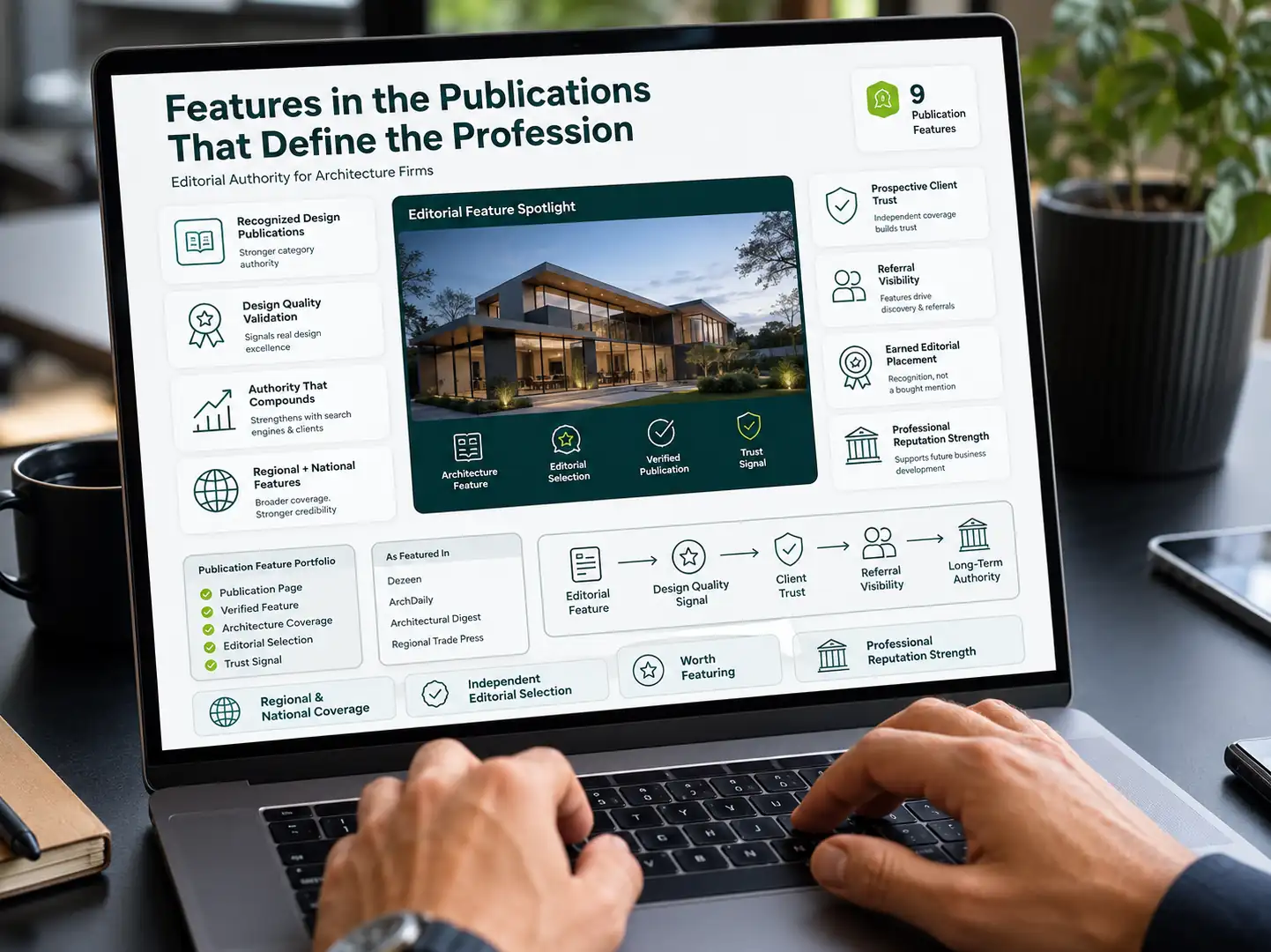
Features in the Publications That Define the Profession
A feature in a recognized design publication is a different category of authority than a local mention or directory listing.
Dezeen, ArchDaily, and respected regional and trade press all carry weight that compounds with both search engines and prospective clients who read them.
These publications cover work they find genuinely worth featuring, which means a placement is a signal of design quality, not a bought mention.
The result: One mid-sized residential firm earned nine design publication features across regional and national outlets in fourteen months, with organic traffic growing 195% as a direct result of the authority and referral visibility those features built.
Recognition That Builds the Profession’s Own Trust System
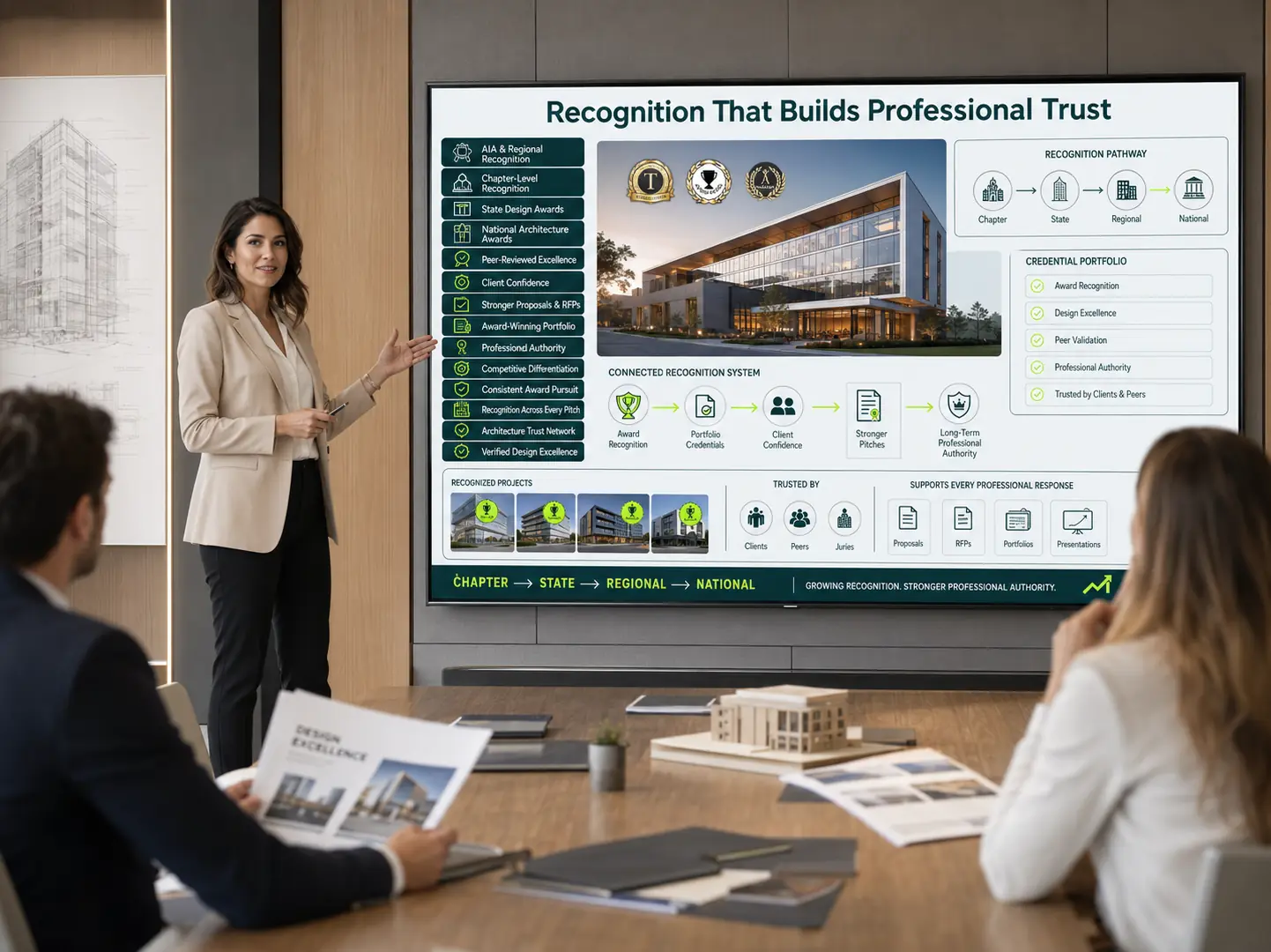
AIA awards and regional design recognition aren’t a side credential. They’re how architecture itself signals quality to clients, peers, and the profession.
Winning at the chapter level, the state level, or nationally builds a form of authority that’s specific to architecture and genuinely hard for a competitor to replicate without matching the same standard of work and submission effort.
Most firms submit inconsistently, if at all, which means systematic award pursuit is a real competitive advantage.
The result: Firms that pursue award recognition consistently build a portfolio of credentials that strengthens every future pitch, proposal, and RFP response, not just their search visibility.
Ranking Where Homeowners Are Actually Searching
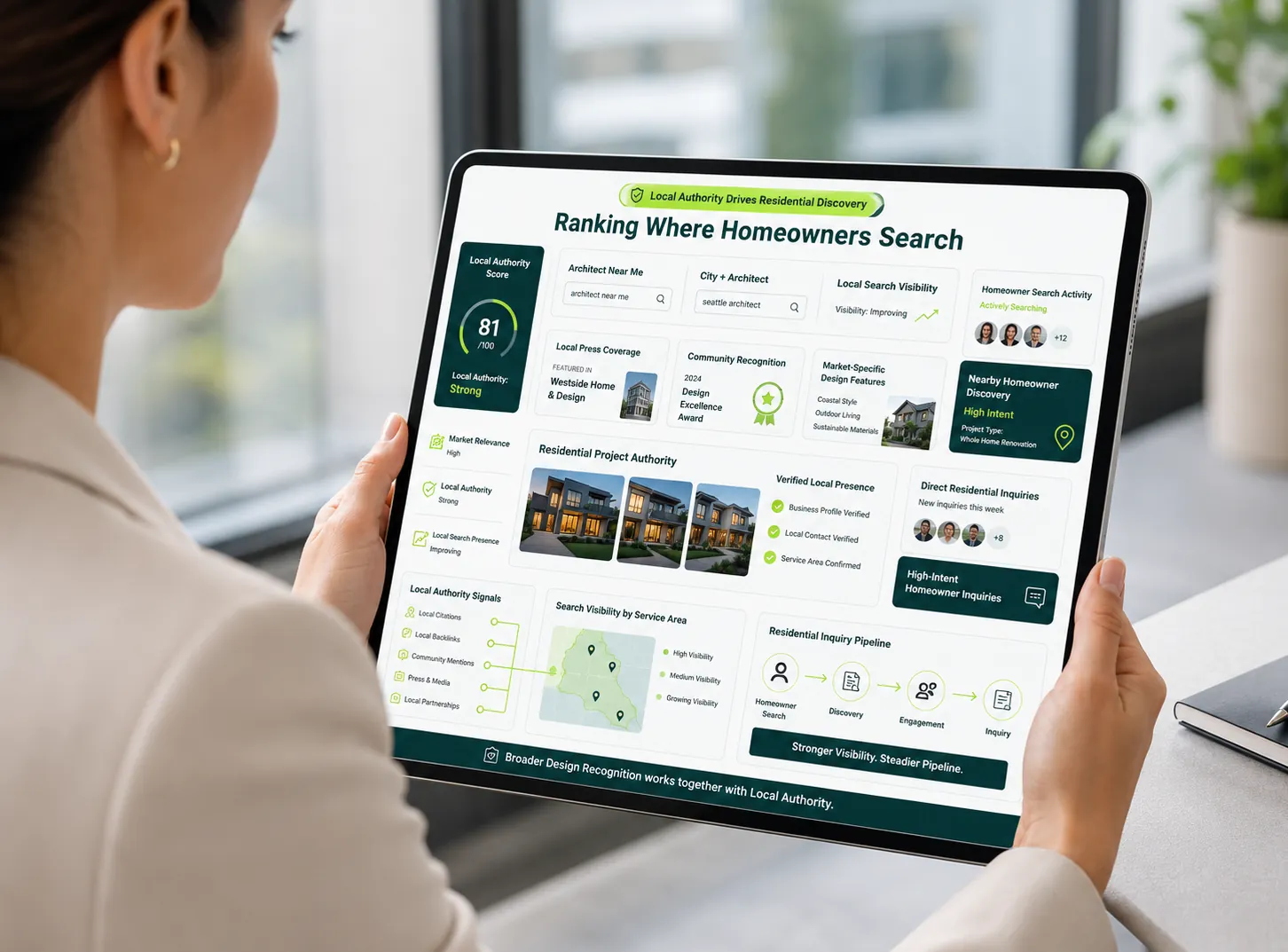
Residential architecture clients search locally, and the local authority determines whether your firm shows up when they do.
Genuine local press coverage, community recognition, and design features specific to your market build the local authority that supports ranking for “architect near me” and “city plus architect” searches, the terms that drive direct residential inquiries.
The result: Residential-focused firms building local authority alongside broader design recognition see stronger local search visibility and a steadier inquiry pipeline from homeowners actively searching for an architect.
Being Found When the Decision Is Being Made
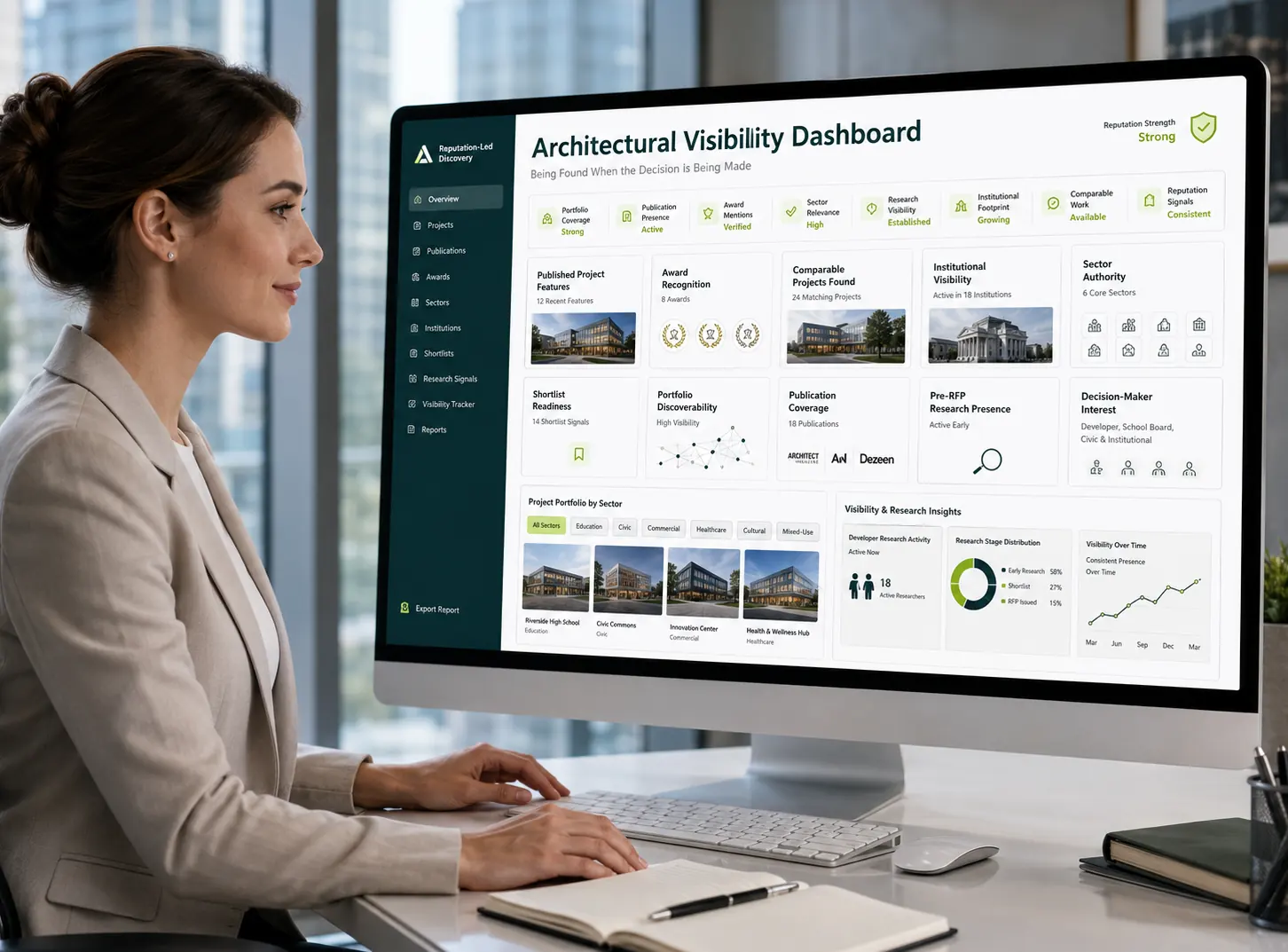
Commercial and institutional clients rarely search “architect near me.” They research firms by reputation, portfolio, and prior comparable work.
Visibility here means your completed projects, design recognition, and publication features are discoverable when a developer, school board, or civic body begins researching architects for a project like theirs.
This is a longer, reputation-driven game than local search, and it pays off at the RFP and shortlist stage, not in direct organic clicks.
The result: Firms with strong publication and award visibility are more likely to be the names that come up unprompted when institutional clients begin their research, which is a meaningful advantage before a single RFP is issued.
Client Success Stories
What Clients Say About Our Architecture Link Building Service
Verified reviews from architecture firms that earned design publication features, award recognition, and stronger visibility with the clients who matter most.

4.9/5 

5/5 
Rating on Google



We’d never had a real strategy for award submissions or publication outreach. It always happened if someone got around to it. Having a team that actually pursued this systematically got us into two regional publications and our first AIA chapter award in the same year.

Principal
Residential Architecture

Most of our work comes from RFPs, not search, so we were skeptical that link building would matter. What changed was how often we started coming up as a known name when institutional clients researched firms before issuing the RFP. That visibility is hard to measure but easy to feel in how our pitches land now.
Partner
Institutional Architecture

The local side made a real difference for our residential inquiries, but the publication features were the bigger win. Getting featured in outlets our own prospective clients actually read changed how people perceived the firm before they ever called us.
Principal
Mixed Residential and Commercial Practice
Service Framework
Investment, Timeline, and Deliverables
Every architecture link building campaign is tailored to your practice types, target publications, awards, and market reach. Here’s what shapes your investment:

Practice Type and Reach
Residential-focused firms need a different approach than commercial or institutional firms competing regionally or nationally.

Publication and Award Tier
Pursuing top-tier design publications and national AIA recognition requires more intensive outreach work.

Portfolio Submission Readiness
Campaigns covering multiple award categories and publication pitches scale beyond a single submission.

Campaign Duration
Many firms see initial recognition within 4 to 8 months, with authority compounding well past 12 months.
Directional pricing
Pricing and scope depend on your placement volume, account team size, and growth goals, so we tailor them to fit rather than quote a flat number upfront. Custom proposals follow an initial strategy call and lay out approach built for your requirements, including monthly placement scope, anchor strategy, reporting cadence, and month-by-month roadmap aligned with your goals.
What You Get
Every Award, Every Feature, Every Inquiry Source Reported
Full transparency on your design recognition campaign, with reporting based on whether you compete locally, regionally, or both.

Live Publication Features
You see every design publication placement with the outlet, the project featured, and the authority and visibility it adds.

Award Submission Tracking
You see every award submission made, its status, and the recognition earned across AIA and regional design programs.

Local and Regional Authority Split
You see your reporting broken out by local ranking impact and regional or RFP-relevant discoverability, based on your practice type.

Inquiry and Visibility Reporting
You see how your campaign connects to inquiry volume and broader visibility, which strengthens your pitches and proposals.
Our Approach
A Design-Authority Approach Built for How Architects Actually Win Work
You get systematic publication and award outreach based on your practice type, not generic local SEO that misses how architecture clients actually decide.
| Factor | Generic Local SEO Agencies |
 |
|---|---|---|
| Practice Type Strategy | One local SEO approach applies regardless of whether the focus is residential or commercial. |
Strategy scoped to local search for residential and reputation building for commercial and institutional work. |
| Award Pursuit | No systematic approach to AIA or design award submissions. |
Award opportunities mapped to your portfolio, with submission work handled as a core part of the campaign. |
| Publication Tier | Generic local directory listings and basic local press, if any. |
Outreach scoped to the design publication tier that actually matters in architecture. |
| RFP-Relevant Visibility | No concept of reputation-building for institutional and procurement-driven clients. |
Visibility built for the discoverability that matters before and during the RFP process. |
| Authority Source | Directory submissions and citation building unrelated to design quality. |
Authority earned through your actual project quality, recognized by awards and publications. |
Who We Help
Architecture Practice Types We Support
Whatever your practice focus, we build the design authority and visibility strategy that matches how your specific clients find and choose a firm.

Residential
Architecture

Commercial
Architecture

Institutional & Civic Architecture
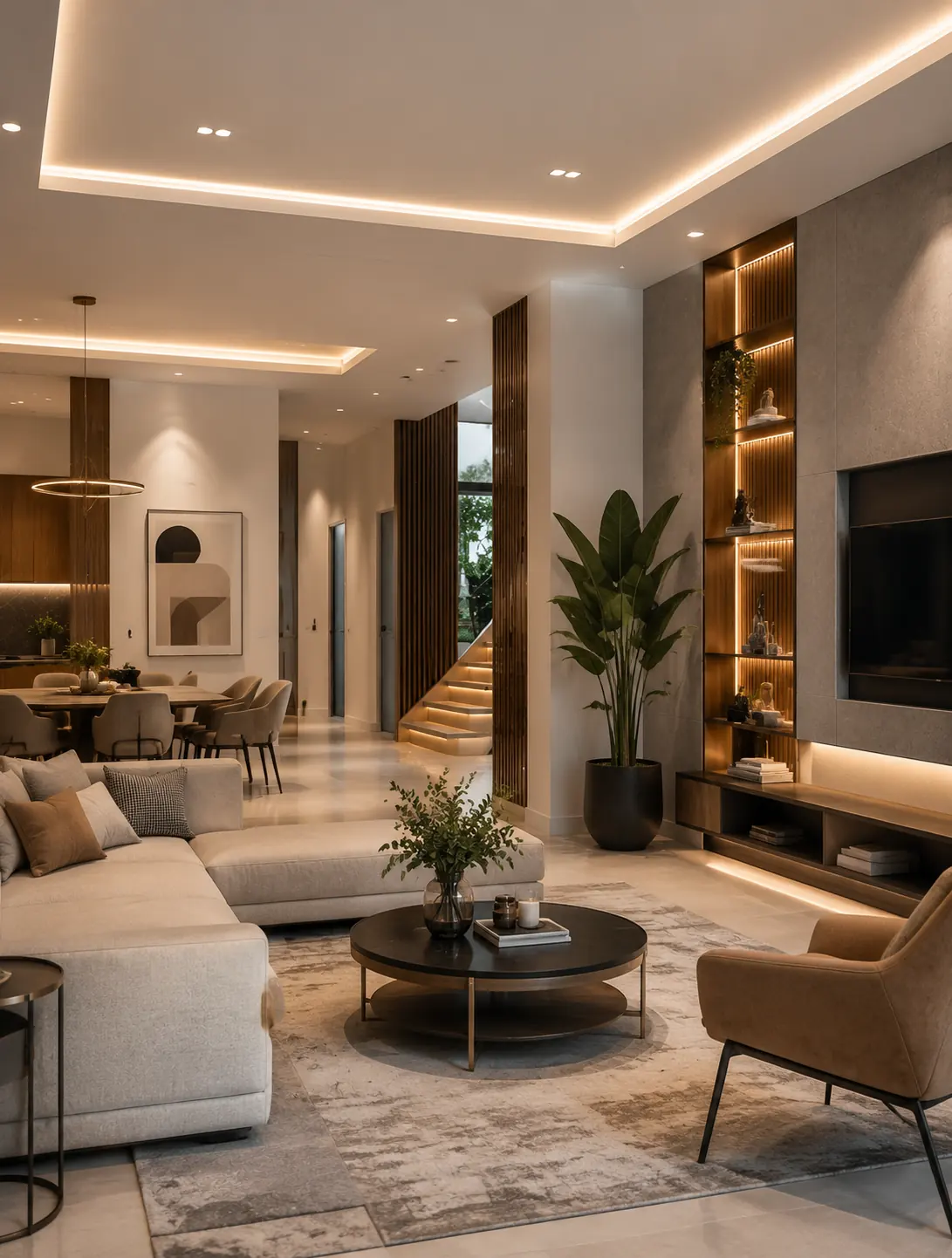
Interior
Architecture

Sustainable & LEED Design
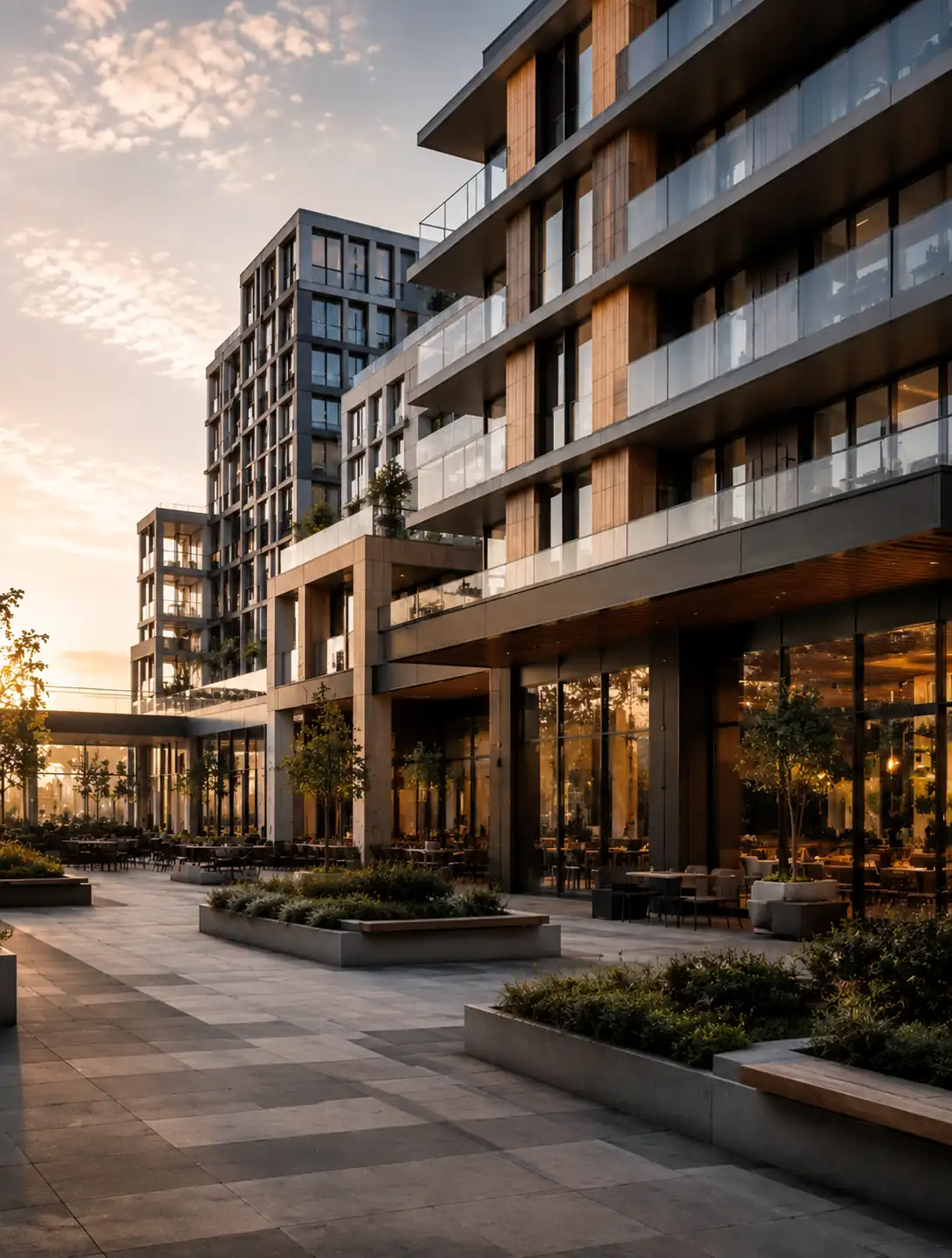
Multi-Family & Mixed-Use
Real Results
Results From Our Architecture Link Building Campaigns
See the traffic, ranking and authority gains from recent campaigns.
Common Questions
Frequently Asked Questions
Everything architecture firms ask before starting a design-authority campaign, from award submissions to RFP-relevant visibility.
Residential clients search locally, looking for “architect near me” or “custom home architect” in their city, so residential link building focuses on local authority:
- press
- Community recognition
- Design features tied to your market
Commercial and institutional clients rarely search this way. They research firms by reputation and portfolio, often through word of mouth or by looking at who designed a comparable project elsewhere, and they’re frequently driven by a formal RFP process.
Commercial and institutional link building focuses on building reputation and discoverability that get a firm shortlisted before an RFP is even issued, rather than on ranking for a local search term.
It depends on your practice type, project scale, and design style, since not every publication fits every firm.
For firms with strong, distinctive residential or boutique commercial work, that can include globally recognized outlets like Dezeen, ArchDaily, and Architectural Digest.
For most firms, respected regional and trade publications, including Architect Magazine, Architectural Record, and strong regional design and business press, are realistic and valuable targets.
Your editorial outreach team maps the publication tier that actually fits your portfolio rather than pitching everyone the same generic outreach.
Short answer: you get into a strong position, but winning isn’t something anyone controls. Judging belongs to the award program, and the final call rests on the quality of your work.
Here’s what you get: award categories picked to fit your portfolio, submission material that presents your project exactly how judging criteria reward, and access to recognition most firms miss out on.
Build a steady process, and you get a real edge every year, no matter what happens with one award.
Yes, though the value shows up differently than it would for a residential firm.
RFP-driven clients still conduct research before issuing a request for proposals, and firms with strong publication records, award recognition, and visible completed work are more likely to come up as known names during that research.
Being a recognized, well-documented firm strengthens your position before the RFP process even starts and supports stronger proposal responses once it does.
The return isn’t measured in organic search clicks the way it would be for a residential firm. It shows up in how often your firm gets considered and how your proposals land.
Both, since they reinforce each other.
Award recognition strengthens publication pitches, since an editor is more receptive to a project that’s already earned design recognition.
Publication features, in turn, can strengthen future award submissions by demonstrating the kind of attention the project has already received. Your campaign treats these as one coordinated design-authority strategy rather than two separate, unrelated efforts.
Architecture link building costs depend on your campaign scope, target publications, competitive market, and long-term growth goals.
Following an initial strategy call, you’ll receive a tailored proposal that outlines the recommended monthly scope, publication strategy, reporting cadence, and a roadmap designed around your firm’s objectives.
Ready to build the design authority that wins more of the right commissions?
Get a senior strategist to map your practice type, identify your strongest award and publication opportunities, and build a visibility strategy that fits how your clients actually find you.
4.9/5 Trusted by agencies
and brands worldwide.