Link Building Service for Solar Companies That Wins More Projects
Your solar company earns certification, trade, and local authority that helps attract new project opportunities from relevant audiences.

Certification directory placements
Trade publication and ranking coverage
Per-market reporting

4.9/5
Trusted by agencies
and brands worldwide.
Average DR
40 to 75
Campaign Dashboard
CERTIFICATION PLACEMENTS
certification and credential directories
TRADE PLACEMENTS
solar publications and rankings
LOCAL RANKING WINS
“city + service” terms
ORGANIC TRAFFIC
3,400 to 9,500

Local Authority Score
88/100





Service Overview
Why Solar Companies Have Link Sources Other Trades Don’t
Solar is a certified, subsidized trade with two link layers: a directory of certified professionals and state, utility, and national program pages. Most installers qualify, yet few use them. A solar link building service earns backlinks from certification directories, trade publications, and program pages you qualify for, helping you rank for searches.
NABCEP (North American Board of Certified Energy Practitioners) maintains professional directories that let employers and consumers verify certification status.
Solar Power World covers solar technology, development, and installation and publishes its annual Top Solar Contractors List. It publishes an annual Top Solar Contractors List, a U.S. ranking. State, utility, and national incentive programs add another layer of institutional links.
Three things define solar link building done right:

Credential-Gated Placements
Your existing qualifications unlock directory listings that uncertified competitors can’t enter.

Trade Standing
Your team earns coverage and rankings in the publications your industry reads, opportunities no competing agency page even mentions.

Projects and Search Visibility
Placements you own permanently, instead of customers you rent at a price somebody else sets.
How We Work
How Your Solar Link Building Campaign Works
Your campaign builds authority through certification directories, trade publications, rankings, incentive pages, local organizations, press, and verified directories.
Your campaign starts by defining your markets and competitors. Your strategist identifies whether you serve residential, commercial, or both, then reviews credentials, listings, and local search position. Installers serving a metro need different work than those covering three states.
They audit citations because inconsistent name, address, and phone details weaken your foundation. Your team prioritizes directories where editors review entries over auto-submission lists.
Your Google Business Profile supports map-pack visibility, but search teams handle it. We flag issues that need attention.
Your team earns the placements that match your existing credentials. Competitors face a real barrier when they try to replicate these links.
If a valuable certification could strengthen your presence and nobody on your team holds it, your strategist flags the opportunity. You need the credential to secure the listing.
Your team pitches relevant solar publications and pursues contractor rankings such as Solar Power World’s Top Solar Contractors List. Companies apply with installation data that Solar Power World verifies against state interconnection and utility records.
Your team can pitch solutions you’ve developed, such as crew training, permitting fixes, or successful service models. When editors need evidence, your team creates data breakdowns, diagrams, or short guides that editors can cite.
Your team pursues institutional program pages that support solar financing. State energy offices, utility program administrators, and the national database publish these pages, often referencing contractors that qualify for their programs. These institutional sites offer valuable links because they differ from commercial sites.
Your team pursues these placements without offering financial or program advice to your customers.
When the story needs an artifact, your team builds a data breakdown from your installs, diagram, or short guide worth citing.
Your team targets local organizations and news outlets that publish links.
Chambers of commerce, local business associations, and community groups maintain linkable listings. Sponsoring local events or school programs can also earn organizer-page links. Community papers readily cover local business stories, so notable installations and new markets create news opportunities.
Commercial work adds another layer: property owners and facility partners often publish vendor pages, and your existing relationships can provide those placements.
Your monthly report covers live placements, source mix, local ranking movement, and per-market results wherever you serve multiple markets.
The report separates residential and commercial work when you serve both, so you can see which side of the business builds authority.

Expected Results
Outcomes Solar Link Building Service Delivers
When your credentials are visible where buyers actually search, the qualifications you already hold start bringing projects in.
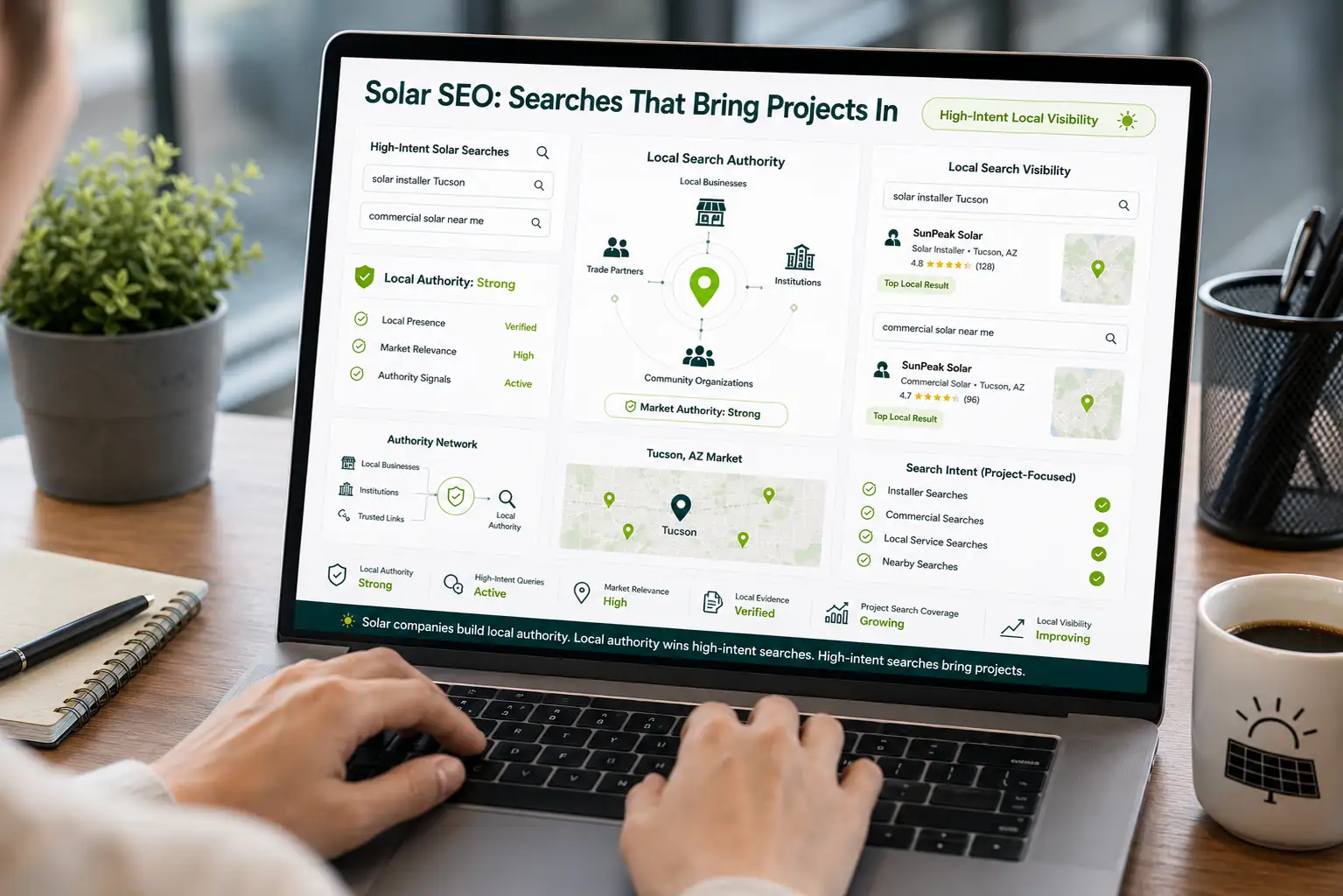
Ranking for the Searches That Bring Projects In
Searches like “solar installer Tucson” or “commercial solar near me” capture buying intent. Local search authority largely determines who wins those searches.
Google treats links from local businesses and institutions as evidence that you operate as an established provider in that market.
The result: Installers build genuine local authority and compete for searches that produce projects. You stop fighting competitors for searches where you already rank.
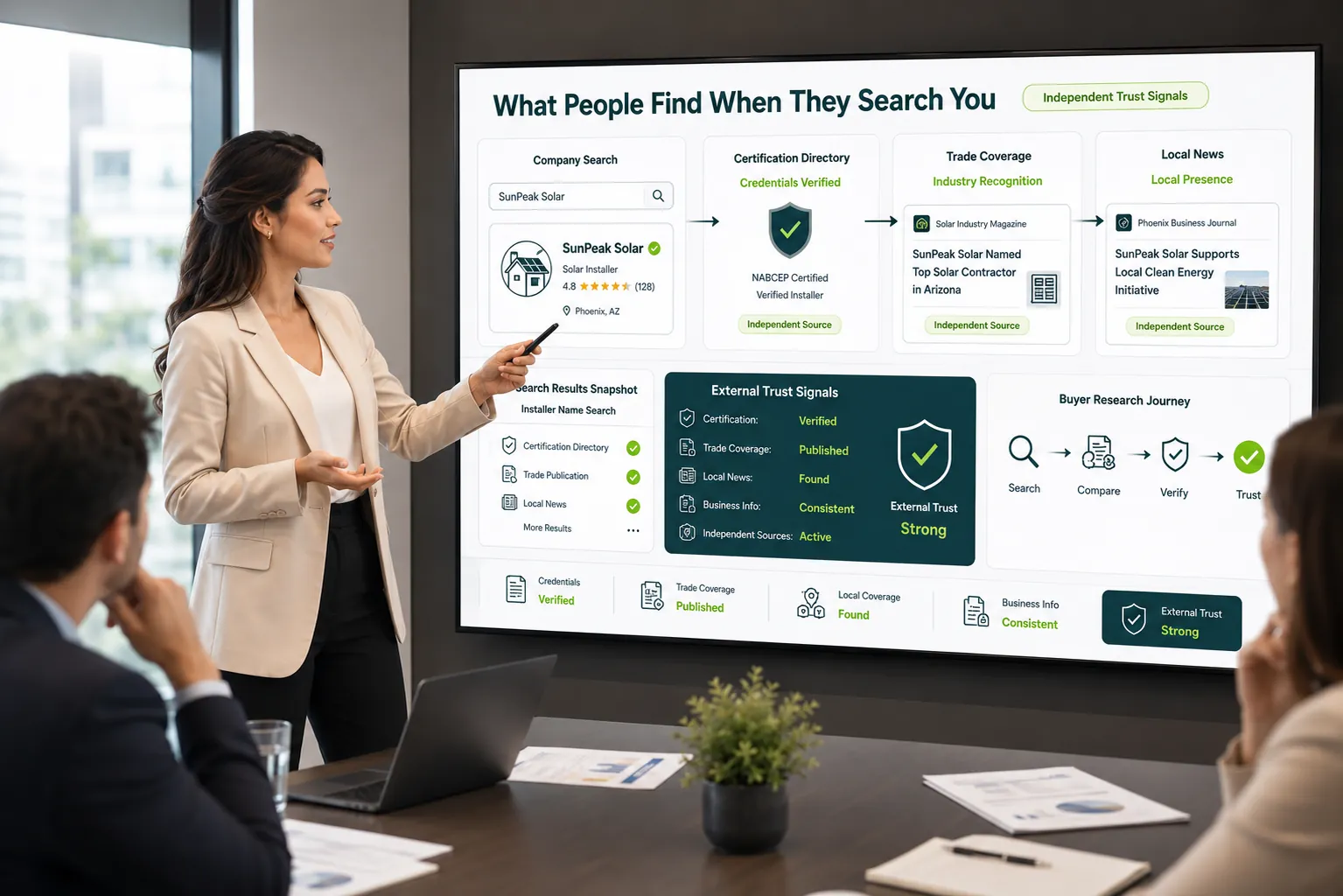
What Someone Finds When They Check You Out
A homeowner or facility manager comparing installers will search your company name, and those search results shape the conversation before it starts.
They’ll find your certification directory entry, trade coverage, and local news in those results. These sources support your website’s claims, and independent publishers create them.
The result: Your credentials work beyond your own site, where most installers show little or nothing.
Placements Earned by Qualifying Instead of Paying
Certification directories and published contractor rankings use your credentials and real installation data instead of purchases.
Search engines value that distinction. Buyers who cannot distinguish between two installers value it just as much.
The result: Your existing qualifications generate search authority instead of sitting on a certificate wall.

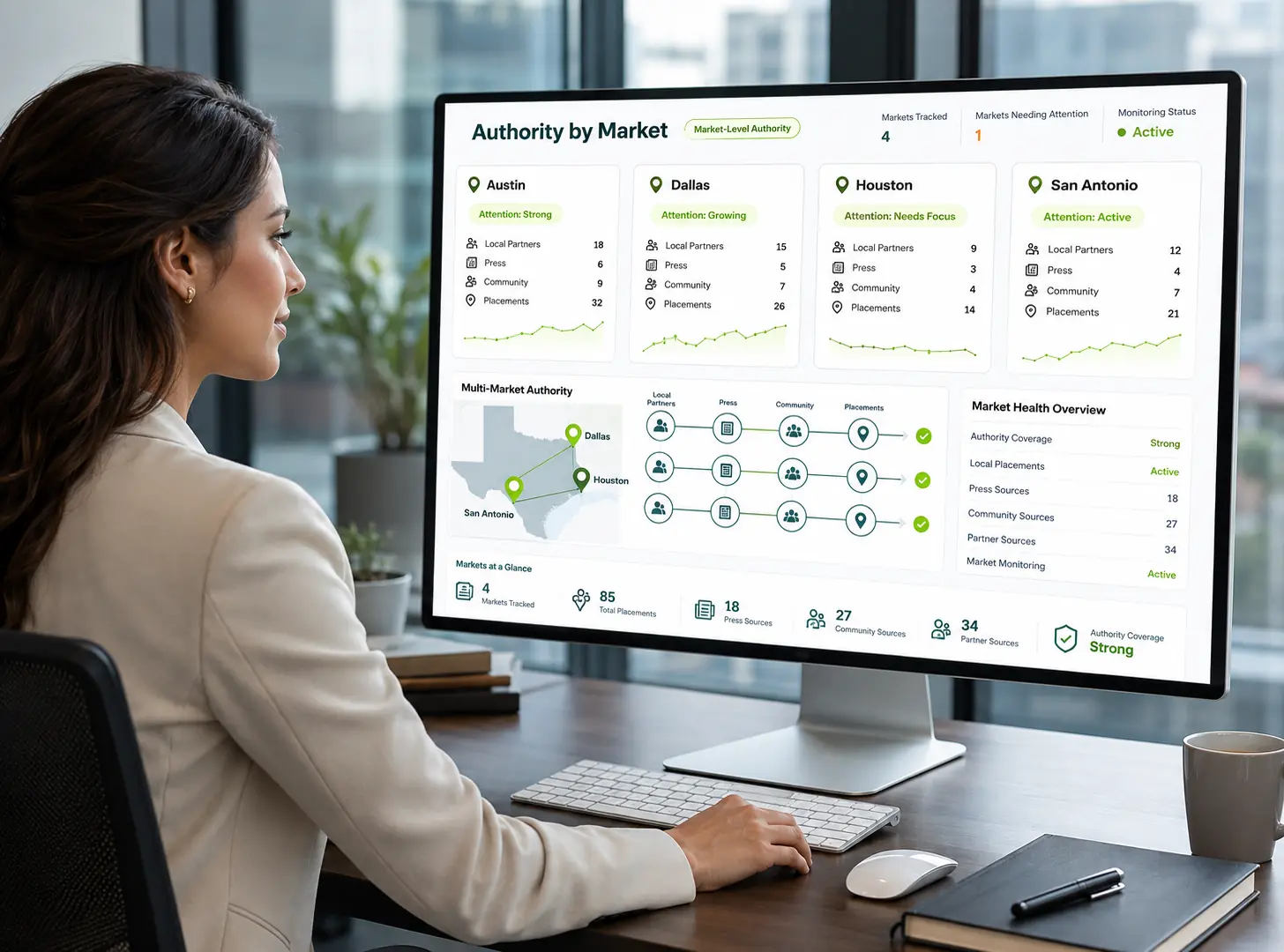
Build Authority Per Market, Track Each Location Separately
An installer serving several markets needs authority in each one instead of one blended profile.
Each market competes through its own local partners, press, and community sources.
The result: Multi-market operators see which areas earn placements and which need attention, instead of relying on one number that hides both.
Client Success Stories
What Clients Say About Our Solar Link Building Service
Verified reviews from solar contractors who turned certifications and trade standing into real search visibility and direct project inquiries.

4.9/5 

5/5 
Rating on Google



We already had the certifications, but Outreach Desk helped us turn those credentials into actual search visibility. The placements gave prospective customers more third-party proof that we were a legitimate, established installer.

Solar Company Owner
Residential Solar Installer

We were tired of paying for leads that other installers could also receive. The link-building campaign gave us a way to build search visibility we actually own, instead of renting access to the same customers.
Marketing Director
Commercial Solar Contractor

We serve multiple markets, so one blended report never showed us where we were actually gaining authority. The per-market reporting helped us see which locations were earning placements and where we needed more work.
Growth Manager
Multi-State Solar Installer
Service Framework
Investment, Timeline, and Deliverables
You buy editorial placements earned through credentials and trade standing, and keep them permanently. Four things shape your investment:

Markets Served
One metro needs a different scope than an operation covering several states.

Residential or Commercial
The two pull on different partners, publications, and local relationships.

Existing Credentials
Installers already holding certification start from further ahead than those who don’t.

Campaign Duration
Most installers see ranking movement within 3 to 4 months, with placements compounding well beyond 12 months.
Directional pricing
Your investment increases with source quality, market coverage, existing credentials, and campaign scope. Your strategy call determines the right campaign scope and produces a tailored proposal for your goals.
What You Get
Every Placement, Every Market, Every Source Reported
You get full transparency on live placements, source mix, and local ranking movement, with reporting that separates each market and segment.

Live Placements Reporting
You see every placement as a live link you can open, with its source and target page.

Coverage Source Mix
You see which sources are producing, so effort shifts toward trade publications, institutional sources, or local opportunities depending on what’s landing.

Per-Market Reporting
You see results split by market, because a chamber placement in one metro does nothing for a crew three states away.

Residential and Commercial Split
You see which side of the business the authority is building on when you serve both.
Our Approach
A Credential-First Approach Built for How Solar Buyers Compare
You earn credential-based placements, keep them permanently, and receive per-market reporting instead of paying for monthly link quotas.
| Factor | GENERAL MARKETING AGENCIES |
 |
|---|---|---|
| Unit Sold | A link quota with limited source-level visibility. | Individual editorial placements with live URLs and placement-level reporting. |
| Credentials | Certification treated as a wall decoration. | Certification directories serve as gated placements. |
| Trade Standing | No awareness that solar has its own press and rankings. | Trade publications feature pitches, and contractor rankings rely on real data. |
| Buyer Fit | One solar page sold to installers and developers alike. | Campaigns target installers and contractors and segment them by the work they do. |
| Multi-Market Handling | One campaign and one blended report. | Per-market source lists separate residential and commercial work. |
Who We Help
Solar Business Types We Support
Whatever you install and however many markets you serve, your team builds the authority that matches how your buyers compare installers.

Residential Solar Installers

Commercial and Industrial Solar
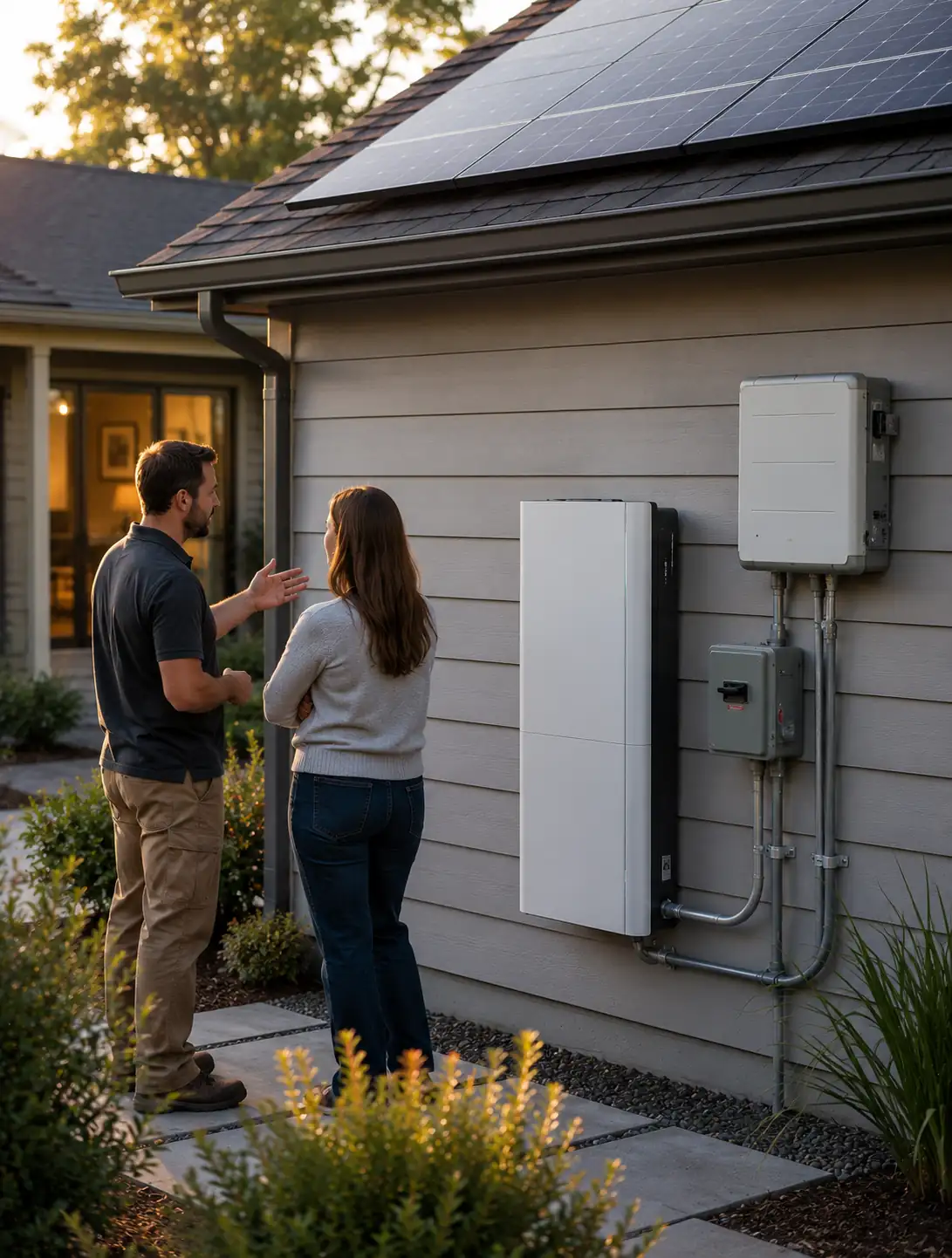
Solar and Battery Storage

Solar Maintenance and Repair
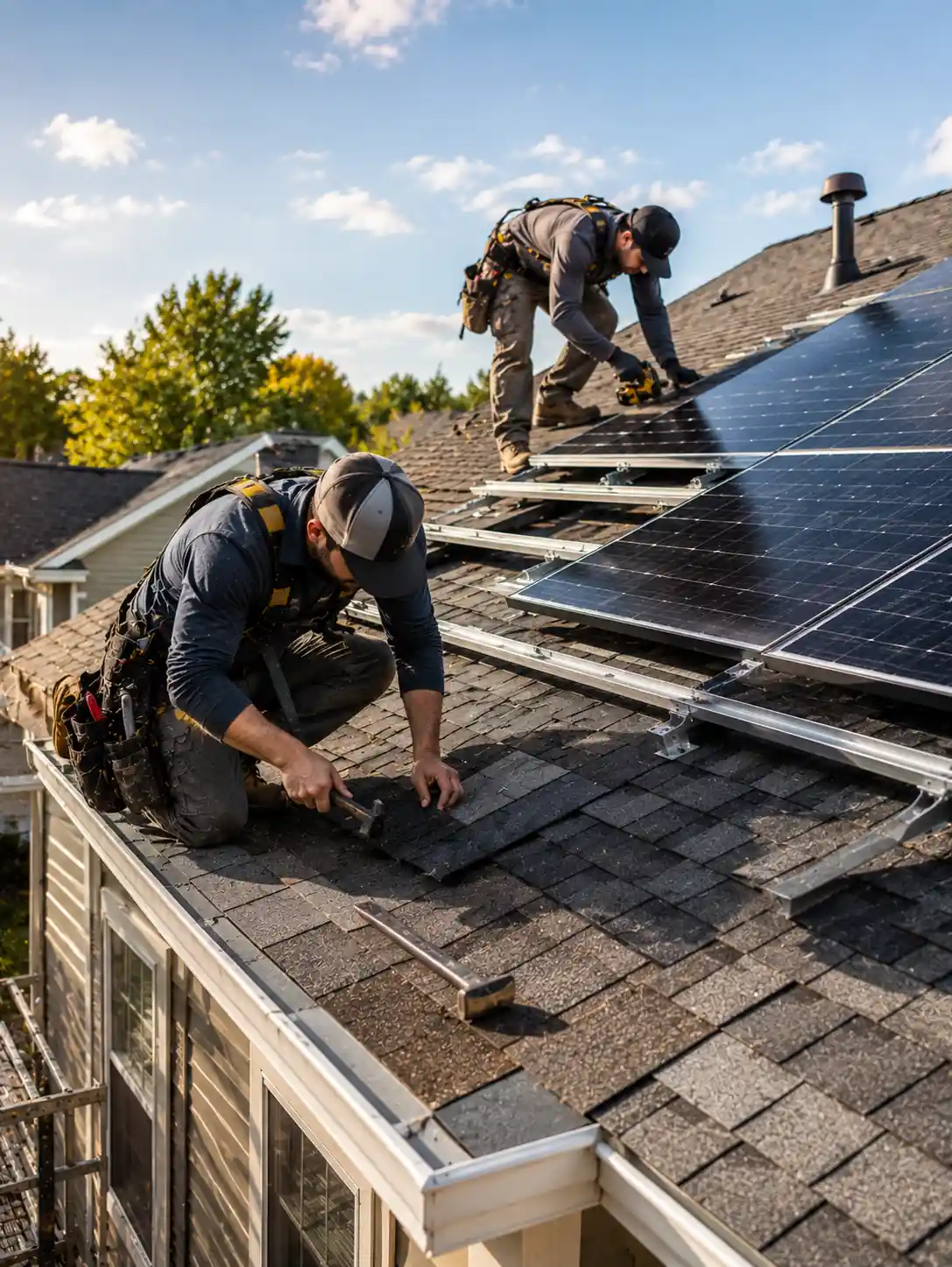
Roofing and Solar Contractors

Multi-State and Multi-Market Installers
Real Results
Results From Our Solar Link Building Campaigns
See the traffic, ranking and authority gains from recent campaigns.
Common Questions
Frequently Asked Questions
Straight answers to the questions solar contractors ask most before a campaign starts.
Expect ranking movement in three to four months, with project impact following as certification, trade, and local placements accumulate. Trade coverage works differently: when a publication their buyers read features an installer, that installer can hear from prospects the same week. The return can arrive before rankings move.
Sites you can earn links from include certification and certified-professional directories, solar trade publications, and published contractor rankings.
Guest posts can fit where a publication has a genuine readership and accepts relevant contributions. They sit behind the credential and trade work rather than in front of it.
What you won’t get is a monthly batch of auto-submitted listings on sites nobody reads.
Because a lead is a customer you rent, and a placement is an asset you own. On a marketplace, the platform sets the price. Depending on the product, the same lead may go to several installers. You’re often paying to compete with people who bought the same name. Placements work the other way: they stay up, they keep sending people, and nobody resells them. Most installers run both for a while and shift the balance as their own search visibility builds.
Ask what type each placement is, and expect an answer in plain words. A real placement sits inside editorial content on a site with its own readers. It exists because an editor decided it should. Some tactics have names you’d have to look up. That’s the moment to look them up. We report every editorial placement individually as a live link you can open and judge for yourself.
No, but it opens doors that stay shut otherwise. Certification directories only list certified professionals, so those placements aren’t available without the credential. If nobody on your team holds one yet, your strategist will flag whether it’s worth earning. In the meantime, the campaign runs on trade, institutional, and local sources.
Both, and the sources overlap more than you’d expect. Certification, trade publications, contractor rankings, and institutional program pages all serve residential and commercial installers alike. What differs is emphasis. On commercial projects, buyers draw a shortlist before anyone calls, so credentials and references carry more weight. In residential, local proximity and reviews do more of the work. We weight your campaign toward the areas that generate your revenue.
Ready to stop renting customers and start owning your search visibility?
Get a senior strategist to review your credentials and map the pages worth pursuing. Then we’ll build a campaign that brings projects directly to you.
4.9/5
Trusted by agencies
and brands worldwide.