Automotive Link Building Service That Drives Bookings
Your shop earns the trust, certification, and insurance network links that win the customers who need work done.

Local trust and review-adjacent authority
Insurance DRP and certification links
Coverage across every service line

4.9/5
Trusted by agencies
and brands worldwide.
Local Trust Authority Score
88/100
Campaign Dashboard
LOCAL PLACEMENTS
trust + trade sources
LOCAL RANKING WINS
“city + service” terms
INSURANCE & CERTIFICATION LINKS
DRP + ASE sources
ORGANIC TRAFFIC
3,400 → 9,700

Client Retention Rate
92%





Service Overview
Why Automotive Link Building Service Runs on Trust First
Auto repair carries a trust problem most local trades don’t.
Customers worry less about price and more about honest answers on what actually needs fixing. That skepticism shapes which shop they choose, and which links actually move the needle for an automotive business.
Generic local SEO treats a shop like any other local business: a directory listing here, a citation there. It misses the credentials that matter in this industry. ASE certification is a trust signal most shops never use as a link source. Direct Repair Program listings carry even more weight, since they mean an insurance company already vetted the shop.
Automotive link building done right builds authority from real certifications, insurance network relationships, and genuine local trust, not another directory listing every competitor already has.
Three things define automotive link building done right:

Certification and Credential Authority
ASE certification and other real industry credentials become link sources that address customer skepticism directly, not just SEO metrics.

Insurance Network Links
Direct Repair Program listings from insurance companies give body shops high-authority links tied to a credential most competitors never claim.

Local Trust Across Every Service Line
Repair, body work, tires, quick lube, and detailing each get authority scoped to how customers actually choose in that category.
How We Work
How Your Automotive Link Building Campaign Works
A trust-first workflow built on certification authority, insurance network links, and genuine local credibility.
Your campaign starts with understanding your local competition and your service mix.
Your strategist reviews which competitors rank for your priority “city plus service” searches, where your current backlink profile stands, and which of your service lines-repair, body work, tires, quick lube, or detailing has the most room to grow. A shop with strong general repair visibility but no body shop authority often has meaningful upside there.
Your team identifies the real credentials you hold that qualify as link opportunities.
ASE certification, manufacturer-specific training certifications, and other industry credentials often come with directory listings or recognition your shop is already eligible for and hasn’t claimed. This step maps every credential-based link opportunity available to your specific business.
For collision and body repair businesses, your team pursues Direct Repair Program listings from insurance companies.
Being listed as an insurer-approved shop is a real credential that carries weight with both customers and search engines, since it signals an insurance company has already vetted your quality and pricing. Your team identifies which insurance networks are realistic targets based on your current standing and helps you pursue the listings you qualify for.
Your team builds the local authority that reinforces trust: local news coverage, chamber of commerce recognition, community involvement, and genuine local business press.
Given how much trust matters in this industry, these links do double duty. They support local search rankings and reinforce the credibility signals customers are already looking for when choosing where to take their car.
Outreach scopes to what matters for each service line, not one approach for all.
Repair and mechanic work leans on certification and trust. Body shops lean on insurance network ties. Tire and quick lube lean on local volume and convenience trust. Detailing leans on visual, portfolio-style proof. Your campaign reflects these differences, not a single generic strategy.
You receive a monthly report broken out by the service lines relevant to your business.
You see local ranking movement, which certification and insurance network links your team has claimed. Also, how your authority is building relative to local competitors in each category you serve.

Expected Results
Outcomes Automotive Link Building Service Delivers
Real credentials and local trust build rank and conversions. Generic directories can’t match that.
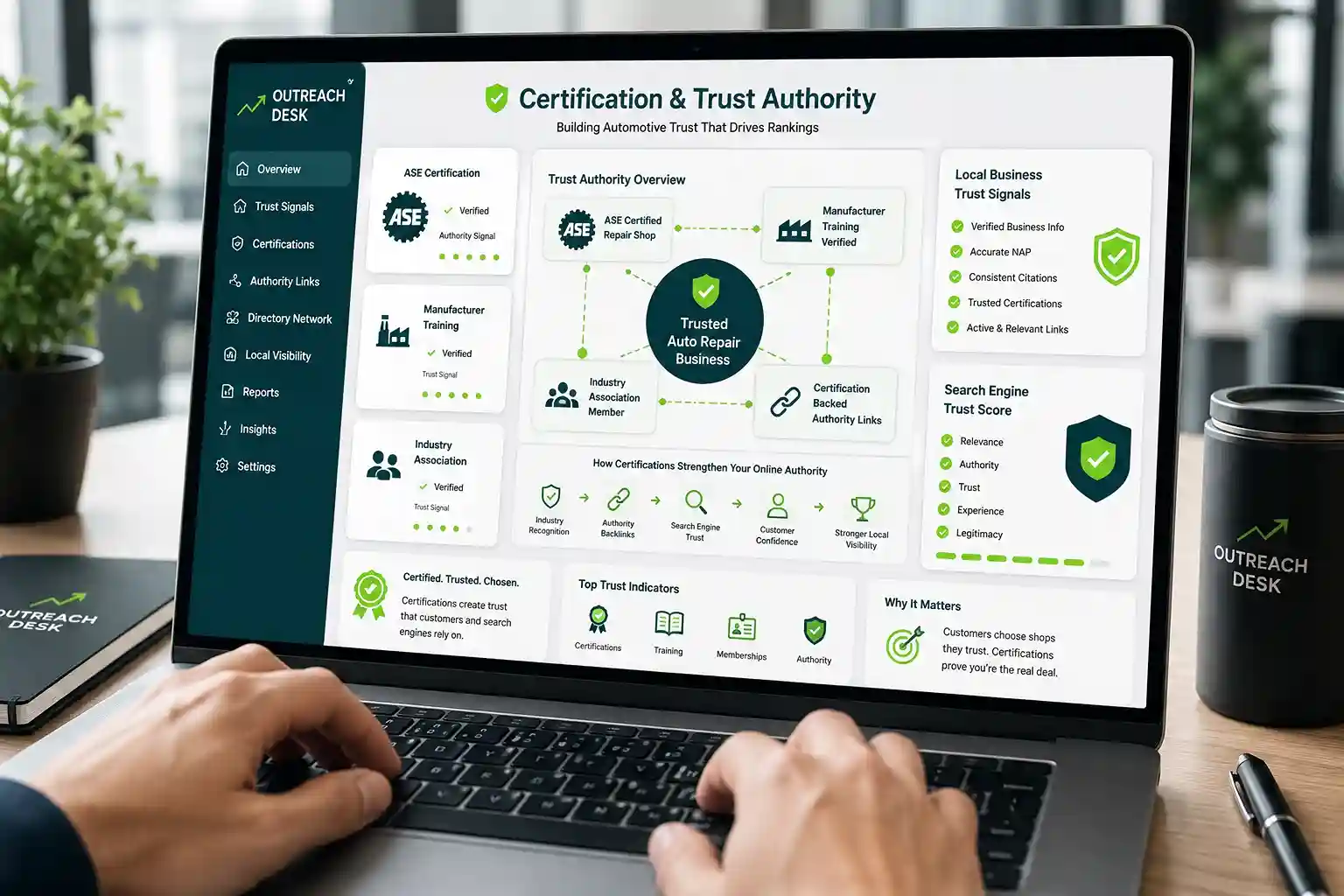
Authority That Answers the Question Customers Are Already Asking
Every auto repair customer is silently asking whether they can trust the shop they’re considering.
Links tied to real certifications, ASE recognition, manufacturer training credentials, and industry association membership answer that question before the customer even calls. It answers both to search engines and to the customer reading your site.
The result: One multi-bay repair shop claimed ASE and manufacturer certification links it had held for years but never used as a link source. This adding meaningful authority to a profile that had previously relied entirely on generic directories.
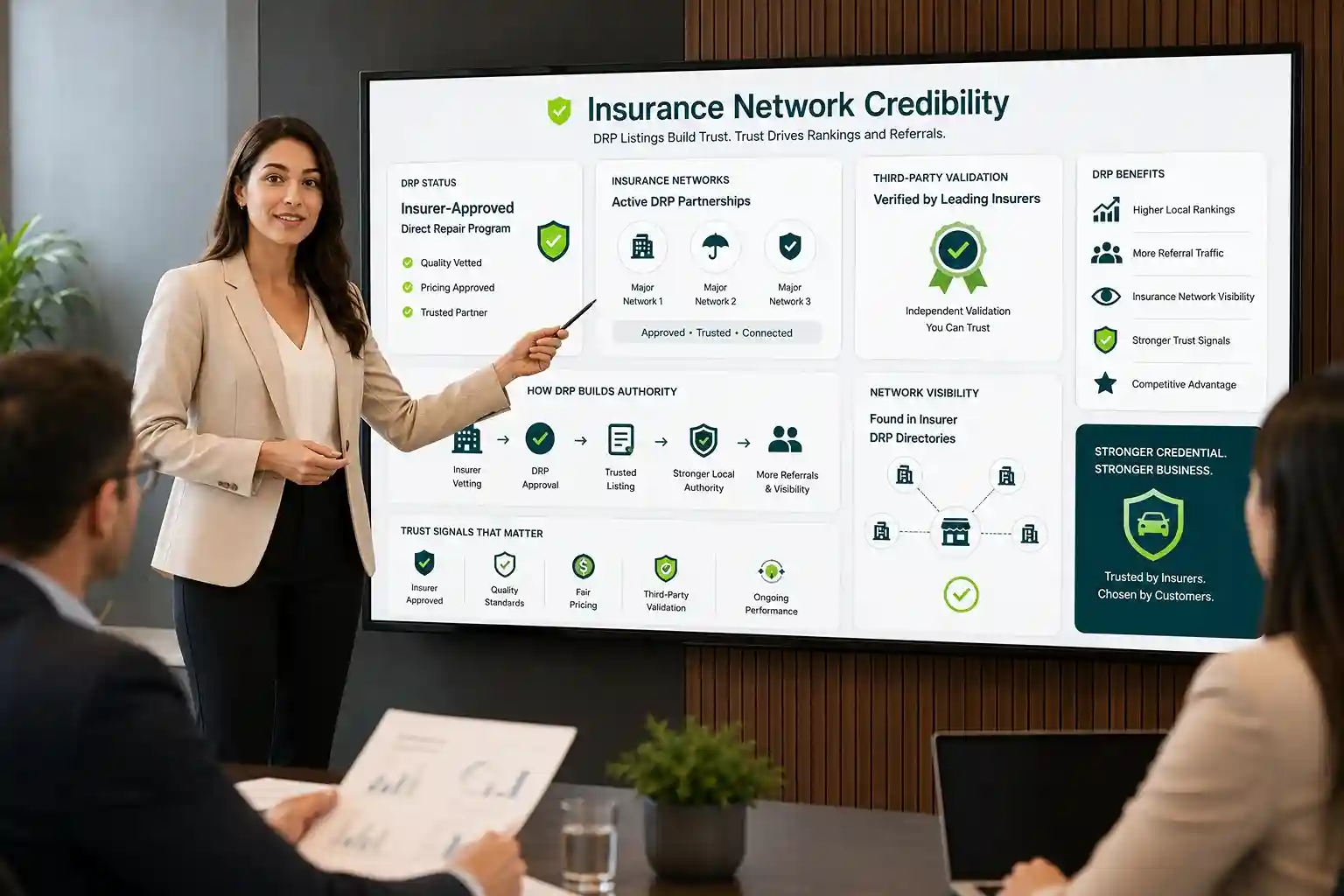
The Strongest Credential Most Body Shops Never Claim
Being an insurer-approved Direct Repair Program shop means an insurance company has already vetted your quality and pricing.
That’s a level of third-party validation almost no other local trade has access to, and the link that comes with a DRP listing carries real authority.
The result: A regional body shop group pursued DRP listings across three major insurance networks it qualified for and had never claimed. It saw a meaningful lift in both local rankings and inbound referral volume from those networks directly.
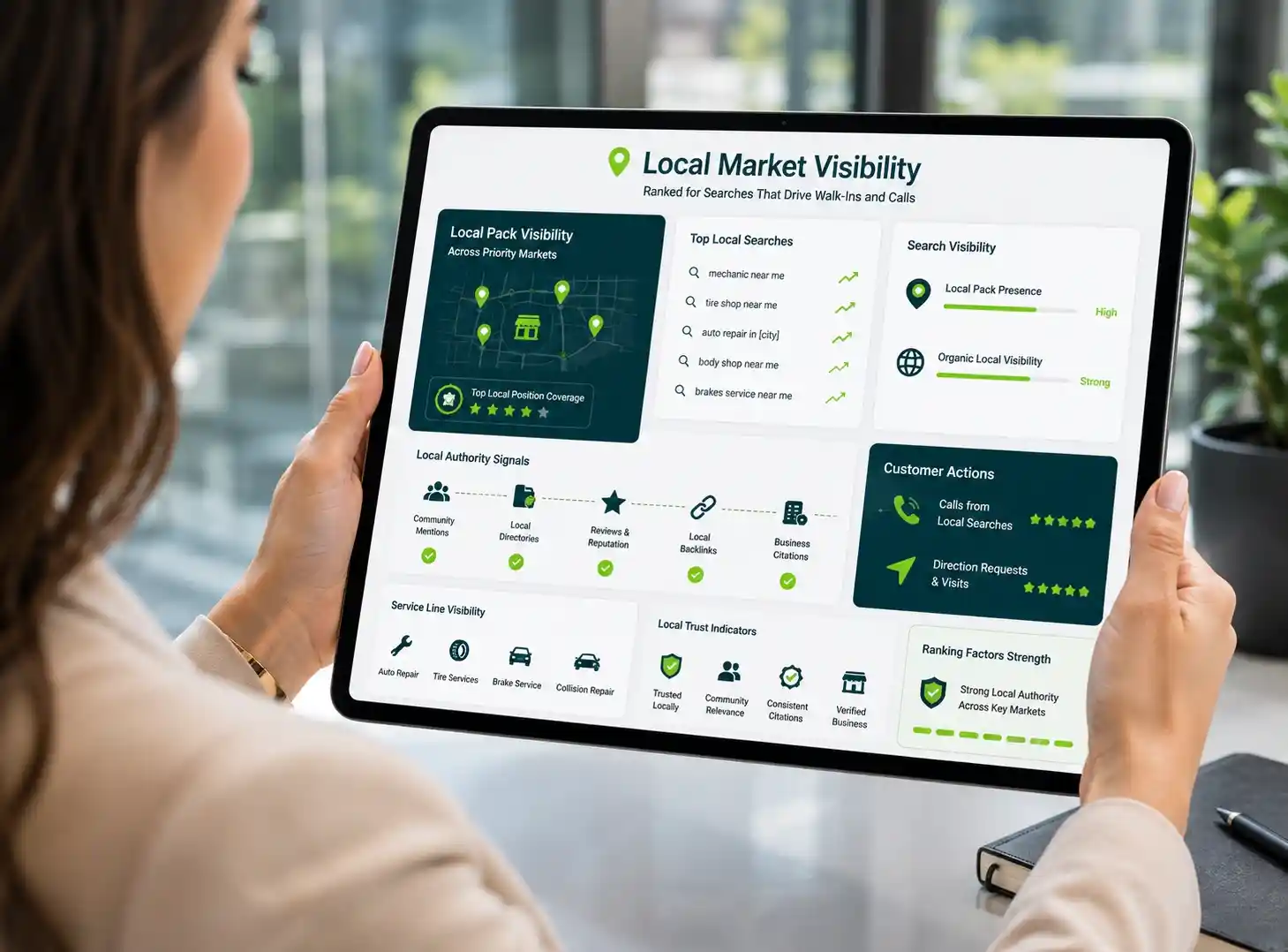
Ranking for the Searches That Drive Walk-Ins and Calls
Most automotive customers search locally, whether they’re looking for a mechanic, a tire shop, or a body shop after an accident.
Local authority built from trust and community sources supports stronger local pack and organic visibility for the “city plus service” searches that drive real customer volume.
The result: An automotive service group building genuine local authority across repair and tire lines grew organic traffic sharply year over year, with local pack visibility improving across priority markets.
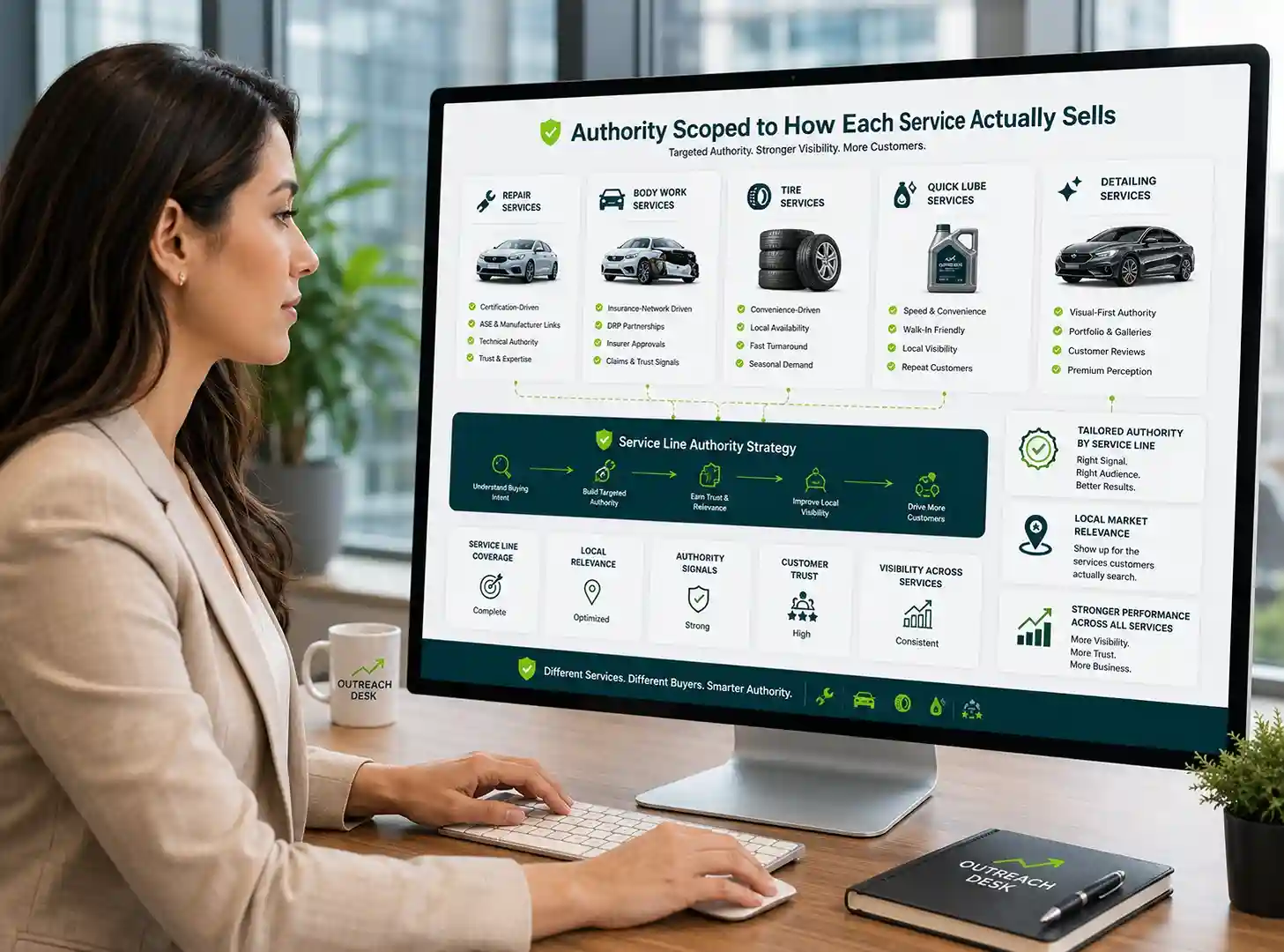
Authority Scoped to How Each Service Actually Sells
Repair, body work, tires, quick lube, and detailing aren’t sold the same way, and they shouldn’t be marketed the same way either.
Each service line builds authority through a different signal: certification for repair, insurance-network ties for body work, convenience for quick lube, visual proof for detailing. This matches how customers buy in each category, not one undifferentiated local listing.
The result: Multi-service automotive businesses that scope authority by service line see stronger performance across their full revenue mix.
Client Success Stories
What Clients Say About Our Automotive Link Building Service
Verified reviews from repair shops, body shops, and automotive businesses that built trust-first authority and grew their local visibility.

4.9/5 

5/5 
Rating on Google



We’d been ASE certified for over a decade, and it had never occurred to us that it was a link opportunity, not just a certificate on the wall. Getting that credential working for us online made a real difference in how we showed up locally.

Owner
Independent Repair Shop
As a body shop, most of our marketing had ignored the insurance side of our business entirely. Getting us properly listed on the DRP networks we already qualified for brought in referral volume we hadn’t been capturing, on top of the SEO benefit.
General Manager
Collision Repair

We run repair, tires, and quick lube under one roof, and every previous agency treated it as one generic local business. Having a strategy that actually reflected how differently customers choose each of those services
Owner
Multi-Service Auto Shop
Service Framework
Investment, Timeline, and Deliverables
Every automotive link building campaign is scoped to your service lines, local market, and credentials. Here’s what shapes your investment:

Service Line Mix
Covering repair, body work, tires, and detailing adds scope beyond a single service line focus.

Insurance Network Pursuit
Body shops pursuing multiple Direct Repair Program listings require more relationship-focused outreach work.

Local Market Competition
Dense metro markets with several established automotive competitors require more intensive local link building.

Campaign Duration
Most clients see local ranking gains within 3 to 5 months, with authority compounding past 12 months.
Directional pricing
Investment scales with your service mix, insurance network pursuit, and local market competition. Single-location shops focused on one service line sit at the lighter end. Body shops chasing DRP relationships and multi-location businesses sit higher, given the added outreach and coverage. You get a detailed proposal after your strategy call, built around your service line priorities and your specific credentials.
What You Get
Every Credential, Every Network, Every Service Line Reported
Full transparency on your Automotive link building, your certification and insurance network placements, and performance across your service lines.

Live Local Placements
You see every placement with the source, the trust or credential connection behind it, and the local ranking impact it drives.

Certification and DRP Tracking
You see which certification links and insurance Direct Repair Program listings your team has claimed and their authority contribution.

Service Line Breakdown
You see ranking and visibility impact split across repair, body work, tires, and other service lines relevant to your business.

Local Ranking Reports
You see local pack movement and ranking gains on your priority searches, broken out by market and service category.
Our Approach
A Trust-First Approach Built for Automotive Businesses
You get authority built on real certifications and insurance network links, not the generic directories every shop already uses.
| Factor | Generic Local SEO for Auto Shops |
 |
|---|---|---|
| Certification Use | No use of ASE or manufacturer certifications as a link source. |
Certification links claimed and built into your profile as trust authority. |
| Insurance Networks | No pursuit of Direct Repair Program listings for body shops. |
DRP relationships pursued as high-authority, insurer-vetted credibility links. |
| Trust Signal Focus | Generic directory links with no connection to the skepticism customers bring. |
Authority built from sources that directly address customer trust concerns. |
| Service Line Coverage | One undifferentiated strategy applied across repair, body, and tires alike. |
Strategy scoped separately to each service line based on how it’s actually sold. |
| Dealership Confusion | Often blends dealership and independent shop tactics without distinction. |
Built specifically for independent automotive businesses, not dealer networks. |
Who We Help
Automotive Businesses We Support
We build the local trust your automotive business needs to win customers, whatever your service mix.
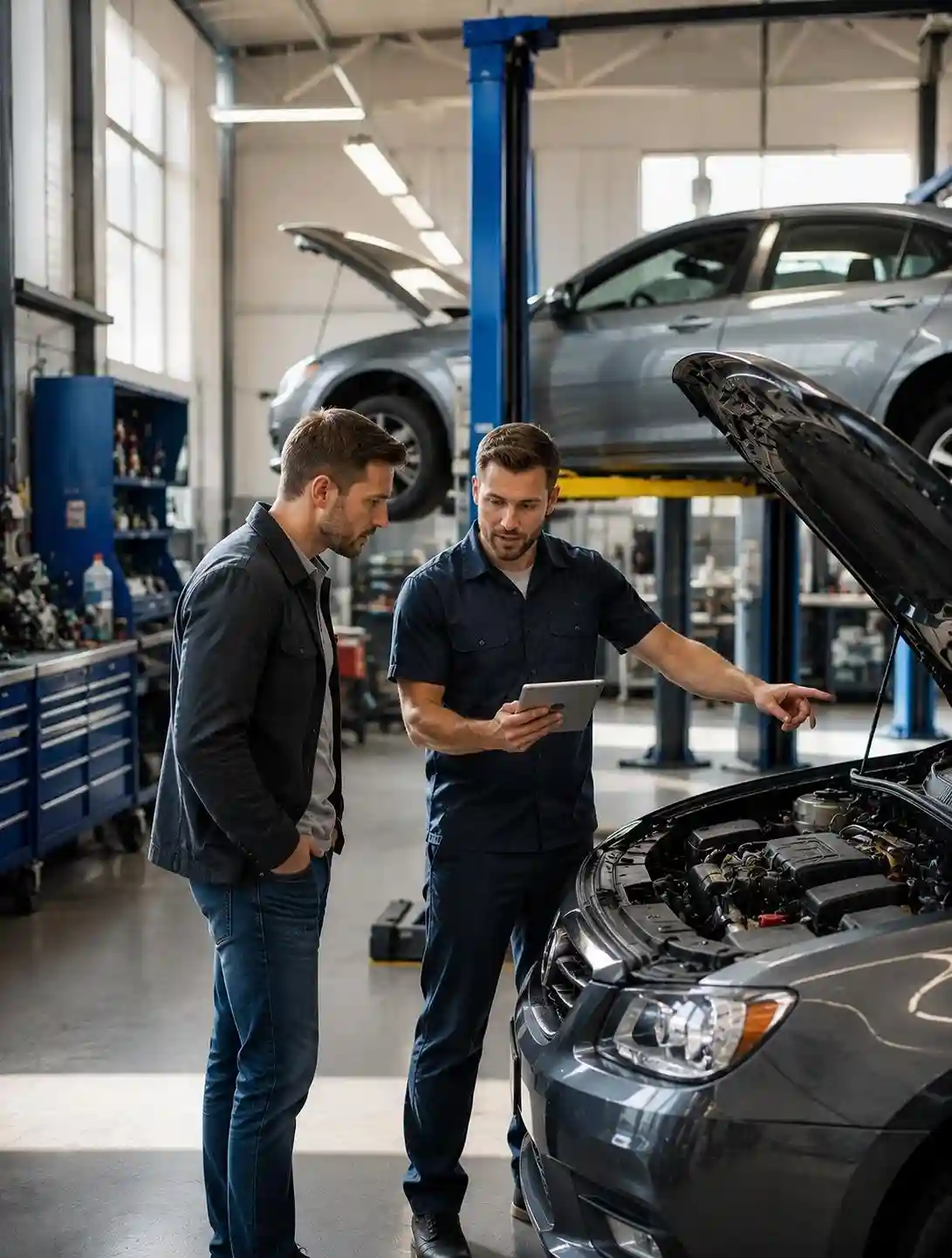
Auto Repair & Mechanic Shops
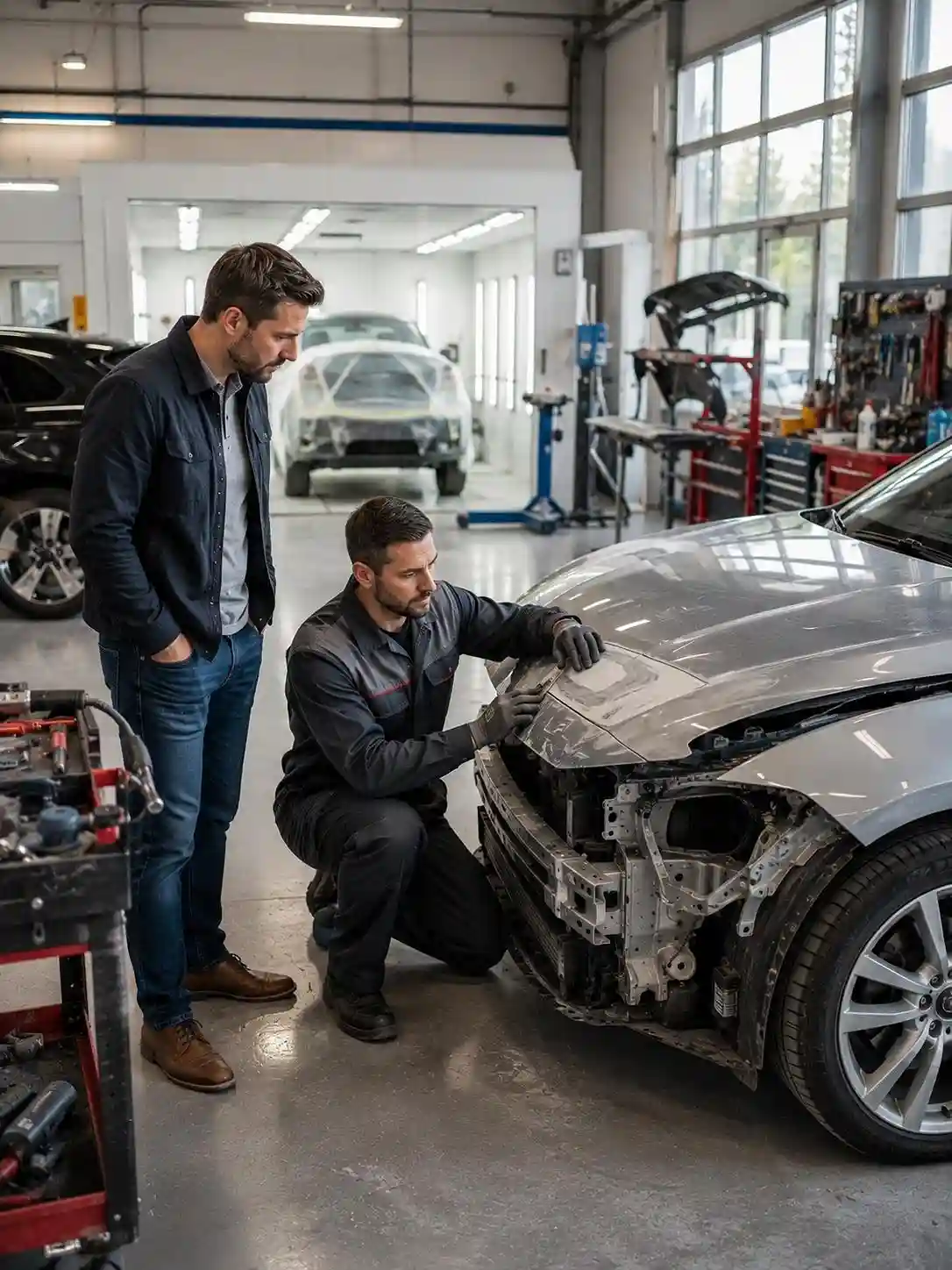
Auto Body & Collision Repair
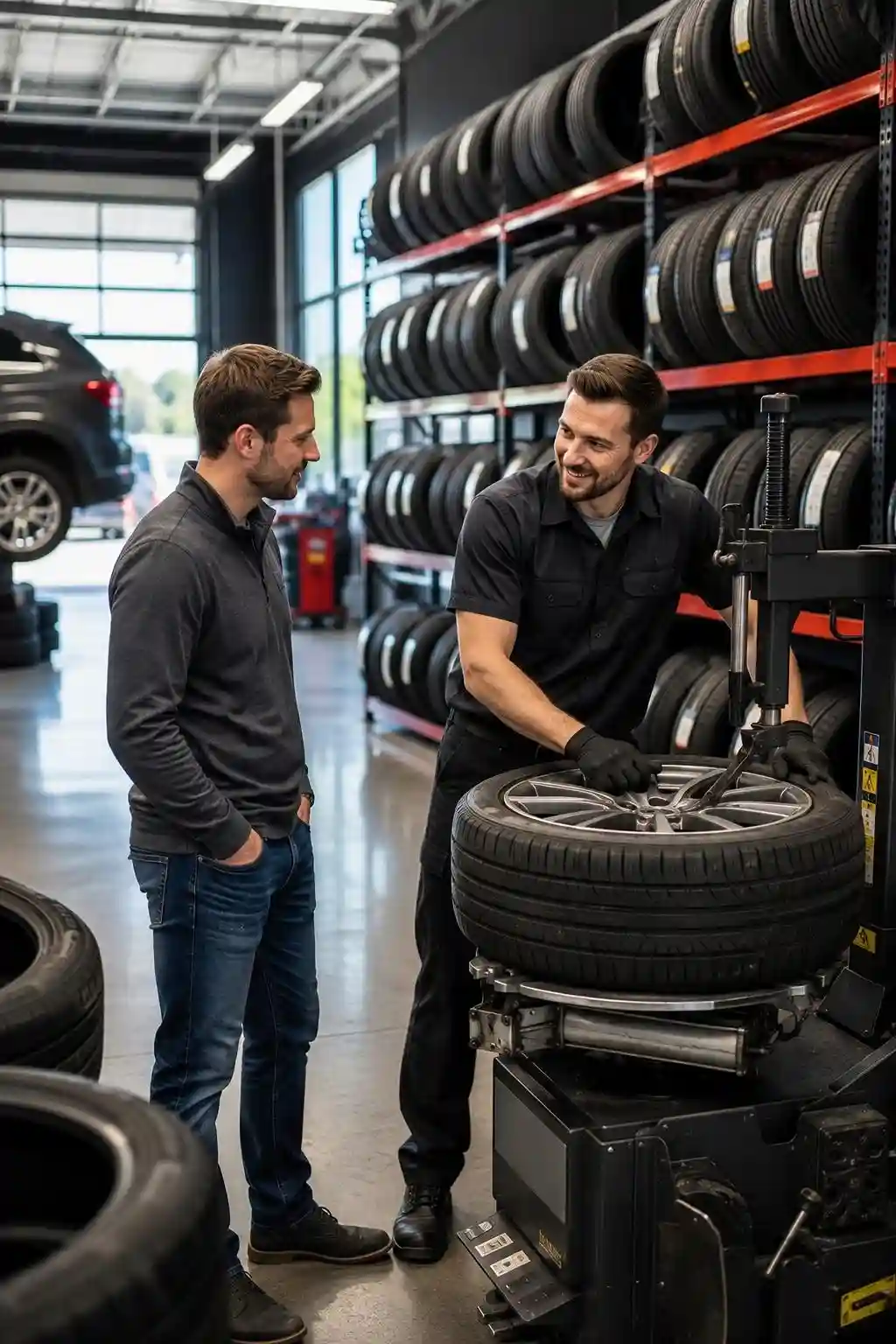
Tire Shops & Service Centers
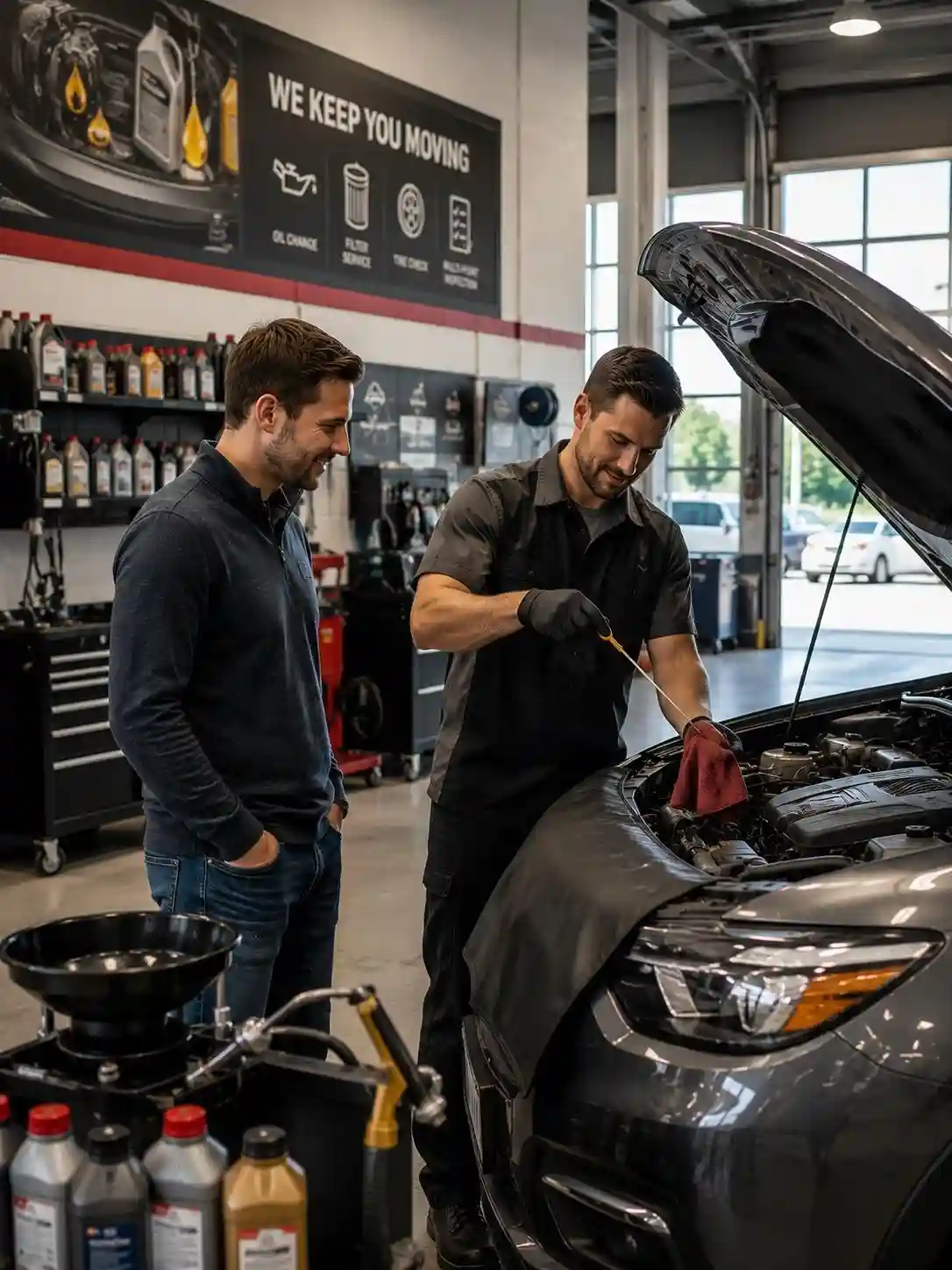
Quick Lube & Maintenance
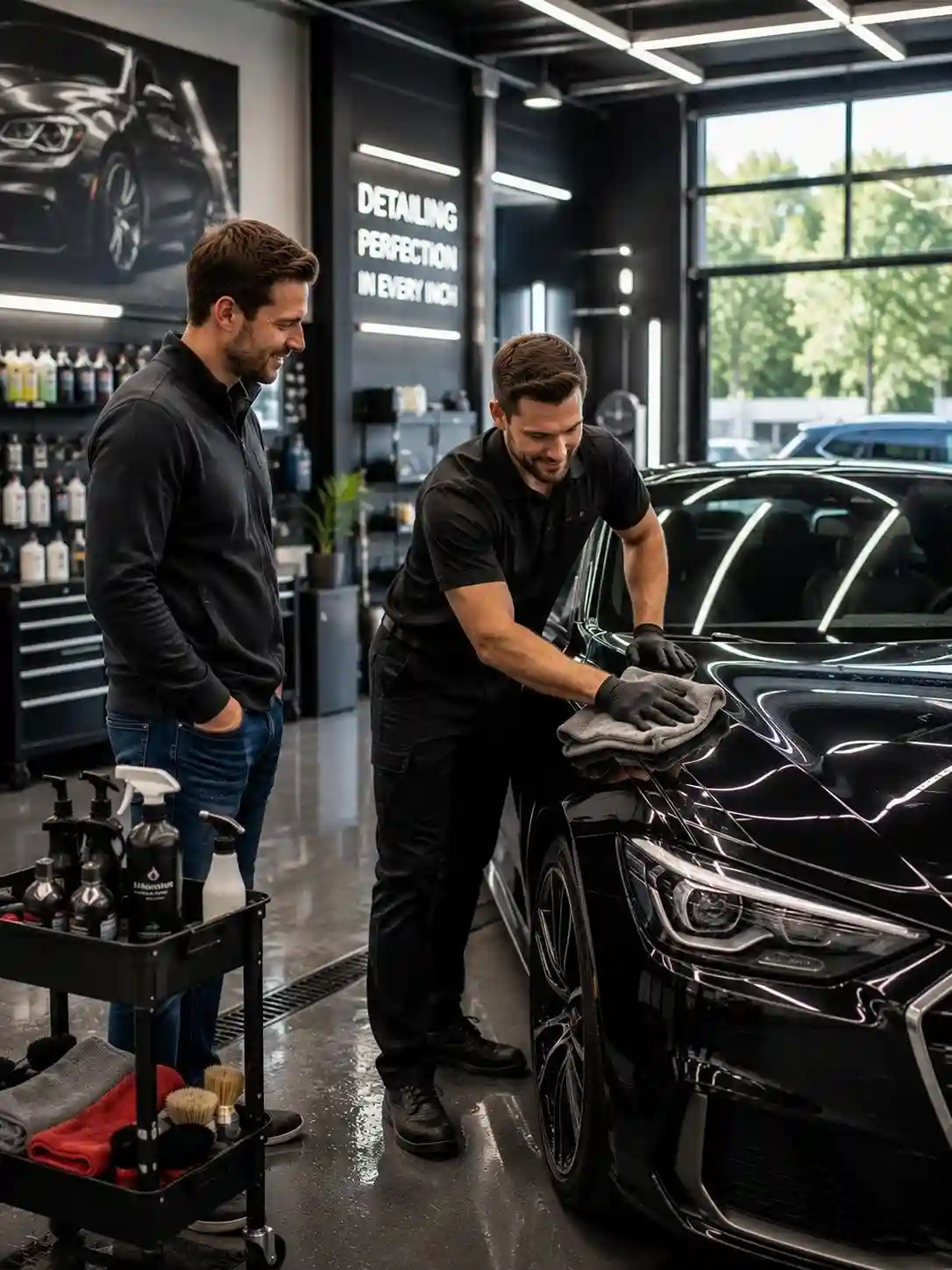
Auto
Detailing
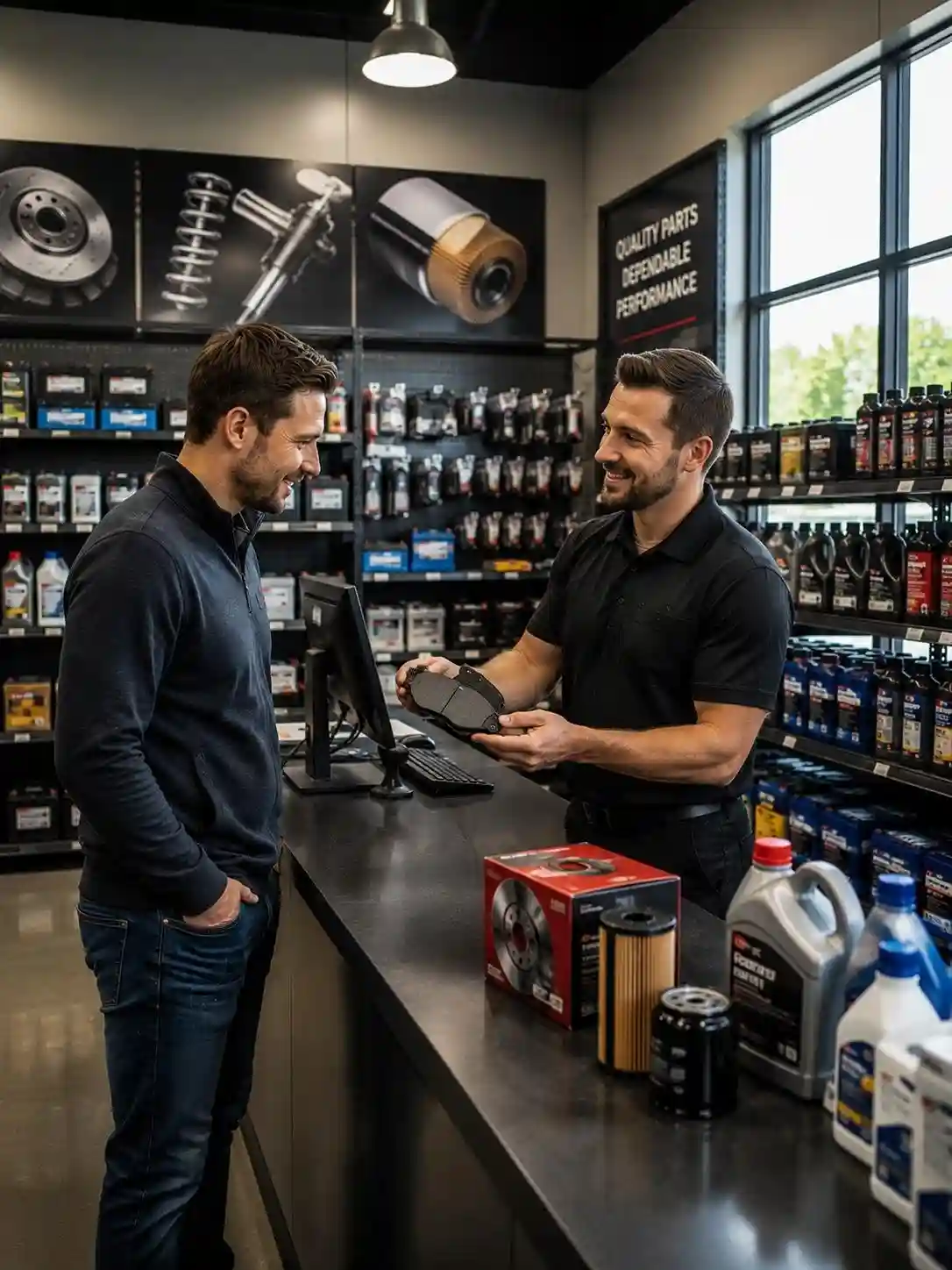
Auto Parts Retailers
Real Results
Results From Our Automotive Link Building Campaigns
See the traffic, ranking and authority gains from recent campaigns.
Common Questions
Frequently Asked Questions
Answers to common questions about how automotive link building works and what it costs.
No. Car dealerships operate under manufacturer brand agreements and compete on a specific dynamic tied to that structure: local brand rivals, the same brand in nearby cities, and the manufacturer’s own dealer locator. That’s covered on our dedicated dealership link building page.
This page is built for independent automotive businesses, repair and mechanic shops, body and collision repair, tire shops, quick lube, detailing, and parts retailers. It operates without a manufacturer-brand overlay and competes primarily on local trust and credentials. Here, you need a professional link building service provider that helps your business to rank higher. If you’re a new or used vehicle dealer, our dealership-specific page is the better fit.
ASE (Automotive Service Excellence) is the real professional credentialing body for automotive technicians, and it’s the industry’s version of a licensing or board certification.
Many shops display their ASE certification as a badge on their site but never claim the directory listings or recognition that come with holding it. That’s a missed link opportunity tied to a credential most shops already have, and it carries real trust value with customers who are specifically looking for a shop they can rely on.
A Direct Repair Program, or DRP, is a network that insurance companies maintain of pre-approved, vetted body shops. Getting listed on a major insurer’s DRP network means that the insurance company has already reviewed your quality and pricing standards, which is a strong trust signal for both customers and search engines.
Most body shops that qualify for DRP listings never think of them as a link building opportunity, even though they’re one of the highest-authority, most credible link sources available in this vertical.
Yes, and it’s common in this industry. Many automotive businesses run repair, tires, and quick lube under one roof, or combine general repair with body work.
We market each service line differently because customers choose each one differently: repair and body work lean on certification and trust signals, tire and quick lube lean more on local convenience, and detailing leans on visual proof similar to how a landscaping business is chosen. Your campaign reflects your actual service mix rather than treating your business as one undifferentiated local listing.
Auto repair carries a higher baseline of consumer skepticism than most local service categories. Customers commonly worry about being oversold on unnecessary work or overcharged, and that concern shapes how they choose where to take their car.
Link sources that directly address that skepticism real certifications, insurance network validation, genuine community reputation carry more weight in this vertical than in trades where trust is less of a live concern for the buyer.
Cost depends on your service line mix, local market competition, and whether you’re pursuing insurance DRP relationships. Single-location shops focused on one service line land toward the lower end. Body shops and multi-location businesses run higher, given the extra outreach and coverage involved.
Your strategy call gets you a detailed pricing plan and a proposal scoped to your credentials and priorities.
Ready to build the trust and credential authority your automotive business needs?
Get a senior strategist to review your certifications, your insurance network eligibility, and the local trust opportunities most automotive competitors overlook.
4.9/5
Trusted by agencies
and brands worldwide.