Link building for startups means earning backlinks to a new website with very little or no existing authority. Search engines like Google use backlinks as one of the strongest signals to decide how much to trust your site and where to rank it.
A startup with no link is invisible to Google. The right links help you build visibility and improve search rankings, even without a big budget. The goal is to build links slowly and steadily for long-term results rather than quick wins that fade.
If you are a fresh starter and your site has no links yet, that’s completely normal. This is exactly the stage where the right approach matters. Getting it wrong early can make it expensive and hard for you to fix. Getting it right can build a strong foundation that grows and compounds over time.
Key Takeaways:
- Backlinks are the trust signals that give you visibility.
- You don’t need many links; you just need the right ones.
- Link building builds credibility, not just rankings.
- Backlinks beat paid traffic for long-term investments.
- Create a link-worthy asset before doing outreach.
Why do Startups Need Link Building
Startups require link building because organic search authority doesn’t build itself, and without it, your site is invisible to people searching for what you offer.
Here are some reasons why the startups require link building. Let’s look at them in detail:
Builds credibility for a New Website
When you create a new domain, Google knows nothing about your business. It doesn’t know whether your site is trustworthy. Backlinks from established, trustworthy sites act as third-party approvals.
Each one tells Google that your site is worth paying attention to. Without them, even quality, well-written content can struggle to rank, because trust comes before visibility.
Brings Targeted Referral Traffic
High-quality backlinks not only boost rankings but also bring visitors to your site who are already interested in what you offer. That makes them qualified visitors who are far more valuable than someone who stumbled across your page by chance.
A well-placed link on the right website can send a steady stream of visitors directly to your pages. With paid ads, traffic stops as soon as you stop paying. However, the backlinks work differently. Once it goes live, it continues to send visitors to your site at no cost or extra effort.
Helps Compete With Established Brands
If your direct competitor has 200 high-quality backlinks and you have none, their page will outrank your page, even if your content is strong, helpful, and well-written. That is because backlinks are considered a vote of trust. More trust means more authority, and more authority means better rankings.
This gap is an authority that startups need to close because it is one of the biggest obstacles to ranking well in the early stage. The earlier you start building links, the faster you close those gaps. You are not just competing on content; you are competing on trust, and trust needs time to build.
Improves Search Rankings
Quality backlinks help your pages rank higher in the search results. The higher you rank, the easier it is for potential customers to find your business online. Backlinks do more than just improve rankings.
When your site gets mentioned or gets linked in an industry publication, it puts your name in front of an audience that may have never searched for you before. These readers are already interested in your industry, and that kind of exposure builds awareness and attracts visitors who may become customers.
Faster Organic Growth
Backlinks can speed up your organic growth. When authoritative websites link to your site, Google starts to trust your site faster. That trust leads to better rankings and more visitors, which means more chances to convert leads to customers.
Without backlinks, even good content can go unnoticed for months. With the right links pointing to your site, your content gets discovered sooner, can rank faster, and reaches more people. Over time, this creates a compounding effect, where new links add to the momentum you have already built.
More Visibility With Your Target Audience
For startups, every opportunity to get noticed matters. You are not just trying to rank higher on Google, but you are trying to reach the right people who are more likely to become customers, invest in your business, or spread the word.
A backlink from the right website gets you directly in front of that audience. It is not only about traffic, but it is also about reaching people who are already interested in what you offer and are more likely to take action.
Investor and Partner Credibility
When a well-known, trusted industry website features or cites your startup, it does more than just help your SEO. It builds your credibility in the real world. In fundraising, it shows the investors that credible sources recognize your work and validate your vision.
In partnership discussions, it signals that you are serious in your field, making the potential partners more confident to trust and collaborate with you. People tend to work with businesses they trust, and being mentioned and recognized is one of the fastest ways to earn that trust from both investors and partners.
Creates Long-term Seo Value
The biggest advantage of link building is that it can drive results for months or even years. A quality backlink earned today can continue to send visitors to your site and also support your rankings.
Unlike paid ads, which work until the budget runs out, backlinks have a lasting effect. Over time, as you earn more links, their impact increases. Each link adds to the ones that are already working for you, creating a foundation that continues to deliver results long into the future.
Paid Marketing Has Limits
Most of the startups rely heavily on paid channels, such as Google Ads, Meta, and influencer marketing, in the early stages. These channels work and bring results. However, a significant drawback is observed. Every click costs money, and the moment you stop spending, the traffic disappears completely.
As a result, there is no return on what you have already spent. This makes the paid channels more expensive to maintain over time. On the other hand, backlinks continue to deliver traffic and ranking benefits long after the effort began, at no ongoing cost.
The Link Volume Myth
The most common misconceptions that startups carry into their first SEO strategy are that more links mean better rankings. A set of 10-20 high-quality, contextually relevant links can improve rankings for targeted keywords far more effectively than hundreds of low-quality links. Volume matters, but not as much as relevance and authority of the source.
Why Standard Link Building Advice Fails Startups
When you are starting from scratch, the math is different from that of an already established business. Editors ignore cold pitches from unknown domains. Quality sites will never link to thin content, and every hour spent on the wrong tactic is the time you could have spent on what actually works at this stage for your business.
The core startup link building problem is that you need links to build authority, but you need authority to earn links. Both are deeply connected.
Breaking this cycle requires a systematic approach, one that builds credibility in each step rather than just chasing tactics that are designed for sites already past that phase.
Effective Link Building Strategies for Startups
Here are the strategies that actually work well for startups at the early stage, without requiring an established brand or huge expenses.
1. Build Something Worth Linking To First
The biggest, most common mistake early-stage companies make is starting with outreach before their site is ready to receive links. A link to a thin, low-quality page does almost nothing for your rankings; that’s the reason why the content behind the link matters just as much as the link itself.
Before starting an outreach campaign, you require content that earns a link on its own. It’s not about volume, but it is about having at least one asset that is worth referencing.
Linkable assets that work for startups:
- Original data or survey results, including small-scale surveys of 100-200 respondents.
- A free tool or an asset, such as a calculator, relevant to your industry.
- A resource page that your target audience genuinely uses.
- A well-researched “state of the industry” piece that makes a clear, citable argument.
- Visual content assets like comprehensive charts, process diagrams, or original infographics are more likely to be used by writers.
One genuinely useful resource can earn more links over the six months than ten thin blog posts.
The only question you should ask before the outreach is, “Would a journalist or editor link to this if they’d never heard of us?
2. Establish Foundation Links Early
Before chasing authority links, you need a basic level of credibility. These are the foundational links that any new site can earn, regardless of its authority.
These are not the editorial placements you will go after, but they are what make those better opportunities possible in the first place.
1. Niche directories and industry listings
Skip the generic web directories that carry minimal value; instead, focus on:
- Vertical-specific directories that are relevant to your industry, like legal tech, health, and fintech.
- Review platforms in your product category, such as G2, Capterra, and Product Hunt for SaaS. Use Clutch for service businesses.
- Startup platforms like Crunchbase and AngelList carry genuine authority and generate referral traffic along with link equity.
Each of these placements requires low effort and creates a trusted base that makes editorial outreach more credible over time.
2. Partner and ecosystem links
The organizations or individuals already connected to your startup, such as investors, partners, accelerator programs, and early customers, often have high authority websites.
A mention from their portfolio page, an integration listing, or a customer case study is one of the easiest and most valuable links you can earn as a startup.
Before spending much of your time on cold outreach, start mapping your existing relationships. Links from people who already know you are much easier to get. These links are more likely to be contextual, appearing in the relevant content, making them valuable for SEO.
3. Build Relationships Before You Need Links
The most appropriate and lasting approach to link building is not any tactic, but a relationship. Editors, journalists, and bloggers who know you are far more likely to respond when you reach out to them.
The image below shows how partnership links come from real connections, where websites naturally link to each other within content.
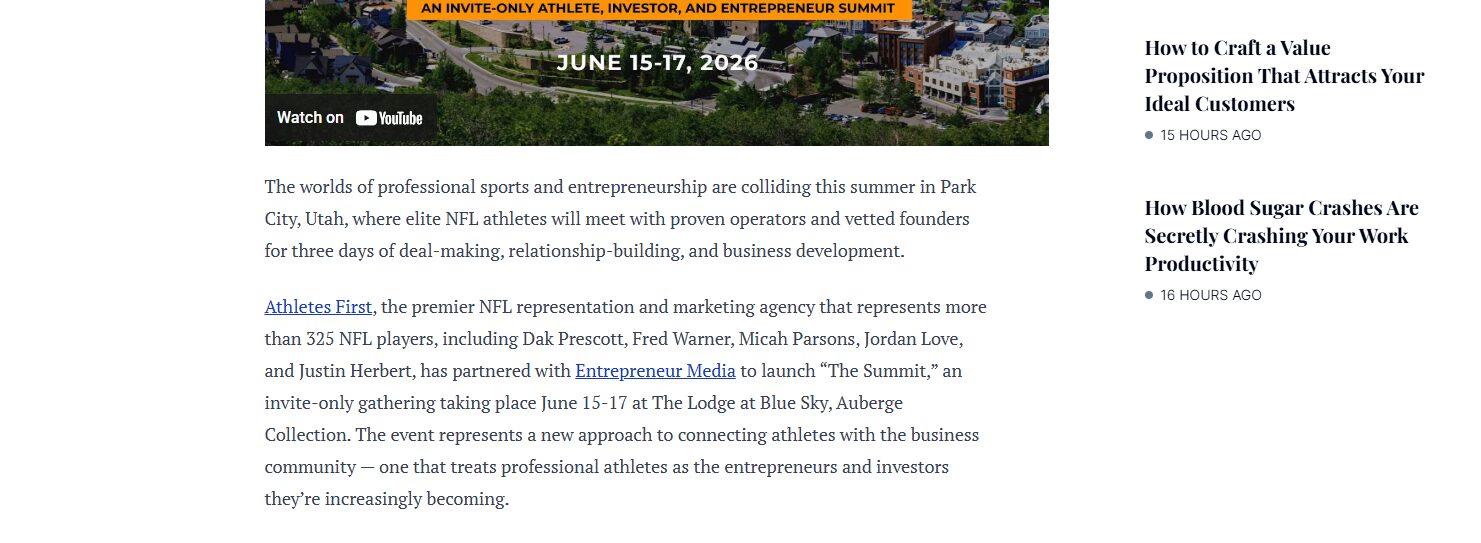
Don’t reach out to someone only when you need a link. Instead, build a relationship first. Maintain the relationship by commenting on their content, sharing their work, contributing unique quotes or data when invited to roundup posts, being active in the communities where your target editors spend their time, or even engaging with them on social media. When they already know you, your outreach feels familiar rather than random, and they are more likely to say yes.
A relationship built over two to three months of genuine engagement can unlock consistent link opportunities that cold outreach can never.
4. Use Digital PR to Earn Editorial Backlinks
Digital PR is the process of pitching journalists and editors with newsworthy stories, original research, or expert commentary to earn backlinks from media and news sites.
For startups, it is one of the most effective strategies available because it relies on your unique perspective and original data rather than your existing authority.
When done well, it can earn you links from major publications like Forbes and TechCrunch, and carry significant authority to your rankings.
Journalists who cover your industry consistently look for:
- New, original research and data that no one else has published.
- Founder insights and bold opinions that challenge the generalized thinking of the industry.
- Real startup stories that reflect bigger shifts in the market.
- Free tools or resources that genuinely help the journalist’s audience.
When digital PR is worth pursuing:
- You have original data, such as a survey, a novel analysis, or other original data, that creates a genuine news angle.
- Your founder has a credible, specific point of view on a trend that journalists are covering.
- You are responding to breaking news in your industry with an expert’s perspective; this is called newsjacking.
The key is to match your pitch to what journalists are actually looking for and need. A pitch that says “we wrote a great article” fails. A pitch that says “we survived 200 early-stage founders on their first-year SEO spend and found X” has genuine news value.
5. Guest Posting, Done With Selectivity
Guest posting is the practice of writing an article and publishing it on another website. When your content genuinely adds value to their audience, they publish it with a link back to your site. It remains one of the most reliable link building strategies for a startup.
Guest posting works well for startups when done selectively. Many startups pitch any site that accepts content and end up with low-authority links that contribute to results without moving rankings.
A more effective approach is to identify 10-15 publications your target customers actually read, then build familiarity with the editors by engaging with their content genuinely before pitching.
How to find guest posting opportunities
You can use Ahrefs’ Content Explorer or simply use Google Search Operators like “Write for us” + your industry/niche to shortlist the publications that genuinely accept guest posting in your industry.
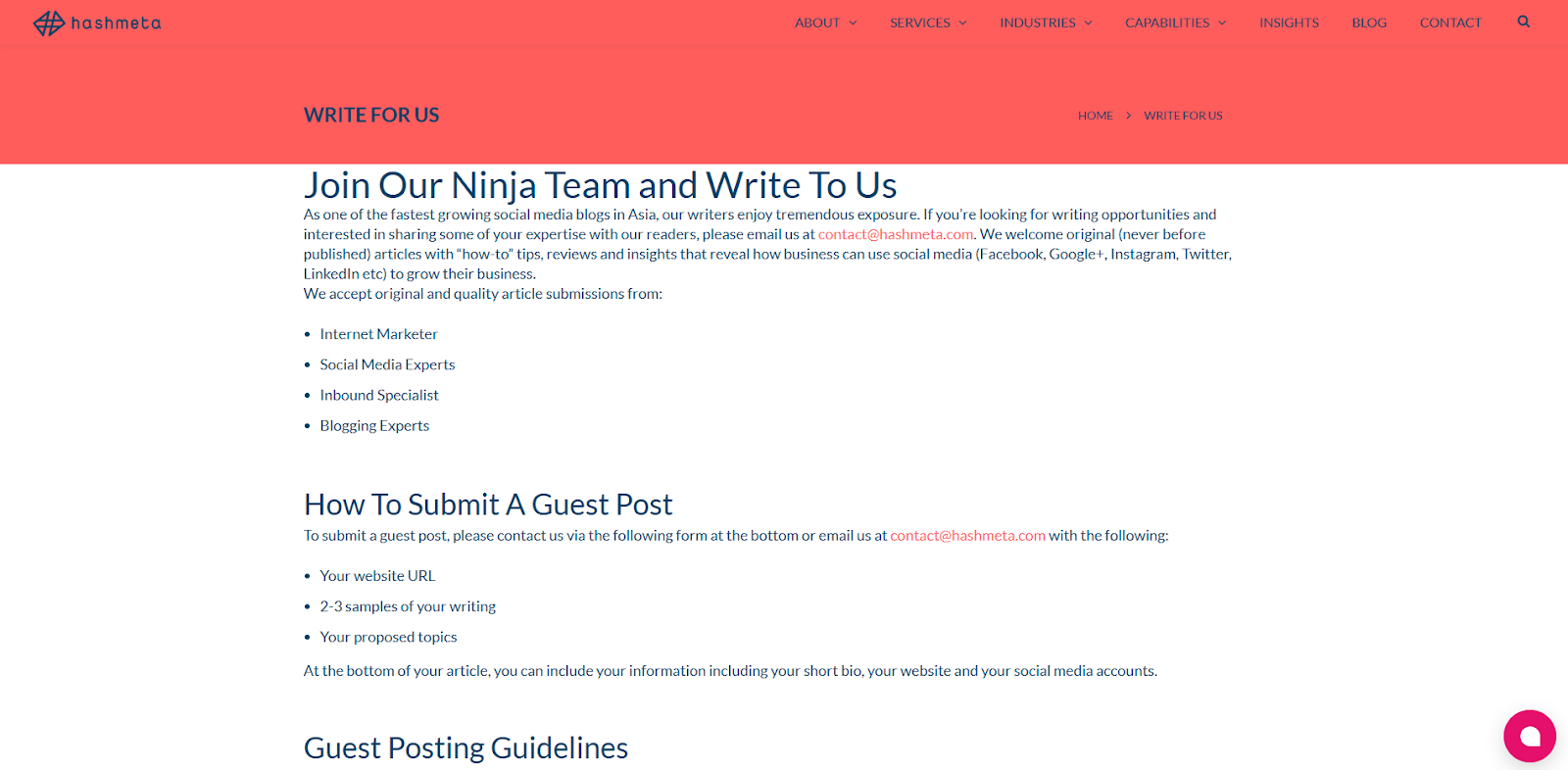
Prioritize those sites where you recognize the author’s names, because that’s a signal of real editorial standards.
However, avoid websites that publish anything and have no real audience. Links from these sites carry little to no value and can also signal to Google that you are trying to manipulate your rankings, which can hurt your site rather than help it.
What to pitch:
Editors accept guest posts when the topic genuinely serves their audience, not when it promotes your products. A strong pitch includes:
- A specific angle that fits the publication’s editorial style, not just a repurposed blog post.
- A clear reason why their audience will benefit from this topic right now.
- A brief author bio establishes credibility on this specific subject.
- A link back to a resource page or tool, not just your home page.
6. Resource Page Link Building
Resource pages are curated lists that mention useful tools, articles, and references. They exist in almost every industry/niche. They are built specifically to link to useful content, which makes it one of the most respected places to earn backlinks to relevant additions.
How to find resource pages
To find resource pages relevant to your industry, you can use Google Search Operators like ‘[your niche] + “useful resources”’, ‘[your niche] + inurl: resources’, or ‘[your niche] + “recommended tools”’.
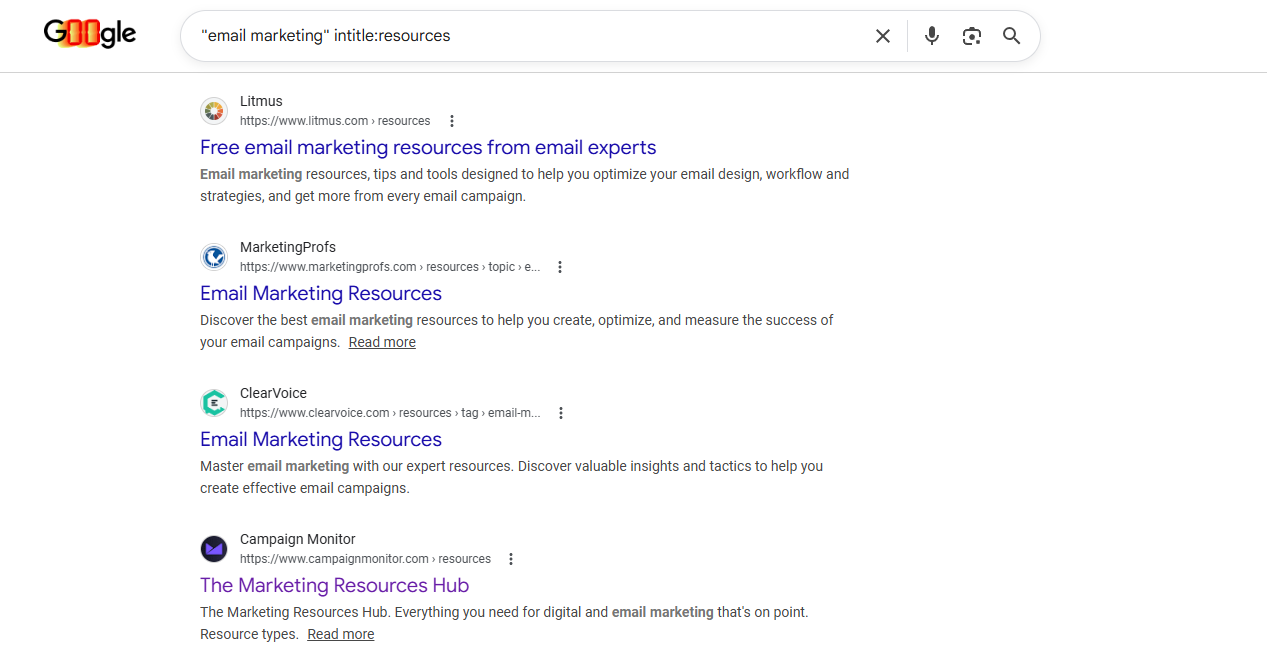
Before you reach out, carefully evaluate the resource pages. A page on a high authority site with genuine links is worth pursuing, while a low-quality page with hundreds of random links is not.
While reaching out, keep it short and simple. Explain to them what your resources cover, why it is a good fit for their existing list, how it provides value for their readers, and make it easy for them to add it.
7. Convert Unlinked Brand Mentions
As your startup grows, you will get mentioned in articles, podcasts, and online communities without always receiving a backlink. These mentions are endorsements that exist. You just need to reach out to the author and ask them to turn that mention into a clickable link.
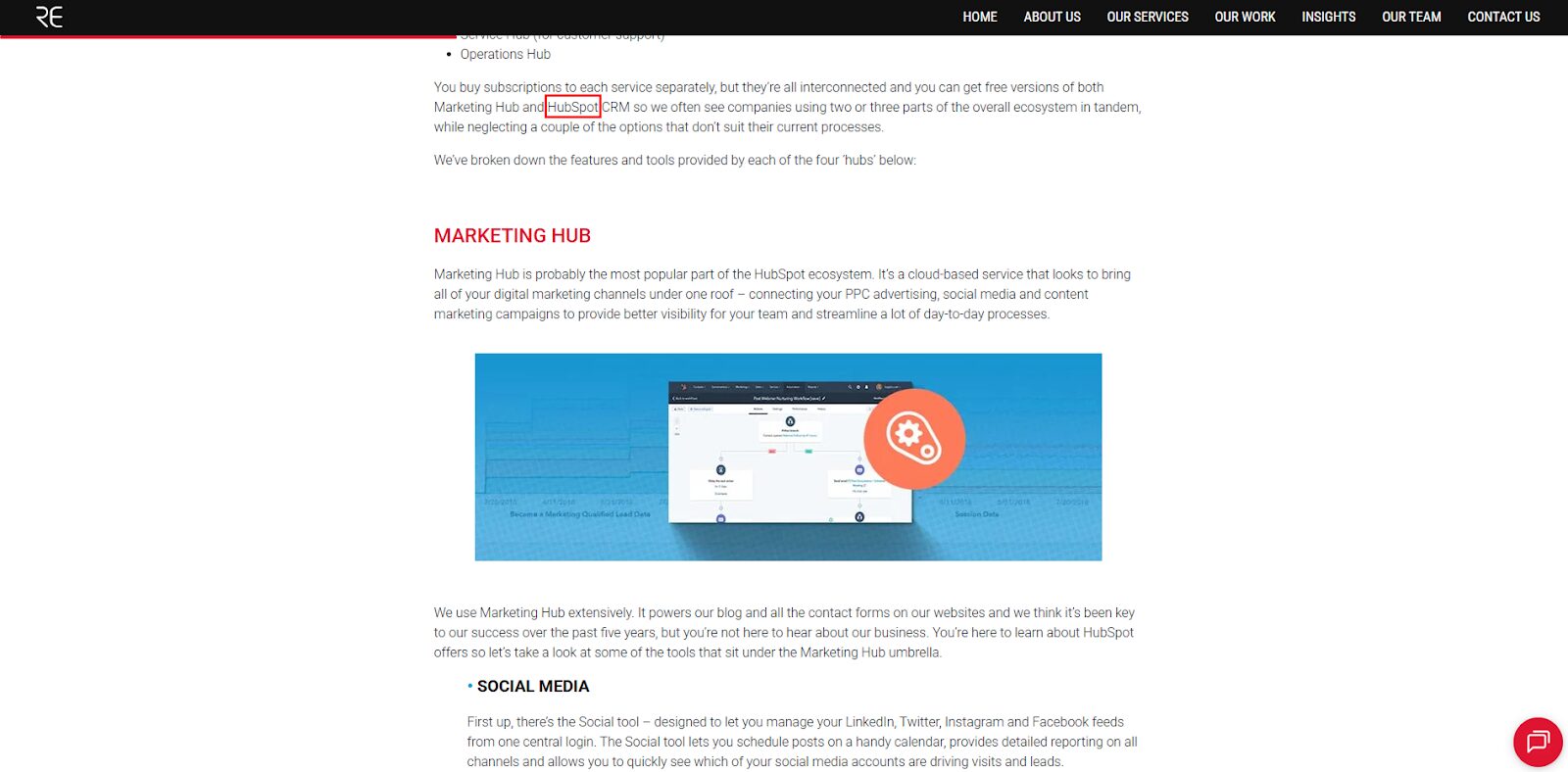
The image above shows HubSpot mentioned in content without a clickable backlink.
How can you find unlinked mentions?
You can find unlinked brand mentions by setting up Google Alerts for your brand name, founder names, and even product names. Use Ahrefs’ Content Explorer with your brand name as the query to filter for pages that are not already linking to you.
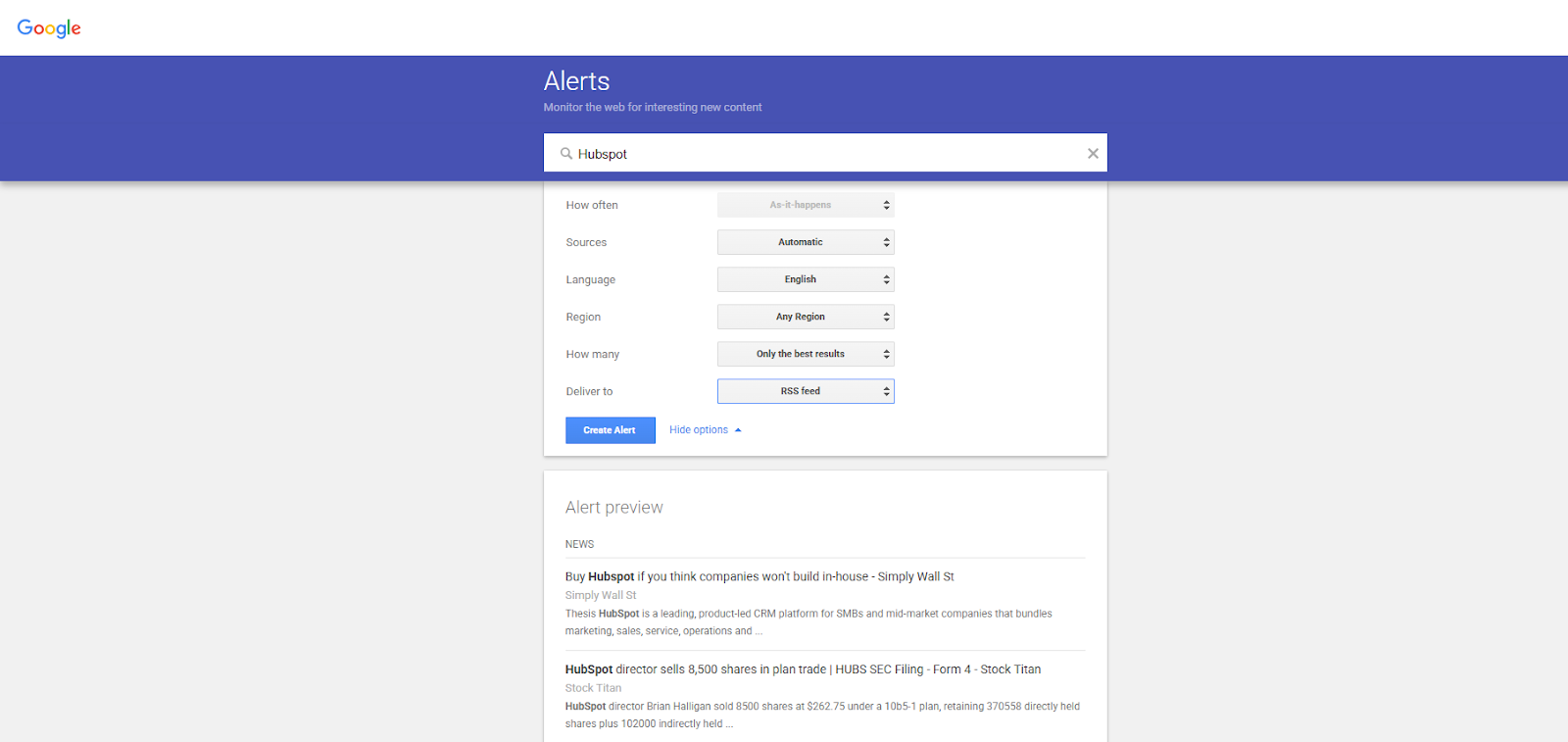
When you reach out to them, first thank them for the mention, and politely ask them if they would be willing to add a link. Here, the conversion rates are typically higher since they already referenced your brand positively, and they are more likely to agree than a cold outreach target.
8. Niche Edits
A niche edit is when your link is placed inside an existing article on a relevant website. Unlike a guest post, you are not creating new content, instead, you are earning a contextual link placement within the content that already ranks and has topical authority.
Niche edits also give you more control over placement. You can choose pages that closely match your topic, making your links more relevant and impactful.
Outreach for niche edits should be simple and focused. Instead of asking for a link directly, show how your content adds value to their article. This increases your chances of getting a positive response.
Because the article already ranks and holds authority, any link placed within it inherits that trust and passes it directly to your site.
9. Thought Leadership as a Link Channel
Leadership efforts, such as podcast appearances, conference speaking, and co-authored research, are not done primarily to get the links, but they can naturally attract over time.
For founders with genuine expertise, these channels build authority on multiple platforms and websites. That authority makes every link building effort easier and more effective over time.
A single feature in a relevant industry podcast can generate:
- A backlink from the show notes pages.
- Link from the listeners who reference the episode.
- Increased brand search volume, which Google treats as an authority signal.
What Makes a Link Actually Valuable
All the links are not built equally. Understanding what makes a backlink worth pursuing helps you avoid spending your budget on links that provide minimal authority transfer. Google evaluates the links on several dimensions.
Topical Relevance
Topical relevance, in simple terms, is a website that talks about the same topics as yours is more valuable than a link from a site that is not relevant to your industry at all. For example, a fintech startup benefits more from a link on a payment industry blog than from a link on a lifestyle blog
Editorial Placement
Editorial placement is a link placed naturally in the body of an article because it genuinely helps readers and carries more weight than a link in a footer, sidebar, or author bio. Google values these links more because they are placed in context, surrounded by relevant content, and intended to add value for readers.
Domain Authority of the Linking Site
Domain authority is the score by Moz that helps to predict how well a site is likely to rank on Google, based on the strength of its backlinks. Domain rating is a score created by Ahrefs that measures the overall strength of a website’s backlinks on a scale of 0 to 100. However, the measures are not perfect, but both are useful signals when evaluating if a placement is worth pursuing.
Anchor Text Diversity
Anchor text is a clickable word or phrase that contains a link. A profile with natural backlinks uses a variety of anchor texts, including your brand name, partial match keywords, URLs, and also generic phrases like “click here” or “read more.” According to Ahrefs analysis, sites where exact match anchor text exceeds 40% of the total profile are at risk of being flagged by Google’s algorithm. Therefore, vary your anchor text to keep your profile natural.
Dofollow
Dofollow links are the default link type that pass link equity from one website to another. When a reputable site links to you with a dofollow link, it transfers a portion of its authority to your site, which Google counts as a trust signal when evaluating your rankings.
Here’s a comparison table showing high-value vs. low-value link signals.
| Factor |
High-value link signals |
Low-value link signals |
|---|---|---|
| Topical Relevance | It comes from a website closely aligned with your industry. | Comes from irrelevant or generic websites without any relevance. |
| Editorial Placement | Naturally placed within the main content, where it adds value to readers. | Placed in headers, footers, author bios, and sidebars, and are clearly paid or forced placements. |
| Domain Authority/ Rating | Links from websites with strong authority (high DR/DA), including a trusted backlink profile. | Links from low-authority, spammy websites, link farms, or sites with a weak, unnatural backlink profile. |
| Anchor Text Diversity | Uses a natural mix of anchor types, including branded, partial-match, and generic URLs, to maintain a healthy profile. | Overuse of exact match anchors or repetitive anchors signals risk and manipulation. |
| Dofollow vs. Nofollow | Primarily, dofollow links that pass authority and contribute to rankings. | Only nofollow links profile with no authority transfer. |
How Many Links Does a Startup Actually Need?
Link building for startups is not just about the quantity of links, but is also about relevance and quality.
Research on ranking factors consistently shows that top-ranking pages succeed with a relatively small number of high-quality referring domains, not thousands. A site that ranks are not necessarily with many links. They are the ones whose links come from the most relevant, trustworthy sources relative to their competitors for the specific keyword.
The starting point is to identify your three to five high-priority pages, the ones that drive conversions. Build the links to those pages first. Distributing efforts on your entire site.
While building, also track:
- The referring domains not total backlinks, a signal of link profile growth.
- Organic ranking movement on the targeted keywords.
- Referral traffic from the linked domains is a signal that your placements come from sites with genuine traffic and engagement.
The Budget Question: Diy Vs. Outsourced Link Building
Most early-stage startups have to choose between spending time and spending money on link building. Building links in-house is possible, but it requires consistent effort over several months before you start to notice meaningful results.
DIY link building works when:
- Your founder or a team member can dedicate around 5-10 hours per week to consistent outreach.
- You are in a niche where relationships can be built through the communities you are already part of.
- Your content is strong enough to attract links without needing promotion.
Outsourced link building makes sense when:
- You do not have enough time internally to build links at the pace that matches your growth requirements.
- You need placements in the publications that your team does not have existing relationships with.
- You want a steady flow of links every month without managing the complete process of prospecting, vetting, and outreach.
When evaluating any agency, ask for real case studies with measurable results, including domain referral growth, ranking improvements, and the timeframe for achieving them. Some agencies focus on manual editorial outreach rather than automated link networks, which matters because the quality of the link placement determines the long-term health of your backlink profile.
The cost of outsourced link building varies on the quality tier you choose. For contextual editorial placements in real publications, the expected budget is $1,500 to $3,000 per month, depending on the quality and volume of the links. Understanding where that budget goes starts with knowing how link building pricing is structured across different quality levels.
Common Startup Link Building Mistakes to Avoid
Here is the list of a few common mistakes the startups make. You should try to avoid them completely to see better results.
Chasing High DR at the Expense of Relevance
A DR 80 link from an irrelevant site is less valuable compared to a DR 40 link from a publication that targets the same audience you target and is relevant to your industry.
Building Links Before the Page is Ready
A link to thin or unhelpful content products weakens the transfer of authority. The page needs to be ready and valuable before you build links to it.
Using the Same Anchor Text Repeatedly
Using the same anchor text repeatedly looks unnatural to Google and can raise flags. A healthy backlink profile uses a variety of anchor texts, including your brand name, partial keyword phrases, and URLs.
Prioritizing Quantity Over Consistency
50 links acquired in a month, followed by nothing, signals manipulation more than organic growth. Steady, consistent link acquisition is healthier for gaining long-term authority.
Ignoring Internal Links
Every external link you earn passes authority to the page it lands on. That authority then flows to the other pages on your site through internal links. If your internal links are weak, much of that authority gets trapped on a single page instead of flowing through your site.
Conclusion
Link building for startups is not a shortcut to instant rankings, but it is a long-term investment where each quality placement adds to the growth foundation that makes the next one easier to earn.
Sequence is the most important thing; start by building content, pursue link types that are realistic for your current authority level, build relationships before you need them, and work towards your targets as your profile grows.
The startups that build lasting organic visibility are not always the ones with the large budgets. They are the ones that stayed consistent, focused on relevance over quantity, and treated every link as a signal worth protecting.
Not sure where to start with link building for your startup?
Get a clear plan that drives traffic, boosts rankings, and delivers steady growth.
How Long Does Link Building Take to Show Results for a New Site?
Link building for startups may take time; the new sites typically see improvements in 2-3 months, and the real growth is observed in 4-6 months. Consistency matters more than speed.
Can a Startup do Link Building With no Budget?
Yes, with the right investment in time and effort, podcast guesting, unlinked brand-mention conversion, journalist queries, and guest posting on industry publications are all accessible at no direct cost. It takes months of consistent work, but the results grow over time.
What’s a Realistic Dr Target for a Startup After 12 Months?
Your site’s authority grows based on your industry and how consistently you build links. Most niche shows progress in 12 months, but in competitive fields like finance or health, and in SaaS, it takes longer.
Should Startups Focus Only on Dofollow Links?
Links like dofollow can directly boost your site’s rankings, and it should be your main focus. Other links, like nofollow, may not boost ranking directly, but they can bring visitors to your site and make your link profile look natural. Having a mix of both is considered healthy. Relying only on one type of link can look suspicious, so don’t ignore any.
What’s the Difference Between Link Building and Link Earning?
There are two ways to get links. Building links means reaching out through partnerships, content promotion, or outreach, and earning links means creating good content or a content asset so that people want to link to you naturally.