Enterprise link building is the process of earning high-quality backlinks at scale for large organizations with complex websites, strict compliance requirements, and cross-functional teams.
It’s not regular link building with a bigger budget. The coordination, risk management, and stakeholder alignment involved make it a different discipline entirely.
In this article, you’ll get strategic link building strategies, team structures, and measurement frameworks that actually work for enterprise link building programs.
Key Takeaways
- Cross-functional coordination across legal, PR, product, and marketing.
- Quality and brand safety matter more than volume.
- Link building for large businesses requires strategy, coordination, and data-driven outreach.
- Enterprise backlink strategy builds long-term visibility in highly competitive markets.
- Supports sustainable growth across complex site structures.
What is Enterprise Link Building?
Enterprise link building is a strategic approach to building backlinks for big companies.
A 50-page startup website and a 40,000-page enterprise site don’t need the same link building strategy.
The difference isn’t just scale — it’s complexity.
Enterprise link building works across multiple subdomains, languages, product lines, and regional sites while competing in crowded markets and protecting established brand reputations.
Large companies already rank for branded searches, so they prioritize driving traffic to high-impact pages, such as product launches and key category hubs.
Enterprise link building campaigns are completely different from small-business campaigns as they require:
- Cross-functional team collaboration
- Management of thousands of internal and external links
- Careful and calculated risk management to protect your domain
- Performance tracking at the domain and page level
- Coordinating complex tasks across divisions
- Legal and compliance review at every stage
Here, you need volume. But not at the cost of quality.
One bad or manipulative link can trigger a manual penalty that affects your domain. And at the enterprise level, that consequence is difficult to recover from.
What Makes it ‘Enterprise’?
You’re not just building links. You’re managing a systematic program that aligns with corporate governance, brand standards, and ROI expectations from C-level stakeholders.
Every link decision is also a brand decision. Every campaign is a cross-functional initiative. That is what separates enterprise link building from standard link building.
Challenges That Make Enterprise Link Building Different
Large organizations face more problems than small businesses. Understanding these complex hurdles is your first step to building links at scale.
These challenges include:
Complex Site Structures
Enterprise websites often have thousands of pages across multiple subdomains, languages, and locations. Maintaining these pages with balanced link equity is difficult.
You’re building backlinks for:
- Product lines with different audiences
- Regional sites with local content
- Content hubs serving various customer segments
- Subdirectories or microsites with their own authority profiles
Manual link building is not practical when you’re managing thousands of pages.
A strategy that works for your main product line may not work for your regional sites or niche content hubs.
You need repeatable processes that adapt to different contexts and not individual URLs.
Approval and Compliance Delays
Every piece of content, outreach email, and partnership needs approval and sign-off from multiple departments.
- Your legal teams review guest posts for liability.
- Brand teams check messaging consistency.
- Product teams ensure technical accuracy.
- PR teams manage media relationships.
These processes take time, so approval and compliance often slow down your progress.
A guest post takes one week to approve and publish for a small business. At an enterprise, that post may take six weeks or more.
Brand Protection Requirements
Your brand reputation is your strongest asset.
You can’t place a link on low-quality sites or anything that might damage stakeholder trust.
Backlinks reflect on your entire organization. One toxic link attached to your brand can become a serious PR problem.
To avoid that, you need to check every linking site for brand safety, not just domain authority.
Resource Allocation Pressure
Link building is a slow process. Visible results take months to show up.
You need to justify the budget to stakeholders who want a clear, measurable ROI.
Executives want real answers, such as:
- What is the cost per acquired link?
- How do these links impact revenue?
- Why does this take months instead of weeks?
- What separates this from simply buying links faster?
Quality link building requires consistent investment before you see meaningful results.
The goal is to build a reporting structure that shows actual revenue. Not SEO metrics that need translation.
Attribution Difficulty
Link building doesn’t drive instant conversions. It builds awareness first.
Suppose a CFO is evaluating expense management software. Now, once he discovers your company in an industry report and reaches your site, your brand already feels familiar. That familiarity increases trust and improves conversion rates.
Standard analytics often miss the full impact of link building because they track results over a short period and overlook long-term influence.
7 Enterprise Link Building Strategies That Actually Scale
Enterprise link building strategies are different from basic SEO practices. These strategies work for large organizations and consistently outperform traditional link building strategies.
Use these link building strategies and combine them with the available resources, timelines, and growth goals.
Remember, not every strategy fits every situation. Start with those that match your assets and team capacity.
1. Build Linkable Assets From Your Data Advantage:
Linkable assets are high-value, data-backed pieces of content, original research, interactive tools, and reports built to attract links.
This type of valuable content often gets shares and links from other sites and industry publications.
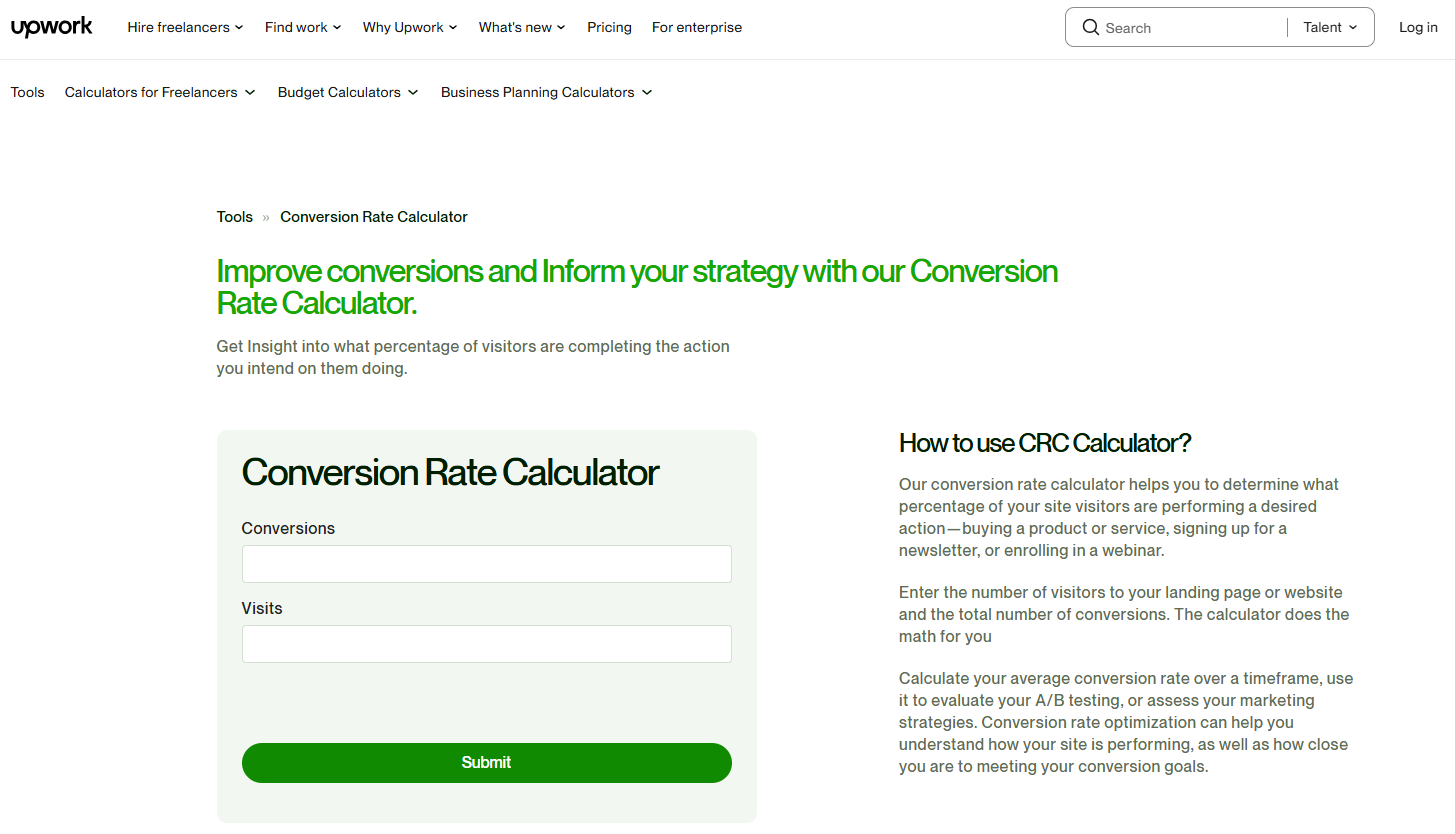
Here, you can see Upwork’s ROI calculator tool.
This interactive tool earns thousands of backlinks from HR blogs, freelance guides, and business publications.
This calculator solves real problems freelancers and businesses face daily.
Your enterprise link building journey starts with assets designed to attract links at scale. These aren’t just regular blog posts.
You’re building resources that drive authority and trust.
Assets should be high-impact resources, built with the depth, data, and authority that industry publications, partners, and analysts naturally reference when writing about your space.
The goal is to create something so genuinely useful that earning backlinks from high-authority, trusted sites becomes a byproduct of being the best resource available on a topic.
Types of linkable assets:
One well-executed asset can earn backlinks for years after its initial promotion.
Here are the types of linkable assets.
Original research and data studies:
You have access to large datasets and can afford customer surveys at scale. Your unique findings and data become credible sources that bloggers and journalists mention on their websites for statistics and insights.
Interactive tools and calculators:
You can build free interactive tools, like an ‘ROI calculator’ that solves real problems. These tools help your visitors and potential customers solve high-value challenges, making them worth linking to and referencing in guides.
Comprehensive industry guides:
Definitive guides (usually 10,000+ words) covering complex topics with deep insights often drive quality links. The content should be deep enough to answer every possible question a serious reader would have. Now, when people write about the same subject, they will mention your website as a source for deeper learning.
Annual benchmark reports:
Publish yearly reports that track industry-level metrics and become the standard reference for new data. High-authority sites link to credible, authentic reports. This is the advantage you can gain for long-term growth.
Proprietary data visualizations:
Proprietary data visualizations, such as infographics, charts, and interactive maps, make complex information easy to understand. These assets encourage others to link to your site as a resource.
Step to Execute Linkable Assets Creation:
- Identify content gaps in your industry where no authoritative resource currently exists.
- Analyze competitor backlink profiles to see which asset types consistently earn links.
- Invest in original research, data collection, and expert interviews to create unique value.
- Design the assets that drive maximum shares using clear data visualizations and quotable statistics.
- Launch your linkable assets with coordinated outreach to tier one and niche industry publications.
- Repurpose the asset into smaller pieces for ongoing promotion across different channels.
Expected timeline:
It takes 3 to 6 months from ideation to significant link acquisition. Quality assets earn links for years.
Common mistakes:
- Creating assets without a promotional strategy.
- Copying competitor asset ideas instead of identifying actual gaps.
- Focusing on what you want to promote instead of what your audience needs.
2. Turn Existing Partnerships Into Link Opportunities:
Your existing business relationships often include link opportunities you are not using. Many partners already mention your brand, but do not link to it properly.
Use business partnerships, technology integrations, and co-marketing relationships to earn contextual links.
Zapier’s integration directory lists 6,000+ app partners. Companies like Canto and Intercom earn hundreds of high-authority backlinks simply by being listed as Zapier integration partners.
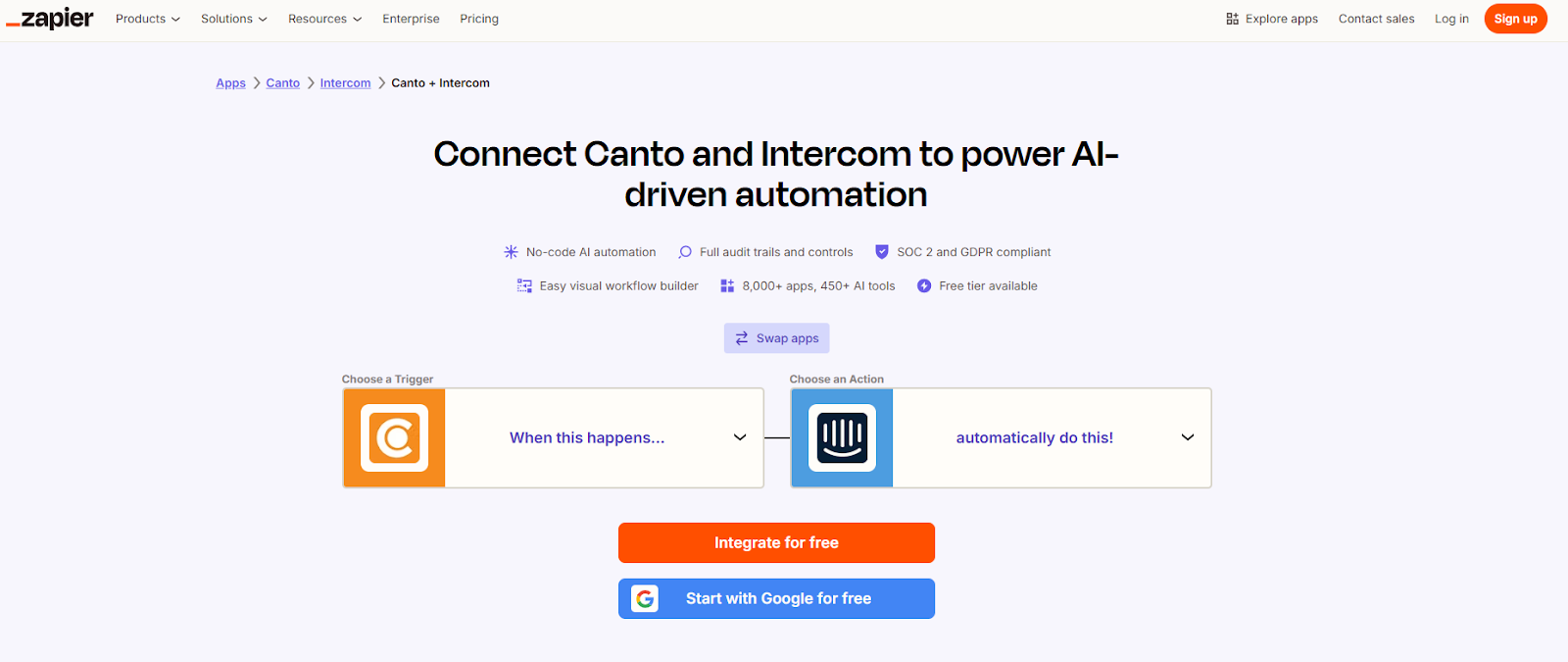
No outreach needed. Partnership-based link building works because the relationship already exists.
Where to find partnership links:
Technology integrations
If your software integrates with other platforms, request inclusion on their integration directory, partner page, or how-to blogs.
Service provider networks
The intermediaries between you and your customers are agencies, consultants, and resellers who recommend your product.
They naturally mention your site when producing content to demonstrate their expertise.
Association memberships
Industry associations list members with links from high-authority and niche-relevant domains.
These links count as gold—they’re white-hat links.
Your competitor can’t just ask nicely for this link; they have to pay membership fees.
Supplier and vendor relationships
B2B vendors often maintain client or partner showcases. This is a low-hanging fruit for enterprises to acquire backlinks, as vendors often mention high-profile clients (enterprises) to prove their own value.
Types: Logo walls, Customer testimonial pages, Case studies, etc.
Strategic partner alliances often produce quality backlinks because:
- You know the companies and members involved.
- Mutually shared collaborations, content, and tools benefit both audiences.
- Agencies and partners link to your business and help you reach new markets.
- These links are high-quality, niche-relevant, and trusted.
- A strong partnership builds long-term relationships and creates recurring opportunities for quality links.
How to activate partnership for links:
1. Audit existing partnerships for link opportunities
Check where links already exist and where they’re lacking.
2. Formalize link placement in partnership agreements
Include specific link requirements in your contracts: partner directory listing, integration pages, co-branded resources, and case studies.
3. Create co-branded content assets
Pursue mutually beneficial content collaborations such as joint webinars, research reports, integration guides, and customer success stories.
4. Build an integration/partner directory on your site
Secure links through integration pages, resources directories, or co-marketed content. Showcase partners with individual profile pages. Most will link back from their own partner pages.
Timeline:
- 2-4 weeks per partnership to formalize and execute.
Things to Keep in Mind:
Always secure explicit link agreement with partners and avoid building a one-sided relationship where you only ask for links and don’t provide business value.
3. Strategic Guest Posting:
Most guest posting (guest blogging) programs fail before the pitch goes out, because teams target sites, not audiences.
Strategic guest posting isn’t about chasing volume.
Instead, well-executed guest posts with subject-matter expertise help you earn highly relevant backlinks from trusted industry websites.
Businesses publish your content when they see expertise, content depth, and value it drives. That’s how you earn high-authority backlinks for your business.
Remember, you’re not writing for just any site that accepts submissions. You focus on respected platforms that truly matter in your industry.
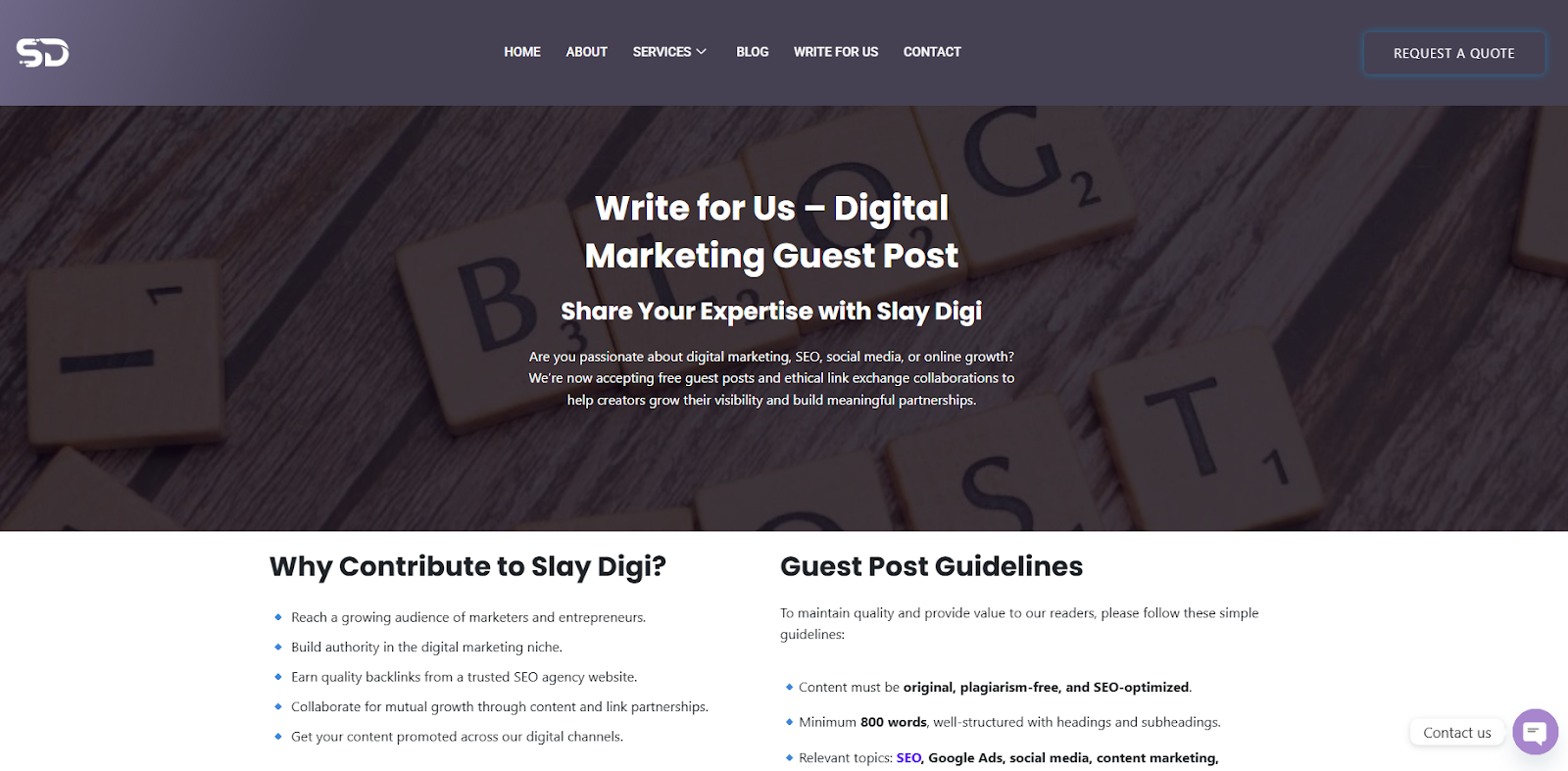
Why it works for enterprises:
You have resources, a budget, and subject matter experts who offer valuable insights. Top publications are always looking for these high-value articles, and your brand name adds credibility to their content.
How to Execute Strategic Guest Posting:
- Start by identifying the target publications your audience reads.
- Read their recent articles to analyze content gaps and topics where your experts can add new insights or original data.
- Create a strong pitch based on real experience, original insights, genuine expertise, or internal data that offers clear value to the publication’s audience.
- Reach out to editors with a concise, personalized pitch that highlights expertise and relevance.
- Publish the article under the executive or subject matter expert, not the marketing team.
- Place 1-2 natural, contextual links to relevant resources. Avoid linking to promotional or sales-driven pages.
Common mistakes:
- Targeting publication volume over audience quality.
- Writing promotional content instead of educational insights.
- Using identical author bios and links across every post.
- Ignoring whether the publication’s audience matches your target market.
Expected results:
- 5-10 placements on premium publications each quarter build more authority than dozens of posts on mediocre sites.
4. Broken Link Building:
Start with the top 20 authoritative sites in your industry. Scan their resource pages and look for the dead or broken links that point nowhere.
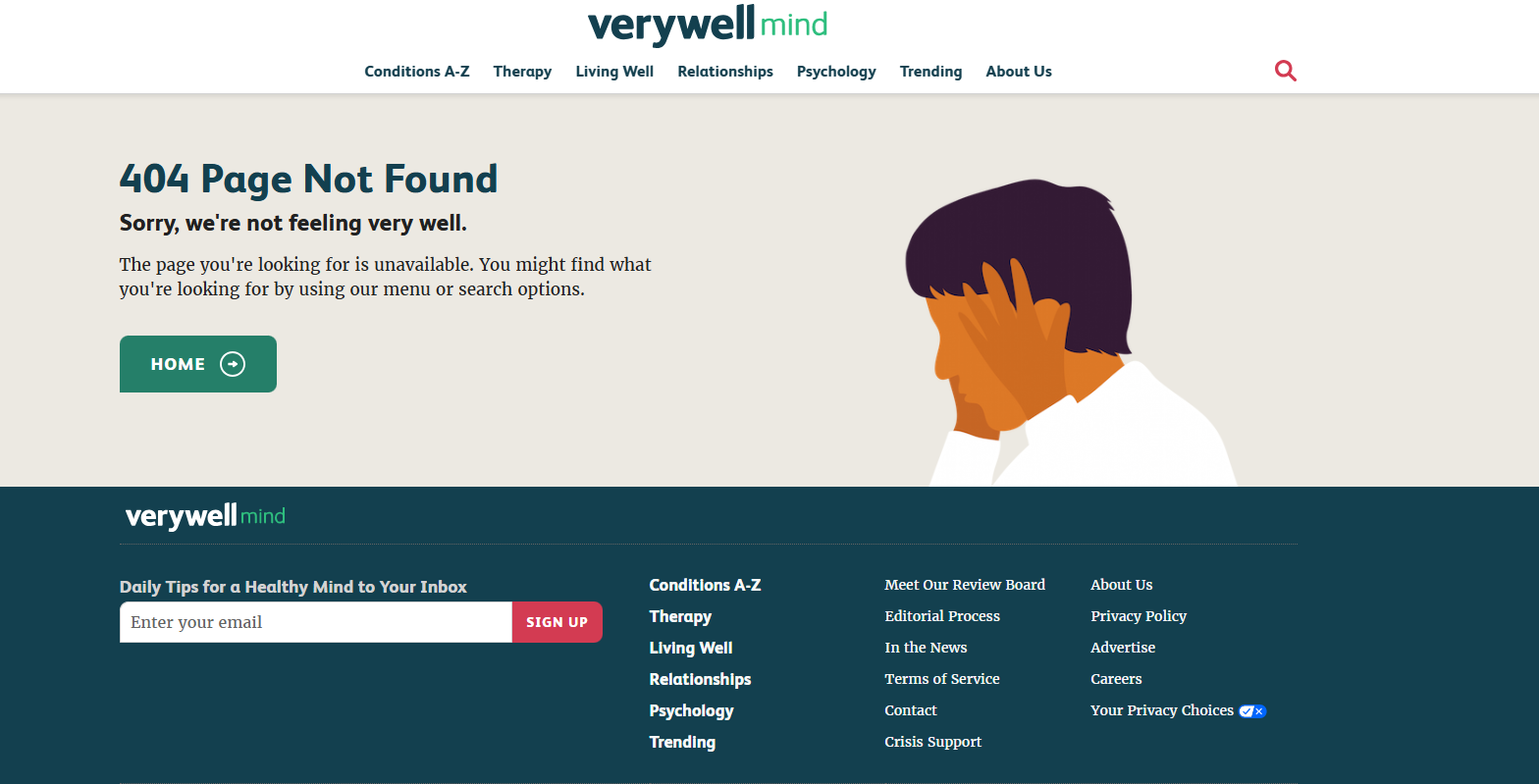
Authoritative sites accumulate broken outbound links over time. Identify broken links and offer your content as a better replacement. When you reach out, your goal is to help editors fix a broken user experience, not just to ask for a link.
Why it works for enterprises:
Your extensive content library lets you replace almost any broken resource in your industry. This depth gives you a real competitive advantage.
Execution approach:
1. Find Authoritative Sites:
Identify trusted, relevant, and authoritative websites in your niche.
2. Run Broken Links Checks:
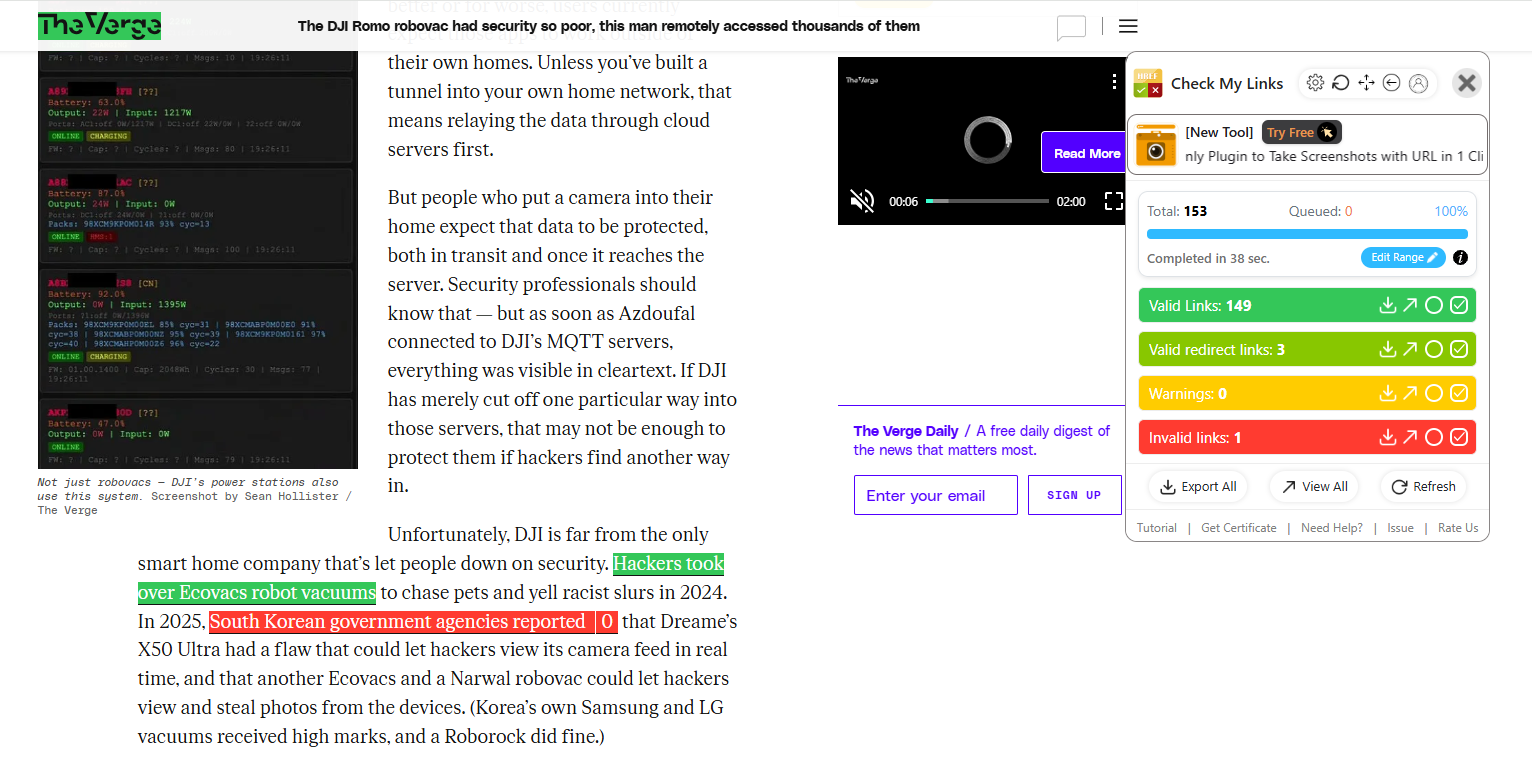
Scan their resource pages, guides, and evergreen content for broken links using broken link checker, Ahrefs, or Check My Links extension.
3. Filter for Relevance:
Scan only for broken links that are contextually aligned with your existing content.
4. Reach Out
Reach out to the site owner and notify them about the specific broken link. Suggest your content as a replacement that better serves their readers.
Expected Results:
- 2-3 hours of dedicated research bring one high-quality, topic-relevant backlink.
- Best for targeting specific high-authority domains, not for mass outreach.
Common mistakes:
- Generic broken link report without offering genuinely useful replacements.
- Irrelevant content suggestions that don’t match the broken link’s original context.
- Automating outreach at scale with impersonal templates.
- Focusing on quantity instead of targeting the most authoritative opportunities.
5. Use Digital PR to Earn Links From Media Outreach:
BuzzStream’s 2025 industry research found that 48.6% of SEO professionals rank digital PR as the top link building strategy. Why?
The reason is simple: media outlets need expert sources and credible data for their stories. Your organization has both.
Digital PR positions you as an authoritative source for journalists and industry publications. It builds brand awareness, drives visibility, and strengthens your reputation.
Original research, expert commentary, and timely insights help you earn backlinks from media outlets while strengthening brand credibility and expanding your reach into new markets.
Execution approach:
Monitor Media Opportunities
Monitor journalist requests on platforms like Featured. Stay on top of trending industry topics using Google Trends, social listening tools, and news aggregators.
Build Executive Thought Leadership
Designate media-trained executives as company spokespersons with expertise in specific topic areas. Create a ready media kit with executive bios, headshots, and key statistics your PR team can deploy quickly.
Create Newsworthy Content
Develop original studies, surveys, and expert commentary on trending industry topics. Build a rapid-response process so your team can act on time-sensitive opportunities before competitors do.
Build Reporter Relationships
Identify journalists who regularly cover your industry and invest in those relationships over time. Track connections in CRM systems as they compound in value for years.
Three digital PR approaches:
Reactive outreach:
Monitor and respond to journalist requests on media pitching platforms like Featured. Provide expert quotes and data that earn attributed links in published articles. Your response quality and speed will determine your success rate.
Proactive campaigns:
Create genuinely newsworthy studies, surveys, or announcements. Pitch relevant journalists before public release, offering exclusive access to data. Exclusivity significantly improves pickup rates.
Thought leadership programs:
Stay in contact with reporters who actively cover news and trends in your industry. Become their trusted source for expert commentary on breaking news. This is the highest-value and the most durable approach.
Expected results:
Consistent digital PR programs can earn you 10-20 high-authority backlinks per quarter from mainstream news and industry publications.
Most importantly, these placements build brand credibility that compounds into organic link acquisition over time.
Common mistakes:
- Treating digital PR as a one-off campaign instead of an ongoing program. Consistency builds stronger relationships with reporters.
- Reaching out to journalists with irrelevant stories who don’t even cover your industry.
- Creating content framed as newsworthy that is actually ‘self-promotion.’
- Ignoring relationship-building in favor of mass pitching.
- Failing to respond quickly enough to time-sensitive requests from journalists.
6. Reclaim Your Unlinked Brand Mentions:
Enterprise brands accumulate hundreds of unlinked mentions across the web — publications, analyst reports, industry articles that reference your company name without linking to your site.
This is one of the highest-converting strategies in enterprise link building because you’re not building a relationship from scratch. You’re asking someone to complete something they already started.
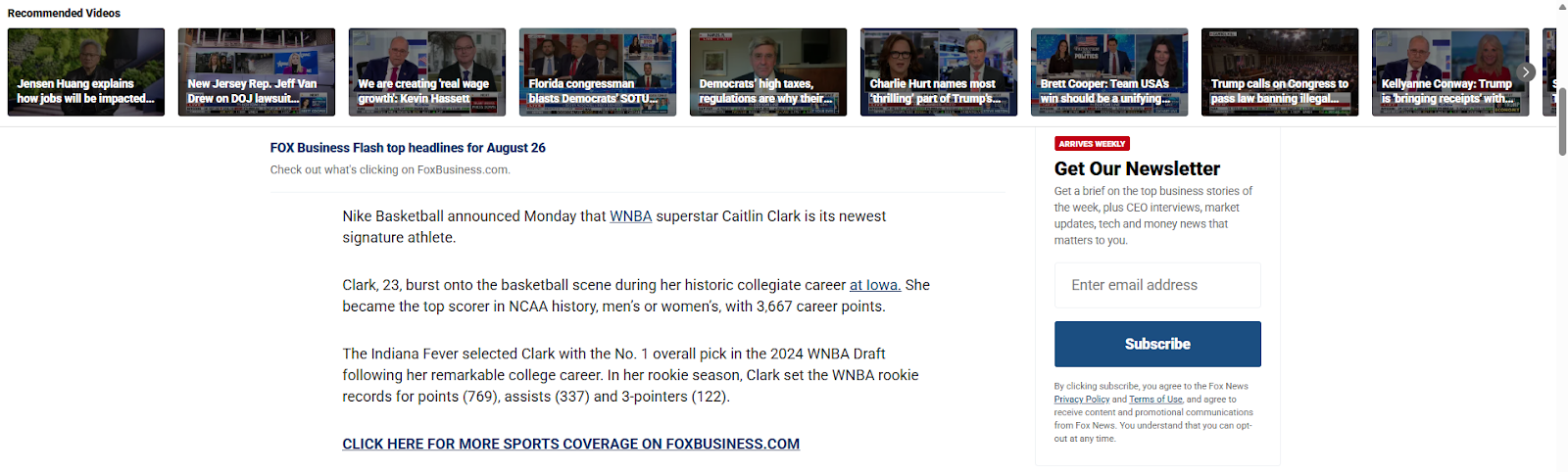
As you can see in the image above, an article mentions Nike by name but does not link to its official website. This is an unlinked brand mention that you can convert into a backlink through outreach.
How it works:
Publications often mention enterprise brands in articles and analysis pieces without adding clickable links. Identify these mentions, then reach out with a brief, friendly note to add a link to the already existing brand name.
Steps to Execute:
1. Set Up Brand Monitoring
Track unlinked mentions for your brand and product names using Google Alerts, Ahrefs Content Explorer, or Mention. You can also run manual searches using “your brand name” – site:yourdomain.com
2. Filter for High-Value Mentions
Focus on high-authority domains with DR 40+ and focus on recent mentions within the last 6 months. Avoid social media, review sites, and forums. You need to prioritize editorial content where a link carries real authority value.
3. Send Your Outreach Email
Send a brief, warm email thanking the author for the mention, referencing the specific article, and suggesting that adding a link would help their readers learn more. Keep it short, helpful, and free of any pressure.
Expected Results:
30-40% of authors add the link when you ask politely and specifically. This is one of the highest-converting link building strategies that you can implement at the enterprise level.
Common mistakes:
- Waiting too long to make a request. Unlike new articles, older ones do not get updated regularly.
- Using aggressive or entitled language in outreach.
- Requesting links to irrelevant pages instead of the contextually appropriate URL.
- Ignoring lower-authority mentions that still provide topical relevance and referral value.
- Not tracking which mentions converted for follow-up optimization.
7. Analyze Competitor Backlink Profiles for Proven Opportunities:
Your competitors’ backlinks are pre-qualified link opportunities.
If a site links to them, they’re already open to linking within your space. Your job is to position your content as the better and more authoritative option.
Remember:This isn’t about copying your competitor’s strategy.
It’s about using their backlink profile as a validated map of link opportunities, then creating content and outreach angles that earn those same links or better ones.
The process:
- Analyze competitor backlink profile using link building tools such as Ahrefs, or Semrush
- Filter for high-authority domains (DR 50+).
- Identify link types. It could be resource pages, industry roundups, guest posts, or mentions.
- Determine why the competitor earned each link.
- Create a superior content or outreach angle.
- Contact the linking site with your alternative content piece.
Common mistake:
- Focusing only on competitor links instead of expanding to new high-value sources.
One Important Rule:
Use competitive analysis as a starting point, not as the entire link acquisition strategy.
The strongest enterprise link building programs use competitive analysis to find proven opportunities, then expand beyond them.
Building Your Enterprise Link Building Team
Enterprise link building is complex. It requires the right team and processes.
Dedicated specialists work closely together to execute your plan and drive meaningful results. Without the right team and clear processes, even the best strategies fail.
Here’s the team structure:
Internal Team Roles
| Role |
Responsibilities |
|---|---|
| Link Building Manager (1) | Leads strategy and coordinates across marketing, PR, product, and leadership. Tracks performance and reports results to C-level stakeholders. |
| Content Strategists (1-2) | Identify linkable asset opportunities. Oversee linkable assets creation, identify data stories, and work with the subject matter experts. |
| Outreach Specialist (2-4) | Executes email outreach campaigns. Manages prospect lists, tracks responses, and refines messaging. One specialist can manage around 500 target sites. |
| Data Analyst (1) | Tracks link acquisition progress and analyzes backlink profiles. Measures impact on organic performance, prepares leadership reports. |
| Technical SEO Support (1) | Manages redirects, monitors crawl errors, handles disavow processes, and audits backlink health. |
When to Use an Agency
Hire an enterprise link building agency when:
- You need specialized expertise you don’t have in-house.
- Your team lacks bandwidth for consistent, systematic outreach.
- You’re quickly entering new markets or verticals.
- You need to scale execution without expanding headcount.
Many enterprises also use white-label services to scale execution across multiple brands or campaigns without expanding their internal headcount.
Red flags to avoid:
- Agencies promising specific link quantities without quality guarantees.
- ‘White label’ guest posts at scale with no transparency on sources.
- Services that won’t disclose link sources before delivery.
- Guaranteed ranking promises. No legitimate agency can promise this.
What to expect from a quality agency:
- Transparent link prospecting and outreach processes.
- Detailed reporting on every acquired link.
- Strict compliance with your brand guidelines.
- Strategic recommendations based on competitive analysis.
- Focus on editorial links from relevant, authoritative sites.
In-house Vs. Agency Vs. Hybrid:
| Factor |
In-house |
Agency |
Hybrid |
|---|---|---|---|
| Brand Knowledge |
Deep product and brand understanding | Limited, requires onboarding | In-house handles strategy and direction |
| Scalability |
Hard to scale during campaigns | Scales quickly without hiring | Agency handles execution at scale |
| Cost |
Higher fixed costs | Lower commitment, flexible | Balanced, fixed core, flexible execution |
| Creative Diversity |
Limited | Fresh perspectives and competitive insights | Best for both |
| Stakeholder access |
Direct and fast | Slower feedback loops | In-house manages stakeholders |
| Quality control |
Easier to maintain | Requires oversight | In-house oversees agency output |
| Best for |
Brand consistency, long-term relationships | Specialized tactics, media relations | Most enterprise link building programs |
Enterprise Link Building Workflow
Even the best strategy needs a clear execution process to deliver consistent results.
Follow this three-phase workflow to keep your enterprise link building program on track.
Phase 1: Planning and Asset Development
Week 1-2: Competitive analysis and opportunity identification.
- Audit the top 10 competitors’ backlink profiles.
- Categorize link types by acquisition method.
- Identify content gaps where you can create superior assets.
Week 3-6: Develop linkable assets.
- Create original research, tools, or comprehensive guides that your audience values.
- Ensure legal and compliance approval.
- Optimize assets for shareability and citation.
- Build dedicated landing pages for each major asset.
Phase 2: Outreach and Relationship Building (Ongoing)
- Build prospect lists of relevant, authoritative sites.
- Personalize outreach based on the target site’s content.
- Follow up strategically (2-3 touches maximum).
- Track response rates and continuously refine messaging.
Best practice for enterprise outreach:
- Send from a real employee’s email. Not a generic ‘marketing@’ address.
- Reference specific content on their site to demonstrate familiarity.
- Lead with value for their audience, not your SEO goals.
- Include a clear, low-friction call to action.
Phase 3: Monitoring and Quality Control
Weekly: Review all acquired links.
- Verify links are live and properly attributed.
- Check for correct anchor text and follow/nofollow status.
- Flag any links that don’t meet quality standards.
- Monitor for toxic backlinks using Google Search Console.
Monthly: Analyze performance and adjust strategy
- Measure impact on target keyword rankings.
- Calculate the cost per acquired link.
- Identify which asset types generate the most backlinks.
- Reallocate resources to the highest-performing tactics.
Measuring Enterprise Link Building Success
Stakeholders care about business outcomes, not about DR scores, and SEO in general. Your reporting framework should connect link building activity to the metrics that matter most to your business and executives.
Primary Metrics
Links acquired: Total new referring domains and backlinks per quarter
Domain authority improvement: Track Domain Rating (Ahrefs) or Domain Authority (Moz). Expect incremental gains, not overnight jumps.
Keyword ranking movement: Monitor target commercial and informational keywords. Focus on page-one positions (1-10)
Organic traffic growth: Measure traffic to pages receiving new backlinks. Compare growth rates to pages without new links to isolate the impact.
Conversion attribution: Track assisted conversions from organic search. Link building often supports the consideration phase, not the final click.
Secondary Metrics
Average link quality: Calculate the median Domain Rating of acquired backlinks. This matters more than total volume.
Link velocity: Track how quickly you’re earning new links month-over-month
Competitor gap: Measure the referring domain gap between your site and top competitors
Brand mention growth: Monitor unlinked brand mentions as a leading indicator of future link reclamation opportunities.
Common Enterprise Link Building Mistakes
Most link building mistakes don’t happen because teams don’t care. They happen because teams move fast, skip steps, and follow patterns that look right but aren’t.
Here are the eight mistakes that cost enterprises the most, and how to fix them.
1. Prioritizing Quantity Over Quality
Chasing hundreds of links from random sites and ignoring topical relevance or audience overlap are the most common mistakes that enterprises make. Your rankings won’t move, even if your monthly target is achieved. That’s what happens when you focus on the number of links and not the quality.
After all, fifty links from sites your customers actually read will always beat five hundred links from random sites.
Build a list of 200-500 sites that your idea buyers read and target only those to gain quality backlinks.
2. Ignoring Existing Assets
Look at your existing assets before building anything new.
Most enterprise teams skip the audit and jump straight to creating new content. That’s a mistake. You likely have guides, tools, and data on your site that could earn links today.
You need to audit your existing content first and then promote it before creating new content.
3. No Cross-functional Collaboration
Running link building in isolation without combining content, PR, product, or legal teams won’t help you climb higher.
When teams work independently without sharing critical information, you lose opportunities, and progress slows across the entire organization.
You need to align departments before starting any link building tasks. Establish a collaborative approach among cross-functional departments and define clear ownership and responsibilities.
4. Short-term Campaign Mentality
Link building is not a campaign with a start and end date. This is an ongoing program. Site authority compounds with time. However, inconsistent efforts can break long-term progress.
Commit to a long-term roadmap with consistent outreach and quarterly performance goals. Treat it like an investment, not a project.
5. Neglecting Competitor Analysis
Ignoring competitor backlink profiles when planning your link building strategy is a red flag. Because you miss publisher opportunities that are already working and driving high-value targeted traffic in your industry.
Review competitor links regularly to identify effective content formats and outreach targets.
6. Inadequate Tracking and Attribution
Without clear tracking, you can’t prove ROI, justify your budget, or refine performance.
Many enterprise teams scale their link building before setting up proper tracking. And, six months later, they can’t tell management which links moved rankings, and which ones drove traffic to the site.
The fix is to set up the tracking process and system before you even start.
7. Ignoring Link Quality and Risk Signals
Accepting any link offered, or using risky tactics like directory spam, private link networks (PBNs), or paid links disguised as sponsored content.
Google’s spam algorithms are sophisticated. One manual action can tank your entire domain’s rankings.
How to avoid it: Audit every link source. Reject anything from low-quality directories, link farms, or spammy sites. Use disavow files proactively. Train your team to spot red flags such as thin content, excessive ads, unnatural link patterns, and over-optimized anchor text.
8. Failing to Build Relationships
Treating every outreach email as a transaction. Pitching journalists cold without building any rapport. Cold outreach converts at 1-5%. Relationship-based outreach converts at 15-30%. The difference is trust, and building trust takes time.
Invest in relationships before you need a link. Engage with journalists on social. Share their work. Add value without asking for anything. When you pitch, you’re reaching someone who already knows your name.
Your Next Step:
Enterprise link building is a long-term investment that builds your authority, visibility, and search performance in Google and AI searches.
Organizations that treat it as an ongoing program consistently outperform those that don’t. The ones that win in link building don’t chase shortcuts. Instead, they build backlinks systematically.
Here’s what to do right now:
Pick one strategy. Run it consistently for 90 days. Track every link earned, every domain gained, every ranking moved.
Struggling to scale link building across a large website?
Get a clear strategy to build authority at scale without compromising quality.
1) What Metrics Matter Most for Enterprise Link Building Success?
Focus on domain authority growth, keyword ranking movement for target commercial terms, organic traffic to linked pages, and referring domain growth. Total backlink count alone is not meaningful. Quality relevance always matters more than volume.
2) How Many Backlinks Does an Enterprise Site Need?
There is no fixed number. Success depends on link quality, relevance, and the competitive landscape you’re operating in. A handful of authoritative, relevant links can consistently outperform hundreds of low-quality ones.
3) How is the Enterprise Link Building Different From Regular Link Building?
Regular link building targets a small number of pages with straightforward outreach. Enterprise link building operates at scale across complex site structures. It prioritizes domain authority, brand safety, stakeholder alignment, and systems that support ongoing growth.
4) Why do Large Organizations Need Enterprise Link Building?
Large brands compete in crowded markets where basic SEO is simply not enough. Authoritative backlinks help you rank for competitive terms, strengthen trust signals, and maintain visibility across multiple products, services, and regions simultaneously.
5) What Types of Links Work Best for Enterprise Websites?
High-quality editorial links from reputable, relevant publications. Digital PR placements, thought leadership content, original data studies, and strategic partnerships consistently produce the strongest, most durable results.
6) How Long Does it Take to See Results?
Enterprise link building is a long-term strategy. You may see initial improvements within a few months. Meaningful authority and ranking gains typically build over 6-12 months and compound from there.
7) Should We Build Links In-house or Hire an Agency?
Most enterprises use a hybrid approach. In-house teams handle strategy, stakeholder management, and brand oversight. Agencies handle execution, outreach volume, and specialist tactics. This gives you the brand alignment of an internal team and the scalability of an agency.
8) How do We Measure the Success of Enterprise Link Building?
Track domain authority growth, keyword ranking movement, organic traffic to linked pages, referring domain growth, and assisted conversions from organic search. Build a reporting dashboard that connects these metrics to business outcomes, not just SEO benchmarks.