Manual link building means a person, not a script, finds each site, pitches its editor and earns the link. You get manual backlinks from sites that chose to link to you, and every placement passes through human review. You’ll learn what a manual link building service does, how to judge one before you pay, and what drives the price.
Key Takeaways:
- Manual backlinks are earned through outreach, so an editor chooses to publish each one.
- A manual link building service pays for people’s time, not for the link itself.
- Paying a publisher for a link that passes ranking credit breaks Google’s spam policy.
- Vet a service by the sites it shows you, not by a promised Domain Rating.
- Automated link building creates the patterns Google’s systems are built to ignore.
What is Manual Link Building?
Manual link building is earning valuable backlinks by contacting real site owners one at a time. A backlink works like a friend vouching for you, and manual work makes sure the friend actually knows you.
You find a site that covers your topic, show its editor something their readers need, and let them decide whether to link.
No software sends the emails or places the links for you.
The result is contextual backlinks: links inside the body of a relevant article.
Here’s a quick example.
You publish a guide comparing email marketing tools, then send it to the editor of a digital marketing blog who covered the same topic last month.
If the guide fills a gap for their readers, they cite it and link to you. That’s one high-quality backlink built entirely by hand.
One link like that beats fifty forum profiles.
What is Automated Link Building?
Automated link building uses software to create backlinks or send outreach emails in bulk, with no human checking each site.
The tools drop links into comments, forums and low-quality blogs, whether or not the site has anything to do with you.
The Risks of Automated Link Building
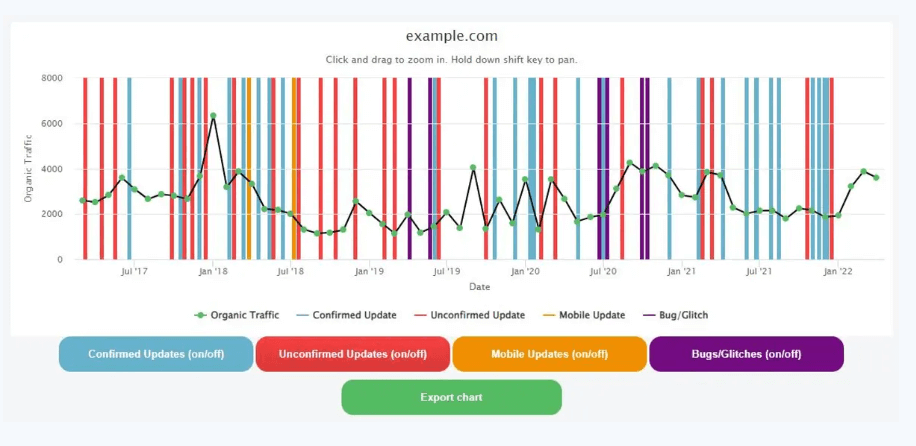 Automated link building is fast, and that speed is the problem. Google’s link spam policy names links created with automated programs or services as spam.
A few hundred comment links on unrelated blogs teach Google nothing good about your site. At best they’re ignored, and at worst they invite a penalty.
You can run your domain through the Website Penalty Indicator to look for traffic drops that line up with Google updates.
The table below sets the two approaches side by side.
Automated vs. Manual Link Building
| Factor | Automated Link Building | Manual Link Building |
|---|---|---|
| Method | Uses software or tools to create backlinks automatically | Involves human effort to build backlinks manually |
| Quality Control | Limited control over link quality and placement | Complete control over link quality and placement |
| Time | Quick to implement | Time-consuming due to research and outreach |
| Link Quality | Often contains low-quality or spammy links | Produces higher-quality, relevant backlinks |
| Risk Level | Higher risk of penalties | Lower risk when done ethically |
| Cost | Lower cost due to automation | Higher cost due to manual outreach and effort |
| Effectiveness | Gains that Google’s systems tend to discount | Links that keep their value as long as the page stays live |
If you don’t have the hours for outreach, a manual link building service runs the same process for you. The difference between a good service and a bad one is the subject of the next section.
What Does a Manual Link Building Service Actually Do?
A manual link building service is a team that prospects, vets, pitches and tracks links on your behalf, by hand. You pay for research, writing and outreach time. The publisher still decides whether your link goes live.
Most services cover 5 jobs: choosing target pages, building a prospect list, qualifying sites, writing pitches or articles, and reporting live links.
The outreach itself is its own craft. Our guide to manual outreach for link building covers pitches, follow-ups and contact research in depth.
How to Vet a Manual Link Building Service
A manual link building service earns your trust with sample sites, not promises. Ask for 4 things before you sign.
- Show me 10 sites you’d target for my niche, and why each fits.
- Explain how you check that a site has real traffic, not just a high score.
- Tell me who writes the anchor text, and how varied it’ll be.
- Send a sample report with live URLs, anchors and target pages.
Walk away from any service that guarantees a DR (Domain Rating, Ahrefs’ 0 to 100 score for a site’s backlink strength) or a ranking. Nobody controls either.
And be wary of a “cheap manual link building service” priced far below the work involved. Real prospecting and writing take hours, so a very low price usually means a recycled list of sites that sell links to anyone.
Can You Buy Manual Backlinks?
Buying manual backlinks is allowed only when the link is marked as paid. Google’s link spam policy treats links bought to pass ranking credit as spam. A paid placement must carry rel=”sponsored” or rel=”nofollow”, and then it passes no ranking credit.
So “buy manual backlinks” offers usually mean one of two things.
The first is a service fee for outreach work, where the editor links for free because your content earns it. That’s legitimate.
The second is a fee passed to the publisher for a dofollow link. That’s a paid link, however hand-placed it looks.
Our breakdown of whether you should buy backlinks covers the risk in detail. Private blog networks are worse still: read what PBN backlinks are before anyone sells you one.
Backlink Marketplace vs Manual Link Building Service
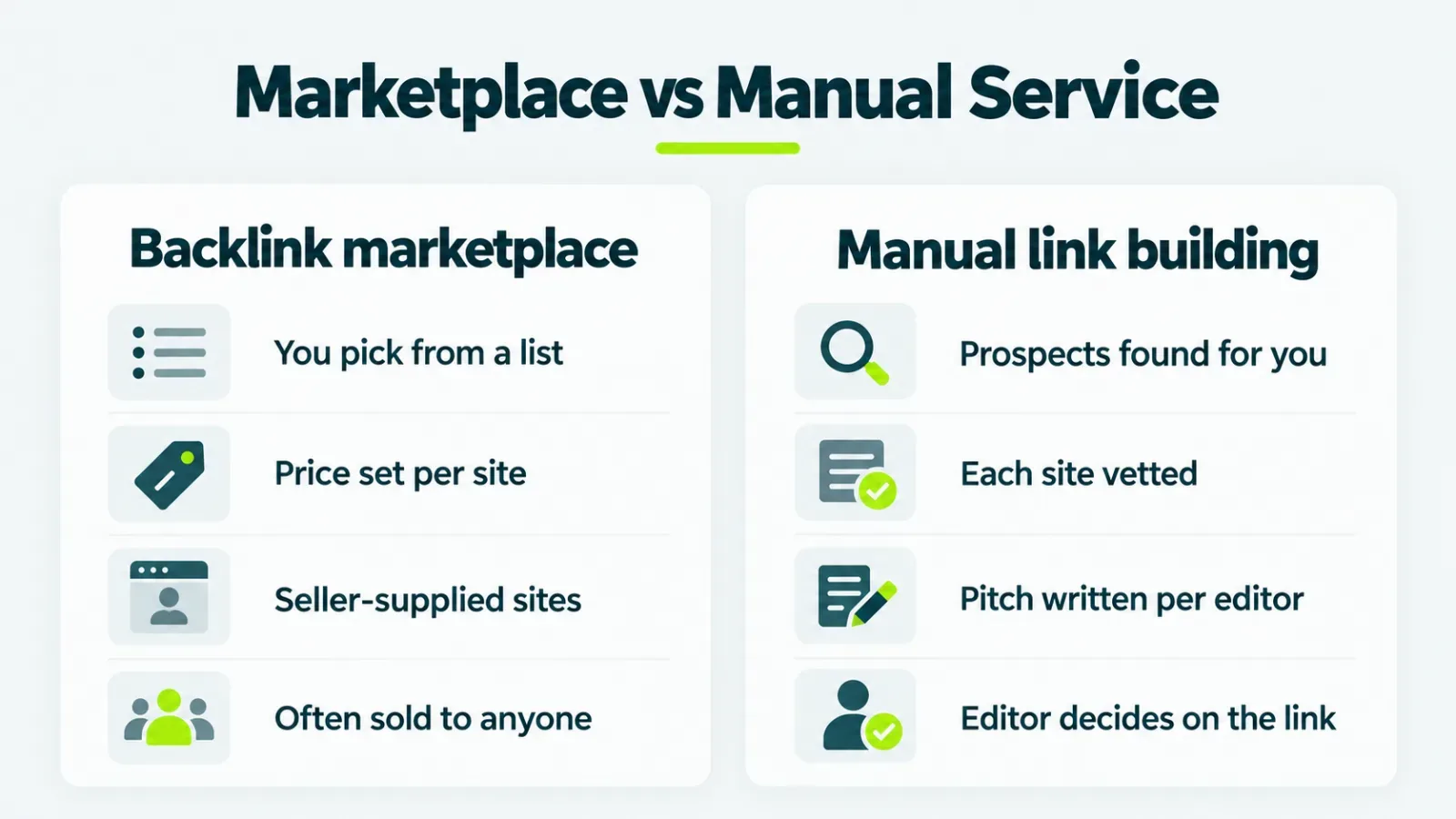
A backlink marketplace sells placements from a fixed list of sites. A manual link building service finds sites for your specific pages and asks their editors. The two look similar on an invoice and differ completely in risk.
| Factor | Backlink marketplace | Manual link building service |
|---|---|---|
| Who picks the site | You, from the seller’s list | The service, from fresh research |
| Editorial decision | Usually guaranteed once you pay | The editor can say no |
| What the money buys | The placement itself | Research, writing and outreach time |
| Site footprint | Same sites sold to many buyers | Sites chosen for your topic |
| Spam policy risk | High unless marked sponsored | Low when no publisher is paid |
A guaranteed yes is the giveaway. Editors who publish anything for a fee are the sites Google trusts least.
Why Manual Link Building Matters More Now
Manual link building matters because Google’s systems are designed to ignore links that look manufactured. An editor who chose to cite you leaves a pattern automation can’t fake. Every earned placement is one Google has no reason to discount.
Manual backlinks pay off in 4 ways: control over quality, better replies, the right visitors and lower penalty risk.
Full Control Over Quality
You decide which sites to contact, where your link sits and whether the site fits your brand.
That control keeps junk out of your link profile from day one.
💡Key Factors of Link Quality
- Relevance means the website linking to you should be related to your industry or topic.
- Authority indicates that the links from well-known or reputable websites carry more weight.
- Credibility is that the links from a trustworthy site are more reliable.
- Link Placement means that links appear naturally within meaningful content.
- Real Traffic means the website receives actual visitors who engage with your content.
- Natural Anchor text is the clickable text that is relevant to the linked page and fits naturally in the sentence.
Higher Response Rates
Personalized outreach reads like a note from a person, and editors answer people.
Templated blasts get filtered or deleted.
A pitch that names the editor’s article and explains what it adds for their readers earns a reply far more often.
Reach The Right Audience
A link from a relevant site sends visitors who already care about your topic.
They stay longer and buy more than traffic from random sources.
Keeps Your Site Safe From Penalties
Manual link building lowers risk because each backlink is built through a real editorial decision.
No automation, link packages or unnatural patterns.
Google’s systems ignore many low-quality links automatically, but sites that keep using manipulative or paid link tactics can still get a manual penalty.
What is a Google Manual Penalty?
A Google manual penalty (called a manual action) is applied when a human reviewer at Google finds clear evidence of spam, such as paid links.
Relevant sites plus honest outreach keep you inside Google’s rules.
Manual Link Building Techniques
The core manual link building strategies are guest posting, relationship building, broken link building, resource pages, linkable assets, journalist requests, industry networking and testimonials. Each one gives the editor a reason to link that has nothing to do with money.
Start with 1 or 2 that fit your content, then add more as your link profile grows. Our list of safe white hat strategies goes deeper on the safest options.
Guest Posting
Guest posting means writing a useful article for another site in your industry, with a link back inside the content.
The value is the audience and the editorial fit, not an exact-match anchor. Keep anchors descriptive and natural.
Tools like Pitchbox or the Moz toolbar help you find and judge sites that accept guest posts.
Competitor backlinks and industry resource pages are good sources too.
Google search operators find them fastest:
- Keyword + “write for us”
- Keyword + “guest post”
- Keyword + “guest contributor”
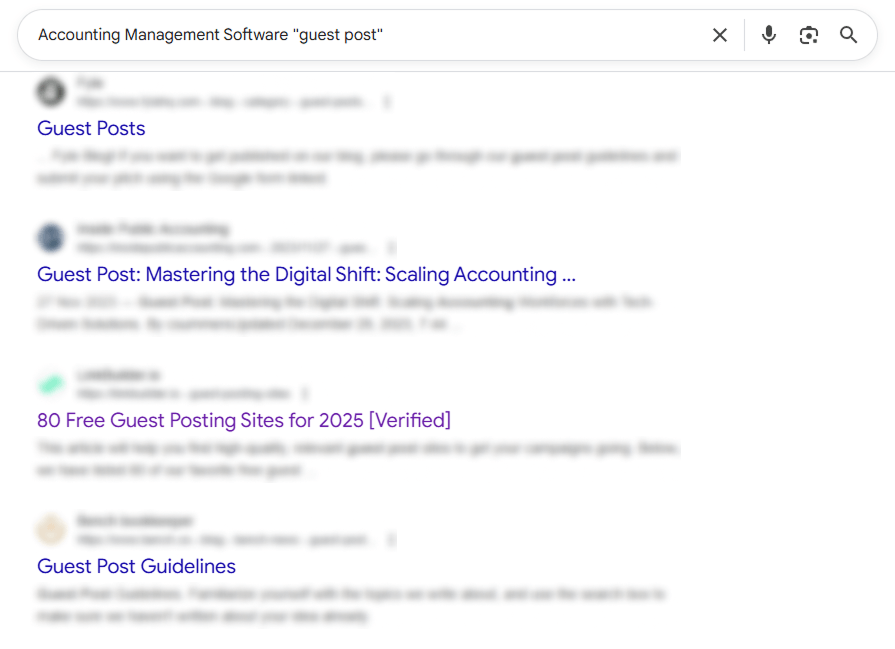
Once you find a fit, email the editor and ask to contribute.
For example: “I’ve been reading your posts on account management and noticed you cover complex accounting tasks. I’d love to contribute a guest post with practical accounting tips for your readers.”
Adapt that opening to the editor’s own recent article.
Guest Blogging Best Practices
Pick niche-relevant sites
A site that serves your audience beats a bigger site that doesn’t.
Skip the sales pitch
The article should teach, not advertise your business.
Write well
Hire a skilled writer if writing isn’t your strength.
Give every post a job
If a post doesn’t teach the reader something, don’t send it.
Relationship-Based Link Building
Relationship-based link building earns links by becoming useful to site owners and experts before you ever ask.
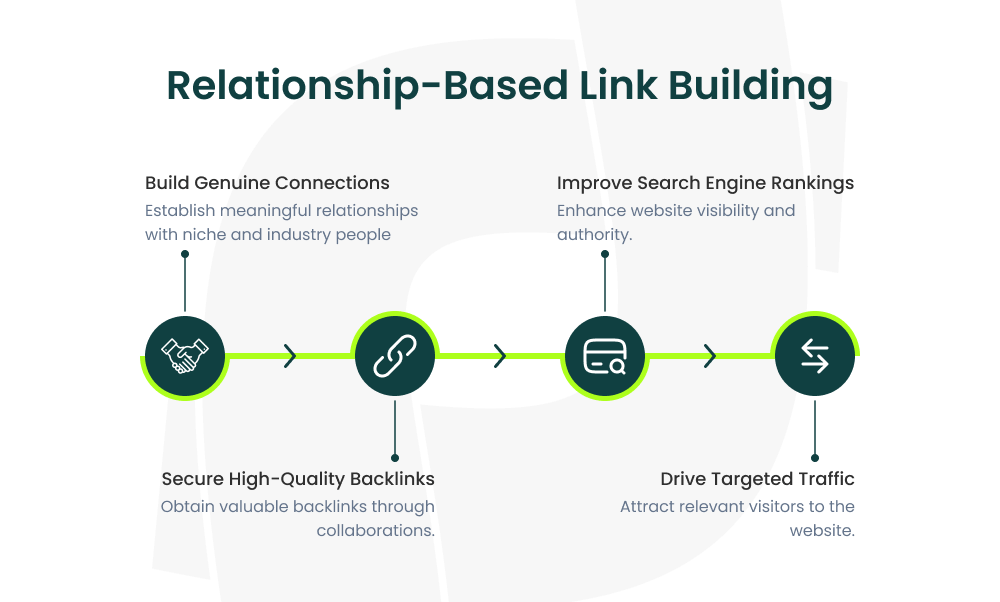
You share their work, leave thoughtful comments and cite them in your own posts.
Say you run a marketing blog and regularly reference three industry writers.
Those writers notice. Over time, they start linking back and recommending your content.
It’s slow. It’s also the hardest link source for a competitor to copy.
Broken Link Building
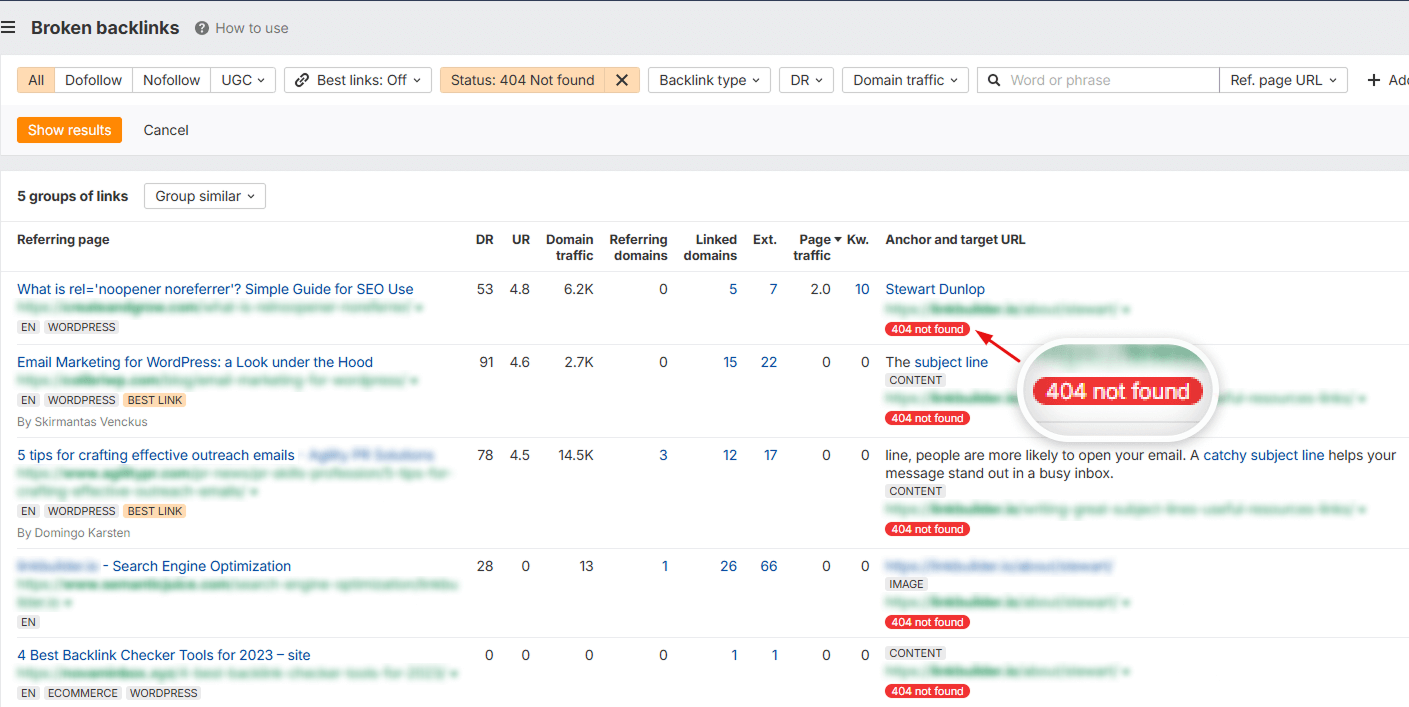
Broken-link prospecting means finding dead links on relevant sites and offering your page as the replacement.
The editor fixes a problem on their page, and you get the link.
For example, a marketing blog links to a “free SEO audit tool” page that now returns a 404 error. You offer your working audit tool in its place.
How to Do Broken Link Building
1. Find broken links
Check relevant pages for dead links with a tool like Ahrefs, or browse older resource pages in your niche.
2. Match a replacement
Use an existing page that covers the same thing, or create one.
3. Email the editor
Point out the dead link and suggest your page as the fix.
For example: “I noticed the ‘free SEO audit tool’ link in your article on SEO audit tools leads to a 404.”
“If you’re updating the post, our audit tool does the same job: [Your Tool Link]”
“Hope this keeps the page useful for your readers.”
4. Earn the link
You’ve solved their problem first, so the ask feels fair.
Resource Page Link Building
A resource page is a list of useful tools and guides a site keeps for its readers.
Resource page link building means asking the owner to add your page to that list.
Some sites have a “Submit a Resource” form. Use it when your page clearly fits.
Resource Page Link Building (Step-by-Step)
1. Find niche-relevant resource pages
Use search operators like:
- keyword + “resource page”
- keyword + “useful resources”
2. Check if your content is a good fit
Make sure the page lists high-quality resources and that your article genuinely adds value.
3. Reach out to the site owner
Email them with a polite message, share your resource, and explain why it deserves a spot on their page.
Ex: “I saw your list of ‘Top Digital Marketing Tools.’ I think our free Headline Analyzer Tool would be a fantastic addition for your readers.”
4. Get your content listed
If they find it helpful, they’ll add your link to the resource page, helping you to get a high-quality manual backlink.
Here’s an example for finding a resource page using search operators

Asset-Based Link Building
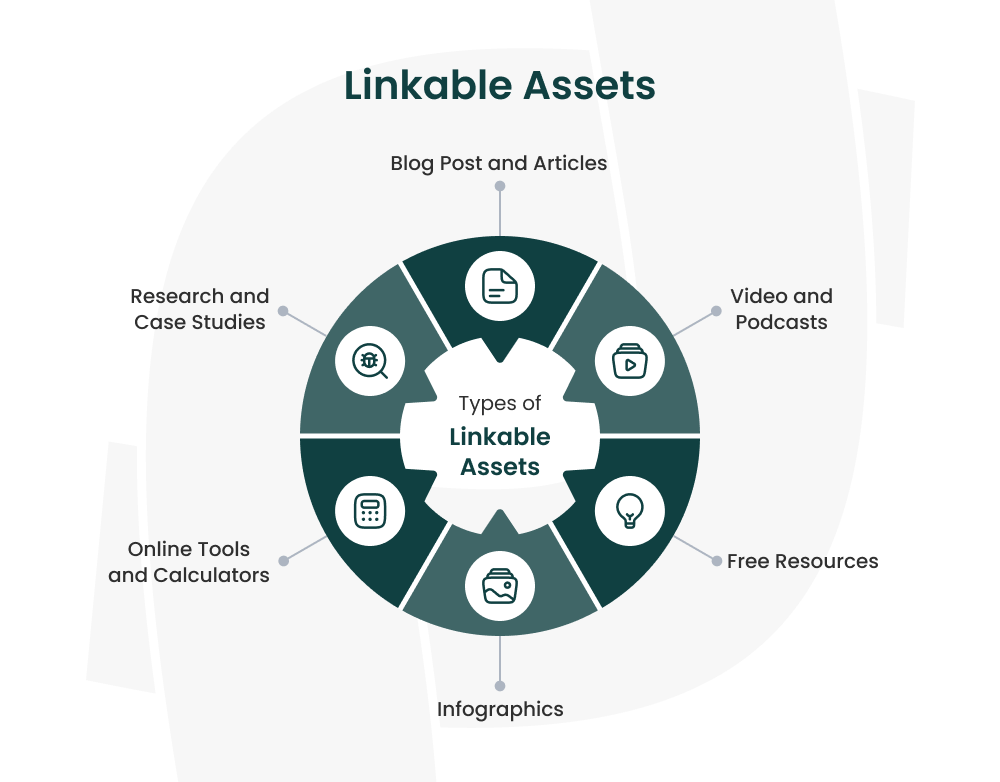
Asset-based link building is a strategy where you create high-value linkable assets that other websites naturally want to refer to, cite, or link to because they find them genuinely useful.
Here are some linkable assets:
- In-depth guide and Tutorials
- Infographics and Visual Content
- Original research and Case Studies
- Tools and Calculators
- Templates and Checklists
- Data reports and resource roundups
You share the asset with sites that cover related topics, and they cite it because it helps their readers.
A good asset keeps earning links for years without fresh outreach.
To find sites likely to link to your asset, check:
- Competitor pages that already attract many backlinks
- “Best tools/resources” lists in your niche
- Blog posts covering related topics
Ahrefs, Semrush and Moz all show who links to similar assets, so you can contact those sites directly.
HARO Link Building
HARO link building means answering journalists’ requests for expert sources, so their articles cite and link to you.
HARO ( Help a Reporter Out)
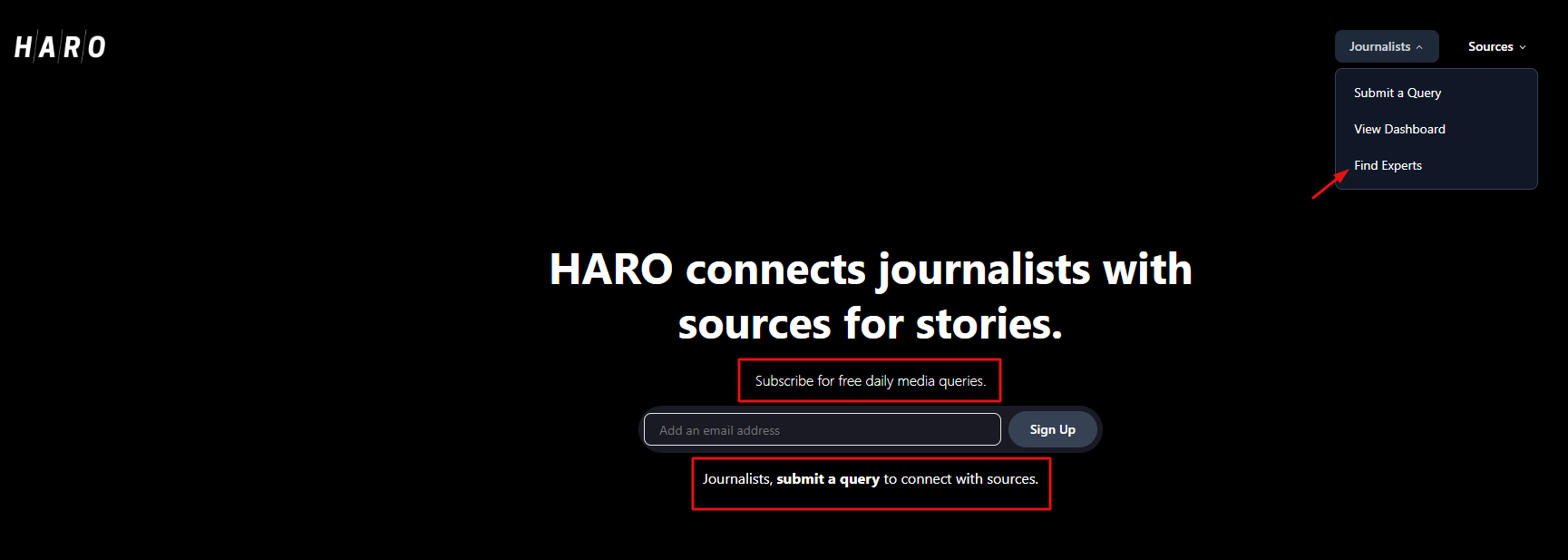
HARO connects journalists with experts who can answer their questions.
A mention in a real publication strengthens how readers and Google see your business.
The work is entirely manual: read the requests, pick the ones you can answer with authority, and reply fast with a specific, quotable answer.
Most replies go unused. The ones that land come from expertise, which is why they carry weight.
Here’s the HARO dashboard, where sources sign up for daily media queries.
Networking with Industry Influencers
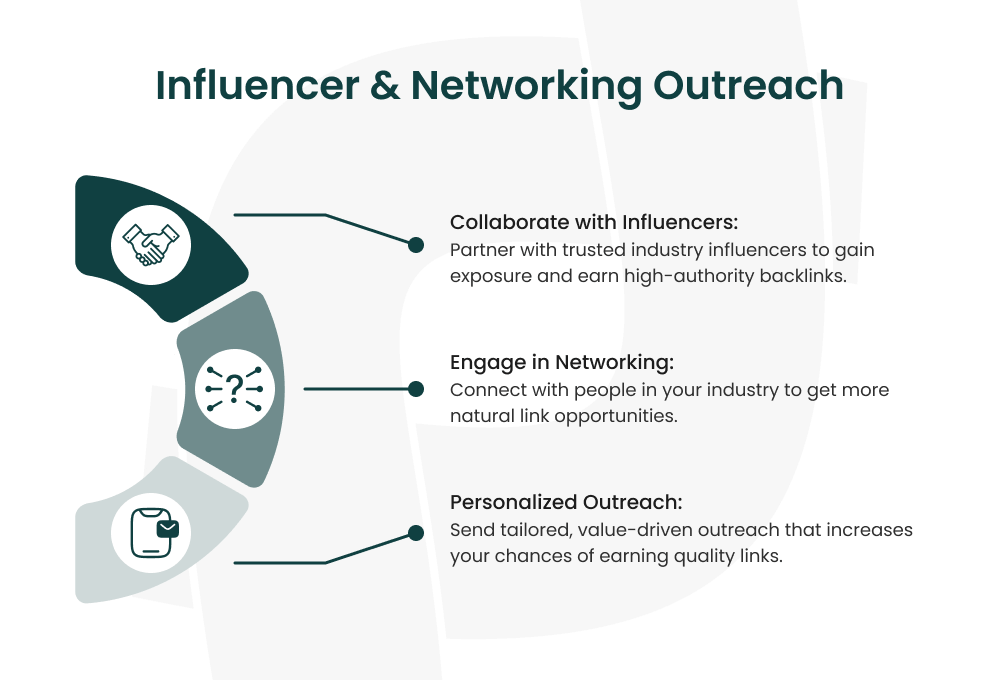
Industry networking means working with respected people in your niche and giving them something useful first.
That might be data for their next post, an interview, or a co-written resource.
When they share or cite the result, the link comes with their audience’s trust.
If you give a product or payment in exchange for a link, that link needs rel=”sponsored”.
Testimonial Link Building
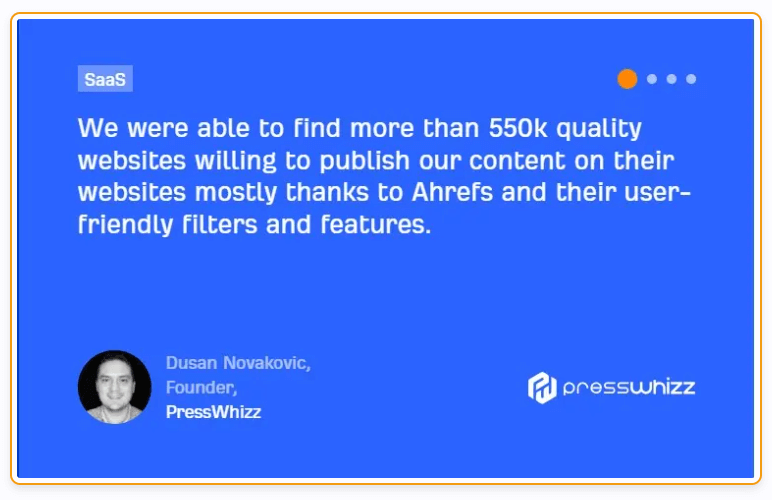
Testimonial link building means giving honest feedback on a product you use, which the vendor publishes with a link to you.
Many software companies show customer reviews with a link to the reviewer’s site.
Only review tools you actually use. A fake testimonial is a trust problem long before it’s an SEO one.
For example, PressWhizz wrote a testimonial for Ahrefs, and Ahrefs linked back to PressWhizz’s site.
The Manual Link Building Process, Step by Step
A manual link building campaign runs in 6 stages, from choosing the pages you want to rank to confirming each link is still live weeks later. Whether you run it yourself or hire a service, these are the stages to check.
Step 1: Choose the target pages and anchors
Decide which pages the campaign is meant to move before you look at a single prospect. Pick the pages that earn revenue, not the ones that are easiest to link to. Write anchors that describe the linked page plainly, and let each publisher choose wording that fits the article.
Step 2: Build the prospect list
Search for sites that already publish on your topic and rank for the terms your buyers use. Competitor backlink reports, industry roundups and resource pages all produce usable names. Keep the list in a sheet with the URL, the topic match and the reason the site is worth approaching, because a campaign is only as good as its link prospecting groundwork.
Step 3: Qualify every site before you pitch
Check that the site publishes recently, ranks for real queries and covers your topic rather than everything at once. Run the domain through a domain age checker at this stage, because a site registered a few months ago cannot have the history its metrics suggest. Look at whether its outbound links point to businesses like yours or to unrelated paid placements. A site that fails on relevance is not worth pitching regardless of its authority score.
Step 4: Find the right contact
Look for the editor or the author who owns the section you want to appear in, not a general inbox. Author pages, LinkedIn and the site’s own masthead name the person. A pitch that reaches whoever is responsible for the page gets answered more often than one sent through a contact form.
Step 5: Write and send the pitch
Open with the specific page you read and what you noticed about it. State what you are offering, say why it fits that page, then make the ask once. Keep the first message short enough to read on a phone, and treat the follow-up as part of the same link building outreach sequence rather than a separate campaign.
Step 6: Track placements and confirm they stay live
Record every live URL, the anchor used and the page it points to. Check the placements again after a few weeks, because links get edited out, moved behind redirects or switched to nofollow without notice. Running a backlink monitoring check on a schedule is what turns a list of placements into a link profile you can rely on.
Common Manual Link Building Mistakes to Avoid
Most manual link building mistakes come from chasing link count over link fit. Here are 4 to skip.
Buying Cheap or Paid Links
Paying a publisher for a dofollow link breaks Google’s link spam policy. These links often sit on unrelated sites or link farms built only to sell placements.
Earn links with useful content and real relationships instead.
Any link you pay for, or get in exchange for a product, needs rel=”sponsored” or rel=”nofollow”.
Building Links Too Fast
Hundreds of new links in a month look like a purchase, not popularity.
Build at a steady pace that matches the attention your content really gets.
Targeting Irrelevant Websites
A link from an unrelated site adds a number and tells Google nothing about your topic.
Choose sites that serve a similar audience. One relevant link outweighs ten random ones.
Failing To Diversify Strategies
Relying on one method, such as guest posting, leaves you stuck when that channel dries up.
Mix several link building strategies: guest posts, resource pages, broken links and linkable assets.
How Much Does Manual Link Building Cost?
Manual link building costs more per link than automation because people do the research, writing and outreach. The price depends on your niche, the sites you target and how much content each link needs.
Our guide to what backlinks cost per link covers current price ranges, and the backlink cost calculator helps you estimate a budget.
4 factors drive the cost:
Time Investment
Researching prospects, qualifying them and writing personal pitches take hours for every link that goes live.
Content Creation
Guest posts and linkable assets need writers, editors and sometimes designers.
Tools & Software
Most link builders pay for SEO and outreach tools such as Ahrefs or Semrush on a monthly subscription.
Outreach & PR
Digital PR and journalist outreach need steady effort, and some campaigns need samples or original data.
Typical cost items:
- Outreach tools: a monthly subscription for prospecting and tracking
- Content creation: writing and design for each guest post or asset
- Team time: hours spent on research, outreach and follow-ups
- PR & HARO campaigns: costs vary depending on scope
Paying an agency for prospecting, outreach and content does not make a link paid.
A link counts as paid when the publisher receives money, products or favors for it.
SaaS Client Growth Story: From 49K to 70K Monthly Users
We ran a manual link building campaign for a SaaS client whose content was strong but whose pages lacked trusted backlinks.
The campaign used only white hat link building, with no automated or bulk placements.
The work covered:
- Identifying authority websites related to the client’s industry
- Placing backlinks within relevant content
- Prioritizing the links that offer real value to the users
- Turning down low-quality or spammy placements
Every backlink came from outreach to a relevant site.
Organic traffic grew steadily over the course of the campaign, as the chart below shows.
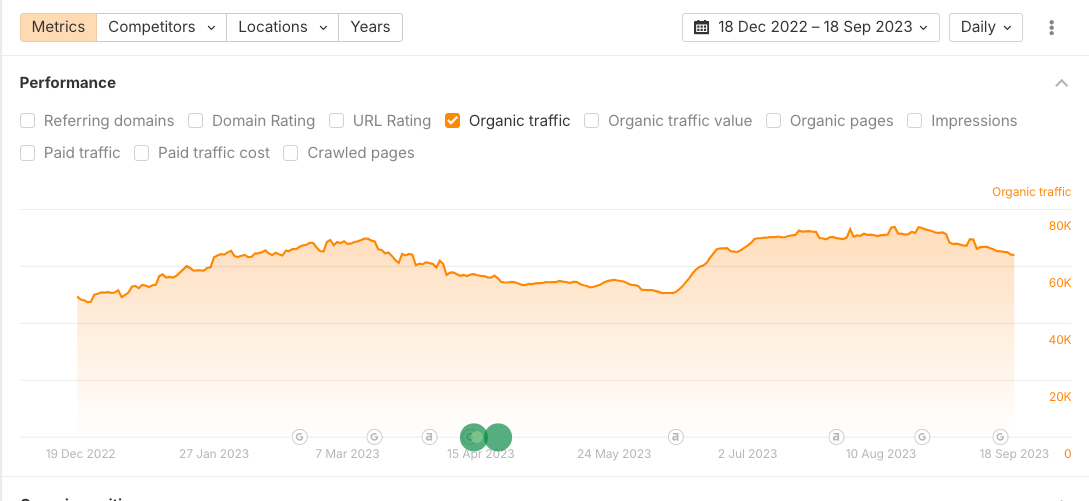
The chart shows a gradual climb rather than a spike, which is what steady, earned links look like.
Ask One Service for 10 Target Sites This Week
Before you hire anyone, ask a manual link building service for 10 sites it would target for your best page.
Check each one yourself: does it cover your topic, rank for real queries and publish recently?
If half the list fails, you’ve saved your budget. If it passes, you’ve found a team worth talking to.
Struggling to earn safe, high-quality backlinks?
Outreach Desk builds manual links through real editorial outreach.
Frequently Asked Questions About Manual Link Building
Is manual link building better than automated link building?
Yes. Manual links come from editors who chose to cite you, while automated links come from patterns Google’s spam policy names as spam. Automation is faster, but those links rarely keep any value.
How long does it take to build links manually?
Manual link building takes weeks to land the first links and months before rankings move. Response speed depends on your niche and the strength of your content. Our guide on how long link building takes covers realistic timelines.
What tools should I use for manual link building?
Ahrefs or Semrush handle prospecting and tracking, and a tool like Apollo.io helps you find editor emails. A spreadsheet works fine for logging pitches when you’re starting out.
Is manual link building still effective?
Yes. Relationship-driven outreach still earns editorial links, while Google spam policies name links created with automated programs or services as spam.
How do I measure the success of manual link building?
Track referral traffic, rankings for the linked pages and the number of new referring domains (unique sites linking to you). Check that each link stays live, too.
Is manual link building the same as buying links?
No. Paying an agency for prospecting, outreach and writing is a service fee. A link counts as paid when the publisher receives money, products or favors for it. Paid links need the sponsored or nofollow attribute.