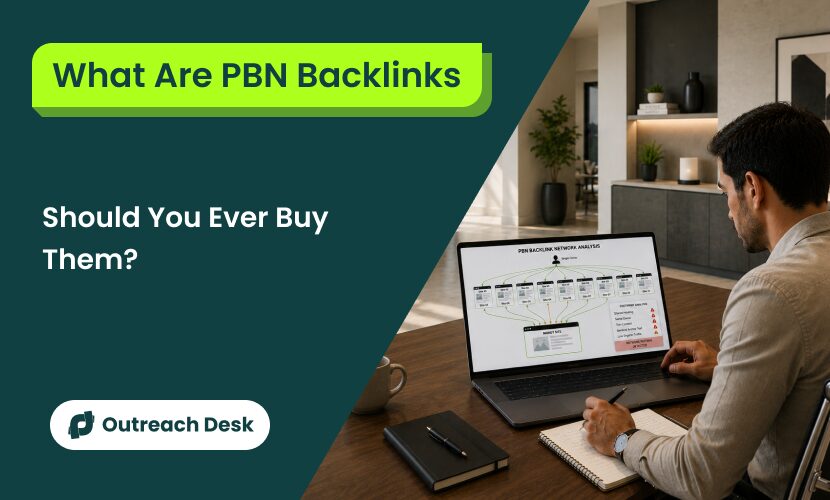
PBN Backlinks come from privately controlled networks of websites built mainly to pass ranking authority. Using or buying PBN backlinks to influence search ranking violates Google’s spam policies on link spam policies on manipulative link schemes.
Some websites still use them, but understanding the potential rewards and risks is essential before you make that choice.
Google doesn’t mention “PBN” by name; instead, it classifies these links as link spam. Buying them carries two major risks: Google ignores the links and your money gets wasted, or Google’s spam team issues a manual action that drops your rankings.
What This Article Covers
- PBNs are paid link networks that violate Google’s spam policies.
- Google may ignore or devalue many manipulative links algorithmically; rankings don’t meaningfully improve.
- Detected PBN use risks manual actions, ranking drops, and cleanup work.
- PBN footprint: shared hosting, ownership data, thin content, identical anchors.
- Disavow PBN links mainly when resolving active manual actions in Search Console.
What a Private Blog Network Actually Looks Like
A private blog network is a group of websites owned and controlled by a person or team to sell paid backlinks, not to reach a real audience.
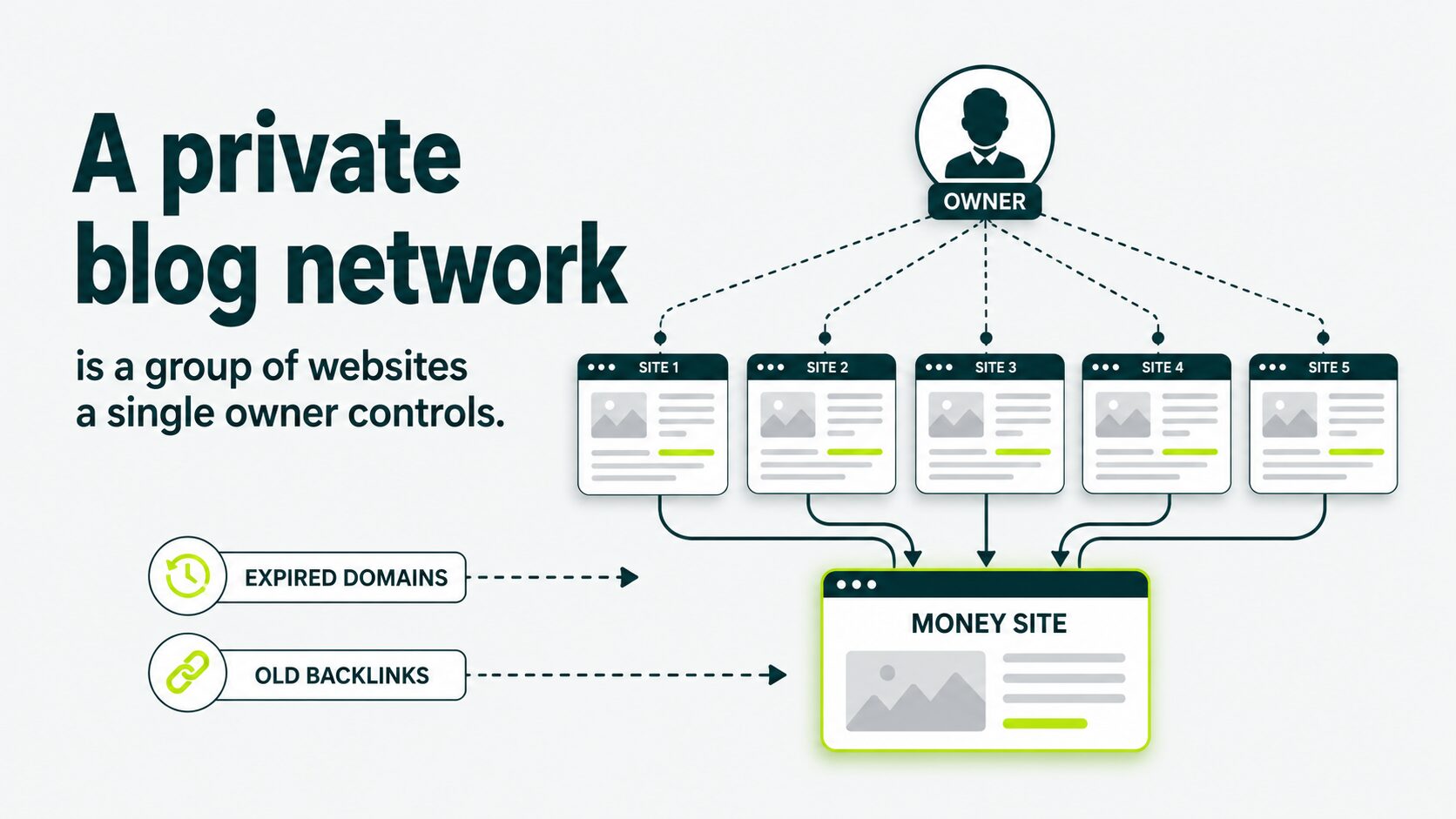
It gives the impression that many sites recommend the buyer’s site, called the money site in PBN terminology, but in reality, they’re all controlled by the same owner.
Google classifies PBNs as a form of link spam because they are intended to manipulate search rankings.
If Google observes patterns like:
- Same IP (server) block
- Same host
- Same template
- Same “WHOIS pattern”
Google may deindex some or all of the network if it identifies patterns commonly associated with link farming networks.
The setup starts with expired domains, also known as dropped domains. These were once active websites with real backlinks pointing to them from other sites. Those old backlinks are the assets. A free domain age checker shows how long any domain has actually existed.
When a site has been around for years, and other websites have linked to it, it carries link juice. Link juice (link equity) works like a recommendation from a trusted colleague; the old backlinks pointing to that domain carry credibility, and that’s what the PBN operator is buying.
A PBN operator buys these aged domains at auction. They publish a few thin articles to make each site look active. Then they place paid links inside those articles, pointing to the buyer’s site.
The pitch is simple: pay $30 to $50 and get a “vote” from a high-authority domain. The problem is that the PBN site never earned that authority on its own.
Google’s spam policies treat any link built mainly to pass ranking signals as artificial, and Google treats PBN links as artificial by design.
Not every owner who runs multiple websites is operating a private blog network. A media company with 10 editorial publications isn’t a PBN. PBN operators build or buy these sites primarily to sell links rather than to publish content for readers.
PBN backlinks fall under the broader category of link tactics Google flags as manipulative.
PBN backlinks are different from link farming, which focuses on bulk reciprocal links between sites rather than individual paid placements.
Why PBN Links Can Be Bought for $20 to $50
PBN links are cheap because the people selling them need to recover the cost of building the network. Pricing at $20 to $50 per link lets them do that at scale.
The economics start with the domain purchase. A PBN operator buys an expired domain at auction, typically for $50 to $500, depending on the strength of its existing backlinks.
Sellers advertise Domain Rating (a DR is a 0 to 100 score from Ahrefs, a tool that tracks backlink strength across websites) as the main selling point. A domain showing DR 40 lists at a premium over one showing DR 15.
Content comes right after the domain. The operator commissions a short article for each site, often for $3 to $10 per piece on freelance platforms. The content only needs to make the site look active. The article includes a link to the buyer’s site.
At $20 to $50 per placement, a seller with 20 network sites can quickly recover their setup costs. Every link sold after that is profit.
That price tells you what you’re actually buying: a brief rental of whatever authority the original domain still carries.
DR-based selling is where the conflict of interest becomes clear. A seller has every reason to present a DR score as the primary value metric, since it justifies the price.
DR measures the strength of backlinks pointing to that domain. It doesn’t measure whether Google will count those links as genuine signals for your site. When Google detects the PBN pattern, those links lose their value entirely.
If you’re evaluating whether to buy backlinks from any source, the same conflict-of-interest question applies to other paid link channels.
We regularly encounter PBN links during backlink audits, and sites that depend heavily on them often experience ranking instability or corrective action over time.
The Footprint Problem: How Google Finds PBN Sites
Footprints are patterns that connect all the fake sites. Google’s algorithms identify those patterns to find PBNs.
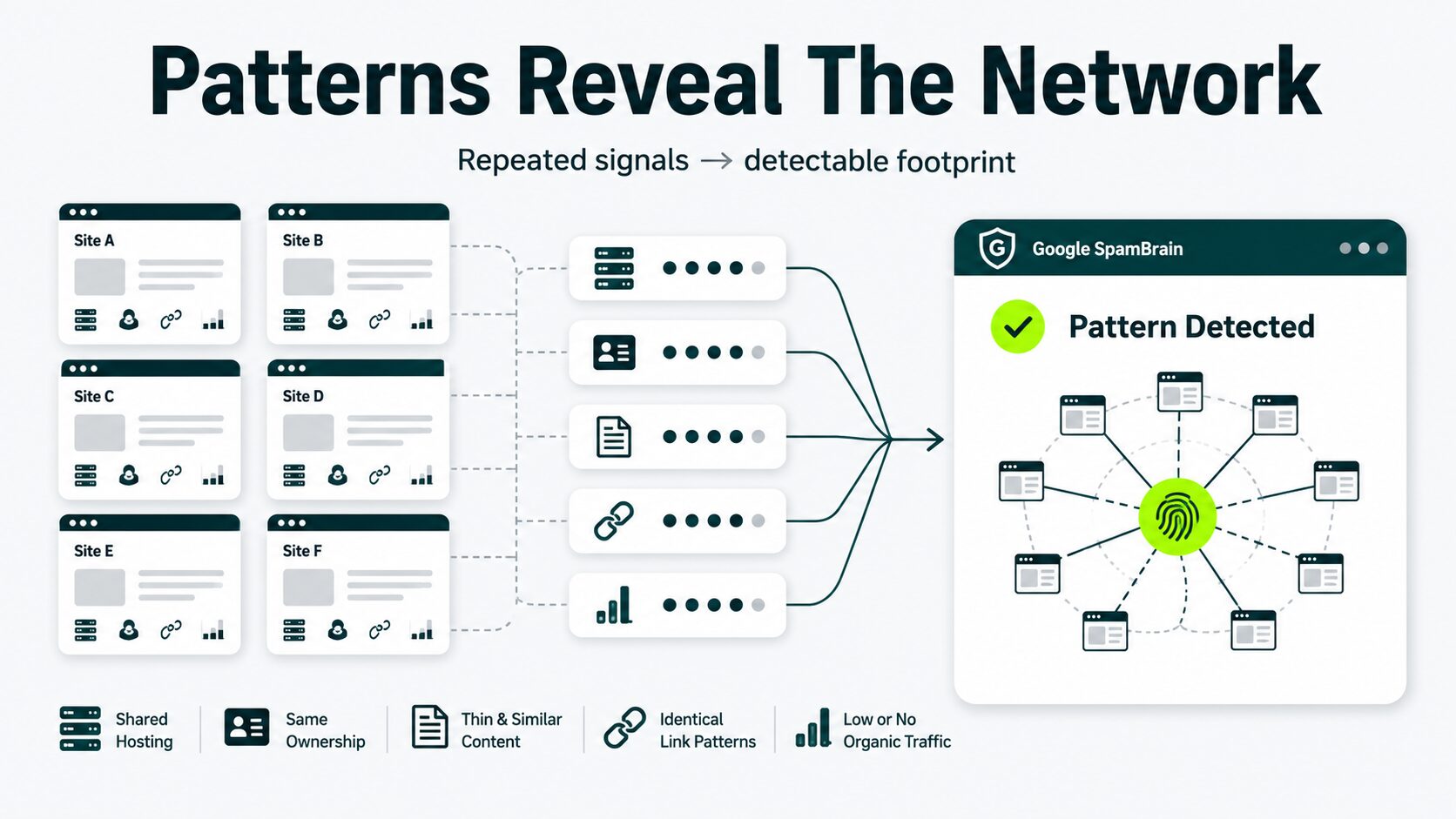
Google’s AI system for detecting link spam, called SpamBrain, analyzes these patterns across the web at scale. SpamBrain works like a spam filter for links. It doesn’t look at a single link in isolation; it looks for clusters of sites that behave similarly.
Here are some common footprints that come from five areas.
1. Shared Hosting Addresses
Google’s crawlers can identify patterns such as:
- If all the sites have the same IP address
- Same hosting providers, same nameservers
2. Registration and Ownership Data
Ownership records may reveal similarities such as:
- Same registrar, same “WHOIS” information such as email, name, and phone
- Domain bought on the same day, batch-style
3. Thin Content and Unbalanced Link Ratios
Content quality and publishing patterns can reveal signals such as:
- Spun content: same article, words swapped across network.
- Same writer style, same posting schedule
- Thin content, no real engagement such as comments and shares
4. Identical Link Text Across Sites
If 12 sites in the same network all link to the same money site, that cluster stands out. When the clickable words in each link, called anchor text, are nearly identical, the pattern becomes even clearer.
Natural editorial links don’t arrive in coordinated batches with matching phrasing.
5. Low or Zero Organic Traffic
A website that appears active but has little or no organic traffic is a strong warning sign. It suggests that no real audience is visiting the site.
PBN websites rarely rank for meaningful keywords because operators built them to sell links, not to attract readers.
The larger a PBN network becomes, the more obvious its patterns are. A seller managing 50 websites creates 50 separate data points that often share the same footprints.
As those patterns multiply, detecting the network becomes easier.
In our backlink audits, the most common PBN footprints include:
- shared hosting or IP patterns
- nearly identical outbound link profiles
- thin content
- referring pages with little or no organic traffic.
A related tactic, a tiered link building strategy, adds a second layer of links pointing to the first-tier links rather than directly to the money sites. The goal is to amplify the signal those first-tier links send.
While the structure is more complex, it creates many of the same detectable footprints, often on an even larger scale.
What Actually Happens to Your Site When Google Acts
When Google identifies PBN links pointing at your site, one of two things happens. It either quickly ignores the links or issues a formal manual action.
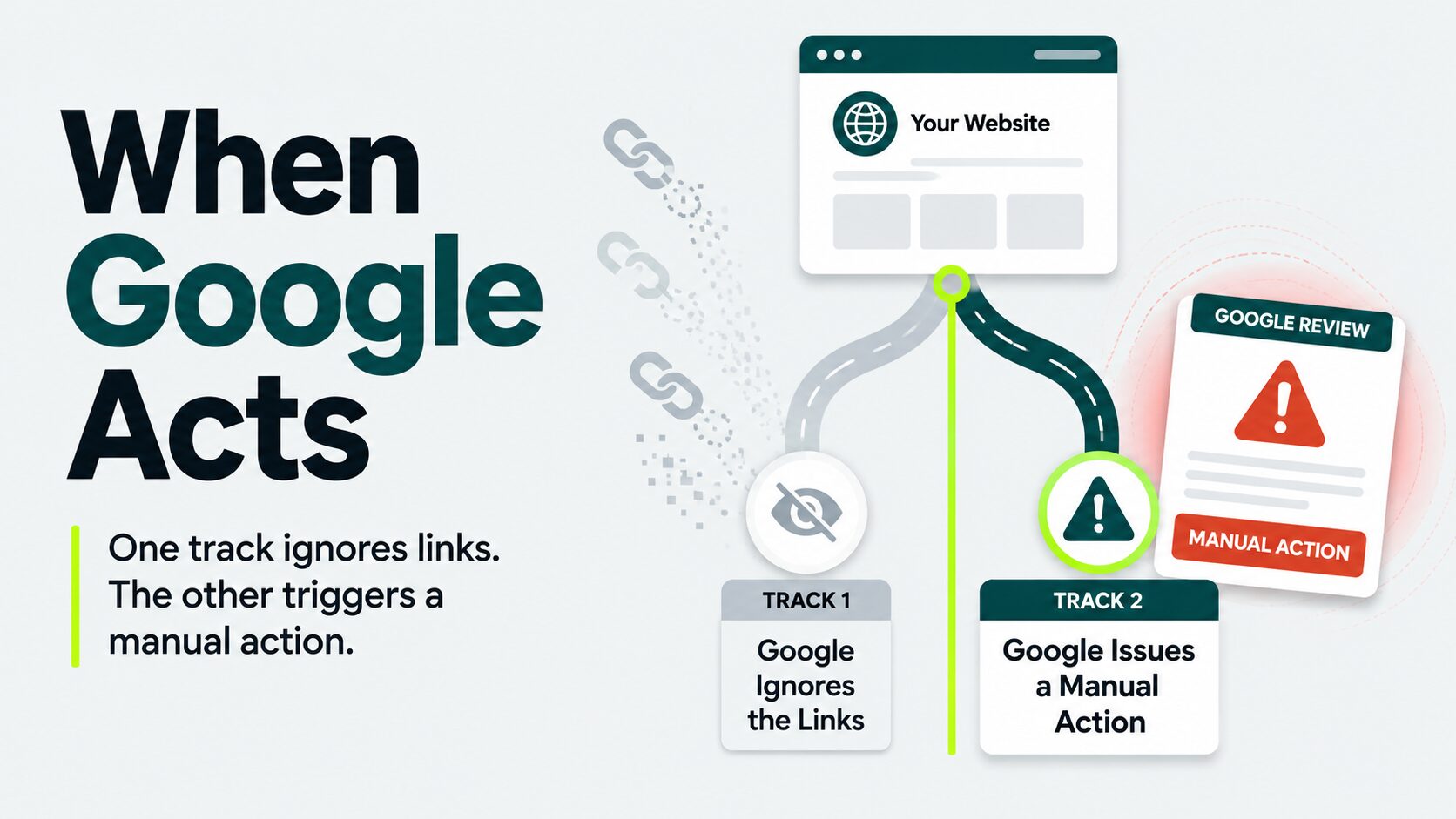
Track 1: Google Ignores the Links
This is the most common outcome, and it’s easy for site owners to miss.
Google’s algorithm quietly devalues or stops counting the PBN links. Your rankings don’t actively drop. But they also don’t rise the way you expected when you bought the links.
The investment is unlikely to deliver lasting SEO value. The links appear there doing nothing.
Buying PBN links is a bet that Google won’t identify the network before you see ranking gains. That window is shorter in 2026 than it was five years ago. When Google silently devalues links, Google sends no notification. You may not know it happened until you compare your rankings to the link purchases and notice no correlation.
This outcome isn’t as safe as “nothing happened” might imply. Google’s spam detection systems continue to evaluate sites and links over time.
While spamBrain commonly neutralizes the value of unnatural links, repeated or broader spam signals can still lead to stronger ranking impacts or manual actions. after identifying a pattern of links.
Across the PBN-heavy backlink profiles we reviewed in 2025, we observed that more than 60% of suspected PBN links appeared to stop contributing meaningful ranking improvements within three months.
Track 2: Google Issues a Manual Action
A manual action means a member of Google’s spam team reviewed your site and decided to take formal action.
You’ll see this in Google Search Console under the Security and Manual Actions section.
Google Search Console
Google Search Console is a free tool from Google that shows how your site performs in search.
The notification explains what Google found: in most PBN cases, it reads as “unnatural links pointing to your site.” Affected pages may drop significantly in rankings, or the action may apply to your whole domain depending on the severity.
To recover, you need to either remove the PBN links at the source, which requires the seller’s cooperation. Or you can tell Google to stop counting those links through the disavow tool (a Google feature that lets you ask Google to ignore specific backlinks).
You must address the issue before ranking recovery.
Some site owners worry when they notice a sudden spike in inbound links they didn’t build. In some cases, this can be a sign of negative SEO, where a competitor deliberately points low-quality or manipulative links at your domain to harm your rankings.
Google designed its spam systems to handle links you didn’t build, and this scenario is less common than feared. Still, if you notice a sudden spike in low-quality inbound links, check your Manual Actions report in Google Search Console. It’s the fastest way to confirm whether Google has flagged anything.
What to Do If PBN Links Are Already Pointing at Your Site
If you’ve already bought PBN backlinks, understanding what you’re dealing with matters more than panicking.
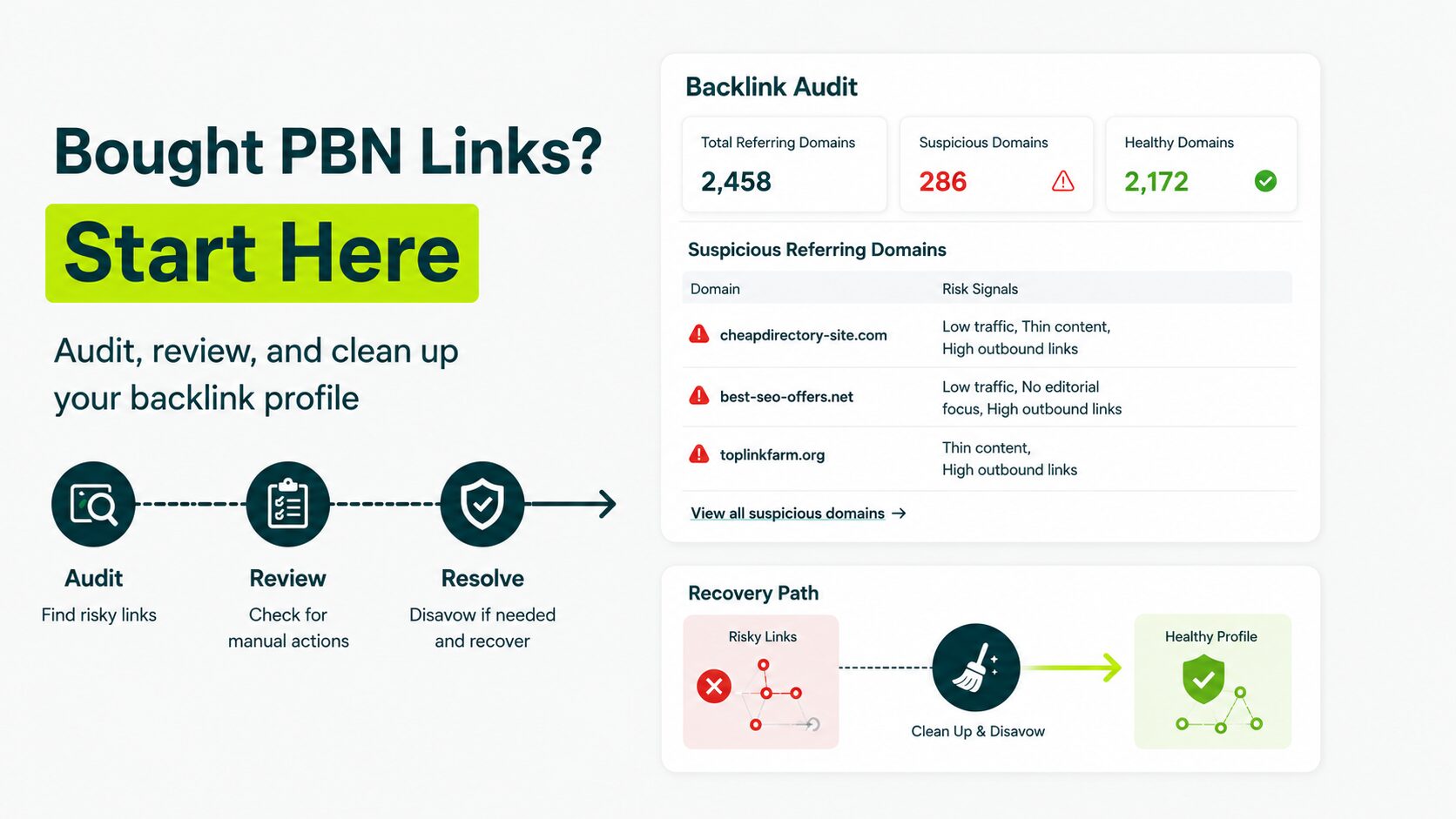
Step 1: Audit Your Backlink Profile
Open your backlink profile in Ahrefs or Google Search Console to see which domains are linking to your site.
Look for signals you now recognize as PBN footprints: sites with low organic traffic, thin content, high outbound link counts, and no clear editorial focus.
Make a list of the suspicious referring domains and the specific URLs linking to you.
Understanding what a healthy referring domain profile looks like makes it easier to spot what doesn’t belong.
Step 2: Check Your Manual Actions Report
Go to the Google Search Console, click Security and Manual Actions, then open Manual Actions.
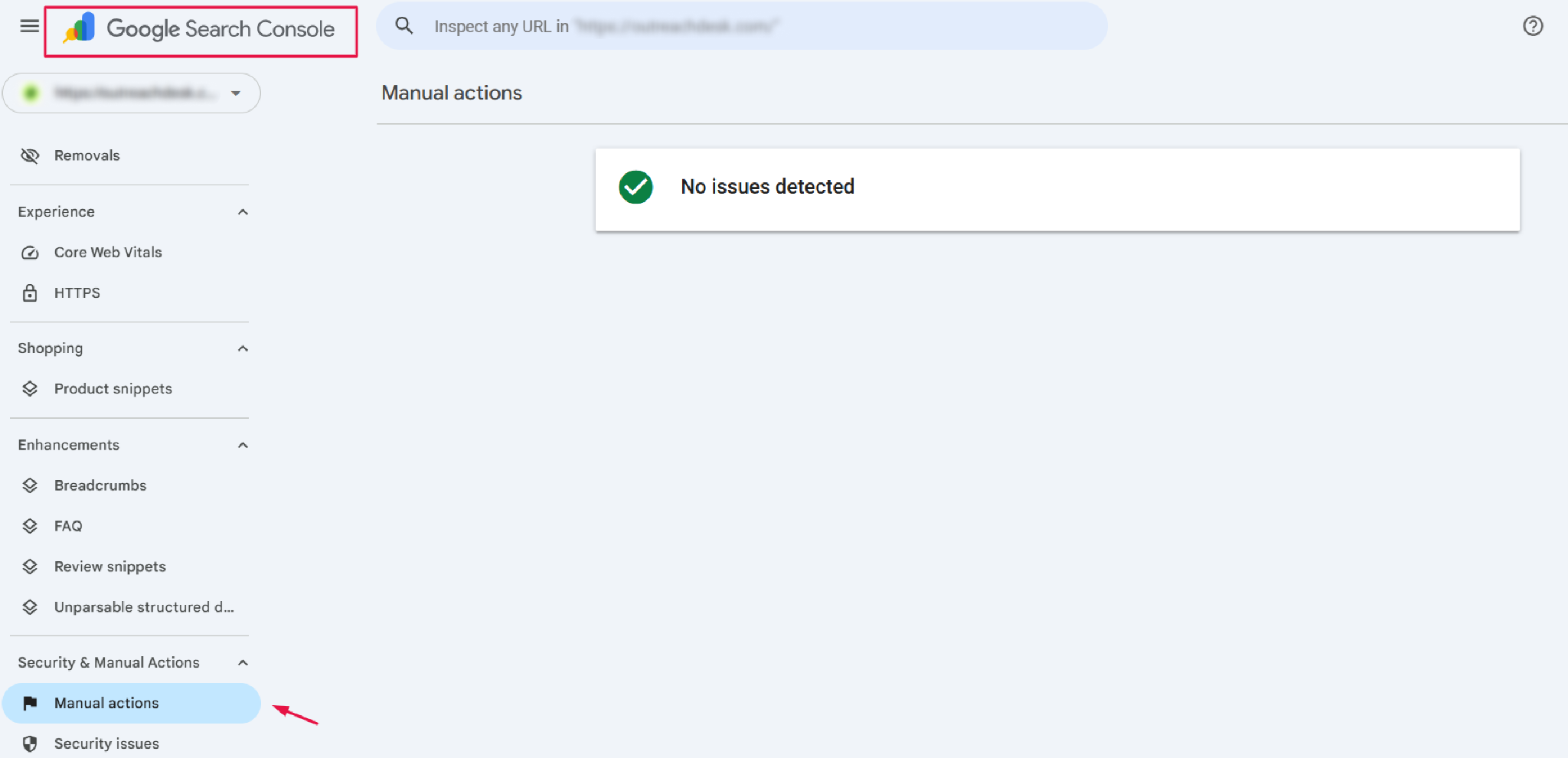
If no manual action is listed, it doesn’t confirm that the links are working. It may mean Google has already neutralized them without notifying you, or they haven’t been crawled yet.
If you’ve bought PBN links and haven’t been penalized, that doesn’t mean they’re working. It may mean Google has devalued them and is still watching.
If there is a manual action for “unnatural links to your site,” fixing it requires addressing the major cause and submitting a reconsideration request after you’ve cleaned up the links. A reconsideration request is a formal appeal through Google Search Console asking Google to review and lift the manual action.
Step 3: Decide Whether to Disavow
Disavowing means submitting a list of domains to Google and asking it to ignore those links when evaluating your site.
If PBN links are already devalued, disavowing them does nothing to help. If there’s an active manual action, disavowing is part of the required response.
Our complete guide on the Google disavow tool covers when it helps, when it doesn’t, and how to build the file correctly.
In our remediation audits, many PBN-heavy backlink profiles already contain a large number of links that Google appears to have devalued automatically.
Disavow submissions tend to have the greatest impact when they’re part of resolving an active manual action rather than attempting to recover value from links Google has already stopped counting.
What to Build Instead of PBN Links
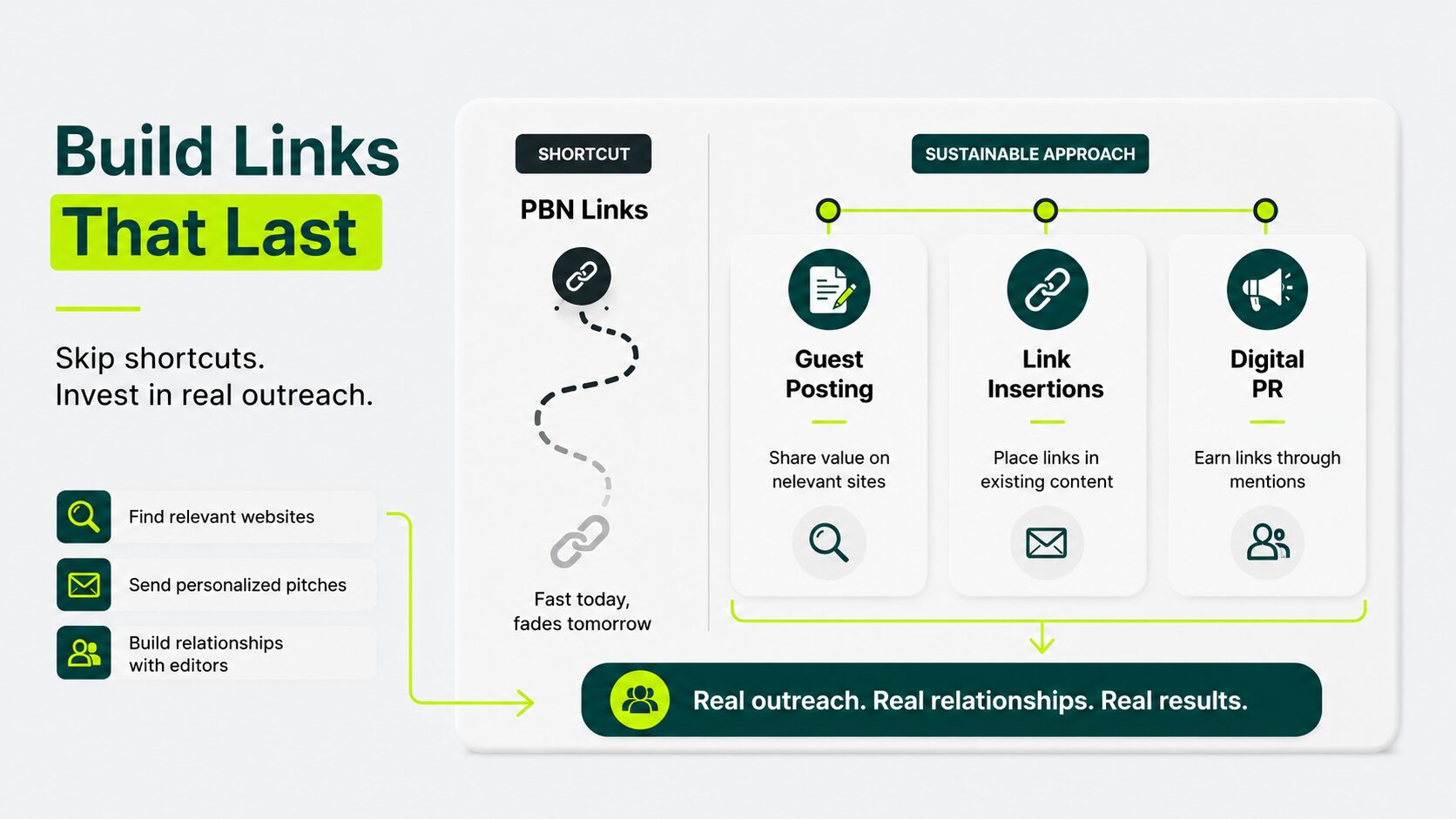
The alternative to PBN backlinks is editorial backlinks. These are links a real editor or site owner chose to add because your content was genuinely useful to their readers. No money changes hands for the link itself. The editor added it because it served their audience.
That’s what makes an editorial link valuable: Google treats it as a genuine signal because a real person made a real decision. PBN links don’t pass that test.
Ways to Earn Editorial Backlinks
You can earn editorial backlinks three ways.
1. Guest Posting
In guest posting, you write an article for another website in your industry and include a contextual backlink to your site.
2. Link Insertions
You reach out to website owners who already have content related to your topic and ask them to add a relevant link to your page.
3. Digital PR
You create original research, useful tools, or expert commentary that other publications naturally choose to cite.
The real tradeoff is that all three approaches require real outreach for link building. That means:
- Finding relevant websites
- Sending personalized pitches
- Building relationships with editors or website owners
That takes longer than buying a PBN link, but without the risk.
The difference is that editorial backlinks continue to hold value through algorithm updates because they tend to be more durable than purchased links.
We focus on this type of earned placement. If you’re looking to learn more about how ethical link building works in real-world scenarios, this guide provides an overview of sustainable strategies that continue to perform well over time.
In one of our campaigns, a client who previously relied on PBN backlinks saw minimal ranking movement despite acquiring over 50 links in three months.
After switching to editorial placements, the same client earned 18 high-quality backlinks over the next six months and experienced a 42% increase in organic traffic along with multiple page-one keyword rankings.
Should You Ever Use PBN Backlinks?
Buying PBN links is a gamble on whether Google notices the network before you see ranking gains. The more common outcome isn’t a dramatic penalty.
Google quietly ignores the links, your rankings don’t move, and the money is gone. Editorial links take longer to earn, but they don’t disappear when Google updates its algorithm. That’s the only difference that matters in the long term.
Looking to Build Authority Without the Risk?
Discover a sustainable link building strategy that earns trusted editorial backlinks.
Can a PBN be part of a legitimate link building strategy?
No, Google’s spam policies classify links intended to manipulate multiple search rankings as link spam, and PBN links exist specifically for that purpose.
A link network isn’t legitimate just because it has good content on its sites. Using real editorial articles as cover doesn’t change its classification. What matters is why the sites exist. If they were built or bought to sell links, they’re a part of a private blog network, and the links violate Google’s policies.
Is it Worth the Risk to Use PBNs for Faster Rankings?
PBNs can produce short-term ranking movement because the links pass keyword-relevant anchor text and authority signals quickly. But that speed comes from bypassing the vetting process Google’s algorithms are specifically built to catch.
The risk isn’t just a single penalty. Once Google’s systems identify a network pattern, they tend to devalue the entire footprint tied to it, not just one link. That can erase months of ranking progress overnight, and recovery often takes longer than the original gains took to build.
A scalable link building services approach gets you comparable or better long-term ranking gains through real editorial placements, without the exposure to a network-wide deindexation event.
How many bad links does it take to trigger a Google penalty?
There’s no fixed number. Google evaluates link patterns, not link counts. A single PBN link from a site with real traffic and other editorial links rarely triggers anything.
A profile where most of your referring domains are thin, low-traffic sites with identical outbound link lists is a different situation.
The question isn’t how many bad links you have. It’s how much of your overall link profile they represent.
What is the difference between PBN backlinks and authoritative backlinks?
An authoritative backlink comes from a site that has genuine traffic, real editorial standards, and a real audience. A PBN backlink comes from a site that exists to place paid links.
The DR score a PBN site shows in Ahrefs can look similar to an authoritative site on paper. The difference is that Google evaluates the full picture of a site’s behavior, not just its score. A site with no organic traffic, thin content, and dozens of outbound links to paying customers signals a network pattern, regardless of its DR.
What separates white hat link building from grey hat tactics?
The line isn’t always obvious on paper a link insertion and a paid PBN placement can look identical in a backlink report. What separates them is whether the link exists because an editor judged it genuinely useful to their readers, or because money changed hands with no real editorial review.
Grey hat tactics often disguise a transaction as an editorial decision. A white hat driven link building process avoids that ambiguity by only pursuing links where the site owner’s decision is independent and traceable.
Can One High-authority Link Outweigh Multiple PBN Links?
A genuine editorial link from a high-traffic, authoritative publication carries more ranking signal than multiple PBN links. But the comparison is framed incorrectly.
PBN links aren’t “weighed” the way an editorial link is. If Google has identified and devalued the PBN links, they contribute nothing regardless of count.
The only links that reliably affect rankings are the ones Google has no reason to discount.
Should I disavow spammy backlinks from PBN sellers?
Only if there’s an active manual action. If Google has issued a manual action citing unnatural links, disavowing is part of the required response.
You also need to submit a reconsideration request after cleaning up the links. If there’s no manual action, the links may already be devalued.
Disavowing them in that case carries a small risk of removing any residual equity. Audit your Manual Actions report in Google Search Console first, then decide based on what you find.