Black hat link building is the practice of acquiring backlinks through methods that violate Google’s spam policies. These methods include buying links to rank, using private blog networks, or using automated link creation.
These methods can trigger manual penalties, algorithmic demotions, or complete removal from Google’s search results.
The risks have grown sharply, as Google’s SpamBrain AI, a system used by Google to detect and filter low-quality and fake links from the search results. This system can now detect 200 times more spam than it did at launch.
If you think manipulative links are worth the risk, then the answer is clear. They’re not.
Key Takeaways
- Black hat links manipulate rankings and violate Google’s spam policies.
- Google’s SpamBrain can now detect more link spam automatically.
- Black hat tactics like private blog networks and link farms carry high penalties and risks.
- Algorithmic devaluation is permanent. Your lost ranking’s value is difficult to reverse.
- Disowning can only clear manipulative links, especially after receiving manual actions.
What Counts as Black Hat Link Building?
Black hat link building is any tactic that manufactures backlinks through deception. Automation, or payment rather than earning them through genuine content quality, Google’s Webmaster Guidelines classify all such methods as link spam, regardless of whether the links appear natural on the surface.
The distinction matters because Google evaluates intent, not just method: a single paid placement on a high-authority site is still a policy violation if the publisher didn’t disclose it as sponsored content.
The definition matters because Google treats intent, not just method: a single paid placement on a high-authority site is still a policy violation if the publisher didn’t disclose it as sponsored.
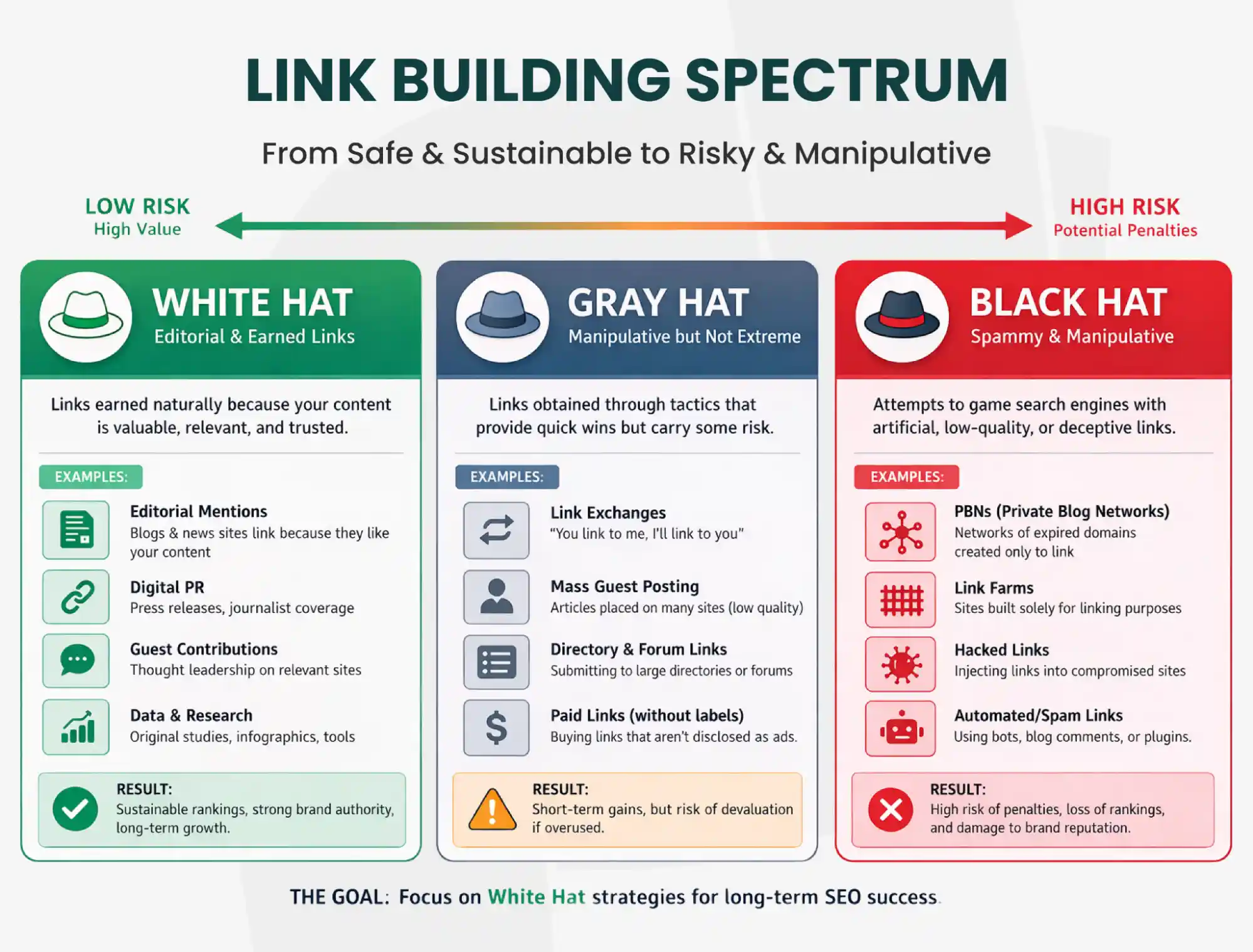
Black hat link building includes buying and selling links for ranking purposes, using automated programs to generate backlinks, building private blog networks, and link exchanges, all of which violate Google’s search guidelines.
Not every low-quality backlink is a problem.
Random spam links appear on nearly every site. Google said it can usually ignore them. The real problem comes when you intentionally start building those links for yourself.
Common Black Hat Link Building Tactics
The common black hat tactics share one thing: they manufacture backlinks through deception rather than earning them through content. Private blog networks, comment spam, paid link drops, link exchanges, and automated tools all try to trick Google’s algorithms into rewarding patterns that don’t exist in genuine editorial coverage.
SpamBrain is built to detect each of them.
Manipulative tactics aren’t always easy to spot. Some are obvious, and some are subtle enough that site owners don’t even recognize they’ve crossed a line.
Private Blog Networks
A private blog network is a group of websites built for one specific purpose: sending backlinks to another site. These sites are not built for actual readers but purely to manipulate rankings.
Google has been targeting these networks since the Penguin update. With the evolution of Google SpamBrain, the ability to detect link spam has improved.
Buying Links Without Disclosure
Buying a link placement isn’t automatically against Google’s rules. However, it becomes link spam when the link passes ranking credit without a rel=”sponsored” or rel=”nofollow” attribute.
Google’s own documentation says that buying and selling of links is a normal activity as long as they’re properly tagged. Ignoring the tags, and you’re violating the guidelines.
Automated Link Building Software
Automated link generators can produce many backlinks in hours across forums, blog comments, and web directories.
However, those links come from low-quality domains, and the pattern is easy for the algorithms to spot. SpamBrain’s update enhanced real-time detection of link schemes.
Comment and Forum Spam
Dropping links in blog comments and forums doesn’t work as it used to in 2008. It’s far less effective than it was in 2015.
Google treats these as spam and ignores them. In the worst-case scenario, it may flag your site.
Link Farms and Reciprocal Link Schemes
Link farms are groups of websites that are created solely to link to one another and manipulate search rankings, rather than providing real value. Similarly, for reciprocal link exchanges: “I’ll link to you, you link to me” can signal manipulation when done systematically rather than naturally.
Google’s algorithms can detect these patterns easily and ignore these links to neutralize them.
The clean alternative is a one-way link building service, where a site links to you on merit and nothing is traded.
Hacked Link Injections
Hackers break into legitimate sites and secretly add hidden links, often targeting older blog posts that site owners rarely update. It violates Google’s policies and can be illegal in many places.
Let’s see the table below to analyze the risk levels, detection speed, and reversibility of each tactic.
| Tactics | Risk Level | Detection Speed | Reversibility |
|---|---|---|---|
| Private blog networks | High | Weeks to months | It’s difficult because the devalued links can’t regain their ranking credit. |
| Buying links (undisclosed) | High | variable | Possible with disavow + reconsideration. |
| Automated link tools | Very high | Days to weeks | It’s low because the pattern is hard to undo. |
| Comment/forum spam | Moderate | Near instant devaluation | Low value, low recovery needed. |
| Link farms | High | Weeks | Requires complete disavowal. |
| Hacked links | Severe | Once reported or crawled | Requires site clean-up + legal action. |
What Happens When Google Catches Black Hat Links?
Google’s response to black hat links follows a two-track system. algorithmic devaluation through the SpamBrain classifier (which silently ignores the links, costing you the equity without triggering a visible penalty) and manual actions issued by human reviewers, which suppress rankings directly and require a documented link cleanup to resolve.
Most sites hit by SpamBrain never know it happened, their links simply stop counting.
Manual actions appear in Google Search Console under Security & Manual Actions.
According to industry data, Google issues an estimated 750,000 manual penalties each month for webspam violations, though Google hasn’t officially confirmed this figure.
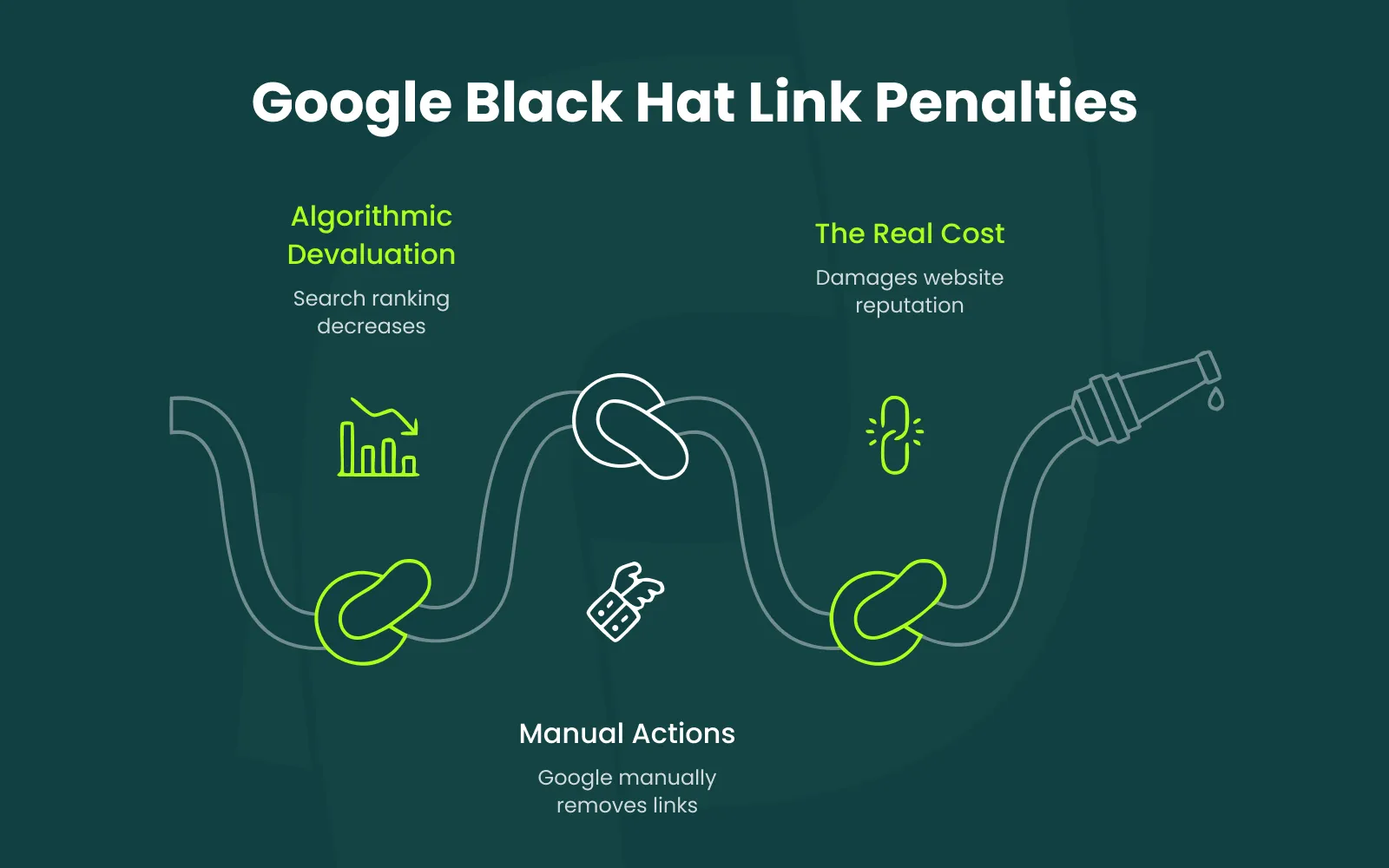
When manipulative links are detected, Google either ignores them or penalizes your site. The penalties can range from a drop in ranking to complete removal from search engine results.
Algorithmic Devaluation
Since the Penguin 4.0 update, Google’s response is to ignore spammy links rather than penalize them.
The links simply stop passing any value, without any notification. Your rankings simply drop or stall.
The worst part is, even if you clean up your link profile, the lost value is gone permanently. Google’s documentation states that ranking benefits from neutralized links “can’t be regained.”
That’s not a penalty you can fix; it’s damage that’s irreversible.
Manual Actions
Manual actions are applied by Google’s human reviewers after they identify a common pattern of manipulation.
You’ll see the notification in Google Search Console under the “Security & Manual Actions.” Penalties can affect a single keyword or remove your entire domain from search results.
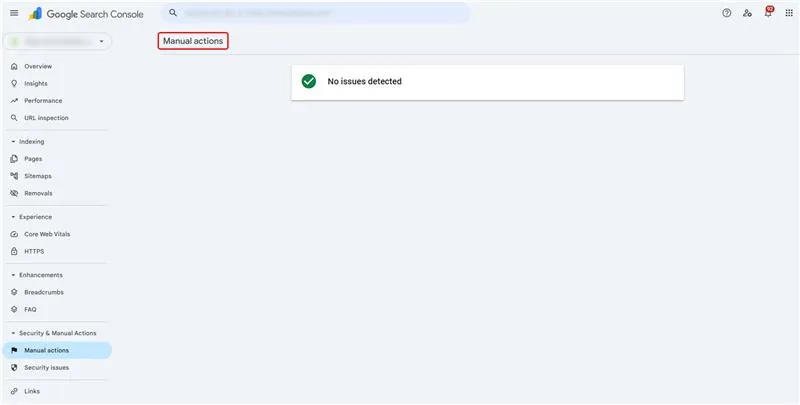
Based on industry experience, manual penalty reviews take an average of 10-30 days after all fixes are applied and after a reconsideration request is submitted.
But here’s the catch: only about 30% of penalized sites recover their previous rankings within a year, and less than 40% of businesses hit with a harsh penalty remain operational after six months.
The Real Cost
Imagine a business-to-business software company spending $5,000 per month on purchased link placements from a private blog network vendor.
After six months, you have spent $30,000, and then a Google spam update hits. Rankings drop 40 positions overnight; organic leads vanish, and the money and rankings are gone.
Most businesses need 4-6 months of legitimate link building just to get back to where they started. On top of that, your money is already wasted.
How to Check if Your Site Has Black Hat Backlinks
You can spot black hat backlinks by auditing your referring domains for thin or templated content. Irrelevant niches, exact-match anchor text spikes, and sudden link velocity that doesn’t match any campaign you ran. Search Console shows you what links Google sees.
Ahrefs, Semrush, or Majestic let you filter referring domains by quality signals to find the patterns SpamBrain is already watching.
You haven’t built black hat links for yourself. Maybe your previous agency did, maybe a competitor pointed spam links at you.
Either way, you need to know what’s in your backlink profile.
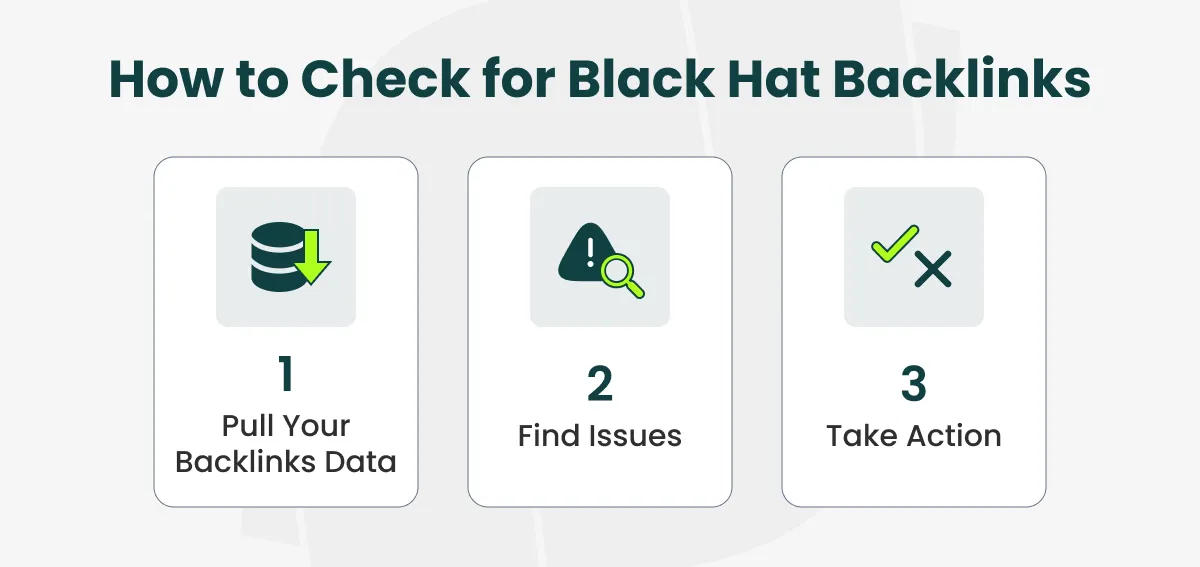
Step 1: Pull Your Backlink Data
Start by analyzing your backlink data. Open Google Search Console, navigate to Links and then to Top Linking Sites, and export the full list.
To analyze your domain in depth, run it through link building tools such as Ahrefs or Semrush to see referring domains, anchor text distribution, and link velocity.
Step 2: Flag Suspicious Patterns
Look for the domains with no organic traffic, thin or auto-generated content, excessive outbound links, or irrelevant niches, such as a casino site.
Sudden spikes in hundreds of backlinks appearing over a few days are a red flag.
Step 3: Decide What to Act on
Google states that most of the sites don’t need to use the disavow tool.
Their algorithms ignore most low-quality spam. However, if you’ve received a manual action or you know links were built through manipulative methods, disavowing is the right decision.
Why Do People Still Use Black Hat Link Building?
People still use black hat link building because legitimate link earning is slow. Expensive, and uncertain, while shortcut tactics still occasionally work long enough to pay off in short-term affiliate or churn-based business models. The math only works if you accept that the site is disposable.
Long-term brand businesses don’t take that trade because the penalty risk outlasts the upside.
It can’t be a fair question, because if the risks are clear, why does anyone still do it? There are three reasons that come up:
Impatience
White hat link building strategies take time, around 3-6 months before showing measurable results. Some businesses want results next week, and manipulative tactics promise that, but not ethical methods.
Ignorance
Many people do not realize the risk. Plenty of vendors sell private-blog-network links without naming the practice or warning the buyer.
Industry Pressure
In competitive niches like gambling, crypto, and payday lending, aggressive tactics are most common because per-click stakes are massive and risk tolerance is higher.
These reasons explain why black hat link building still exists, not why it’s a good idea.
What to Do Instead: Build Links That Last
The alternative to black hat is white hat link building. It means earning editorial backlinks by publishing content publishers actually want to cite, building genuine relationships with journalists and bloggers, and contributing expertise that is worth referencing. Our guide on the white hat alternative covers the same principles at the broader SEO level. The work takes longer, but the links compound instead of disappearing at the next algorithm update.
The alternative to this isn’t slower because it’s worse, but it’s slower because it is real and ethical.
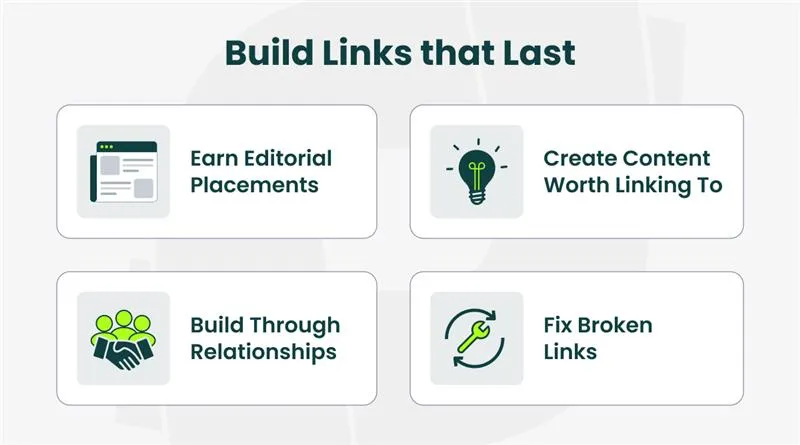
Earn Editorial Placements
Editorial link building means earning a link placement in a relevant article on an authoritative website through genuine outreach.
The links are contextually placed, surrounded by relevant content, and point to pages that add value for readers.
Create Content Worth Linking To
Creating original content, such as research, data studies, interactive tools, and in-depth guides, that naturally and organically attracts links because other writers need sources.
A well-crafted industry survey can generate more quality links over its lifetime than a year of purchased placements. Those links won’t disappear with the next spam update.
Build Through Relationships
Build relationships by being genuinely helpful to others.
Guest posting on relevant publications, participating in expert roundups, and contributing quotes to journalists through platforms like HARO build brand mentions and backlinks.
Fix Broken Links
Broken link building identifies dead links on relevant sites and offers your content as a replacement. Link reclamation converts brand mentions into actual backlinks.
Neither of these tactics involves manipulation, but they produce lasting results.
Pro Insight:
A site ranking on page 1 on Google has an average of 220 backlinks from different domains, according to Backlinko’s 2026 data. The number matters far less than the quality and relevance of those links.
Black Hat vs. White Hat Link Building: A Direct Comparison
Black hat and white hat link building differ on every dimension that matters: source quality, durability, penalty risk, scalability, and the 12-month payoff. The table below puts them side by side; one approach survives core updates, the other does not.
| Factor | Black Hat | White Hat |
|---|---|---|
| Speed to results | Days to weeks | Months (3-6 typically) |
| Longivity | Temporary, because it is neutralized by the next spam update. | Compounds over time. |
| Penalty risk | Has a high risk of manual actions and deindexing. | Minimal to no risk. |
| cost | Appears cheap up front, but expensive when penalties kick in. | Higher initial investment, lower long-term cost. |
| Brand impact | Damages trust if discovered. | Builds authority and credibility. |
| Recovery difficulty | Months to years, if possible. | Not applicable because no recovery is needed. |
Every dollar spent on reliable ethical link building continues to produce value. Whereas every dollar spent on manipulative links becomes a liability since the moment Google catches up.
The Honest Take
Black hat link building gets harder every year. Google’s SpamBrain classifier improves with every update, and AI search surfaces actively flag manipulative content patterns; the tactics that worked in 2019 trigger detection in 2026.
Build links that stand still. Editorial placements, original content, and real relationships are what move rankings and keep them moving.
Is black hat link building illegal?
Most black hat link building tactics violate Google’s policies, not criminal law. The exception is hacking into a site to inject links, which can violate the Computer Fraud and Abuse Act. Not illegal does not mean safe; Google penalties can hurt a business faster than legal problems.
Can Google actually detect purchased links?
Yes, SpamBrain was updated in December 2022 to detect buyers and sellers of links. The system detected the patterns humans might miss, such as unrelated content topics, expired domains, and unnatural outbound links. The single update costs 50 times more link spam than before.
Should I disavow suspicious backlinks?
Only disavow if you have received a manual action or strong evidence of manipulative links pointing at your site. Google automatically ignores most low-quality links, so the disavow tool is rarely needed. An Ahrefs experiment found a 7% drop in traffic after disavowing links flagged as toxic by third-party tools.
How long does it take to recover from a link spam penalty?
It depends on the penalty type. Manual action takes 10-30 days after a successful reconsideration request, while algorithmic penalties can run 6 months to 2 years because you have to wait for the next core update cycle. Even then, the ranking benefit those links once provided is gone for good.
Is it possible to accidentally use black hat link building?
Yes, and it is more common than most site owners realize. Many SEO agencies and freelancers sell link building services that quietly rely on private blog networks, automated submissions, or mass link insertions.
The safest check is to request sample publisher sites and verify that each has real organic traffic using a tool like Ahrefs or SEMrush. An agency that can’t or won’t show its publisher list is a significant red flag.