A link building campaign is a structured, time-bound effort to earn high-quality backlinks from relevant, authoritative sites through outreach, content creation, and relationship building, with a focus on building authority and improving rankings.
The campaigns that produce measurable results share 3 traits:
- A clear strategy
- Personalized outreach at scale
- A consistent system to track performance and prioritize what to scale or fix.
Most teams skip at least one, and it shows. But the gap isn’t about volume, it’s about acquiring the right links, pointed at the right pages, from genuinely relevant sources.
Key Takeaways
- A link building campaign is a scoped, time-bound effort with named target pages, a chosen tactic mix, and a 90-day measurement window.
- Point links at 3 to 5 revenue pages, not your whole site, to move rankings faster.
- Run 2 to 3 complementary tactics together (digital PR, guest posts, niche edits, broken link building) rather than relying on one.
- Pair every backlink with a brand mention, because AI search now rewards branded mentions alongside links.
What Makes A Link Building Campaign Different From “Doing Link Building”
Link building campaigns are different from link building. Ongoing link building involves checking for broken links, responding to journalist queries, and publishing guest posts as opportunities arise.
Whereas a link building campaign has:
- A clear scope
- List of target pages
- Timeline
- Mix of strategies
- Plan for measuring results
If you can’t name your target pages, tie them to revenue, and measure success in 90 days, you don’t have a campaign yet.
Teams with a structured campaign framework consistently outperform those who just build links without a plan. Structure helps you choose where to point links, which tactics to use, and when to stop.
Phases of Link Building Campaign
Once you know what each phase should deliver, you can design your work around real business outcomes, such as traffic, visibility, and revenue, rather than chasing vague SEO metrics.
Phase 1: Set Goals That Actually Matter
‘Improve domain authority’ isn’t a campaign goal. It’s an outcome of actions that actually drive business results.
Real campaign goals start with your business, not your backlink profile. Campaigns that produce business results start with questions like these:
- Which pages generate revenue but rank on page 2 or 3?
- Which product or service categories need more organic visibility?
- Are there specific competitors consistently outranking you on your most valuable terms?
Tie every campaign to a page and an outcome. “Build 20 links this month” is a task, and “Move /enterprise-seo from position 14 to the top 5 for ‘enterprise SEO services’ within 3 months” is a campaign goal.
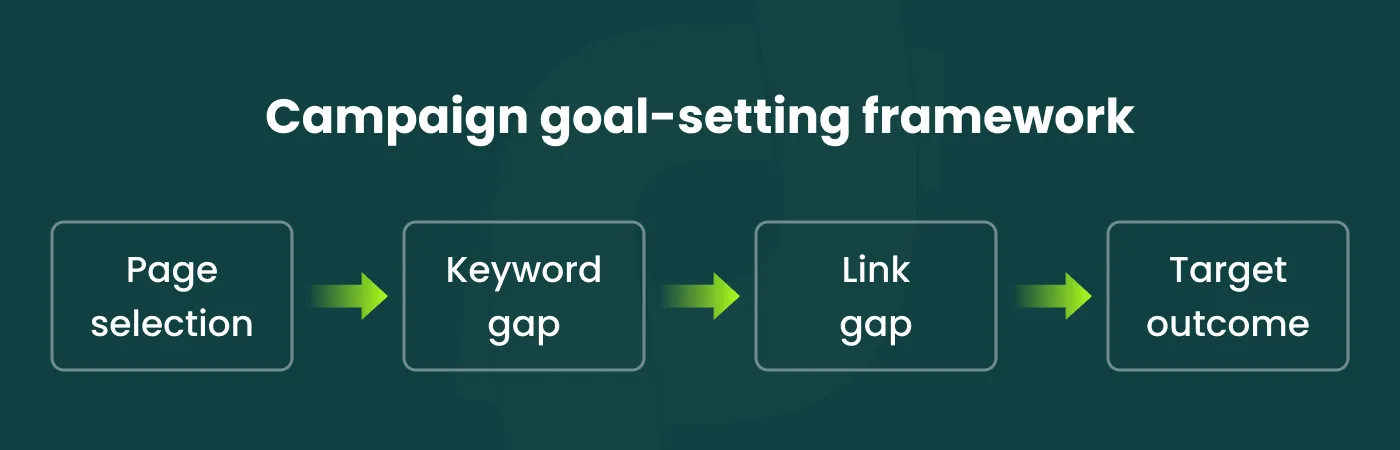
Most SEO professionals start noticing ranking improvements from links within a few months after starting their link building campaign, with the majority of them noticing the impact around 3 months. That’s your planning window.
Strategic link planning support can help turn broad SEO goals into measurable link targets, campaign timelines, and quality benchmarks.
Don’t spread your links across your whole site. Pick 3–5 priority pages per campaign. Focusing your links on a few pages moves rankings faster than thin content distribution across dozens of URLs.
Phase 2: Audit Before You Build
You can’t plan a campaign without knowing where to start. First, run a backlink analysis across 3 areas.
Your Current Link Profile
Use Ahrefs, Semrush, or Moz to check referring domains, your strongest linked pages, and the distribution of anchor text.
If 80% of your links point to your homepage and zero point to your money pages, then that’s your campaign priority right there.
Your Competitors’ Link Profile
Perform competitor backlink analysis using the Ahrefs Backlinks tool. Create a prospect list of sites that link to competitors but not to you.
This is what a backlink profile looks like in the Ahrefs Backlinks Tool. This helps you recognize which sites are linking to your competitors.
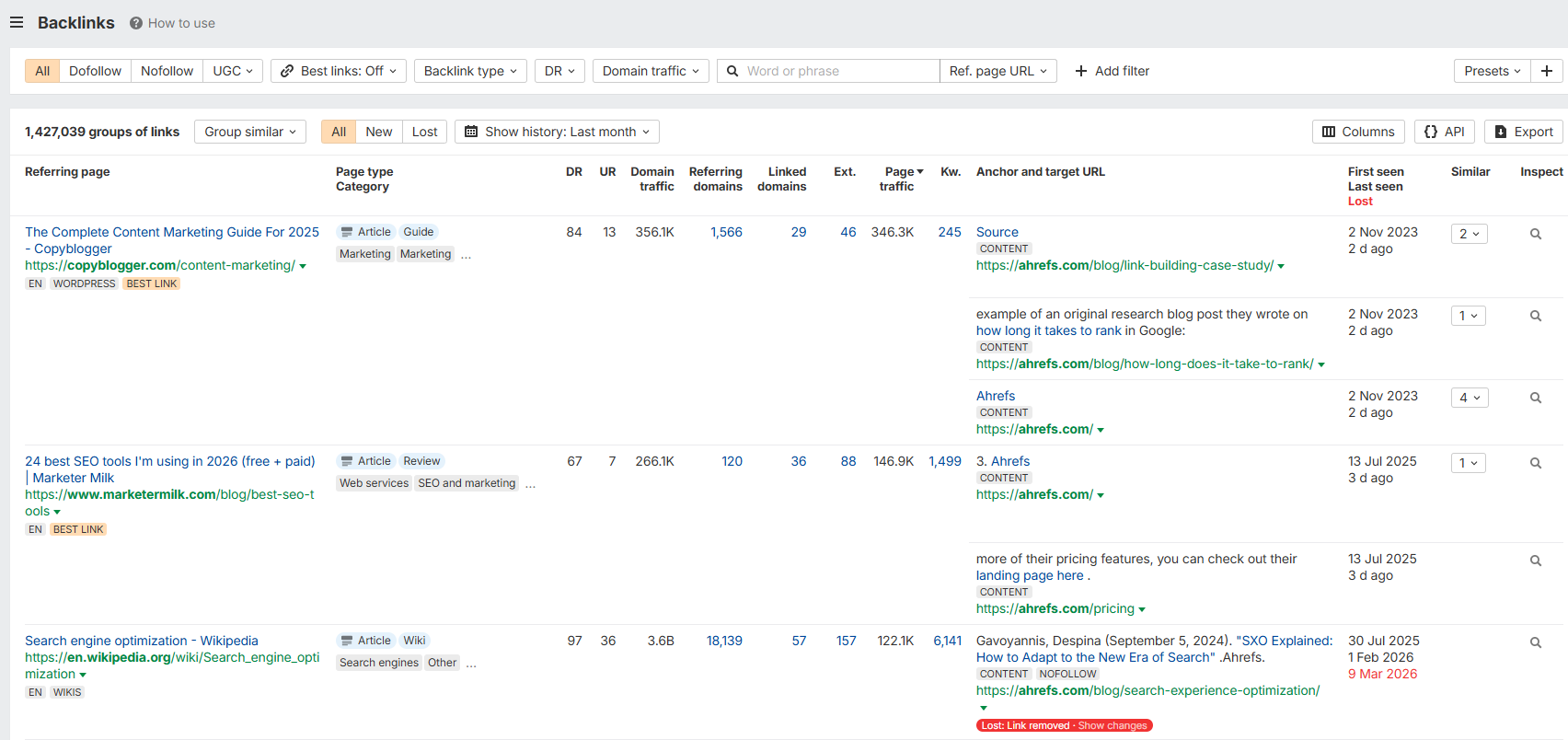
If a site links to three of your competitors’ posts on the same topic, they’ll likely consider linking to you if your content offers something valuable.
Your Content Readiness
Make sure your target page has high-quality, valuable content. If your page is just 200 words of thin copy, no amount of outreach will convince anyone to link to it.
Sometimes, you need to upgrade your content before you send a single pitch. Strong content comes first.
Phase 3: Choose Your Tactics (And Build a Mix)
The strongest campaigns use 2-3 complementary link earning methods simultaneously. No single tactic sustains a full campaign on its own.
Digital PR And Data-Led Content
Digital PR uses data-led content, like
- Original research,
- Surveys
- Proprietary datasets
For original research, take the Ahrefs analysis as an example. It analyzed 863K keyword SERPs and 4M AI Overview URLs, generating a highly valuable original study that publishers want to cite.
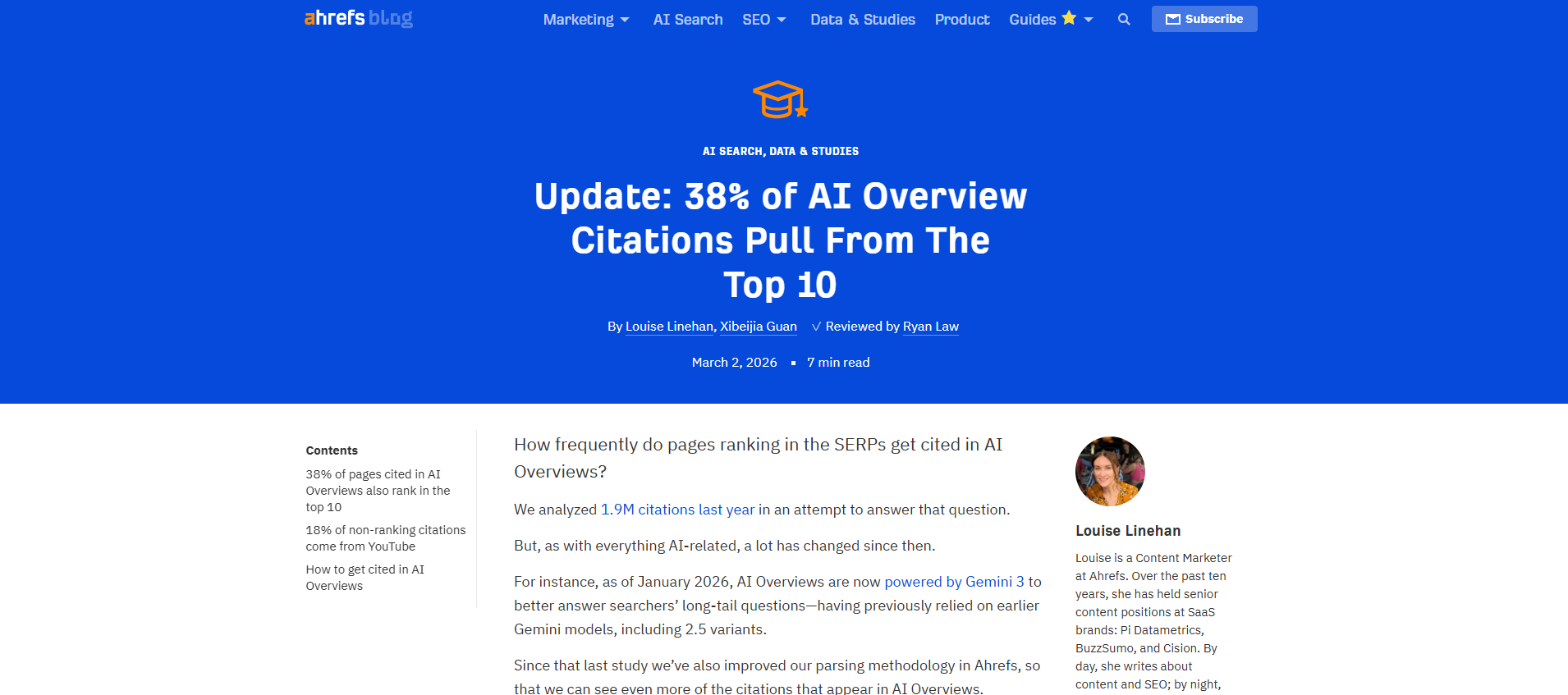
High-quality content gives journalists and publishers something credible and citable worth covering, which earns your brand press mentions and backlinks.
Editorial links from real publications carry more weight than casual guest posts. They also help you earn brand mentions that matter for AI search visibility.
This works best when you have original data, a unique angle, a trending topic, or access to subject matter experts who can provide commentary that journalists actually want to quote.
Guest Posting
Guest posting is the process of writing valuable content on other relevant sites that genuinely benefits their readers.
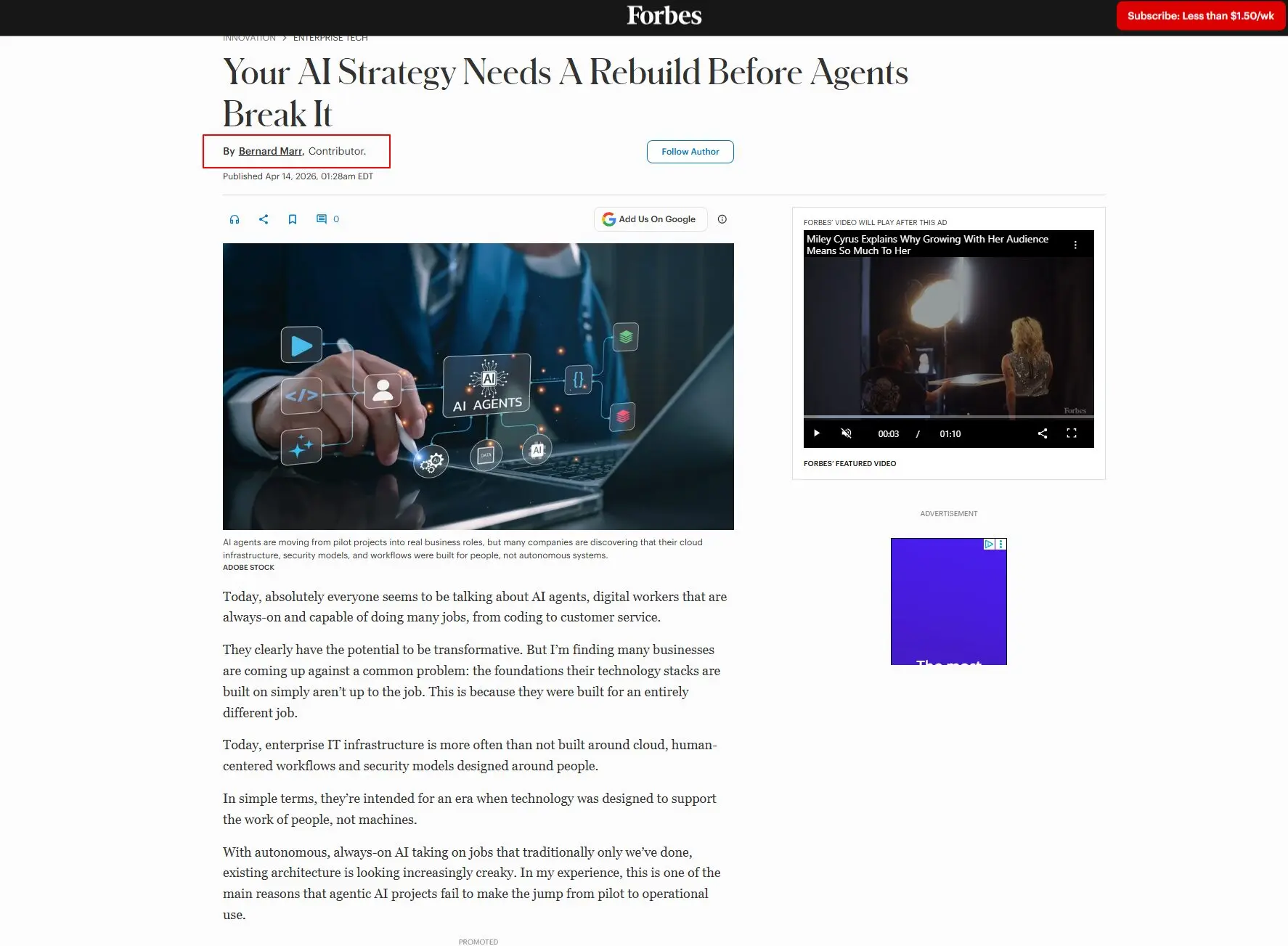
This tactic still works, but the bar is high. Generic “10 tips” articles just for link placement get ignored. To earn guest posts links now, your posts must be deeply researched, share original insights, and deliver real value.
Niche Edits
Niche edits mean placing your link in already existing, indexed content. The advantage of niche edits is that you appear on pages that already rank and have established authority.
If your link feels forced or irrelevant, it won’t help and might even hurt your SEO. This means that relevance is non-negotiable.
Broken Link Building
Broken link building means finding broken links on relevant pages. In this strategy, you create or identify your own content as a replacement and pitch it to the editors as a fix.
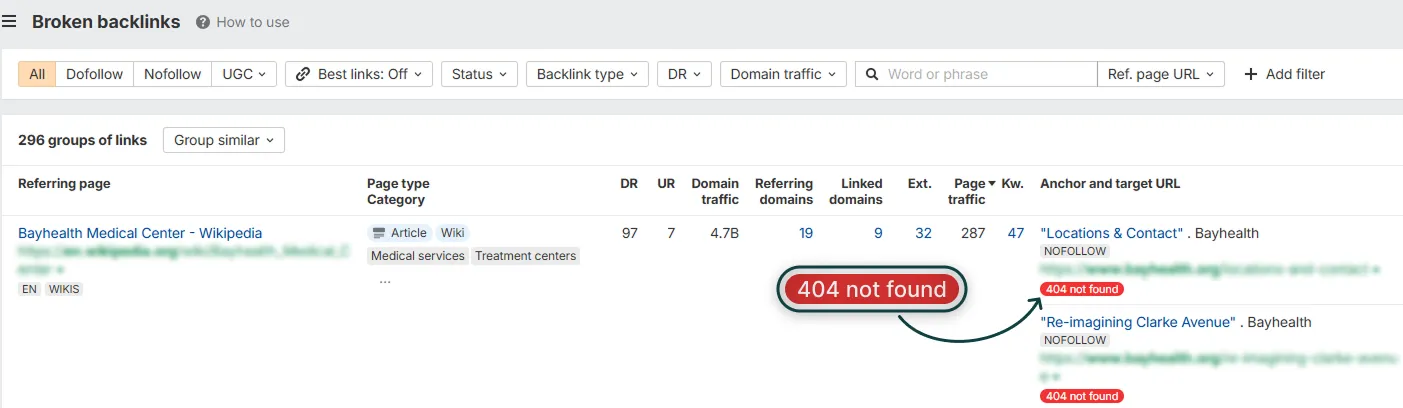
But campaigns with a direct content match earn placements at a higher rate than those without one. So here the secret is having the content match. A mediocre replacement gets ignored. A clearly better one gets linked.
Here is a quick scan table for tactics with their typical timeline:
| Tactic | Best For | Typical Timeline | Effort Level |
|---|---|---|---|
| Digital PR | Authority sites, brand visibility, and AI citations | 2–4 weeks per campaign | High |
| Guest posting | Niche relevance, thought leadership | 3–6 weeks per placement | Medium |
| Niche edits | Fast results on indexed pages | 1–3 weeks | Medium |
| Broken link building | Resource pages, .edu/.gov domains | 2–4 weeks | Medium-High |
Phase 4: Build Your Prospect List and Outreach System
This is where most campaigns fail, not from bad links, but poor execution. Focus on these essentials:
Prospect Quality Over Quantity
A list of 50 highly relevant, well-researched targets beats a list of 500 generic domains every time. For each prospect, ask yourself:
- Does this site publish content relevant to my target page?
- Does it have real organic traffic?
- Would my audience actually trust it as a source?
Personalize or Don’t Bother
Generic pitches with personalization have more chances of getting replies. Make sure your pitch is relevant to a journalist’s beat and mention them by name.
But referencing a specific article they’ve written takes it further. Keep it short and make the value to their readers obvious.
Follow Up Once
According to BuzzStream’s report, 55.4% of practitioners follow up just once, and reply rates drop to 33.1% if follow-up is done twice. This means that one follow-up is the right move; anything more than that risks the relationship entirely.
Track Everything
Create a spreadsheet where you log all your outreach efforts. You can log every effort, like who you contacted, when, and what you pitched, and their responses.
This is how you improve your future campaigns and avoid pitching the same person twice with the same pitch.
During link building campaign, people who split their time strategically between prospect research and link building outreach consistently beat teams that spend 10% on research and 90% on sending emails.
The quality of your list shapes the quality of your results. A tight list of relevant, high-authority sites will always outperform a bloated one. Put real time into prospecting before you send a single pitch.
Phase 5: Measure What Matters
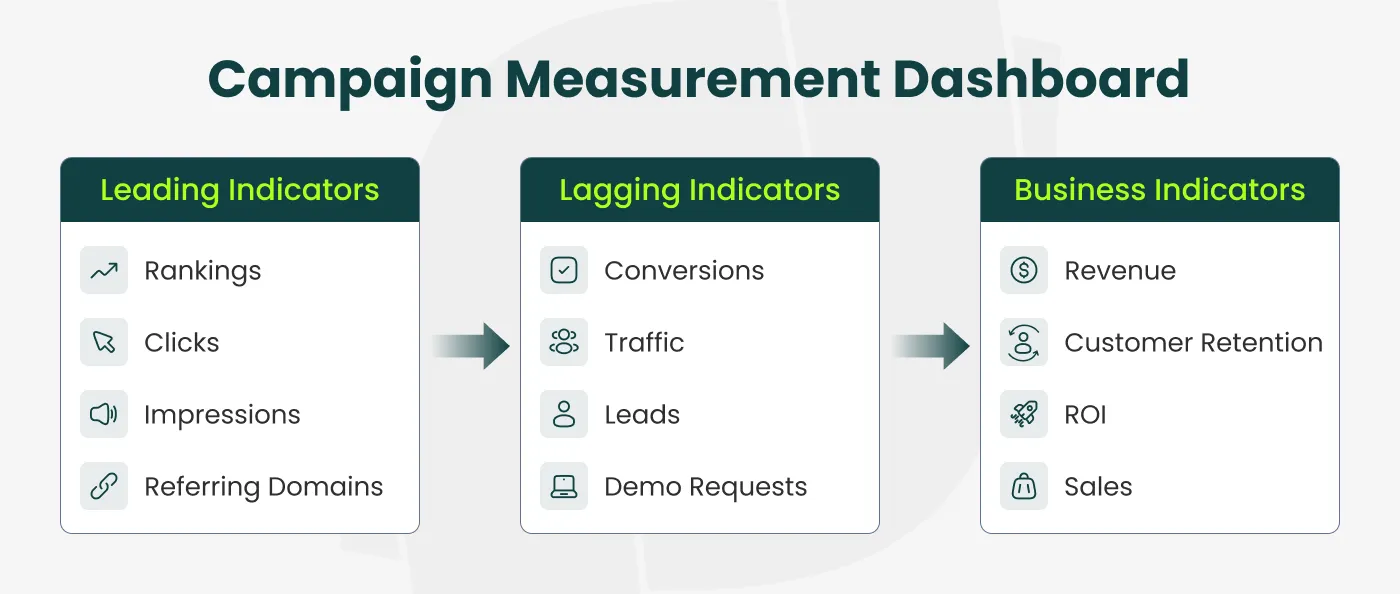
Counting links is easy, but measuring impact requires more effort. Go through this checklist of the measurement framework that connects campaign activity to business results:
Leading Indicators (Check Weekly)
Track these metrics weekly to see whether your link‑building and Digital PR efforts are actually working:
- New referring domains to target pages
- Prospect response and placement rates
- Brand mentions frequency across target publications
Lagging Indicators (Check Monthly)
Review these monthly to see if earlier outreach and content efforts are translating into measurable visibility and traffic gains.
- Keyword ranking changes for target terms.
- Organic traffic to target pages
- Referral traffic from earned placements
Business Indicators (Check Quarterly)
Measure these quarterly to connect your link‑building and Digital PR to revenue, leads, and overall business value.
- Revenue or leads attributed to organic traffic on target pages
- Cost per acquired link vs. traffic value generated
- AI search citation frequency (Google AI Overviews, ChatGPT mentions)
Do not mistake activity for progress. Building 30 links to a blog post that doesn’t connect to any revenue page through internal links is motion, not momentum. Make sure your link equity flows from content pages to the pages that drive business.
Download our free Link Building Campaign Planner to keep track of your campaign efforts
Why Link Building Campaigns Now Need an AI Search Strategy
Link building campaigns now need an AI search strategy because they don’t just affect your search rankings on Google; they also shape whether your brand appears in AI-generated answers across ChatGPT, Perplexity, Google AI Overviews, or Gemini.
Brand mentions now drive AI search results, alongside links. An Ahrefs analysis of 75,000 brands found that branded web mentions correlated with AI Overview visibility at 0.664, compared to 0.218 for raw backlink counts.
What this means for your campaign:
Every backlink you earn should come with a brand mention. And every piece of coverage, even without a hyperlink, has value.
The line between link building and brand building has blurred. Campaigns that combine brand mentions with link building perform better than those focused solely on link building.
Tip:
Track brand mentions alongside backlinks. Tools like Ahrefs Brand Radar or Google Alerts give you visibility into unlinked mentions. Convert the strongest ones into links through mention reclamation outreach.
What a Focused 90-Day Link Building Campaign Looks Like
Here is how a focused 90-day campaign typically plays out, modeled on a SaaS company whose high-intent page is stuck on page two. Treat the structure and ranges below as a planning template, not a promise of specific outcomes. In this scenario the target page sits at position 18 with fewer than 10 referring domains, while the top competitors hold 40 to 80.
Here’s how the campaign played out:
| Phase |
Timeline |
Activity |
Output |
|---|---|---|---|
| Audit & Content Upgrade | Weeks 1–3 | Backlink audit, competitor gap analysis via Semrush, content upgrade on the target page | Two thin sections expanded, one proprietary data point added |
| Guest Posting & Niche Edits | Weeks 4–8 | 60-prospect list built, outreach to 40 SaaS and agency blogs with real organic traffic | 4–6 guest post placements, 2–4 niche edits secured, depending on team size and niche competitiveness |
| Digital PR | Weeks 9–12 | One original survey piece on agency productivity benchmarks pitched to 18 publications | 2–4 links back to the target page |
By day 90, a campaign run this way would typically add 10 to 14 new referring domains and move the page closer to page one, with measurable gains in rankings, visibility, and organic traffic.
The Five Mistakes That Kill Link Building Campaigns
Most campaigns don’t fail because of bad outreach. They fail because of avoidable strategic errors made before a single pitch goes out.
1. No Target Page Strategy
If you create content for random pages, you waste effort. Focus on the pages that matter most to your business.
2. Ignoring Content Quality
A low-quality page won’t hold links for long. Before you run a campaign, make sure your page is actually providing value to others and is worth linking to.
3. Chasing Volume Over Relevance
20 backlinks from irrelevant sites won’t improve your rankings, but two relevant backlinks from authoritative sites in your niche can improve your rankings. So always chase relevance over backlink volume.
4. Treating Every Campaign the Same
A SaaS product page and an ecommerce category page need different approaches. Match your tactics, prospect list, and timeline to the page you’re building.
5. No Measurements Beyond Link Counts
If you can’t connect your campaign to rankings, traffic, or revenue, you can’t prove it worked. And you can’t improve it.
What Comes After Your First Campaign
Your first campaign gives you data. Your second campaign uses it.
Look at what worked:
- Which tactics got placements?
- Which prospects responded?
- Which link text patterns moved rankings?
Double down on what worked. Cut what didn’t.
From there, build a rolling campaign calendar. Run 90-day cycles, with each cycle focused on a different set of priority pages. Over 12 months, you’ll have strengthened your most important pages and built a link profile that keeps compounding.
Your next campaign isn’t just about rankings. Every editorial placement you earn also shapes whether your brand gets cited in AI Overviews. Build the link equity and the brand signal simultaneously.
Ready to start a link building campaign that delivers results?
Get a strategy focused on high-quality backlinks and steady growth.
What is a link building campaign?
A link building campaign is a structured, time-bound effort to earn high-quality backlinks to specific target pages through outreach, content, and digital PR. Unlike everyday link building, a campaign has a defined scope, a list of target pages, a chosen tactic mix, and a 90-day window to measure results against business outcomes.
How long does a link building campaign take to show results?
Most sites start noticing ranking movement around three to six months. It depends on where your site stands today, which means your current authority, keyword competitiveness, and link quality. A good rule of thumb: run in a 90-day cycle because usually you can see the progress after that.
How many links does a campaign need?
There is no universally fixed number. A site in a low competition niche can move from page two to page one with 5-10 quality links. A site in a competitive vertical like finance or Saas might need 20-30 referring domains over multiple campaign cycles. Focus on relevance and authority, not volume.
How much should a link building campaign cost?
Budgets vary widely. About 38.4% of businesses spend between $1,000 and $5,000 per month on link building, as per DemandSage. Premium editorial placements from top publications can run $2000 or more per link. The full link building cost data breaks this down by tactic.
The right number for you depends on your niche, your goals, and whether you’re building in-house or working with an agency. There’s no one-size answer, but there is a right answer for your situation.
Should link building campaigns also target AI search?
Yes, your link building campaign should also target AI search. And if you’re not already thinking about this, now’s a good time to start. AI-powered answer engines like Google AI Overviews, ChatGPT, or Perplexity shape how people find brands, and that influence is only growing.