Resource page link building is a practical way to earn backlinks from relevant resource pages in your niche.
Resource pages give you one of the most direct link opportunities. These pages are typically created by website owners, educators, and industry publications to recommend useful tools and guides to their audiences.
When your content aligns with what a resource page already recommends, you earn a relevant, trusted link that builds your site’s authority.
Key Takeaways
- Resource pages earn you editorial links placed in context, on topically relevant pages.
- Find prospects using search operators, backlink filters, and .edu or .gov searches.
- Qualify every page for indexing, relevance, and traffic before you pitch.
- Keep pitches short, be specific, and follow up once.
- Pair resource page outreach with guest posting, digital PR, or broken link building.
What is a Resource Page?
A resource page is a standalone, curated web page that lists external links to helpful tools, articles, or references on a specific topic.
Site owners, universities, non-profit organizations, government agencies, industry blogs, and niche communities all build resource pages to connect their audiences to the best external content in their niches.
Think of a local business association linking to a relevant accounting guide. Or a university health department listing mental health tools for students. Or an SEO blog curating a list of relevant SEO tools. The common pattern: Someone chose to build a page that points readers to the best stuff elsewhere.
Resource pages are not random link lists covering multiple unrelated topics or simple directory listings. They are topical, curated, and maintained by someone who cares about quality.
That is exactly why a backlink from a high-quality resource page carries weight. It reflects an editorial choice rather than an automated listing.
What is Resource Page Link Building?
Resource page link building is the process of earning backlinks by getting your content listed on web pages that curate helpful links for their audience.
These pages are already trusted by Google. When your link is included, you earn a high-quality backlink that carries more weight than directory listings or paid placements.
The pitch is simple: you find pages that already link to content in your niche, and then you pitch your content to them as a worthy addition. There is no guest post to write, and no journalist to convince. Your content improves their page, and you get a contextual backlink. It’s a clear value exchange.
But it’s not as simple as sending one email and waiting. Most site owners get flooded with requests, and webmasters are selective. So your pitch needs to be precise, relevant, and focused on what’s valuable for them and their readers.
Why Resource Page Links Still Matter in 2026?
Resource page links still matter because a real person reviewed your content and decided it was worth including. No automation, no exchange.
Your link sits in context, on a relevant page, next to other resources they chose to list. Google can tell the difference.
What Makes Resource Page Links Valuable
Resource page links check every quality signal that matters:
| Signal | Why It Matters |
|---|---|
| Editorial placement | Someone reviewed your content and chose to link |
| Topical relevance | The link sits on a page dedicated to your subject |
| Contextual anchor | Your link appears alongside related resources |
| Evergreen durability | Resource pages tend to stay live for years |
| White-hat by nature | No exchange, no payment, just value for the Curator |
6 Reasons to Add Resource Pages to Your Link Strategy
- Lower Competition
Resource page opportunities remain largely untapped. While most websites focus on guest posting and digital PR, you face less competition for placements and are more likely to get a response from this outreach effort.
- High Relevance
Place your link on resource pages that focus on your topic. When your link sits alongside other trusted sources in your niche, it gains stronger value for both search engines and your audience.
- Faster Outreach Process
Keep the process simple. You do not need to write a full article as you do for guest posting. Just send a clear, focused email that shows why your content belongs on their list.
- Long Term Link Value
Earn links that last. Once your link is added, it can continue to drive referral traffic and pass authority to your site over the long term.
- Builds Referral Traffic
Bring in the right traffic. You attract visitors who are already looking for solutions in your niche. These clicks are more relevant and more likely to engage with your content.
- Safe and White Hat
You stay within Google’s guidelines and earn placements by offering real value and genuine growth, without paid links or manipulative tactics.
Is it Worth the Effort?
Yes, if you care about link quality over volume.
Resource page outreach won’t drive the same volume as digital PR campaigns. If you need a high monthly link volume, this isn’t your main strategy.
But if you want to build a clean, diversified backlink profile, especially in competitive niches like SaaS, legal, or health, resource page link building should be part of your strategy.
How to Find Resource Pages Worth Pitching?
Some resource pages aren’t worth your time. A dead page with a huge number of outbound links and no recent updates is generally not worth pitching.
Here’s how to build a list that is worth pitching:
Start With Google Search Operators:
- [your topic] intitle:resources inurl:resources
- [your topic] “useful links”
- [your topic] “recommended sites”
- [your topic] inurl:links.html
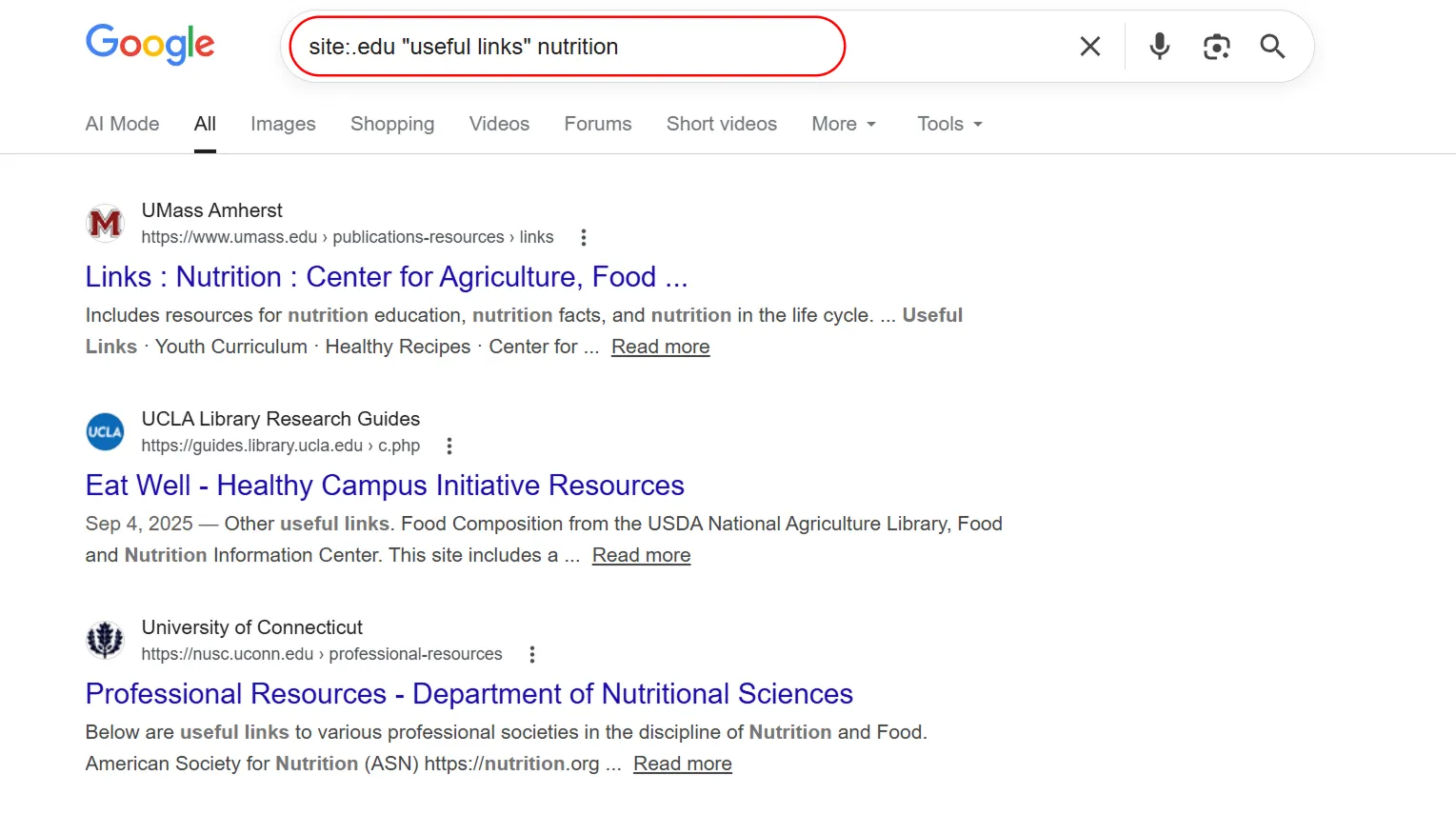
- [your topic] “helpful resources” site:.edu
For hidden resources pages, try these:
- “[your topic] further reading”
- “[your topic] recommended tools”
- “[your topic] for beginners”
These surface blog post link lists, tool roundups, and starter guides.
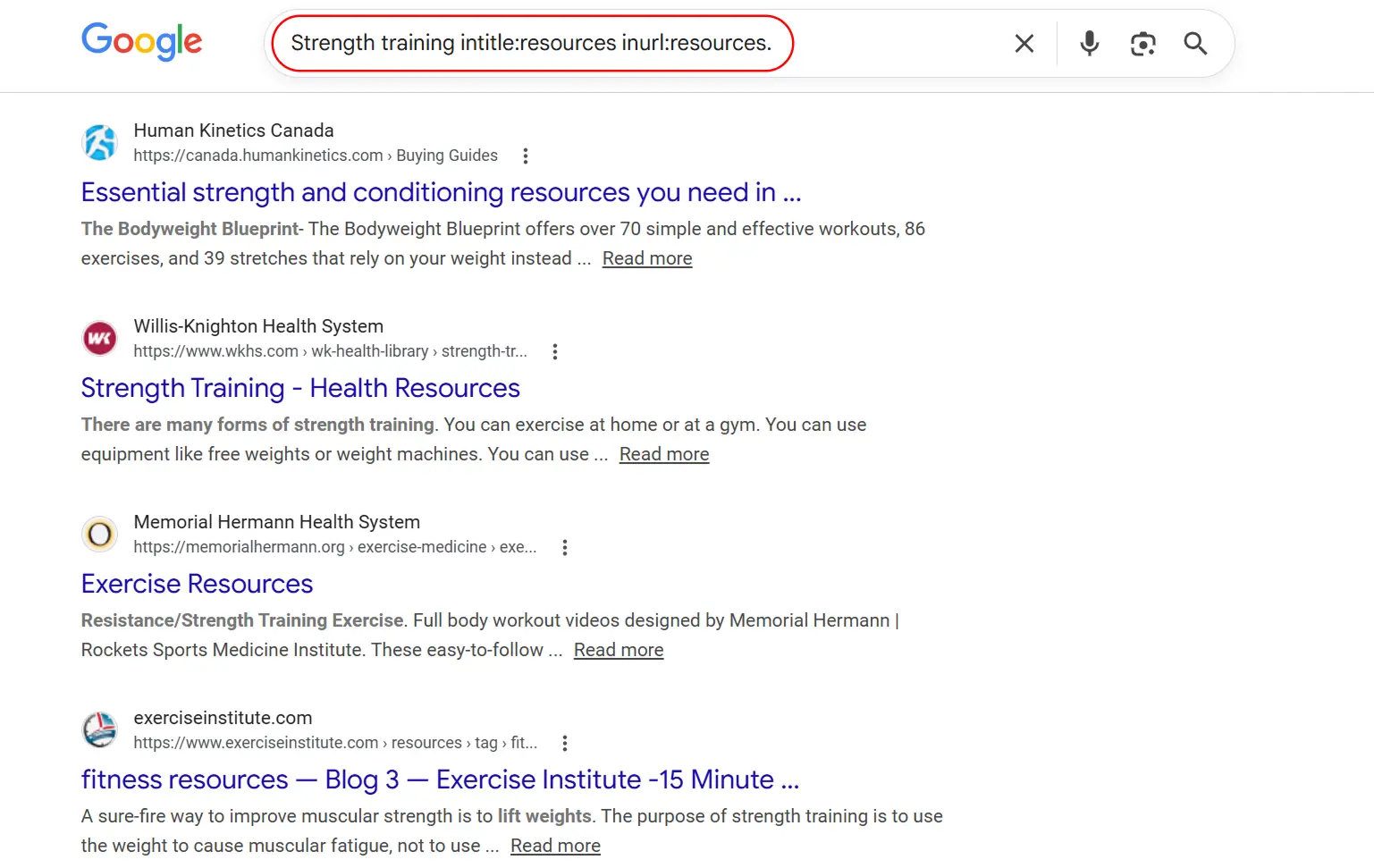
For a fitness brand, you can type: Strength training intitle:resources inurl:resources.
And for a B2B SaaS company: project management “useful links” site: .edu.
Run 5-10 variations for search operators. You will uncover many potential pages before filtering.
Mine Competitor Backlinks
Open Ahrefs or Semrush, then enter a competitor’s URL. Filter their link profile for referring URLs that contain “resources,” “links,” or “tools.” Those are resource pages already linking to someone in your space.
That’s your shortlist. If they linked to a competitor, they’re open to adding more. And if your content is as good or better, the opportunity is already validated.
This one step can significantly cut your prospecting time.
Check .Edu and .Gov Domains
University and government resource pages carry real authority. And the people maintaining them care about helping their audience, not monetizing it.
- site:.edu [your topic] resources
- site:.gov [your topic] “useful links”
A dental practice might find university health pages listing oral hygiene guides. A cybersecurity firm might land on a .gov page curating privacy tools. Harder to land, yes. Worth the effort, absolutely.
How to Qualify Resource Pages Before Outreach?
Sending hundreds of emails to every resource page wastes not only your time but also your momentum. Careful selection of prospects is important for real results.
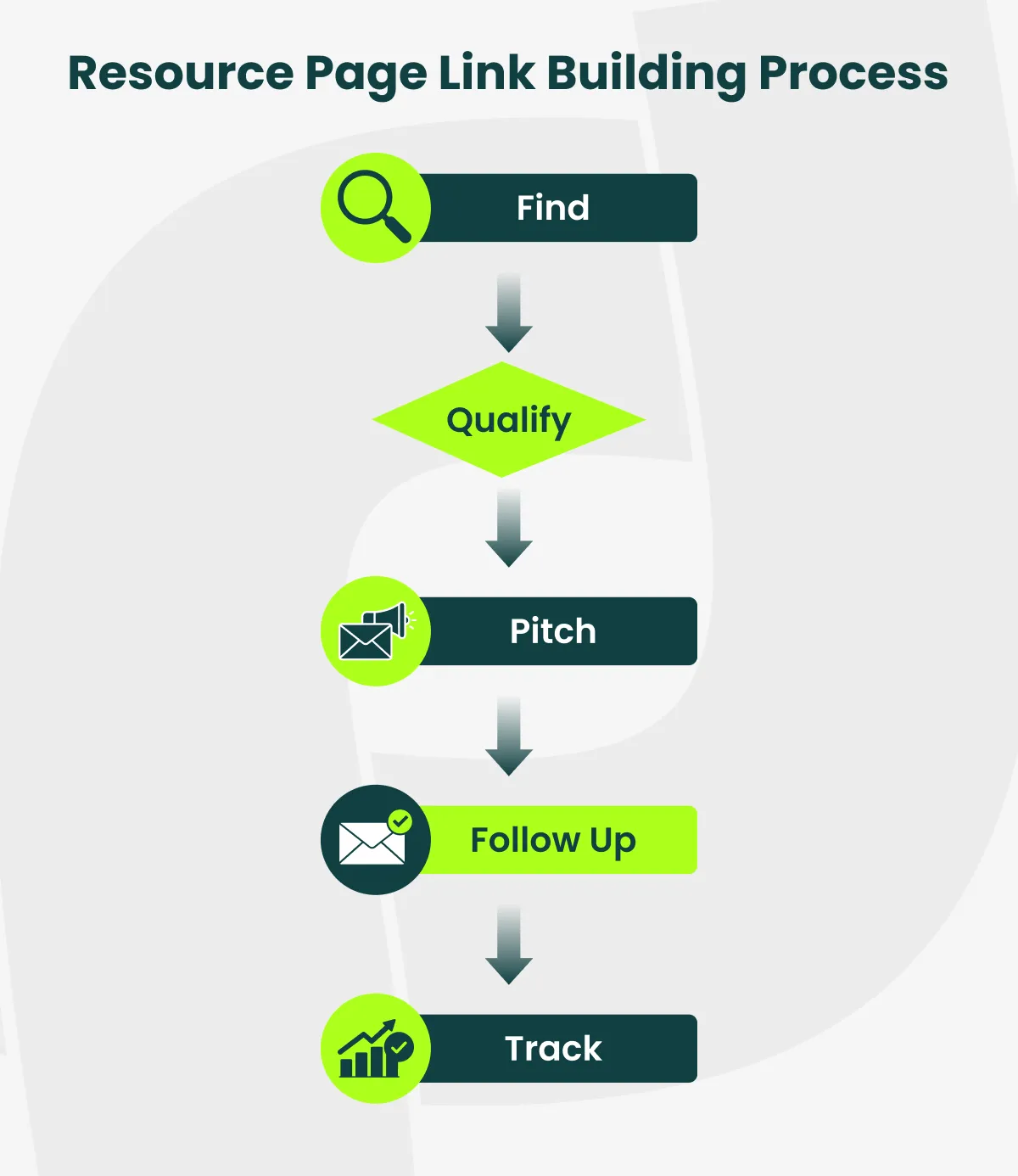
Run each prospect through these 5 checkpoints before it reaches your final list.
1. Is the Page Indexed?
Paste the URL into Google using site:[URL]. If the site doesn’t show up, skip it. No index means the site has no link value.
2. Is Your Content a Genuine Fit?
Relevance beats authority every time. A cloud computing resource page won’t link to your email marketing guide, no matter how strong your site rating is.
3. How Many Outbound Links Does It Have?
It’s ideal to have pages with 30 to 70 external links. If it exceeds 100, your link gets buried. If the number is below 10, it means the curator probably isn’t actively maintaining the page.
4. Is the Page Still Maintained?
Look for a “last updated” date or any recent additions. Check for dead links using Broken Link Checker Tool. A page full of broken links is either abandoned or run by someone who doesn’t check their inbox.
5. Does the Linking Site Have Real Traffic?
Prioritize resource pages that people actually visit. A link from a page with real organic traffic is worth far more than one sitting on a forgotten corner of the web.
Disqualify 60-70% of your initial list. That’s not aggressive. That’s the difference between a 2% conversion rate and a 10%+ rate.
Writing Outreach Emails That Actually Get Replies
Pitches fail because they sound generic. The webmaster opens an email, sees a generic request, and deletes it.
This is what separates a good pitch from a generic one:
Lead With Their Page, Not Your Ask
Reference something specific about their resource page at the start. Talk about a resource they have already listed on the site. Make a note of something you found helpful. This takes 30 seconds of research and immediately signals you’re not blasting a similar template to 500 people.
Weak Opener: “I found your resource page, and I think that my content would be a great fit.”
Strong Opener: “Your guide roundup on [topic] is solid. I especially like the [specific resource] link you included. I have been referencing it myself.”
Be Specific About What You Are Offering
Explain what is included in your content, why it is relevant to their page, and where it might fit in their resource page ( reference a specific section if the page has many categories).
Keep it Short
Keep your email short. Just write 5-7 sentences. Don’t try to sell. Make it a clear, helpful suggestion from one professional to another.
Follow up Once, Not Five Times
Send one follow-up after 7-10 days. One reminder email is enough to show interest without damaging your reputation or the relationship.
Here is a template you can adapt:
Subject: Quick suggestion for your [topic] resources page
Hi [Name],
I was looking through your [topic] resource list and noticed you’ve linked to [specific resource]. Great pick.
We recently published [brief description of your resource] — it covers [specific angle or data point]. Might be a useful addition under your [section name] category.
Here’s the link if you’d like to take a look: [URL]
Either way, appreciate the work you’ve put into that page.
[Your name]
Common Mistakes That Kill Resource Page Campaigns
Most of these mistakes happen before you even hit send.
Pitching Content That Does Not Belong
Make sure the content you pitch fits naturally in the resource page and is relevant. If it doesn’t, then skip the pitch.
Targeting Abandoned Pages
Check for content freshness signals before emailing. A resource page that hasn’t been updated with the latest content since years, probably has an unmonitored inbox.
Sending Identical Emails to Every Prospect
Personalize every pitch. Reference the page title, a specific listed resource, or the curator’s name. Even minimal personalization can considerably boost response rates.
Ignoring Broken Links on the Page
If you spot dead links while qualifying a page, mention them in your pitch. You help the webmaster improve their page, and adding your resource becomes a natural next step.
Asking for Payment
If a webmaster asks you for a listing, walk away. Paid placements on resource pages defeat the purpose and risk a Google penalty.
How to Scale Without Losing Quality?
Resource page link building is inherently manual. But you can move faster without cutting corners.
Batch Your Prospecting
Dedicate time to find and export prospects using tools like Ahrefs Content Explorer. Qualify leads in a spreadsheet before you write a single email. This builds momentum and saves time.
Create Templates With Personalization Slots
Write 3-4 email variations. For each prospect, personalize the opening line and explain exactly why your content is a good fit. That keeps your outreach personal, even if you scale.
Track Everything
Use link building tools such as BuzzStream, Pitchbox, or a spreadsheet to track every email, response, and link earned. Tracking helps you double down on what works and build long-term growth.
Pair With Others
Resource page outreach works as part of a broader link building campaign. Combine it with other link building strategies such as guest posting, digital PR, and contextual link building to grow a strong, diversified backlink profile.
Resource Page Link Building Vs. Other Tactics
| Tactic | Effort Level | Link Quality | Scalability | Best For |
|---|---|---|---|---|
| Resource page outreach | Medium | High | Medium | Clean, relevant links from curated pages |
| Guest posting | High | Medium-High | High | Building thought leadership + links |
| Broken link building | Medium | High | Medium | Pages with dead links in your niche |
| Digital PR | Very High | Very High | Low-Medium | Brand authority + high-DR links |
| Niche edits | Low | Variable | High | Quick placements in existing content |
Resource page outreach won’t replace digital PR for building brand-level authority. But it fills a gap that other tactics miss, especially for newer sites that don’t yet have the brand recognition to land press coverage. If you’re building links for a startup, resource pages are one of the most accessible entry points.
Conclusion
Resource page link building isn’t trendy, or it won’t go viral on LinkedIn, but it delivers clean, contextual, lasting links that strengthen your site’s authority month after month.
Start small. Find 20 qualified resource pages in your niche. Write 20 personalized emails. Track what happens. You’ll learn more from that first batch than from reading another five articles about link building theory.
Want backlinks from high-authority resource pages?
Learn how to get your content listed where people actively look for trusted resources.
Is Resource Page Link Building Still Effective in 2026?
Yes. Resource page link building remains effective because it is considered one of the cleanest white-hat strategies available. Google consistently rewards editorial, contextual, and topically relevant content. This strategy has a compounding effect. Sites that build 10-15 resource pages per quarter often see measurable improvements in their rankings within 3-6 months.
How Many Emails Should I Send to Get One Link?
Expect 20-100 emails per resource page link, based on 1-5% conversion rates. That’s the benchmark to aim for, not the average. Personalized pitches outperform templated emails, according to PressWhizz’s 2026 link building statistics.
What Tools do I Need for Resource Page Link Building?
The list of minimum tools includes:
- Google for search operators
- Ahrefs or Semrush for backlink analysis of competitors and page qualification
- Hunter.io for finding email IDs and contact info
- Spreadsheet or CRM for tracking
If you are running outreach campaigns at scale, platforms like BuzzStream or Pitchbox can save significant time.
Should I Pitch My Homepage or a Specific Page?
You should almost always pitch a specific page from your site. Resource page curators link to resources such as detailed guides, free tools, calculators, and original research articles.
Treat your homepage as a business card rather than a resource page. Create genuinely helpful content and pitch that. The more specific and valuable your content asset, the higher the conversion rate.
Can I Combine Resource Page Outreach With Broken Link Building?
Yes, you can combine resource page outreach with a broken link building strategy. When you find a resource page with broken link, you can mention the broken URLs in your pitch and suggest your content as a replacement or addition.
This gives the webmaster two reasons to edit the page, rather than just one. Outreach Desk frequently layers these tactics inside link building campaigns for better results per email sent.