Health and fitness link building is the process of earning backlinks from authoritative health, wellness, and fitness websites to improve your site’s search rankings and establish credibility in a niche where trust and expertise are critical ranking factors.
Health and fitness sites compete in one of the most competitive search areas. Your brand may have solid content, but still struggle to gain visibility; in many cases, the issue might be the lack of authority. Link building helps address this by showing Google that trusted websites recommend your content, which improves your visibility in search results.
Key Takeaways:
- A health and fitness site falls under YMYL, making the source of link quality more important than link volume.
- Health is a competitive niche that requires backlinks to rank against massive competition.
- Original research, data-driven content assets, and expert guides attract the most backlinks in the health industry.
- Consistent link building is important for long-term visibility in the healthcare industry.
- A well-structured outreach campaign targeting niche-relevant publications can build 15-30 high-quality links per month without the risks of penalties.
Why Health and Fitness Link Building Follows Different Rules
Google classifies and evaluates this entire niche more strictly under the Your Money Your Life (YMYL) model because it can directly affect the person’s physical well-being, as the content is about nutrition, exercise, supplements, or wellness.
Google applies stricter standards when ranking health content. It means Google may only show health and fitness pages that show real trust, expertise, and credible signals from the relevant websites. Google also carefully checks the sites that link to you, as it checks your own content.
Your websites must demonstrate strong signals of Expertise, Experience, Authoritativeness, and Trust (E-E-A-T) to earn visibility in the search engine.
E-E-A-T
E-E-A-T signals are a quality framework for identifying whether content is reliable, written by real experts, and from a trusted source. Content that shows genuine expertise and credibility is evaluated more favorably than content from random and anonymous sources.
According to an analysis by SEO consultant Glenn Gabe, health and finance sites were among the first to experience major ranking volatility. Therefore, the health and fitness industry must follow strict guidelines.
What Makes a Backlink Valuable in the Health Niche?
In health and fitness, a backlink from an irrelevant website will not only fail to help you but can also work against you. Here’s what makes it different.
Topical Relevance Over Raw Metrics
Topical relevance simply means that the website linking to you should cover the same niche and industry as yours.
In short, a backlink from a fitness blog holds more value to a fitness site than a link from any irrelevant tech news site, regardless of how popular the site is, because Google prioritizes relevance over reputation.
Editorial Context Matters
A link placed in the content naturally, where your content is referred to as a source, carries far more weight than links that are placed in a footer, header, or sidebar. It signals Google that the real person reviewed it and that the content is relevant and trustworthy enough to recommend.
Securing contextual links through manual editorial outreach is more effective and can drive more referral traffic than automated link networks.
Linking Page Quality Signals
Not every website is worth getting a link from; individual pages matter too. Look for pages that actually get visitors and check whether they are regularly updated; avoid pages that link to dozens of other sites.
Check if the page has a real author with verified credentials. Google places more trust in content written by credible, identifiable experts, so a backlink from that page carries significantly more value.
Comparison table showing the differences between high- and low-value health industry backlinks
| Signal |
High Value Links |
Low Value Links |
|---|---|---|
| Source relevance | Health, wellness, or medical publication | Links from generic link directories or irrelevant blogs |
| Placement | Within the main content, an editorial mention | Placement in sidebar, footer, or author bios |
| Author attribution | Named experts with credentials | AI-generated or automated content. |
| Linking page traffic | Receives organic search and visitors | Zero to no traffic |
| Outbound link count | Moderate external links | Around 50+ outbound links on the page |
| Content freshness | Updated within the last 12 months | Published years ago, never updated |
Content Assets That Consistently Earn Health and Fitness Links
Before you begin outreach, you require something that feels genuine and worth linking to. Editors and publishers will not risk their credibility by linking to thin or unoriginal content.
Here are some content formats that can help you attract backlinks in the health and fitness industry.
Original Research and Data Studies
Original data and studies can help attract backlinks in the health and fitness industry. Your own surveys, industry trend reports, or performance benchmarks give journalists and bloggers something that they cannot find elsewhere.
Suppose a supplement brand publishes an annual survey of 2,000 consumers on their supplement-buying habits, creating a citable resource that health journalists reference year after year. According to Mordor Intelligence, the global health and fitness club market is valued at approximately $135.71 billion in 2026, yet very few brands in this industry publish original consumer research.
Interactive Tools and Calculators
Calculators such as BMI calculators, macro trackers, calorie estimators, workout load calculators, earn links because they solve a specific problem instantly. They are practical, shareable, and frequently referenced in the resource roundups.
In one documented case study, a health brand’s keto calculator became the most-linked asset on its domain after a focused link building campaign.
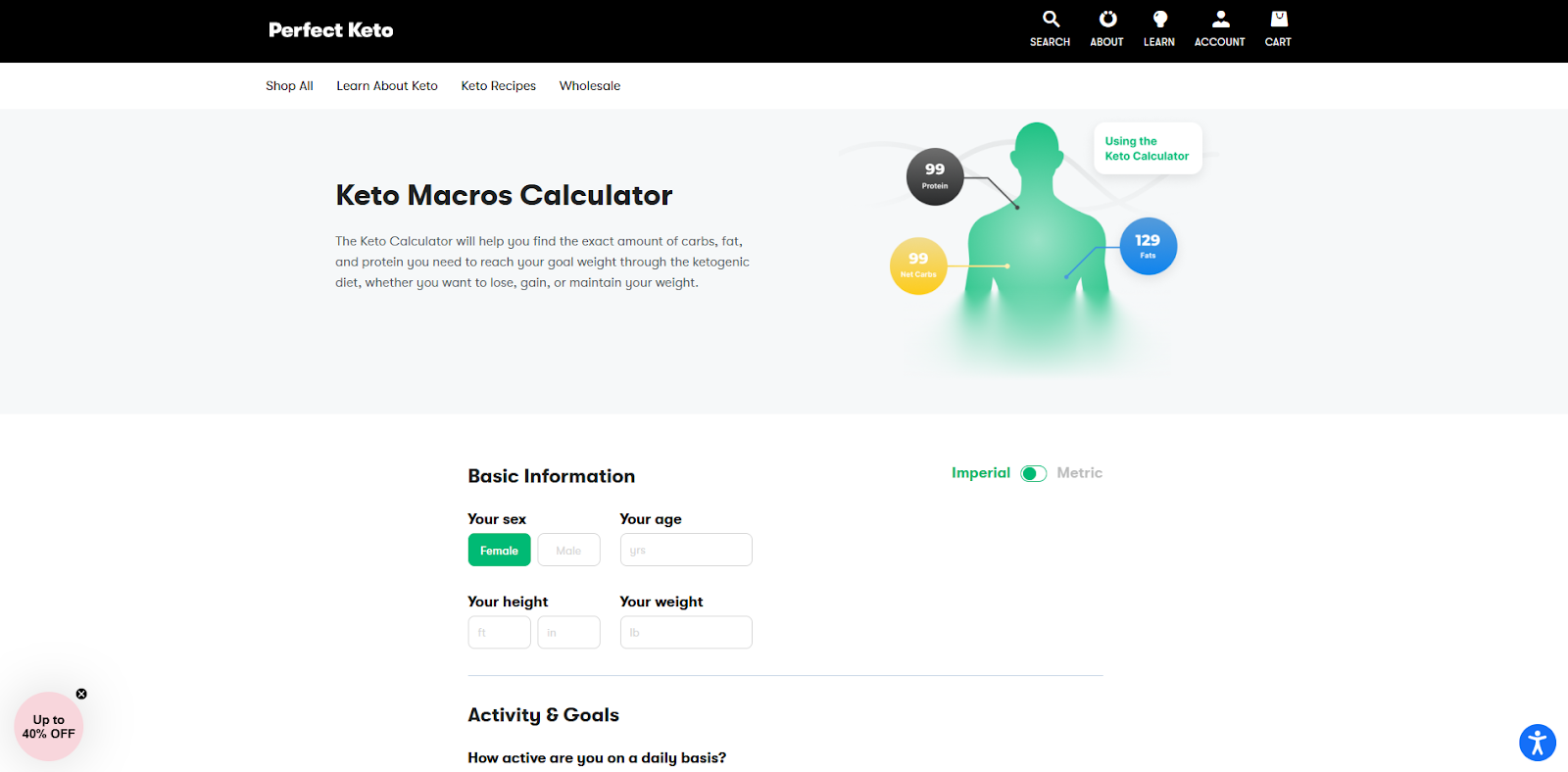
An increase in visitors was observed from 2,000 to over 30,000 monthly visits, and a focus on targeting resource pages to replace outdated competitors’ calculators.
Expert-authored Guides With Credential Signals
In health content, Google’s search quality raters pay close attention to who actually wrote and reviewed it. A workout guide written by a certified personal trainer (CPT) or a nutrition article reviewed by a registered dietitian (RD) is more likely to earn backlinks than the content with no named author.
Ensure that every piece of content has an author bio, visible verified credentials, a link to your professional profile, and clear data showing when it was last reviewed.
Visual Assets and Infographics
Health and fitness is a niche where visuals play an important role. Things like exercise diagrams, workout charts, meal-preparation infographics, and anatomy visuals naturally attract backlinks because other publishers include them in their content and credit you as the source.
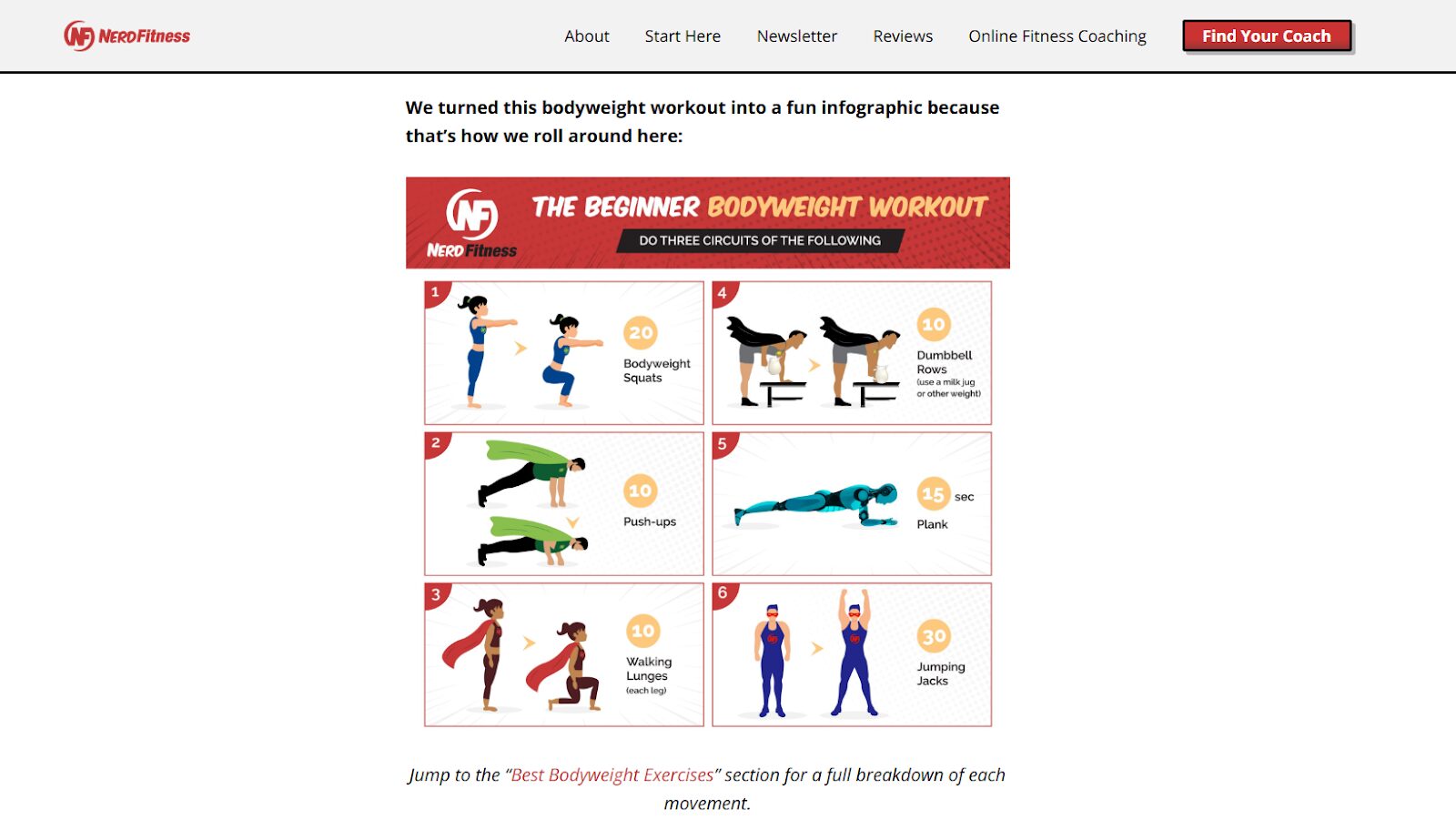
Proven Outreach Strategies for Health and Fitness Backlinks
Creating linkable content is just half the work; the other half is reaching the right people with the right message. Outreach in the health industry requires a more careful, credibility-first approach.
Editorial Guest Contributions
Guest posting is writing an article for another reputable health or fitness brand that may include a link back to your own site.
To find opportunities using Google search for terms like “write for us” or “contribute guest post” along with the keywords like “fitness”, nutrition”, or “wellness”. This will show you a list of websites that accept guest articles in your niche.
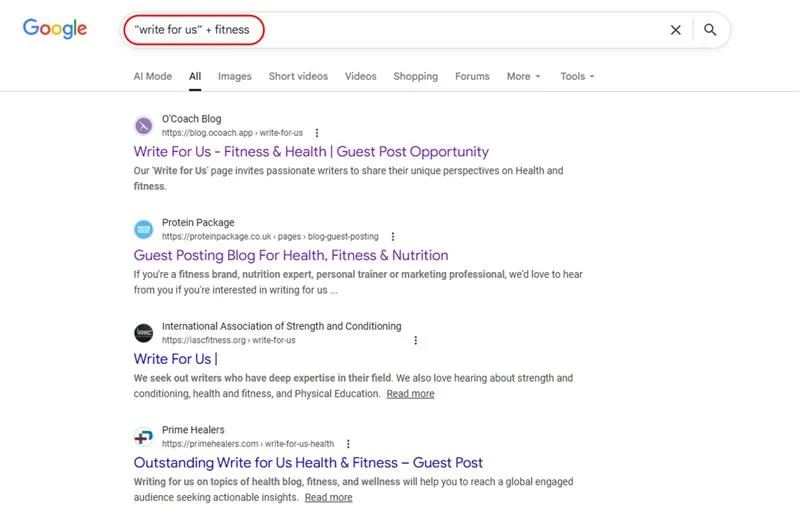
Write for websites with a real audience and genuine editorial standards. Avoid blogs that exist purely to sell guest post links.
When pitching health publications:
- highlights the author’s credentials because a pitch from a certified expert or nutritionist is more likely to be taken seriously and get a response.
- propose a specific topic because health editors prefer accurate, research-backed, and well-supported content over generic ideas.
- Mention your sources upfront because linking to studies or reputable references in your pitch shows that you take the accuracy seriously and establishes trust from the start.
Broken Link Reclamation
The health industry is full of outdated resources, dead links to discontinued supplements, expired government health pages, or shuttered fitness blogs. Broken link building is the strategy for identifying dead links on relevant sites and offering your content as a replacement.
This tactic works well for the health calculators, evergreen nutrition guides, and exercise database. Tools like Outreach Desk’s Broken Link Checker, Screaming Frog, and Check My Links extension can also help you find broken link opportunities more easily.
Digital PR and Data-driven Pitches
Journalists covering health and fitness stories require expert data. If your brand publishes original research, survey results, or industry benchmarks, pitch those directly to the health reporters and editors at publications like Healthline, Men’s Health, Well+Good, and Everyday Health.
Create a pitch around a newsworthy finding. That means instead of writing “our brand offers great fitness tools,” you can specify the details and give specifications. Show data that clearly explains your value, like: “our survey of 2,500 gym-goers found that 61% now use AI-based fitness apps for workout planning, up from 34% in 2024.”
Resource Page Outreach
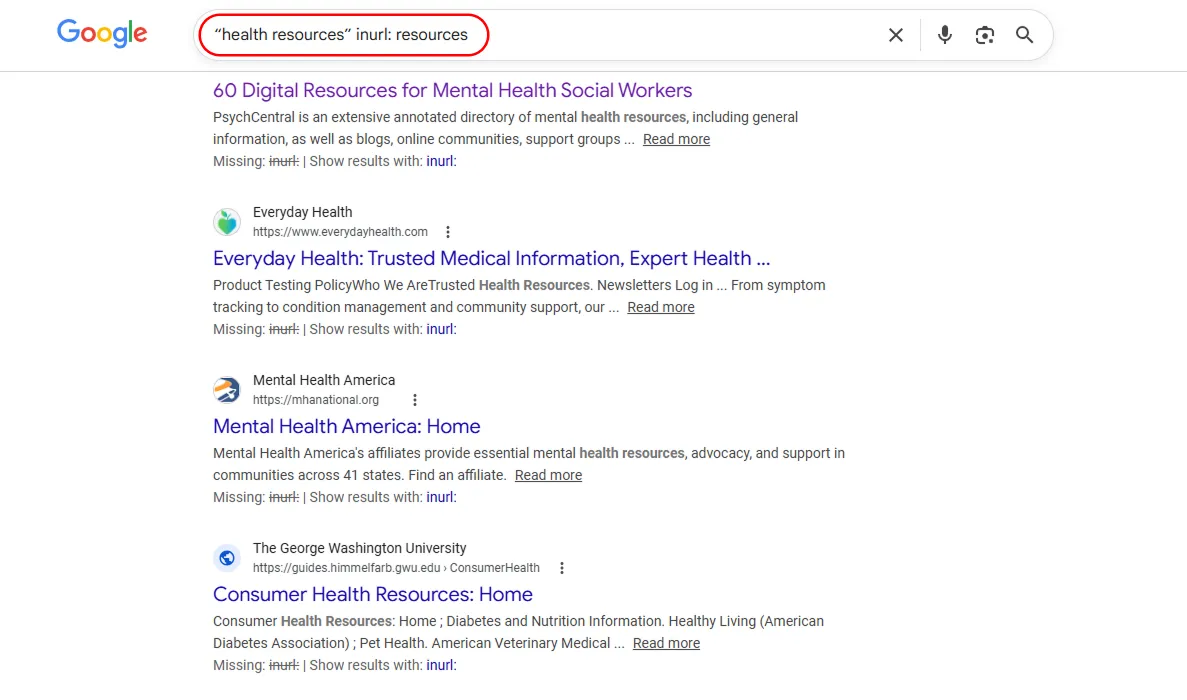
Many health organizations, universities, and nonprofits maintain dedicated resource pages where they list helpful tools, guides, and references. If your content genuinely helps their readers, a simple outreach email requesting inclusion can result in high-quality, relevant backlinks.
You can find these pages easily and quickly by using search operators like “health resources” inurl: resources or “fitness” inurl: “useful links”. This searches the pages specifically built to recommend external content.
The editors in the health industry receive hundreds of outreach emails weekly, and generic pitches go ignored. The pitches that get a response are mostly personalized, offer something specific about their site, reflect the author’s qualifications, and lead with value instead of directly asking for a link.
How to Keep Your Link Building Strategy Ymyl-compliant
Building links in health and fitness is not only about gaining volume, but it is also about building authority in a way that aligns with Google’s trust expectations. One link placed poorly from a questionable source can do more damage than ten good links can repair.
Vet Every Linking Domain
Vet every linking domain before accepting or publishing a backlink. You can check the linking site for:
- Published editorial guidelines or content standards.
- Ensure the health content mentions the named authors and includes verifiable credentials.
- Absence of spammy link patterns, including excessive outbound links, and paid link disclosures is missing.
- A history of original content rather than AI-generated materials.
Diversify Your Anchor Text Naturally
Repeated use of keyword-heavy, clickable text is a warning sign for Google; in the health industry, it raises more red flags than usual. Maintain a natural anchor text profile with a mix of your brand name, natural phrases such as ‘learn more’ and ‘this guide’, and sometimes descriptive terms.
Even though there is no official number from Google, most SEO professionals recommend keeping the exact-match keyword anchors to a small portion of your brand’s overall backlink profile.”
Prioritize Editorially Earned Links
In the health industry, the safest and most effective links are those that are earned through genuine editorial value. It means that the real editor reviewed your content, found it valuable, and chose to link to it, without any payment, reciprocal agreement, or artificial incentives. Google’s link spam update targets links that violate this principle.
Document Your Outreach Process
To document means simply maintaining the tracks and records of every outreach email, editorial relationship, and link placement. If Google ever manually reviews your link profile, this documented evidence of the legitimate outreach protects your site from being penalized and risks.
How to Measure Health Fitness Link Building Results
Link building is a long-term investment. Especially in the health and fitness industry, you can expect 3-6 months before you can see notable improvements in rankings from the new campaign. Here are some of the metrics that matter:
| Metric |
What Does It Tell You |
Tools |
|---|---|---|
| Referring Domains (growth) | It tells you how many sites from unique domains link to you over time | Use tools like Ahrefs, SEMrush, Moz |
| Domain Rating/Domain Authority | Overall, the backlink profile strength | For DR, use Ahrefs, and for DA, use Moz |
| Organic Keyword Rankings | Tells you if the target pages are climbing in SERPs | Use tools like Ahrefs, SEMrush, and Google Search Console |
| Referral Traffic | Direct visitors from the linking pages | Use Google Analytics 4 |
| Link Velocity | Tells you about the rate of new links acquired per month | Ahrefs, Majestic |
| Anchor Text Distribution | Tells you whether your profile looks natural or over-optimized | Ahrefs, SEMrush |
Check your progress monthly and look for steady growth rather than direct jumps. For health and fitness link building, a minimum commitment of 6 months is recommended because trust and authority are built slowly and gradually, not overnight. Quick wins are rarely seen in this industry; however, consistent efforts over time can build an advantage that is hard for competitors to match.
Common Health Niche Link Building Mistakes to Avoid
The health and fitness industry has some common mistakes that even experienced SEO teams can make mistakes; you should completely avoid these:
Chasing Volume Over Relevance
Chasing volume over relevance is the most common mistake. It is simple: 10 backlinks from reputed health-related publications are far more valuable than 100 backlinks from random directories. Google’s algorithms are smart enough to spot the unnatural link patterns, and it will either ignore those links or penalize your site for using them.
Specifically in the health and fitness industry, links from irrelevant sources don’t add value but also hurt your rankings.
Ignoring Author Credentials on Guest Posts
Publishing a guest post under the term “Marketing Team” wastes the entire opportunity. Google’s quality raters specifically check the author’s credentials for health content. Use real, qualified individuals rather than generic names, and include verifiable credentials relevant to the topic. This applies to both whether you are publishing your own content or contributing a guest post.
Using Outdated Tactics That Trigger Link Spam Filters
Tactics such as blog comment links, mass directory submissions, private blog networks, and link exchanges are all listed in Google’s link spam documentation as manipulative practices. In the health and fitness industry, where Google applies extra scrutiny, using any of these tactics can increase the risk of penalties.
Neglecting Content Quality on Your Own Pages
No amount of link building can fix thin, outdated, or inaccurate content on your target pages. Before starting any link building campaign, take a close look at the pages you want to build links to. Make sure that each page is comprehensive, up-to-date, properly sourced, and authored by credentialed experts.
Building a Scalable Health Fitness Link Strategy for 2026
A sustainable link building program in the health and fitness industry follows a predictable cycle. Here’s a practical quarterly framework:
Month 1: Foundation
- Audit your existing profile for toxic or low-quality links.
- Identify 3-5 cornerstone content assets worth building links to.
- Set up the tracking dashboards in Ahrefs or SEMrush.
- Research competitors’ backlink profiles to identify replicable link sources.
Month 2: Content and Outreach Launch
- Publish or update a linkable content asset such as an original study, interactive tool, or expert guide.
- Build the initial outreach lists targeting 50-100 niche-relevant publications.
- Launch guest post pitches with credentialed authors.
- Begin outreach for broken links and resource pages.
Month 3: Scale and Iterate
- Analyze which outreach angles are generating the highest response rates.
- Double down on the tactics that work and cut off the tactics that aren’t converting.
- Pitch the original data findings to health journalists for digital PR coverage.
- Review the link placements for quality, and disavow anything that looks suspicious.
You can repeat this cycle quarterly. In each round, your backlink profile strengthens, making each link campaign more effective and efficient. The compounding effect is the biggest advantage of link building in a competitive YMYL industry.
Conclusion
Health and fitness link building in 2026 is defined by one major principle that is trust. Google’s YMYL standards and the rise of AI Overviews all point in the same direction: the only reliable way to grow organic in this industry is to earn quality backlinks through editorial outreach.
Start with your content; make sure every page you want to rank is written by real experts, backed by sources, and genuinely useful to readers. Then earn your links the right way through editorial outreach, original research, and building real relationships with the publishers who serve your audience. The results compound over time, and the authority you establish today protects your rankings through every major update ahead.
If you are serious about growing your health or fitness brand through search, link building is not optional. It is the foundation on which everything else is built.
Want to earn trusted backlinks in the health and fitness niche?
Get a strategy focused on quality links that improve your authority and rankings.
How Many Backlinks Does a Health Website Need to Rank?
Even though there is no definite number. A 2024 Ahrefs study has found that the average top 10 results for competitive health keywords had 150+ referring domains, whereas an industry-specific and long-tail health term can often rank with 20-50 quality referring domains.
Is it Safe to Buy Backlinks for a Health Website?
Purchasing links violates Google’s policies and carries risk in the YMYL model. If Google detects any paid links in a health site, the consequence includes a manual penalty and severe rank drops. Instead, invest in editorially earned links through content and outreach.
How Long Does it Take for Link Building to Improve a Health Site’s Rankings?
You can expect around 3-6 months to see measurable improvements, with the complete impact taking 6-12 months. YMYL sites usually require longer timelines because Google evaluates the authority signals more carefully in the health-related search results.
Can Small Health Brands Compete With Webmd or Healthline Through Link Building?
Not on the general terms, but you don’t need to. Focus on industry-specific keywords where your expertise and knowledge are deepest. A specialized fitness recovery brand can outrank generalist health publishers on targeted queries by building a concentrated backlink profile from the relevant sources.
What Types of Health Sites Should I Avoid Getting Links From?
Avoid sites with no editorial standards, anonymous authors, excessive outbound links, AI-generated or thin content without any expert review, and sites that sell links openly. In the health and fitness industry, links from low-trust sources can harm your rankings.