Off-page SEO refers to all the actions taken outside of your own website to build your site’s credibility across the web as well as improve your rankings within search engine results pages (SERPs).
It includes earning links from other sites, building brand mentions across the web, getting reviewed on third-party platforms, and growing your presence on channels like YouTube and social media.
While on-page SEO focuses on content, structure, and technical setup, stuff that you can control, off-page SEO shapes how search engines or AI systems see you.
Key Takeaways
- Off-page signals can strongly influence whether AI systems name your brand as a trusted expert.
- Persistence is mandatory, as a significant share of outreach responses comes from follow-ups.
- Some studies suggest branded mentions may correlate more strongly with AI visibility than backlinks, though results vary by dataset.
- Video platforms like YouTube can enhance discoverability across search and AI systems.
- Regular content updates help maintain relevance, especially in fast-changing topics.
What is Off-Page SEO
Off-page SEO (search engine optimization) refers to improving your site’s authority and trust through actions such as link building, brand mentions, digital PR, and third-party reviews, without making any changes to the website itself.
Google measures your site’s reputation using off-page SEO based on who links to you, who mentions you, and whether credible sources treat your content as worth referencing.
No matter how well you optimize your page, without strong off-page signals, your rankings will stop improving.
The rules have shifted. Google has indicated that no single ranking factor, including links, works in isolation. Your visibility now depends on how multiple signals stack together.
Different platforms pull from different sources. Ranking on Google does not guarantee visibility across AI-driven results.
Off-Page SEO vs. On-Page SEO: What’s the Actual Difference
On-page SEO is what you control on your site:
- Title tags
- Content quality
- Internal links
- Page speed
- Mobile design
Whereas, Off-page SEO is what others say about you across the web:
- Customers reviewing you on Google Business Profile or G2.
- A journalist quoting your founder in a trade publication.
- Other websites linking to you.
- Your brand is showing up in a Reddit thread, a YouTube video, or a news piece.
You don’t control it directly, but you earn it.
Below is a quick-scan table
| Key Factor | On-Page SEO | Off-Page SEO |
|---|---|---|
| Control | Direct control – you own the changes | Indirect control – you earn or influence it |
| Focus | Focuses on Content, structure, and UX | Focuses on Authority, reputation, trust |
| Key Tactics | Keywords, meta tags, internal links, page speed | Link building, brand mentions, PR, reviews |
| E-E-A-T Signal | Experience + Expertise through content | Authoritativeness + Trustworthiness through external endorsement |
| AI Visibility | Helps content get understood and selected for answers. | Increases the likelihood that your brand will be recognized and cited as a trusted source. |
On-page and off-page SEO work together to help you build lasting results. You need strong content that aligns with your audience’s intent.
Google’s ranking systems prioritize helpful, relevant content supported by strong link signals from authoritative and contextually relevant websites. While third-party metrics can help compare sites, Google does not use them to rank pages.
Why Does Off-Page SEO Still Matter in 2026
Off-page SEO matters because search engines and AI platforms use external signals like high-quality backlinks, customer reviews, and brand mentions as votes of trust and relevance from the web to determine whether your site should rank higher or be cited as a reliable source.
Three forces keep off-page SEO at the center of any growth strategy:
1. Search Rankings Still Depend on Authority Signals
According to a BuzzStream report, they consistently pull in more referring domains than the pages sitting below them. Authority signals still drive rankings, and referring domains are among the strongest.
2. AI Search is Reshaping What “Authority” Means
Ranking in the top 10 no longer guarantees you get cited in AI-generated answer engines.
According to updated Ahrefs research, 76% of AI Overview citations came from the top 10 pages. By early 2026, that number had dropped to 38%.
AI systems are pulling data from a wider pool, which means your presence on YouTube, news sites, forums, and review platforms now can influence whether your brand is surfaced or cited
3. Zero-Click Search Makes Off-Page Visibility Non-Negotiable
AI Overviews now reduce organic CTR for the top-ranking page by 58%. And organic clicks overall dropped from 44.2% to 40.3% of all U.S. searches in just one year, as per the Search Engine Land report.
When users don’t reach your site, your brand lives wherever it gets mentioned. If someone asks ChatGPT or Google’s AI Mode about your category and you don’t show up, that user never knew you existed.
The Off-Page SEO Strategies That Actually Work
Different off-page tactics build your authority in different ways. Some have been reliable for years. Others only became critical once AI search began deciding which brands to discover and recommend. The tactics that actually move the needle are:
1. Editorial Link Building
Editorial link building is the process of earning backlinks naturally when editors or website owners choose to link to your content because it provides value, relevance, or useful information to their audience.
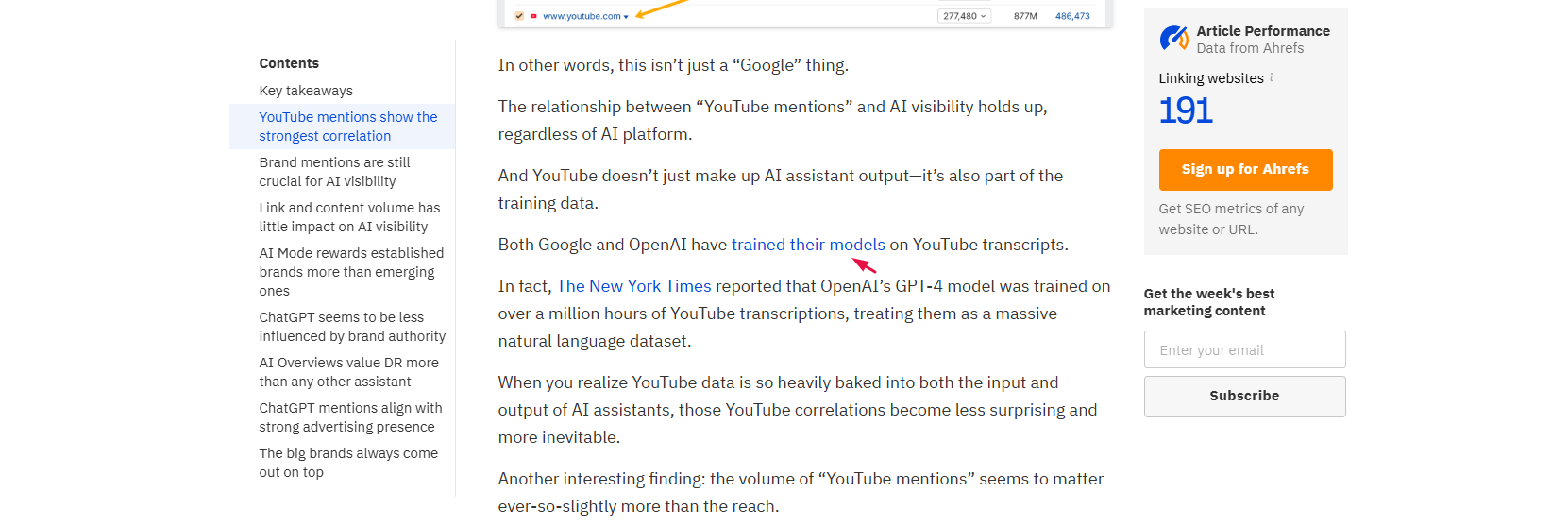
In the image above, an editorial link that sits naturally in the content, with no exact-match anchor text, is placed there because it adds real value for readers.
Link building remains the backbone of off-page SEO. But relevance, quality, and editorial context matter more than volume. One contextual link from a trusted site in your niche carries more weight than dozens of link placements on unrelated blogs and directories.
What works:
- Creating content others want to reference:
Original research, data studies, practical frameworks, and tools naturally earn links. Combine all these with targeted outreach to place it in relevant publications, and you can build authority faster than any mass campaign.
- Guest Posting:
Guest posting on niche-relevant blogs, industry publications, and authority sites in your vertical attracts referring domains your competitors haven’t yet tapped. That gap is where rankings shift.
- Contextual links:
Contextual links on niche-relevant sites consistently outperform scattered, high-volume placements. A small number of high-quality editorial links each month can drive meaningful results.
Pro Insight:
Referring domain diversity matters more than raw link count. The more unique, relevant sites that link to you, the stronger your rankings grow, as per Backlinko’s analysis.
2. Brand Mentions and Digital PR
A brand mention is your company, product, or brand name appearing on another website, with or without linking back to you.
In the image below, the MediaPost article mentions CNN and includes a link pointing to the original source.
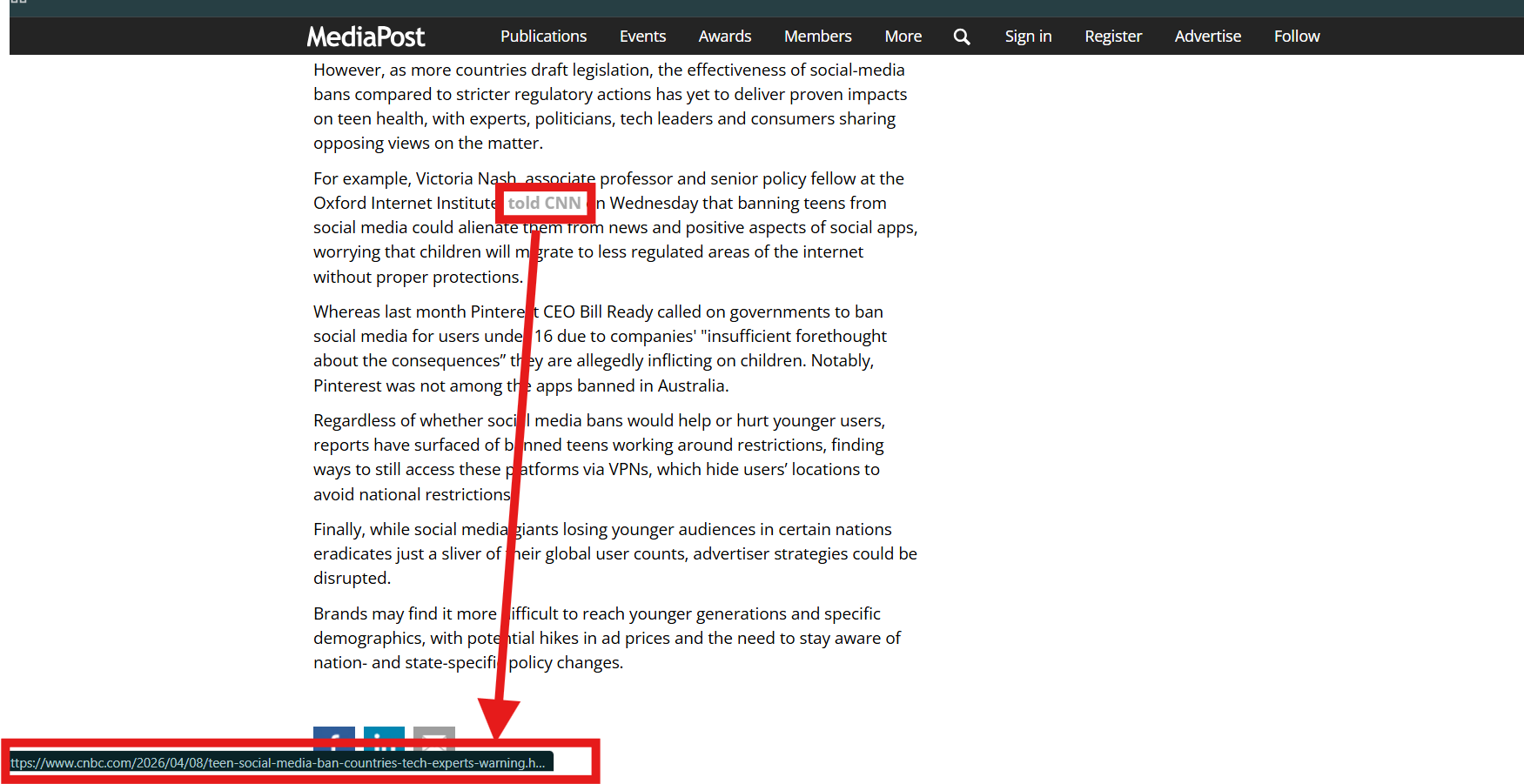
This link provides valuable information to MediaPost readers. This is what a brand mention with a backlink to the brand looks like.
The brand mention tactic is where the 2026 off-page strategy separates itself from what most teams did in 2023. ChatGPT, Perplexity, Gemini, and Google AI Mode build their understanding of your brand from how often you’re discussed across the web.
Muck Rack analyzed over one million links cited by AI tools and found that 82% came from earned media. Overall, 94% came from non-paid sources.
Owned content alone is often not enough without broader recognition across trusted sources.
What this means practically:
Invest in digital PR. Digital PR is the practice of earning coverage, citations, and links from news outlets and industry publications by giving journalists a reason to mention your brand.
The image below is a HubSpot page that regularly updates marketing statistics. This data is what journalists and content creators keep coming back to.
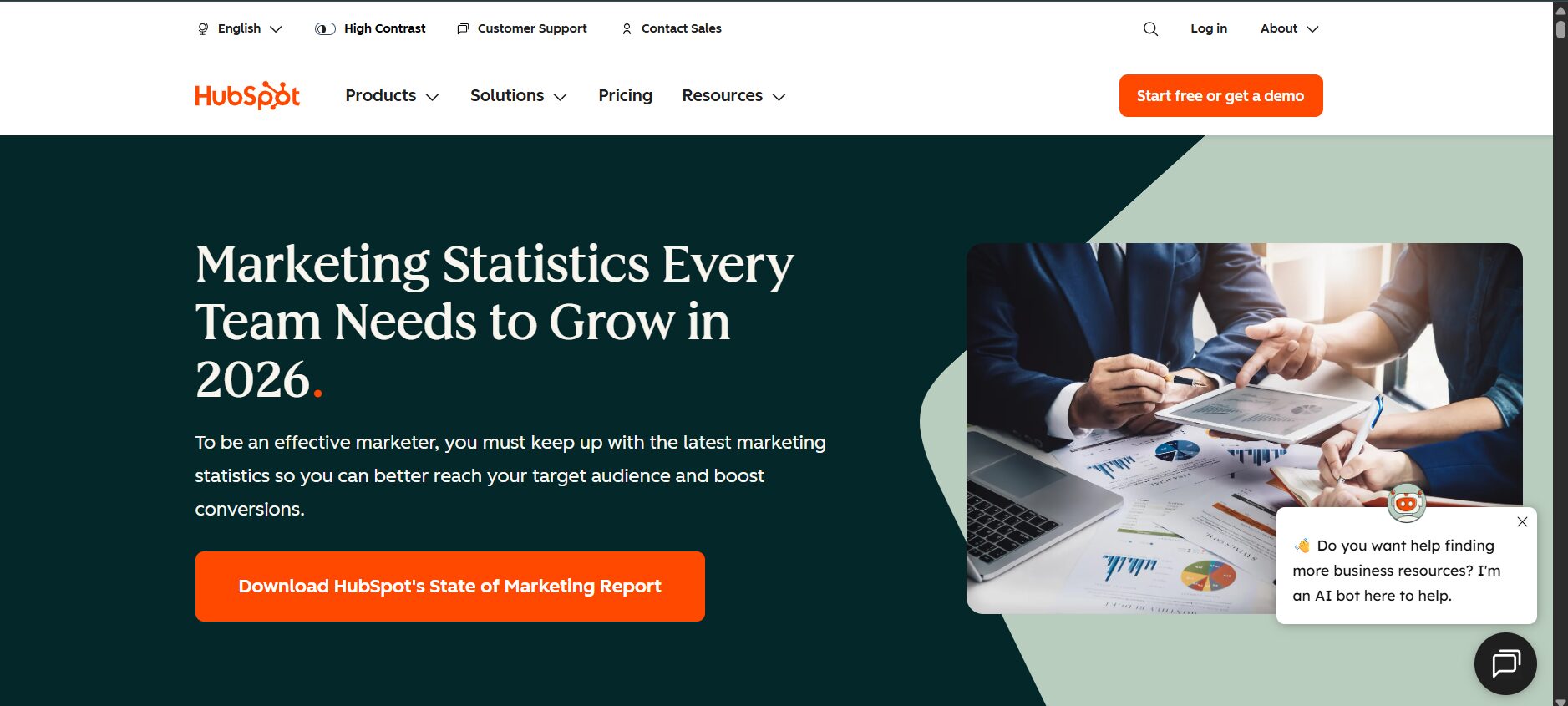
Publish original research for journalists’ reference. Get your experts quoted in industry publications. Respond to media queries through platforms like HARO.
You’re not just after a link. You want your brand mentioned in the right places so AI systems connect you with your category.
3.YouTube Presence
A YouTube presence in off-page SEO means using the platform to build authority and trust for your website beyond your own pages. Using YouTube for link building can strengthen your brand and support your overall SEO efforts.
The image shows a Google AI Overview result for a search related to Canva. Notice the sources panel on the right. It includes a YouTube video alongside blogs and articles.
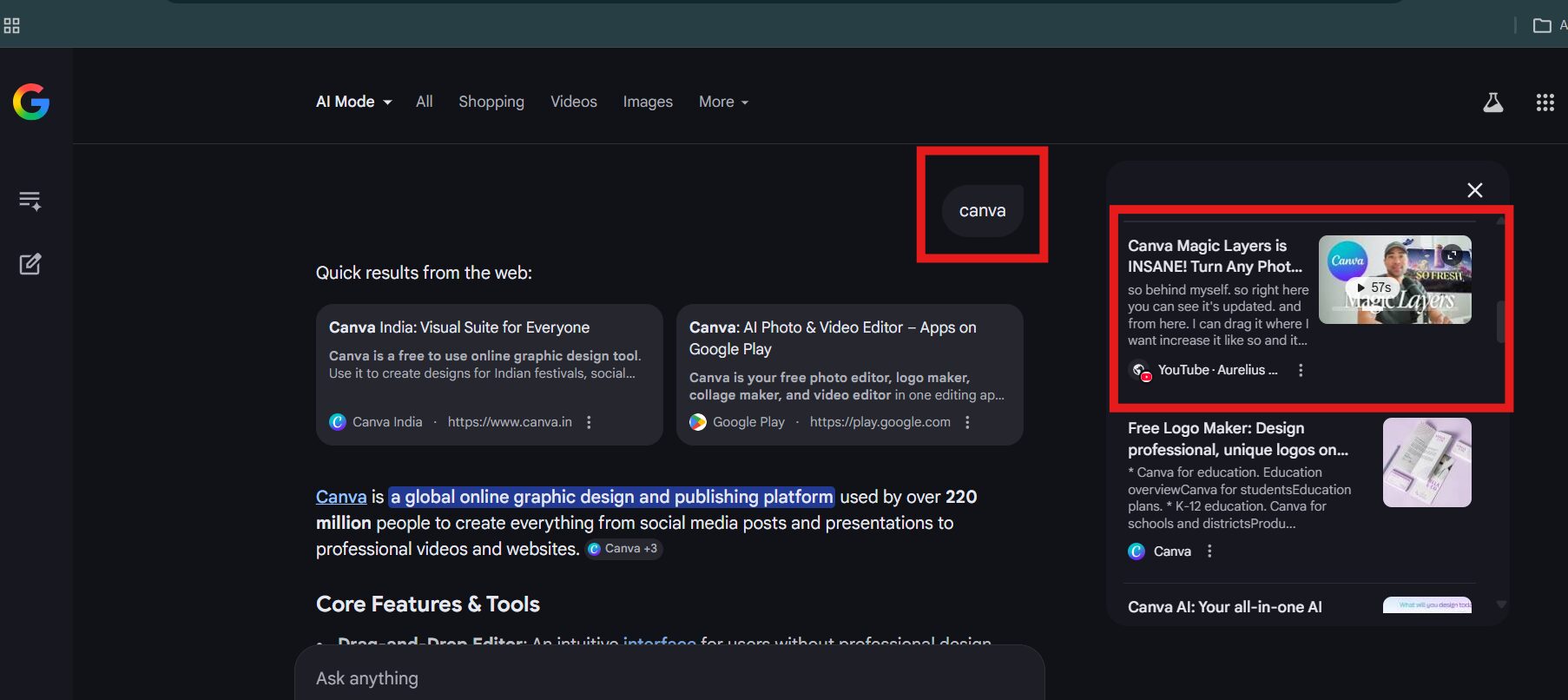
That’s Google’s AI pulling directly from video content to build its answer. This is exactly what happens when your brand has a YouTube presence. If your videos provide value to users, they become citable sources for Google and most AI-generated answer engines.
Most teams treat YouTube as a content channel. It’s actually one of the strongest off-page SEO signals you can build right now. It is the most-cited domain in Google AI Overviews and other AI-generated answer engines.
But here’s the part most people miss:
You don’t need a big YouTube channel to get cited in AI or Google. Brands that are mentioned in other creators’ video titles, descriptions, and transcripts gain AI visibility even when their own YouTube presence is modest.
Getting mentioned or talked about on YouTube matters more than how many videos you publish.
Start by getting your brand mentioned on existing channels your audience already watches. That alone moves the needle.
4. Reviews and Third-Party Mentions
A review is a public record of someone else’s experience with your brand, posted on a platform you don’t own or control.
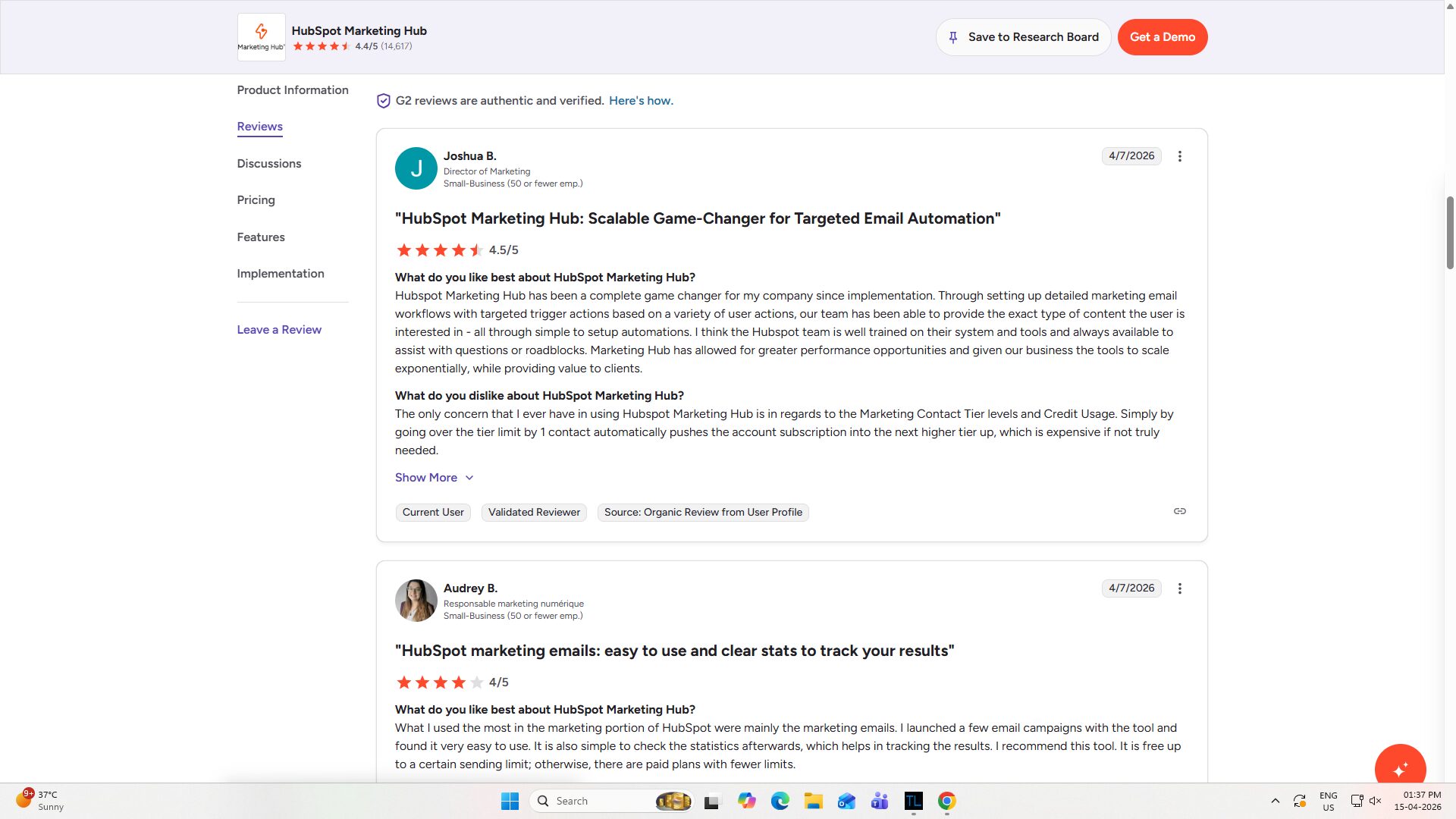
That’s what makes it valuable. Google and AI systems don’t just read your website. They read what others say about you across the web.
The more credible sources talking about your brand, the easier it is for both search and AI to treat you as the obvious answer in your category.
In B2B, you can focus on sites like G2, Capterra, and Clutch. G2 is frequently cited in B2B software-related queries across search and AI platforms.
Getting reviewed where your buyers look strengthens your authority for both people and AI systems, making recommendations.
For local and service businesses, Google reviews, Trustpilot, and industry directories do the same job. Recency and sentiment matter more than volume.
What this means practically:
Don’t wait for reviews to come in on their own. Build a process. The brands that consistently appear in AI recommendations have one thing in common.
Enough people have talked about them in enough places that AI systems no longer second-guess whether to recommend them.
5. Local SEO and Citations
A local citation is any mention of your business name, address, and phone number (NAP) on a website outside your own.
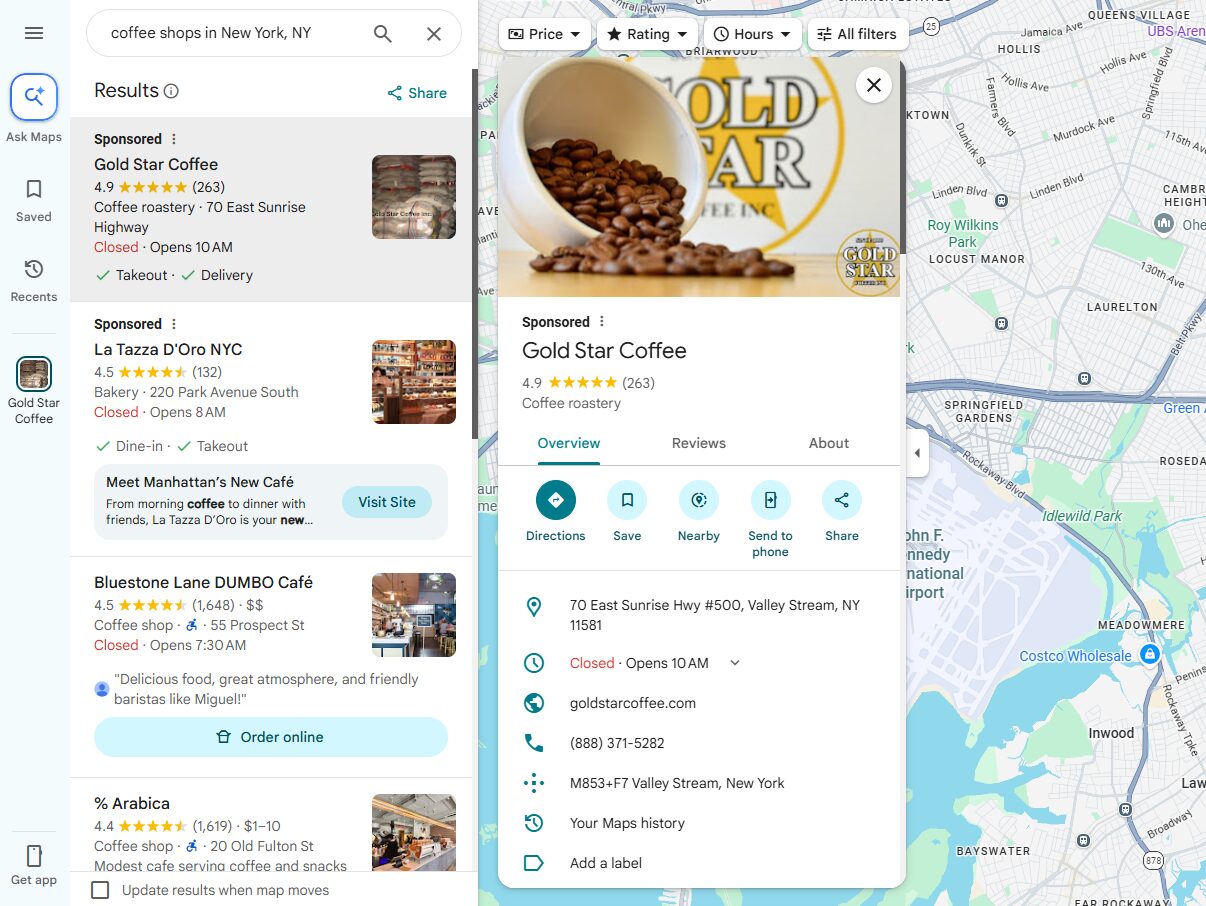
That sounds simple. But consistency is the whole game. Your NAP citations, Google Business Profile, and community mentions all tell Google the same story. Or they don’t. And when they don’t match, Google starts questioning whether your business is actually legitimate.
One version of your address on Google. A slightly different one on Yelp. A third variation on a local directory. That’s enough to create doubt. Every citation needs to match exactly, down to whether you write “Street” or “St.”
Local links carry real weight too. A mention from a regional news site, a city-specific blog, or a local chamber of commerce tells Google you’re genuinely part of that community. Not just a website claiming to serve it.
Start by auditing every directory your business appears in. Fix the inconsistencies first. Then build local links from community organizations and regional publications.
6. Social Signals
A social signal is any engagement your content receives on social platforms, shares, comments, mentions, and reposts, that indirectly influences your off-page authority.
Social shares don’t directly affect Google rankings. But that framing misses what’s actually happening. Every share puts your content in front of someone who might write about it, link to it, or reference it in their next article.
In the image below, a LinkedIn post mentions Ahrefs and includes a link pointing to its website. This is how you can earn backlinks from social media platforms.
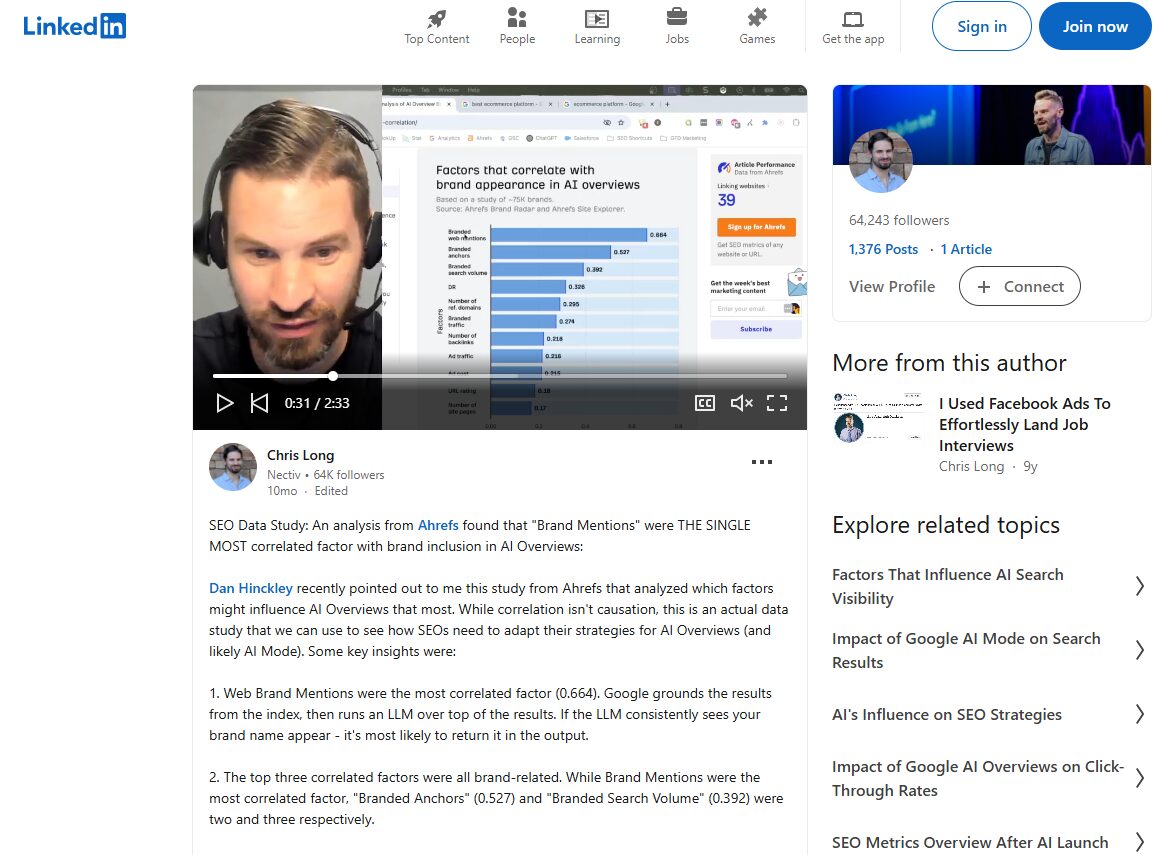
Social signals can help you earn more brand mentions and brand searches.
That’s the mechanism. The share starts the chain. The link or mention that follows is where the SEO value lands.
Reddit threads, LinkedIn posts, and X discussions referencing your content do something else too. They drive brand searches. And brand search volume is something Google quietly pays attention to.
The more people search for you by name, the more Google treats you as an authority worth surfacing. A community talking about you is worth more than a campaign targeting you.
Don’t chase likes and follower counts. Put your best content where your audience actually spends time and let the right people find it.
How Off-Page SEO Works for AI Search
AI systems don’t cite everything they find. They prioritize sources that appear consistently across the web, such as backlinks, brand mentions, reviews, and media coverage.
Here’s what the data shows about AI-specific off-page priorities:
- ChatGPT cites only about 15% of the pages it retrieves, as per Search Engine Land analysis.
- SE Ranking study shows that sites with over 32,000 referring domains are roughly 3.5 times more likely to be cited.
- Google AI Overviews prefer content from sites with strong brand signals
- Perplexity cites multiple sources per answer and favors unique data points not found elsewhere.
- Semrush data shows that approximately 93% of searches within Google’s “AI Mode” result in zero clicks to external websites.
The Takeaway:
Off-page SEO builds the signals that make your brand visible across platforms. The more consistently your brand appears on credible third-party sites, the more likely you are to be cited.
Common Off-Page SEO Mistakes to Avoid
Avoid these common off-page SEO mistakes:
Chasing Quantity Over Relevance
50 links from random, irrelevant sites won’t outperform five contextual placements in your niche. Both Google’s ranking system and AI tools reward topical relevance.
Ignoring Brand Mentions
If you’re only building links and doing zero digital PR, you’re missing out on a huge chunk of AI visibility. In 2026, brand mentions are just as important as links. If your name is being dropped in expert circles, AI is far more likely to name you in its answers.
Paying for Links on Networks that Google Already Knows About
Yes, buying links on public networks still works for some in the short term, but it’s a losing bet. These sites eventually get flagged, and any authority they gave you can disappear overnight. It’s a “ticking clock” strategy that isn’t worth the risk to your domain.
Building Links to Your Homepage and Nowhere Else
Don’t send every link to your front door. Distribute them across your most helpful, specific pages. A strong internal linking structure will then move that authority to wherever it needs to go.
Forgetting About Freshness
AI citation decay is real. Content that hasn’t been touched in months loses its spot in AI answers. Plan to refresh your most valuable pages every 90 days to stay at the top of the pile.
How to Measure Off-Page SEO Results
Off-page seo results are not seen instantly. Most people see improvement in rankings within 1-6 months of consistent link acquisition. You can measure off-page SEO results by tracking the following metrics:
| Metric |
What to Track |
|---|---|
| Referring domains | The total number of unique sites linking to you and the growth rate (track this in Ahrefs or Semrush) |
| Brand mention volume | How often people are actually talking about you (use Google Alerts, Ahrefs Brand Radar, or Mention) |
| AI citation rate | How often your brand is named in AI-generated answers for your target keywords( use Ahrefs Brand Radar and similar tools ) |
| Domain authority/rating | Not a Google metric, but directionally useful to check your overall profile strength. |
| Organic traffic and Keyword rankings | The ultimate proof that your off-page work is driving results. |
| Referral traffic from linked pages | Shows which placements actually send visitors. |
Is it worth it? Absolutely. Brands that invest in high-quality link building strategies tend to see stronger and more sustainable organic traffic than those that don’t.
What Happens When You Get Off-Page SEO Right
The brands showing up consistently in competitive search results, getting cited in AI Overviews, and appearing when a potential buyer asks ChatGPT about their category didn’t get there by accident.
They treated off-page SEO as a long-term growth channel. Not a one-time campaign.
Build your link building strategy around earning authority across the channels that frequently get cited or surfaced by AI systems. Links, brand mentions, reviews, YouTube visibility, and earned media.
Do that consistently, and the results compound in ways that are hard for competitors to reverse-engineer. That’s the real advantage.
Want to improve your off-page SEO?
We help you build authority with relevant, high-quality backlinks.
What is the difference between off-page SEO and link building?
Link building is one tactic within off-page SEO, and probably the most well-known. But off-page SEO also covers brand mentions, digital PR, social signals, customer reviews, local citations, and YouTube visibility.
Think of link building as the engine and off-page SEO as the full vehicle. The engine matters, but it won’t get you far on its own.
Does off-page SEO still matter with AI search?
Yes. AI systems like ChatGPT, Google AI Overviews, and Perplexity rely on external signals to decide which brands to cite. If your off-page presence is weak, AI systems won’t know your brand well enough to recommend it.
How long does it take for off-page SEO to show results?
To be honest, there is no fixed number of days or months. Your timeline depends on your current authority, the quality of the links you earn, and the strength of your on-page foundation.
But most seo teams see measurable off-page SEO impact within 3-6 months of consistent link acquisition, whereas competitive niches take longer.
Off-page SEO is a long-term investment. Treat it like one.
What are the most effective off-page SEO techniques in 2026?
Most effective tactics include:
- Editorial link building from niche-relevant sites
- Digital PR that generates brand mentions in authoritative publications
- YouTube visibility through your own channel and mentions in other creators’ content
- Customer reviews on trusted platforms
- Consistent local citations.
Backlinko’s case studies show all 3 paths work:
- Being a data source
- Broken link building
- PR-driven surveys
The right mix depends on your business model and where your audience already spends time.
Can you do off-page SEO without buying links?
Yes, you can do off-page SEO without buying links, and it’s a more sustainable path.
Backlinko’s own growth was built on original research, strategic guest posting, and brand partnerships, not paid link networks.
Earned links from strong content, digital PR, and community engagement carry less risk and compound more effectively over time.
The most durable off-page strategies focus on being worth linking to and worth mentioning, then making it easy for the right people to do both.