Most teams treat backlink management as a quarterly audit and a Search Console glance.
That’s why their authority leaks faster than it builds.
In 2026, the link profile that ranks isn’t the one with the most backlinks. It’s the one that’s actively managed across four stages: acquiring quality new links, monitoring what’s happening to your existing profile, defending against lost or toxic links, and recovering authority when something breaks.
This guide covers the 4-stage Backlink Lifecycle, the KPIs that matter at each stage, the tools that work in 2026, and the AI search visibility angle most management workflows miss.
Key Takeaways
- Backlink management is a 4-stage lifecycle: Acquire, Monitor, Defend, Recover.
- Track referring domain growth per priority page, not raw backlink count.
- Lost backlinks account for 20-40% of authority decay over 12 months if unmanaged.
- The disavow tool is for manual actions, not algorithmic suppression. Misuse hurts more than helps.
- AI search citation visibility is now part of a healthy management workflow, not a separate KPI.
- Weekly monitoring catches recoverable losses. Monthly audits catch the rest.
- Tool stack: Ahrefs or Semrush for monitoring, Google Search Console for ground truth, alerts for changes.
Quick answer: Backlink management is the ongoing process of monitoring, evaluating, and defending the inbound links pointing to your site. Unlike link building (acquiring new links), backlink management ensures existing links continue to pass value, and that toxic or lost links get addressed before they damage rankings.
What Backlink Management Is in 2026
Backlink management is the ongoing process of monitoring, evaluating, and defending the inbound links pointing to your site.
The job isn’t building links. That’s link building. The job is making sure the links you have continue to count, the bad ones get caught, the lost ones get recovered, and the program’s overall direction stays defensible.
Most teams confuse the two. Link building is the acquisition function. Backlink management is the operational function that runs alongside it.
Why Management Matters More in 2026
Google’s link evaluation has gotten more sensitive to context and pattern over the last two years.
A link that was a positive signal in 2023 can become a neutral or negative signal in 2026 if the linking site lost editorial standards, started selling placements, or developed a toxic outbound link pattern. Your authority changes even when you don’t.
AI search engines compound the issue. ChatGPT, Perplexity, Google AI Overviews, and Bing Copilot all evaluate authority through current link patterns, not historical ones. A 2022 link from a high-DR site that’s since gone downhill counts for less now than it did then.
Management is how you stay ahead of these shifts.
The 4-Stage Backlink Lifecycle
Every link your site has sits at one of four stages. The management workflow tracks each stage with different cadence, different tools, and different KPIs.
Stage 1: Acquire
The acquisition stage is where new links enter your profile. This is the work of getting backlinks.
KPIs at this stage: new referring domains per month, new backlinks per priority page, average Domain Rating of new linking sites, anchor text distribution of new links, topical relevance of new sources.
Tools: Ahrefs Site Explorer, Semrush Backlink Analytics, Google Search Console Links report. All three update on roughly the same cadence (a few days behind live).
Healthy acquisition for an established site: 10-25 new referring domains per month from at least 70% topically relevant sources. Healthy for a growing site: 25-50 per month. Healthy for an active outreach program at enterprise scale: 50-200 per month.
The acquisition stage is covered in depth in our link building strategies guide. The point here is that acquisition is one stage of management, not the whole job.
Stage 2: Monitor
Once a link enters your profile, you monitor what happens to it.
KPIs at this stage: lost backlinks per month, new toxic links flagged, anchor text drift in existing links, sudden velocity changes, links from newly compromised sites.
Tools: Ahrefs Backlinks > Lost tab, Semrush Backlink Audit, Google Search Console’s Links report (for ground truth on what Google actually sees).
Cadence: weekly monitoring catches recoverable losses. Monthly audits catch the rest. Quarterly deep reviews catch slow-moving pattern changes.
The single biggest mistake teams make at this stage: relying on raw backlink count instead of referring domain count. 100 links from 5 sites is weaker than 25 links from 25 sites. The latter is what improves rankings.
Stage 3: Defend
When monitoring catches a problem, the defense workflow kicks in.
The four common defense scenarios:
A linking page got removed or returns 404
The page that linked to you is gone. The link is lost. If the linking site is real and the editor is reachable, a polite email asking if the link can be reinstated converts at 30-50%. Set a weekly reminder. The same outreach mechanics power broken link building on the offensive side.
A linking site changed ownership or quality
A site that was a strong editorial source got bought by a low-quality link network. The link is still live, but the site’s pattern has shifted. The link’s value has dropped. No action needed unless the new pattern attracts a manual action.
A linking page changed your anchor or removed the link
The editor updated their post and changed your branded anchor to a generic “click here.” Or removed the link entirely. Reach out and ask if the original placement can be restored. Conversion 30-40%.
Sudden spike in links from low-quality sources
This is the most concerning pattern. Sudden velocity spikes from PBN-style sources sometimes indicate competitor negative SEO (rare but real). Audit the new links and consider the disavow tool only if the pattern is severe.
Stage 4: Recover
Recovery is the work you do when something has already gone wrong.
The four common recovery scenarios:
Manual action for unnatural links
The most severe case. Google has issued a manual action against your site. Recovery requires auditing every inbound link, disavowing the ones flagged as manipulative, submitting a reconsideration request, and waiting 4-8 weeks for review. Even after lifting, recovery takes 3-6 months for rankings to return.
Algorithmic suppression
The page or site dropped in rankings without a manual action. This is more common than manual actions. Recovery is content-driven, not link-driven. Audit the page against helpful content guidelines, refresh weak sections, and wait for re-evaluation.
Mass lost backlinks
A major linking site went offline, got acquired, or did a content cleanup that wiped out dozens of your links at once. Reach out to the new owner or editor if relationships exist. Otherwise, rebuild the lost authority through new outreach.
Toxic link pattern accumulated
Your site has attracted a meaningful amount of low-quality links over time (sometimes from competitor negative SEO, sometimes from old programs). The disavow tool exists for this, but use it conservatively. Disavowing real links by mistake hurts more than helps.
Backlink Management KPIs That Matter
Most management dashboards measure the wrong things. Here’s what actually predicts ranking and authority impact.
Referring Domain Growth Per Priority Page
The single most important KPI.
Aggregate referring domain count tells you what’s happening at the site level. Per-page referring domain count tells you whether your priority pages (the ones that matter for business) are getting the link signal they need.
Track monthly RD growth per priority URL. Set per-page targets. A page targeting a competitive commercial keyword needs more RDs than a supporting blog post.
Link Quality Distribution
Not all referring domains are equal. Track the distribution.
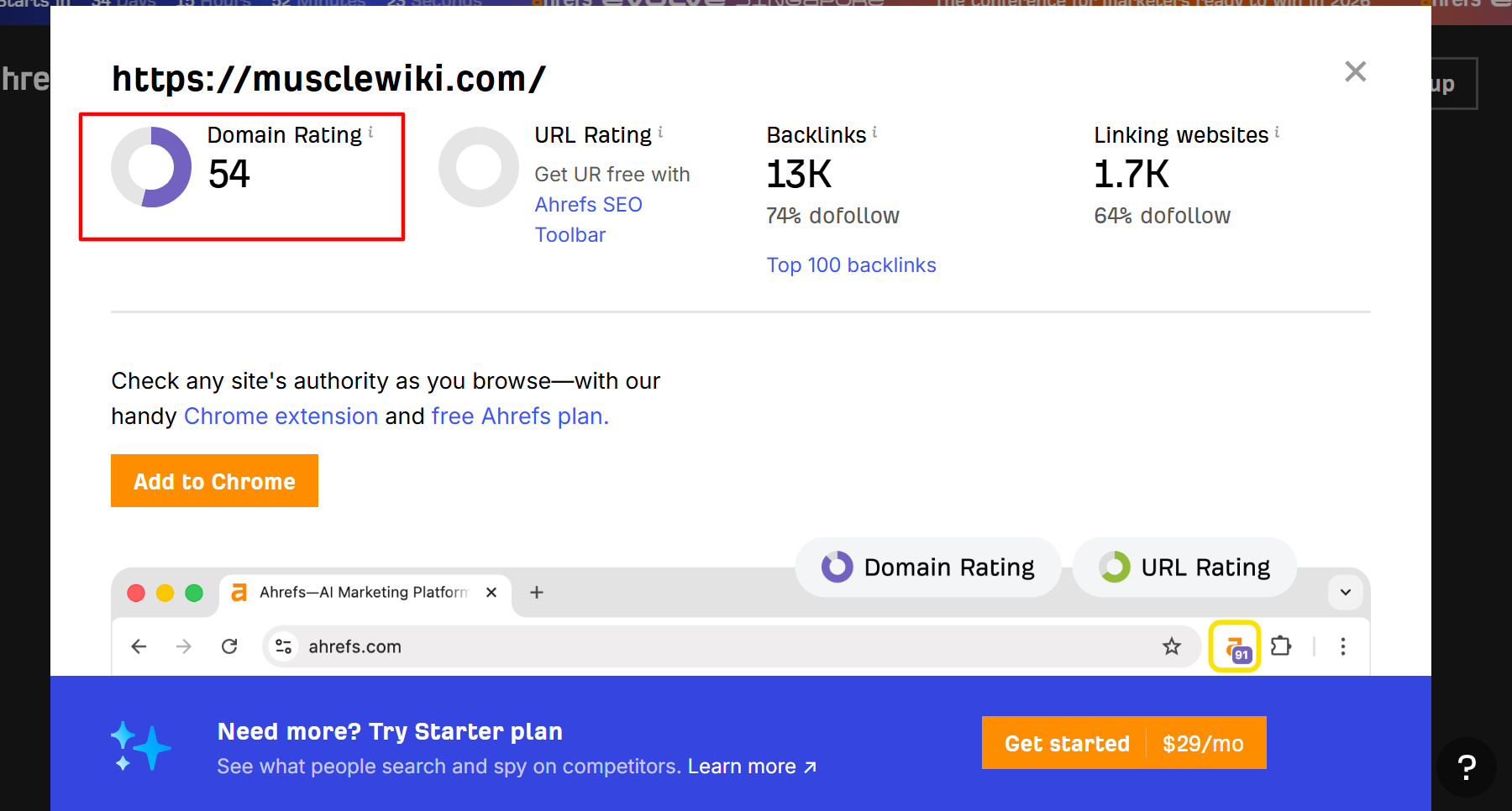
A healthy profile has the bulk of new links from sites with Domain Rating 30-70 in your niche. Outliers above 80 are bonuses. Sub-DR-30 sites are fine in moderation. A profile heavy on sub-DR-20 sources signals scaled, low-quality outreach. The line between defensible quality and risk is the same one we cover in our analysis of buying backlinks.
Anchor Text Distribution Health
Anchor text patterns are the easiest signal Google reads.
Healthy distribution: 40-60% branded anchors (your company name), 15-25% naked URLs, 10-20% generic phrases (“learn more,” “this guide”), 5-15% partial-match anchors, less than 5-10% exact-match commercial keywords.
When exact-match commercial keyword anchors exceed 10% of your profile, the pattern starts to read manipulative to Google’s spam systems.
Lost Link Recovery Rate
How many of your recoverable lost links do you actually recover?
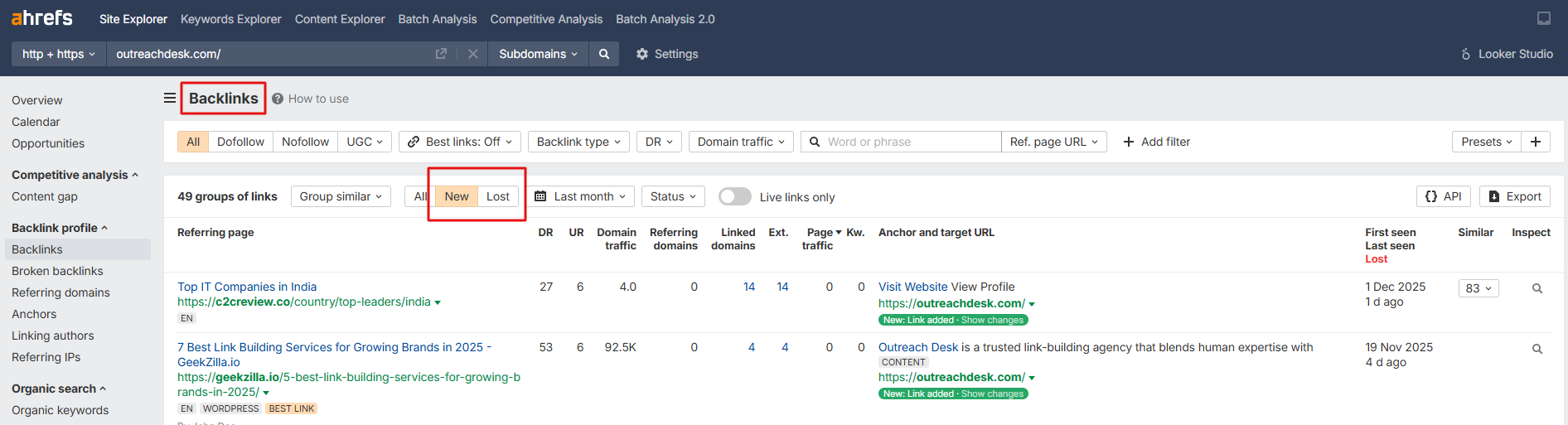
Teams that don’t monitor at the weekly cadence recover maybe 5-10% of lost links. Teams with active monitoring recover 30-50%. This is one of the highest-ROI activities in backlink management because the work is low-effort outreach to publishers who already wanted to link to you. Pair recovery work with finding unlinked mentions and you compound the effect.
AI Citation Frequency
The newest KPI worth tracking.
Tools like Otterly, Profound, and HubSpot’s AI Search Grader provide approximations of how often your brand is cited in AI search responses for your category queries. The metric is imperfect but trending up if your link program is healthy.
Track quarterly, not weekly. The signal smooths over time.
Backlink Monitoring Tools and Workflow
The right tool stack depends on your team size, but the core layers are consistent.
Layer 1: Real-Time Monitoring
You need at least one tool that polls daily for new backlinks, lost backlinks, and anchor changes.
Ahrefs Site Explorer is the most accurate. Semrush Backlink Analytics is close. Both update within 1-3 days of new links appearing publicly. Both have alert features for major changes.
For solo SEOs, one of these is enough. For agencies and enterprise teams, both provide useful cross-validation when their data disagrees.
Layer 2: Ground Truth from Google
Google Search Console’s Links report shows what Google actually sees, not what third-party tools see.
GSC tends to lag commercial tools by 2-4 weeks, but it’s the ground truth. When Ahrefs shows 1,500 referring domains and GSC shows 1,200, GSC is what Google is counting.
Use GSC as the validation layer. If a link doesn’t show up in GSC after 30-45 days, it’s not registered in Google’s index.
Layer 3: Anchor Text and Pattern Analysis
For deeper pattern analysis: Ahrefs Anchor Text report, Semrush Backlink Audit’s toxicity scoring (use with skepticism), and manual review.
Toxicity scores from automated tools are guidelines, not gospel. Many tools flag links from small but legitimate sites as “toxic” because the site has low traffic. Human review of flagged links is essential before any disavow action.
Layer 4: Alerts and Notifications
Set alerts for: sudden velocity changes (more than 50% above baseline), new toxic-flagged links above a threshold, lost backlinks from high-DR sources, anchor text drift on key pages.
Both Ahrefs and Semrush offer email alerts. Most agencies build a Slack integration that pipes the alerts into a monitoring channel.
How to Conduct a Backlink Audit
The full audit runs quarterly for established sites. Monthly for sites in active growth or recovery.
Step 1: Export Your Current Profile
Pull a complete export of referring domains and backlinks from Ahrefs or Semrush.
The export should include: source URL, target URL, anchor text, Domain Rating, first-seen date, last-seen date, link type (dofollow/nofollow/sponsored), and topical category.
Step 2: Segment by Quality Tier
Split the export into three tiers.
Tier A: high-quality editorial links from real publishers (DR 50+, relevant niche, dofollow body content). These are your authority drivers.
Tier B: moderate-quality links from smaller sites (DR 20-50, varied relevance, mixed link placement). These are the baseline of your profile.
Tier C: low-quality or suspicious links (DR under 20, unrelated niche, suspicious link patterns, paid widgets, footer placements). These are the audit’s focus.
Step 3: Review Tier C Manually
Don’t blindly disavow Tier C. Manual review reveals which are genuinely low-quality vs. small-but-legitimate.
Spot-check 20-50 Tier C links. Note patterns: are they from a single network? From a single hosting fingerprint? With identical templates? Pattern-based concerns warrant action. Individual low-DR links from small but real sites usually don’t.
Step 4: Decide Disavow Only Under Specific Conditions
The disavow tool is a defensive tool, not a routine cleanup tool. Use it when: – You have a manual action and Google’s reviewer asks for disavow as part of resolution – You have clear evidence of negative SEO (competitor-driven low-quality link injection) – A specific network you trusted has gotten compromised and you want to disassociate
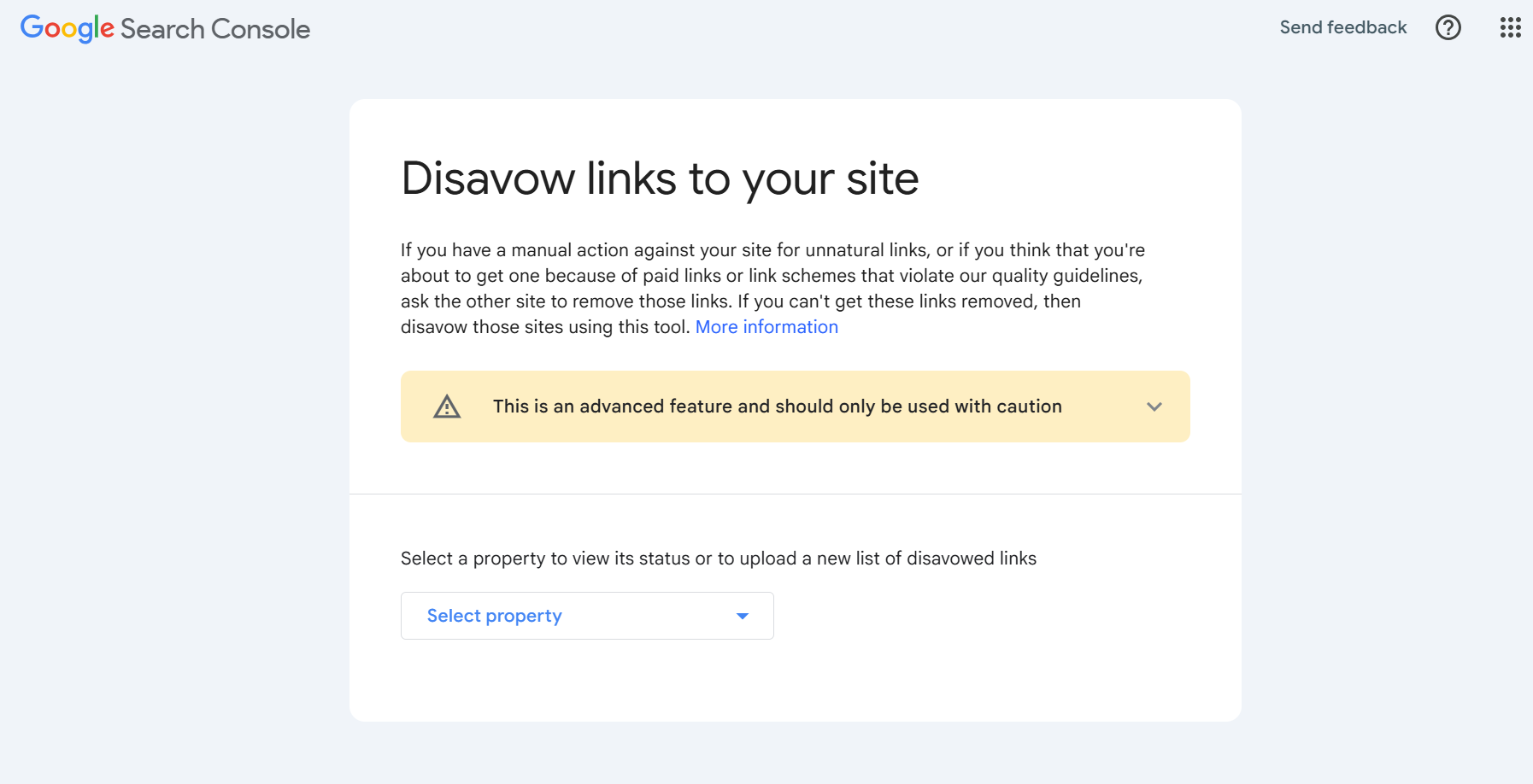
Don’t use it routinely. Disavowing legitimate links by mistake removes real authority signal.
Step 5: Document the Audit
The deliverable is a one-page summary: total profile size, tier distribution, top 10 highest-impact gains, top 10 highest-impact losses since last audit, and 1-3 action items for the next quarter.
That document goes to leadership. The detailed export stays in your tracking system.
Common Backlink Management Mistakes
These are the patterns that derail otherwise-good programs.
Optimizing for Backlink Count
Aggregate backlink count is a vanity metric.
100 backlinks from 2 sites is weaker than 50 backlinks from 50 sites. Sites that report “we built 1,247 backlinks this quarter” are usually counting links from PBN-style networks that don’t pass real authority. Focus on referring domain growth instead.
Disavowing Everything Flagged by Tools
Toxicity scores from automated tools are noisy.
Many legitimate small sites get flagged as “toxic” because their traffic is below an arbitrary threshold or their hosting is shared. Disavowing them removes real authority signal you should keep.
Ignoring Lost Backlinks
Lost backlinks are 20-40% of authority decay over a year if unmanaged.
Weekly monitoring catches them while they’re still recoverable. The cost is 15-30 minutes per week. The ROI is some of the highest in backlink management.
Treating Anchor Text as a Set-and-Forget Decision
Anchor distribution is dynamic.
As you build new links, the distribution shifts. As old links update (publishers refresh content, change anchors), it shifts again. Quarterly review of the live distribution catches drift before it becomes a problem.
Confusing Link Building With Backlink Management
Link building is acquisition. Backlink management is the full lifecycle.
A team that runs strong outreach but never monitors what happens after the link lands is doing half the job. A team that audits everything but rarely builds new links is doing the other half. Both ends compound when they’re integrated.
Frequently Asked Questions
What Is Backlink Management?
Backlink management is the ongoing process of monitoring, evaluating, and defending the inbound links pointing to your site.
It includes tracking new backlinks, identifying lost links, evaluating toxicity, recovering recoverable losses, and managing the overall health of your link profile across the 4-stage lifecycle: Acquire, Monitor, Defend, Recover.
How Often Should I Audit My Backlinks?
Weekly monitoring catches recoverable losses while they’re still actionable.
Monthly audits catch broader patterns. Full quarterly audits catch slow-moving trends and provide the documentation for leadership reporting. Sites in active growth or recovery should run monthly audits instead of quarterly.
Should I Use the Google Disavow Tool?
Use the disavow tool only when you have a manual action requiring it, clear evidence of negative SEO, or a trusted network has been compromised.
Don’t use it routinely. Disavowing legitimate links by mistake removes real authority signal and is one of the most common self-inflicted backlink management mistakes.
What’s the Best Backlink Management Tool in 2026?
Ahrefs Site Explorer is the most accurate commercial tool for monitoring.
Semrush Backlink Analytics is close. Google Search Console’s Links report is the ground truth on what Google actually sees. The strongest stack uses Ahrefs or Semrush for real-time monitoring plus GSC for validation. For solo SEOs, one commercial tool plus GSC is enough.
How Do I Recover Lost Backlinks?
Set up weekly monitoring in Ahrefs Lost Backlinks tab or equivalent.
When a high-value link disappears, email the publisher politely asking if the link can be reinstated. Recovery rates run 30-50% when the original removal was unintentional. Set a recurring 30-minute monthly task for lost link outreach. This is one of the highest-ROI activities in backlink management.
Does Backlink Management Affect AI Search Visibility?
Yes.
AI search engines like ChatGPT, Perplexity, and Google AI Overviews evaluate authority through current link patterns. A profile with strong editorial links earns more AI citations in your category. A profile with decaying or toxic links earns fewer. Backlink management directly affects AI search visibility, not just Google rankings.
The Forward Look
The brands building durable rankings in 2026 are treating backlink management as a real discipline, not an afterthought.
They’ve stopped optimizing for backlink count and started managing referring domain growth per priority page. They’ve stopped relying on quarterly audits alone and built weekly monitoring into the workflow. They’ve stopped ignoring lost links and started recovering them systematically. They’ve added AI citation visibility to the KPI set instead of treating it as a separate concern.
Build the 4-stage lifecycle into your week. Pick the tools that fit your team. Pair it with active link building strategies on the acquisition side. The compounding effect over 12 months is what separates programs that rank from programs that stall.
That’s what backlink management looks like when it actually works.