Curated links are backlinks you add inside a published article on a live site.
Many SEO professionals use curated links (also known as niche edits or link insertions) to strengthen their backlink profiles.
These links can grow your organic traffic over time when publishers place them on relevant, high-quality pages within an existing article.
That article was live before your link arrived. The page has already earned Google’s trust, picked up inbound links, and built a readership. Now your link borrows that.
Key Takeaways
- Publishers insert curated links into already-indexed, already-trusted pages, unlike guest posts, which start from zero.
- Reputable placements cost $100 to $500 and go live in 1 to 3 weeks.
- Ranking movement typically shows in 4 to 8 weeks.
- Real traffic on the host page matters more than Domain Rating.
- A curated link is only as valuable as the page it lives on. Relevance, editorial standards, and a clean outbound link profile determine its SEO value.
What Are Curated Links?
A curated link is a backlink (a link from another website to yours) that a publisher adds to an already-published article. The host page is live, indexed, and has earned Google’s trust. It has picked up inbound links and built a readership, sometimes over years.
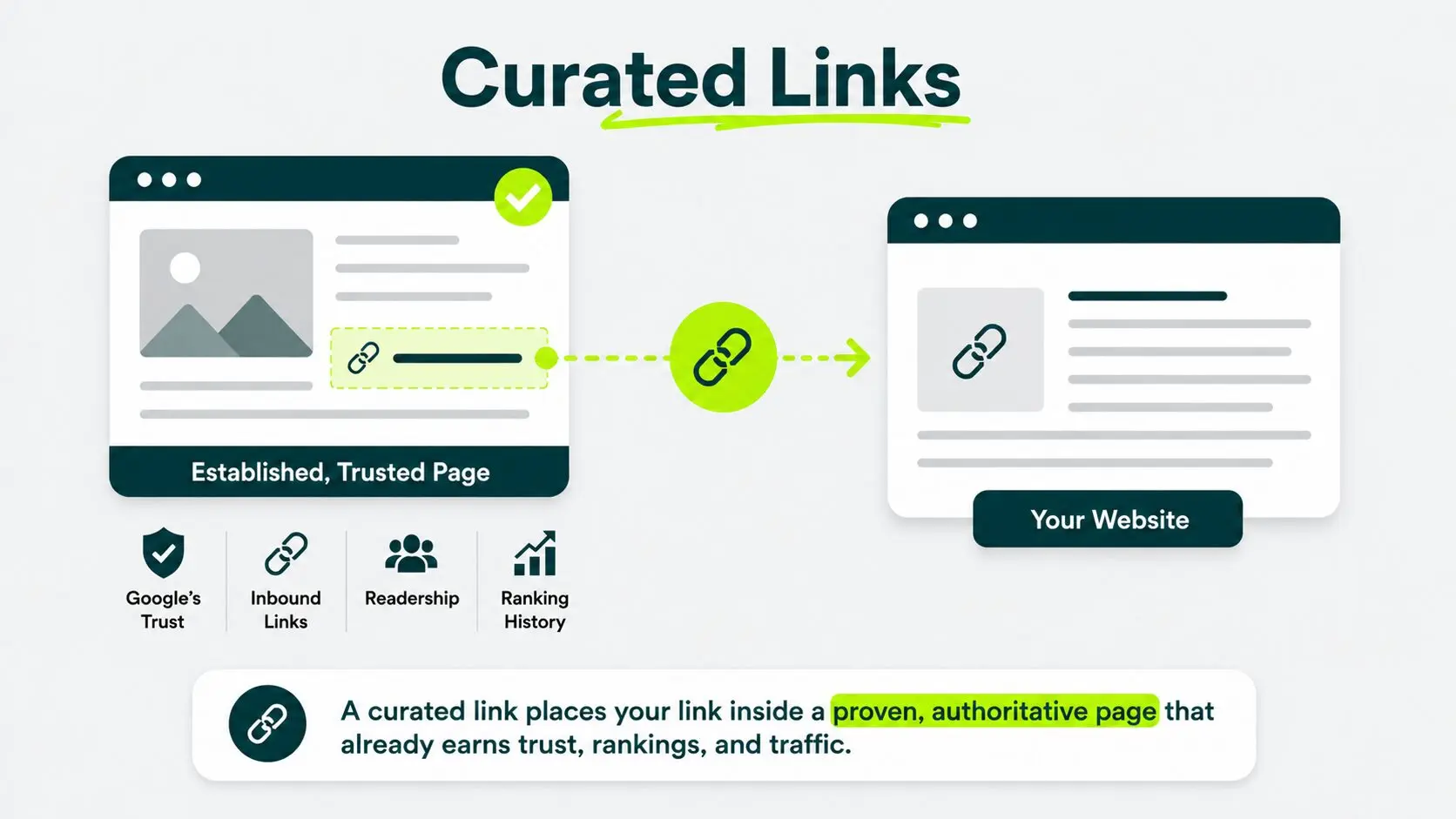
This is how curated links work: a site owner or link building service reaches out to a publisher and proposes a small edit to an existing article. If the publisher agrees, they insert your link into the existing text.
Publishers rarely create a new article just to include a link.
Think of it this way. A guest post is like opening your own booth at someone else’s event. A curated link is like getting your business featured at a booth people are already visiting.
At Outreach Desk, curated links are the placements we secure by reaching out to publishers with relevant, already-indexed articles and negotiating an editorial addition.
The link fits naturally within the content, and the surrounding text provides context.
Practitioners sometimes call these contextual backlinks or in-content links.
Curated Links vs. Niche Edits: Same Thing or Different?
Curated links and niche edits are the same thing.
Both mean inserting a link into an existing, published article on a third-party site.
The difference is how different providers name the technique.
| TERM | HOW IT’S USED |
|---|---|
| Niche edits | Became the standard practitioner term in the mid 2010s, used in SEO communities. |
| Curated links | Curated links emerged as an alternative. Agencies preferred it, seeking a term that emphasized editorial relevance over the act of editing. |
| Link insertions | Another name some providers use for the same technique. |
Names are different because the name often reflects the audience:
- “Niche edits” is practitioner shorthand.
- “Curated links” tends to appear in copy that targets business owners who might be skeptical of the word edit.
If a vendor offers curated links, niche edits, or link insertions, ask about their process.
If it involves reaching out to publishers and inserting a link into existing content, it’s the same product regardless of label.
The quality of the placement is what matters, rather than the name.
Why Curated Links Work: The Built-In Authority Advantage
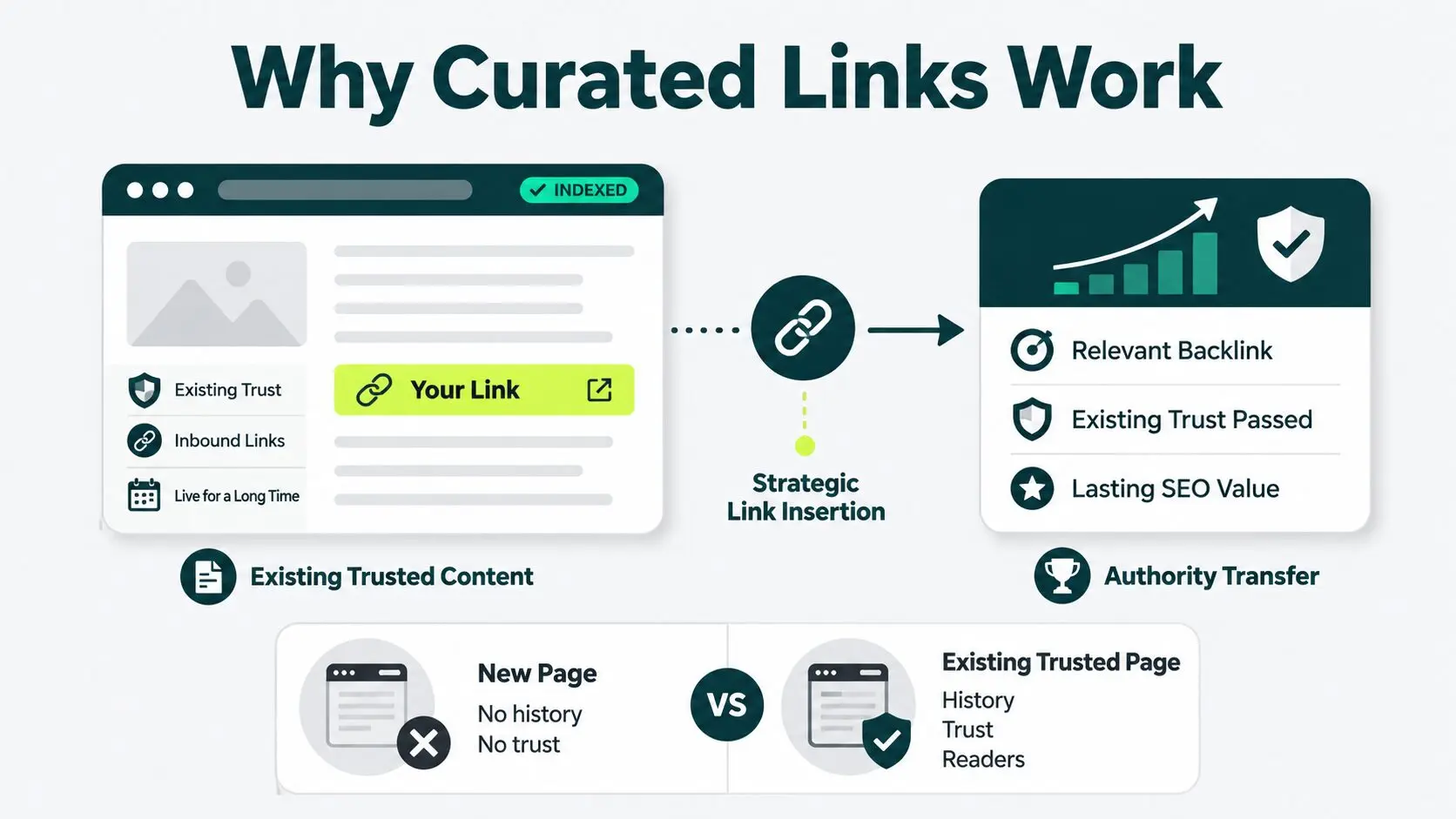
Curated links work for three reasons. The target page already has established authority. Google picks it up faster, and the link sits in real context.
When Google evaluates a link, it doesn’t just look at the link itself. It looks at the page the link lives on.
A curated link sits in a page that has already undergone that evaluation process. It has inbound links pointing to it, real readers have visited it, and Google has indexed and evaluated its content.
You’re borrowing the trust that page has already earned.
The Page Already Has Authority
An article a site published two or three years ago has often built up natural backlinks from other sites. It carries a ranking history, and Google has revisited and indexed it multiple times over the years.
The screenshot below is from an earlier version of HubSpot’s blog “12 Powerful CRMs and Use Cases for a Growing Business”, retrieved from the Wayback Machine. At that point, this section didn’t include a link.
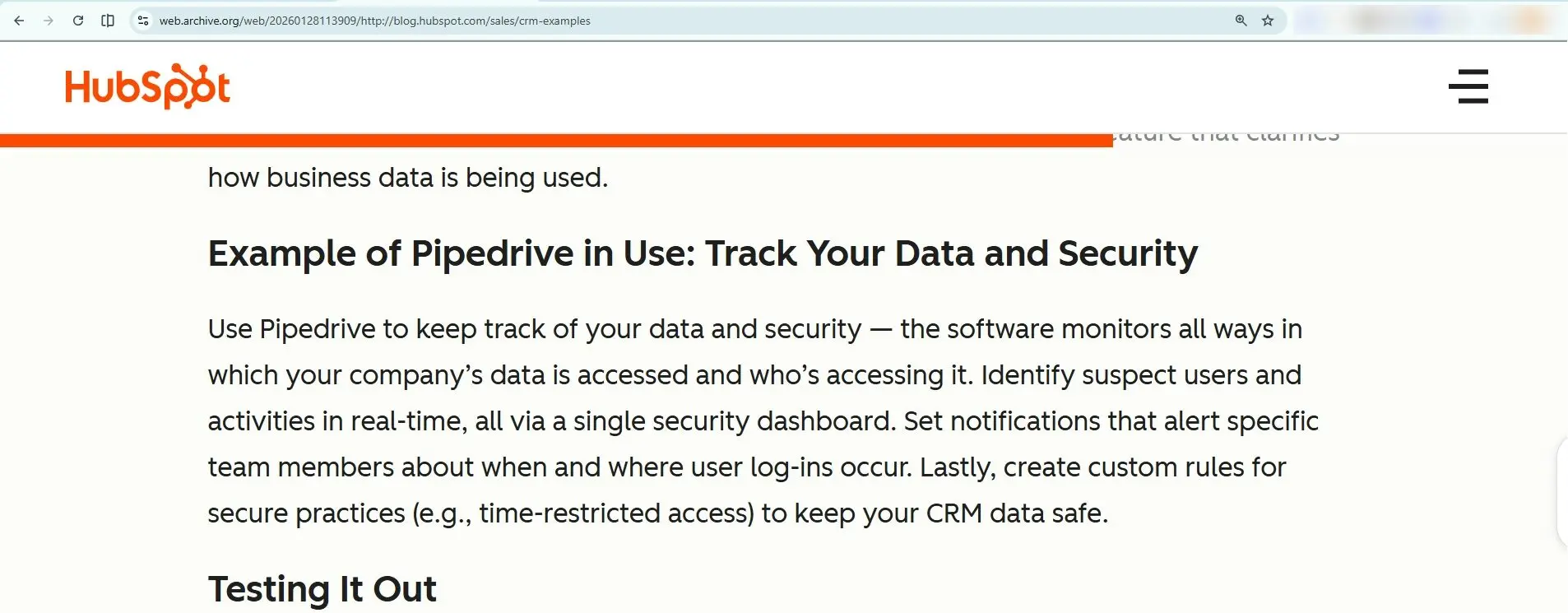
The same HubSpot page now includes a link to Softailed that wasn’t there in the earlier version.
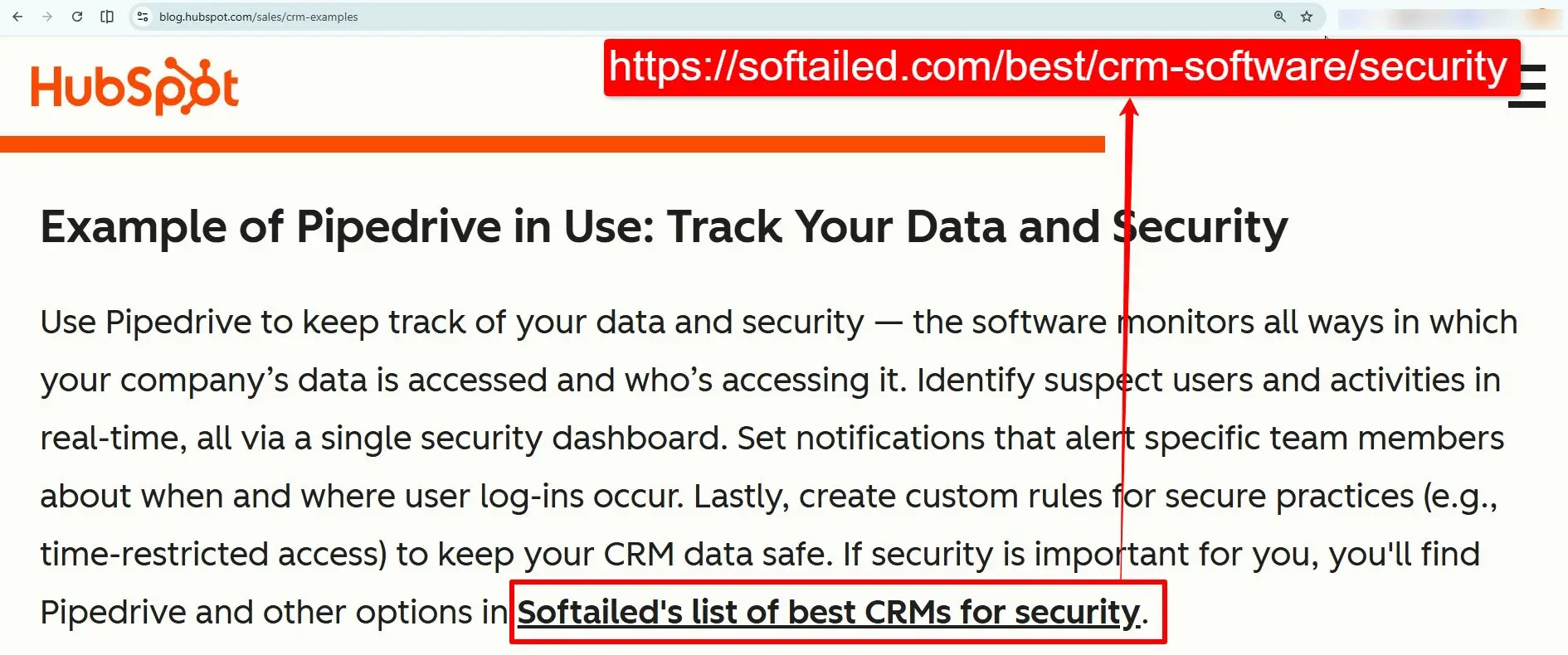
What happened here is that Softailed site created page content relevant to the HubSpot CRM page, outreached them, and earned a backlink from a site with established authority.
Because that HubSpot article has built credibility and earned backlinks over time, a mention on that page can carry more SEO value than placing the same link on a brand-new page.
Compare that to a newly published guest post on another site. The page starts with no history and builds its visibility over time.
Curated links are placed on pages that already have an established history, so they don’t rely on a newly published page gaining visibility first.
Google Picks It Up Faster
Google often discovers a link on an existing, indexed page faster than one on a brand-new article.
Google’s crawlers revisit pages they already know about. They can pick up your link within days, rather than waiting for a new page to crawl and rank.
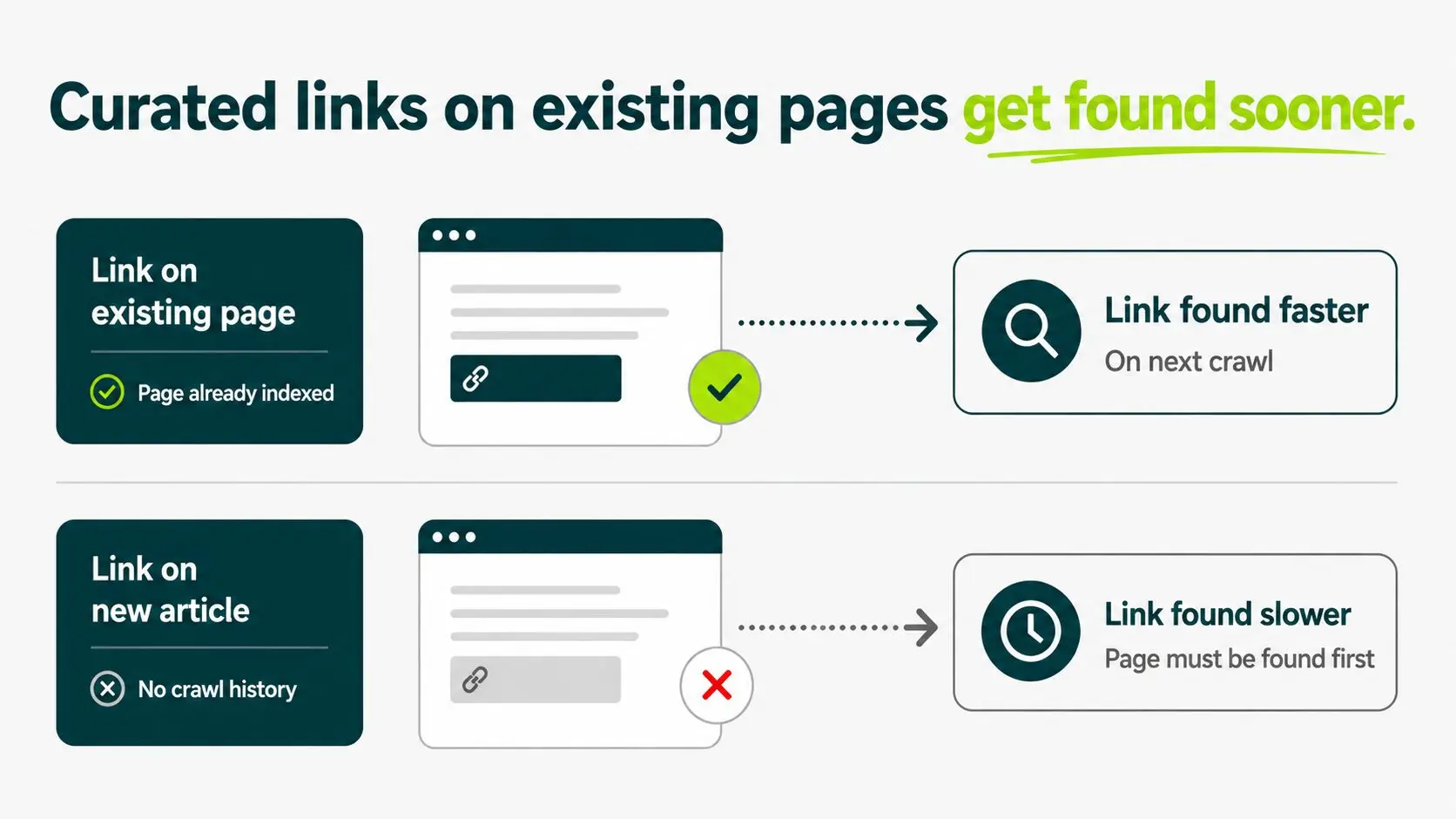
Across our client campaigns, we’ve typically seen Google recrawl existing indexed pages sooner than it discovers newly published pages.
Nothing guarantees the speed advantage, but practitioners consistently report faster discovery on placements inside older, well-indexed content.
Your Link Sits in Real Context
A curated link sits inside a sentence, with related text around it.
That surrounding text gives Google a signal about what your site is relevant for. If the article covers kitchen renovation and your link appears in a paragraph about flooring, Google reads that context.
That context helps Google understand what your site is about and how to categorize it. This is the foundation of contextual link building strategy.
What Makes a High-Quality Curated Link
Four things make a curated link high quality: real traffic on the host page, topical match, editorial standards, and a clean outbound link profile.
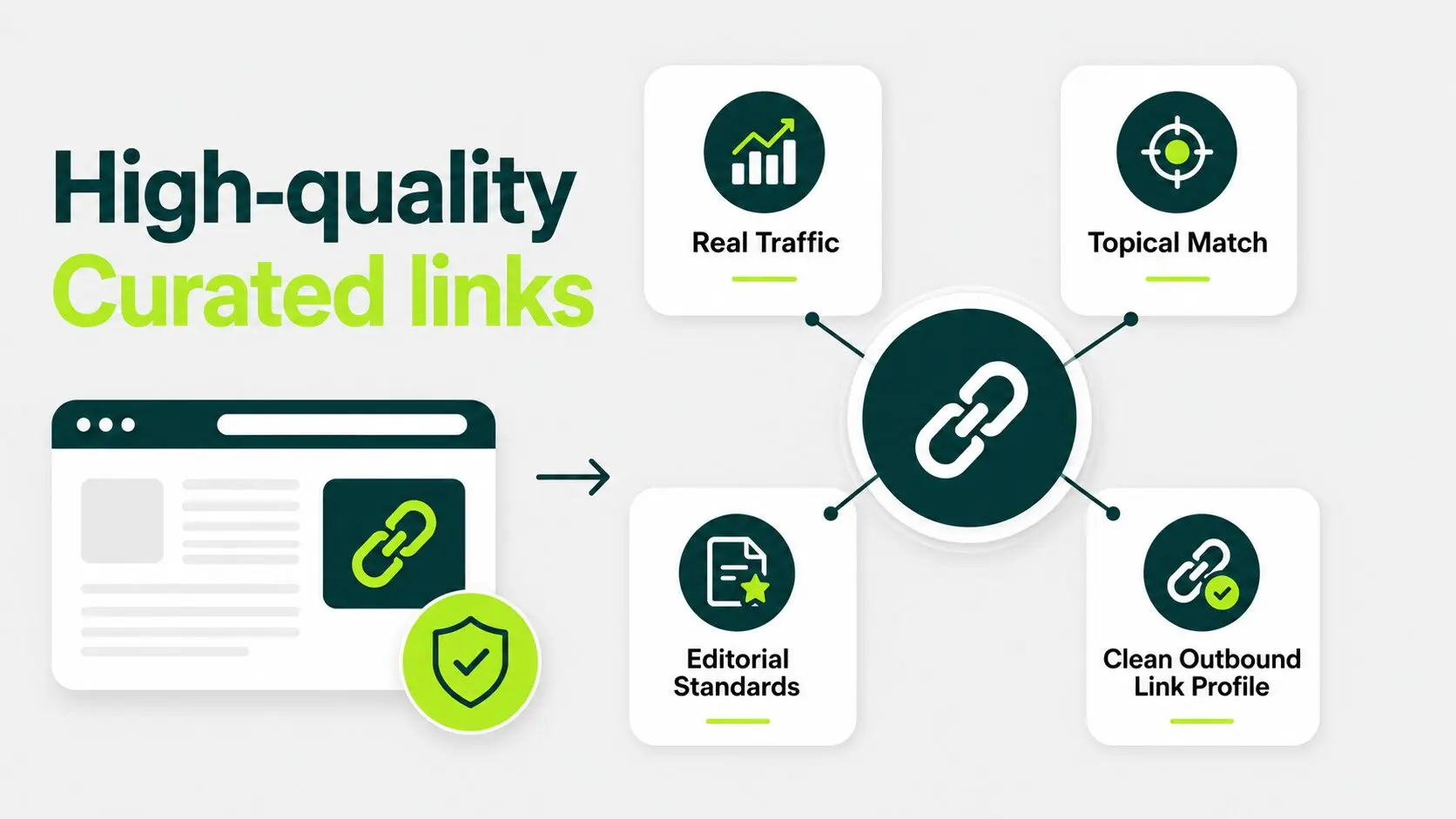
A placement on a site with no traffic and no editorial standards isn’t much more useful than a link you published on your own domain. The quality of the host page determines most of the link’s value.
Check this before accepting a curated link placement:
The Host Page Has Real Traffic
Check if the host page has real organic traffic in Ahrefs’ Website Traffic Checker. Also check whether the specific page where your link will appear receives genuine search traffic.
- Domain Rating (DR, a 0 to 100 authority score from SEO tools like Ahrefs) is a popular metric, but a site can inflate it.
- A network of sites can cross-link to inflate each other’s DR without any real organic traffic.
If the page linking to you gets actual visitors from Google search, that tells you the site has earned real authority rather than manufactured it.
Note
A DR 70 score without organic traffic is a vanity metric (a number that looks impressive but doesn’t reflect real SEO value) and should not be the reason you pursue a backlink.
In most client campaigns, we prioritize sites with at least 1,000 monthly organic visits (Ahrefs), though the threshold varies based on the client’s goals.
The Topic Matches Your Site
A curated link in a completely irrelevant article carries less weight than one from an article in your niche.
If you run a personal finance site and your link appears in an article about cycling gear, Google notices that mismatch.
Topical relevance comes from three things:
- Article’s topic
- Anchor text
- Your target page
All three should form a coherent cluster.
A fitness supplement brand linked from a health and nutrition article passes that test. A fitness supplement brand linked from a travel packing guide probably doesn’t.
This kind of topical alignment is what separates a natural editorial recommendation from a backlink someone placed purely for SEO. It helps create topically relevant backlinks that fit naturally within the content.
The Site Has Editorial Standards
Real publications turn down links that don’t fit their content. A site that will link to anything for a fee is a link farm scheme, even if it looks clean on the surface.
Signs of a real editorial site are:
- Named authors.
- A defined topic.
- Content that doesn’t read like a factory produced it.
- Outbound links that connect to legitimate sources.
Sites that exist purely to sell links often have thin content and no genuine readership.
Their outbound sections link to irrelevant niche sites such as casino, supplements, and payday loans, regardless of the page topic. Those patterns are recognizable, and Google has gotten better at recognizing them.
The Outbound Link Profile Is Clean
Look at the other outbound links on the page where your link will live.
If the page already links to several other sites in your category, a link from that same page carries very little SEO value.
A page linking to 30 SEO agencies with little added context looks less editorial than one linking to 2 or 3 genuinely useful resources.
The page matters more than the domain. The outbound profile of the specific page matters more than the site’s aggregate DR.
One clean page with one or two natural outbound links is worth more than a high-DR page that insertion links have already saturated.
The full backlink quality framework covers every dimension of high-quality links.
The Risks of Poor Curated Links in 2026
The risks of poorly curated links are bulk insertions from link farms, links in low-traffic articles, links from private blog networks, and high-volume, irrelevant anchor text.
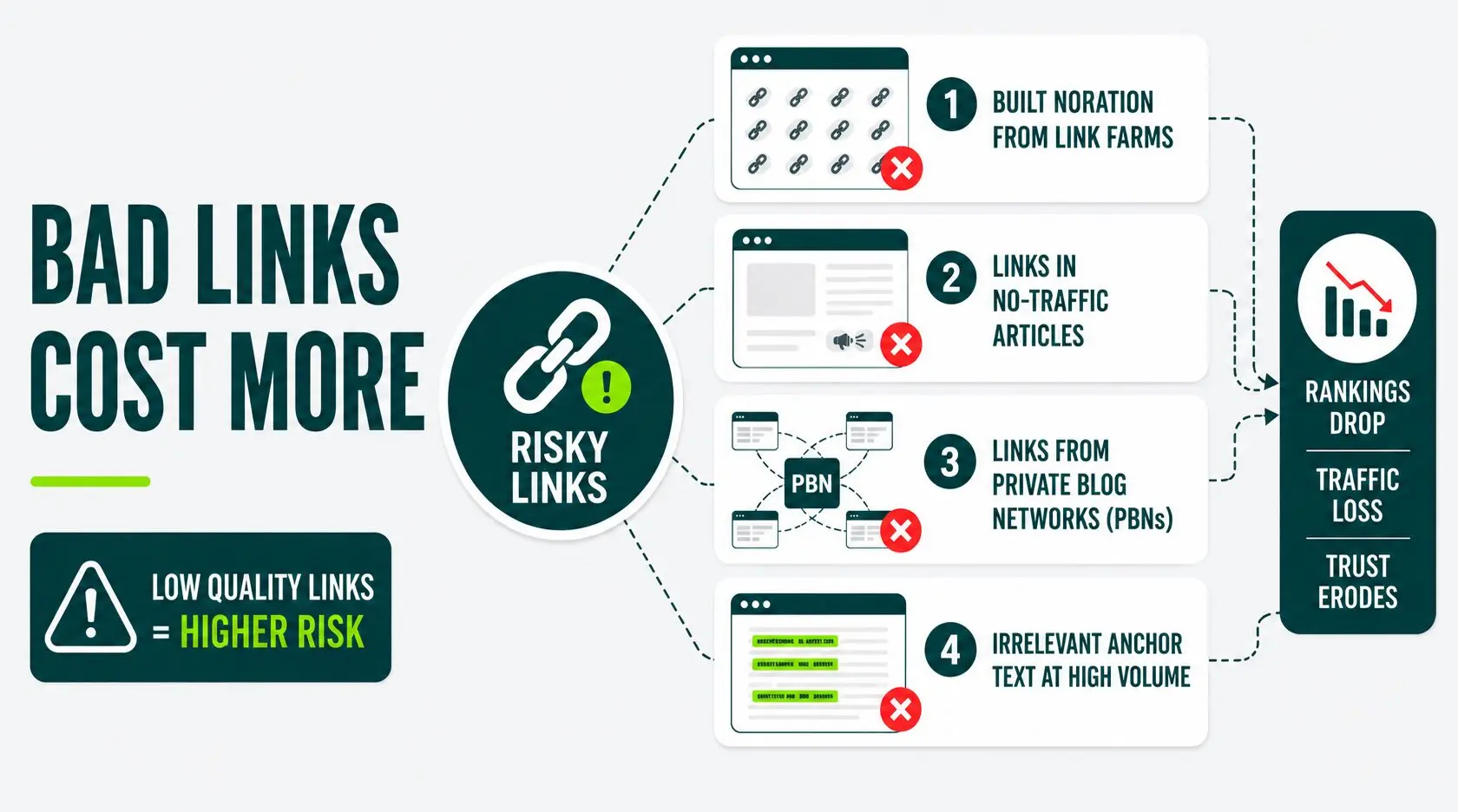
Bulk Insertion From Link Farms
Google hasn’t announced a link-specific spam update since December 2022, but its core ranking systems continue to evaluate link quality. That means bulk insertion links from irrelevant, low-quality sites can still be discounted or contribute to an unnatural link profile.
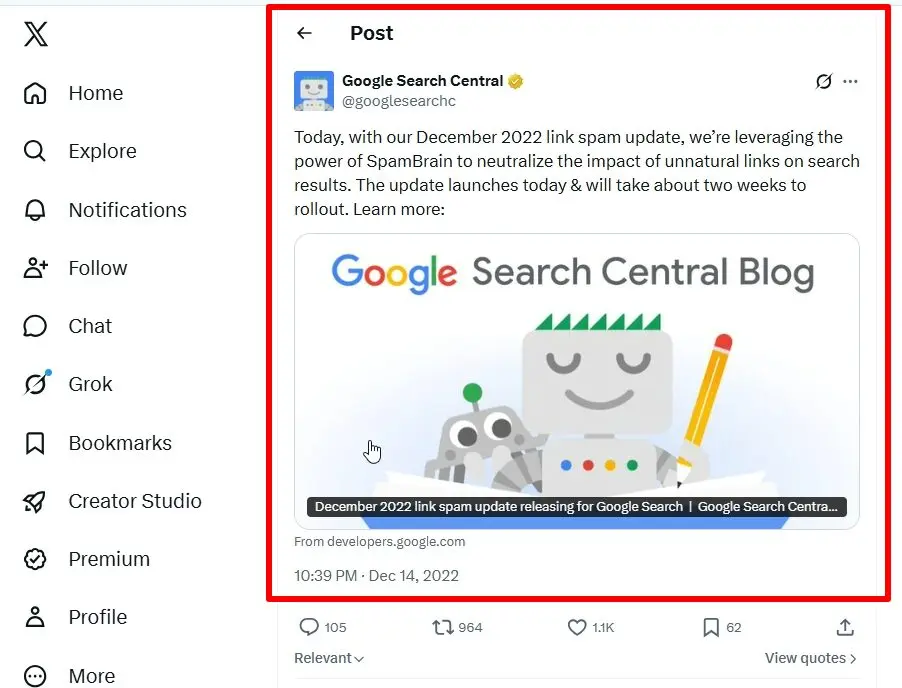
Sites that relied on hundreds of insertion links from irrelevant, no-traffic publishers often experienced ranking declines because those links lacked topical relevance and editorial value.
Note
Google has continued releasing general spam updates since 2023, and its ranking systems continue to enforce its spam policies. Although Google hasn’t announced another dedicated link spam update since December 2022, manipulative link building remains against Google’s spam policies.
Cheap curated link packages that promise dozens of links for very low prices often rely on publisher networks with little editorial oversight or weak topical relevance.
Bulk insertion at scale, especially hundreds of links from irrelevant or low-quality sites, is more likely to create an unnatural link profile than a small number of carefully selected editorial placements.
A niche edit or editorial placement is not automatically compliant with Google’s guidelines. The context, editorial judgment, topical relevance, and overall link acquisition pattern all matter.
We’ve seen this pattern across client campaigns, where replacing irrelevant placements with topically relevant editorial links resulted in a stronger, more focused backlink profile.
Links in No-Traffic Articles
A no-traffic page doesn’t automatically make a link worthless. Relevance matters more than the page’s visitor count. The real risk is the pattern.
Dozens of links from irrelevant, off-topic, or thin publishers can make your link profile look padded instead of earned.
For most buyers, the risk isn’t a Google penalty. It’s paying for placements that are irrelevant and move nothing.
Links From Private Blog Networks (PBNs)
Some providers describe their inventory as curated links but sell PBN placements instead.
PBNs are networks of sites that providers build specifically to sell links, often with thin or AI-generated content and nearly zero to no real audience.
A curated link on a PBN is a liability. Always ask a provider how they source their placements and whether the sites accept editorial contributions from other writers. Treat it as a red flag if they can’t answer that question clearly.
Irrelevant Anchor Text at High Volume
A single curated link with a keyword-rich exact-match anchor isn’t automatically a problem. But building your entire link profile from exact-match insertion links with no variation creates a pattern that stands out.
Vary your anchor text across campaigns, mixing branded, partial-match, and descriptive anchors.
Curated Links vs. Guest Posts: When to Use Each
Curated links and guest posts both build backlinks from third-party sites. The similarity ends there. Placement, timeline, cost, and effort differ sharply between the two.
| CURATED LINKS |
GUEST POSTS |
|
|---|---|---|
| How the link is placed |
Goes into an existing article. | Runs in a brand-new article. |
| Typical timeline |
1 to 3 weeks from pitch to live. | 4 to 8 weeks from pitch to live. |
| Cost range |
$100 to $500 per link. | $150 to $600+ per article. |
| Effort required |
Low; short pitch, no content creation. | Higher: research, writing, editing, revision. |
| Best use case |
Quick wins on topically relevant indexed pages. | Brand authority, new topical coverage. |
The best choice depends on your goal and the opportunity available. A curated link is a practical option when an existing article already covers your topic and your link improves the content for readers.
A guest post is a better fit when you need fresh content or want to shape the message around your expertise from the start.
You do not have to choose one over the other. Using curated links alongside guest posts creates a more balanced link building strategy and strengthens your website’s authority over time.
How to Get Curated Links
To get curated links, you can start by finding pages, identifying the fit, sending the pitch, and then deciding whether to do outreach yourself or use a service.
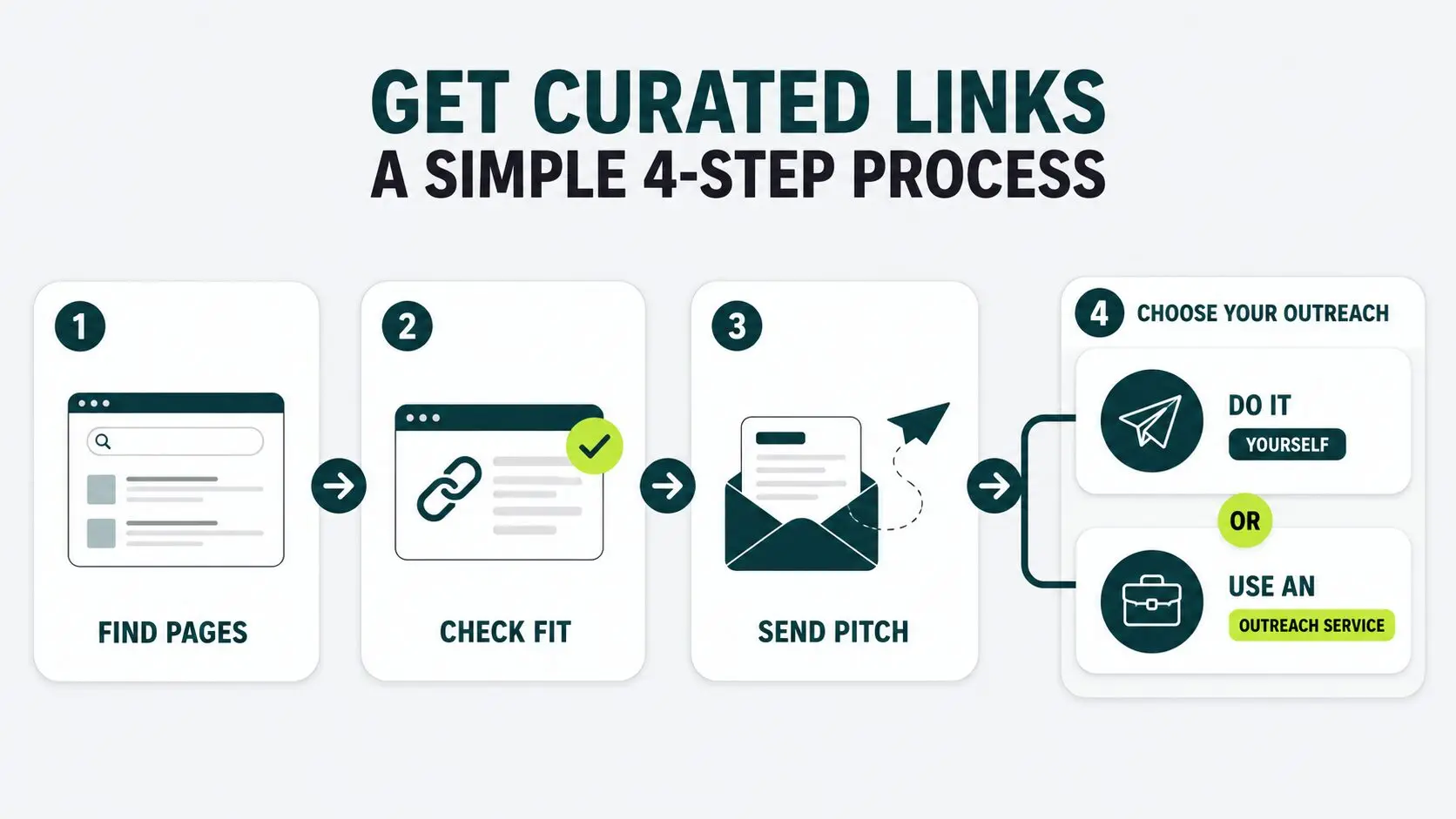
Steps 1 to 3: Find Pages, Identify the Fit, and Send the Pitch
Search for articles on other sites that cover topics closely related to your target page. Look for content with real organic traffic, natural writing, and a topic that fits the context of your link.
Once you find a candidate article, identify the exact sentence or paragraph where your link could go naturally. Proposing a specific placement makes your pitch more credible and saves the editor time.
Then send a short cold email. Keep it to 4 to 6 sentences. Reference the specific article, name where the link would fit, explain the value to their readers, and make it easy to say yes. A respectful, specific pitch outperforms a templated blast.
For a deeper look at crafting pitches and managing link building outreach at scale, check the outreach guide; it walks you through the full process.
In one of our outreach campaigns, a SaaS client earned a contextual link by suggesting a relevant resource for an existing article section.
Step 4: Decide Whether to Do Outreach Yourself or Use a Service
DIY outreach works if you have the time and can find the right sites. The trade-off is volume: a good placement requires research, vetting, and follow-up, and most publishers take days or weeks to respond.
If you’re doing this for one or two links a month, you can manage DIY yourself. If you want consistent monthly placements without running the process yourself, a curated link insertion service handles the prospecting, vetting, pitching, and placement.
Reputable services can charge anywhere between $100 and $500 per link, depending on the site’s traffic and DR. That fee reflects the outreach labor, not just the link itself.
Curated Links Work When They Are Done Well
Curated links work when the placement is on a real site with real traffic, and the link fits the article naturally. They underperform when the placement comes from a site with no readership and no editorial standards.
That gap explains most of the confusion around whether curated links are worth it. The tactic holds up, but execution is what varies.
Looking for High-Quality Curated Links?
Get editorial placements on trusted websites, with prospecting, outreach, and quality checks handled for you.
Are Curated Links Safe for SEO?
Curated links from real, relevant sites with genuine organic traffic carry low risk. The risk comes from poor-quality placements: links from no-traffic sites, link farms, or networks that providers build specifically to sell links.
Google’s spam updates generally target patterns of low-quality link manipulation, not high-quality editorial placements. If you evaluate your placements using the criteria in this guide (relevant topic, real traffic, editorial standards), you keep the risk low.
How Long Do Curated Links Take to Work?
Curated links can contribute to ranking improvements over time, but there is no fixed timeline. Results depend on factors such as crawl frequency, competition, and the overall strength of your SEO.
Curated links can be picked up faster than guest posts because they’re added to pages Google already crawls and indexes.
Links in brand-new articles can take longer for Google to discover and longer to influence rankings, since the host page itself is still building authority.
How Do I Choose a Provider for Curated Links?
Look for a provider that discloses its vetting criteria upfront: minimum organic traffic, domain rating range, and topical relevance checks before outreach even begins. Providers who won’t share their prospecting criteria are usually hiding a reliance on low-quality, high-volume inventory.
Ask to see sample placements from your specific industry, not generic screenshots. A professional link building agency will walk you through real examples of contextual fit rather than just DR numbers.
Transparency after placement matters just as much. You want reporting that shows the live URL, the anchor used, and the surrounding content, not just a spreadsheet of links delivered.
How Much Do Curated Links Cost?
Curated links from reputable providers typically range from $100 to $500 per placement. The price reflects the host site’s traffic and authority, the outreach effort, and the editorial process.
Packages below $100 per link often come from bulk inventory on lower-quality sites. For a detailed breakdown of link pricing across tactics, see current link pricing benchmarks for a full market overview.
Are Curated Links White Hat?
A curated link placed through genuine outreach to a real publication, with a natural editorial fit, aligns with how links should work. A curated link you purchase as a pure pay-for-link transaction from a site with no editorial standards violates Google’s link spam guidelines.
Most curated link services operate in a grey area: they compensate publishers but frame the fee as an editorial placement rather than a pure link sale. Many providers don’t disclose this arrangement. Whether that concerns you comes down to your own risk tolerance.
What Is the Difference Between Curated Links and Niche Edits?
There’s no functional difference. Both terms describe the same tactic: a backlink that someone inserts into an existing, already-published article on a third-party site.
“Curated links” and “niche edits” are just different marketing names for the same product. When you compare vendors, focus on their vetting process, their placement quality, and their transparency about how they source sites. The name they use for the tactic matters least.
If you want curated links on real, relevant sites without managing the outreach yourself, a niche edit service can handle the prospecting and placement for you.