You just landed a guest post on a site you’ve been pitching for months. The editor wants to publish it. They’re asking which phrase you’d like the link to use to go back to your homepage. That phrase is anchor text.
Anchor text is the clickable text in a link that tells search engines and the readers which topic the destination page belongs to. A link that says “project management software” sends a very different signal than one that says “click here,” even when both point to the same page.
Once you understand how anchor text shapes relevance signals, link building becomes less about collecting links and more about placing the right words around them.
What You’ll Learn:
- Anchor text is the clickable phrase inside a link that helps Google understand the destination page.
- Six anchor types matter: branded, exact-match, partial-match, generic, naked URL, and image alt text.
- The simple natural-anchor test: Does the phrase still read naturally without the link?
- Site owners usually accept descriptive suggestions but often edit or reject exact-match anchors.
- Internal anchor text helps Google understand site structure, while external anchors are stronger ranking signals.
- AI search engines evaluate the surrounding sentence, so context matters as much as the anchor text.
What Anchor Text Is and Why Google Reads It
Anchor text is the clickable, highlighted word or phrase in a link that tells you what you’ll find when you click on it.
By default, most browsers display it in blue with an underline, a web convention so familiar that people instinctively know it’s clickable, although the color and style can be customized through HTML.
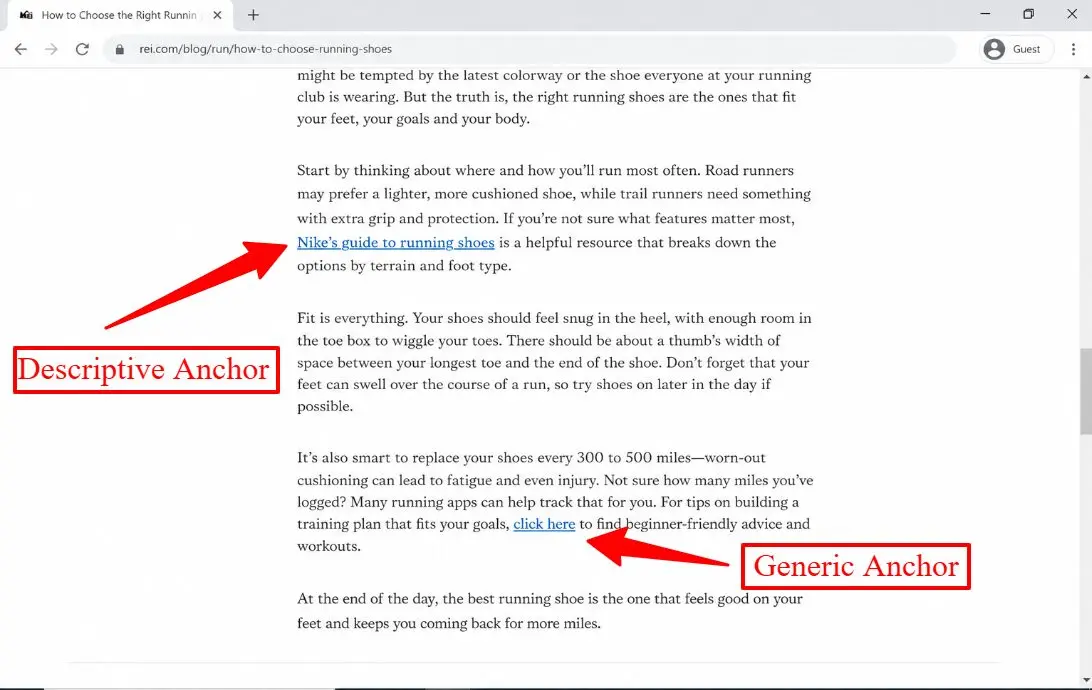
Click the phrase “Nike’s guide to running shoes” in a sentence and land on a service page. Those five words are the anchor text.
Google reads the phrase as a clue about what the linked-to page covers.
Imagine that you’re reading an article and come across a link embedded in a sentence:
- A link with the anchor “Nike’s guide to running shoes” tells Google the destination is about anchor text for founders.
- A link with the anchor “click here” tells Google nothing.
For people doing link building, the question is rarely “what is anchor text?”
It’s “what phrase should this specific backlink use?”
The shift from defining the term to choosing it is where the real decisions begin.
If you’re newer to link building, the basics of earning links covers how anchor choice fits into the bigger picture.
The Six Anchor Text Types You’ll Use Most
The six anchor text types you’ll often see are branded, exact-match, partial-match, generic, naked URL, and image alt text.
Anchor types describe the link text itself. The different types of backlinks refer to how the links were placed and what they do for search rankings.
| Type |
What it looks like |
Best for |
|---|---|---|
| Branded | “Netflix” | Brand mentions, author bios |
| Exact-match | “Best running shoes” | Rare, high-trust placements |
| Partial-match | “How to choose running shoes” | Most natural in body copy |
| Generic | “this guide,” “click here” | When the surrounding sentence already names the topic |
| Naked URL | “amazon.com ” | Sidebar references, citations |
| Image alt | “Red Nike running shoe front view ” | Inside images that link out |
Branded Anchors
A branded anchor is when your company or website name is used as the clickable phrase.
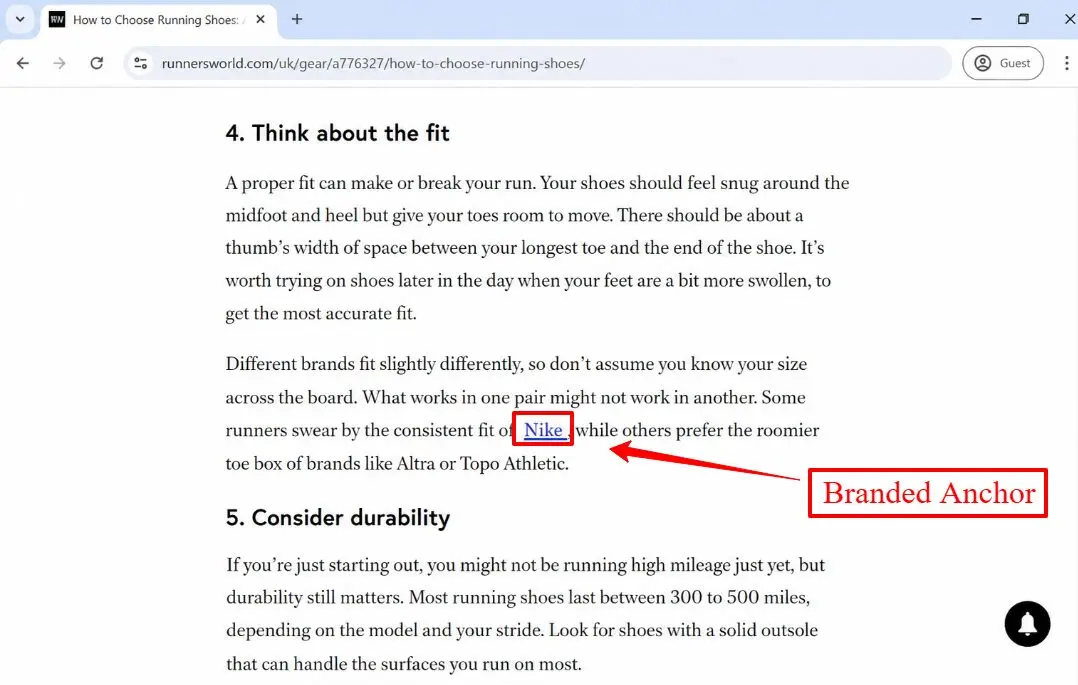
Example of common branded anchor include:
- “Nike”
Branded anchors are the safest type.
They describe exactly where the link goes, without packing in keyword signals that look manipulative to Google.
Most of the backlinks pointing to any healthy website are branded.
Exact-Match Anchors
An exact -match anchor uses your target keyword for that page exactly.
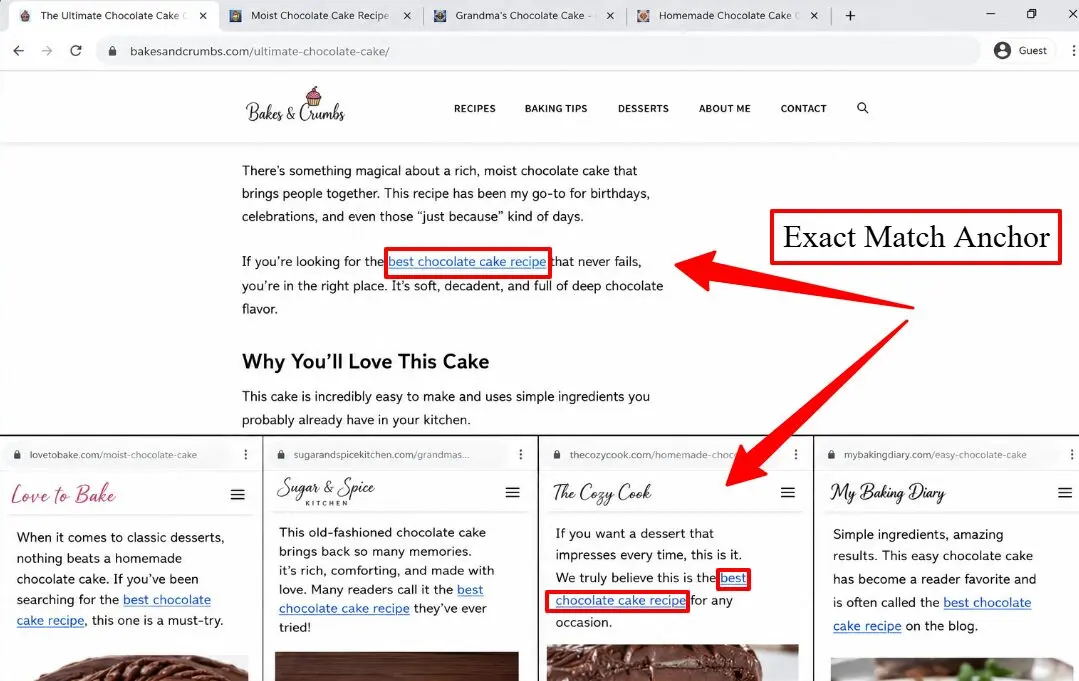
So, “best chocolate cake recipe” pointing to a page about anchor text best practices is an exact match.
Exact-match anchors carry the strongest relevance signal, and they’re also the easiest to overdo.
Google starts to suspect coordination when five different sites link to your page with the same exact-match phrase.
One or two exact-match anchors per page is the upper limit before a detectable pattern forms. Many more than that and you’re walking into a penalty.
Partial-Match Anchors
A partial-match anchor uses a variant of your target keyword. Instead of the exact anchor “best chocolate cake recipe,” a partial-match anchor might look like:
- “How to bake a chocolate cake at home”
- “Chocolate cake tips for beginners”
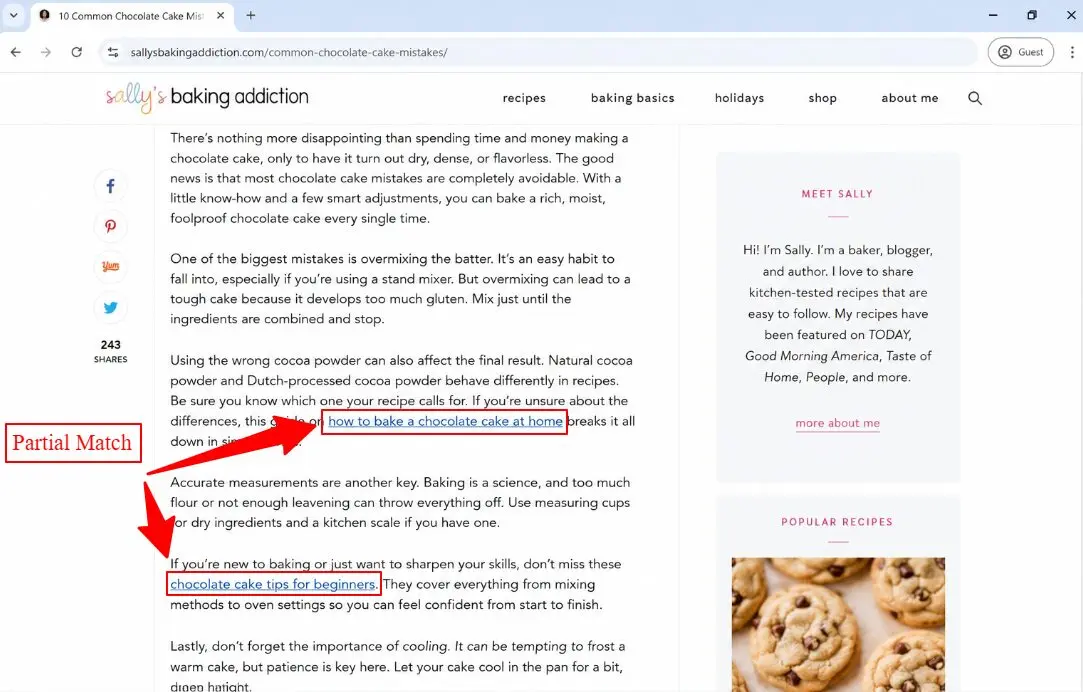
Partial-match is the workhorse for inside-content placements because it reads naturally in sentences and still tells Google what the destination page is about.
If you want to learn one anchor type really well, then learn this one.
Generic Anchors
Generic anchors such as “click here”, “read more”, “this article”, “learn more”. These phrases don’t describe the destination at all.
Inside the body copy, generic anchors waste the placement. The reader doesn’t know what they’re clicking through to, and Google doesn’t either.
The one place generic anchors do work is when the surrounding sentence already does the descriptive work.
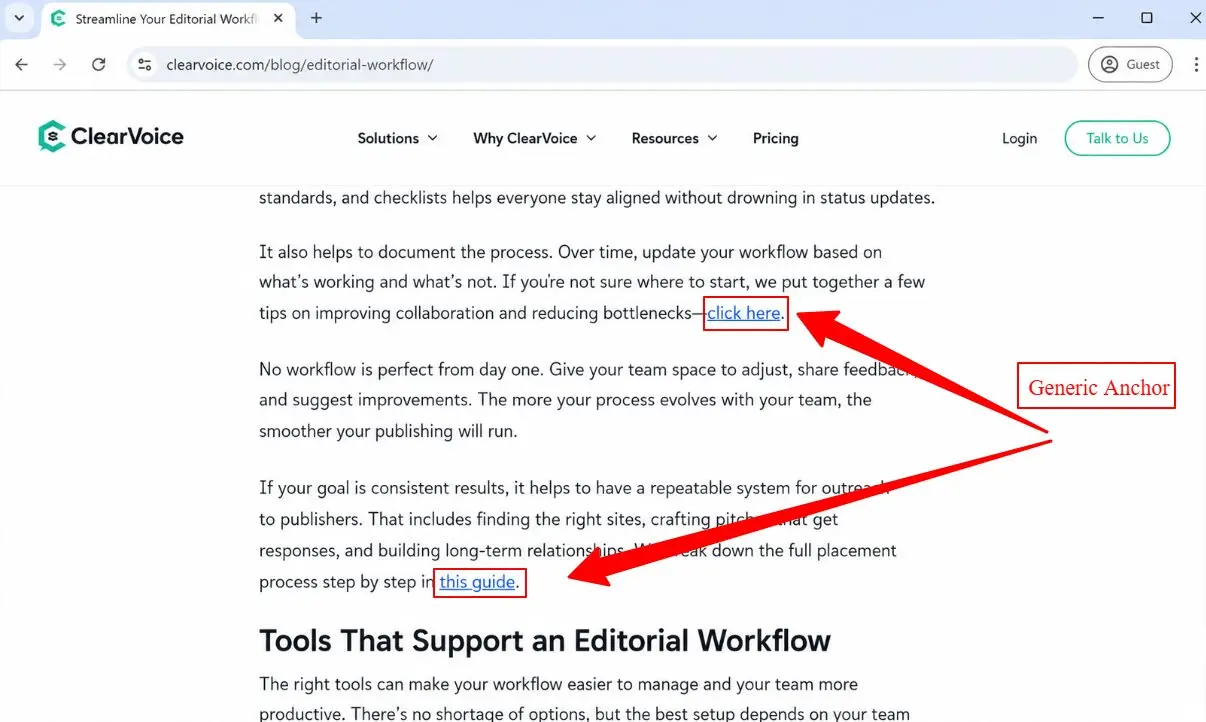
For example, in a sentence about outreach and publisher placements:
Outreach to publishers works differently from writing for your own site. This guide explains the placement process.
The phrase “this guide” works because the sentence before it already named what the link is about.
Use this pattern only once in a while. Inside-content placements almost always do better with a partial-match anchor.
Naked URL Anchors
A naked URL anchor is the bare website address used as link text, such as “nike.com”.
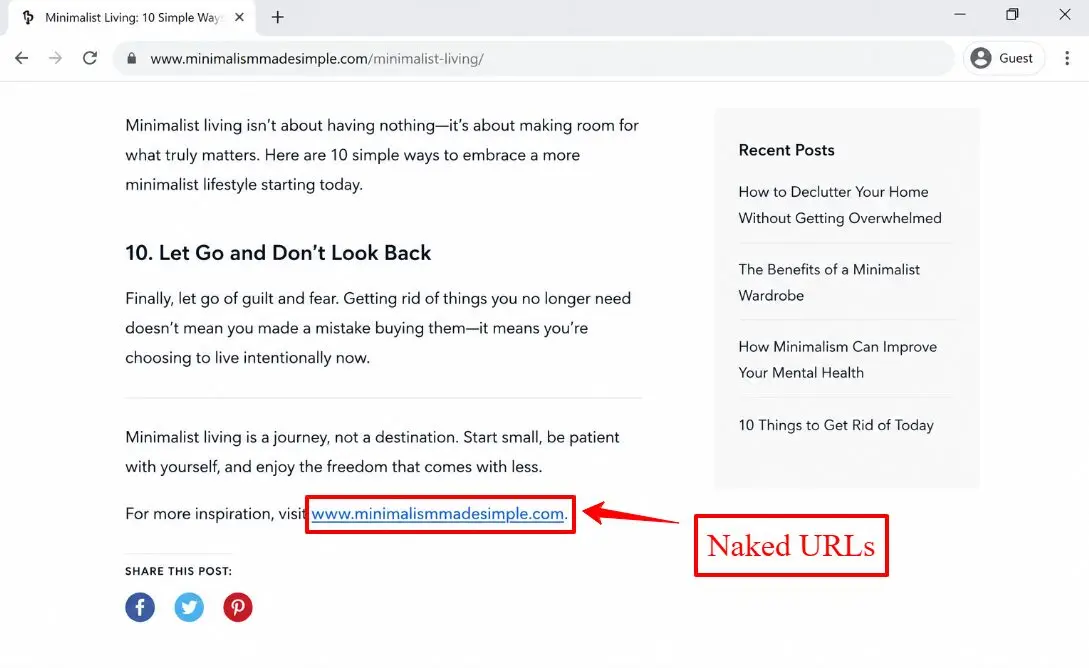
Naked URLs are common in citation lists, footnotes, and quick references where the URL itself is the relevant signal.
Inside the body copy, they look amateur and waste the opportunity, so use them occasionally.
Image Alt Text as an Anchor
When an image is clickable, it needs text that describes where it leads; that’s the alt text. Google reads those hidden words the same way it reads the clickable text in a regular link.
This is the most overlooked type of anchor. The image you link on your site carries an anchor signal through its alt attribute.
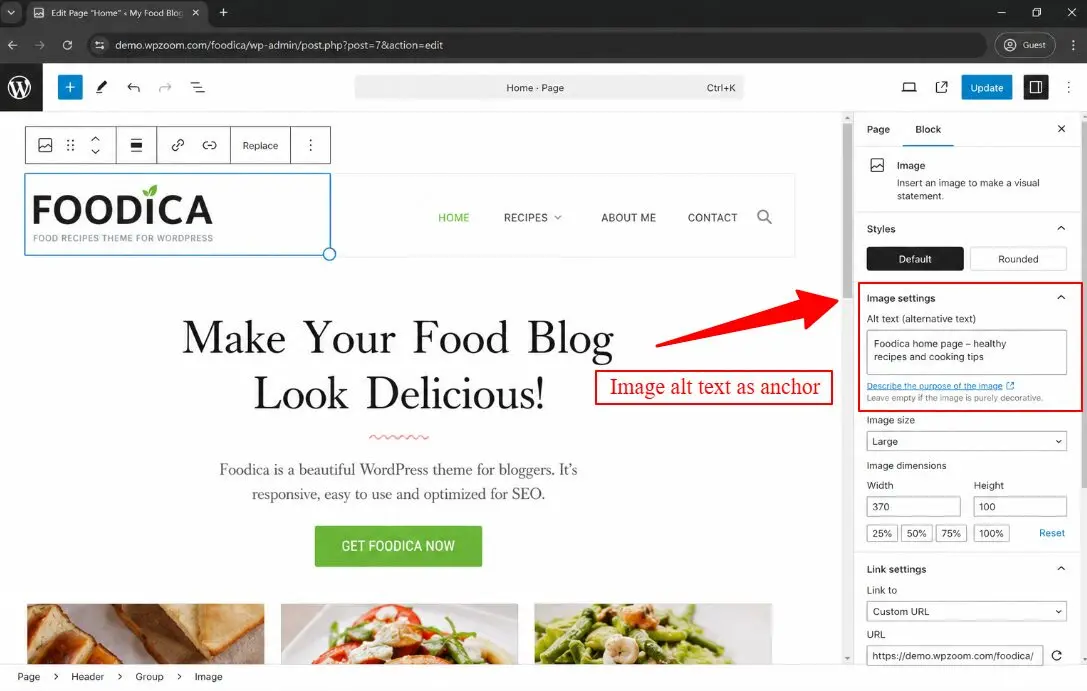
That includes:
- Logos that link to the homepage
- Infographics that link to a study
- Button images that link to a landing page
Write that alt text the same way you’d write any other anchor:
- Descriptive
- Short
- Accurate
Two patterns underlie all six types and determine whether a specific anchor is doing its job.
- Does the phrase preview what’s on the other side of the link?
- Would the phrase still read naturally if you removed the link from the sentence?
Hold those two questions, and most of the rest is detail.
What a Natural Anchor Profile Actually Looks Like
A natural anchor profile leans heavily on branded and partial-match anchors, uses exact-match anchors rarely, and pulls in other types only where the placement calls for them.
The rough mix that keeps your profile looking natural to Google looks something like this:
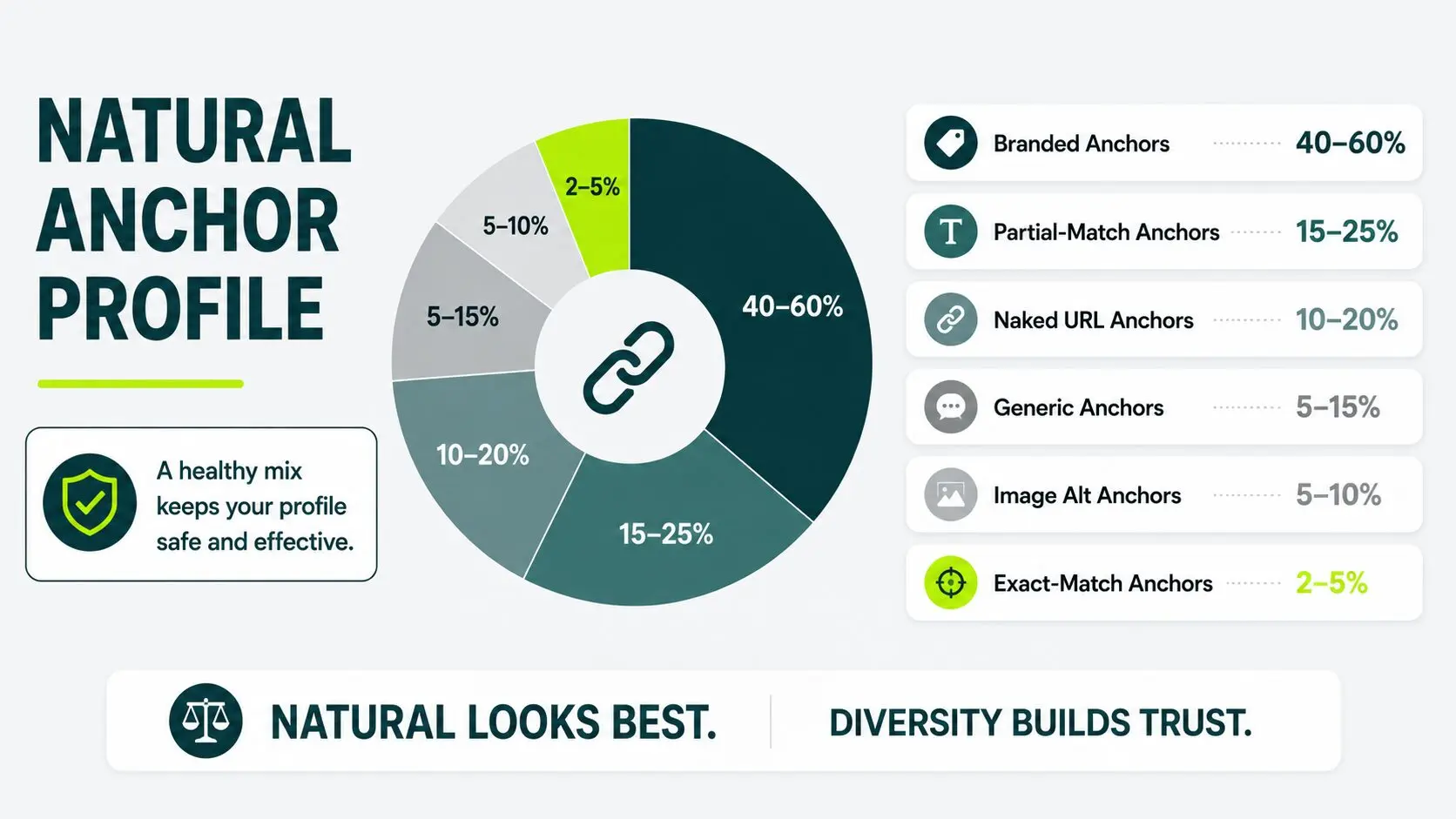
- Branded anchors: 40 to 60% of your backlink profile
- Partial-match anchors: 15 to 25%
- Naked URL anchors: 10 to 20%
- Generic anchors: 5 to 15%
- Image alt anchors: 5 to 10%
- Exact-match anchors: 2 to 5%
In our campaigns, branded anchors hold the largest share of each profile. Partial-match anchors follow, with exact-match at the far end.
While the exact distribution varies by industry and campaign type, healthy backlink profiles tend to mirror the natural ratios shown above rather than concentrating heavily on keyword-rich anchors.
Ratios Are a Sanity Check, Not a Rule
If your backlinks come from real placements and the anchors describe what’s on the page, the ratios sort themselves out.
Editors rarely agree to your target keyword as the anchor anyway. Your real-world distribution naturally tilts towards descriptive and branded phrasing.
The Fastest Over-Optimization Check
The single test that catches over-optimization faster than any ratio threshold is simple:
Would the anchor phrase still read naturally if you removed the link from the sentence? If the answer is no, you’re forcing it. That’s the actual signal Google’s algorithm catches.
Google flags overoptimized anchors because Penguin (Google’s anti-spam algorithm built to catch manipulative link patterns) and its successors flag patterns that don’t look like real editorial writing.
Real editorial writing doesn’t bury target keywords inside contorted sentences just to grab the anchor.
What actually matters is understanding which link building tactics violate Google’s guidelines, and how Google identifies those patterns is a separate discussion.
For most founders building real backlinks, the ratio is a quarterly sanity check, not a target you optimize towards. Real progress comes from focusing on what makes a link worth chasing rather than hitting ratio targets.
Picking Anchors When You’re Requesting a Link From Someone Else
When you’re requesting a backlink from a publisher, the anchor decision shifts from “what would I put here?” to “what’s the editor most likely to accept?”
The placement lives on someone else’s site. That changes everything about anchor choice. The pattern that wins inside outreach has four steps.
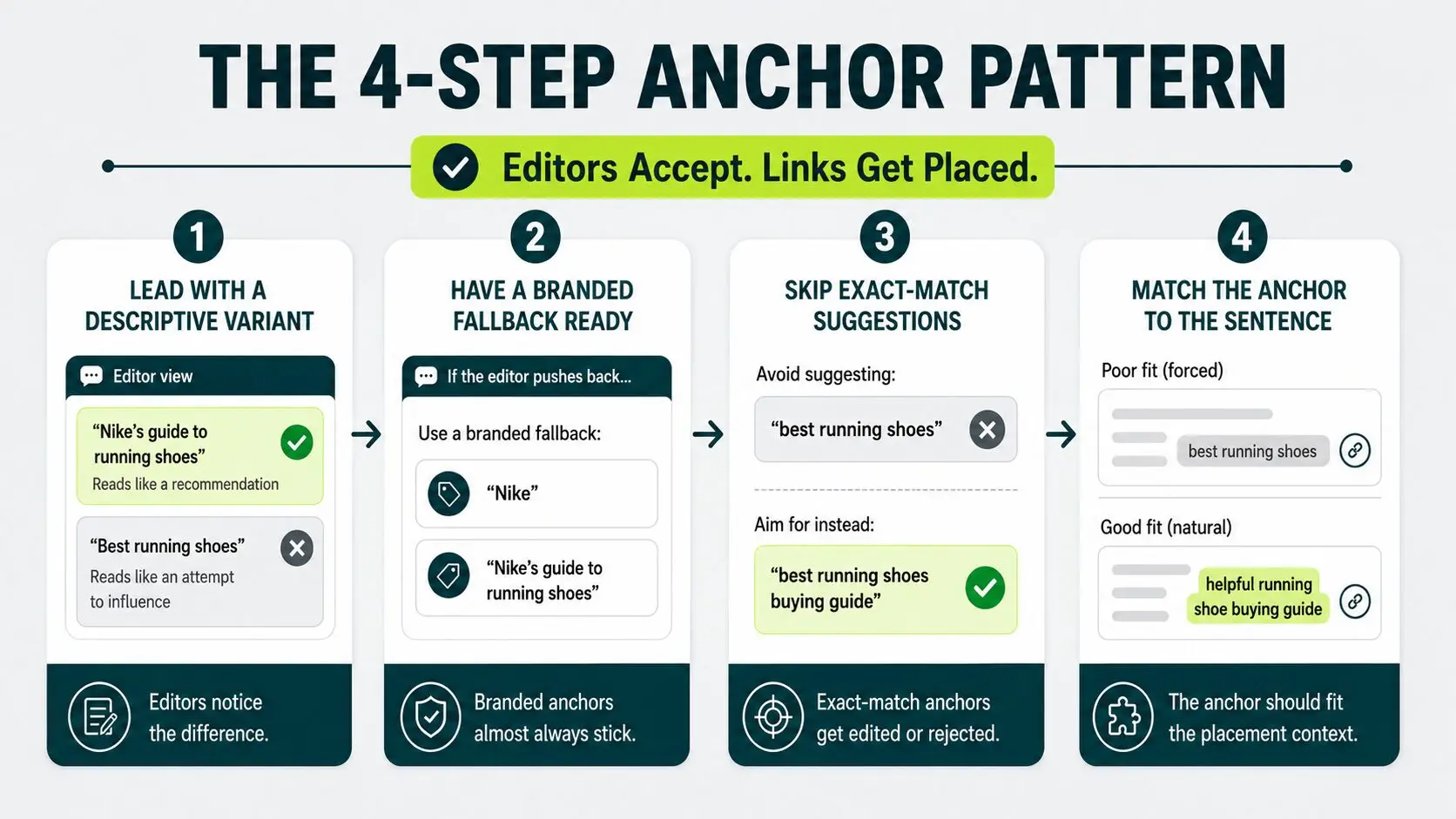
Here’s a four-step anchor pattern that you can use while requesting a link from someone.
1. Lead With a Descriptive Variant
Instead of suggesting your exact target keyword, suggest a partial-match anchor that describes what’s on your page.
For example, compare these two anchor suggestions and how an editor is likely to read each one:
- “Nike’s guide to running shoes” reads as a recommendation.
- “Best running shoes” reads as an attempt to influence the placement.
Editors notice the difference. They edit or refuse the second one most of the time.
2. Have a Branded Fallback Ready
If the editor pushes back on the suggested anchor, your second option is your brand name or a brand-plus-topic combination, such as:
- “Nike running shoes”
- “Nike’s guide to running shoes”
Branded anchors stick. Editors are comfortable linking to brands; they’re less comfortable linking to keyword phrases.
3. Skip Exact-Match Suggestions
When you ask for the exact phrase your target page is trying to rank for, experienced editors recognize what’s happening and either edit or refuse the placement.
This is the most common reason editors reject link requests. You can still get an exact-match anchor every now and then, but you don’t engineer for it. It comes from a writer or editor independently using your keyword in their copy.
4. Match the Anchor to the Sentence
If your published guest post argues a specific point and links back to your site mid-paragraph, the anchor should fit that paragraph context.
If the link goes in the footer of the piece you contributed, the anchor should fit there too. The natural-anchor test catches mismatches before the editor does.
The example below shows a guest post outreach template that includes both a descriptive anchor suggestion and a branded alternative for the editor to choose from.
To: editor@yourwebsite.com
Subject: Guest post opportunity for your blog
Hi [Name],
I’d love to contribute a guest post to your blog on keyword research.
My article will show how to group keywords effectively to improve content strategy and rankings.
If this sounds useful, here are two anchor text options you can use within the article where they fit naturally:
Option 1 (Descriptive): keyword clustering guide
Option 2 (Branded): Your Brand
Either option works use whichever fits best in the sentence.
Thanks for considering!
Best,
[Your Name]
We include two anchor suggestions in the outreach email. One descriptive partial-match anchor and one branded alternative. Editors don’t always use the suggested wording, but providing both options tends to make the request easier to approve.
In many cases, editors use the descriptive version when it fits naturally within the article, while the branded option provides the editor with a simple fallback if they prefer a more neutral option.
The simplest way to think about anchor suggestions in outreach is that you’re handing the editor language they can publish without changing. The closer your suggestion is to something the editor would have written themselves, the more likely it is to survive the final review of a link outreach campaign.
How AI Search Treats Anchor Text in 2026
Anchor text still matters for AI search, and the surrounding sentence matters just as much.
AI engines like Google AI Overviews, Perplexity, and ChatGPT don’t read pages the way Google’s traditional results do (blue-link).
They use language models that read the meaning of phrases in context, not just the literal anchor words, to decide what a page is about.
Frobe and colleagues published academic research on anchor text at ECIR 2022. It showed that anchor text remains a useful signal, even for the neural systems that power modern AI search. ECIR is the European Conference on Information Retrieval, Europe’s premier annual forum for search research.
The takeaway is simple:
- The anchor still tells the AI something
- The sentence around the anchor tells it more
The same anchor inside two different sentences can carry different meanings.
Consider the anchor:
“Anchor text best practices”
In this sentence:
Most founders learn anchor text best practices through trial and error.
The anchor appears inside a discussion about founder education and learning.
Now compare it to:
Here are the best practices for anchor text in link building.
The anchor appears inside a flat keyword pattern. AI systems pick up that contextual frame and use it to help determine which pages are most relevant to a query.
The practical implication is not to abandon the anchor strategy. It’s to lean even harder into natural language.
Descriptive partial-match anchors inside sentences that read like real writing perform double duty:
- They provide Google’s traditional ranking systems with a relevance signal.
- They provide AI retrieval systems with the context needed to understand what the linked page is about.
The pattern we continue to see is that pages cited by AI engines tend to earn links with:
- Descriptive, in-content anchors
- Natural surrounding context
- Paragraphs that genuinely discuss the linked topic
They are less likely to rely on exact-match anchors inserted into awkward placement sentences.
If this is your first time thinking about link building for AI search, remember that anchor text is only one input.
The anchor decision helps determine whether an AI engine understands your page well enough to cite it, but it works best when paired with genuinely useful content and a backlink profile built around topical relevance.
The Mistakes That Bury Otherwise Good Backlinks
Most anchor text mistakes come from over-optimizing for keywords rather than writing for readers.
The patterns below quickly drain link value or actively trigger Google’s anti-spam systems.
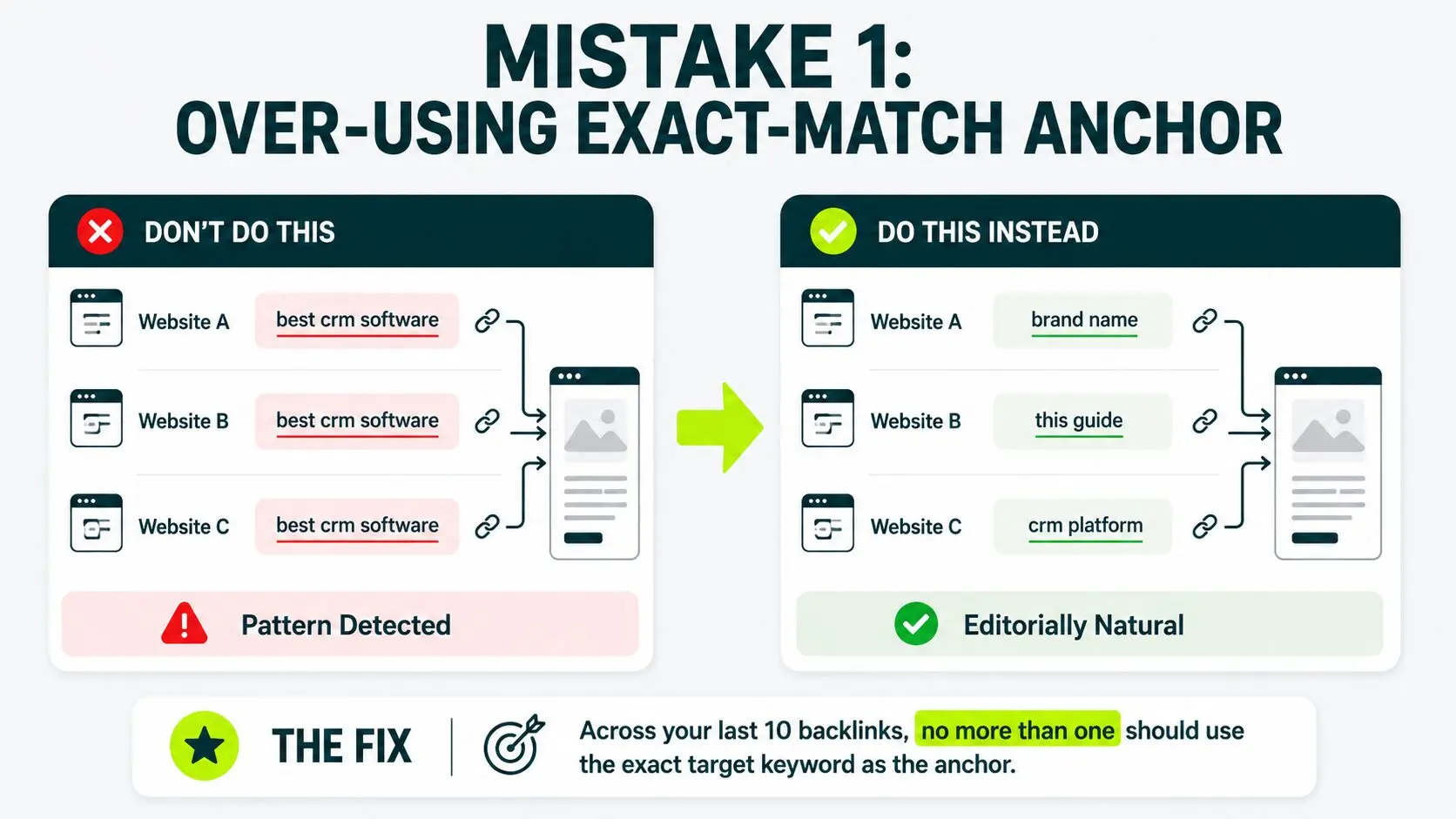
Mistake 1: Over-Using Exact-Match
You secure a great backlink. Then another, then a third. All three use the same exact-match anchor for your page.
That pattern doesn’t read like real editorial coverage. It reads more like coordination.
Fix
Across your last 10 backlinks, no more than one should use the exact target keyword as the anchor.
Mistake 2: Anchor-Destination Mismatch
Sometimes the anchor text suggests a different expectation than what the destination page primarily provides.
A link with the anchor “free backlink calculator” should land on a calculator page. Where readers have to scroll three times to find the calculator, they feel misled. Google reads that mismatch as an inconsistent signal.
Fix
Match the anchor to what’s actually visible on the destination’s primary content, not to something buried somewhere deeper.
Mistake 3: Generic Anchors Inside Body Copy
“Click here,” “this article,” “read more,” and “learn more” inside the following body content waste the opportunity.
The anchor is one of the hints you can give Google about what’s behind the link. Throwing it away on some generic anchor costs you nothing in usability, but costs you a relevance signal.
Fix
Use a descriptive phrase or partial match inside the body copy. Save generic anchors for sidebars, navigation labels, or sentences where the previous sentence already named the topic.
Mistake 4: Anchoring on a Sentence That Wouldn’t Exist Without the Link
If you can’t write the sentence containing the anchor without the link being the only reason that sentence exists, the anchor is forced.
The algorithm and editors both notice this. Readers feel it even if they can’t explain why.
Fix
Write the section first. Add the link only where a sentence already needed the phrase the link uses.
Mistake 5: Treating Internal Anchors Like External Ones
This is the mistake that wastes the most time for first-year founders.
Internal anchor text inside your own site has much less ranking impact than external anchor text pointing to your site.
In April 2025,Google’s John Mueller fielded a question about whether identical anchor text appearing in multiple places would hurt rankings.
His response to repeated anchors was:
“Having 4 identical links on a page to another page seems fine & common to me, I wouldn’t worry about that.”
His example covered 4 links on a single page, but the underlying point applies to structural elements as well. A menu link, a footer link, a sidebar link, and a related-page link all pointing to the same destination with the same anchor text is exactly the kind of pattern Google expects to see on a well-structured site.
Fix
Don’t lose sleep over identical anchors in your menu, footer, or sidebar. Spend that time picking better anchors for the external backlinks that actually move rankings.
When we pitched a client’s link to a SaaS publication with an exact-match anchor, the editor rewrote it in a more descriptive, natural-language variant before publishing. The link still went live, and the page ranked just fine, but it was a useful reminder that experienced editors often prioritize readability over keyword-heavy anchor text.
These mistakes share a common shape. They all come from treating anchor text as a slot to fill with your target keyword. The right frame treats it as a phrase that needs to do real work within a real sentence. The best fix for these mistakes is to write for the readers first; the relevance signals follow.
Run This Anchor Text Checklist Before You Publish or Pitch
Use the questions below to check any anchor you’re about to publish on your own site or suggest in an outreach email.
- Would the anchor phrase still read naturally if you removed the ” link ” from the sentence?
- Does the phrase describe what’s actually on the destination page?
- Is the anchor descriptive but concise, meaning long enough to preview the destination, short enough to read naturally in a sentence?
- Have you kept the exact-match version to no more than once across your last 10 backlinks?
- Does the anchor match the part of the destination page a visitor would land on (not something buried deeper)?
- If this is an inside-content placement, is the anchor descriptive enough that “click here” wouldn’t have been better?
- For outreach suggestions, would an editor reading the sentence cold be likely to accept the anchor without rewriting it?
If any of the answers are no, fix the anchor before the link goes live.
A simple adjustment is often all that’s needed. Switching from “reporting templates for marketing agencies” to “Agency Analytics’ reporting guide for client teams” doesn’t lose ranking signals.
It just sounds more like writing and less like a manipulation attempt.
Anchor work is one piece of that bigger picture. In-content link placement carries the strongest signal of all, but only when it appears inside paragraphs that genuinely discuss the linked topic. Getting the anchor right matters. Getting the placement right matters more.
One final check: open the last three backlinks that point to your site. Look at the anchor.
Ask the question that runs underneath all of this:
Would the phrase still read naturally if the link were gone?
Anchor Text Is a Clarity Signal, Not a Keyword Strategy
Anchor text is not a keyword placement tactic. It is a clarity signal. The founders who get the best results are the ones who stop asking, “How can I fit my target keyword into this link?” and start asking, “What phrase would a real editor choose here?”
If a backlink comes from the right page and fits naturally within the discussion, the anchor usually takes care of itself. Focus on earning links that make sense for readers first, and you’ll spend far less time worrying about anchor ratios, exact-match percentages, and other metrics that rarely determine success on their own.
Looking to improve your link building results without over-optimizing anchors?
Get a strategy for choosing natural anchor text, maintaining a healthy backlink profile, and building links that support long-term rankings.
What percentage of backlinks should use branded anchor text?
There is no official Google-recommended percentage. However, most natural backlink profiles are heavily weighted toward branded anchors because that’s how people naturally reference businesses, products, and websites. The exact ratio will vary by industry and link acquisition strategy.
Can too much anchor text optimization hurt rankings?
Yes, repeatedly using the same keyword-rich anchor across multiple backlinks can create patterns that look manipulated rather than editorially earned. A diverse anchor profile generally appears more natural to both users and search engines.
Should I suggest anchor text during link outreach?
Yes, but descriptive and context-driven suggestions are often more successful than exact-match keyword requests. Editors are more likely to accept anchors that fit naturally into their content. An editorial outreach team builds these suggestions into every outreach pitch so editors see options that already match their editorial style.
Should every backlink contain a target keyword?
No, high-quality backlinks use branded, descriptive, or even URL-based anchors, rather than keyword anchors. The goal is to help readers understand where the link leads, not to force a keyword into every placement.
How do I know if an anchor text feels natural?
A simple test is to remove the hyperlink and read the sentence aloud. If the phrase still sounds like something a real writer would have used without the link, the anchor is usually natural.
Can multiple pages on my site target the same anchor text?
They can, but it’s important that the linked pages align with the anchor’s intent. Using the same anchor text across different destinations can confuse users and dilute topical relevance signals.
Does anchor text matter more for backlinks or internal links?
Anchor text matters more for external backlinks, since those are independent signals from other websites. Internal anchors help with navigation but carry less ranking influence.
How often should I review my website’s anchor text profile?
For most businesses, running quarterly backlink analysis is enough. The goal is not to maintain perfect ratios but to identify patterns that look unnatural, repetitive, or disconnected from the destination pages.