In an editor’s inbox, 78 of 80 outreach emails say “I love your content.” The two that earn a reply show exactly where a relevant resource adds value.
A link building outreach template is a short, repeatable pitch you send to a site owner, written so that saying yes is easier than ignoring it.
What This Article Covers
- The four-part email body structure every effective pitch uses
- Six scenario-specific templates with variable swap notes
- Two follow-up sequences with exact day cadence timing
- Reply rate benchmarks and what your numbers mean
What a Link Building Outreach Email Has to Do
A link building outreach email has one job: to make it easy for the recipient to say yes. Most pitches fail that job.
Most pitches fail because they ask before they give. Senders reference a homepage instead of a specific article, drop in a generic line, and expect a reply. Editors recognize a self-serving pitch easily.
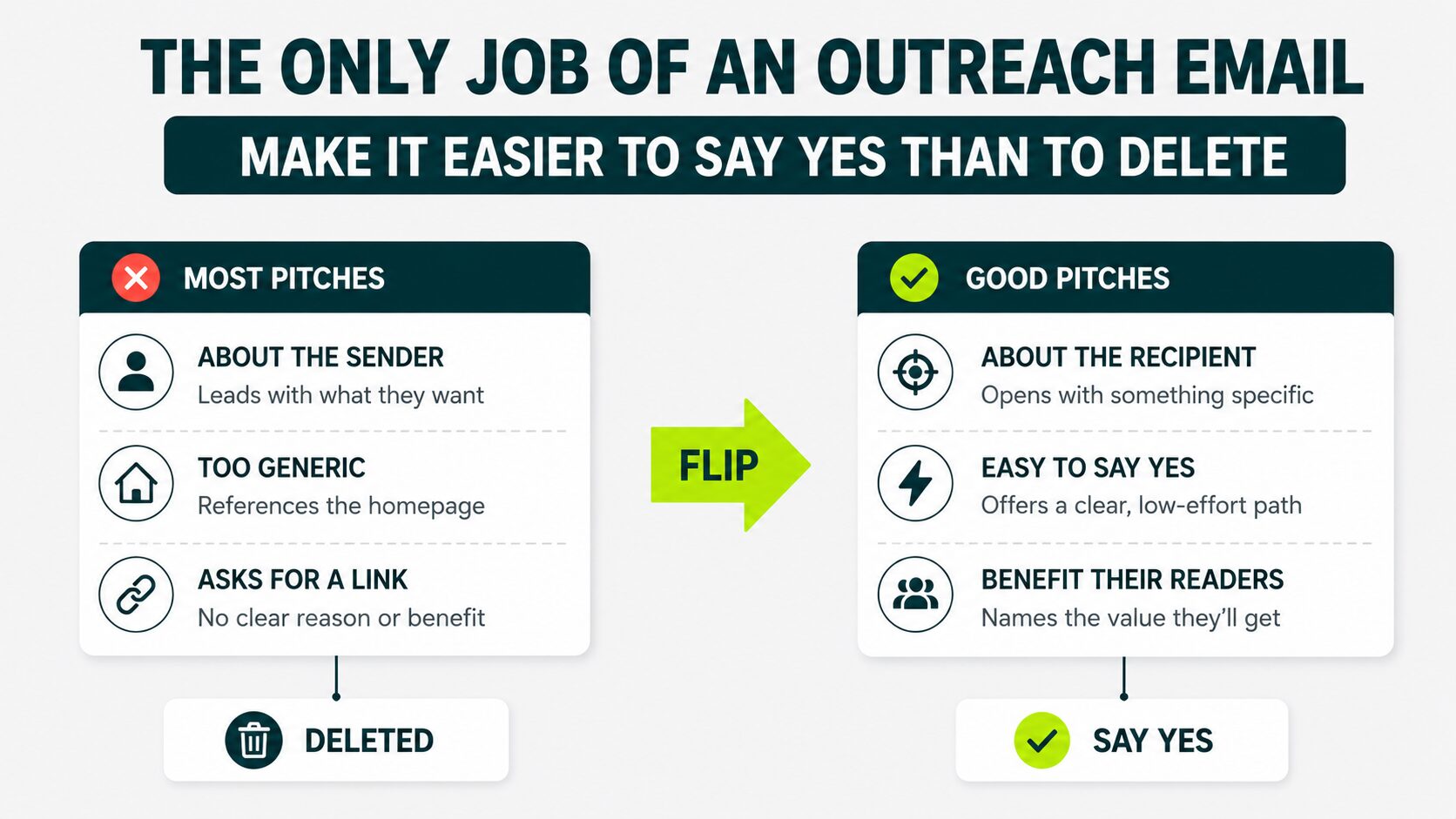
Effective outreach takes the opposite approach. It opens with a relevant reference to the recipient’s content. You show how your resource helps their audience. You give the editor one clear, low-effort action.
Editors act when they see a clear benefit for their readers. Show that benefit, and the reply rate improves.
For a deeper look at the strategy behind successful campaigns, explore the link building outreach process, including prospecting, list building, and outreach planning.
The Editor’s Three-Second Filter
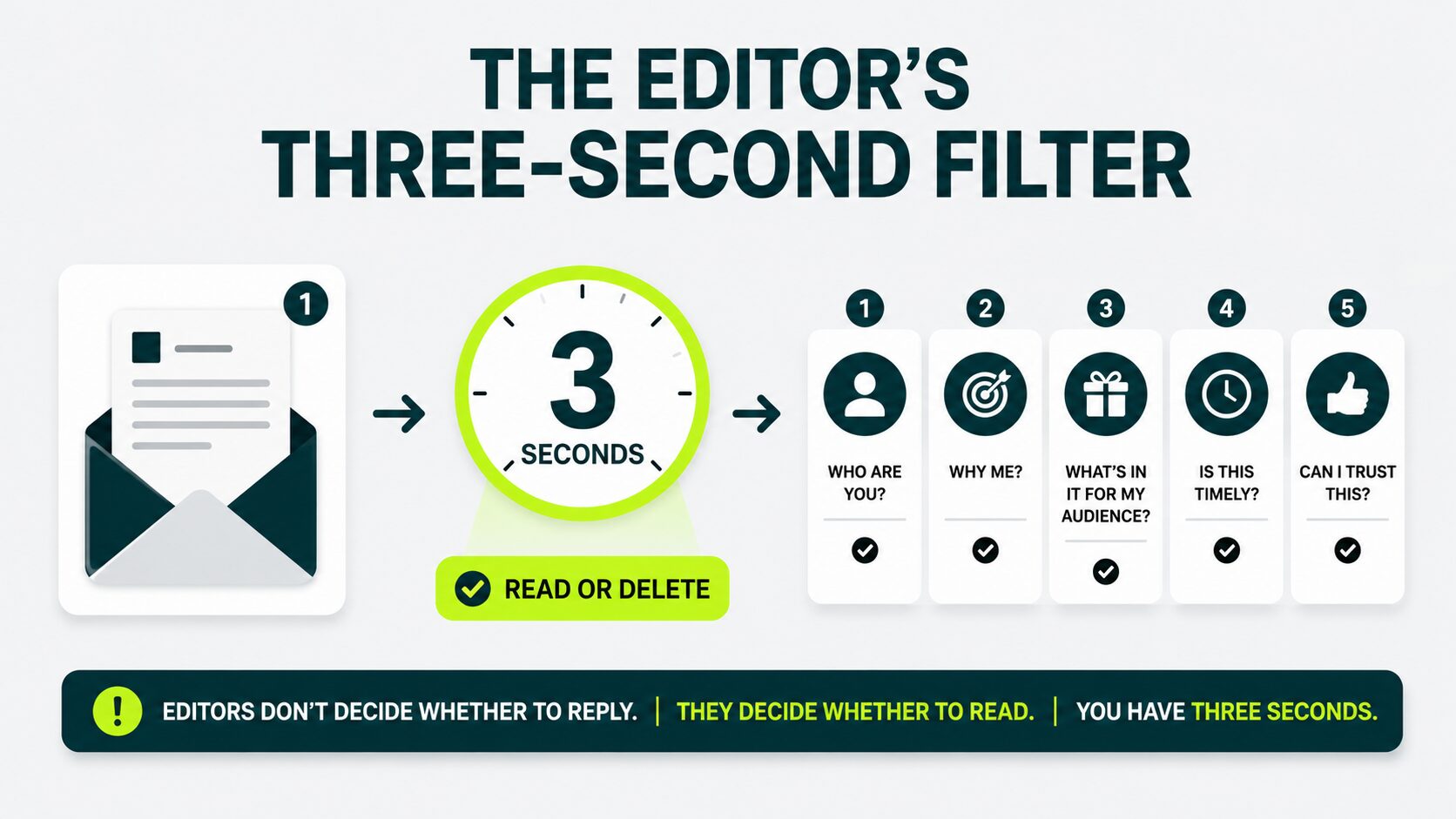
Editors evaluate your email in about three seconds based on: Who are you? Why me? What’s in it for my audience? Is this relevant right now? Can I trust this?
Strong pitches answer all five before the editor opens the email.
You won’t find these questions in an editorial guide, but almost every editor, site owner, and publisher uses them. When you evaluate your pitch through this lens, every line becomes more intentional.
What Editors Ask Before They Open Your Outreach Email
1. Do I Recognize the Sender or the Domain?
Editors trust your email less when they don’t recognize you. Build credibility from the start.
Use your real name and a professional email tied to your real domain. Avoid generic addresses or pretending to be someone the editor already knows.
2. Does the Subject Line Make a Specific Reference to Something on My Site?
Generic subject lines get ignored in crowded inboxes.
“Quick suggestion” gives no context. “Suggestion for your free SEO tools roundup” shows that you researched the site and read a specific page. Specific subject lines prove relevance and earn attention.
3. In the First Sentence, Do They Name the Exact Piece They Read?
Generic compliments such as “I like your content” feel automated. Instead, reference a specific article and a detail from it.
For example, openers such as “I just read your post on broken link building or Wayback Machine searches” show genuine engagement. Editors use your first sentence to decide whether a real person sent the pitch.
4. Is the Ask One Click of Work or Twenty?
Every extra task creates friction between you and the editor. If you ask an editor to update a page, write new content, and review multiple links, you’re asking for significant unpaid work.
Reduce the editor’s effort.Draft the suggested text, provide the URL, and make implementation optional. Make the editor’s task easier, and your chance of getting more replies increases.
5. Would This Be Useful to My Readers If I Said Yes?
Editors prioritize their audience. If your suggestion improves the page, adds value, or fills a gap, they have a reason to consider it.
If the benefit only serves your SEO goals, editors ignore it. Every pitch should answer one question clearly: why would their readers care?
These five filters shape every effective outreach campaign. Strong outreach does more than secure links. You build relevance, trust, and authority.
As you review the templates in this guide, identify how each line addresses one of these filters and reduces friction for the editor.
How to Read a Target Article Before You Pitch
Open the target article and find the section most relevant to your topic. Read that paragraph and one paragraph directly before or after it.
People overuse the word ‘personalization’ in outreach. Adding an editor’s first name is not personalization. It’s a mail merge. Real personalization starts with reading the article.
This simple two-paragraph rule gives you enough context to write a pitch that feels relevant instead of templated.
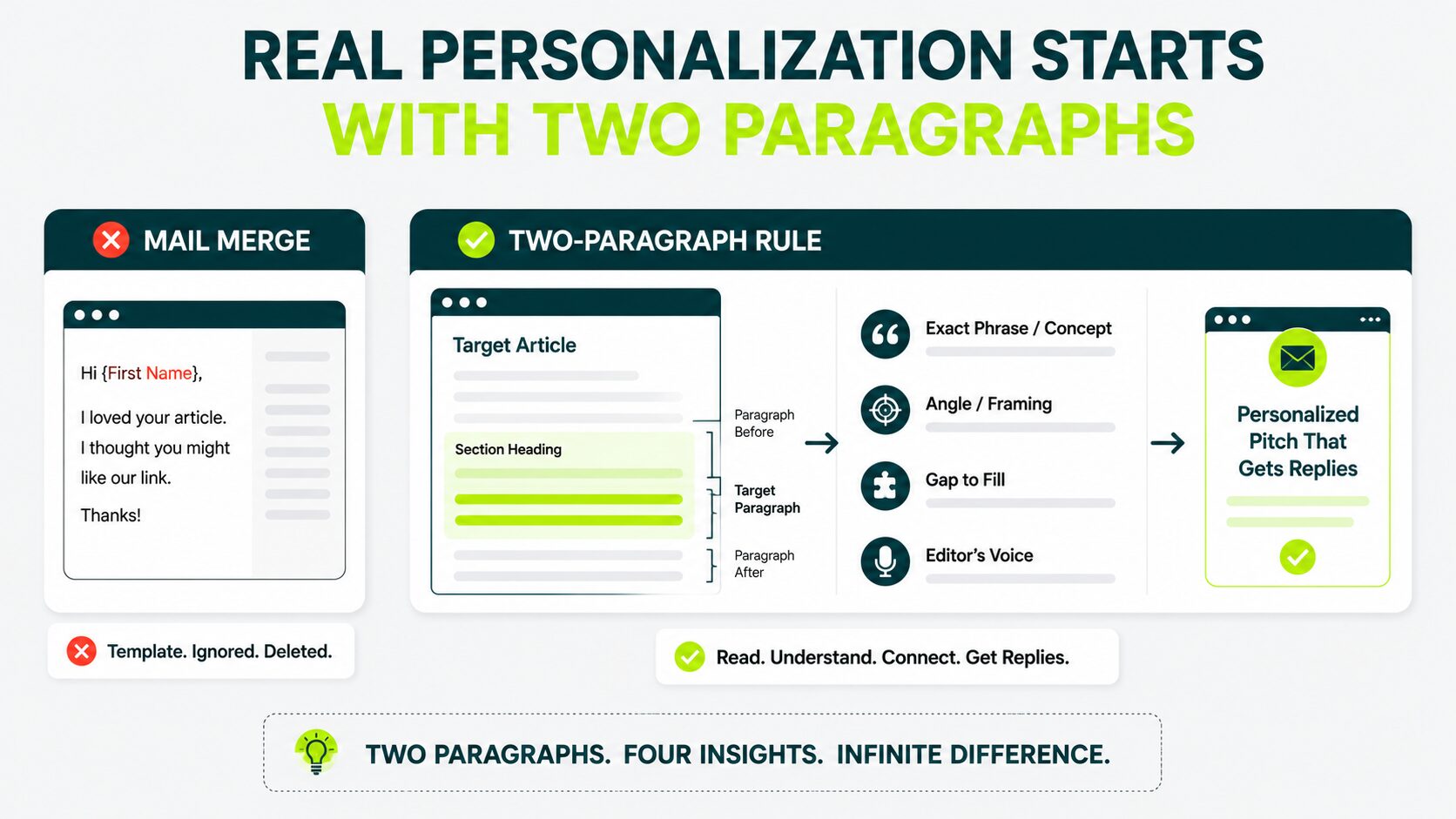
In Those Two Paragraphs, Focus on Four Things
1. The Exact Phrase or Concept the Editor Used
Use their wording in your opening sentence. It shows you read the article and you understand the context.
2. The Angle They Took
Match your pitch to their approach. If they highlight a problem, position your contribution as a solution. If they explain a process, then offer information that expands on it.
3. A Gap
Look for a topic they briefly mention but don’t fully explore. That creates a natural opportunity to fill their content gap by adding value and introducing your resource.
4. The Editor’s Voice
Pay attention to the article’s tone. If it’s conversational, keep your pitch conversational. If it’s formal and data-driven, match that style.
If you can’t identify these four signals within two paragraphs, the article isn’t a strong fit; move on.
Relevant, thoughtful blogger outreach earns responses. Swapping only the name across a large list trains editors to ignore your emails and filter your domain.
The Body Structure Behind Every Template That Works
Every template in this guide follows the same four-part structure: a specific opener, a value sentence, an ask, and a sign-off.
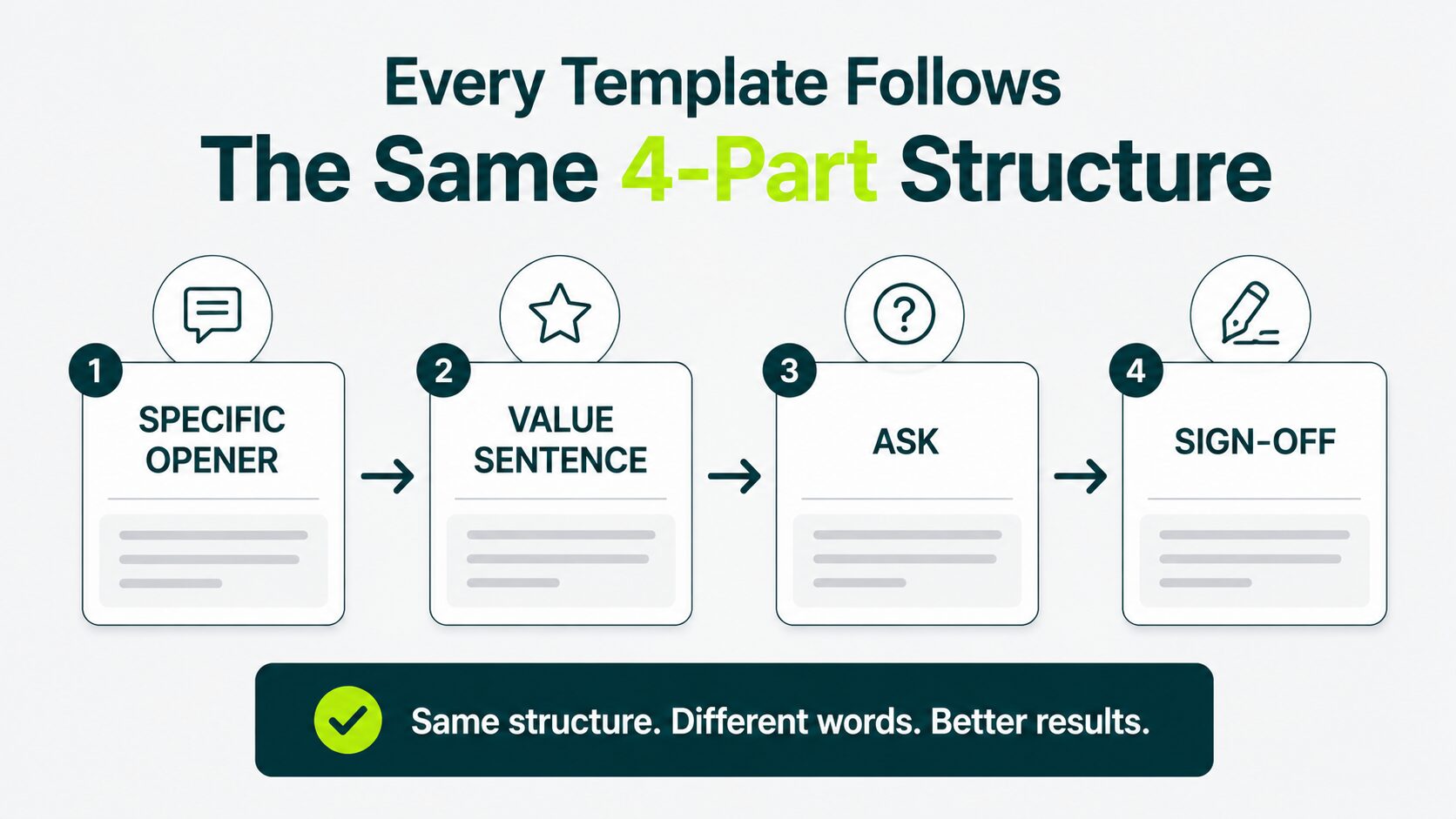
What Goes in Each Part of the Outreach Email
Specific Opener
The specific opener should be one sentence. Name the exact piece you read and one specific thing about it. Name the section, the stat, the angle, or the phrase.
For example, “I just read your roundup of free SEO tools for founders and noticed you grouped Ubersuggest under the keyword research category.”
Value Sentence
The value sentence should include one sentence. Name what you’ve built and why it fits the specific thing you opened with. The value is for the reader. Your link is a side effect of helping their readers.
For example, “I built a keyword cost calculator that fits the same category and adds the pricing comparison your current entries don’t cover.”
Ask
Ask should include one sentence, one verb, and one click of work for the recipient. The recipient should know exactly what saying yes means.
For example, “If it looks like a fit for the page, I’d be glad to send a short summary you can drop in.”
Sign-Off
Sign off with your first name and site name on the line below.
That’s the full template. Four parts, usually under 90 words. The reason every template earns a reply or gets ignored is the part that fails:
- A bad opener kills the pitch before the value sentence is read.
- A weak value sentence turns your ask into a takeaway.
- A weak ask puts too much work on the editor.
Train yourself to spot which part broke when a pitch goes cold. For the broader campaign view, see SEO outreach fundamentals.
Subject Lines That Get Opens
Your subject line exists to get the editor to open the email. Strong subject lines signal relevance.
Most editors check outreach emails on mobile devices. Their inbox usually shows three things: the sender, the subject line, and a short preview of the email body.
If the subject line lacks context, the editor has little reason to keep reading.
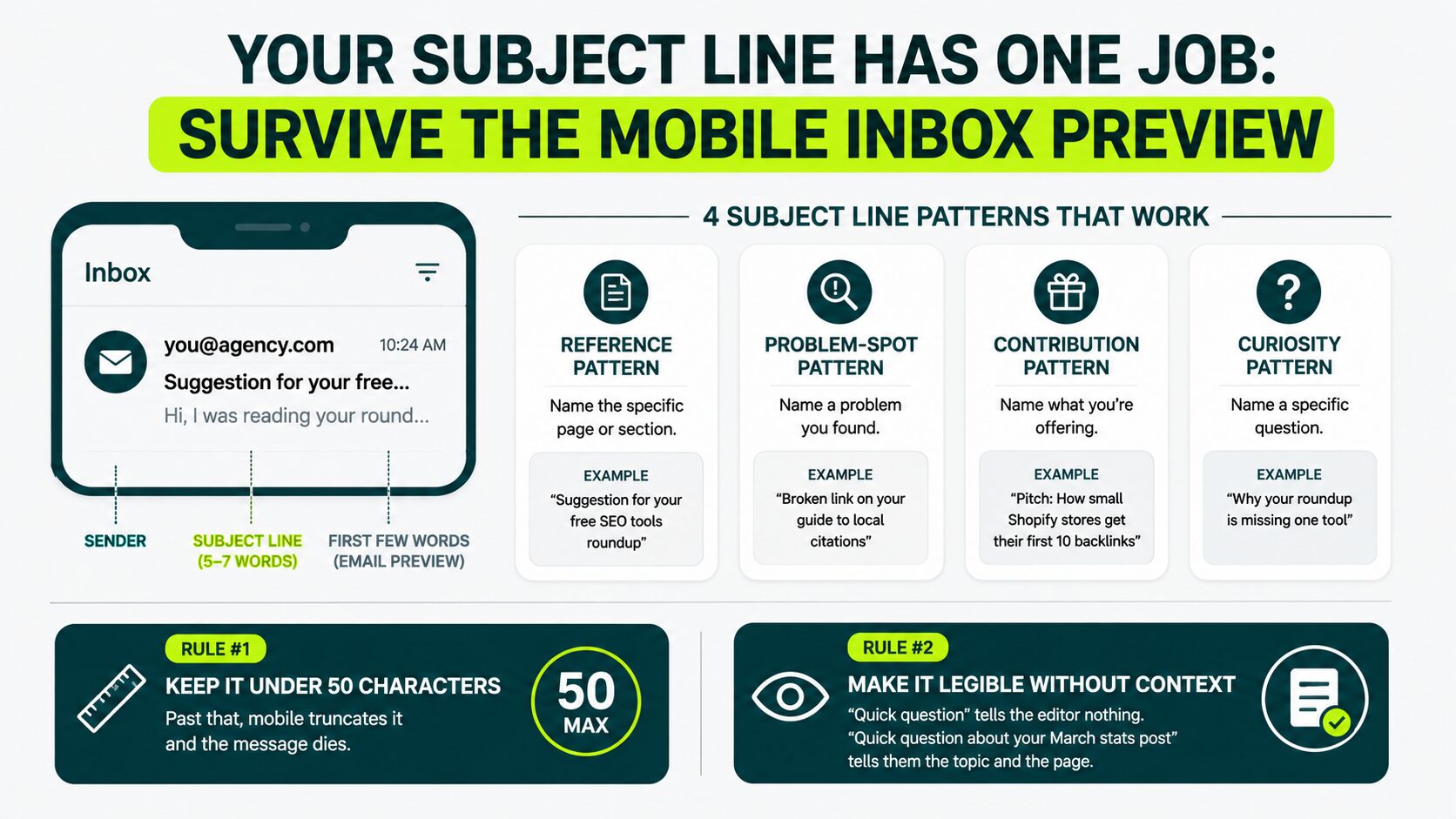
Four Subject Line Patterns Outperform Generic Outreach
The Reference Pattern
Refers a specific page or section. Works for resource page pitches and listicle inclusion.
Examples:
- “Suggestion for your free SEO tools roundup”
- “Addition for your best link building agencies list”
The Problem-Spot Pattern
Spot the problem you found. Best for broken link pitches and unlinked mentions.
Examples:
- “Broken link on your guide to local citations.”
- “Unlinked mention of [brand] in your March post.”
The Contributed Pattern
Names what you’re offering. Use this for guest posts and editorial insertions.
Examples:
- “Pitch: How small Shopify stores get their first 10 backlinks.”
- “A small addition to your post on niche edits.”
The Curiosity Pattern
Points to a specific question without giving the answer, creating curiosity. Use strategically. Editors are tired of vague hooks.
Examples:
- “Question about your broken link section.”
- “Why is your roundup missing one tool?”
Two rules apply across all four patterns above.
- Keep subject lines under 50 characters, as mobile truncates anything longer.
- And make them self-explanatory, as “Quick question” tells the editor nothing, but “Question about your March stats post” tells them the topic and the page.
Templates By Scenario
Choose a pitch template that matches your current scenario. Don’t send all six to the same site.
All six follow the same four-part structure; only the variables change. Each template maps its lines to the editor’s three-second filter.
Resource Page Pitch Template
Pick this one when you find a curated list page that includes pages like yours but doesn’t include you.
Subject: Suggestion for your [page title] roundup
Hi [first name],
I was reading your roundup of [specific topic] last week and noticed you grouped [a specific entry from their list] under [the category they used].
I built [your resource: name plus one-sentence description], which fits the same category and adds [the specific value: what their existing entries don’t cover].
If it looks like a fit for the page, I’d be glad to send a short summary you can drop in. No pressure either way.
[First name]
[Site name]
[Link to your resource]
Why This Passes the Filter
- The subject names their roundup.
- The first sentence proves you read the specific entry or specific category on that page.
- The ask is one paste of pre-written text.
Variable Swap
If the roundup is alphabetical, your value sentence emphasizes a unique feature. If it’s ranked, name a metric you’d credibly score well on. If it groups by audience, name your audience match.
The full resource page link building workflow covers how to find these pages in the first place.
Broken Link Replacement Template
Pick this template when you find a broken link (a 404 error showing a dead page) on a target page where your content could legitimately replace it.
Subject: Broken link on [page title]
Hi [first name],
While reading your [page name] today, I noticed the link to [old anchor text] in the [section name] section returns a 404.
I wrote [your URL] on [topic], which covers what the original link covered. If you’re updating the page, it might work as a replacement, and your readers find what they came for.
[First name]
Why This Passes the Filter
- You flag a problem before asking for anything.
- The subject is genuinely useful. There is no pitch.
- The ask is one URL swap.
Variable Swap
Match the type of the original link. If the broken link points to a definition page, suggest a definition page. If it’s pointed to a tool, suggest a tool.
Type-matching beats topic-matching. The broader broken link building tactic covers how to find broken links at scale.
Editorial Link Insertion (Niche Edit) Template
Use this when a published article on a target site mentions your topic in passing, and a link to your in-depth piece helps the reader.
Subject: A small addition to [article title]
Hi [first name],
I just read your post on [specific topic] and especially liked [the specific point, paragraph, or stat you actually liked].
In the section where you mention [the exact phrase or concept], I think your readers would also want a deeper read on [the angle your piece covers]. I wrote [URL] specifically on that, and it complements your post without overlapping.
If you’re open to it, I’d be glad to suggest a sentence or two that fits your voice.
[First name]
Why This Passes the Filter
- You’re offering to draft the sentence instead of asking them to write.
- The specificity (paragraph plus concept) confirms that you read the article.
- The reader’s benefit is named explicitly.
Variable Swap
Always name the section. Vague references such as “your great post” get filed under generic outreach. To know more about this tactic, see niche edit placements.
Guest Post Pitch Template
Choose this tactic when you can write a useful piece for the target site and want to pitch it.
Subject: Pitch: [proposed working title]
Hi [first name],
I’ve been following [specific column, tag, or series on their site] for a while, and noticed you haven’t covered [a specific angle].
I’d like to pitch a guest post: [working title]. Here’s the rough shape:
- [Sub-point 1]
- [Sub-point 2]
- [Sub-point 3]
I can deliver 1,200 to 1,500 words within two weeks, plus one original chart from data I pulled myself. Recent pieces I’ve written on similar topics: [link 1], [link 2].
Worth a slot in your editorial calendar?
[First name]
Why This Passes the Filter
- Names a specific column or series.
- Names a topic gap (signal that you have read the site).
- Includes timeline, word count, and proof of past work.
Variable Swap
Lead with data hook if they only publish data-led pieces and lead with position if they publish opinions. The guest post outreach guide covers what to do after the pitch lands.
Listicle Inclusion Template
Pick this template when a “best of” roundup ranks tools, products, or sites in your category but doesn’t include yours.
Subject: Worth adding to [roundup title]?
Hi [first name],
Your [roundup title] is the one I keep getting sent by [your audience] asking what tool to pick. Useful list.
One I think belongs there: [your product or site]. Short version of why it fits: [the specific differentiator that matches a gap in the current list].
If you’re updating the roundup, happy to send a one-paragraph entry written in your format. If not, no worries.
[First name]
Why This Passes the Filter
- Compliments the page in a verifiable way (your audience genuinely cites it).
- The “why it fits” is one sentence.
- Offers to do the writing for them.
Variable Swap
Don’t oversell the relationship. If you don’t get the roundup sent to you, drop that line and replace it with a different specific compliment. Lying gets caught and remembered.
Unlinked Mention Template
Use this when a published article mentions your brand or product by name but doesn’t link to your site.
Subject: Quick link suggestion for [article title]
Hi [first name],
Thanks for the mention of [your brand or product] in [article title] earlier this month. Spotted it while doing a brand search.
Would you be open to linking the mention to [your URL]? It points to the page that covers what you described, and it’d give your readers an easy way to follow up.
Either way, appreciated the inclusion.
[First name]
Why This Passes the Filter
- You thank before asking.
- The ask is minimal: add a hyperlink to existing text.
- “Either way” removes pressure.
Variable Swap
If the mention is favorable, keep the warm tone. If neutral, stay neutral. For the broader workflow, see turning mentions into links.
That covers six scenarios. If you’re new to the broader set of twelve tactics that work, the strategies guide shows which templates fit each tactic.
Follow-Up Templates and When to Send Them
Send your first follow-up on day 4. Send the second on day 11. After that, stop.
According to Instantly’s 2026 cold email benchmark, 42%of replies come from follow-up emails instead of first sends. So, skipping the follow-up means losing roughly four in ten of the replies you could have had.
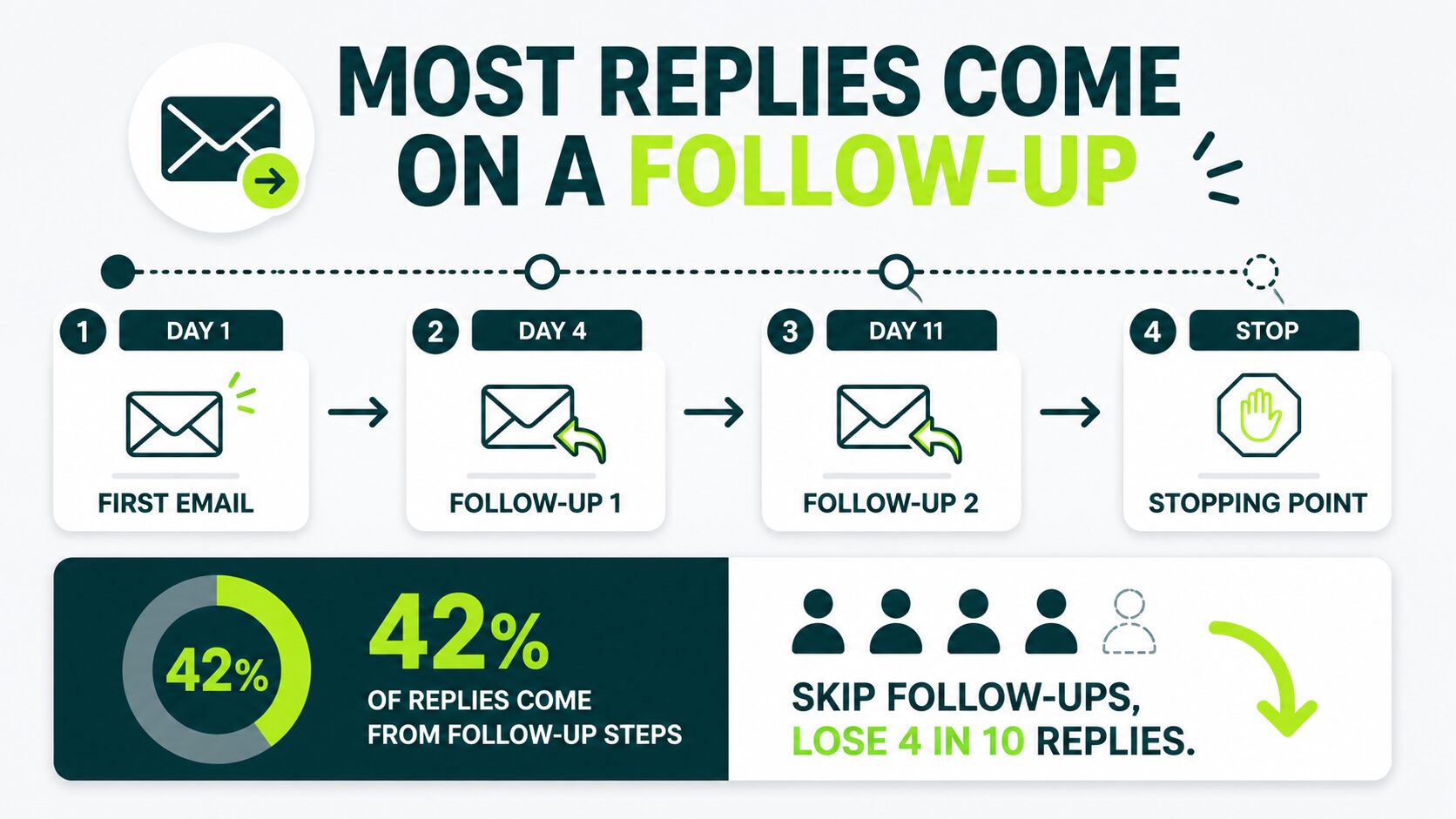
Two follow-ups are usually right; three is almost always one too many.
When to Send
Send your first email on Tuesday, Wednesday, or Thursday morning, in the recipient’s time zone.
Monday inboxes are flooded with weekend backlog, and Friday afternoons get archived without a read.
The 9 A.M. to 11 A.M. window in the recipient’s local time puts your email near the top of morning triage. Past lunch, it gets buried.
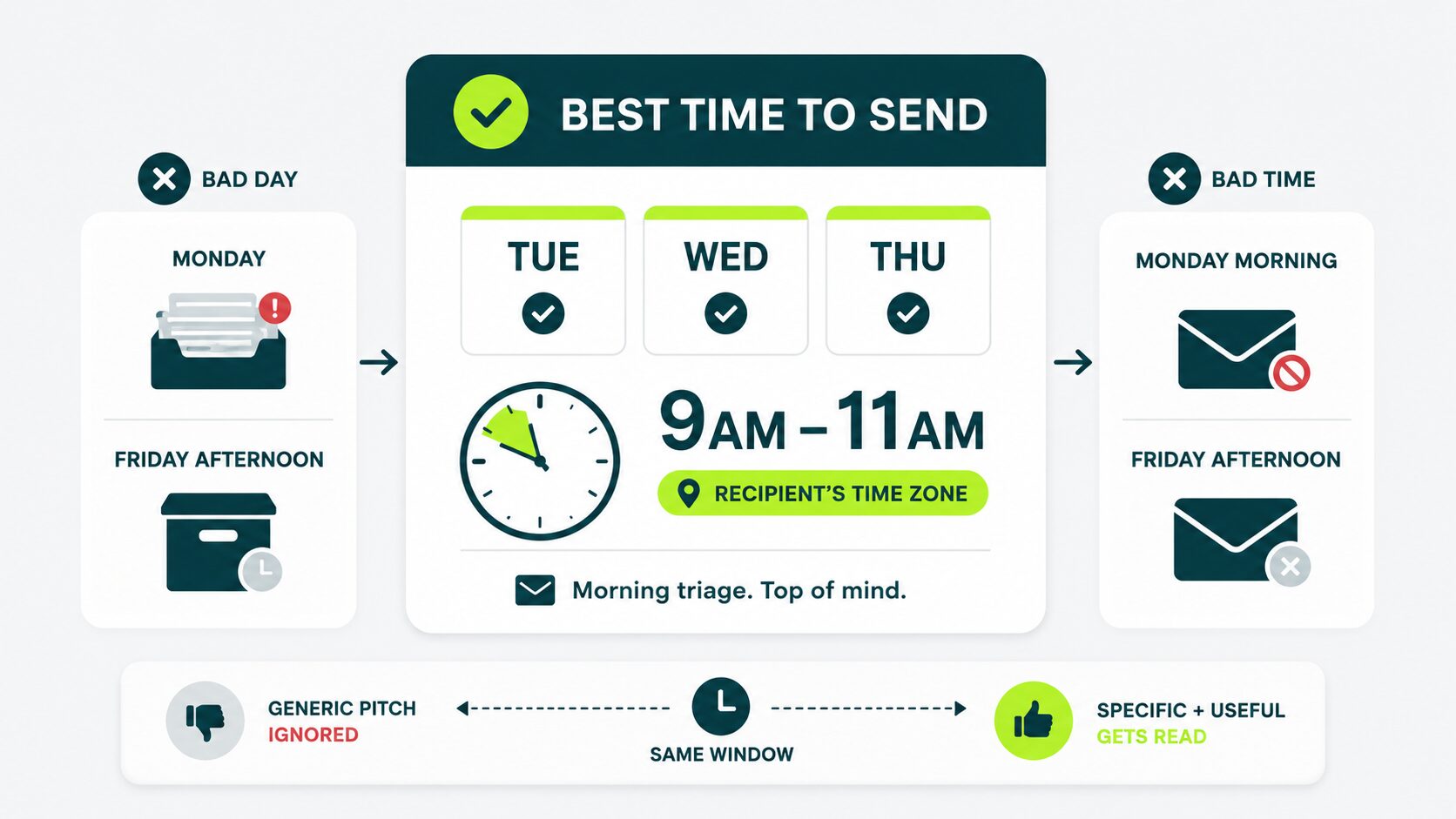
For Follow-ups, the same window works, but don’t apologize over the exact minute. A pitch that’s specific and useful gets read on a Friday afternoon. A generic one gets ignored on a Tuesday morning.
Follow-Up 1 (Day 4)
Example of a first follow-up outreach template:
Subject: Re: [original subject]
Hi [first name],
Quick nudge in case the original got buried. I’d suggested [one-line summary of the original ask].
If now’s not the right time, no worries. If it is, even a one-line reply works.
[First name]
Three rules for the first follow-up:
1. Keep it under 50 words.
2. Restate the ask in one line so the editor doesn’t have to scroll.
3. Remove the original signature block so the email reads as a real reply.
Follow-Up 2 (Day 11)
Example of a second follow-up outreach template:
Subject: Closing the loop on [topic]
Hi [first name],
Closing the loop here, last note from me on this.
If [the specific ask] doesn’t fit, no problem. If it might, here’s the relevant link again: [URL].
Either way, thanks for the time.
[First name]
The “last note from me” line does the heavy lifting. It tells the editor this is your final email and takes the pressure off and often earns you one on the way out.
At Outreach Desk, we follow a simple rule: two follow-ups by default, three only if the email was opened.
From our outreach campaigns, we’ve found that an open-but-unanswered email is a signal worth acting on. The editor saw it, but they just didn’t move.
A third follow-up in that case is a well-timed nudge backed by intent data rather than a chase.
But if the second follow-up gets no open, move on. Don’t send a third email or jump to LinkedIn and dress it up as a new conversation. Chase past two follow-ups and you damage your sender reputation.
When a Template Goes Cold: The Second-Look Pitch
The second-look pitch is your answer. You wait at least 30 days. Change the angle entirely. Reference nothing from the original sequence.
This isn’t a fourth follow-up. You’re starting fresh with a different reason to link.
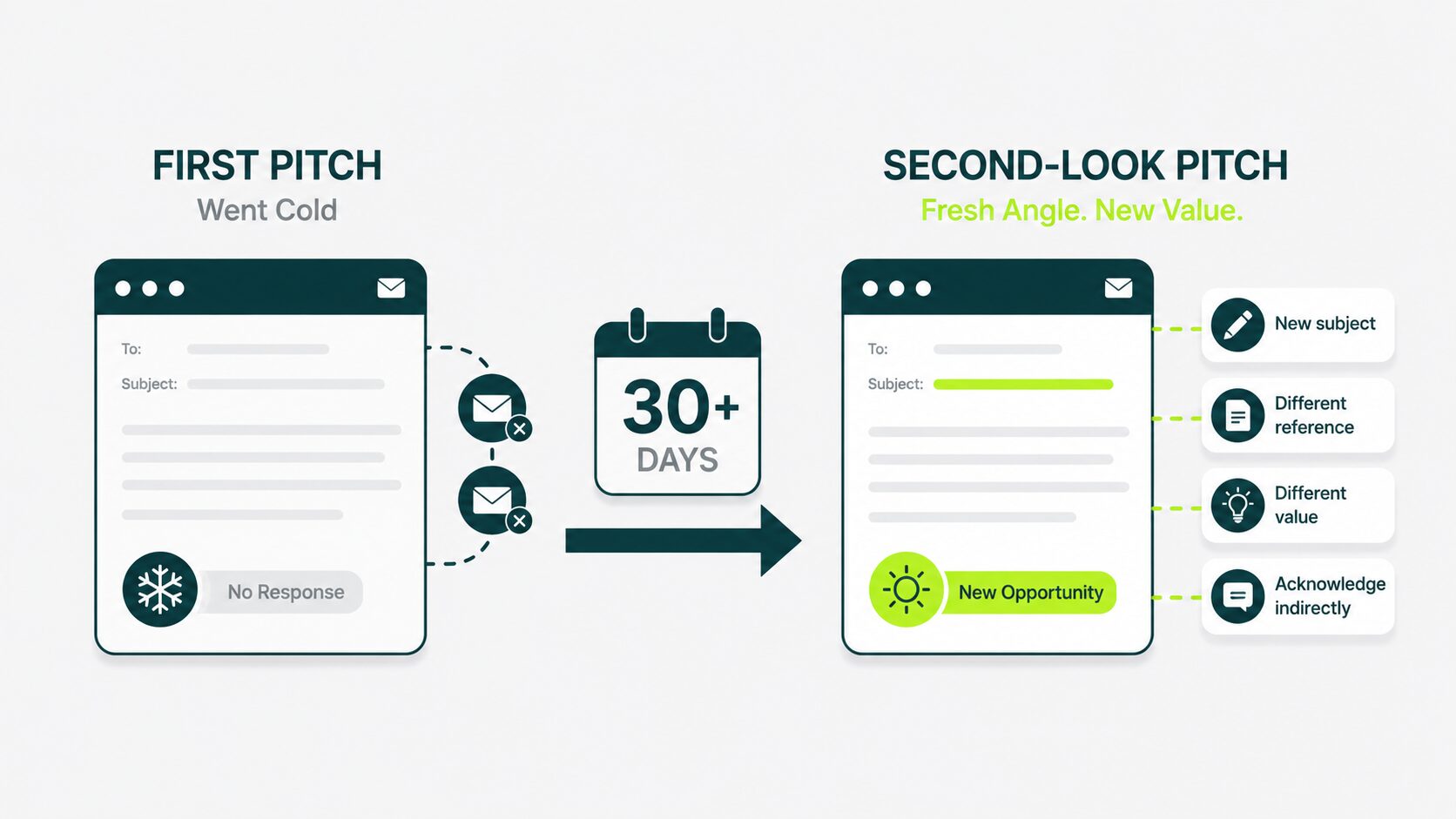
The table below shows what changes in original pitch vs. second-look pitch:
| WHAT CHANGES | ORIGINAL PITCH | SECOND-LOOK PITCH |
|---|---|---|
| Subject line |
Fresh subject | New subject, no “Re:” prefix |
| Reference point |
Any page on their site | Something they published recently |
| Value proposition |
Article or draft sentence | Data, a free quote, or an interview offer |
| How you mention them |
Direct outreach | “I noticed you covered [new topic] last week and thought of you again.” |
In the campaigns we’ve reviewed, the second-look pitches that recover replies are almost always the ones where the angle changed completely, and not just the subject line.
A new subject on the same offer reads like a fifth follow-up. A genuinely different value proposition reads like a first email.
The second-look pitch isn’t always worth it. If the original target was a marginal fit, walk away. Spend your energy on targets where a link would genuinely help their reader.
Eight Common Mistakes That Send Pitches to Trash
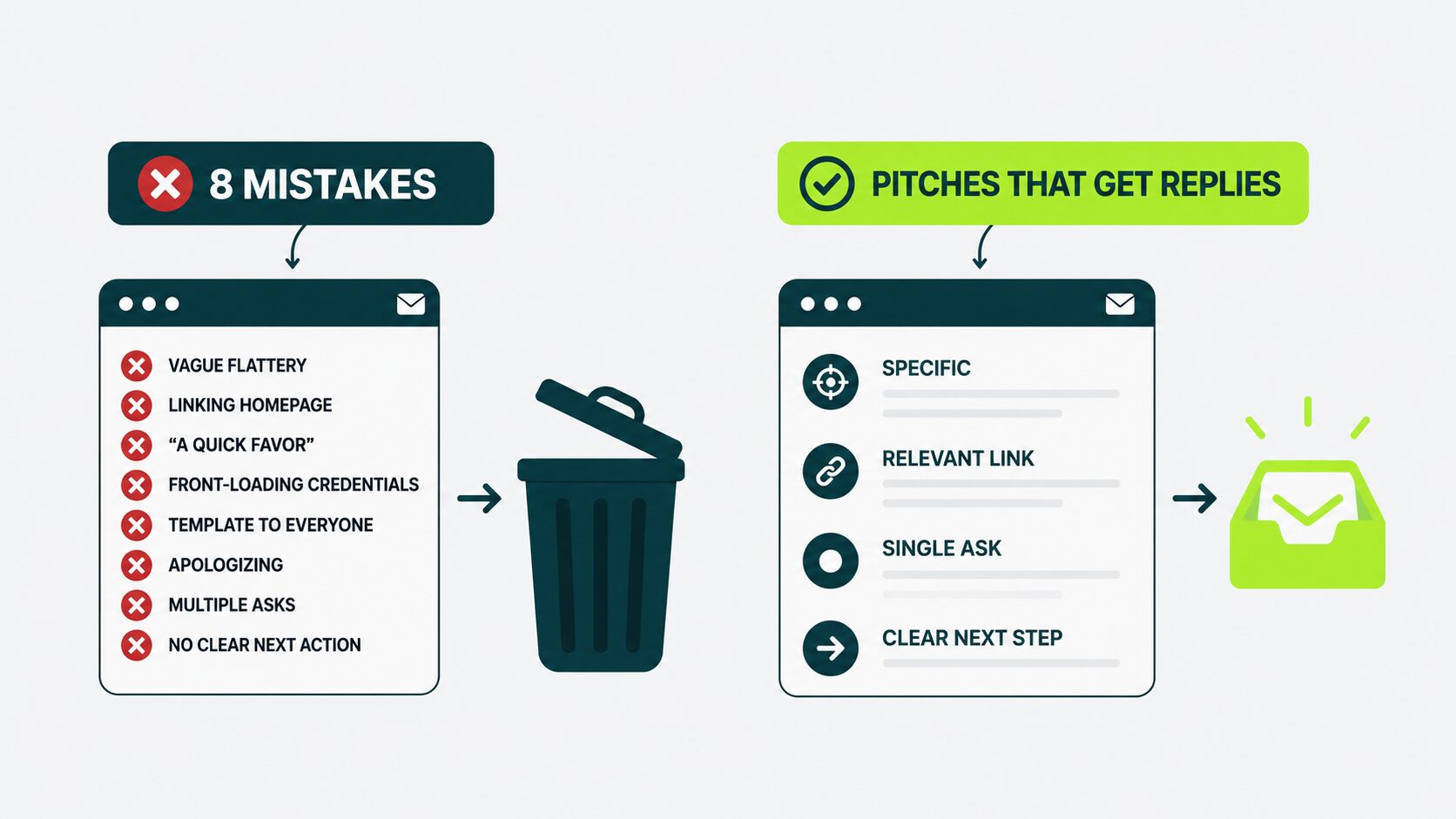
These are the eight common mistakes that come up most often:
| No. |
MISTAKE |
WHY IT FAILS |
DO THIS INSTEAD |
|---|---|---|---|
| 1 |
“I love your content.” |
Editors filter out vague and unverifiable compliments. | Name a specific piece and what it did for you. “Your post on X clarified Y for me” works. |
| 2 |
Linking your homepage |
The editor can’t tell where the link goes, so they don’t click it. | Link to the exact page that fits their article. No specific page? You don’t have a pitch yet. |
| 3 |
Asking for “a quick favor.” |
Favor framing feels transactional and puts the editor on guard. | Describe the ask plainly, no framing needed. |
| 4 |
Front-loading credentials |
Editors don’t care who you are; they care whether the link helps their readers. | Drop credentials into one line at the bottom. |
| 5 |
Sending the same template to 200 sites |
Variables lose their relevance. Your ask stops fitting the site. | Send 20 personalized pitches. They beat 200 generic ones every time. |
| 6 |
Apologizing in the opener |
“Sorry to bother you”. You frame your email as a bother before the editor reads a word | Skip the apology and open with something specific. |
| 7 |
Multiple asks in one email |
The editor reads one ask. The rest get ignored, or sink the whole email. | One pitch, one ask. |
| 8 |
No clear next action |
“Let me know what you think” tells the editor nothing about what saying yes means. | Write the actual sentence: “Just reply ‘yes,’ and I’ll send the URL.” |
The mistake the Outreach Desk team sees most often when auditing client pitch drafts is a vague opener like “Great content,” where a specific reference to the piece should be.
Reply Rate Reality Check
A realistic reply rate for link building outreach in 2026 falls between 5% and 10%. The cold email average across all industries is lower.
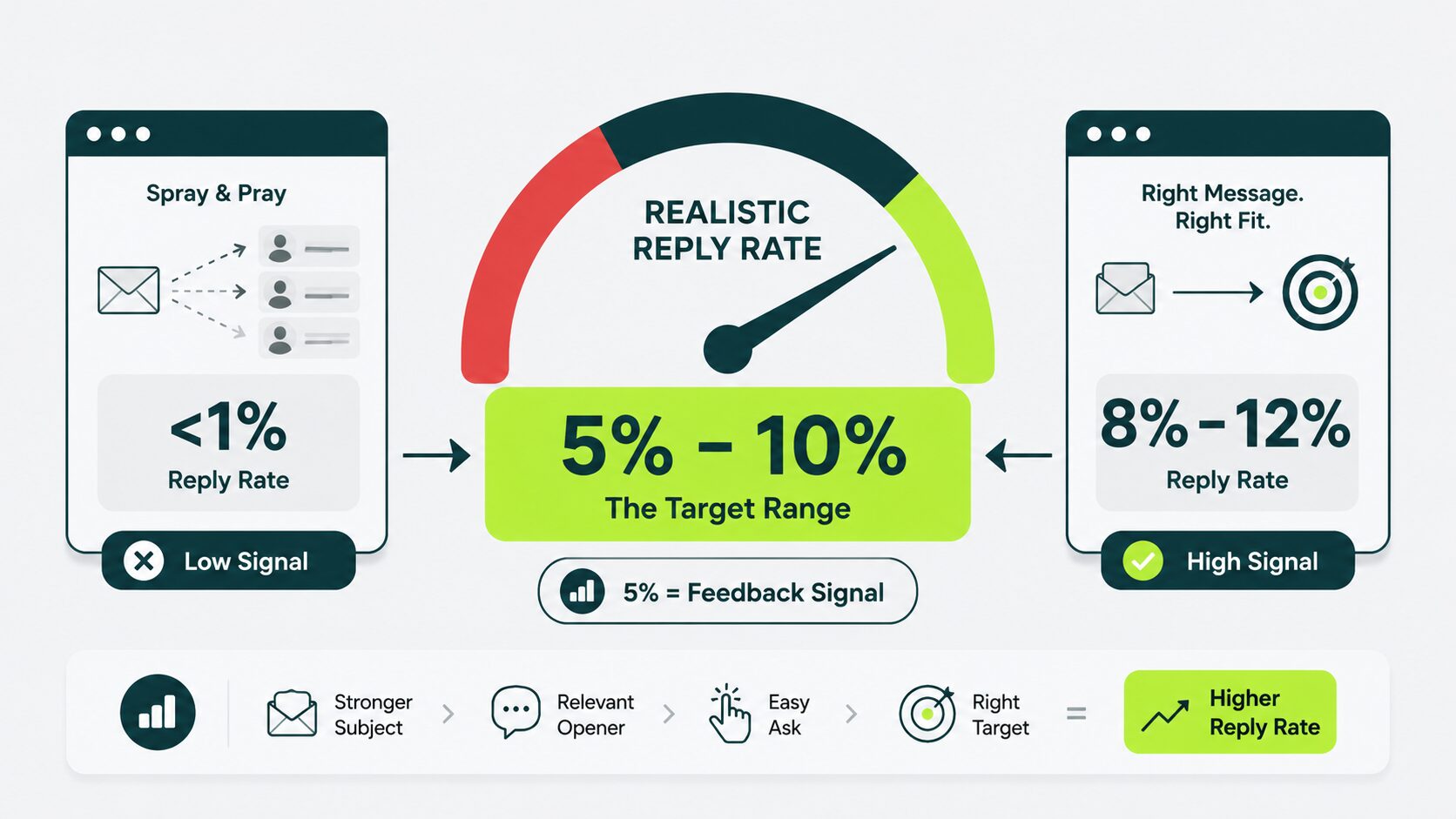
According to Instantly’s 2026 cold email benchmark, the platform-wide average reply rate is 3.43%, with top performers clearing 10%.
Link building outreach outperforms that baseline when it’s done well.
| OUTREACH TYPE | TYPICAL REPLY RATE |
|---|---|
| Cold email average (all industries) | 3.43% |
| Link building outreach (general) | 5% to 10% |
| Personalized outreach to relevant targets | 8% to 12% |
| Generic templates to scraped lists | Below 1% |
If your reply rate is below 5%, run through this checklist:
| WHAT TO CHECK | THE PROBLEM SIGN |
|---|---|
| Subject lines | Not referencing the specific page. Mobile opens collapse |
| First sentence | Opens with “I love your content”. Email is dead before the value lands |
| Your ask | Requires more than one click of work. Editors archive it for later and never come back. |
| Target list | Pitching tactics the site doesn’t use. Even a strong email earns zero replies from the wrong list. |
We see personalized, relevance-first campaigns outperform industry averages. The gap between a targeted list and a scraped one shows up in the numbers every time.
The reply rate is a feedback signal. A consistent reply rate under 3% means your targeting or your templates are off, and volume won’t fix it.
From Template to Editor’s Yes
Open a target article on your list. Pick the template that fits, then fill in the variables from what you actually saw on the page. Read your draft once through the editor’s three-second filter, then hit send.
If this process feels heavier than your week has room for, working with a professional link building agency can help. We handle prospecting, personalization, and follow-ups, so your team can focus on growth while outreach keeps moving.
Ready to take your template in front of the right editors?
Hand off prospecting, personalization, and follow-ups. You get replies. We handle the grind.
How many outreach emails should I send per day?
Start with 20 to 30 per day from a warmed-up domain. Volume without deliverability setup gets you filtered before an editor ever sees the email.
What is a good reply rate for link building outreach?
A good reply rate for link building outreach is 5% to 10%. It’s a realistic target for personalized link building outreach. Personalized campaigns to relevant targets hit 8% to 12%. Generic templates sent to scraped lists rarely clear 1%. If you’re consistently below 5%, the problem is either your target list or your opener, not your volume.
When does it make sense to hand outreach to a specialist instead of running it in house?
When reply rates stay below 5% after three months of testing, or when outreach volume is the bottleneck rather than strategy. A dedicated outreach team already has warmed domains, publisher relationships, and personalization systems in place,removing the two biggest friction points most in-house teams hit.
How long should a link building outreach email be?
Keep it under 90 words. Every effective pitch has four parts: a specific opener, a value sentence, a one-sentence ask, and a sign-off. If your email runs longer than that, you’ve added something the editor doesn’t need to read.
What’s the best day to send outreach emails?
To send outreach email, Tuesday, Wednesday, or Thursday works best. Send between 9 A.M. and 11 A.M. in the recipient’s time zone. Monday inboxes fill up with weekend backlog. Friday afternoons get archived without a read.
How do I find sites to reach out to for link building?
Start with the pages already ranking for your target keyword. If they link out to resources like yours, they’re candidates. For broken link building, run a crawl on competitor backlink profiles and filter for 404s.
For the resource page, search inurl:resources + your topic in Google. Each tactic has a different prospecting method, so match your prospecting approach to the template you plan to use.