Link Building Service for Recruitment Agencies to Win More Placements
Your clients check you out before they call. This builds what they find: member directory listings, trade press bylines, and links from real business sources.

Member directory and association listings
Recruitment trade press bylines
Reporting split by source and audience

4.8/5
Trusted by agencies
and brands worldwide.
Average DR
41 to 89
Campaign Dashboard
DIRECTORY LISTINGS
+7 listings
TRADE PLACEMENTS
+7 bylines
COMMERCIAL RANKINGS
+23 points
ORGANIC TRAFFIC
8,600 to 49,900

Placement
76 total, 58 unique domains





Service Overview
Which Recruitment Sources Publish You, and What They Let You Link To
Four types of sites link to recruitment agencies, and they don’t all offer the same things.
Membership comes first. American Staffing Association runs a directory searchable by location and company. APSCo (Association of Professional Staffing Companies) calls its members reference-checked. American and British bodies keep separate lists, so which applies depends on where you operate.
Trade press comes next. Doors open here, and rules stay published. RecruitingDaily takes contributed articles for thought leadership, but bans promotional content, marketing pitches, or links to services inside articles.
So the biggest open door in recruitment publishing prints your byline. That’s not a reason to skip it. It’s a reason to know which source does which before paying for either.
A backlink is one site vouching for another, like a client reference. A listing matters when membership is gated by conduct. Only then does it certify something a client can check. Most of this job is telling the two apart and saying which is which.
Three things define recruitment link building done right:

Sources Named Before the Work Starts
You get the specific directories, publications, and business sources open to your firm.

Read the Rules Before Pitching Anything
Your assigned strategist checks every publication’s contributor terms first, so you get what’s allowed.

Count Links, Bylines, and Listings Separately
Three different outcomes, reported as three different things, because they do different jobs.
How We Work
How Your Recruitment Link Building Campaign Works
A recruitment campaign runs six steps, from an eligibility audit through placement, with everything that lands reported back to you.
Your campaign starts with what you already qualify for.
Your association memberships, the sectors you recruit in, the countries you operate in, and how long you have been trading all decide which directories are open to you.
Two agencies of the same size get different maps. One trading for a decade in a single sector clears gates a six-month-old generalist cannot. If you have bought links before, this is also where your strategist reviews what is already pointing to your site.
Next, your strategist decides which pages need authority. For most agencies, that is the sector pages and the service pages.
A page about hiring finance staff in one city and a page about executive search compete for different searches and need different sources. Some of the pages worth linking to don’t exist yet, and that’s often where the work starts.
The best listings are the ones you qualify for, rather than the ones you buy.
Association membership is the clearest example. It gives you a directory entry prospective clients can search, and no competitor can pay their way past the gate.
Your strategist checks which bodies you already belong to, which ones your trading history would qualify you for, and what each one actually publishes about its members.
Open directories that take anyone with a credit card get handled separately, and honestly. Some are worth having as a floor. None is authority, and your report will say which is which.
Recruitment trade publications post their contributor rules, which is rarer than it sounds.
Read them first and you know what each placement can carry. RecruitingDaily invites thought leadership from practitioners but bans promotional content and links to services inside articles. Recruiting Headlines invites writers to share opinions on recruiting and frames the payoff as a personal brand boost.
Neither will link to your services page, and both are still worth having. A byline in front of people who hire agencies does work a link can’t.
Your strategist identifies which of your expertise makes a piece editor-ready.
The last two source types sit outside the directories and the trade press.
The first is your own numbers. Salary movement, time to hire, vacancy volumes by sector. Published properly, that kind of thing gets referenced by people writing about your market, and a reference is a link.
Then the ordinary business sources: chambers, sector bodies, local press, and the organizations in the industries you actually recruit for.
If you work more than one region or sector, this runs separately in each, because a placement in one market does nothing for a desk covering another.
You see what landed, where it landed, and which of the four source types produced it.
Links, bylines, and listings are counted separately rather than added together, because they don’t do the same job.
Declined pitches are reported too. The trade press turns down most of what it receives, and a report showing only wins tells you nothing about where the effort went.

Expected Results
Outcomes Recruitment Link Building Service Delivers
When the sources that vet your business start publishing about you, clients find proof of your presence before they ever get on a call.
Ranking for the Searches That End in a Briefing
An employer looking for a recruitment partner searches by sector and city, and those searches are decided partly by how many real sites point to yours.
Sector and regional terms usually move first, because they face less competition than the broad ones every agency chases.
The result: your firm competes on the searches that produce briefings, rather than on terms that never filled a vacancy.

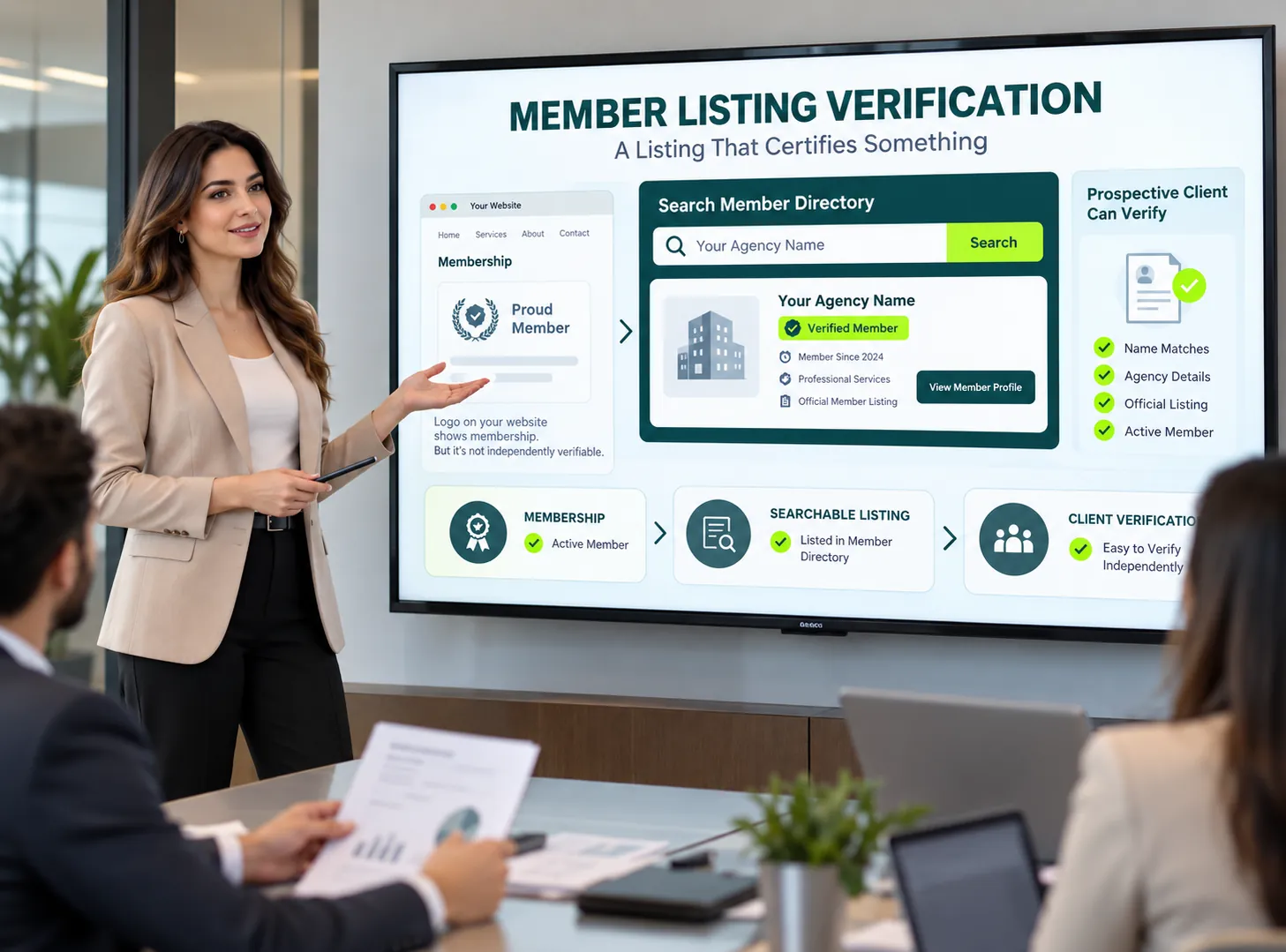
Standing a Client Can Verify Without Asking You
Your memberships already exist. What they usually aren’t is visible anywhere a prospective client looks while they are shortlisting three agencies. A searchable member listing puts that standing where they will find it. A logo in your website footer does not, because anyone can put a logo in a footer.
The result: the memberships you already hold start working during the shortlist.
A Byline That Does What a Link Cannot
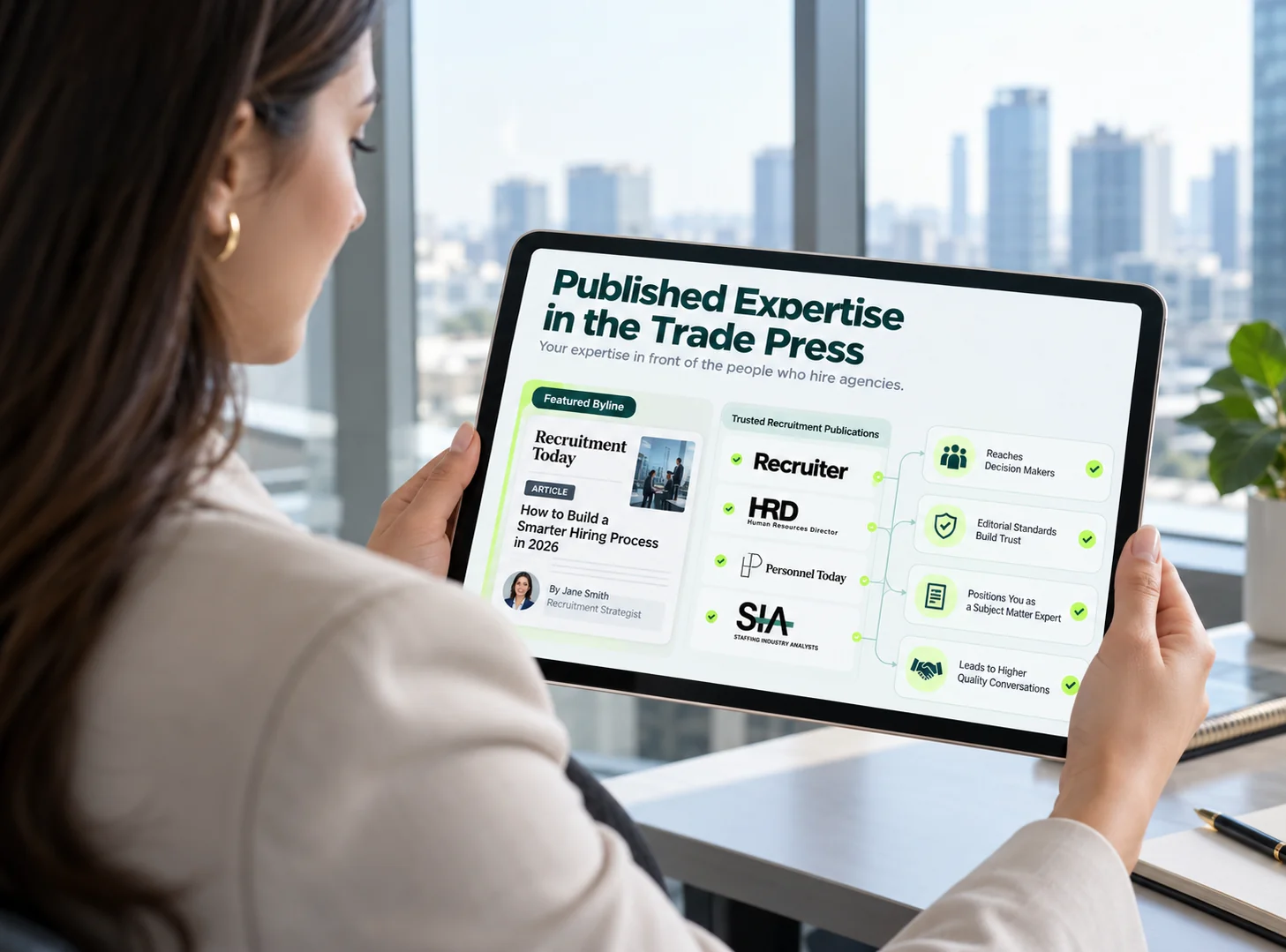
Contributed articles in recruitment publications put your name in front of the people who hire agencies, under rules that keep the piece editorial.
Most of those placements carry no link to your services page, and that constraint is what makes them worth reading. An editor who bans promotional content is running something readers trust.
The result: your expertise is on record somewhere a client already reads, which changes the first conversation.
The Same Authority, Working on Both Sides
Your website serves two audiences who never meet. Employers deciding whether to brief you, and candidates deciding whether to register with you.
Directory listings and published expertise reassure both, from one domain, without you running two marketing programs.
The result: one body of work does double duty, rather than a candidate campaign and a client campaign competing for the same budget.

Client Success Stories
What Clients Say About Our Recruitment Link Building
Reviews from recruitment firms that turned memberships and published expertise into search visibility.

4.8/5 

5/5 
Rating on Google


Working with this team made recruitment link building much clearer. They understood which directories, publications, and industry sources actually made sense for us instead of chasing random placements. Reporting was also easy to follow.

Marketing Director,
Recruitment Agency

We wanted more than generic guest posts. The team focused on recruitment-relevant sources, checked publication rules before outreach, and helped turn our existing expertise and memberships into useful visibility. The process felt thoughtful from start to finish.
Head of Marketing,
Staffing Firm

What stood out was how practical their approach was. They separated links, listings, and bylines instead of treating every placement the same. We always knew where coverage came from and why it mattered for our recruitment business.
Managing Director,
Executive Search Firm
Service Framework
Investment, Timeline, and Deliverables
You’re buying individual placements, each one a link a real editor or directory agreed to publish, earned against your standing rather than rented by the month.

Sectors and Regions
One specialist desk needs a different scope than a generalist firm working six sectors across two countries.

Service Mix
Permanent, contract, executive search, and outsourced hiring pull on different sources and different publications.

Existing Standing
Firms already holding association membership or a long trading history start from further ahead.

Campaign Duration
Most firms see ranking movement within 3 to 4 months, with placements compounding well past 12 months.
Directional pricing
Recruitment link building is priced by monthly volume. More links per month means a lower cost per link. Every placement sits on a site with 1,000 or more monthly visitors from search. Sites are also scored 40 to 95 on Domain Rating, a 0 to 100 strength score from the tool Ahrefs. You get a detailed proposal after your strategy call, scoped to your sectors and your service mix.
What You Get
Every Placement, Every Source, Every Outcome Reported
See which of the four source types is producing results, and what each placement actually delivered.

Live Placement Reporting
Every placement arrives as a link you can open, with its source and the page it points to.

Outcome Type Tracking
Links, bylines, and listings are reported separately, so a byline never gets counted as a link to your services page.

Per-Sector Reporting
Results come split by desk and region, because coverage in one sector does little for a team working another.

Source Rule Notes
Each publication’s contributor terms are recorded alongside the placement, so you can see what was permitted and what wasn’t.
Our Approach
A Rules-First Approach to Recruitment Authority
You get sources named before work starts, their rules read first, and links, bylines, and listings reported separately.
| Factor | GENERIC LINK BUILDING AGENCY |
 |
|---|---|---|
| Publication Rules | Guest posts sold with no reference to what the publication actually permits. |
Contributor terms read first, so nothing is promised that the source forbids. |
| Sources | "Industry sites" promised without naming a single one. |
Named directories, publications, and business sources, given to you before work starts. |
| Memberships | Treated as a logo for the website footer. | Mapped first, because membership decides which directories are open to you. |
| What Gets Counted | Every placement reported as a link, whatever it actually is. |
Links, bylines, and listings reported separately, because they do different jobs. |
| Pricing | Quoted privately after a discovery call. | Published on this page, before you talk to anyone. |
Who We Help
Recruitment Businesses We Support
Wherever you place it, we build the authority that matches how clients actually shortlist an agency.

Permanent Recruitment

Temporary and Contract Staffing

Executive
Search

Specialist and Technical Recruitment

Recruitment Process Outsourcing and Embedded Teams

Multi-Office and International Firms
Common Questions
Frequently Asked Questions
Get clear answers on link sources, guest post limits, and association membership. Know what you are buying before the strategy call.
On the biggest open recruitment publications, no, and it’s worth knowing why. RecruitingDaily publishes its submission rules openly, and they ban promotional content in articles, including links to services or demos.
What you get there is a byline in front of the people who hire agencies. Instead, links to your commercial pages come from directories, business sources, and coverage of your data. Any provider promising you both from the same placement hasn’t read the rules.
A general agency runs the same playbook across every industry it serves. A dedicated link building agency tends to vet publishers and build anchor strategy with more depth than a shop juggling ten other deliverables.
That focus matters more for recruitment agencies, where publisher relevance to your niche and client-facing credibility carry more weight than raw authority scores.
Four types. Member directories, where your association standing is the gate. The recruitment trade press, which publishes practitioners under editorial rules. Coverage of research and data you publish.
And ordinary business sources in the sectors you recruit for. You get the specific list for your firm before any outreach starts, rather than a category description after the invoice.
No, but it opens doors that would otherwise stay shut. The American Staffing Association runs a directory a client can search by location and company name. APSCo describes its recruitment members as reference-checked.
Neither listing is for sale. If you’re already a member, your campaign starts further ahead. If not, the other three source types still work, and the directories section covers how to judge the open ones.
For clients, and the candidate side benefits anyway. Employers shortlisting agencies do more research before making contact than candidates do, and they check things candidates never look at.
The authority that satisfies an employer sits on the same domain a candidate lands on, so one program serves both. If your priority is candidate volume rather than client briefings, say so on the call, because that changes which pages get the work.
Recruitment and staffing agencies can target relevant HR, employment, business, industry, and professional websites where backlinks provide genuine topical relevance and value.
It can, and it’s one of the few assets your business generates as a byproduct. Journalists and analysts writing about your sector need numbers, and yours are first-hand. What decides whether it earns anything is how reachable the findings are. Data people can quote gets quoted. This is also the slowest of the four source types, so treat it as compounding rather than as a campaign.
No, and the word agency causes real confusion here. This page is for recruitment firms buying link building for their own website. White label link building is for agencies reselling the work to their own clients under their brand.
If you want the general version of what we do for business-to-business firms, B2B link building covers it. Your strategist will point you to the right one on the call.
Pricing depends on monthly link volume. Higher volume means lower cost per link. Every placement sits on a site with 1,000 or more monthly visitors from search and a Domain Rating of 40 to 95.
What shapes your number: how many sectors and regions you cover, your mix across permanent, contract, and search work, and whether you already hold association membership. You get a detailed proposal and pricing after your strategy call.
Ready to Find Out Which Sources Will Publish Your Firm?
You’ll see which listings are open to you, which publications take your kind of story, what each one permits, and what the work costs.
4.8/5
Trusted by agencies
and brands worldwide.