Link Building Service for Rehab Centers to Rank for Treatment Searches
Link building service for rehabs that earns accreditation listings, healthcare directory placements, and local links to help your facility rank when people search for treatment.

Accredited directory and association listings
Clinical and recovery publication placements
Reporting split by source and location

4.9/5
Trusted by agencies
and brands worldwide.
DOMAIN AUTHORITY
19 to 44
Campaign Dashboard
LINKING WEBSITES
+28 referring domains
PUBLICATION PLACEMENTS
+27 features
PAGE-ONE SEARCHES
“State + treatment” search terms
ORGANIC TRAFFIC
+7,500 monthly visits

ADMISSIONS LEADS
9 to 38





Service Overview
The Four Sources That Link to Treatment Centers, and What Gates Each One
Four types of sites typically link to addiction treatment centers, and each has its own requirements. Accredited provider directories come first. CARF maintains a public directory for accredited providers and programs.
Association listings work similarly. NAATP requires members to provide direct addiction recovery services, hold state licensure or certification, follow its code of ethics, and maintain accreditation through CARF, The Joint Commission, or another recognized accrediting body. This requirement has applied to existing members since 2019. Clinical and recovery publications, as well as local and community organizations, are other common sources.
LegitScript certification also matters. Its standards prohibit “co-ownership of, or any formal or informal business affiliation with, lead generators” and state that this “may be grounds for immediate denial.”
Three things define rehab link building done right:

Gates Mapped Before You Buy Anything
Your team separates what your accreditation already covers from what raises questions before pitching a placement.

Sources Named Up Front
The focus stays on specific directories, associations, and publications that are open to your programs and relevant to your work.

Every Number Traceable
Your strategist reports nothing that doesn’t come from an organization’s own page or your own campaign data.
How We Work
How Your Rehab Center Link Building Campaign Works
A treatment center campaign runs six steps, from an accreditation audit through placement, and your team reports back everything that lands.
Your campaign starts with what your programs already qualify for.
Your accreditation, state licensure, association memberships, and the levels of care you actually provide determine which directories are open to you.
This is also where your team reviews anything already pointing to your site, including placements you bought before you become a client.
Next, your strategist decides which of your pages need the authority. For most centers, that is the program pages and the location pages.
A detox page and a dual diagnosis page address different searches and require different sources to feed them.
Some of the pages worth linking to don’t exist yet, and that’s often when the work starts.
The listings worth having are those your accreditation opens. CARF’s provider search lists accredited providers and lets the public filter programs.
Association membership works similarly, with criteria your strategist checks before submission. Your team separately handles open directories that accept anyone who pays.
Some provide a useful baseline. None automatically represents authority, and your report distinguishes each.
Publications in this field feature people who do clinical work. That means editors read a piece about how your program handles sometimes difficult cases, while they skip one about how good your center is.
Your clinical staff is the asset here. A named clinician writing about what they actually see can make the difference between a submission an editor accepts and one they delete.
Your strategist identifies the strongest program story and follows each publication’s rules.
Every place you operate has its own set of organizations willing to link.
Chambers, community health coalitions, local press, recovery community organizations, and the employers and courts that already know your programs exist.
Those land faster than accreditation and publication work, which is why they usually produce the first movement you see.
If you run more than one location, this runs separately in each. A relationship in one state does nothing for a facility three states away.
You see what landed, where it landed, and which of the four source types produced it.
Your team splits by facility when you run more than one.
Declined pitches are reported too. Clinical publications turn down most of what they receive, and a report showing only wins tells you nothing about where the effort went.

Expected Results
Outcomes Rehab Link Building Delivers
When the bodies that already accredit you start appearing in search results, people comparing programs can find you through verifiable sources.
Ranking for the Searches That End in a Call
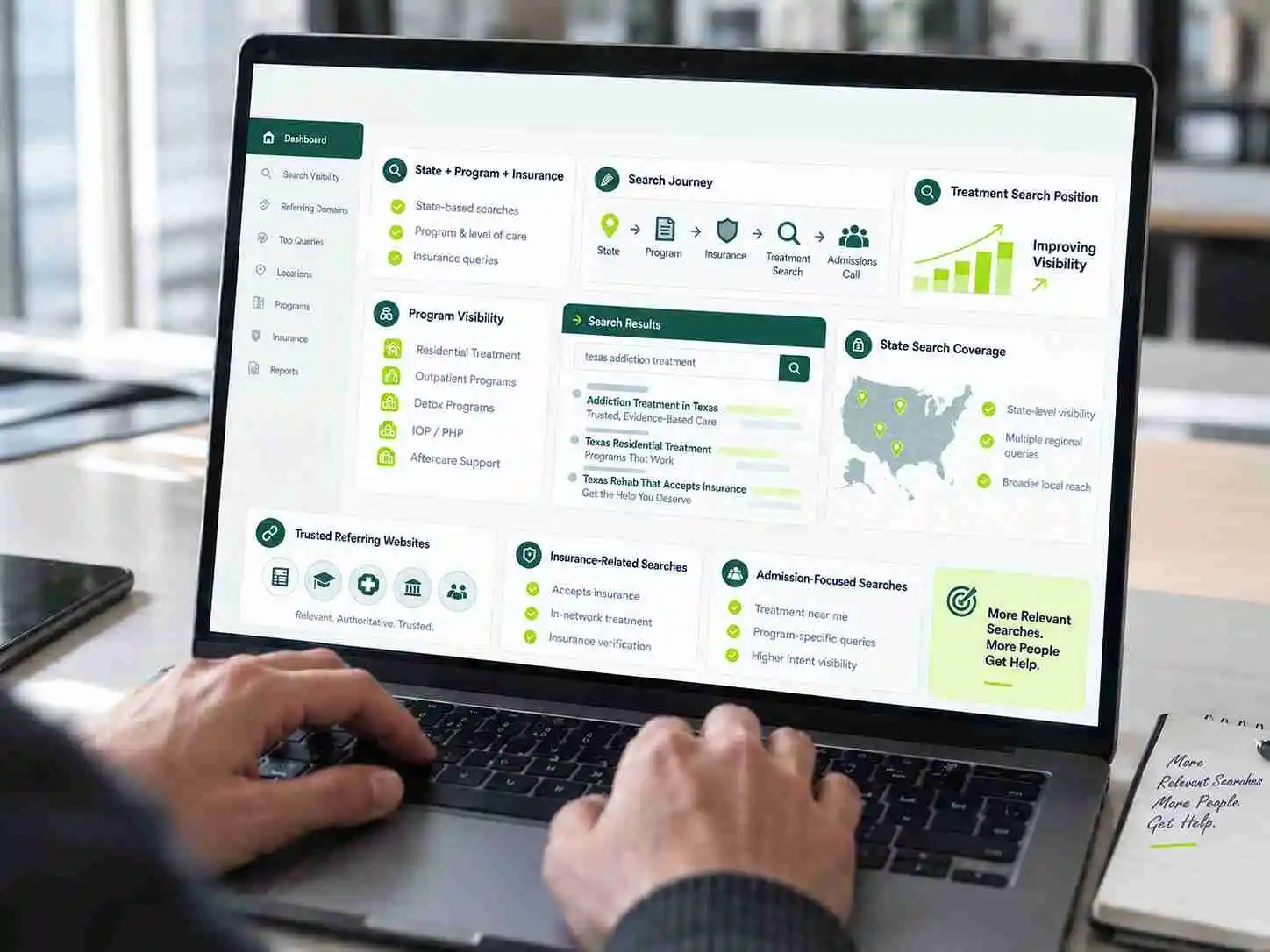
Someone looking for treatment may search by state, level of care, or insurance. How many relevant sites link to your center can affect how your pages appear for those searches.
State and program terms often move first because they have less competition than broad national terms that every center targets.
The result: Your programs can show up for searches that connect people with the right level of care and location.
Where Your Accreditation Gets Seen
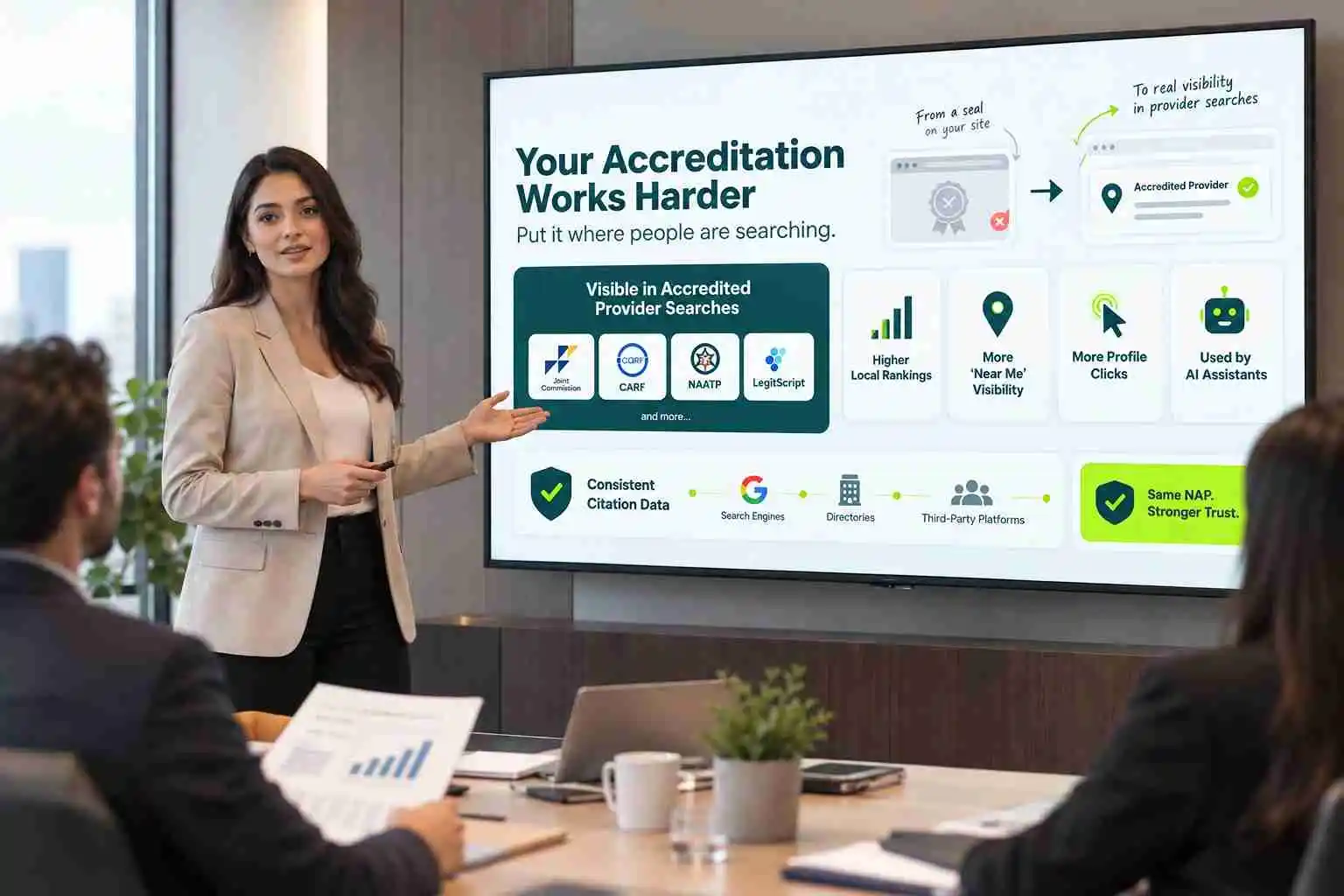
Your accreditation takes work to earn and maintain. But people searching for treatment may never see it if it only appears on your website.
An accredited provider directory puts your center in front of people comparing programs. That gives your accreditation another place to support your center’s credibility.
The result: People can see your accreditation while researching treatment options, before they reach your website or admissions team.
Your Clinicians on Record Where Referrers Read
Clinical and recovery publications often feature named practitioners, giving your clinicians a chance to appear where other professionals already look for information.
These placements can reach referring providers, discharge planners, and other professionals who help people choose treatment programs. They also give your clinical team a presence beyond your own website.
The result: Referrers can encounter your clinicians and their expertise before they contact your admissions team.

Visibility That Stays After an Ad Ends
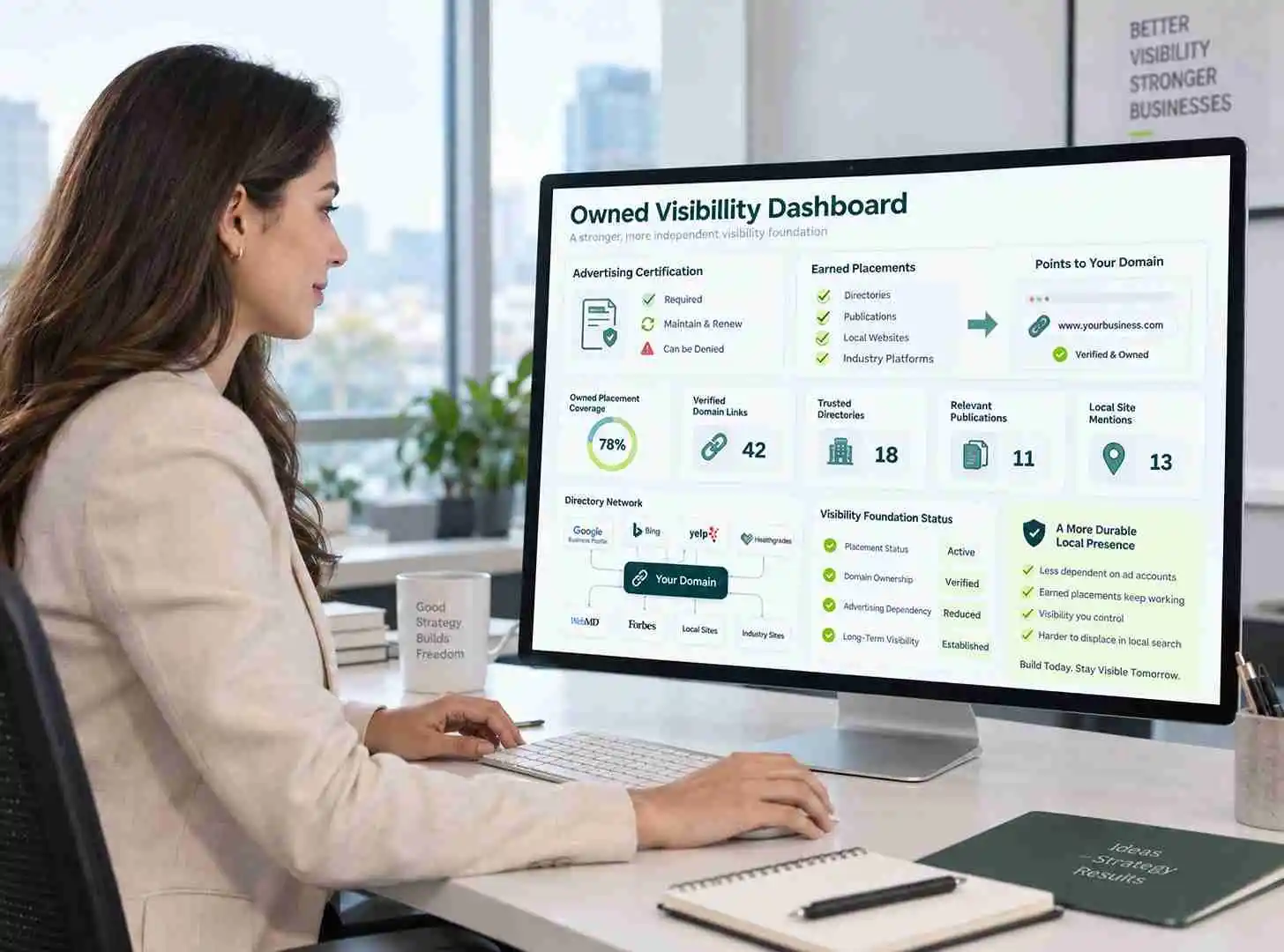
Advertising in this field requires certification, and LegitScript can deny or revoke that certification based on its requirements.
Earned placements in directories, publications, and local sites can continue to drive traffic to a domain you own. They remain in place even when an ad campaign pauses or ends.
The result: Your center can keep building visibility through placements that remain online over time.
Client Success Stories
What Clients Say About Our Rehab Link Building Service
Reviews from treatment centers that turned accreditation and clinical expertise into search visibility.

4.9/5 

5/5 
Rating on Google


We had the credentials and accreditation to establish trust, but they weren’t doing much for our search visibility. The link building campaign helped us earn relevant placements that referenced the standards and services our center is known for. It gave prospective patients and referral partners another reason to see us as a credible provider.

Executive Director
Addiction Treatment Center

Our focus was on building visibility beyond the usual treatment directories. The campaign targeted relevant healthcare, behavioral health, and recovery publications, giving our center stronger connections to the sites and organizations people already use when researching treatment options. We began seeing more relevant referral traffic and inquiries.
Director of Marketing
Rehabilitation Center

We didn’t want generic backlinks that had little connection to addiction treatment. Outreach Desk focused on placements relevant to our programs, accreditation, and clinical services. That helped strengthen the pages that matter most to our admissions team and brought more qualified people into the consultation process.
Admissions Director
Rehab Center
Service Framework
Investment, Timeline, and Deliverables
Your visibility can grow through placements you earn on relevant directories, publications, and local sites.

Locations and Markets
One facility needs a different scope than a provider running six across three states.

Levels of Care
Residential, outpatient, detox, and dual diagnosis pull on different directories and different publications.

Existing Standing
Centers that already hold accreditation and association membership start from a position of greater advantage.

Campaign Duration
Ranking movement can begin within a few months, while placements can continue to compound over time.
Directional pricing
Once we understand your focus, such as substance abuse, mental health, dual diagnosis, detox, or PHP and IOP programs, we’ll outline exactly what we include, what placements to expect, and what your authority growth looks like over time.
What You Get
Every Placement, Every Source, Every Location Reported
You see which of the four source types is producing, and which facility it’s producing for. Results split by location when you run more than one.

Live Placement Reporting
Every placement arrives as a link you can open, with the source it came from and the page it points to.

Source Type Tracking
You see whether directories, publications, or local work is landing, so effort shifts towards whatever is actually producing.

Per-Location Reporting
Results come split by facility, because a community relationship in one county does little for a program three states away.

Gate Notes
Each source is recorded with what gated it, so you can see what your accreditation opened and what anyone could have bought.
Our Approach
A Gate-First Approach to Treatment Center Authority
You set sources before work starts, read published standards first, and make sure every reported number is traceable to its source.
| Factor | GENERIC LINK BUILDING AGENCIES |
 |
|---|---|---|
| Placement Risk | Agencies sell paid placements with no reference to what the certification standards actually say |
We read published standards first, and bring anything that raises a question to you |
| Sources | Agencies promise "industry sites" without naming a single one |
We name accredited directories, associations, publications, and local sources, and give them to you before work starts |
| Accreditation | Generic agencies treat accreditation as a seal for the website footer |
We map accreditation first, because it decides which listings are open to you at all |
| Where Numbers Come From | Agencies repeat industry statistics from other agencies’ blog posts |
Only what an organization publishes about itself, or campaign data we can show you |
| Pricing | Agencies quote pricing privately after a discovery call |
We publish pricing on this page, before you talk to anyone |
Who We Help
Treatment Centers We Support
Whatever levels of care you provide and however many facilities you run, we build the authority that matches how families and referrers actually compare programs.

Residential and Inpatient Treatment

Outpatient and Intensive Outpatient Programs

Detox and Medical Stabilization

Dual Diagnosis and Mental Health Treatment

Sober Living and Recovery Residences

Multi-Location and Multi-State Providers
Common Questions
Frequently Asked Questions
Get clear answers on rehab center link building, covering accreditation, trusted placements, reporting, and healthcare strategies.
We start with your accreditation, your location, and the treatment you offer, then match your facility to accrediting bodies, treatment directories, health publications, and local sources that fit. We vet every source before outreach begins, and as a trusted link building agency, we put visibility and trust ahead of link volume.
Some paid listings are worth having as a baseline, and we’ll say which ones. But in this case, that decision deserves a second look.
LegitScript’s published certification standards state that it prohibits any formal or informal business affiliation with lead generators and may immediately deny certification as a result.
Whether a particular listing falls under that rule is a question for you and LegitScript to answer, rather than one we should answer on your behalf. We’ll flag anything that looks worth asking about rather than quietly buying it.
There are four types we look at: accredited provider directories, where your accreditation determines eligibility; association member listings, where published criteria determine who can join; clinical and recovery publications, which feature practitioners; and local and community organizations in the places you operate.
We’ll give you the specific list for your programs before any outreach starts, and our resource on which directories are worth it covers how to evaluate the ones that are open to you.
It opens doors that would otherwise stay shut. NAATP’s published membership criteria require accreditation by CARF, the Joint Commission, or another recognized body, along with state licensure and a code of ethics, and this requirement has applied to existing members since 2019.
CARF’s own provider search lists accredited providers. If you hold accreditation, your campaign starts further ahead. If you don’t, the local and publication layers still work while accreditation is in progress.
We’re not the right people to answer that, and an agency that tells you otherwise should worry you.
Compliance questions in this field are the responsibility of your counsel and the certification program itself. What we can tell you is what we do: we work with sources that publish editorial links, we read published standards before pitching anything, and we raise anything that looks like a question rather than buying it and hoping.
Your compliance team should see the source list before work starts.
Because we checked where they come from. The numbers circulating on this keyword, on cost per link, reply rates, and how many links it takes to rank, mostly trace back to marketing agencies’ own blog posts rather than to research.
On a page about healthcare, we’d rather carry no statistic than one we can’t stand behind. How to judge link quality covers what to actually look at instead.
Our free healthcare link building resource covers the broader medical source layer, including directories and publishers that serve healthcare in general.
This page is about our service, specifically addiction treatment, where the relevant directories, accrediting bodies, and advertising rules differ. If you want some background before a call, start with the guide.
The cost of rehab link building depends on factors such as the number and quality of links needed, the competitiveness of your local or regional market, the types of sites you’re targeting (addiction recovery blogs, mental health publications, healthcare directories, community resource pages, etc.), and whether the campaign is standalone or part of a broader healthcare strategy.
Rehab centers competing in high-demand areas or offering specialized programs, such as dual diagnosis treatment or luxury residential care, will typically require a more extensive link building effort than those serving smaller or less competitive markets.
To explore our services and find the right fit, visit our pricing page.
Ready to Find Out Which Listings Your Accreditation Opens?
It takes one conversation, and the answer is different for an accredited residential program than for an outpatient provider still working toward it.
4.9/5
Trusted by agencies
and brands worldwide.