Elder Care Link Building That Starts With Credentials You Hold
Elder care link building service that turns the credentials you earned into listings and links, so more families find you when they search for care.

Inventory every credential held
Check where each’s listed
Separate listings from links

4.8/5
Trusted by agencies
and brands worldwide.
Referring Domains
8 → 20
Campaign Dashboard
ACCREDITATION LISTINGS
entries that gained a website link
PLACEMENTS EARNED
editorial links on published pages
FAMILY INQUIRIES
+180% care inquiries from search
ORGANIC TRAFFIC
+163% monthly visitors from search

Keyword in Top 10
SERVICE POSITIONING SECTION





Service Overview
Elderly Care Link Building, Starting With Your Credentials
The Community Health Accreditation Partner publishes your website in its public locator if you submit one. Most accredited providers never do. On the locator’s Atlanta results, 4 of 18 listings carry a website link. On its Riverside results, 2 of 28.
The Best of Home Care directory publishes a profile for every winner, yet the three profiles we checked carried no link to the agency’s own site. Winners earn the Best of Home Care award based on client satisfaction scores according to Activated Insights.
The Eldercare Locator will not list you. It routes families to Area Agencies on Aging and public services.
A backlink is one website pointing at another, like a hospital discharge page naming partner agencies. A listing without one certifies you and points nowhere.
So the audit comes first: list every credential, then keep only those that publish something a search engine can follow.
Three things define good elder care link building:

Credentials Audited First
You see every accreditation, award, and membership the organization holds, and which of them publish anything at all.

Listings Reported Apart From Links
We record anything that certifies you without linking to your site as a listing only, and never count it as a placement.

Every Market Handled Separately
A group’s locations compete in different areas, so we give each one its own sources and its own line.
How We Work
How Your Elder Care Link Building Campaign Works
Your elder care campaign follows six steps, starting with a credential audit. We begin outreach after completing the audit and target-page strategy.
Your strategist starts your campaign by building two lists.
The first list covers everything your organization has earned: service line accreditations, satisfaction awards, state licenses, and association memberships.
The second list records what each credential publishes: a profile with a website field, a profile without one, or no public listing at all.
A provider that runs home health and hospice holds different accreditations than a provider that runs private duty care only, so the two lists rarely look alike.
If you have bought links before, we also review the links already pointing to your site.
Next, your strategist identifies the pages that need stronger authority from relevant links.
For most providers, those pages include service line and location pages rather than the homepage.
Families searching for hospice care have different needs than those seeking private duty care. Each service line may need its own relevant landing page.
For a group, we build the plan per market, because links from one metro may have limited relevance to a location in another state.
Some pages worth linking to do not exist yet, and building them is often where the work starts.
Your strategist identifies accreditation listings that can include your website link. Each organization is checked your business belongs to it, and you get a record of what its listing publishes: name only, name and address, or name and link.
When a listing carries no link, the report counts it as a listing only rather than as a placement.
If a listing includes a website field but doesn’t show your URL, we check whether we can add it.
Your strategist tracks open directories that accept paid submissions separately. These may support basic visibility, but a listing alone doesn’t establish editorial authority.
Your strategist identifies relevant organizations that already work alongside your business and may have a reason to link to your website.
They include hospitals and discharge planning teams, physician practices, senior centers, and the elder law and estate planning firms whose clients need what you provide.
These organizations may help families navigate care options, making relevant provider resources useful to their audiences.
Your strategist sends personalized emails to relevant site owners, asking them to link to an appropriate page. An existing relationship can make that outreach more straightforward.
Your strategist identifies relevant organizations and publications in every market you serve.
Local business groups, community health events, sponsorships, faith communities, and regional press all count.
For a group, we plan outreach separately for each market. This requires more coordination than running a campaign for one location.
A sponsorship in one county may have limited relevance to a location in another state. We report activity by market so you can see where outreach is progressing.
Your strategist reports each placement by source and target market. You get a separate directory listing from editorial placements so the report doesn’t count one as the other. You also get the live URL for each placement we report.
They list pitches that didn’t result in a placement separately to give you a clearer view of the outreach activity.

Expected Results
Outcomes Elder Care Link Building Delivers
When the accreditations you hold point at your pages, authority builds on a site you control instead of on someone else’s directory.
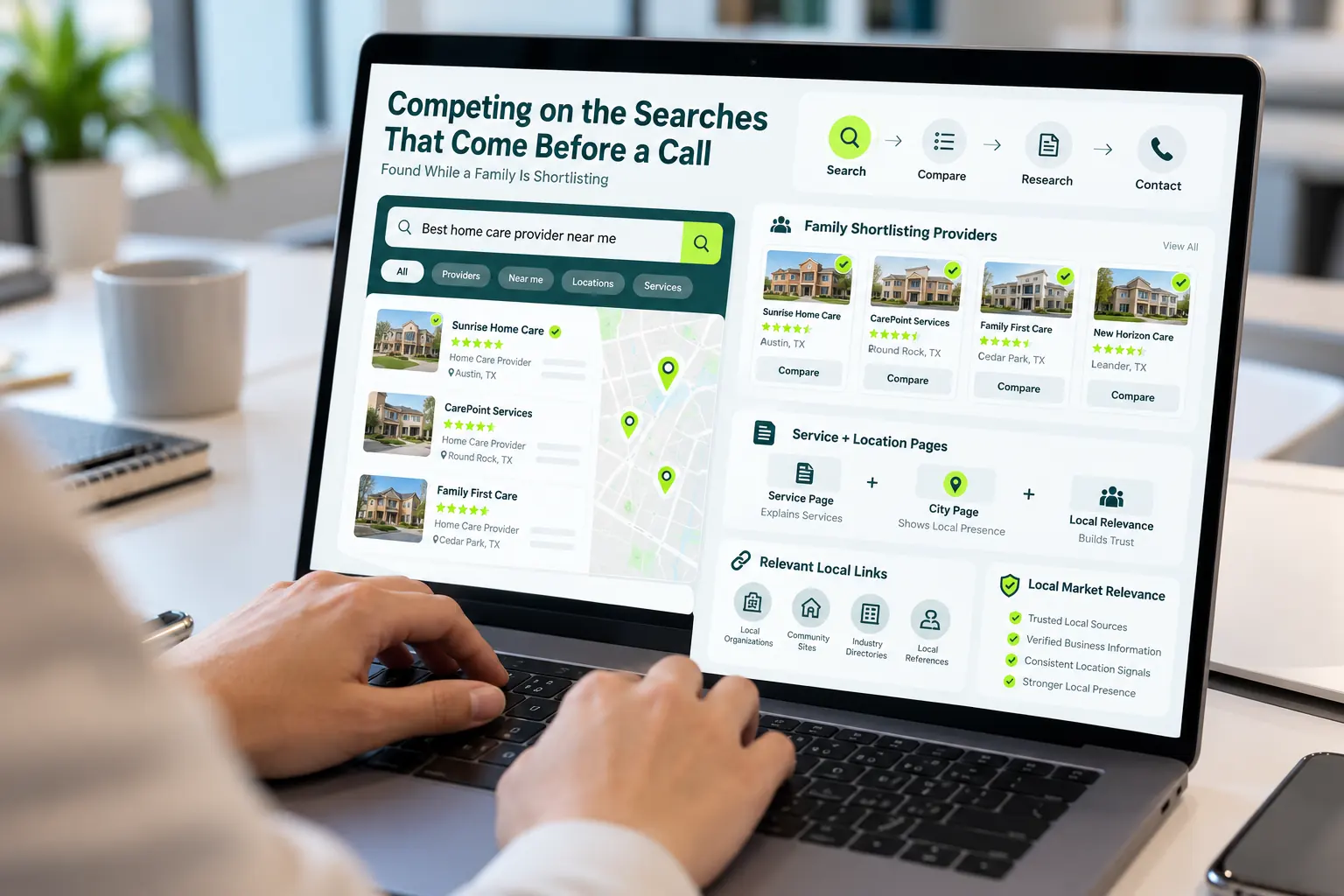
Competing on the Searches That Come Before a Call
Someone choosing a provider reads a lot before picking up the phone.
The service line and location pages answer those searches, so a campaign points links at them.
Links from organizations in the same market strengthen those pages, because a search engine can read a local organization’s link as evidence that the provider operates there.
The result: Each location competes where it operates instead of relying on the group’s homepage to carry all of them.
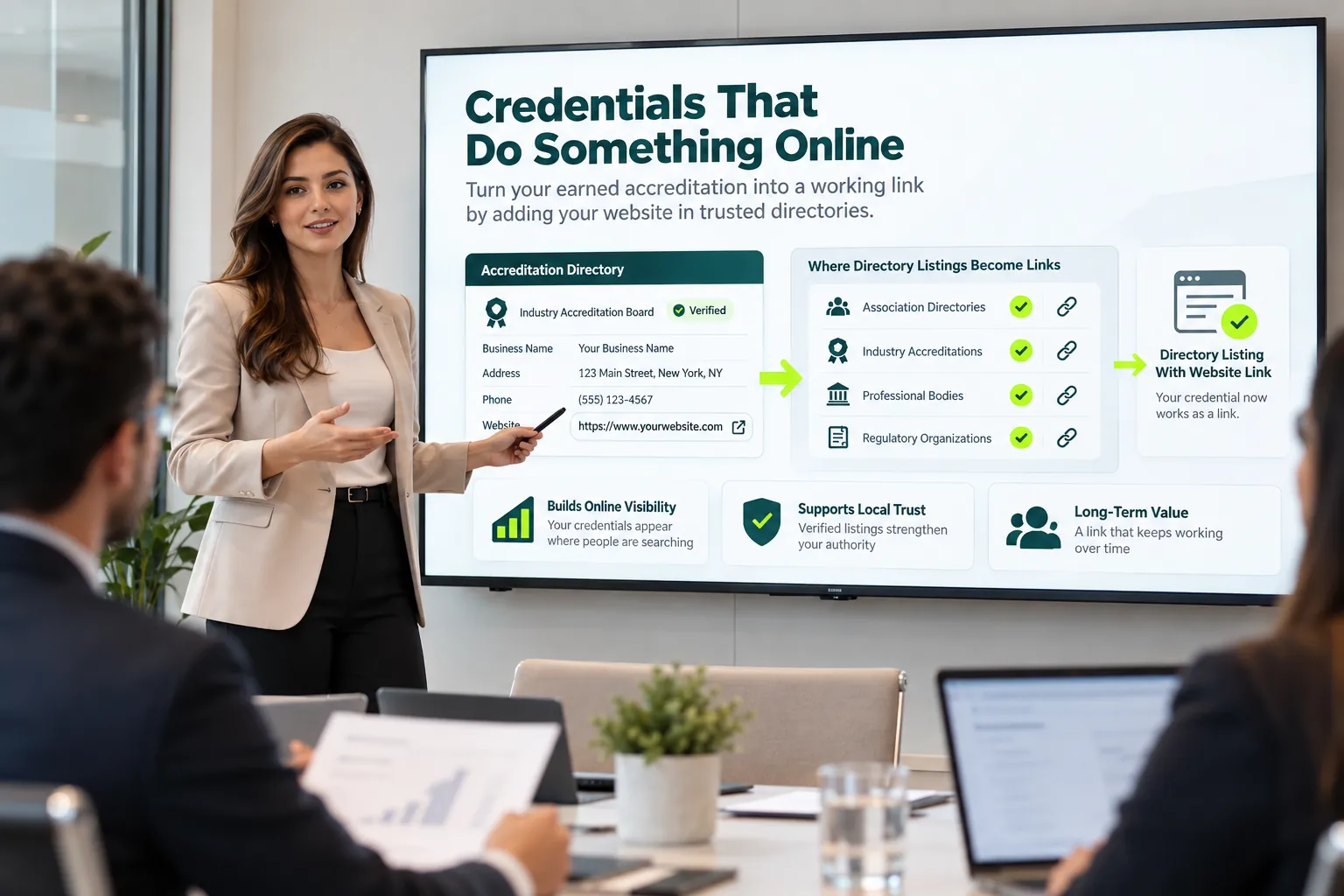
Turning an Earned Credential Into a Working Link
An accreditation survey is serious work, and the result is one line in a directory.
When that directory has a website field, filling it turns a credential you already earned into a link that works every day.
When it has no field, the report says so, and the credential remains a listing you can point to.
The result: The work you already did starts showing up in the one place where it was invisible.
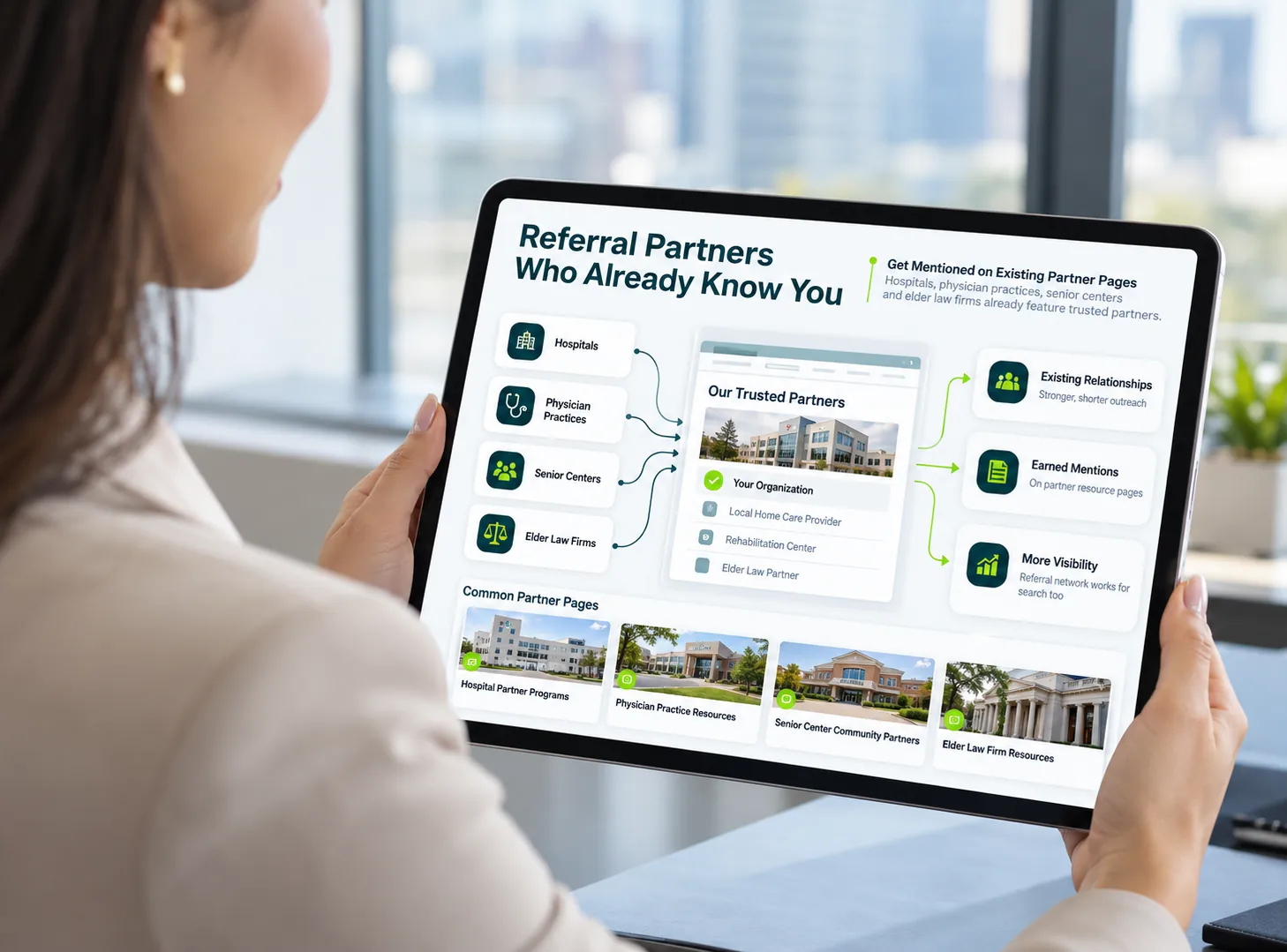
Partners Name You on Pages That Already Exist
Hospitals, physician practices, senior centers, and elder law firms often publish pages that name the organizations they work with.
Those pages exist to help someone choose, so your mention earns its place on the site.
An existing offline relationship keeps the ask short, because the relationship already answers “why you” before anyone writes the email.
The result: The referral network you built over years starts working for your search visibility too.
Reporting That Separates One Market From Another
A group’s locations do not share a local footprint, so they cannot share a local link profile.
Building per market starts slower and is much harder to copy, because a competitor must repeat the work everywhere you operate.
Per-market reporting also shows which markets are working and which have no sources yet, instead of one blended number.
The result: You can attribute growth to a location instead of to a campaign.

Client Success Stories
What Clients Say About Our Elder Care Link Building Service
Reviews from care organizations that turned accreditations, awards, and referral relationships into search visibility.

4.8/5 

5/5 
Rating on Google


We had a state licensing listing and a chamber membership, and neither linked to our site. Outreach Desk identified both gaps, requested the website field be added, and then pitched a local paper on our caregiver training program. The story ran, and families now mention it when they call about home care for a parent.“

Owner
Elder Care Agency

Senior living directories dominated every search for our town. Outreach Desk secured links from a hospital discharge partner, a regional aging council, and a local news feature on our memory care garden, and pointed them to our community page. Each link came with a live URL and a note on which page it targeted.
Executive Director
Assisted Living Community

Each of our locations needed its own page and its own sources. Outreach Desk reported by location, so we saw which community partners and local outlets sent links to which page. We put our next round of outreach behind the location where those partnerships were strongest.
Director of Marketing
Multi-Location Senior Care Provider
Service Framework
Investment, Timeline, and Deliverables
You buy individual placements: links real editors or directories choose to publish based on credentials you hold, never monthly rentals.

Service Lines and Locations
One private duty agency in one market needs a different scope than a group that runs home health, hospice, and assisted living across six markets.

Existing Credentials
Organizations that already hold accreditation, awards, or association membership start further ahead.

Local Layer Depth
Every market you operate in needs its own sources, so scope grows with your footprint rather than with revenue.

Campaign Duration
Timing depends on your markets, the credentials you hold, and how quickly sources respond. The audit and listing fixes come first, and outreach follows. Search engines decide when rankings move, so we report each placement when it goes live instead of promising a ranking date.
Directional pricing
Elderly care link building is priced per placement, with lower rates at higher monthly volumes. Price depends on your markets, service lines, and credentials. We prioritize sites with steady search traffic and assess Domain Rating. Your proposal outlines placement costs, target sites, and campaign scope after your strategy call.
What You Get
Every Placement, Every Credential, Every Market Reported
You see which sources produce results and which locations benefit. We split results by market if you operate in multiple.

Live Placement Reporting
Every placement arrives as a link you can open, with the source and the page it points to.

Credential Inventory
You receive the full list of accreditations, awards, and memberships, and we mark what each one publishes and whether that includes a link.

Per-Market Reporting
We report each location’s results separately, because a link from one metro does little for a site in another.

Listing and Link Split
We report any listing that certifies you without linking to your site separately from placements, so nothing counts twice.
Our Approach
An Audit-First Approach to Elder Care Authority
You get the credential audit first, then placements from sources that publish a link. We report those separately from listings that only certify you.
| Factor | GENERIC HEALTHCARE MARKETING AGENCIES |
 |
|---|---|---|
| Starting Point | Build a keyword list before asking what the organization has already earned. |
Audits every accreditation, award, and membership on file. |
| Accreditation | Often treat it as a footer logo | Checks whether its directory publishes a website field at all. |
| Sources | Promises "healthcare sites” without naming one. |
Names the directories, partners, and local sources for your markets before work starts. |
| Listings | Often count them as links whether or not they point to your site. |
Report them separately, because a listing without a link is not a placement. |
| Pricing | Quote prices privately after a discovery call. |
We share a personalized quote after a strategy call. |
Who We Help
Elder Care Providers We Support
Whichever service lines you run and however many locations you have, we build the authority that matches how families actually shortlist a provider.

In-Home Care and Private Duty Agencies

Home Health and Skilled Nursing Providers

Hospice and Palliative Care Organizations

Assisted Living and Memory Care Communities

Independent and Senior Living Operators

Multi-Location and Franchise Groups
Common Questions
Frequently Asked Questions
These answers cover what outreach can and cannot do, what your credentials publish, and what elder care link building costs.
No. Accreditation comes from a survey, and the federal Eldercare Locator lists public agencies rather than private providers. Outreach cannot arrange either one, and anyone who says otherwise is selling something they cannot deliver. We do different work: we make the credentials you already earned visible where searchers can find them. Earning accreditation means talking to an accrediting body. Earning visibility means talking to website owners.
Links can be lost when a site redesigns, removes old content, or changes hands, and that happens to every website. Links built under your plan are monitored, and any that drop are replaced as part of the managed link building service, so the work doesn’t quietly fade. Your strategist can confirm how this works for your plan.
Less than it should, and you should know why before you budget around it. The award directory publishes a profile for every winner, and the profiles we checked carried no link to the agency’s own site.
So the award gives you a credential a family can verify, but it is not a placement.
Your report shows it that way instead of counting it as a link. It still works as a citation, and if the directory ever adds a website field, your report will show it. Learn how local citations work and why an award profile still counts.
We get links from three kinds of sites. First, accreditation and association directories, where your credential opens the door, and the listing sometimes carries a website field.
Second, referral partners: the hospitals, physician practices, senior centers, and elder law firms that already work alongside you and publish pages naming organizations they trust. Third, local organizations in each market you operate in.
You get the specific list for your organization before any outreach starts.
This page focuses on elder care, where the credential layer behaves three different ways: some directories publish a link, some list you without one, and some will not list you at all. Sorting out which is which is the first thing a campaign does. If you run a clinic alongside your care business, our physical therapy link building page may fit better.
For background on the general medical source layer, read how to build links for healthcare.
Not yet, and we will say so plainly. Pricing is per placement, and a single-location provider often has better places to put that budget first. Two steps cost nothing.
Check whether your accreditation directory has a website field you never filled in, and ask the two referral partners who send you the most work whether they will name you on their site.
If your budget is tight, start with the two free steps above. Once you add a second market, a campaign is easier to justify.
Point them at your service line and location pages, and almost never at the homepage.
Someone comparing hospice providers in one city runs a different search than someone comparing private duty care, and the page that answers each one needs its own authority.
Homepage links spread their value across everything and concentrate it on nothing. If you operate across several markets, we plan this per market by earning links locally, so each location’s pages earn links from sources in its own area.
Pricing is per placement, and the rate per link falls as monthly volume rises. Every placement sits on a site with steady search traffic and meets a firm Domain Rating quality bar.
Your price depends on how many markets you operate in, how many service lines you run, and which credentials you already hold. You get a detailed proposal after your strategy call. See link building pricing to see what the wider market charges.
Ready to See Which of Your Credentials Can Carry a Link?
Get a senior strategist to audit every accreditation and award the organization holds, then map which directories, partners, and local sources it can reach.
4.8/5
Trusted by agencies
and brands worldwide.