Link Building Service for Carpenters That Earns Real Listings
We get carpenters listed in woodworking association directory that publish real links, rather than just names, so more buyers find you.

Guild and chapter directory placements
Trade publication and referral partner features
We check every directory before pitching

4.8/5
Trusted by agencies
and brands worldwide.
Avg. DR of Linking Sites
38 → 52
Campaign Dashboard
CHAPTER AND GUILD LISTINGS
association members directories
TRADE AND INDUSTRY PLACEMENTS
industry publication features
LOCAL PARTNER LINKS
neighboring business sites
TARGET KEYWORDS ON PAGE 1
from relevant links

Organic Traffic
600 → 1,350





Service Overview
We Find Links That Fit Your Trade and Your Town
You may have joined a guild, paid the dues, and never checked whether it links to your website. You won’t find a single national list of sites that link to carpenters. Hundreds of local guilds and regional chapters run separate websites. Each group decides which member information it publishes.
The Architectural Woodwork Institute serves shops that do architectural millwork. Its Chicago and Washington chapters list member companies on separate public websites. Visitors can click a company name and reach its website. You can verify each link yourself.
The Minnesota Woodworkers Guild has more than 800 members. Its directory shows names, cities, and email addresses but no websites. Members must log in to view it.
A directory’s size tells you nothing about its links. Check each listing before you pursue it. Focus on four source types: regional chapters, local guilds, trade publications, and designers, architects, and builders you already work with.
Three things define how to do carpenter link building right:

Directories Checked First
Our team opens and reads every guild and chapter directory before pitching anything, so you know what a listing produces.

Regional Coverage
Chapters run their own websites, so a chapter listing is separate from the national body’s.

Gated Listing Reported Too
Your strategist reports directories that are closed or lack links, because that check is part of what you paid for.
How We Work
How Your Carpenter Link Building Campaign Works
A carpentry campaign runs six steps, from mapping the bodies near you through placement, and our team checks everything before it reaches your report.
Your campaign starts with a map of the organizations near you.
Fine Woodworking maintains a directory of woodworking clubs that covers more than 300 groups across U.S. states and Canadian provinces. Most clubs link to their own websites. The directory lists clubs, rather than businesses, so you can’t add your business to it. Use it as a map; that is its value.
Regional chapters of national organizations follow the same pattern because each chapter maintains its own separate website.
We open and read every directory on your map.
We look for two facts: can a nonmember see the listing, and does it link to your website? Those answers determine whether the membership can improve your search visibility.
The Guild of Oregon Woodworkers offers a Professional membership for people with advanced woodworking skills and income from their work. Read the guild’s own wording and check that your work fits before you pay the higher dues.
After you identify the directories that matter, apply to the organizations that can help you.
Each organization sets different requirements, so read every application before you commit to dues. Your strategist compares each organization’s published requirements with your shop’s current qualifications, then tells you which listings you can secure now and which memberships do not justify the dues.
A directory that hides its listings from nonmembers can still offer a worthwhile membership. That membership does not build links, though. Know the difference before you pay.
Designers, architects, and builders often publish pages that name the tradespeople they use.
Ask those partners about those pages, but only when you have a genuine relationship. A designer who specified your millwork on three jobs has a reason to name you. A stranger does not.
Your strategist reviews the partners you already work with, identifies partners who maintain vendor or credits pages, and drafts the request. You decide which relationships justify the request.
Trade publications cover the details behind completed jobs.
Readers engage with a story about a staircase that your team built inside a stairwell with no room to maneuver. Readers ignore a generic story about your shop’s quality.
Your strategist pitches the job rather than the business and tailors the pitch to the publication’s audience. Before anyone sends a pitch to a publication, our team reviews that publication’s contributor rules.
Your strategist opens and checks every link before adding it to your report.
Your report shows where each link appears, which source type produced it, and which page it points to.
Our team also reports directories that remain closed, gated, or linkless, as well as applications that produced no results. A report that shows only wins would hide the part of the job you actually paid for: discovering which doors open.

Expected Results
Outcomes Carpenter Link Building Service Delivers
When a chapter or guild publishes your shop on its own site, anyone checking you out can find it without having to ask you first.
Directory Placements You Can Open and Check
A listing that links is something you can verify yourself. Open the directory, find your shop, click the name, and see where it goes.
That’s the standard we hold every placement in your campaign to, because a listing nobody outside the membership can see does nothing for your search visibility.
The result: every placement in your report is a link you can click, from a page anyone can reach.
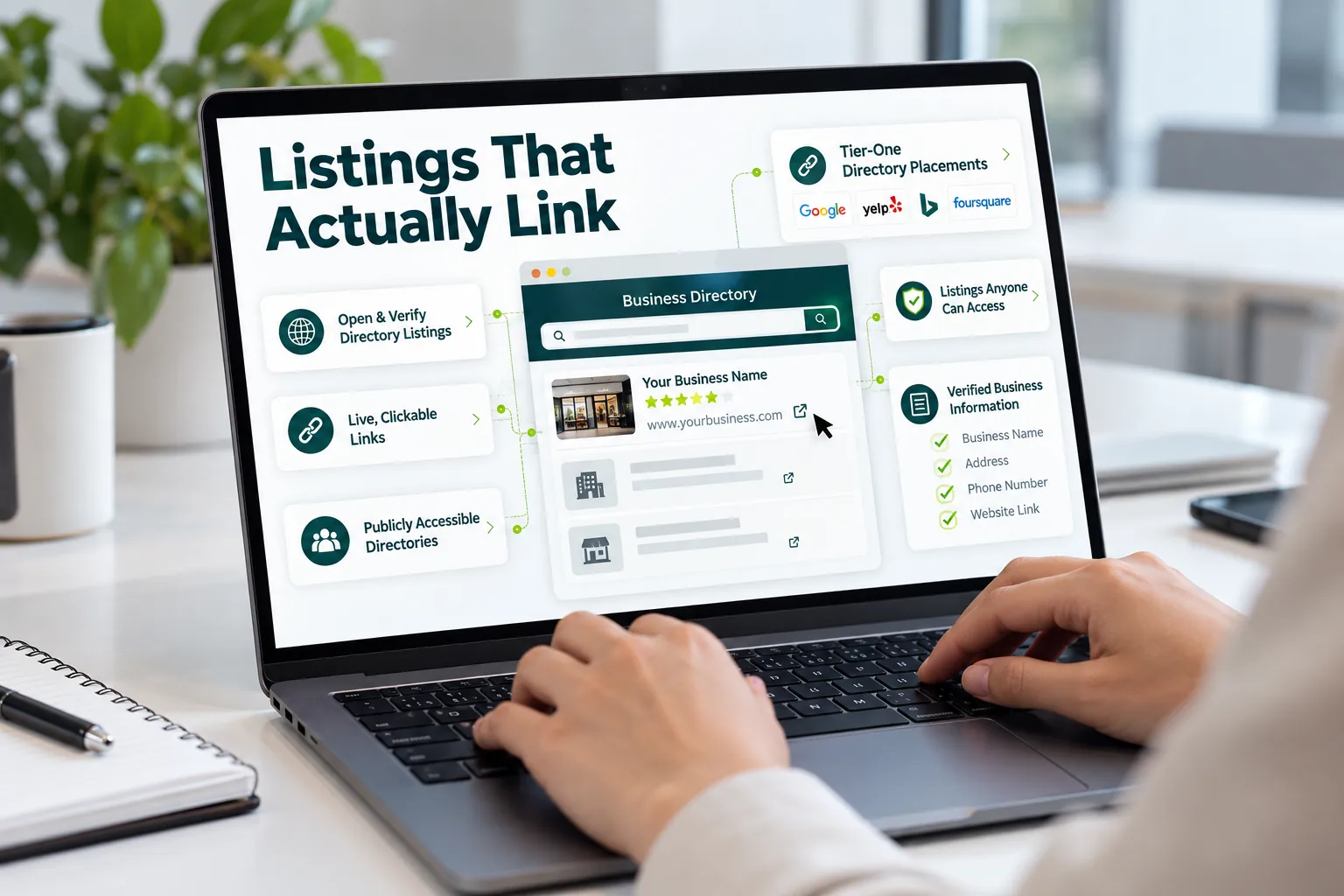
One Region, Several Separate Websites
A national body’s regional chapters run their own sites, so a chapter listing appears on a different domain than the national one.
A shop working across a metro area or two states can have more than one chapter in reach. Chapters aren’t interchangeable either, because the members and the region differ.
The result: your listings cover the region you sell into rather than just one page.

Knowing Which Doors Don’t Open
Some directories are members-only. Some carry no websites at all.
Finding that out is part of the job, and it saves you the dues. Your strategist records each closed directory instead of quietly dropping it, so nobody checks the same body again next year.
The result: you decide what a membership is for before you pay for it, instead of after.

Visibility With the People Who Specify Your Work
Carpentry work often comes through a designer, an architect, or a builder who decides who to bring in.
A listing on the trade’s own body carries weight your own website can’t give itself.
The result: someone deciding whether to bring you in can check you out without taking your word for it.

Client Success Stories
What Clients Say About Our Carpenter Link Building Service
Reviews from carpentry and millwork shops that turned guild listings into search visibility.

4.8/5 

5/5 
Rating on Google


We paid guild dues for years and never knew whether it did anything for our website. Outreach Desk checked the directories one by one and got us into chapter sites that actually link to us. Designers and homeowners who look us up now find us on pages anyone can open, and more of our inquiries come from people who have already seen our work.

Owner
Independent Finish Carpentry Shop

We stopped blending in with every other shop in the county. Before this, our name appeared in general contractor directories alongside companies that had nothing to do with millwork. The placements Outreach Desk secured put us on woodworking chapter sites, so architects checking us out can see we belong to the trade body they already know.
Operations Manager
Architectural Millwork Shop

Outreach Desk told us which directories were closed, and one guild we had belonged to for years turned out to be members-only. That saved us from renewing it for the wrong reason. They also helped us ask the designers we already work with to name us on their vendor pages, since those were the people sending us jobs anyway.
Lead Cabinetmaker
Custom Cabinet Shop
Service Framework
Investment, Timeline, and Deliverables
You’re buying individual placements, and our team checks each one before it reaches your report.

Region
A single-town shop needs a different scope than one working across a metro area or two states.

Work Type
Finish carpentry, cabinetry, architectural millwork, and furniture each reach different bodies and different publications.

Existing Memberships
Shops already in a guild or chapter start further ahead and sometimes already have a listing that nobody has checked.

Campaign Duration
Most shops see ranking movement within 3 to 4 months, with placements compounding well beyond 12 months.
Directional pricing
Pricing scales with your region, your type of work, and your existing memberships. A single-town shop needs a narrower scope than one working across a metro area or two states, or building finish carpentry, cabinetry, architectural millwork, and furniture side by side. Shops already in a guild or chapter start from further ahead. We’ll scope a proposal to your region and the work you do after your strategy call.
What You Get
Every Directory Checked, Every Listing Verified, Every Link Reported
You see which source type is producing, and which directories turned out to be dead ends. Our team splits results by region when you work across multiple regions.

Live Placement Reporting
Every placement reaches you as a link you can open yourself, and we name the body that published it.

Directories Checked and Closed
Your strategist lists every directory they check, including those that turned out to be gated or had no member websites.

Per-Region Reporting
We split results by region because a chapter listing in one state does little for work two states away.

Application Tracking
You see what we applied for, what each organization accepted, and what it turned down, because a list of wins hides the effort.
Our Approach
A Records-First Approach That Fits How Your Buyers Choose
We open and check every directory before pitching it, record the closed ones, and show you what drives the price up front.
| Factor | GENERIC LINK BUILDING AGENCIES |
 |
|---|---|---|
| Source Verification | Promises "woodworking sites" without naming one. | Opens and reads every guild and chapter directory before pitching it. |
| Closed Directories | Skips them quietly and never mentions them. |
Records them in your report, because that check is work you paid for. |
| Regional Coverage | Treats one application as done. | Lists each chapter separately, because each runs its own website. |
| Referral Partners | Many arrange link swaps with sites unrelated to your work. |
Drafts asks only for partners you already work with. |
| Pricing | Quotes privately after a discovery call. | Shares what drives the price up front, then scopes a fixed proposal after one call. |
Who We Help
Carpentry Businesses We Support
Whatever you build and whoever hires you, we build the authority that matches how your buyers actually choose a shop.

Finish
Carpenters

Custom Cabinet Shops

Architectural Millwork and Casework Shops

Furniture
Makers

Deck and Outdoor Structure Builders

Framing and Rough Carpentry Crews
Common Questions
Frequently Asked Questions
Straight answers to the questions carpenters ask most often before a campaign starts.
That depends on the body, and the wording is worth reading before you assume. The Guild of Oregon Woodworkers describes its professional members as people who make at least part of their living in many different areas of woodworking.
If you run a shop, take commissions, or do finish work alongside another job, you may clear that bar. Each body works differently, so we check the wording before you apply.
For links, no. A directory only members can open can’t pass a link, because search engines can’t reach it either.
Joining can still be worth it for the people and the work. Just don’t count it as link building.
How directory listing works covers what a listing does and doesn’t do.
Yes, this is the right page. The link building for contractors page serves general contractors who manage the entire job.
A cabinet shop, a millwork shop, or a finish carpenter is a single trade, and the sources that publish you are different ones: woodworking chapters and guilds rather than the builder associations. If you run jobs as a general contractor and also make the millwork, the two pages cover different halves, and your strategist will say which fits.
Yes. We write both the pitch and the draft for you, then shape them to the publication we’re pitching rather than to a template. What you supply is the job: the problem, the constraint, the thing that made it hard.
A staircase your team built inside a stairwell with no room to maneuver is a story an editor can use. A general piece about quality craftsmanship is not, and no amount of drafting fixes that.
Every placement is reported with the live URL, the anchor text used, the site’s Domain Rating, its monthly traffic, and whether the page is indexed. That is how our dedicated link building team reports on every campaign, so you can check each link yourself instead of taking a total on trust.
For a carpenter, that means you can see whether a trade listing or a local partner link went live and where it sits.
It depends on how many bodies operate near you and how many of their directories are open. That number is knowable, and we count it before you commit rather than guess afterward.
A shop in a metro area with several chapters and guilds in reach has more room than one in a rural county with two. Local coverage and referral partners fill the gap where trade bodies are thin, which is what local link building generally covers.
Most shops see ranking movement within 3 to 4 months. The directory side runs on somebody else’s calendar.
A listing goes live as soon as the organization accepts your application, which can be quick. Whether the organization accepts you depends on membership cycles and chapter meeting dates, which you can’t speed up.
Trade publication pieces run on editorial calendars that can stretch a quarter. See how long link building takes for more detail on campaign timelines.
Pricing depends on the region you work in, whether you do finish work, cabinetry, or architectural millwork, and how many memberships you already hold.
Trade publication placements follow traffic and Domain Rating benchmarks. Guild and chapter sites often fall below those benchmarks, and we flag that difference before you commit.
The Directional Pricing section above shows how scope moves the number, and your strategy call turns it into a proposal. For the wider market, what backlinks actually cost has ranges.
Ready to Find Out Which Guild Directories Will Actually Link to You?
Get a senior strategist to map the guilds and chapters near your shop, check which directories publish a link, and scope the price.
4.8/5
Trusted by agencies
and brands worldwide.