You spend a week building a piece of content that earns 400 LinkedIn shares. Six months later, zero websites have linked to it.
This is because sharing and linking are two different motives. When someone shares a post, it means they are saying, “this is interesting.” But when someone links to a page from their own article, they say, “this source makes my content more credible.”
Link baiting is creating content people naturally want to reference, recommend, and link to because it offers real value. It helps you earn editorial backlinks from editors, bloggers, and journalists who cite it, as it improves their publications.
It’s one of the link building strategies that can be used regardless of budget. Once you understand what actually motivates others to cite a page, you can stop guessing and start creating content that attracts links on its own.
What You’ll Learn
- What link baiting means and why it’s an ethical tactic, not a shortcut.
- The difference between content that gets shared and content that earns editorial links.
- Five formats that earn backlinks consistently, with realistic budget notes for each.
- How to build a piece of link bait step by step from scratch.
- How to reach the editors and journalists who will link to it.
- How to measure whether your link bait is working.
What Link Bait Means
Link bait means creating content that’s valuable enough for publishers to link to it on their own sites, without paying them or asking them to add it.
The term sounds descriptive, but the tactic isn’t. “Bait” in this context means content built to attract backlinks, much like someone builds a fishing lure to attract fish. The difference is that the value is real. Instead of trying to trick publishers into linking, the content earns attention by providing information, data, or resources worth citing.
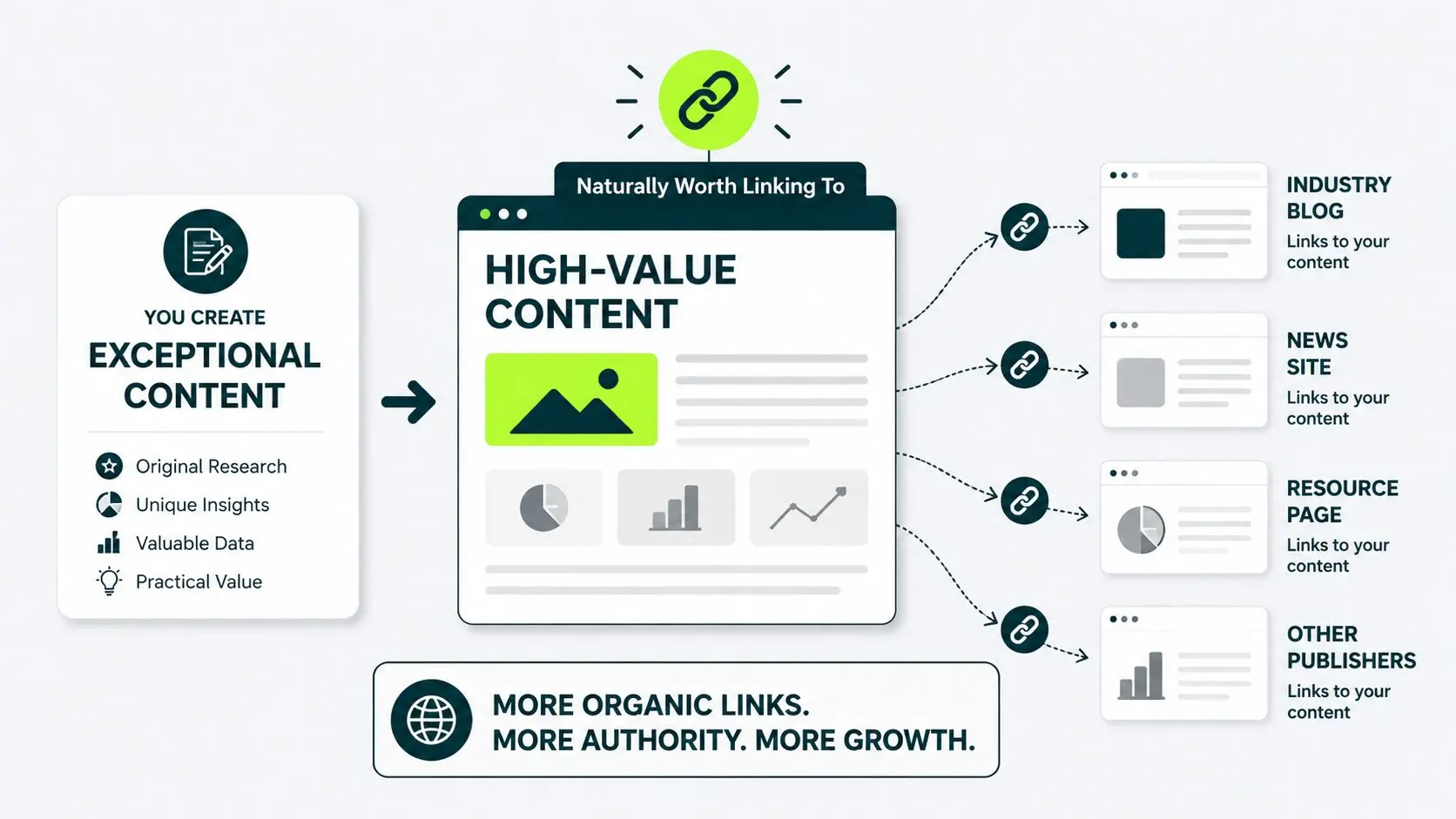
The editor or blogger who links to your page does so because it makes their own article more useful or credible. You call that link a backlink to your website (a clickable link from another website to yours, placed inside that site’s content).
Each backlink signals to search engines like Google that another publisher considered your content credible enough to cite or recommend. Link baiting is a white hat tactic that follows Google’s guidelines.
It focuses on earning editorial links rather than creating artificial ones, unlike a link farming scheme.
Goal
To earn links because your content deserves them, not to gain ranking through paid schemes or fake link networks.
When publishers consistently choose to reference your content, those editorial backlinks can increase referral traffic, strengthen your site’s authority, and improve its ability to rank in search results.
Is Link Baiting the Same as Clickbait?
No, link baiting and clickbait aren’t the same. Clickbait uses headlines designed to trick people into clicking. The goal of clickbait is to get clicks on the link; the title promises more than the article delivers.
Link bait focuses on content and delivers something genuinely useful, such as data and tools.
Here’s how clickbait might look:
“You won’t believe what happened to software pricing this year.”
A piece of link bait on the same topic would be an original survey showing how pricing changed across 500 SaaS companies, with data that editors can cite.
One frustrates readers, and the other gives journalists something to reference.
Why Most Link Bait Earns Shares but Not Links
Sharing and linking are not the same action. Different motivations drive each one. That difference changes everything about how you build content.
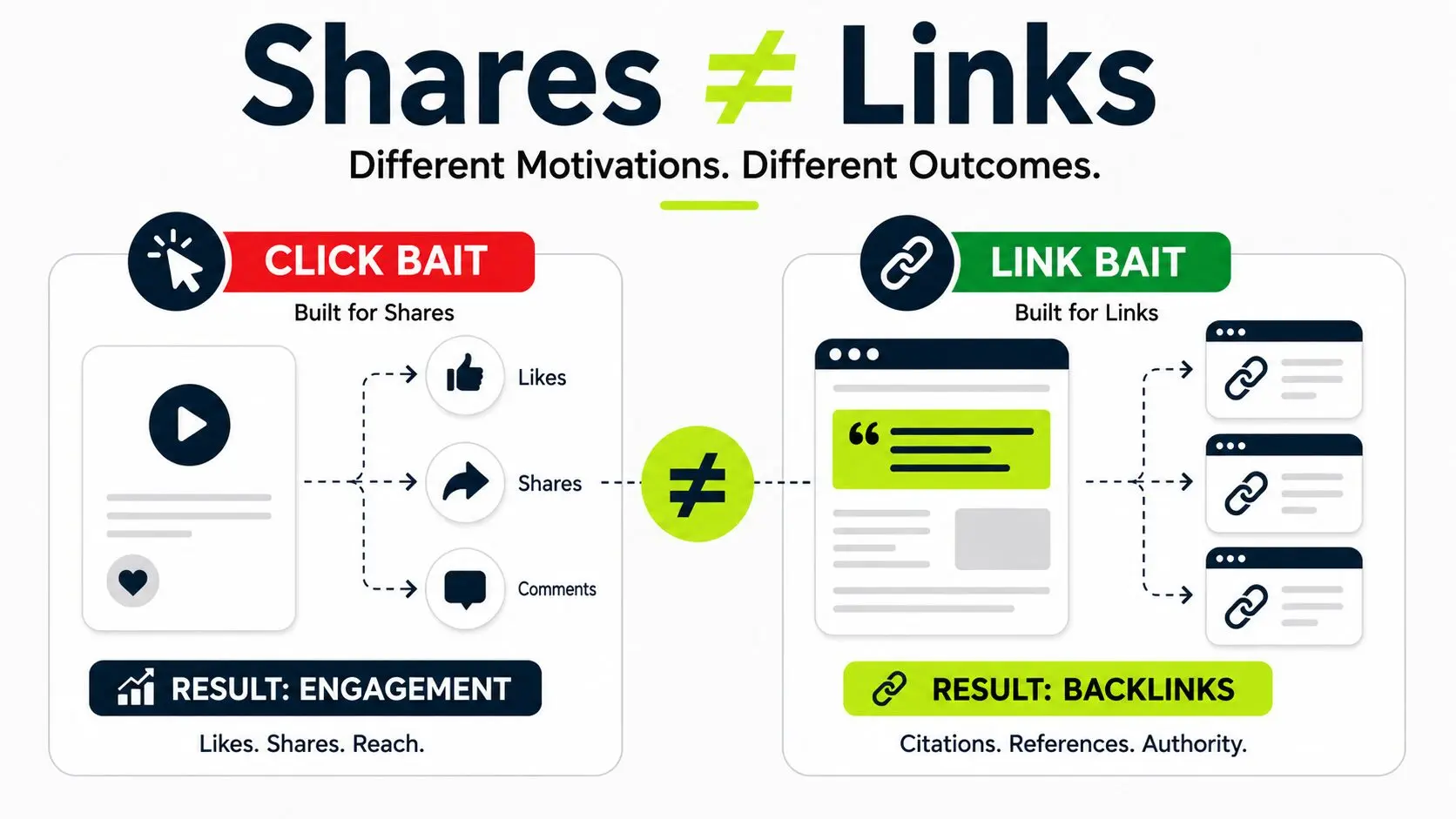
Content can be genuinely engaging, the kind that’s funny, emotionally resonant, or timely, and still earn zero backlinks. That’s not a quality failure.
It’s a sign you built the content for shares, not links. An editor links when your content is citable, meaning specific and hard enough to find elsewhere that citing it beats paraphrasing it.
One pattern we’ve seen across Outreach Desk campaigns is that social engagement and backlink performance rarely move together. Pages that attract plenty of shares still miss out on editorial links when they don’t give publishers something worth citing.
The Linkability Test
Before committing to a content idea, run it through these four questions:
- Would a journalist or blogger need to reference this to make their own content more credible?
- Is the information specific enough, and hard enough to find elsewhere, that linking back is the easiest way to cite it?
- Does it give a publisher’s readers something they can use right away?
- Will it still be useful 6 to 12 months from now?
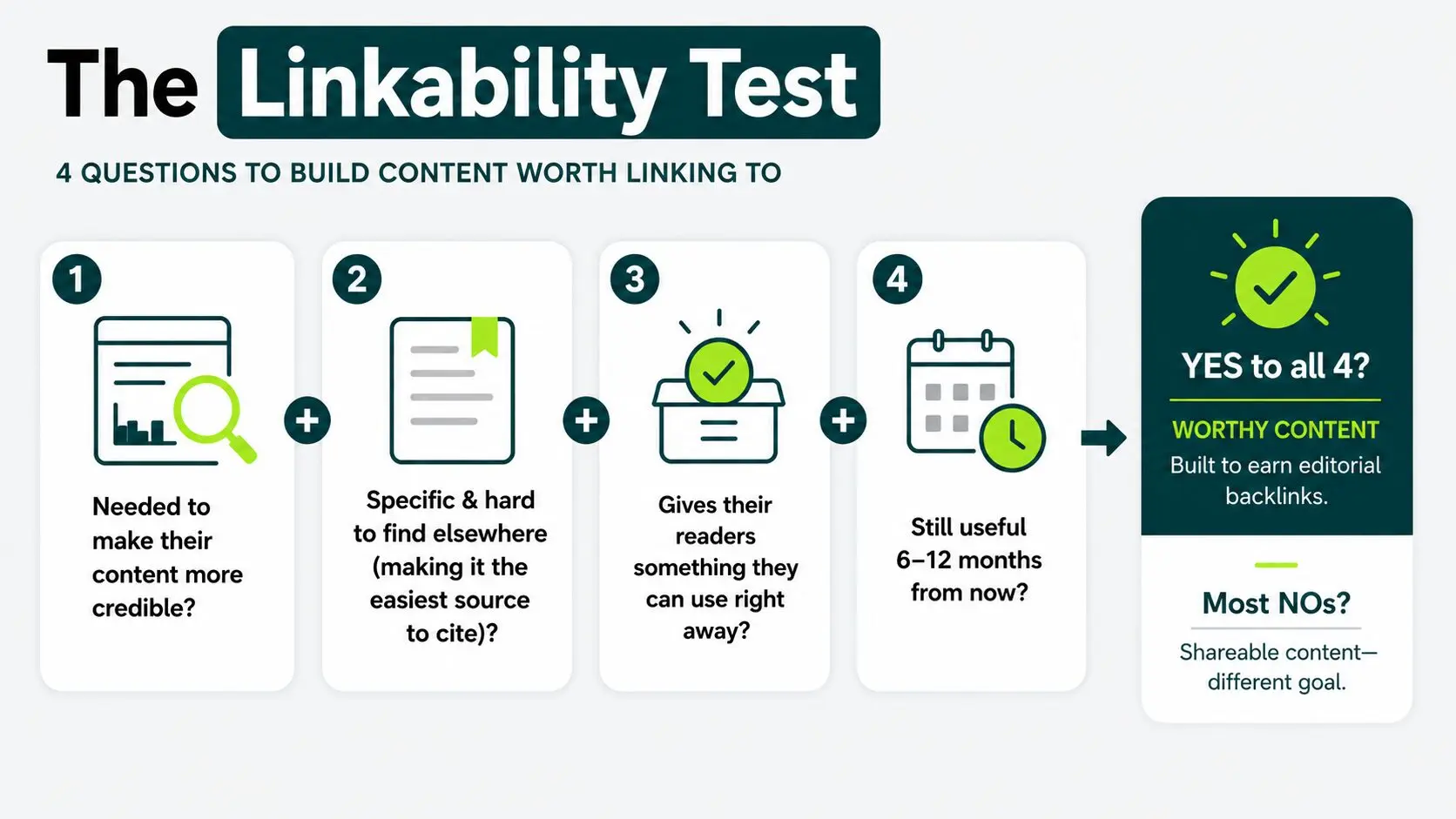
If the answer to all four questions is yes, you’re building link worthy content. Content you built specifically to earn backlinks because other publishers need it.
If most answers are no, you’re building something sharable, which is a different goal entirely.
Going viral and earning editorial backlinks require different content decisions. You can pursue both, but you need to know which one you’re building before you start.
Data-driven and original research content consistently earns more backlinks than standard blog posts. For example, Orbit Media’s 2025 Blogging Survey found that bloggers who publish original research are significantly more likely to report strong results. Including higher link acquisition than those who do not.
Five Formats That Consistently Earn Editorial Links
The format that earns the most backlinks is the one that makes a writer’s job easier.
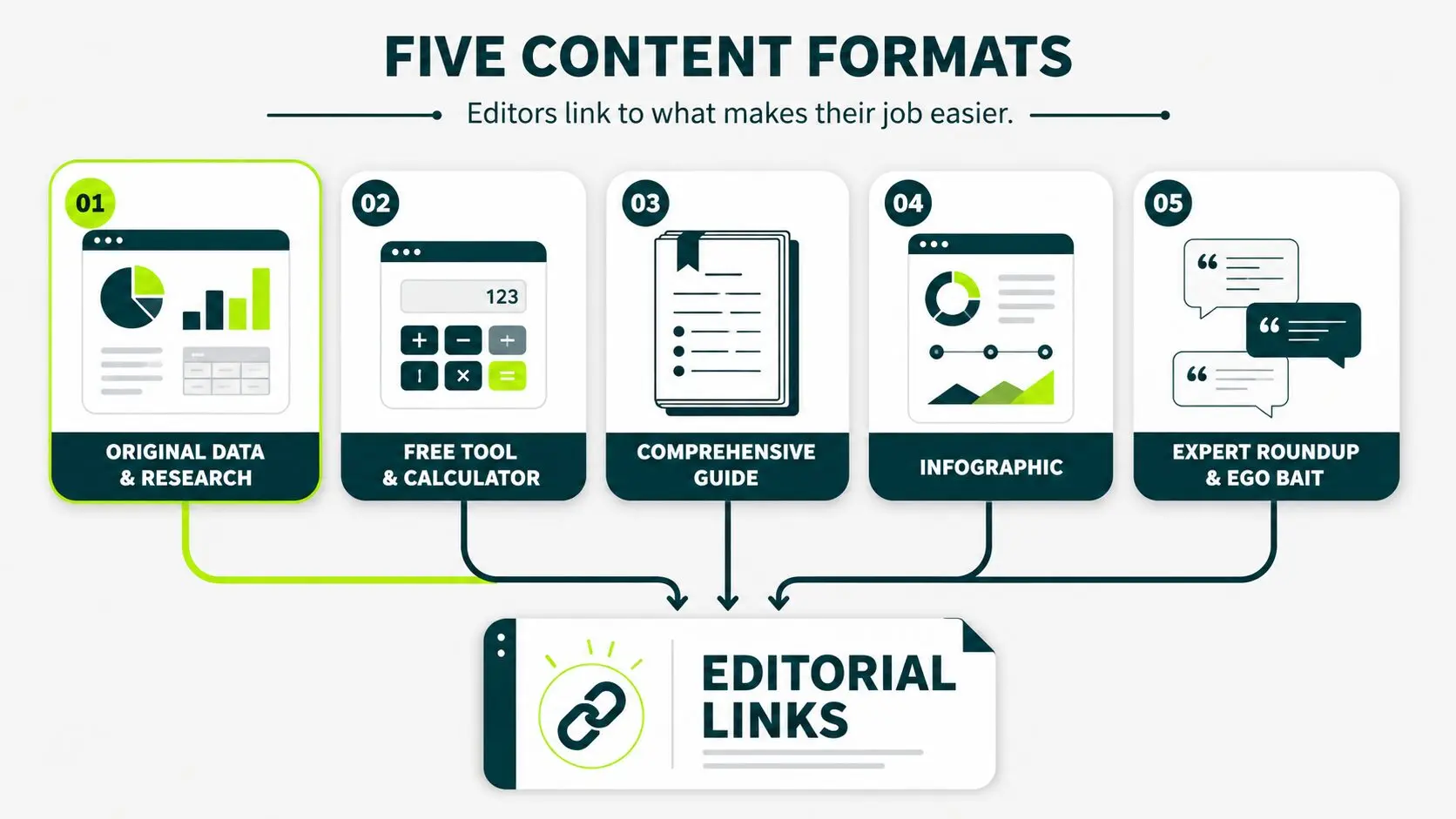
That usually means content that provides:
- specific data they can cite
- tools their readers can use
- explanations thorough enough to replace a whole section they’d otherwise need to write themselves.
We’ve consistently found that original research and data-driven assets generate higher editorial response rates than visual-only assets, such as infographics. That’s because they give editors something authoritative to reference rather than simply something to share.
Original Research and Data Studies
A data study is content built around findings you researched and collected yourself.
This could be anything such as:
- A survey
- An analysis of publicly available data
- A test conducted within your own product or industry
Editors cite original data because it adds credibility to their articles in a way that personal opinions cannot.
For solo founders, surveying 50 to 100 people in your niche can be enough to produce genuinely citable insights.
Creating original research is primarily an investment of time.
Budget
Primarily requires a significant investment of time rather than financial resources
Free Tools and Calculators
A free tool is a web-based utility that serves a useful purpose for your audience, such as a calculator, a generator, or a readability checker.
Editors link to free tools because they give their readers something they could use, not just read. The tradeoff is production cost. A useful tool takes more to build than a blog post.
For a small budget, start with a publicly accessible spreadsheet that works as a simple tool, such as a calculator, template, or interactive resource that solves a specific problem.
Budget
Requires a greater investment of time or money than simpler content formats, such as blog posts or guides.
Comprehensive Reference Guides
A reference guide covers a topic so completely that other writers link to it rather than explain the concept themselves.
They earn backlinks because the key is depth, not breadth.
A guide that completely answers one specific question is more likely to earn backlinks than a broad guide that touches on ten different questions at a surface level.
By becoming the go-to resource on a single topic, the guide gives publishers an easy reference they can confidently cite.
Budget
Primarily an investment of time rather than money.
Infographics
An infographic presents data or a process in a visual format that other publishers can embed or reference in their own articles.
Editors link to infographics because visual content helps readers understand information more quickly and easily.
If you’re using infographics as part of your link building strategy, promoting them to earn backlinks from publishers who cover the same topic is just as important as creating them.
A well-designed infographic can become a valuable reference when it clearly explains a concept or summarizes data.
Budget
Requires design time or the cost of hiring a freelance designer.
Expert Roundups and Ego Bait
An expert roundup brings together quotes from multiple people in your industry around a single question.
This format works because contributors often link to the published piece themselves. Their audiences also discover and link to it, creating more backlink opportunities.
Ego bait is the broader category of this approach.
It includes any content that encourages people to share or link to it because it features them or highlights their work.
This format works especially well for solo founders with:
- A strong professional network
- A limited content budget
Pick the right format that best fits your business before you start creating content.
For example, consider the following scenarios:
- If you sell software, a free tool is often the strongest choice.
- If you work in a research-heavy industry, an original data study will usually outperform other formats.
- If you already have access to a network of industry experts, an expert roundup is often the fastest way to earn your first backlinks.
For a broader look at how these formats fit into an overall content strategy, see our guide to content marketing as a link building strategy.
How to Build a Piece of Link Bait from a Blank Page
You have the format, now you need to build the piece. The steps below apply to any format, whether you’re running a survey, writing a reference guide, or building a tool.
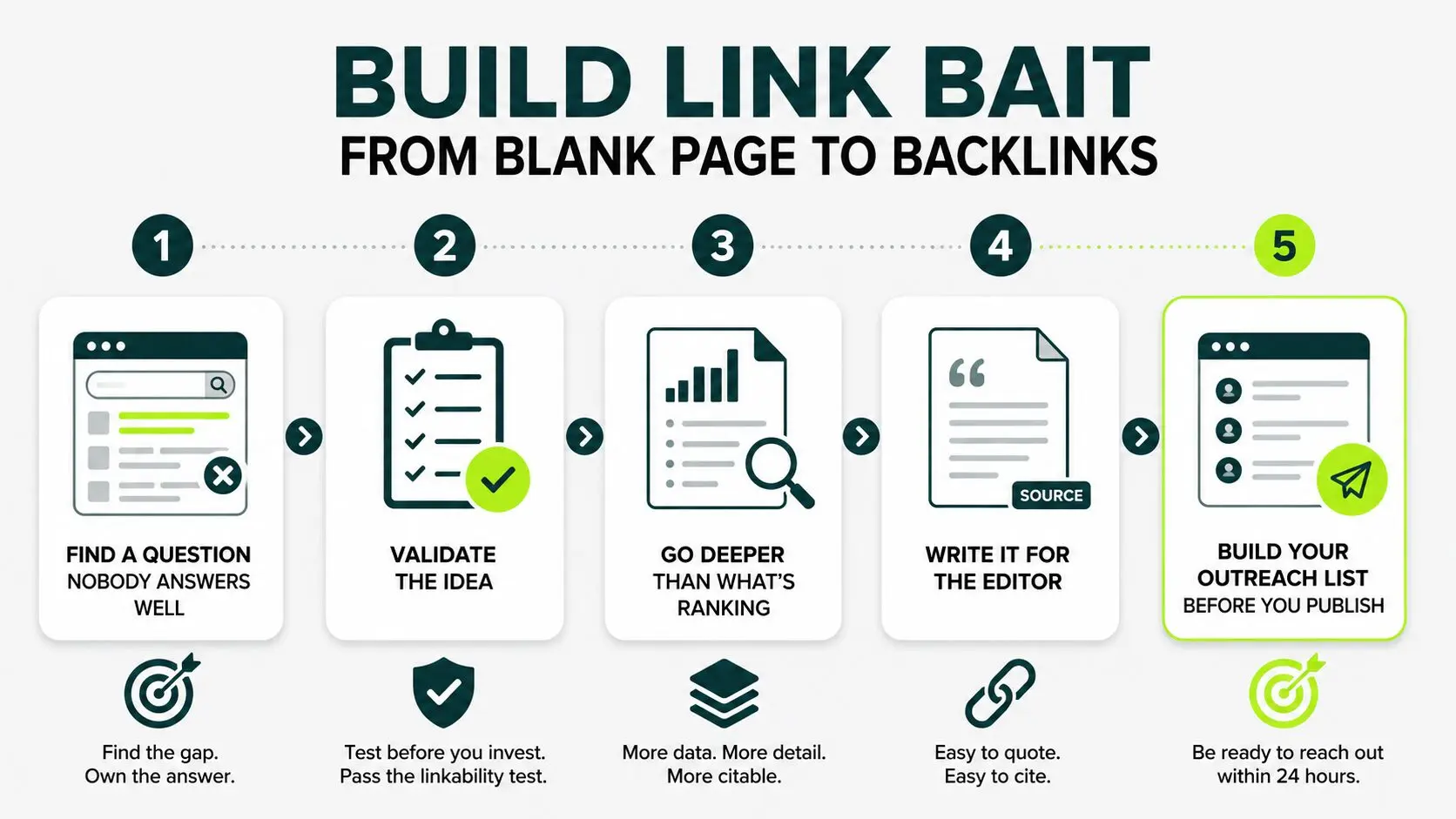
Step 1: Find the Specific Question Nobody Has Answered Well
Search for your topic in Google and read the top results. If every answer is vague, outdated, or skips the practical details, that’s your opportunity. Fill that gap.
The more specific the question, the more useful your content is to an editor looking for a citation on exactly that point.
Step 2: Validate the Idea Before You Build
Run the linkability test before investing time in production. If the idea doesn’t pass all four questions, adjust the angle until it does. The most common mistake is starting production before validating.
Surveys take time; tools take time and money. Spend 30 minutes stress-testing the idea first.
Step 3: Go Deeper Than What’s Already Ranking
Whatever topic you pick, cover it more completely than the current top-ranking pages. If every existing article has three data points, you should have ten. If every existing guide skips examples, yours should have five.
Depth is what makes content genuinely citable. Editors don’t link to sources that cover the topic at the same level as everything else they could already reference.
Step 4: Write It for the Editor, Not Just the Reader
Your primary audience is the person who might link to this content, not only the person reading it.
That means specific claims that are easy to quote, data you present in a format that’s easy to copy or reference, and clear sourcing for any figures you used. Plain, descriptive section headings help an editor scanning your page find the exact claim they want to cite.
Step 5: Build Your Outreach List Before You Publish
Before you go live, identify 20 to 30 specific writers or journalists who cover your topic and would benefit from your content.
When that list is ready, you can start outreach within 24 hours of publishing. Figuring out who to contact after publication delays your momentum by weeks.
For the outreach emails, we have a set of outreach templates you can adapt to your own content and niche.
Getting Editors to Link to It
Just publishing good content is not enough. Editors and journalists aren’t browsing the web for new sources to add to their articles. They’re writing their next piece.
If your content isn’t directly in front of them at the moment they need a citation, they won’t cite it, even if it’s the best resource on the topic.
Publishing without a promotion plan is the single biggest reason link bait fails to earn links.
Build your list from publications that actively cover the topic, contributors who post frequently, and writers with a track record of citing outside sources.
We build targeted lists based on relevance, domain authority, and likelihood to link, then match each asset to the most appropriate editors or writers.
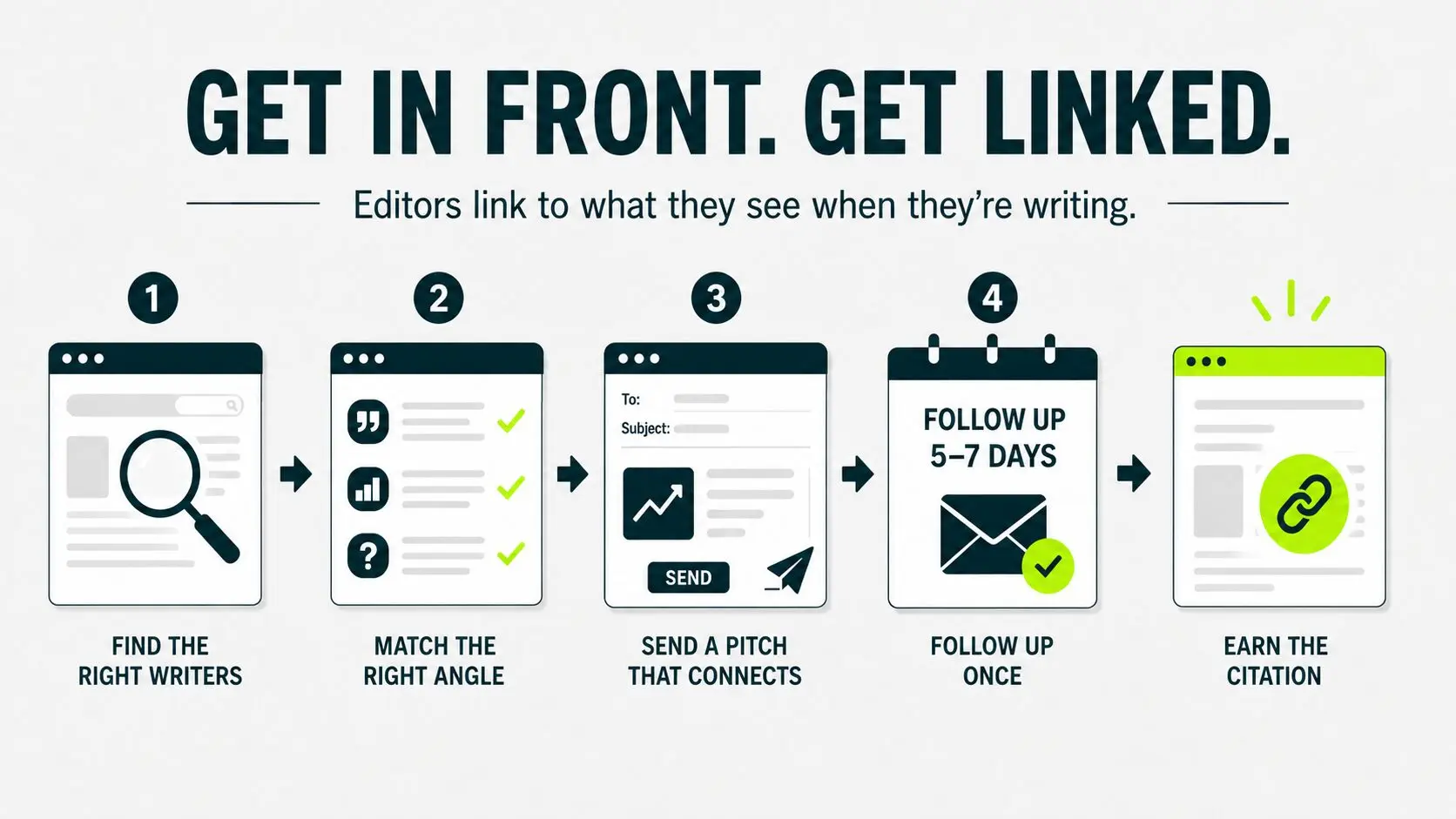
We personalize outreach and tie it directly to the content’s value, highlighting why it’s useful for their current or upcoming articles. Pitches that clearly connect the asset to a specific angle or gap in their coverage tend to earn responses. Editors typically ignore generic mass emails or vague ‘I thought you might like this’ messages.
Who to Contact
Your target is specific writers who cover your topic, not websites in general.
Search for articles published in your space from the past 6 to 12 months, because those authors are actively covering the topic.
Look for:
- Writers who covered a related topic and could strengthen their article by citing your data as a source
- Journalists who cited a similar study and would likely cite yours if they knew about it
- Bloggers who raised a specific question that your content directly answers
What to Say
Your pitch should tell the writer exactly why your content improves their article.
Avoid generic outreach messages such as “I think you’ll find this interesting.” or “We just published a guide on this topic.”
Instead, write “You covered pricing trends in your March article. We surveyed 200 SaaS companies on that exact question. The findings might be worth a mention in a follow-up.”
When to Follow Up
Send one follow-up 5 to 7 days after the first email, then move on. Editors who want to use your content respond within the first two emails.
Continuing past that damages the relationship without producing links.
If you’d rather have a team manage the targeting, pitching, and follow-up, learn more about our outreach process in our guide on how outreach drives link building.
How to Know If Your Link Bait Is Working
Measuring link bait means tracking the signals that matter, not just counting backlinks. Three signals tell you whether your content is building authority.
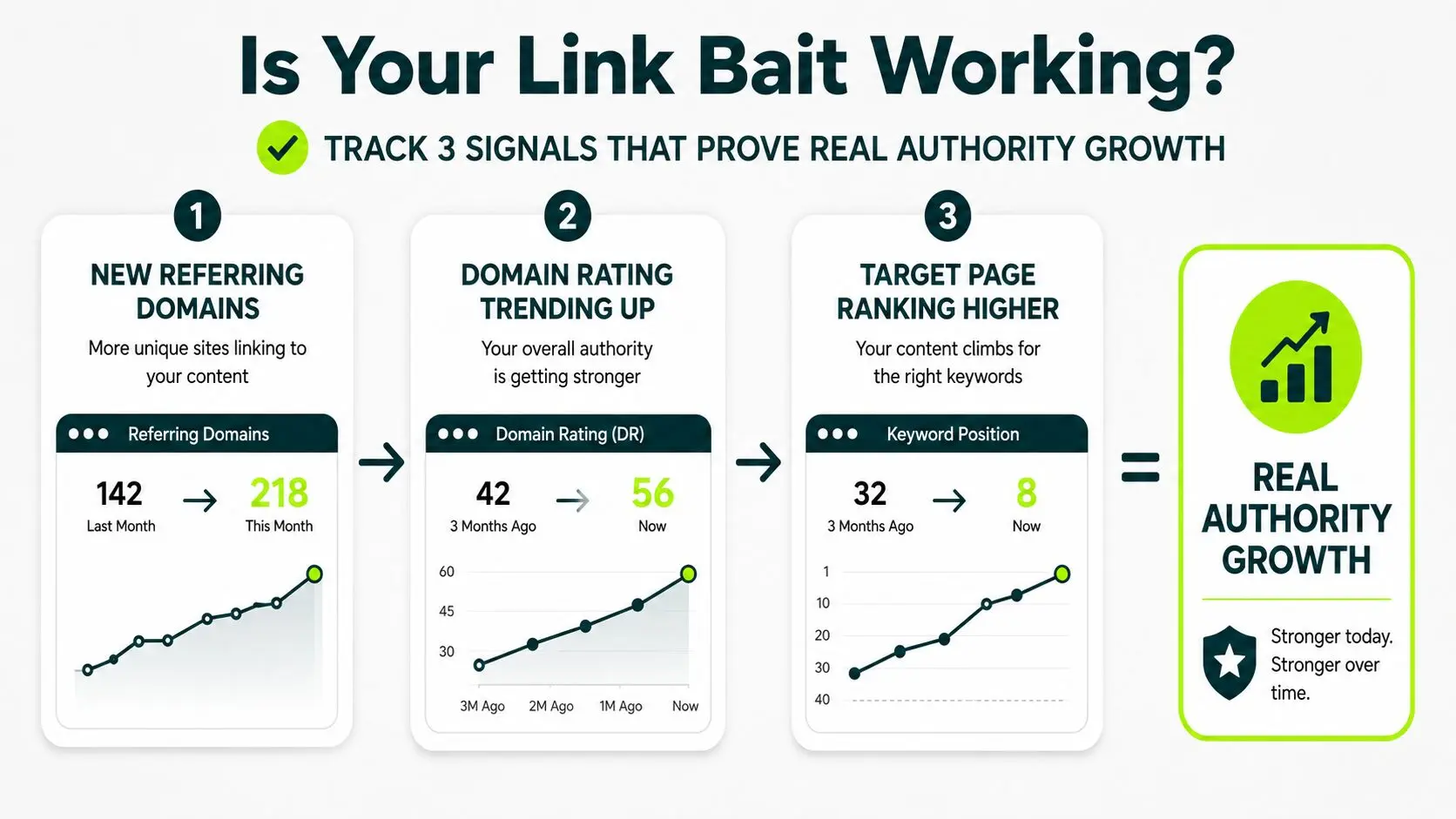
Signal 1: New Referring Domains Keep Coming In
A referring domain is a separate website that has placed at least one link to your site. Getting 10 backlinks from one website is far less valuable than getting one backlink each from 10 different websites.
Track your referring domain count using a tool like Ahrefs or Semrush. Each new referring domain is an independent signal that your content earned real trust from a new source.
Signal 2: Your Domain Rating Is Trending Upward
Ahrefs measures Domain Rating (DR) as a 0 to 100 score that estimates the strength of your site’s link profile. DR rises as you earn more high-quality referring domains.
A sustained upward trend over 3 to 6 months tells you the link bait is contributing to your site’s overall authority, not just adding isolated backlinks. For more on what makes a backlink actually move rankings, see our guide on earning high-quality backlinks.
Signal 3: The Target Page Is Ranking Higher for Its Keyword
Links pointing to a specific page pass authority to that page. Track the keyword rankings for your target page monthly, not weekly. Changes from link building are gradual: don’t expect a ranking jump in week two.
Three referring domains from genuinely relevant sites outperform 30 links from low-quality directories in terms of ranking impact. Source quality matters more than volume.
How Long Does Link Bait Take to Earn Links?
The first backlinks from a piece you promote well usually arrive within 2 to 4 weeks of publication. Referring domain growth usually stabilizes after 3 to 6 months.
Most of the backlinks a piece will earn are acquired during the first few months of active promotion.
Some assets continue attracting backlinks well beyond that initial period.
The formats most likely to do this are:
- Original data studies
- Free tools and calculators
These assets often rank in search results and are discovered organically by writers looking for credible sources to cite.
Assets we actively promote earn 15 to 40 referring domains within the first 90 days, depending on niche, outreach volume, and asset quality.
Start With the Linkability Test
Pick the format that fits your situation and run the Linkability Test on your first idea.
If it passes all four questions, you have a real brief to build from. If it doesn’t, adjust the angle until it does. The most common reason link bait fails isn’t poor execution: it’s starting production on an idea that was never citable in the first place.
Looking to earn high-quality backlinks through effective link bait?
Get a strategy for creating link-worthy content and promoting it to publishers who are most likely to reference it.
Does link baiting still work in 2026?
Yes, the mechanism behind link baiting hasn’t changed: editors and journalists still need sources worth citing, and content that fills that need still earns backlinks. The formats that perform best have shifted as AI-generated content has made generic blog posts less citable.
Original data and purpose-built tools now outperform standard articles by a wider margin. But the core practice remains one of the most reliable ways to earn editorial links.
What’s the biggest reason link bait campaigns fail?
Distribution, not the asset. Most failed link bait campaigns produced something genuinely good but pitched it to the wrong publishers or stopped outreach after one round.
An editorial outreach team runs multi-round outreach to the right targets which is where most self-managed campaigns leave links on the table.
Is iink baiting an Ethical Practice?
Yes, when done correctly. Link baiting earns links because the content genuinely deserves them, which is exactly what Google’s guidelines describe as the goal of link building.
The line between link baiting and manipulation is clear: a link earned because an editor found the content useful is legitimate. A link earned through payment, exchange, or deception is not. Link baiting sits on the right side of that line.
Can images help you earn backlinks?
Yes, original visuals such as infographics, charts, maps, and diagrams often earn backlinks because other publishers can reference or embed them in their own articles. The key is to create visuals that explain data or concepts clearly and promote them on websites that cover the same topic.
Our guide to earning backlinks with images explains how to create link-worthy visuals, promote them to the right publishers, and increase the chances of earning high-quality backlinks naturally.