You can syndicate content without hurting your SEO. Content syndication means republishing the same article, post, or video on sites outside your own.
The key is controlling which version Google treats as the original: use a canonical tag pointing back to your site, or ask the syndicating partner to noindex their copy, and share your original content with partners only after it’s been live on your own site for some time, never at the same time you publish.
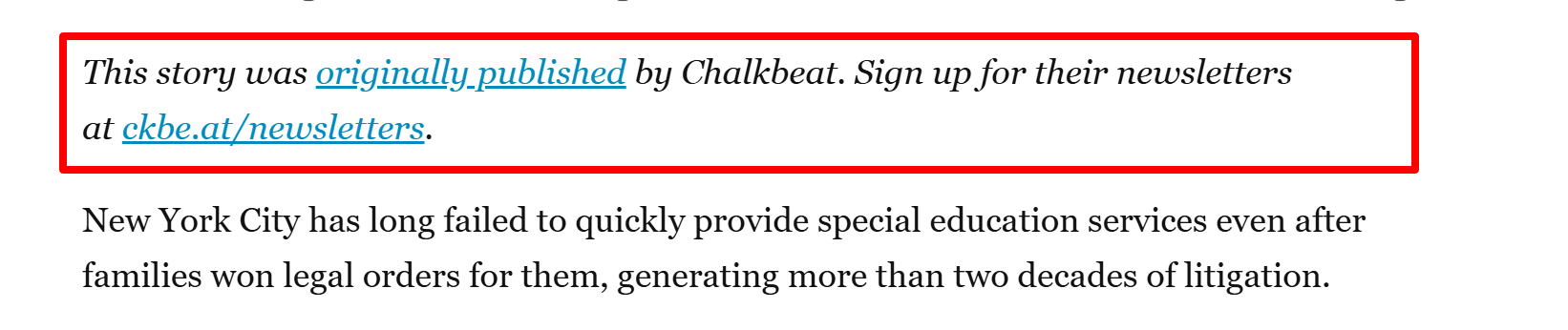
This is an example of syndicated content on a partner’s site:
This sounds like it should only help you, but your first concern should be whether letting someone else run your content costs you the rankings you already have.
Handled correctly, syndication adds backlinks and new readers without splitting your search visibility.
What You’ll Learn
- A canonical or noindex tag lowers the risk of losing rankings to the copy.
- How long to delay your syndicated feed (30 minutes to two hours) so Google indexes your original first.
- Free platforms build stronger backlinks than paid recommendation networks.
- DR (Domain Rating)under 10 and no tag commitment are the clearest partner red flags.
The Risk Beginners Don’t See Before Their First Syndication Deal
The risk you can miss as a beginner before your first syndication deal is publishing the same content on your site and the partner’s site at the same time, without a canonical tag or noindex tag.
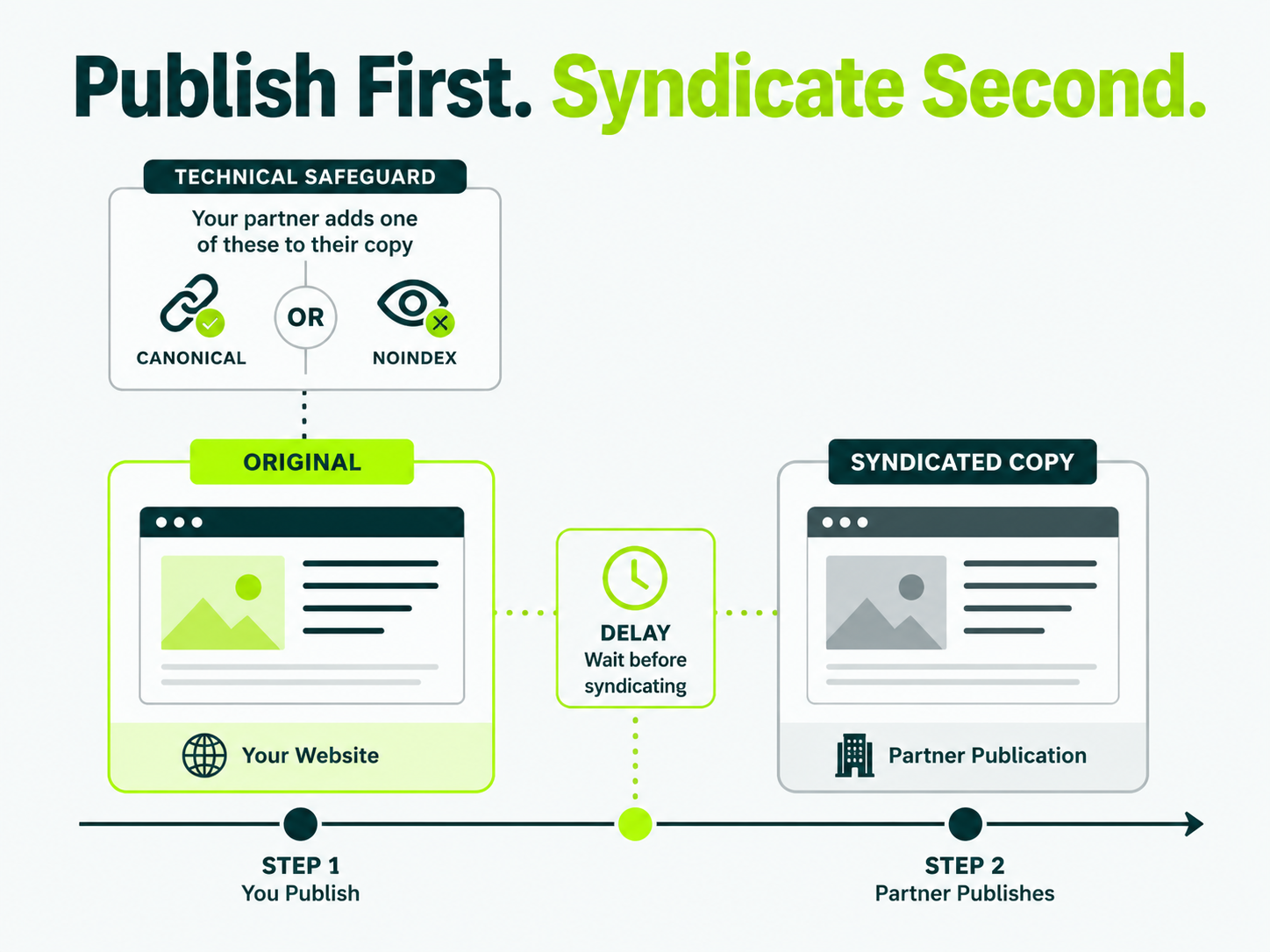
Google ranks the wrong page and costs you traffic when it can’t tell which version is the original.
What Is a Canonical Tag?
A canonical tag is an HTML tag or a small piece of code that tells search engines “This page is the true original; other similar pages are copies.” It looks like this in <head>:
<link rel=”canonical” href=”https://example.com/product-page”/>
Google treats a partner’s copy as the original when their domain outranks yours, and no canonical tag points back to you.
That’s the fear behind every beginner’s real question: Does syndicating a post hurt your SEO? The answer is mostly no, as long as you:
- Add a canonical tag.
- Publish on your own site first.
Google treats the canonical tag as a strong signal instead of an absolute guarantee, but doing both greatly lowers the risk.
When to Use Canonical and Noindex Tags
Use a canonical tag when you want credit for your original content. Use a noindex tag when the partner site shouldn’t rank at all. Pick one.
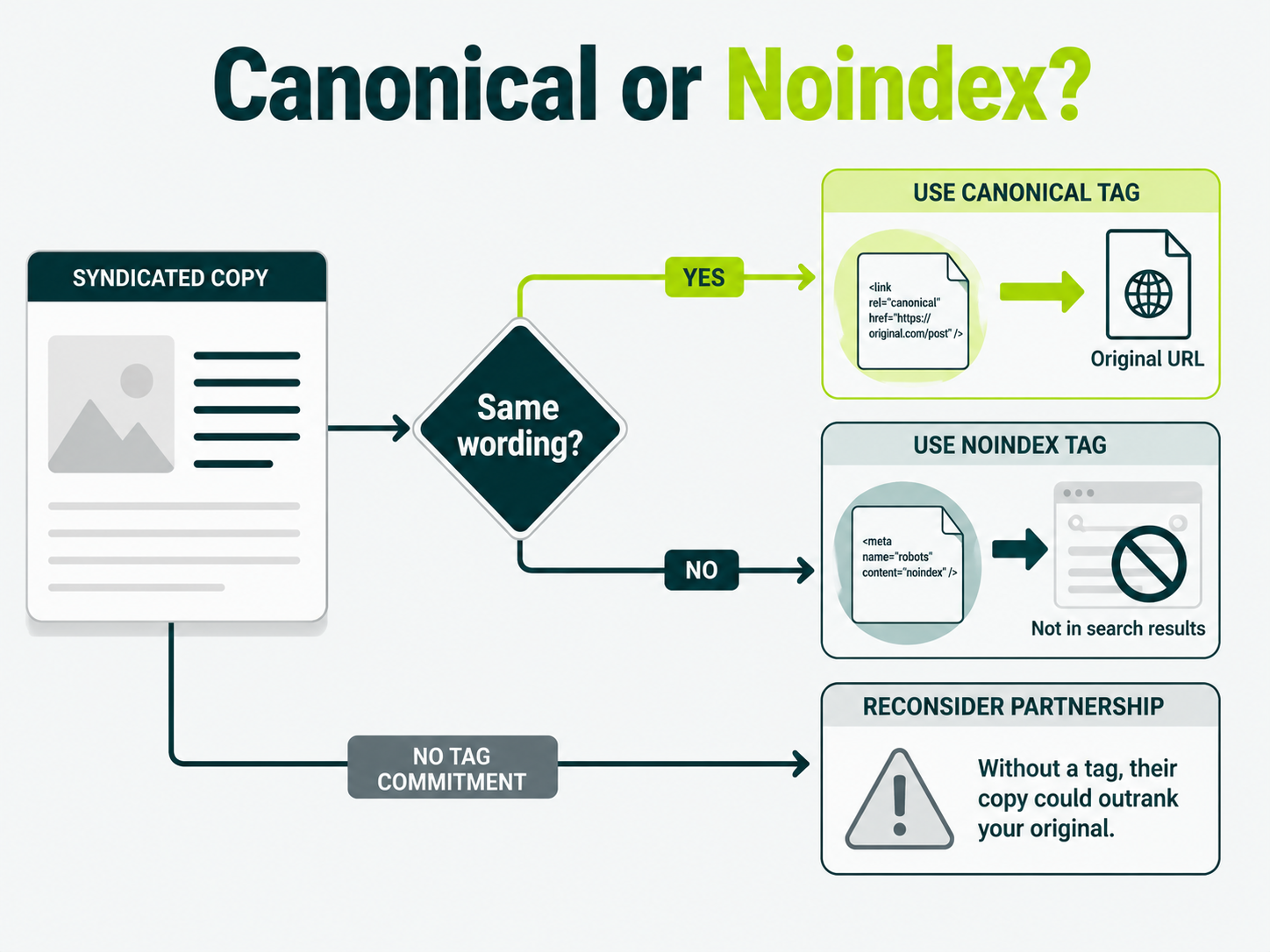
These two small pieces of code decide which version of your content Google treats as the original: The canonical tag and the noindex tag.
Your syndication partner adds it to their copy, which should stay close to the original wording.
A noindex tag tells Google not to rank that page at all, removing it from search results entirely. That’s the safer option when a partner plans to edit, shorten, or reformat your content.
A heavily edited copy is harder for a canonical tag to match back to your original.
| IF YOUR SYNDICATION PARTNER… |
USE… |
|---|---|
| Publishes your post unchanged, same wording. | A canonical tag pointing back to your original. |
| Edits, shortens, or reformats your post. | A noindex tag on their copy. |
| Won’t add either tag. | Reconsider the partnership, or accept that their copy may outrank yours. |
Content Syndication vs. Guest Posting vs. Curated Links
Content syndication republishes a piece already live on your site, word for word, elsewhere. With guest posting, you write a new piece for another site. Curated links add your backlink to an article that already exists.
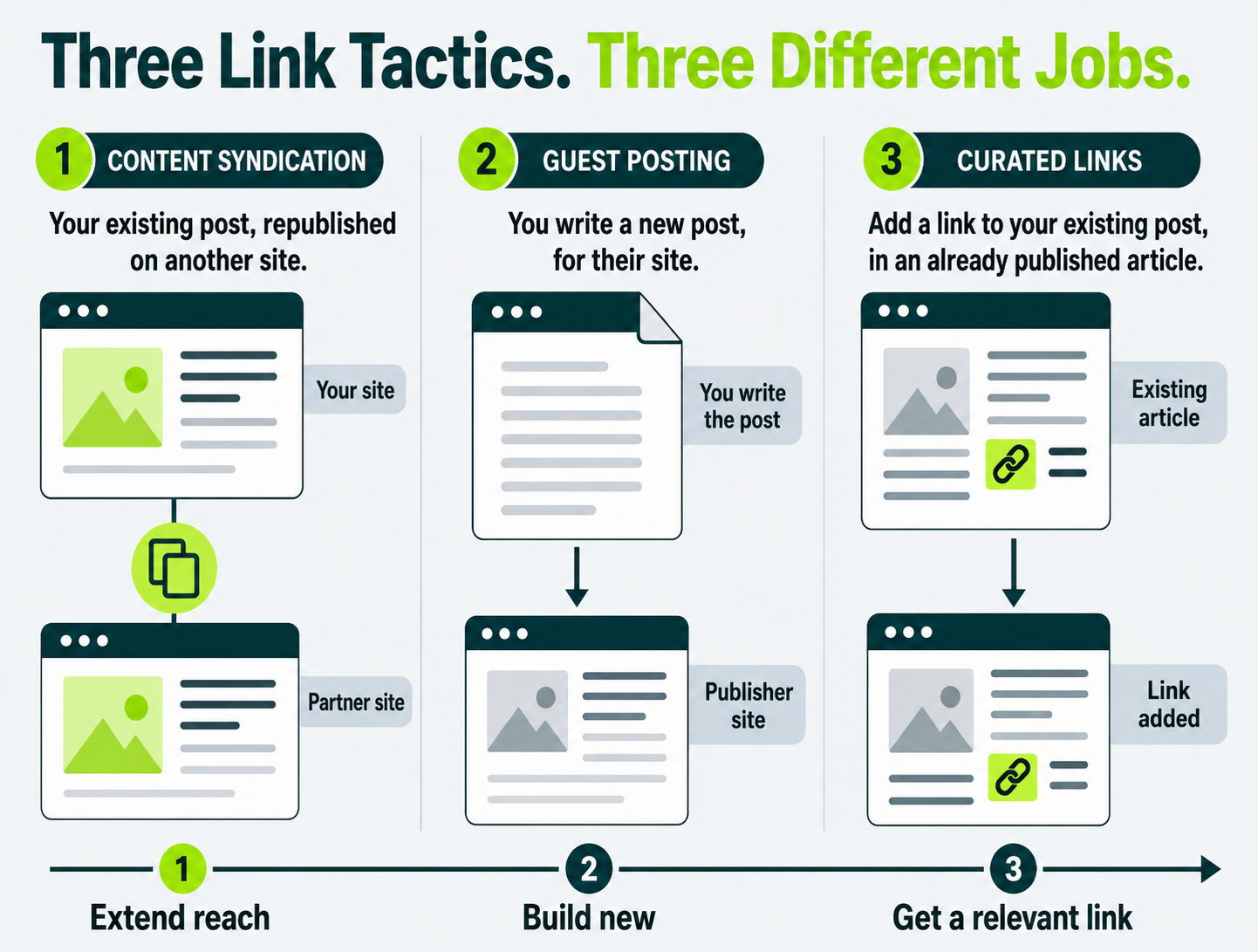
People use these terms as if they’re interchangeable. They’re not, and knowing the difference changes what you should agree to.
| FACTORS |
CONTENT SYNDICATION |
GUEST POSTING |
CURATED LINKS |
|---|---|---|---|
| What gets published |
Your existing post, republished. | A new post, written for them. | Nothing new, a link added to an existing post. |
| Where it lives first |
Your site. | Their site only. | Their site, already live before your link. |
| Backlink you get |
One link back to your original, if they cooperate. | One link inside the new post. | One link inside an existing, already-indexed post. |
| Duplicate content risk |
Yes, needs a canonical or noindex tag. | No, the content is unique to their site. | No, you’re not adding duplicate text. |
| Best for |
Getting more momentum out of a post that already performs well. | Building editor relationships and earning a link inside original writing. | Getting into content that’s already earning trust and traffic. |
If you’ve already got a post that’s performing well, syndication gets more momentum out of writing you’ve already done.
Say you need to build trust on a new subject and no matching posts exist yet. Guest posting as a link tactic is a better fit here.
Or the ideal article already exists somewhere on their site. Niche edits and curated placements can get your link inside it instead.
What You Get From Syndicating a Post
You get two things from syndicating a post: Reach and backlinks. These two help you earn new readers, brand exposure, and proof that your content works elsewhere. You can use that proof when pitching bigger sites or repurposing the post later.
The Reach You Get
A syndication partner puts your post in front of an entirely new audience.
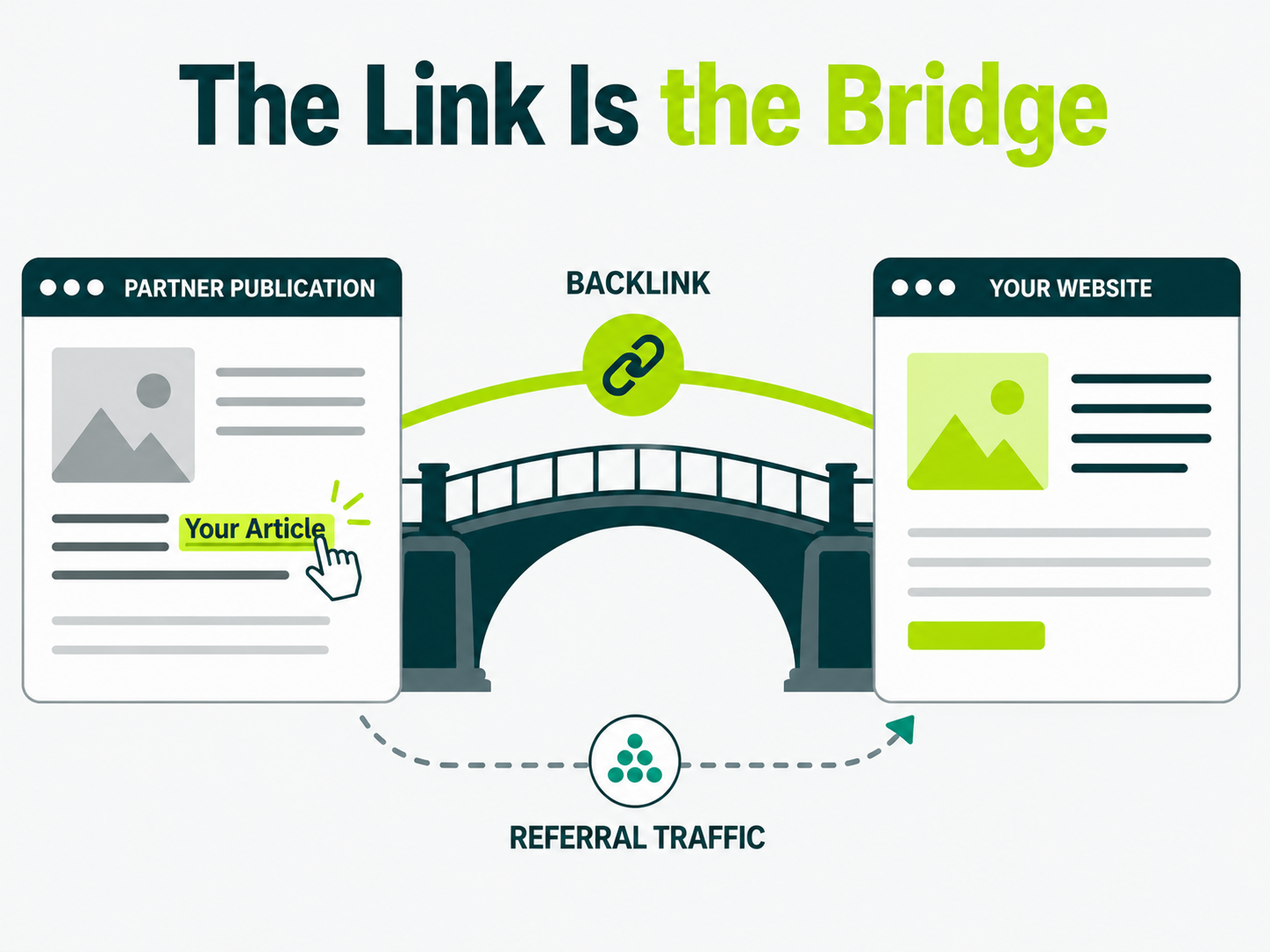
You gain exposure to their traffic and readers who never knew you existed before. This exposure boosts your brand’s reach in new corners of the web.
The Backlink You Get
If a syndication partner republishes your post and links back to the original, that’s your backlink.
A backlink is one site vouching for another, similar to a friend recommending you for a job. Always confirm they’ll include that link before you hand over your content.
None of this replaces the work of creating content that naturally earns links in the first place. Syndication redistributes a post that’s already good. It doesn’t fix one that isn’t.
The Delay That Matters More Than Your Tag Choice
The move is simple: Add your content to your own site first, then send it to the syndicated feed later.
A canonical tag only works if your partner agrees to use it. This is what happens when a partner disagrees: Yahoo Finance refused, and The Motley Fool paid the price. Similarweb (a web analytics tool that tracks how sites rank and perform) documented The Motley Fool’s syndication experiment, proving this:
- Motley Fool syndicated (distributed) its articles to Yahoo Finance.
- Yahoo didn’t add a canonical tag.
- Result: Yahoo outranked Motley Fool’s own original content 60 to 65% of the time (according to Alli Berry, The Motley Fool).
What they learned from the mistake:
- Publish on your own site first.
- Hold content back from the syndication feed for 30 minutes to two hours.
- Let Google crawl and index the original before the partner gets the copy.
The two-hour delay narrowed the gap: Motley Fool started outranking Yahoo on their own content 45% of the time. It’s a sharp improvement over losing 60 to 65% of the time.
If a partner won’t add the tag, try renegotiating first, but delay is your fallback. You can’t force a partner to add a canonical tag; that’s entirely their call. You can control when they receive your content in the first place.
We have observed that the partners who resist a canonical tag are almost always the same ones who also resist a publish delay. If a partner won’t commit to either, that’s usually a sign to renegotiate the whole deal, not just the tag.
That’s the workaround: Get Google to index your version first, before an untagged copy exists anywhere else.
Your action step: Publish on your site first, then delay the syndicated release by 30 minutes to two hours. No fixed delay works for every site. Google crawls sites at different speeds. A smaller site can start with a shorter delay; larger, established partners can justify waiting closer to two hours.
The tag matters. Timing is the fallback when a partner won’t cooperate.
Where to Syndicate: Free Platforms vs. Paid Networks
You can syndicate your content on free platforms such as Medium, LinkedIn, and industry blogs that accept syndicated content.
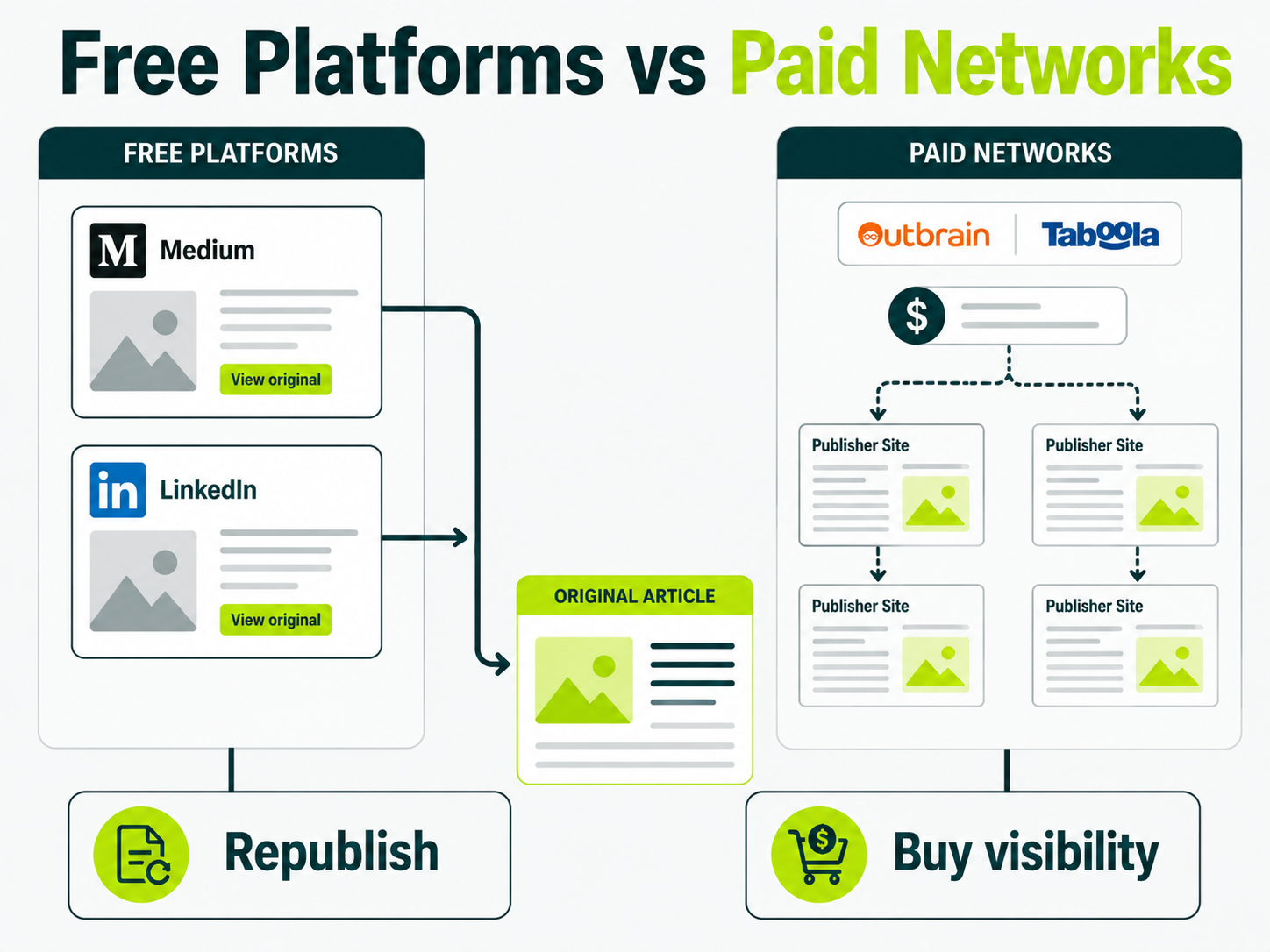
Paid networks offer bigger outlets and wider reach, but cost money. Pick based on your budget.
Free options include Medium and LinkedIn, which both let you republish an existing post under your own name. Both let readers click through to your original site.
Business publications will sometimes republish your post too, especially if it’s already ranking well and covers a topic their audience cares about.
Paid networks like Outbrain and Taboola work differently. Instead of one publisher republishing your post, these networks pay to place a link to your article across dozens of other sites.
The placement usually appears as a small thumbnail and headline inside a ‘recommended content’ widget. You’re buying impressions instead of necessarily a strong editorial backlink.
| FREE PLATFORMS (MEDIUM, LINKEDIN) |
PAID NETWORKS (OUTBRAIN, TABOOLA) |
|
|---|---|---|
| Cost |
Free. | You pay per click or per impression. |
| Backlink quality |
Stronger, closer to a real editorial placement. | Weaker, often a widget link rather than an in-content one. |
| Reach |
Limited to that platform’s existing audience. | Broad, spread across many sites at once. |
| Best for |
Building real backlinks and referral traffic. | Buying visibility and traffic fast. |
Start with free platforms; they cost nothing, and the backlink you get is closer to the kind Google rewards. Save the paid networks for when you’re chasing traffic and impressions rather than when you’re chasing backlinks.
How to Land a Syndication Partner Without Cold-Emailing Editors
Build relationships first. Start by commenting on sites that already cover your topic, share their work, and engage on social media, then pitch one solid piece. Warm outreach beats mass cold email spam.
Look for the specific topic of your content piece and your industry, and see which sites already publish similar pieces.
A tool like BuzzSumo shows you which articles perform best for your topic. It can speed up your search by surfacing the sites that already receive engagement on the same topic. Those sites need content like yours. That’s your opportunity.
Pitch the editor directly if you can find a named contact rather than a generic syndication inbox.
Keep email short: What the post covers, and why their specific audience would want it. Add one line confirming you’ll provide a canonical tag or accept a noindex tag, whichever they prefer.
Editors get dozens of generic pitches a week. They’re more likely to open emails that name their audience. They’ll delete emails that read like mail merges.
If cold pitching feels like too much at first, try pitching through platforms connecting you with journalists such as HARO (Help a Reporter Out). It’s a free service connecting journalists with sources.
Or use the other option: Some publications maintain an open contributor or syndication page listing exactly what they accept. A quick search for your industry plus the phrase “write for us” or “syndication guidelines” often turns up a submission form instead of a cold email.
Red Flags Showing a Syndication Partner Will Hurt You More Than Help
Five signals can tell you when a syndication partner is a red flag: Weak Domain Rating, no tag commitment, unfocused republishing, pay-to-syndicate requests, and no live example to point to. Avoid them.
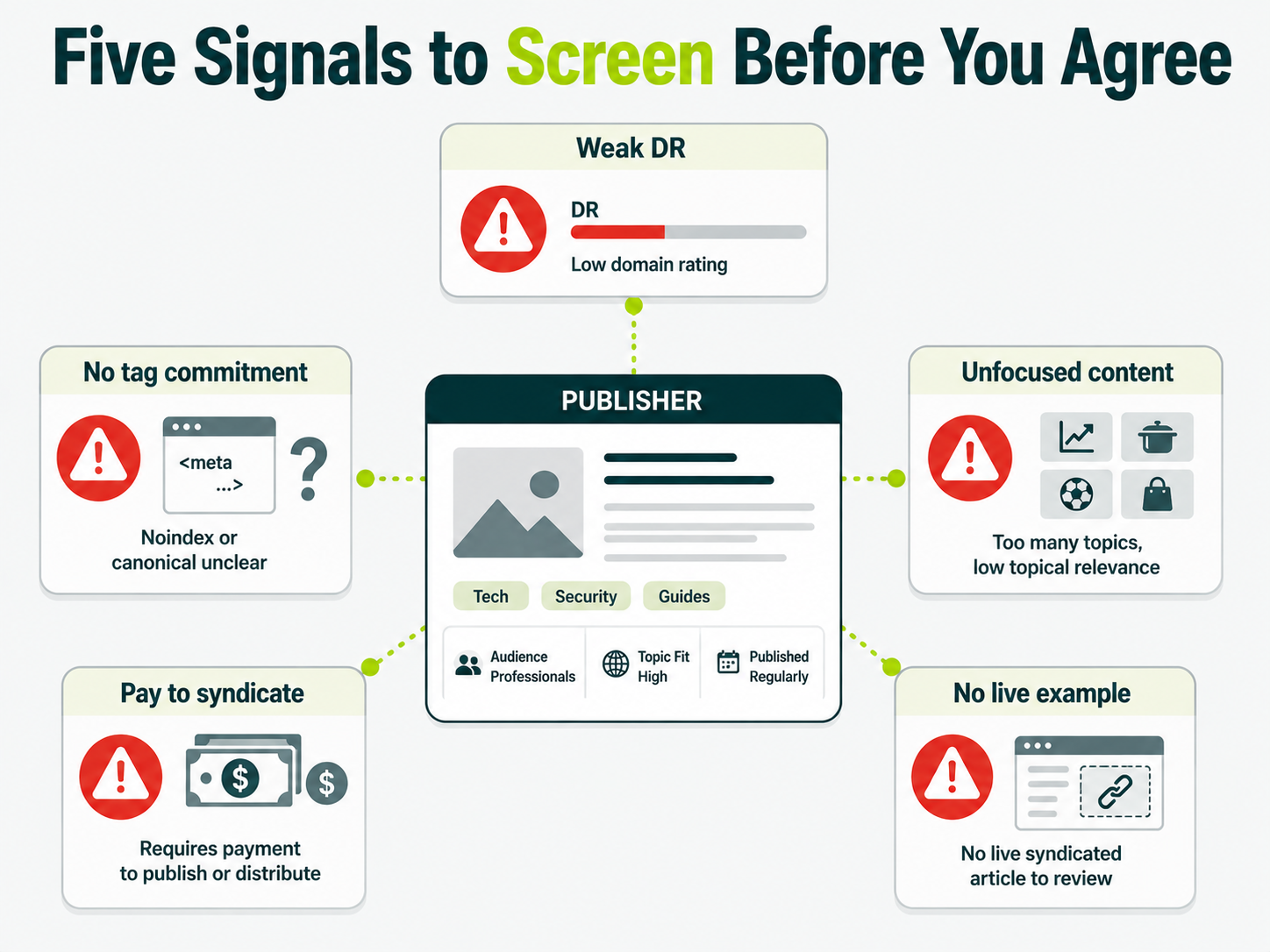
Use these signals to screen a potential syndication partner:
| RED FLAG |
WHY IT’S A PROBLEM |
|---|---|
| Domain Rating under 10, or traffic that looks bought rather than earned. | A backlink from a weak, low-trust site barely moves your rankings, and can sit next to spammy neighbors. |
| They won’t confirm a canonical tag or noindex tag in writing. | You have no way to enforce it once your content is live on their site. |
| The site republishes dozens of unrelated topics with no clear focus. | Google treats this pattern as a content farm rather than a legitimate publisher. |
| They ask you to pay them for the opportunity to syndicate your content. | Real syndication partners want your content because it serves their audience, not because you paid for placement. |
| They can’t show you another live example with a working attribution link back. | If they can’t produce one example, you’re likely their first, and you’ll be the one finding the mistakes. |
DR is Ahrefs’ third-party metric for evaluating the strength of a site’s backlink profile. It can provide context, but it does not measure editorial quality, audience fit, or referral value.
A DR 15 blog with real, engaged readers can beat a DR 40 site that republishes anything for a fee.
The paid-placement red flag deserves its own callout. A site that charges you to syndicate your content has flipped the relationship.
You’re not building authority through a legitimate partner. You’re buying a listing on a site that will sell the same listing to anyone who pays.
How Much Value Is Content Syndication Worth?
One placement adds modest value on its own unless it’s from a high-authority site.
We’ve seen this play out with our clients. Those who treat syndication as a slow-build habit, not a one-off placement, are the ones who actually see it move rankings over time.
One placement rarely changes your organic performance on its own. The value comes from reaching relevant readers, earning useful referral traffic, and building a repeatable distribution process.
What One Placement Gets You
One high-quality placement gets you new readers, one backlink, maybe a small amount of traffic, and proof that partner outreach works. Nothing huge, but a solid first step worth taking.
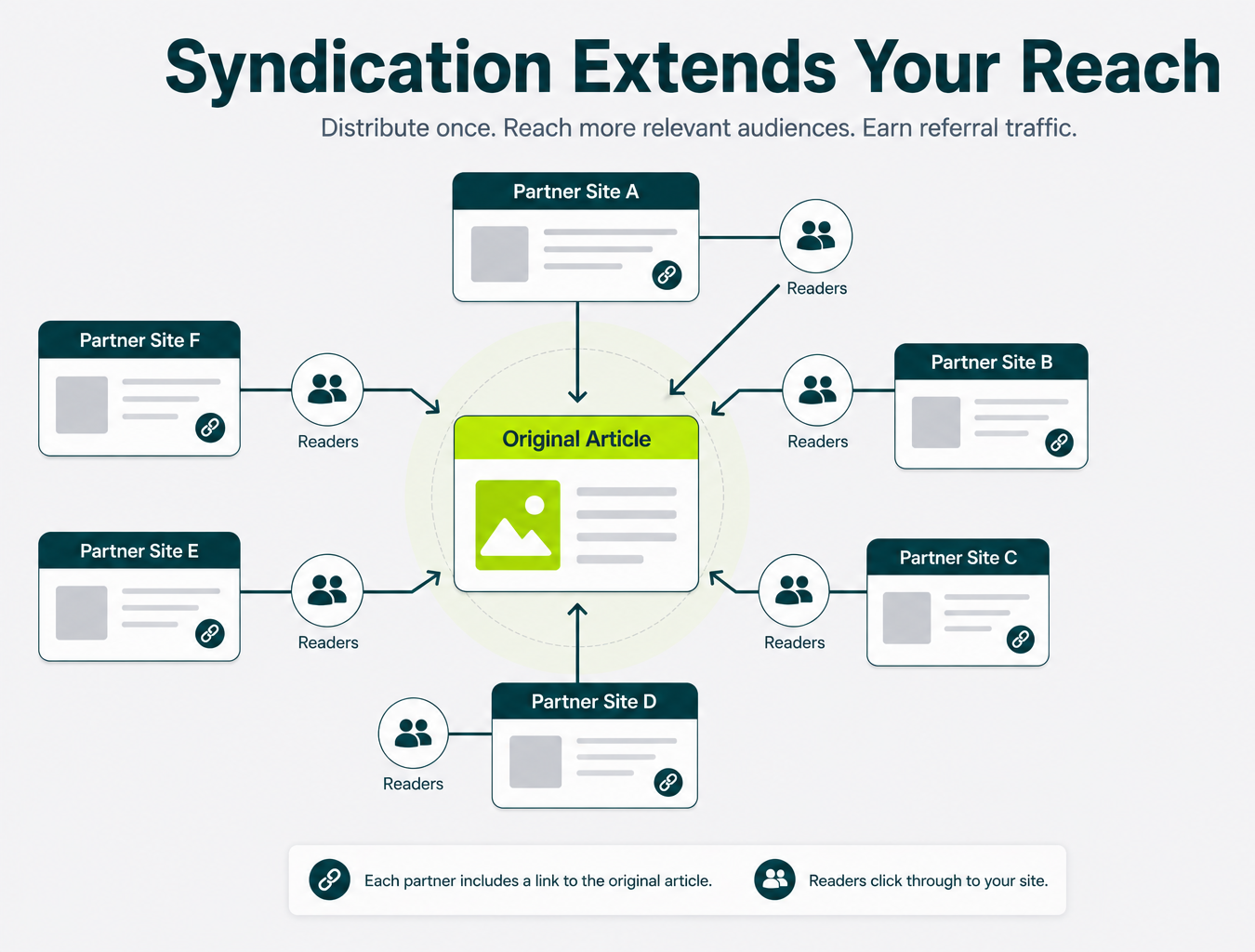
Referral visitors who do arrive convert at a higher rate than search visitors. Even one or two solid placements a month puts you meaningfully ahead of doing nothing.
Why This Compounds When You Track It
Ten placements across ten sites start to look like a real, diversified backlink profile.
Over multiple placements, tracking helps you identify which partners continue to send referral traffic and which placements stay live. Use that data to repeat the partnerships that work and drop the ones that don’t.
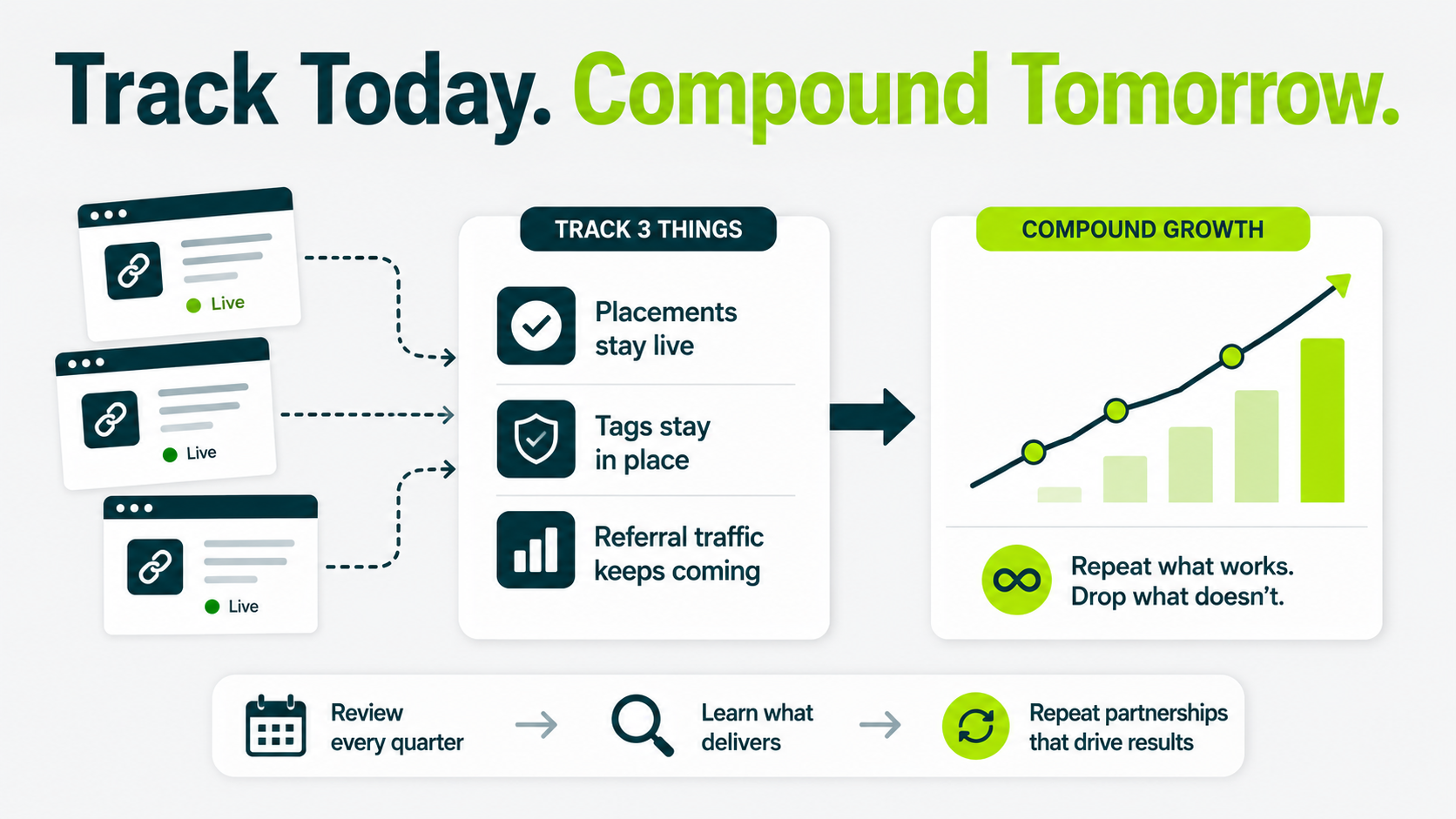
Judge success over a quarter rather than a week. Track it in three ways:
- Count how many placements are still live.
- Confirm the tags are still in place, since partners sometimes drop them.
- Check your referral traffic in your site’s analytics.
If a placement stops sending referral traffic and the tag has vanished, follow up with the partner, or write it off and move to the next one.
Turn One Post Into Your First Placement This Week
Pick one proven post, identify one relevant syndication partner, agree on the technical controls, and publish on your site first. Track the placement after it goes live, then use the results to choose your next partner.
Done right, syndication doesn’t cost you rankings; it adds to what you’ve already earned.
Want Your Best Content to Earn More Links?
Turn valuable content into relevant backlink opportunities through targeted publisher outreach and link building.
Does content syndication hurt my SEO or search rankings?
Not if it’s done correctly. The risk isn’t syndication itself; it’s republishing without a canonical or noindex tag and without a delay. With the right tag and a few hours’ head start, you give your original a better chance of remaining the version Google ranks.
What’s the difference between content syndication and guest posting?
Syndication republishes a post that’s already live on your site elsewhere; guest posting is a brand-new piece you write only for the other site. Syndication carries duplicate content risk and needs a canonical or noindex tag; guest posting doesn’t, since the content is unique to that site.
Should I use a canonical tag or a noindex tag for syndicated content?
Use a canonical tag if the partner publishes your post unchanged; it points Google back to your original. Use a noindex tag if they’ll edit, shorten, or reformat it, since a heavily altered copy is harder for a canonical tag to match back correctly.
How long should I wait before syndicating a post after publishing it?
Publish on your own site first and hold the syndicated version back for at least 30 minutes to two hours, so Google has time to crawl and index the original before the syndicated copy goes live.
Is it better to syndicate through free platforms or paid networks like Outbrain?
Start with free platforms like Medium and LinkedIn. They cost nothing and produce a stronger, more editorial-style backlink. Paid networks buy broad impressions through recommended-content widgets, which is useful for traffic but weaker for real link equity.