Link Building Service for Skincare Brands Built Around Ingredient Pages
Skincare shoppers search by ingredient, leaving room for brands’ own pages. Links give your ingredient pages the strength to compete.

Links that point to your product and collection pages
Placements on beauty, wellness, and lifestyle sites
Reporting on the ingredient searches you track

4.8/5
Trusted by agencies
and brands worldwide.
Referring Domains
9 → 18
Campaign Dashboard
ORGANIC VISITS
ingredient and category pages with new links
INGREDIENT SEARCHES
+8 terms
ORGANIC ORDERS
+200%
Placements Published
beauty, wellness, and lifestyle sites

Top 10 Keywords on Product Pages
15 → 40





Service Overview
The Ingredient Searches Your Own Pages Can Hold
A skincare brand’s own pages can hold ingredient searches, and links help them compete. We checked eight ingredient searches for this page. Across those searches, brand product, collection, and guide pages held 35 of 73 results, nearly half; retailers, publishers, health and medical site, and ingredient databases split the rest.
We then re-ran four of those searches with "best" added. Across those four, brand pages held 2 of 37 results, against 20 of 37 in the plain versions.
All 35 brand pages had the ingredient in the title, and 28 were product pages. That’s why each campaign link points to one of your ingredient pages.
In those four "best" searches, databases and publishers held 26 of 37 results. Roundups are a different job, and we cover them below.
Three things mark skincare link building that works:

Pages That Name the Ingredient
Each link points to the product or collection page that names the ingredient a shopper searched for.

On Sites Your Customers Read
A placement is a published link an editor chose to include on a beauty, wellness, or lifestyle site.

Searches You Can Hold
Each link supports a page competing in a plain ingredient search, where brands’ own pages have room.
How We Work
How Your Skincare Link Building Campaign Works
Six steps, from ingredient searches to verifiable links. Nothing is pitched until the first two steps are settled.
Your campaign starts with the searches your products can answer, one ingredient and product type at a time.
For each one, your strategist records who holds the results today: brand pages, retailers, ingredient databases, publishers, or health sites. That check shows which searches have room for your own page.
You’ll also see where your pages already appear, and where they’re missing.
Next, your strategist matches each search to the ingredient page it should land on.
Usually that page is the product page that carries the ingredient’s name, or a collection page for the product type. Those pages need their own links.
A link to your homepage does less for a single product page than a link to that page itself.
A product page is worth linking to when it answers a shopper’s questions about the product itself.
Your strategist marks what each ingredient page is missing, like a full ingredient list or directions for use. Your team supplies the detail, since nobody knows your formulas better.
We invent nothing to fill a page, reviews included.
Outreach means writing to site editors one at a time with an article idea their readers want.
Your strategist pitches beauty, wellness, and lifestyle sites, and each article links to the one page of yours it supports. Plenty of pitches go nowhere, and the plan allows for that.
Each pitch reflects what that site already publishes, so it never reads like a form letter.
Your strategist matches every placement to one of your pages before the pitch goes out.
Internal links are the links between your own pages. They carry authority from page to page, so a collection page supports the products it lists.
Your strategist open and check every link before it reaches your report.
You’ll see the page it supports and the ingredient search that page competes in. Your report also shows which results your pages hold in each tracked search.
The report lists declined pitches too, so you can see which ideas editors passed on.

Expected Results
Outcomes Skincare Link Building Delivers
When your ingredient pages carry authority, they can compete with other brand pages in the searches shoppers run.
Ingredient Pages That Compete for a Place
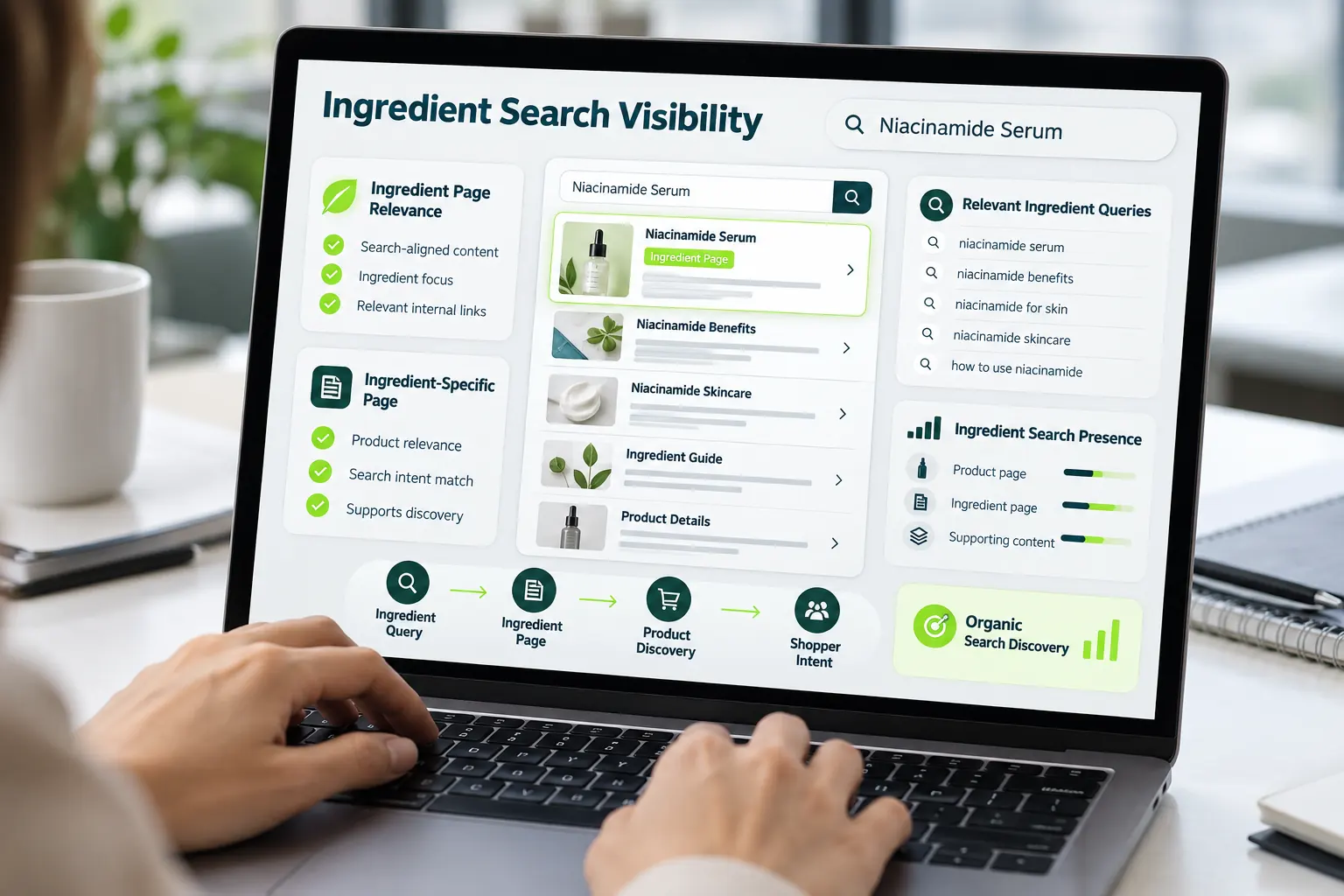
A plain search for an ingredient, like “niacinamide serum”, often brings up brands’ own product pages.
We aim links at the searches that match each of your ingredient pages. That’s how a page you already sell from starts competing where shoppers look.
The result: Your ingredient pages compete for a place in the searches that fit them.
Each Link Strengthens One Product Page
A link to a product page strengthens that product page.
Over a campaign, the pages you picked collect authority one link at a time. Collection pages pass some of theirs along to the products they list.
The result: Your own product pages grow stronger with each placement.

Links From Beauty and Wellness Sites
Links from beauty, wellness, and lifestyle sites fit what a skincare brand does.
Search engines read that fit as a sign your site belongs in skincare searches. A link from a car parts site doesn’t send that signal.
The result: Each placement makes sense to the people who read it.

A Report That Follows Your Ingredient Searches
Your report lists each link, the page it supports, and the ingredient search that page competes in.
For every tracked search, you can see how your pages are doing from one report to the next.
The result: You’ll know which ingredient pages are gaining ground before you plan the next month.

Client Success Stories
What Clients Say About Our Skincare Link Building
Feedback from skincare brands and clinics on how we communicate: which sites we pitched, which placements went live, and how each link was reported.

4.8/5 

5/5 
Rating on Google



Outreach Desk audited every stockist and marketplace page and told us which ones linked to our website and which only listed our name. Two left the link field blank, and each fixed it after a single email. The report labeled those as listing updates instead of editorial links, which is exactly how we wanted it.

Founder
Ingredient-Led Skincare Brand

Our best relationships were with estheticians, a couple of wellness writers, and a dermatology nurse who blogs, and none of them had ever linked to us. Outreach Desk built the outreach around those relationships, so the emails stayed short. Two of those partners now link from articles they already maintain, and the links point to our niacinamide serum and vitamin C collection pages instead of our homepage.
Marketing Director
Clean and Natural Skincare Brand

Our old reports blended every product into one number. Outreach Desk reported each ingredient search separately and named the page each link supported. We could finally see which searches our product pages held and which they hadn’t yet reached, and we shifted our effort accordingly.
Head of Marketing
Sunscreen and Body Care Brand
Service Framework
Investment, Timeline, and Deliverables
Each placement is a link a real editor chose to publish, pointing to an ingredient page matched to each search before pitching.

Product Range
A brand with three products needs a different scope than one with forty across several product types.

Ingredient Searches in Scope
Each ingredient and product type you want to compete in needs its own page and its own links.

Existing Pages
Brands with full product and collection pages already live have less to build before links can help.

Campaign Duration
Placements begin landing within the first two months, and ranking movement usually shows across three to four months.
Directional pricing
Pricing and scope are shared on request, tailored to your product range, target ingredient searches, and growth goals. After an initial strategy call, a custom proposal is provided, covering the pages to link to, placement sites, ingredient search reporting, and a month-by-month roadmap.
What You Get
Every Link Points to the Ingredient Page It Supports
You see which placements went live, which pages they support, and how those pages are doing in the searches you track.

Live Placement Log
Each placement arrives as a working link, with the site the publishing site and the date it went live.

Ingredient Search Tracking
For each ingredient search you track, you see which results your pages hold in that search as the campaign runs

Results by Page
You see which product or collection page each link supports, and how each of those pages is doing

Pitches and Declines
The report lists every pitch with its reply or its silence, so later pitches go where editors have said yes
Our Approach
An Ingredient-by-Ingredient Approach for Skincare Brands
We pick links page by page for the ingredient searches you can hold, and we report every placement back to you.
| Factor | GENERIC LINK BUILDING AGENCIES |
 |
|---|---|---|
| What Gets Linked | Many link the homepage by default. | We link your product and collection pages, one page per link. |
| Where Links Come From | Some take any blog with open space, whatever it covers. |
We place links on beauty, wellness, and lifestyle sites that fit your products. |
| Which Searches | Many target "beauty keywords" in general. | We target the ingredient searches your pages can hold, and we check them first. |
| Link Types | Some use sites that exist only to sell links, plus throwaway blog pages. |
We use none of those. |
| Pricing | Many quote privately after a discovery call. |
We provide clear pricing terms before the campaign begins. |
Who We Help
Skincare Brands We Support
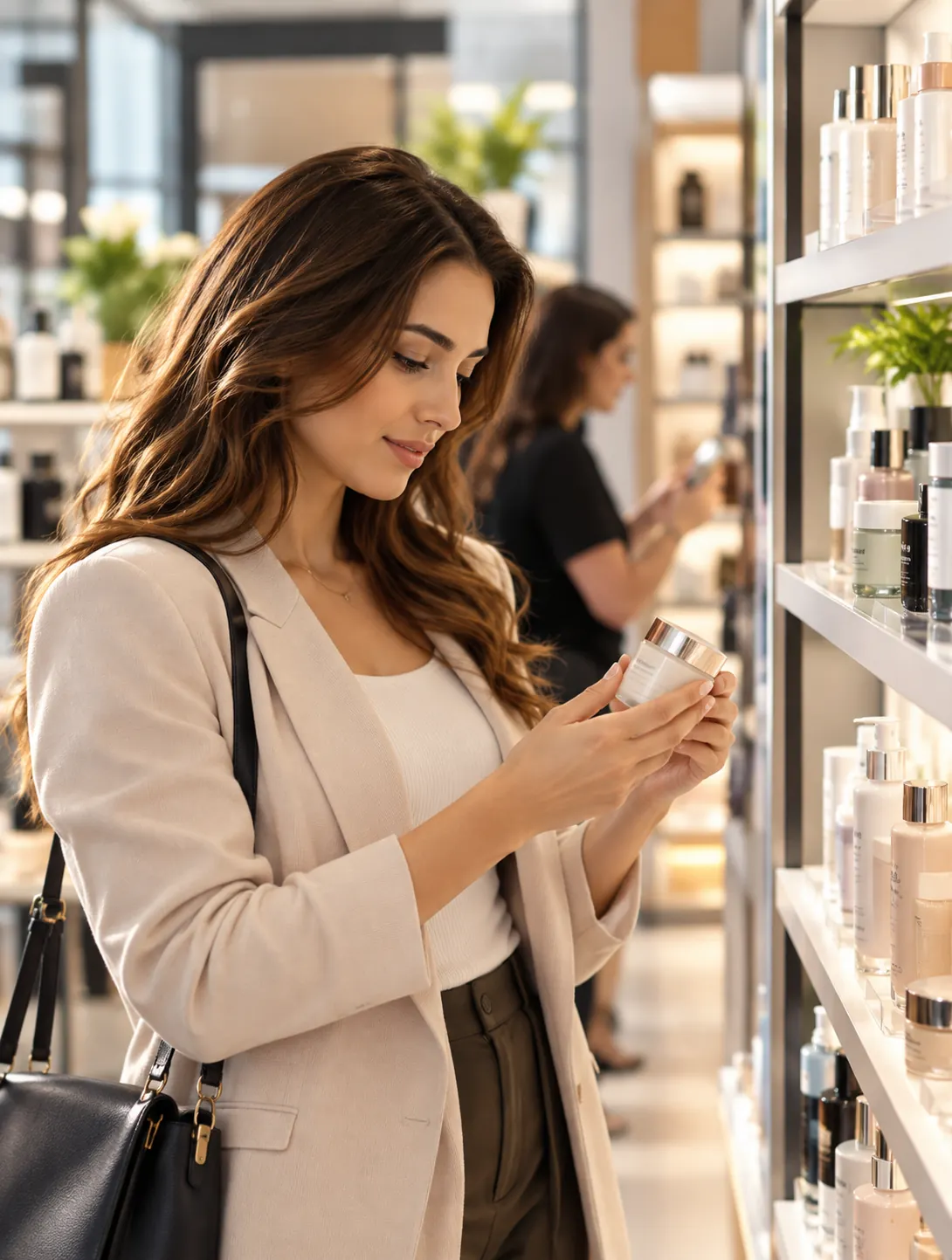
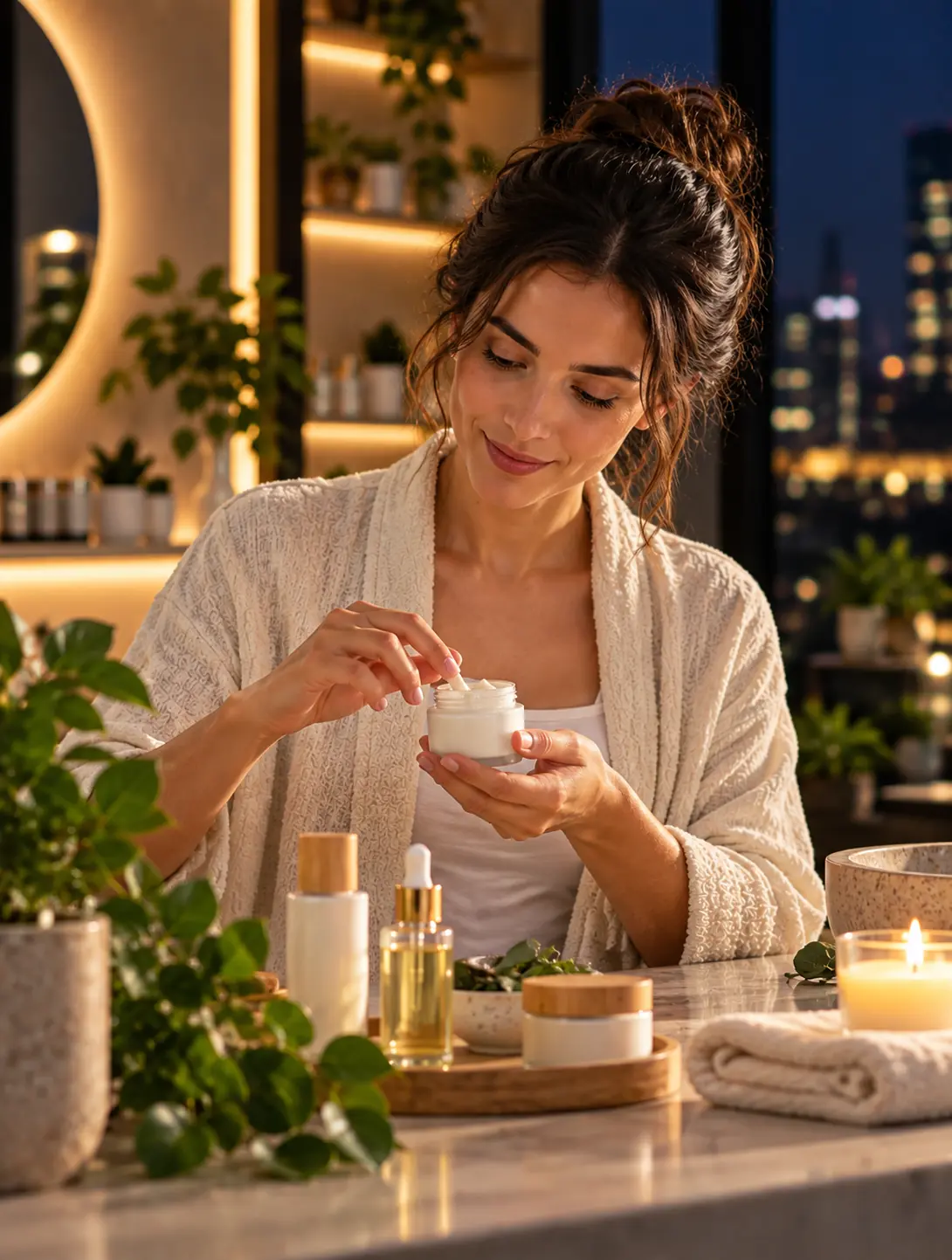
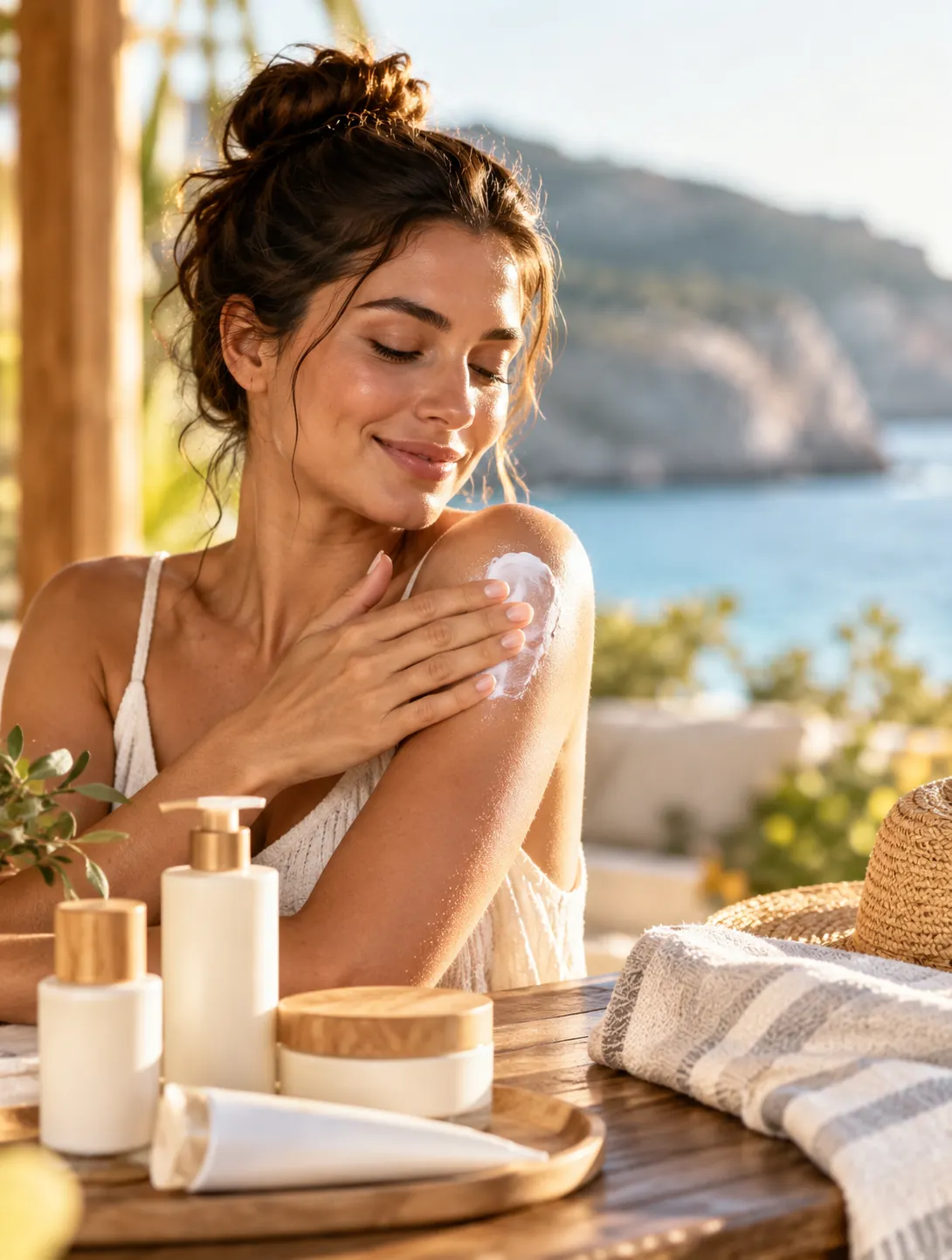
Whatever you make and wherever you sell it, we build authority for the pages on your own site that sell it.

Direct-to-Consumer Skincare Brands
Skincare Brands Sold Through Retailers

Ingredient-Led Skincare Brands
Clean and Natural Skincare Brands
Sunscreen and Body Care Brands
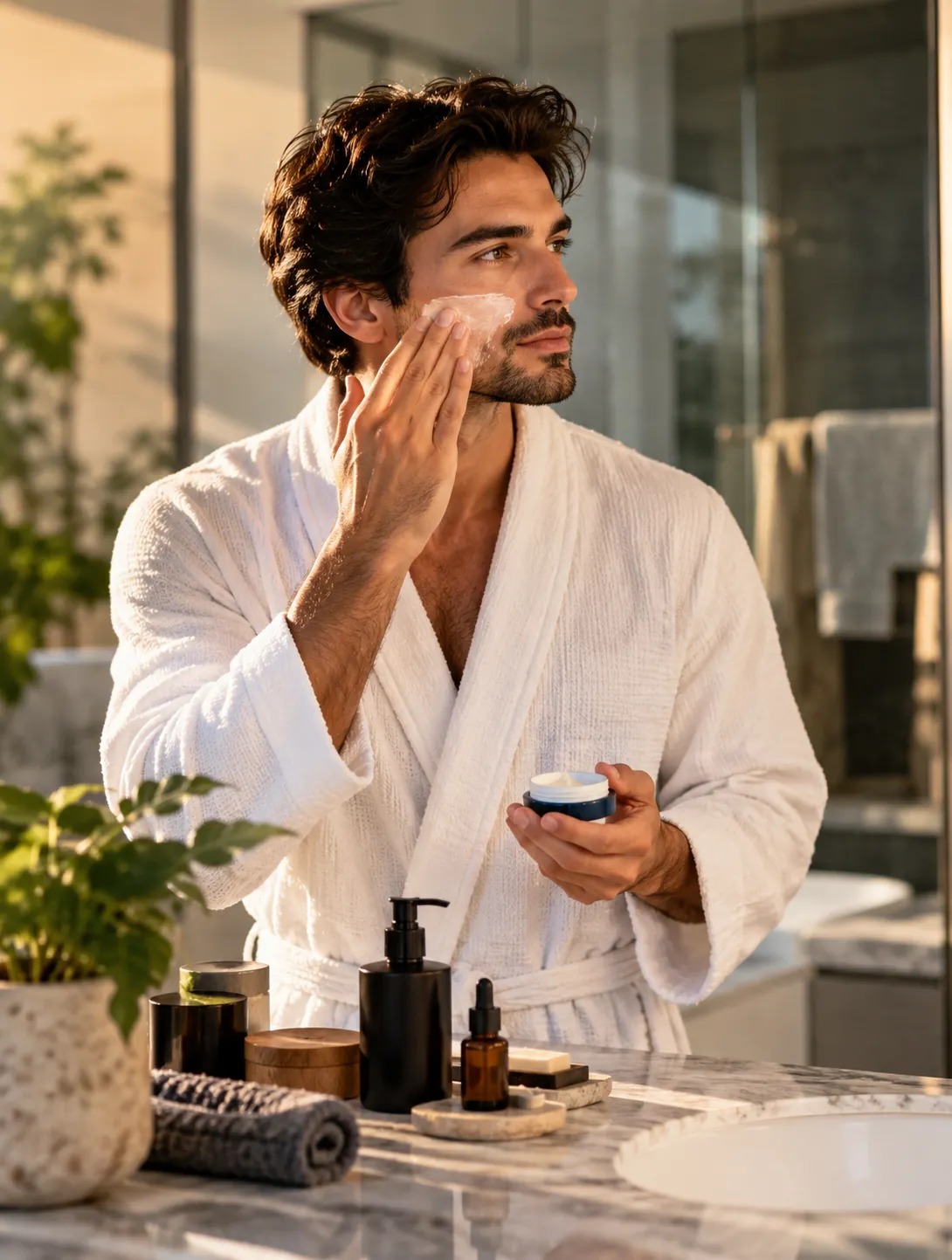
Men’s Skincare Brands
Common Questions
Frequently Asked Questions
Here are direct answers to the questions skincare brands ask us most, from creator gifting to cost.
Mostly through other sites’ pages instead of your own. We re-ran four of our eight ingredient searches with “best” added. Brand pages fell from 20 of 37 results in the plain searches to 2 of 37 with “best”.
Ingredient databases and publishers took 26 of 37 results in the four “best” searches. Earning a product a place in a publisher’s roundup is its own job, and our page on listicle placements covers how it works.
Not the kind this page sells, though it’s often good marketing. Google’s spam policies treat product-for-link swaps as link spam unless the link carries a nofollow or sponsored tag. Google allows those links when they carry a nofollow or sponsored tag.
That tag is a small label in the page’s code, and it tells search engines the publisher did not give the link freely. So a creator’s post can do a lot for your brand without being an earned link. An earned link is one an editor gives on merit. Paid placements need a sponsored tag. Gifted-product posts need a nofollow or sponsored tag.
They can compete for a place, and nobody can promise them one. We checked eight ingredient searches for this page. Pages from 24 different brands appeared in the results, and seven of those brands appeared in more than one search. Links add authority to your own ingredient pages, and that’s the part a campaign controls. The check at the start of your campaign shows which searches are within reach.
The page that names the ingredient, usually a product page or a collection page. In the eight ingredient searches we checked for this page, all 35 brand results carried the searched ingredient in the page title. Of those 35, 28 were product pages. A link to your homepage does less for those pages than a link aimed at each one. Links from your own pages carry that authority further, and our guide explains how to pass authority to product pages.
Yes, because the links build pages on your own site, and that’s true wherever else you sell. In the eight ingredient searches we checked for this page, retailers and marketplaces held 13 of 73 results. Your listings on their sites are their pages, and they compete in the same searches yours do. A campaign builds authority only for pages on your own site, like your product and collection pages. A broader look at link building for online stores covers how those pages can earn relevant links.
If most of your range is skincare, sunscreen, or body care, this is the right page. Brands that sell across makeup, hair, and other categories, and stores that carry many brands, fit our link building services for ecommerce better. That page covers entire stores, including product and category pages. This page serves skincare brands and builds the ingredient pages those brands sell from.
You pay per placement, with lower rates available at higher monthly volumes. Placement costs vary by site quality, relevance, and campaign scope.
Your pricing also depends on your product range, the ingredient searches you want to target, and the pages you want to strengthen. You’ll receive a detailed proposal after your strategy call..
Choose the Ingredient Page to Build First
Have a senior strategist check that ingredient’s searches, pick the page that should compete, and walk you through pricing.
4.8/5
Trusted by agencies
and brands worldwide.