Link Building Service for Towing Companies That Turns Your Credentials Into Links
Your permits, certifications, and rotation approvals show you’re trusted. Link building service for towing companies turns that trust into links to your site, so you rank higher when customers search for a tow.

Every approval and listing inventoried first
Placements built on credentials you already hold
Listings reported apart from links, never counted twice

4.8/5
Trusted by agencies
and brands worldwide.
Domain Rating
7 → 19
Campaign Dashboard
PLACEMENTS EARNED
+24 live
ACCURATE DIRECTORY LISTINGS
+22 entries
CITY + TOWING TERMS IN TOP 3
+12 terms
ORGANIC TRAFFIC
+214%

Phone Calls From Search
18 → 42





Service Overview
The Approvals You Already Hold, and Which of Them Link
A police rotation list is usually a citation rather than a link, so it publishes a phone number where a website would go. The Frederick Police Department publishes a list of companies approved to tow for 2026 to 2027, naming nine companies with addresses and phone numbers but no websites.
California’s rotation program asks for driver training, specified recovery equipment, insurance, and fingerprints, yet publishes no operator list.
WreckMaster sells certification on insurance savings, contract advantages, and credibility with enforcement agencies. Those benefits happen in conversations, while search visibility usually requires more than a credential alone.
A state towing association member list can publish your website. Georgia’s towing association list shows 77 entries with clickable email addresses and 25 with links to company websites.
So the inventory comes first: every permit, certification, rotation approval, and membership. Then we find which sources publish a link to your site.
Three things define towing link building done right:

Approvals Inventoried First
You see every permit, certification, and membership the business holds, and which of them publish anything at all.

Listings Reported Apart from Links
We record anything that proves standing without pointing to your site that way, and we never count it as a placement.

Placements Built on What’s Already Earned
The credential is the reason an editor takes the pitch, so the pitch leads with it.
How We Work
How Your Towing Link Building Campaign Works
A towing link building campaign consists of six steps, starting with an inventory of all approvals, permits, and certifications the business already holds.
Your campaign starts with a list of what the business has already earned: tow permits, operator certifications your drivers hold, police rotation approvals, association memberships (including one someone joined years ago and forgot about), and, where applicable, vehicle storage or impound licensing.
Then comes the second list, which shows which credentials publish anything and whether they include a link to your site. The gap is usually larger than an owner expects.
Next, we decide which pages need authority, meanings.
For most towing companies, that’s service and city pages rather than the homepage. A heavy recovery page and a roadside assistance page answer different searches, so they need different sources.
Light-duty work competes on local search volume, while heavy recovery targets fewer, higher-value jobs. Some pages worth linking to don’t exist yet, and that’s often where the work starts.
The listings worth chasing are the ones already willing to carry your website. A strategist checks each body the business belongs to and records what it publishes: name only, name and phone, or name and link.
Where a listing carries no link, your team records it in the report as standing rather than as a placement.
Adding your website to a listing that doesn’t show one is the fastest work here. We handle open directories that accept anyone with a credit card separately. A few provide a useful baseline, but none is authoritative.
The businesses already calling your dispatcher are most likely to link to you.
Body shops, repair shops, dealerships, trucking firms, property managers, and equipment yards publish pages naming companies they work with, yet often omit the tow operator.
Outreach means emailing site owners and editors asking for a link. A referral relationship shortens that email because it already answers “why you.” Fleet and property accounts publish vendor pages, which are links.
Every market a truck runs in has sites willing to link. Local business organizations, regional press, community events, sponsorships, and charity work all count, while a difficult recovery can give local newsrooms something worth covering.
These opportunities arise sooner than those that require credential checks, so they often drive the initial movement.
If your trucks cover four counties from two yards, run this separately for each yard. A sponsorship in one town does nothing elsewhere.
You’ll see what landed, where it landed, and which source produced it.
Your team reports listings, partner pages, and press placements in separate columns, so we never count an upgraded directory entry as an editorial link. Every placement arrives as a URL you can open.
Your team reports declined pitches too. A report showing only wins tells you nothing about where the effort went, and in a trade this narrow, the declines are often the more useful half.

Expected Results
Outcomes That Towing Link Building Delivers
When the permits, certifications, and relationships the business already has become published pages that link, the authority builds on a site you own.
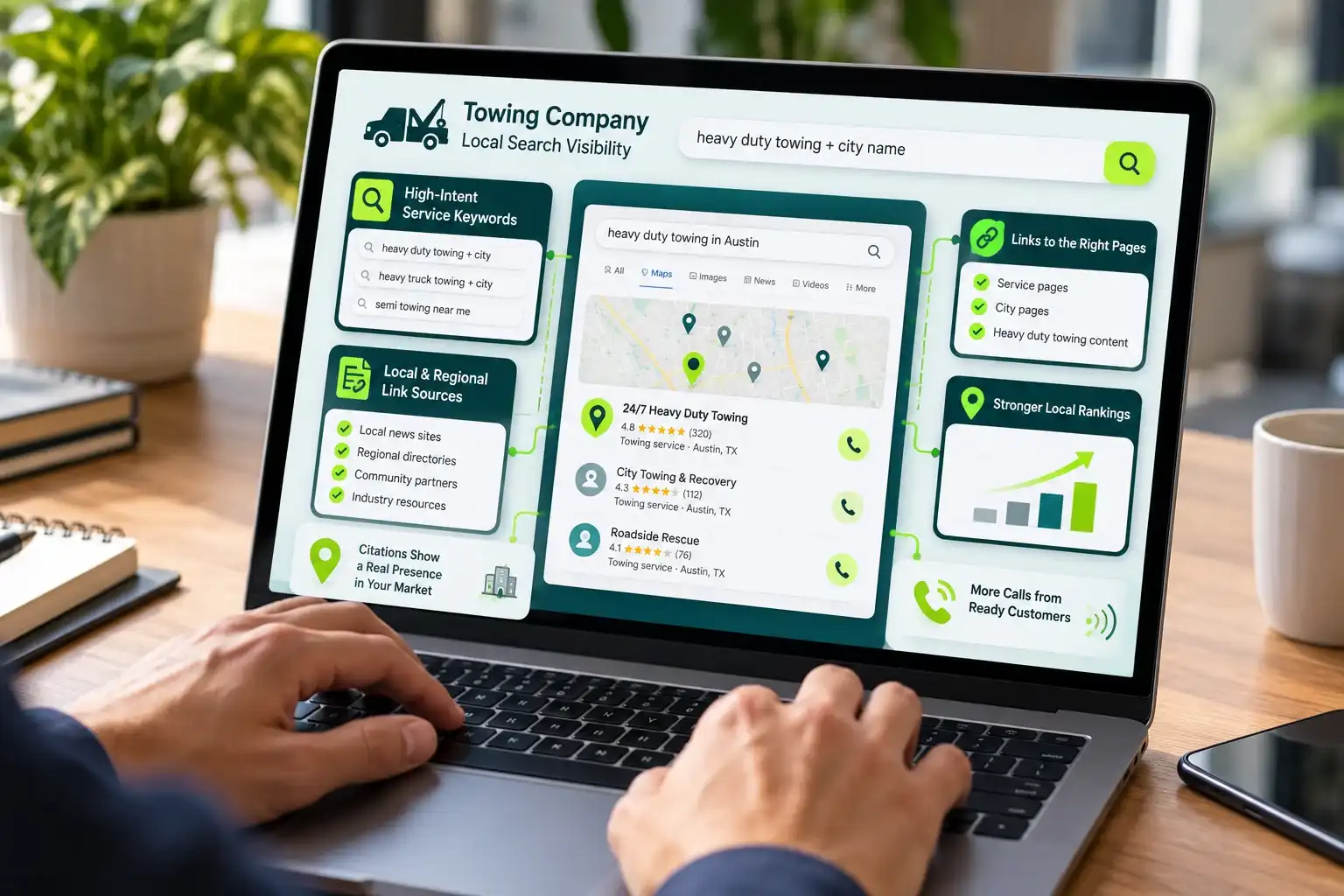
Showing Up for the Searches That Turn Into Jobs
Somebody searching “heavy-duty towing” plus a city name is a very different customer from somebody searching for a tow price.
The pages that answer the first kind of search are the ones a campaign points links at.
Links from local and regional sources move those pages because a search engine reads them as evidence the business is real in that market.
The result: Your service and city pages compete for the searches that end in a phone call rather than a price comparison.
Making the Approvals Visible to Somebody Deciding
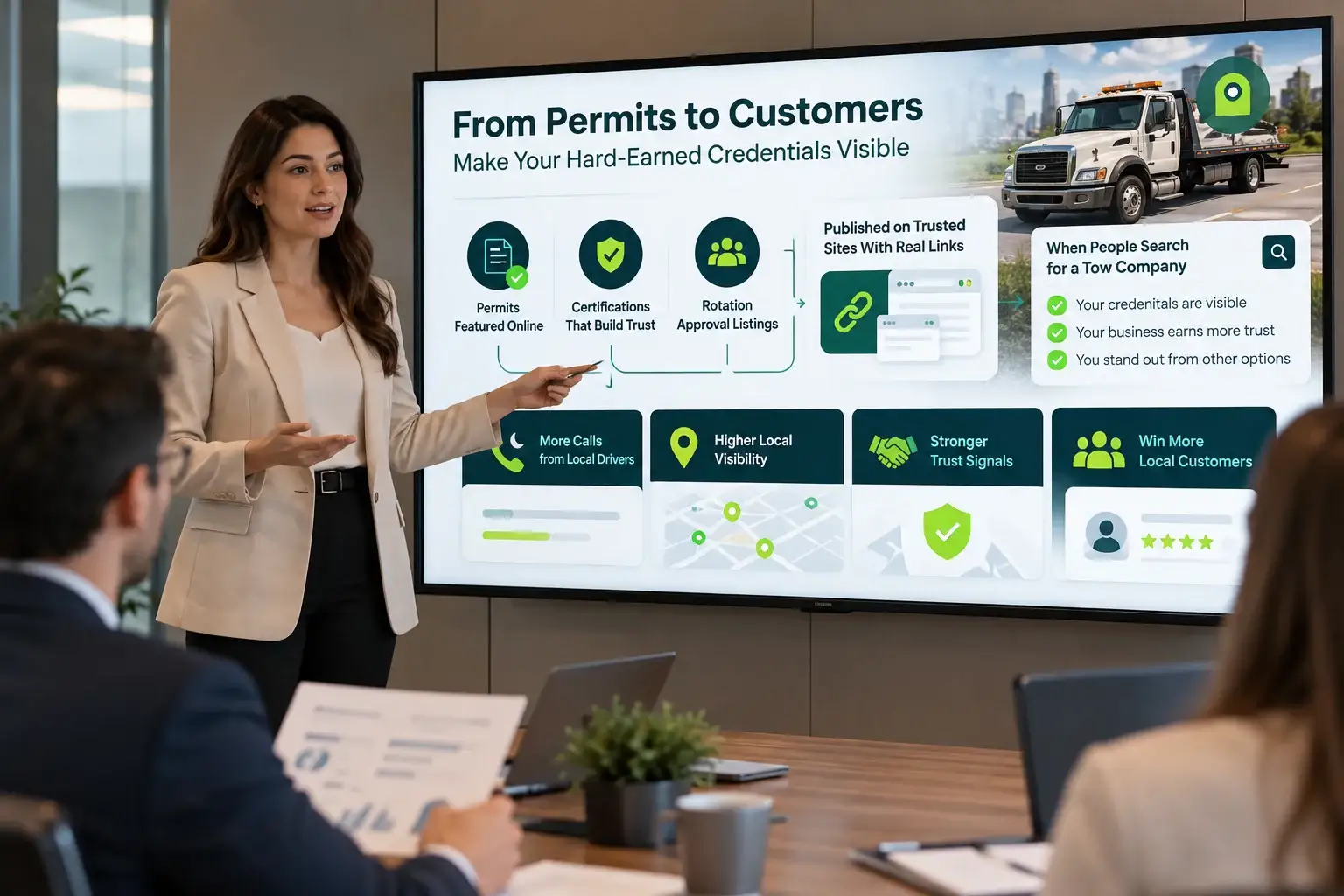
A caller choosing between two tow companies at eleven at night has almost nothing to go on.
Permits, certifications, and rotation approval are exactly what would settle it, and most of that never appears anywhere findable.
Published pages naming the business, alongside listings that actually carry a link, put that standing where somebody can reach it.
The result: The things the business worked hardest for are no longer invisible to the person choosing.
Turning Referral Relationships Into Published Pages
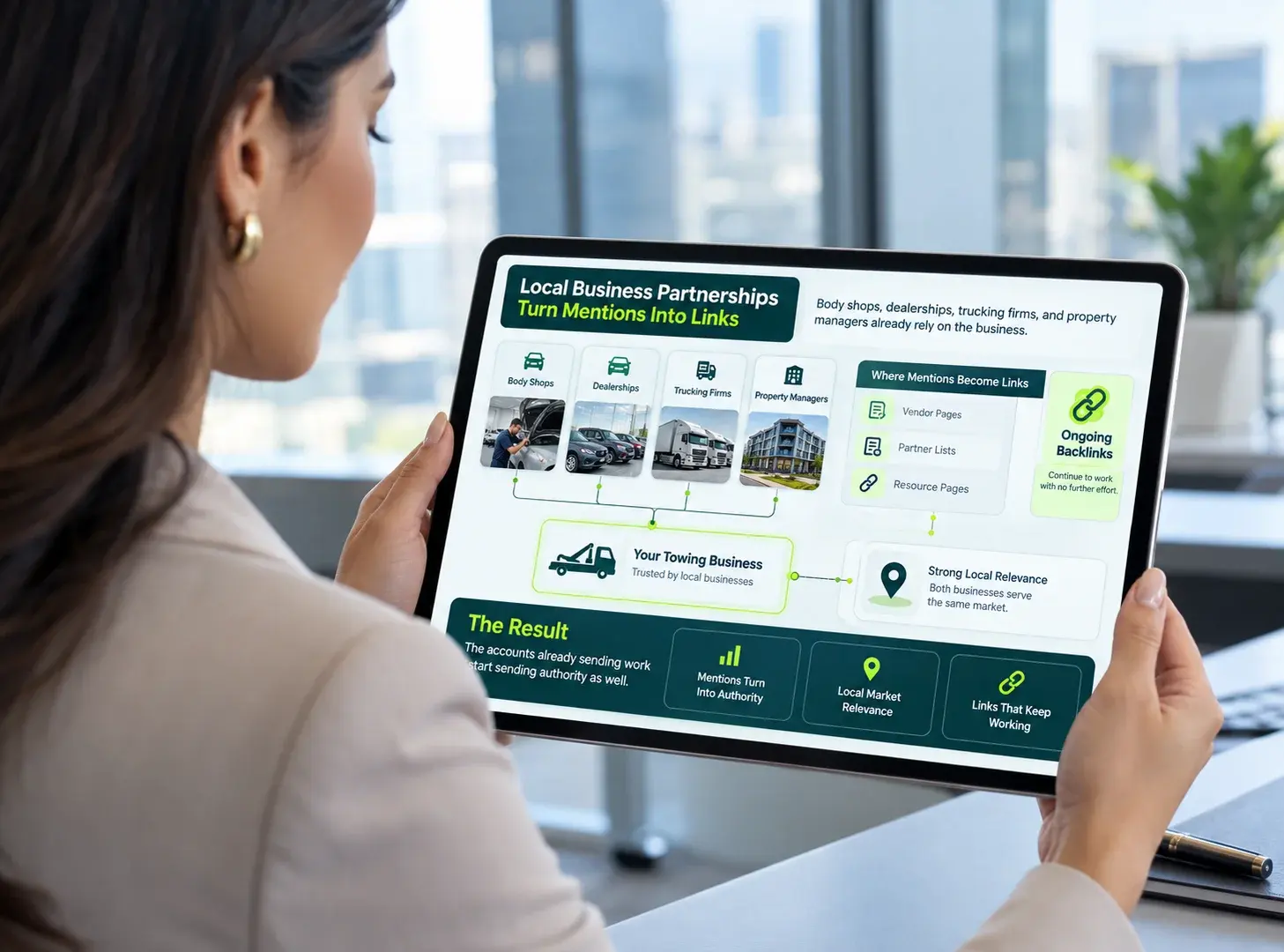
Body shops, dealerships, trucking firms, and property managers already rely on the business and rarely mention it online.
A vendor page, partner list, or resource page that names the tow operator is a link that keeps working with no further effort. These links also carry strong local relevance, because both businesses serve the same market.
The result: Accounts already sending work start sending authority, too.
Building Authority That Doesn’t Expire With a Contract
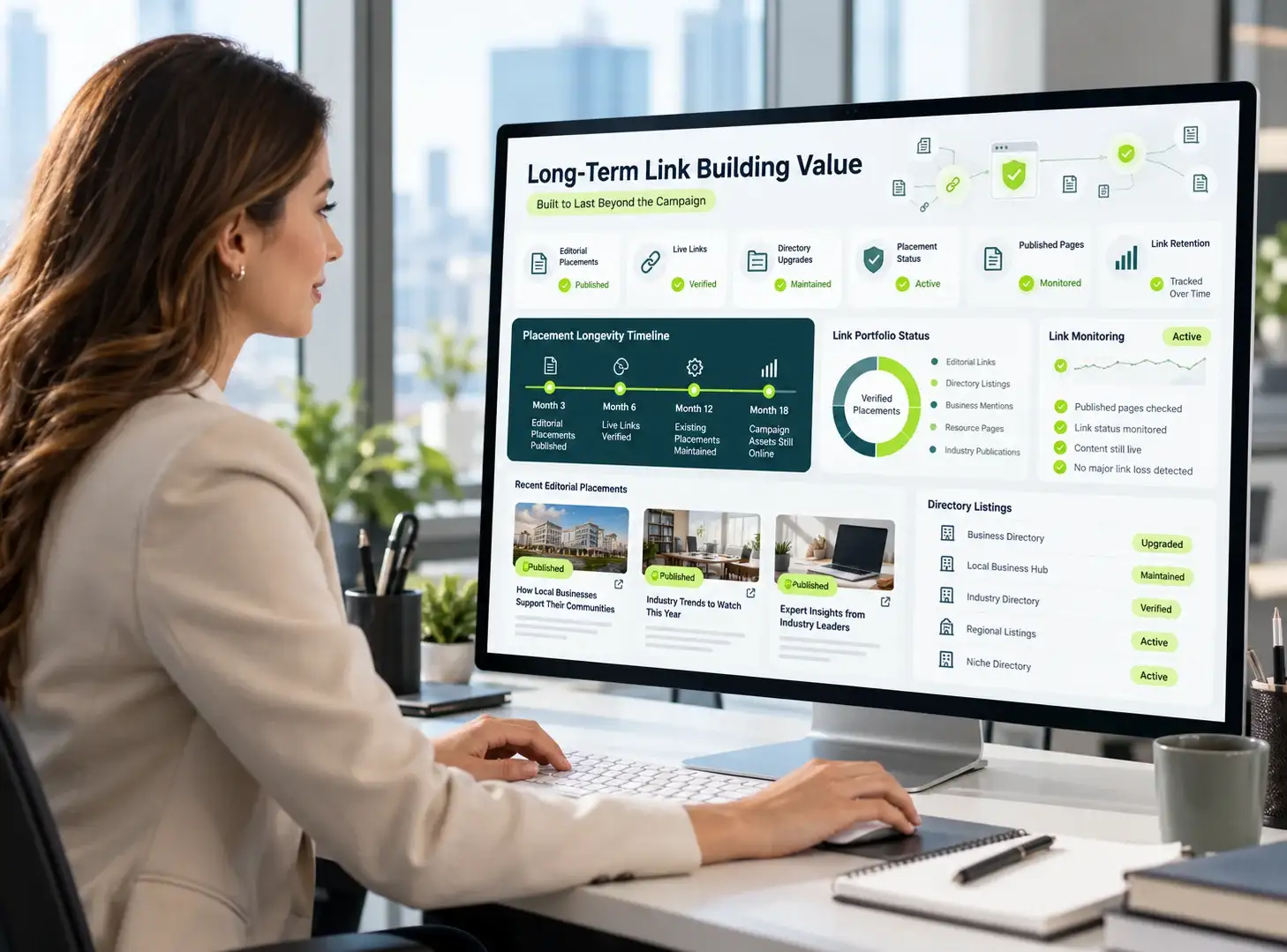
A rented link disappears the month the invoice stops, and a bulk directory entry was never worth much to begin with.
Editorial placements appear on published pages that remain online because someone chose to publish them. The listings upgraded during a campaign stay upgraded too.
The result: What we build in month three is still working in month eighteen.
Client Success Stories
What Towing Companies Say About Our Link Building Service
Reviews from towing and recovery companies that turned permits, certifications, and partner relationships into search visibility.

4.8/5 

5/5 
Rating on Google


We already had the required licenses, permits, and business approvals, but we hadn’t considered how they could support our online visibility. Outreach Desk helped us identify relevant industry directories, local business resources, and community websites where our credentials were relevant. The campaign gave our website more opportunities to earn legitimate links and strengthened our visibility in local searches.

Owner
Towing and Roadside Assistance Company

As a towing company, we had the necessary approvals to operate, but our website wasn’t getting much visibility beyond our existing customer base. The team helped us identify relevant automotive directories, local business associations, and transportation-related resources. This gave us a clearer link building strategy and helped more local customers discover our towing services.
Operations Manager
Towing Company

We wanted to improve our search visibility without relying on unrelated backlinks. Outreach Desk focused on relevant local publications, automotive resources, and business listings that fit our services and operating areas. By connecting our existing business credentials with legitimate link opportunities, the campaign supported our local SEO efforts and helped strengthen our online presence.
Marketing Director
Towing and Recovery Service
Service Framework
Investment, Timeline, and Deliverables
You’re buying individual placements, each one a link a real editor or site owner agreed to publish, earned against the standing the business already holds rather than rented by the month.

Markets and Yards
One yard covering a single metro area requires a different scope than four yards spanning two states.

Service Mix
Highly specialized niches require more selective outreach and stronger editorial relationships.

Existing Standing
Companies already holding certificates, rotation approval, and long-standing body shop relationships start from a position of strength.

Campaign Duration
Timing depends on the market, starting point, and sites targeted. Placements and their impact can build over time as the campaign progresses.
Directional pricing
Once we understand your focus, emergency roadside assistance, flatbed towing, long-distance hauls, motorcycle towing, impound services, or heavy-duty recovery, we’ll outline exactly what’s included, what placements to expect, and how your authority will grow over time.
What You Get
Every Approval, Every Listing, and Every Placement Reported
You’ll see which sources are producing and which of the business’s own approvals turned out to be worth something online.

Live Placement Reporting
Every placement arrives as a link you can open, with the source and the page it points to.

Approval Inventory
The full list of permits, certifications, rotation approvals, and memberships, each marked for what it publishes and whether that includes a link.

Listing and Link Split
We report anything that provides standing without linking to your site separately, so no directory entry counts as a placement.

Source Performance Reports
You can see whether listings, partner pages, or press placements are landing, so you can shift effort toward what is producing results.
Our Approach
An Approvals-First Approach to Towing Authority
You get the inventory of what the business already holds, then placements from sources that publish a link, reported separately from listings.
| Factor | GENERIC LOCAL SEO AGENCIES |
 |
|---|---|---|
| Starting Point | They build a keyword list before anyone asks what the business has already earned |
An inventory of all permits, certifications, approvals, and memberships on file |
| Source Selection | "Industry sites" promised without naming a single one | We name partners, publications, and listings for your markets and give them to you before work starts |
| Listings | Often counted as links even when they do not point to your site |
We report separately, because a listing without a link is a citation |
| Link Types | They sell bulk directories, profile links, and free blog pages by the hundred |
None of those. Anyone with the same budget has them by Friday |
| Pricing | They quote privately after a discovery call | We provide clear pricing terms before the campaign begins |
Who We Help
Towing and Recovery Businesses We Support
Whatever you tow and however many yards you run, we build the authority that matches how drivers, body shops, and fleet managers actually choose an operator.

Light-Duty Towing and Roadside Assistance

Medium and Heavy-Duty Towing
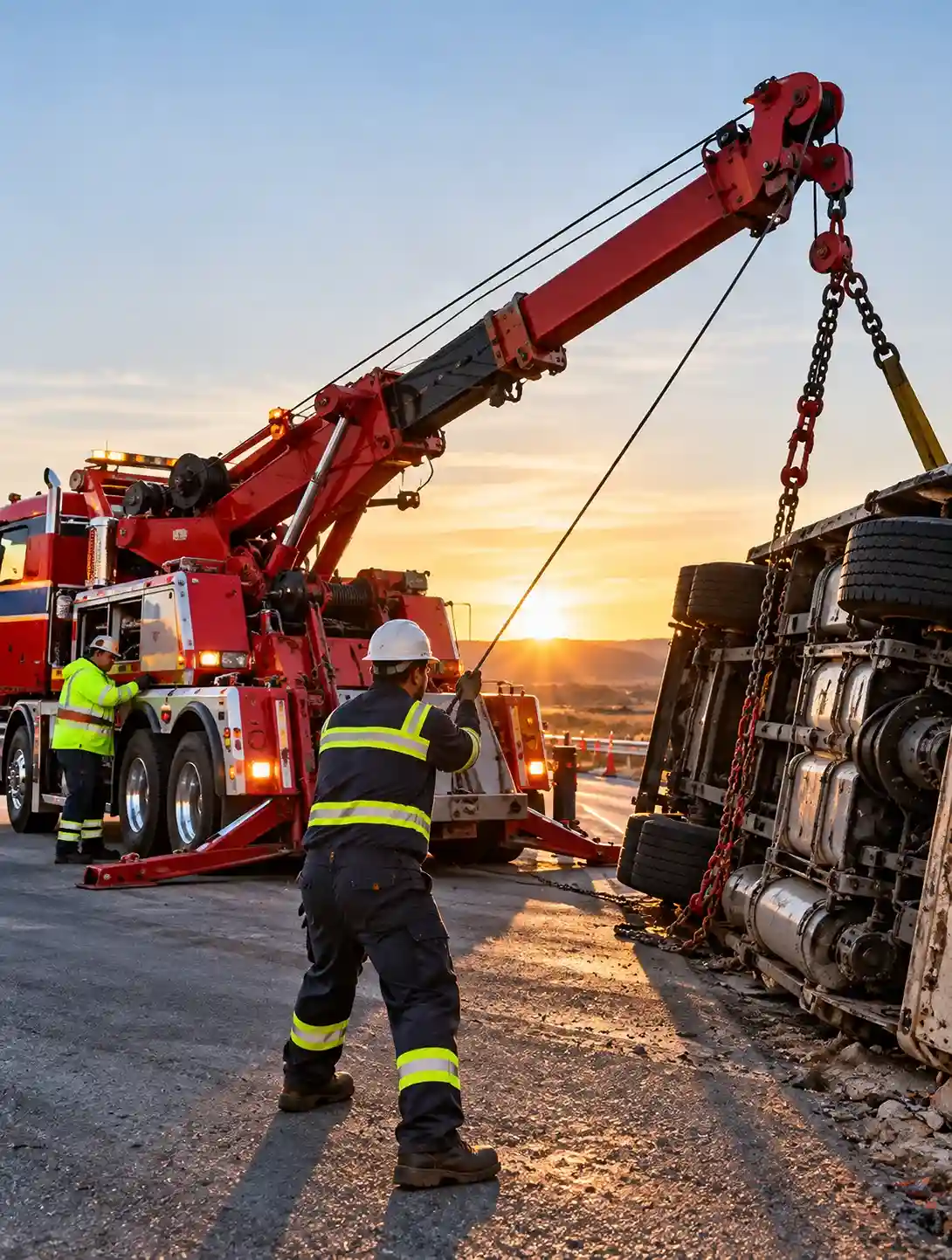
Heavy Recovery and Winching Specialists
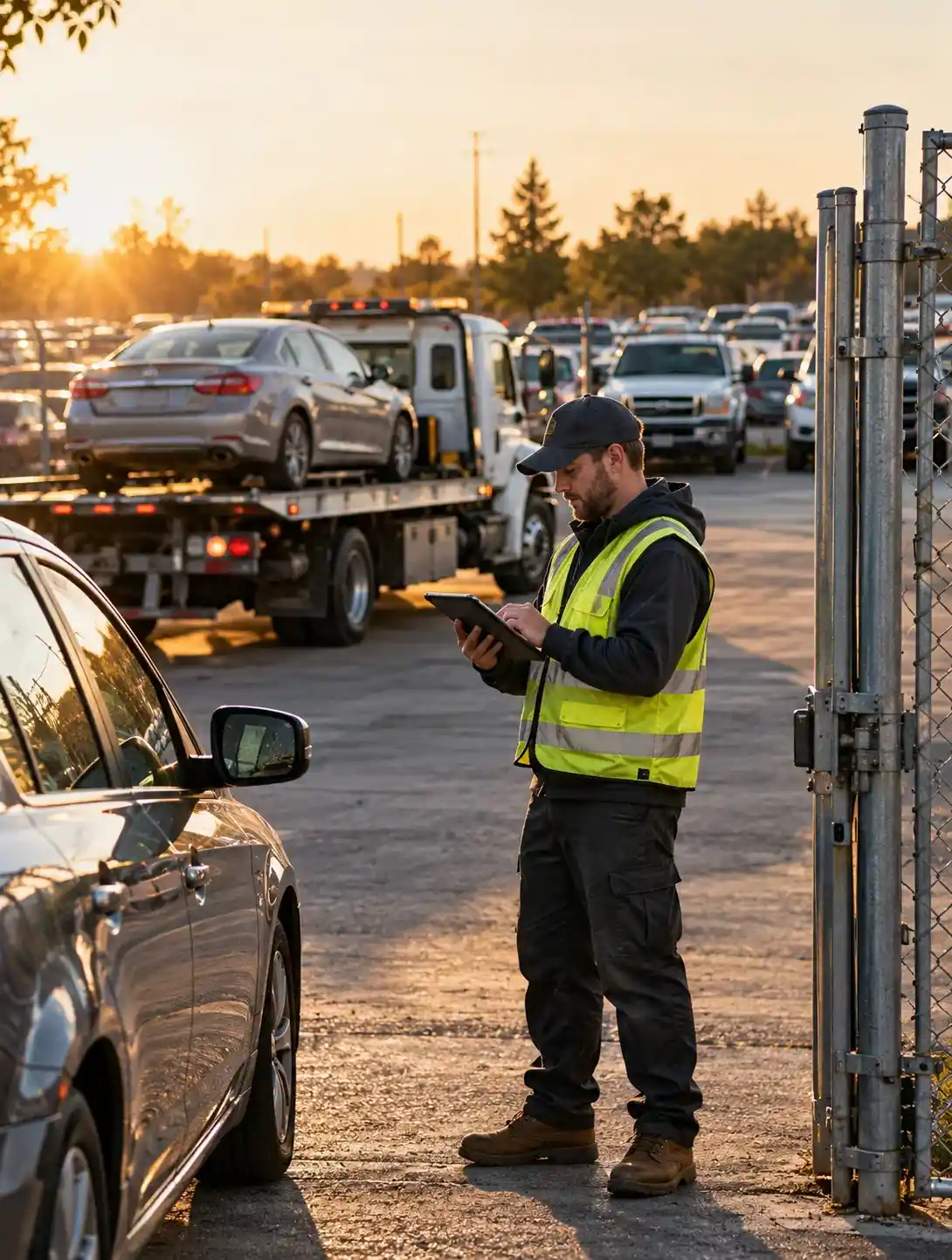
Impound, Private Property and Vehicle Storage Operators
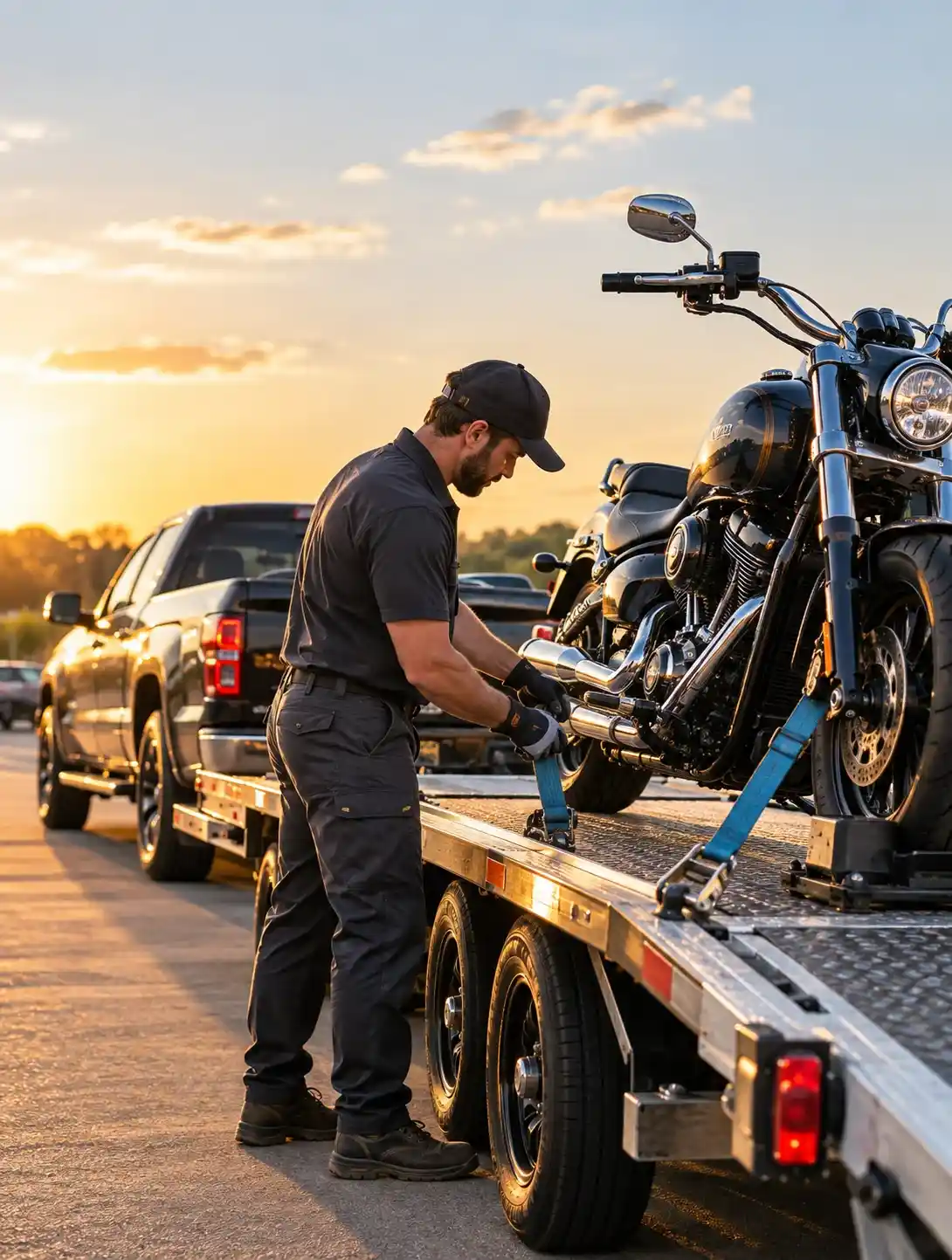
Motorcycle, Equipment and Specialty Transport
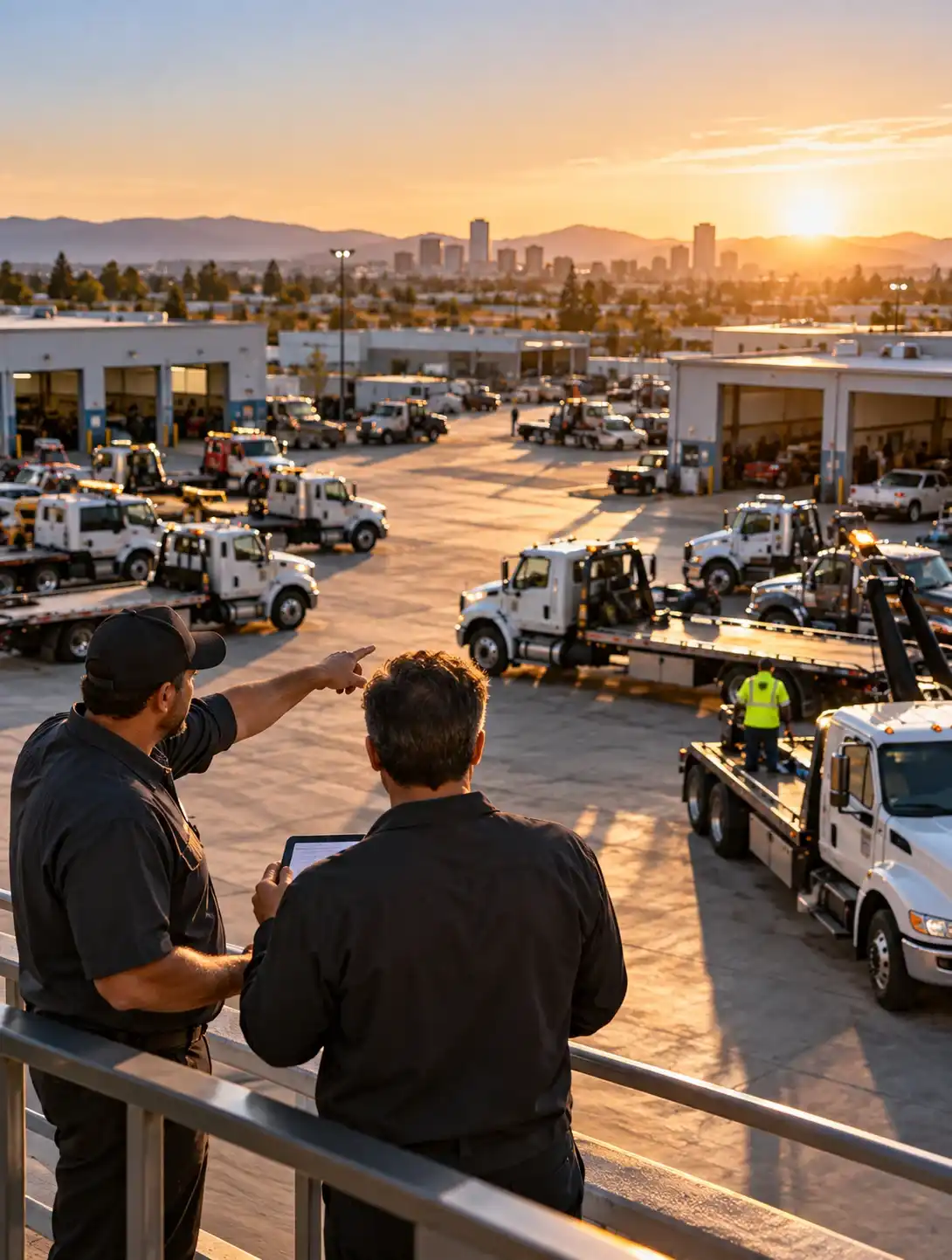
Multi-Yard and Multi-Market Operations
Common Questions
Frequently Asked Questions
Get clear answers on towing company link building, covering local authority, industry-relevant placements, reporting, and long-term growth.
A backlink is more valuable when it comes from a website relevant to the towing industry, automotive services, or the local community. Links embedded naturally in useful editorial content can provide stronger context than unrelated links placed solely to influence rankings. Our experienced outreach team focuses on relevance and editorial context when evaluating link opportunities.
No, licensing, inspection, equipment, and training determine rotation approval and motor club contracts; no amount of outreach changes that.
Anyone telling you otherwise is selling something they can’t deliver. What we can do is make the approvals you already passed visible to someone searching, which is a separate job, the one this page is about.
Getting on rotation is a conversation with a department. Getting found by the driver who has a choice is a conversation with the web.
You get links from three kinds of sites. Partner pages: body shops, dealerships, trucking firms, and property managers who already rely on you and publish vendor or resource pages.
Local and regional publications: outlets that cover recoveries and local businesses. Association and licensing-body listings: the entry either carries a link or it doesn’t, and your report says which. You get the specific list for your company before outreach starts.
Relevant directory listings are a separate, lower-value category.
Only when it actually carries one, and in this trade it often doesn’t. On the Georgia towing association’s member list, 77 entries show clickable email addresses, and only 25 link to the company’s site. So the first job is to find out which category yours falls into, and the second is to ask for the free upgrade. If anything is still publishing only a name and a number instead of a placement, your report will show it.
Our guide to local citations covers why that kind of entry still matters.
Different trade, different sources, different arguments. We built the auto repair version around technician certification and insurance repair networks, neither of which a tow operator holds.
Link building for moving companies centers on seasonal demand and licensed directories. This page is about a trade with unusually heavy and unusually invisible approvals, which changes what the first month of work looks like.
If you run a towing and repair shop from the same yard, a strategist will say which page fits best.
Probably not yet, and that’s worth saying plainly. A single-truck operator usually has better places to put their budget first.
The two things worth doing yourself cost nothing: send your website to every association and licensed directory that already lists you, and ask the three body shops that send you the most work whether they’ll name you on their sites.
For a closer look at starting small, see link building for small businesses.
Your service pages and city pages, almost never the homepage. A search for heavy recovery in a specific city should land on a page about heavy recovery in that city, and that page needs authority.
Homepage links spread their value across everything and concentrate it on nothing. If those pages don’t exist yet, building them comes before any outreach.
Local link building covers how this works when a business serves one market or several.
The cost of link building for towing companies depends on factors such as the size of your target market, the competitiveness of your local area, the types of sites we target (auto blogs, roadside assistance directories, local business listings, vehicle recovery platforms), and whether the campaign is standalone or part of a broader local strategy.
To explore our services and find the right fit, visit our pricing page.
Ready to See Which of Your Approvals Can Carry a Link?
Get a senior strategist to inventory every approval the business holds, then map which partners, publications, and listings it can actually reach.
4.8/5
Trusted by agencies
and brands worldwide.