You can build backlinks without emailing anyone, pitching editors, or waiting for approval. Just create a free account on Medium or Substack, publish a post, add a link in the content, and you build a Web 2.0 backlink.
A Web 2.0 backlink is a link you self-publish on an open platform such as Medium, WordPress.com, or Substack that points back to your site. But can these backlinks give you results? Mostly, there’s no guarantee.
These links are just a starting point, and half of them never even get indexed.
What This Article Covers
- Web 2.0 links and editorial links carry different ranking weight, and this section explains why.
- SpamBrain follows a specific pattern to flag links.
- Five platforms still index links in 2026, and what makes each one work.
- Five content standards decide whether a link passes or gets ignored.
- Web 2.0 links earn their place only in specific cases, and building them elsewhere turns into busywork disguised as strategy.
What a Web 2.0 Backlink Is
A Web 2.0 backlink is a hyperlink you create and publish yourself on these platforms that points back to a page on your website.
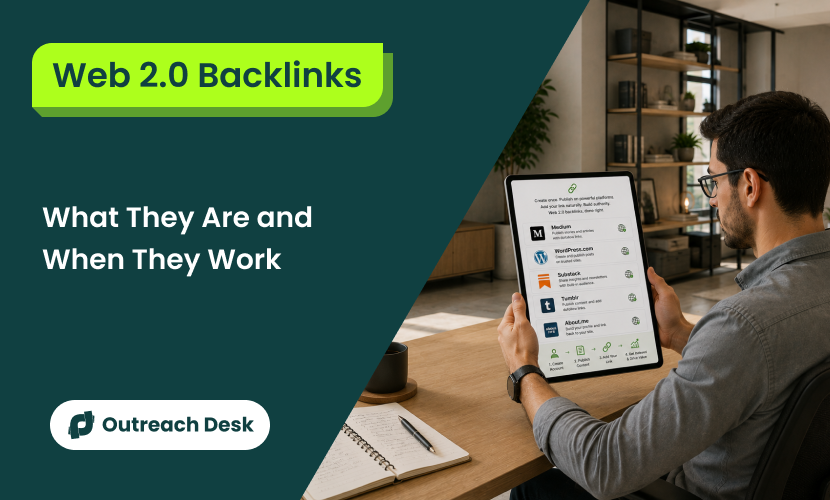
Web 2.0 refers to platforms where anyone can publish without owning the domain. Medium, WordPress.com, and Substack are a few of them.
That open structure is what makes these platforms useful for link building, because you don’t need permission from anyone to get started. Just log in, write content, add a link back to your site, and hit publish.
Web 2.0 backlinks are one of several backlink types a site can carry, alongside editorial links. Writers at publications, directory listings, and social profiles place these types of links.
The Difference Between a Web 2.0 Link and an Earned Editorial Link
The core difference between a Web 2.0 link and an editorial link is CONTROL.
A Web 2.0 link is something you build yourself by creating an account, writing content, and adding the link.
An earned editorial link is something a real editor or writer at another publication adds because your content was useful enough to reference.
You can earn editorial links through outreach (contacting site owners directly to ask for a link) or by creating content people naturally want to cite.
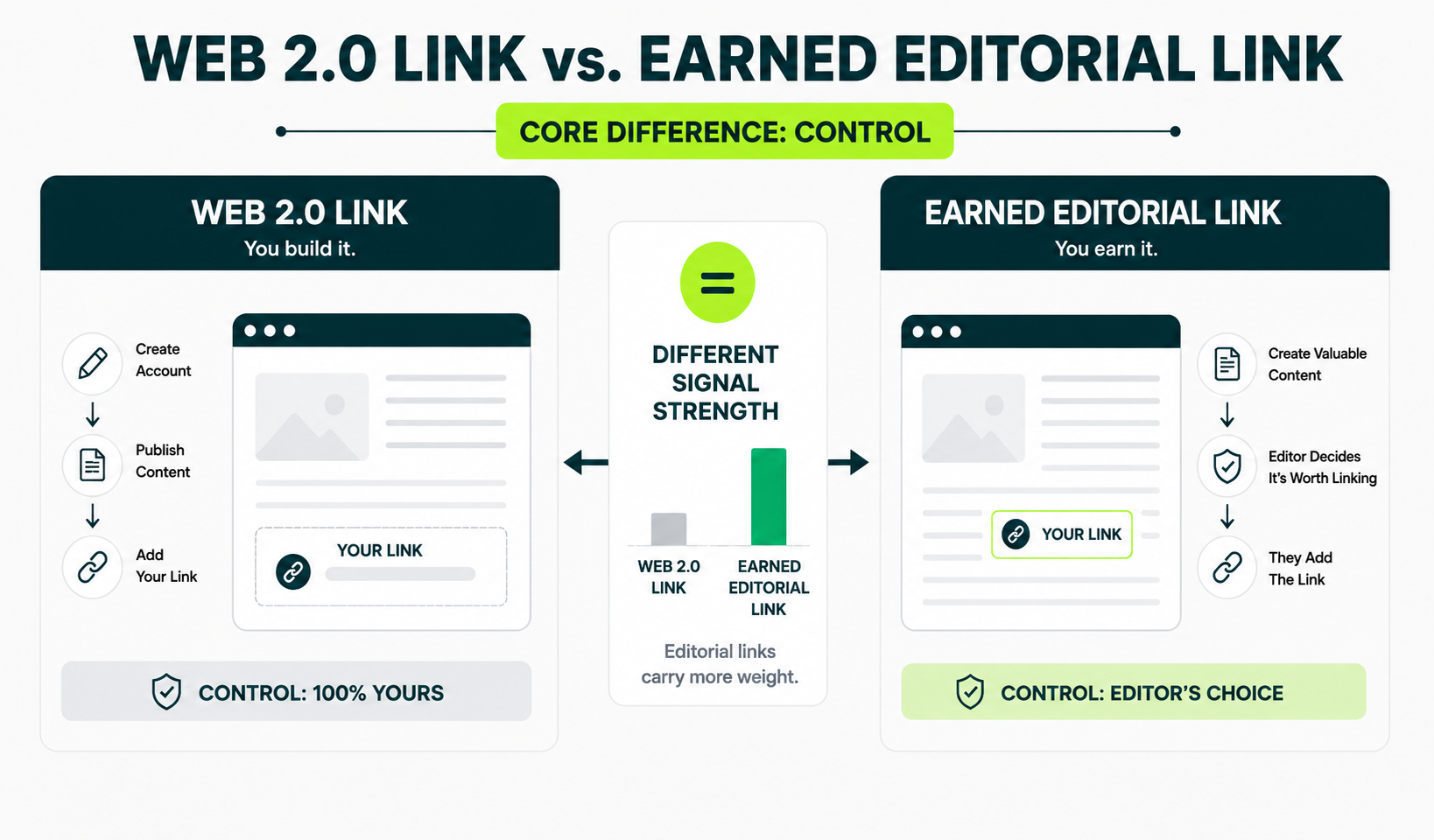
In Google’s POV, these two links are different.
Editorial links carry more weight because they reflect a third party’s judgment: an actual person decided your page was worth linking to.
Web 2.0 links carry whatever weight you earn by building a profile that looks like a genuine publisher, rather than a shell account created to drop a link.
How Google Treats Web 2.0 Links in 2026
Google counts some Web 2.0 backlinks while ignoring or discounting others.
Three things decide whether a Web 2.0 backlink passes link equity:
- Link type (dofollow/nofollow)
- Content quality around it
- Whether the account looks like a real publisher
What is Link Equity?
The ranking power a link sends from one page to another is called link equity. Some people also know this as link juice or PageRank, after Google’s original algorithm for measuring that power.
A Dofollow link passes that equity to your site.
A Nofollow link passes zero or near-zero ranking equity. Google treats it as “not vouching.”
Web 2.0 links sit in a gray zone. They’re real links on real platforms, but Google knows these platforms allow anyone to publish, which changes how much automatic trust the links carry.
When a Web 2.0 Link Is Dofollow vs. Nofollow
The link type you get depends on the platform, and this matters more than almost any other factor when evaluating Web 2.0 links.
| PLATFORM | DEFAULT LINK TYPE |
|---|---|
| Medium | Dofollow (on article you publish) |
| WordPress.com | Dofollow (on published posts) |
| Substack | Dofollow (on published posts) |
| LinkedIn Articles | Nofollow |
| Tumblr | Dofollow (on original text posts) |
(Note: Link types as of early 2026. Verify before you build, since platforms may change these.)
Platforms update their policies over time. A link that was Dofollow in 2023 may not be Dofollow today.
And that’s why, before spending time on any platform, you need to check whether the links it currently produces are Dofollow. You can inspect it by checking the page source or running the URL through a link analysis tool.
What SpamBrain Looks for in a Web 2.0 Link Pattern
Google uses SpamBrain, an AI system that detects manipulative linking.
For Web 2.0 links, it watches four patterns:
- Accounts with only one or two posts (every post links to the same site)
- Thin content (a few paragraphs with no real depth)
- The same anchor text repeated across multiple posts
- Posts copied from other sources rather than building originality
Google’s spam policies call this out directly.
User-generated content that is spammy or that involves low-quality link distribution across platforms violates guidelines. That’s the category Web 2.0 links fall into when done poorly.
Before we build any Web 2.0 links for a client, we run their existing footprint through a quick risk check system. We pull every Web 2.0 account associated with the domain and check these things: post count, anchor variation, backlink data, site structure, and content overlap.
If the website has three or fewer posts and uses repeated anchor text, we fix them first. Because building new links on top of a flagged pattern just scales the risk.
The line between a legitimate Web 2.0 link and a policy violation is whether the account and content look like a real publishing effort.
A genuine Medium writer who happens to link to their product once in a detailed article is different from dozens of accounts all linking to the same page with identical anchor text.
That second pattern is the territory where link farming penalties apply.
Five Platforms That Still Get Links Indexed
Platforms like Medium, WordPress.com, Substack, Tumblr, and About.me still help you get links indexed on Google.
Getting indexed means Google picks up the link and adds it to its knowledge of your backlink profile.
A link that never gets indexed contributes nothing. It’s like you publish content, but Google’s crawler doesn’t pick it up. That distinction matters more than which platform has the most impressive reputation.
Out of the many Web 2.0 platforms that link building guides list, these five produce Dofollowe links, index reliably, and have policies that allow published content with outbound links.
Fact
Google’s crawler does not automatically index every published link. A link only counts once Google has crawled and stored it, regardless of how long the post has been live.
1. Medium
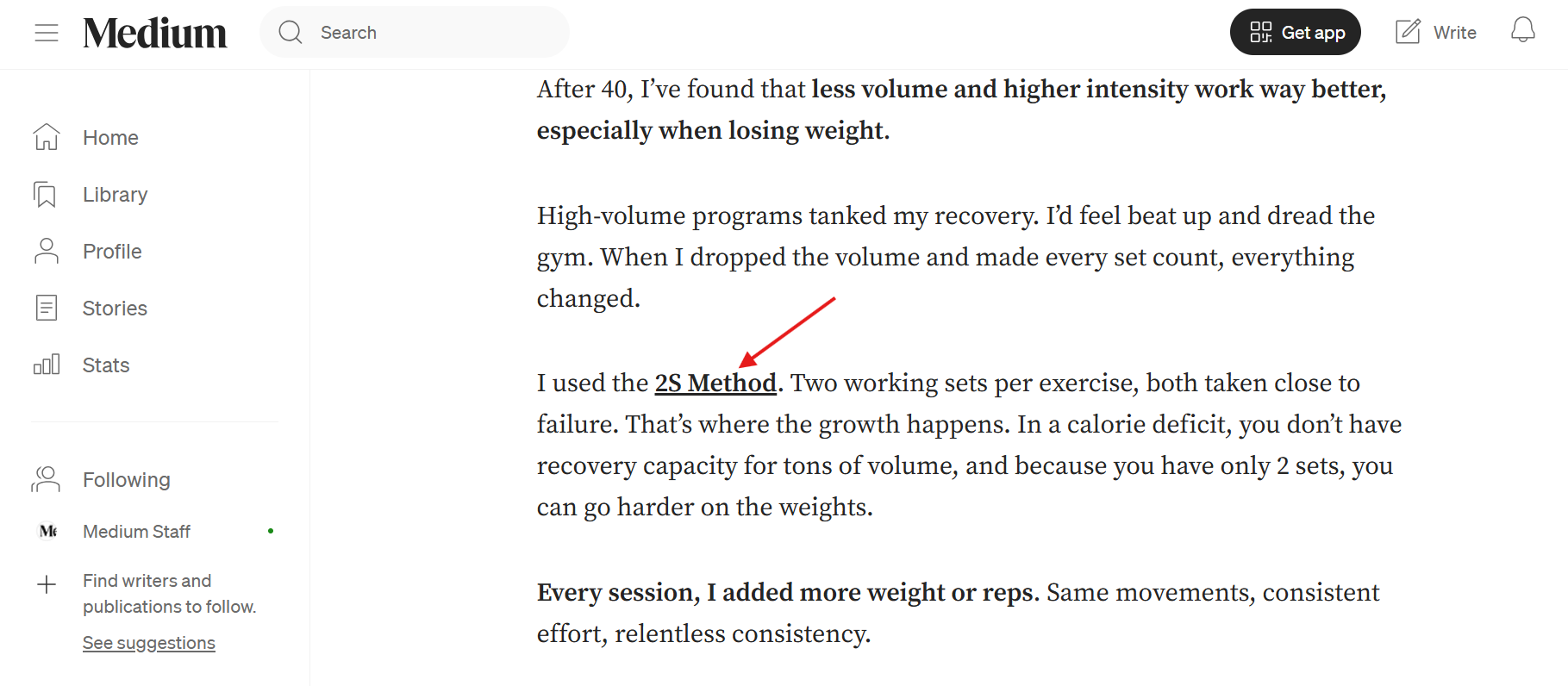
Medium is a publishing platform where writers post articles on any topic. Links in your published Medium posts are Dofollow, meaning they pass ranking power to your site.
Medium indexes posts quickly. A post published today can sometimes appear in Google’s index within a few days, though timing varies by account history and content engagement.
The content bar here is higher than on most Web 2.0 platforms. Because Medium’s own algorithm surfaces posts that get real reader engagement, and a post with zero reads looks like a ghost account to Google’s systems.
You need to write something genuinely useful to index your content. A 700-word or longer piece on a topic connected to your site, with your link placed naturally in the body where it makes sense given the context.
2. WordPress.com
WordPress.com is the hosted version of WordPress, separate from WordPress.org (which requires you to host WordPress on your own web server).
Free accounts on WordPress.com can publish blog posts with Dofollow links.
Remember, indexation typically takes longer than on Medium. It often takes a week or more, and depends on whether the post gets any engagement.
Keep posts focused on a single topic, write at least 600 words, and add your link where it fits within the content. An account with only one post and one link to the same site looks thin to Google’s systems.
3. Substack
Substack started as a newsletter platform but has become a public publishing platform. Posts you publish publicly on Substack are Dofollow and indexable.
Substack indexes quickly, and the platform’s authority has grown as more recognized writers publish there.
Use Substack for longer-form content on a topic your target audience would genuinely want to read. A post that reads like filler content won’t survive Google’s indexing quality filters.
4. Tumblr
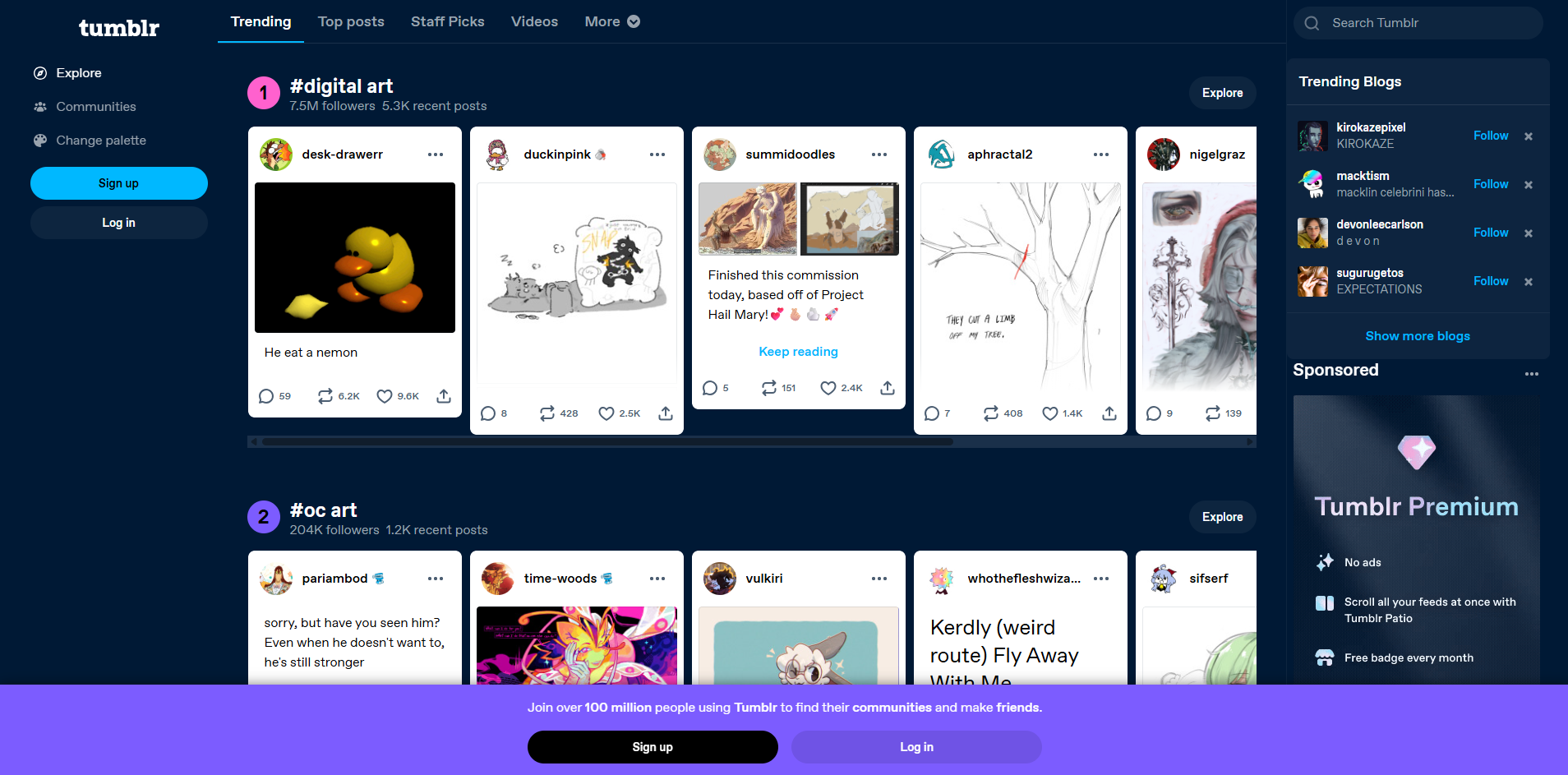
Tumblr is one of the older Web 2.0 platforms still actively maintained. Original text posts on Tumblr can include Dofollow links back to your site.
Indexation on Tumblr is variable.
Original posts tend to get picked up; accounts that only reblog others’ content without original writing often don’t. Write original posts rather than just sharing other people’s work.
5. About.me
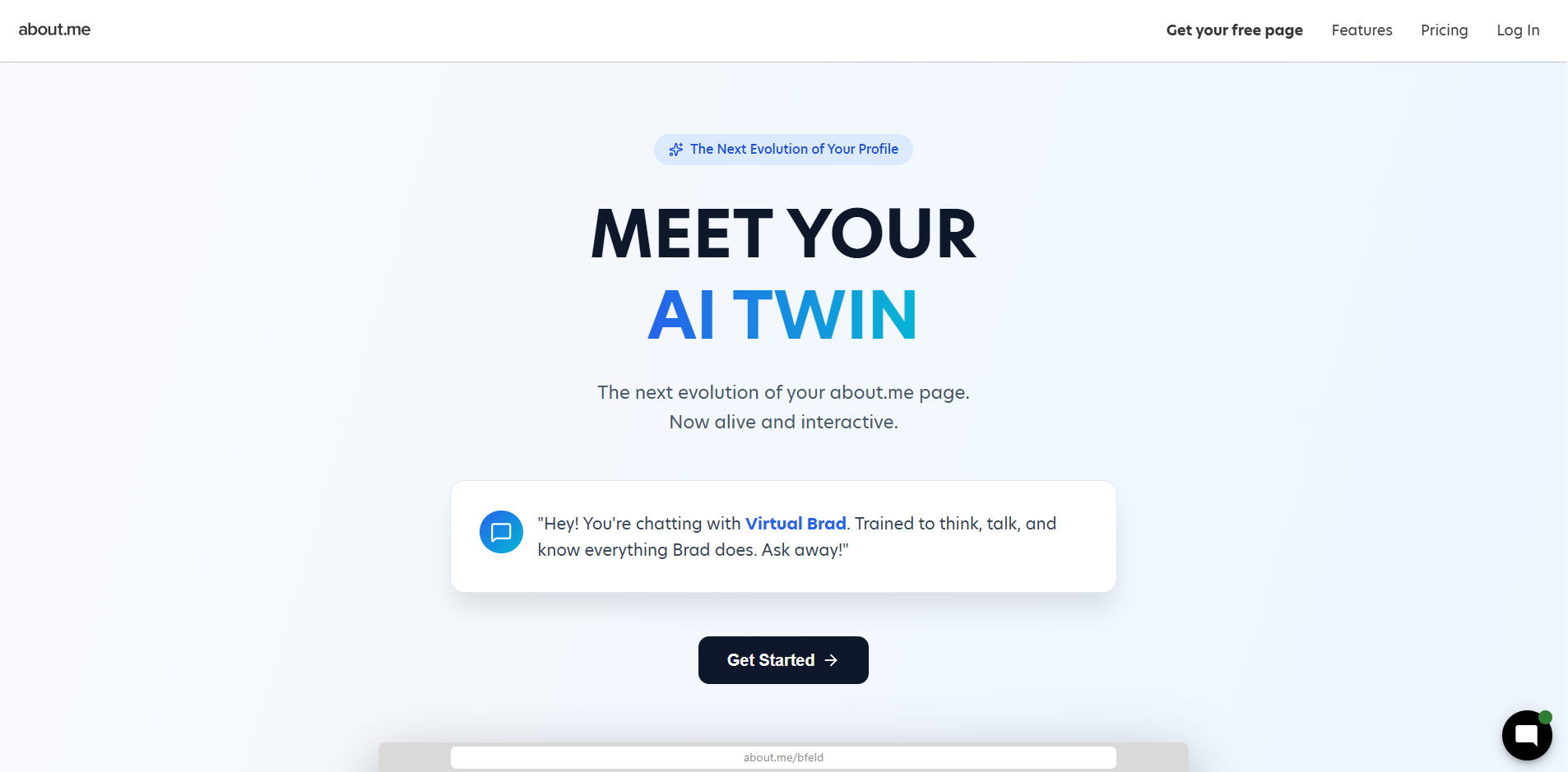
About.me lets users create a public profile page with links to their website and social accounts. The link from your About.me profile to your site is reliably followed and indexed. It’s a simpler platform than the others: you’re building a profile page, not publishing articles.
The link value is lower because there’s no surrounding content, but it takes little time to set up, and the link is stable. Sites like LinkedIn and Crunchbase work the same way, which is why agencies often offer profile backlink building as a dedicated service rather than a one-off task.
Use it for profile links rather than expecting the same level of link equity you’d get from a well-maintained publishing account.
A YouTube channel’s About section works like a profile, though links from YouTube to your site are nofollow.
Content Standards That Determine Whether a Link Counts
Whether a Web 2.0 link passes ranking credit to your site depends on whether the content and account appear to be a genuine publishing effort.
Platforms don’t manually review every post. Google’s systems do the evaluating.
A post that looks thin, copied, or created purely to place a link will either never get indexed or have its link discounted.
Five standards separate a Web 2.0 link that counts from one that doesn’t.
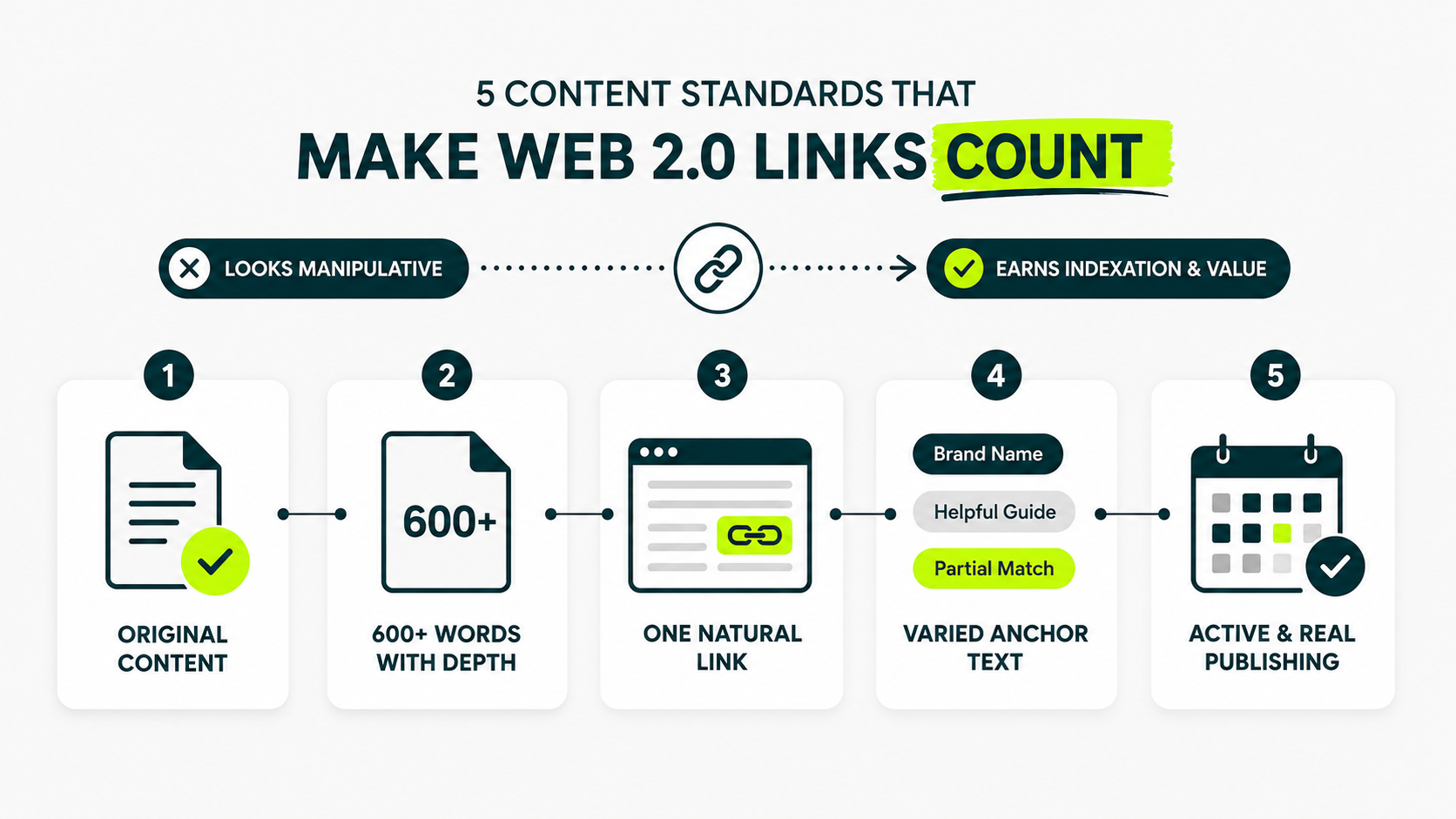
1. Write ORIGINAL Content
Every post on a Web 2.0 platform should be ORIGINAL writing on a real topic. Do not copy the content from your own site or rework it from another source.
Google’s indexing systems can identify duplicate content across the web. A post that matches content already published elsewhere signals that the account exists to manufacture links rather than to contribute real information.
2. Keep Posts at Least 600 Words Long With Depth
Posts under 400 words rarely get indexed as standalone content. At 600 words or more, a post looks like an actual article rather than a placeholder.
Depth on a topic carries more weight than word count. Because readers engage with content that gives them something valuable. If you’re padding to meet the word count, the post won’t hold up.
3. Place One Link Where It Fits Naturally
Put one link back to your site per post, in the body where it makes sense given the topic.
Example:
A sentence like,
“For more detail on this approach, the guide at [your site] goes deeper” is natural.
A sentence built backward from the link
“If you need [exact keyword phrase] services, visit [your site]” reads like an ad and gets treated like one.
This is the same principle that governs dofollow backlinks on third-party sites: the link should fit the surrounding content.
4. Vary Your Anchor Text Across Posts
Anchor text is the clickable words of a link, like a label that tells the reader (and Google) what’s behind it.
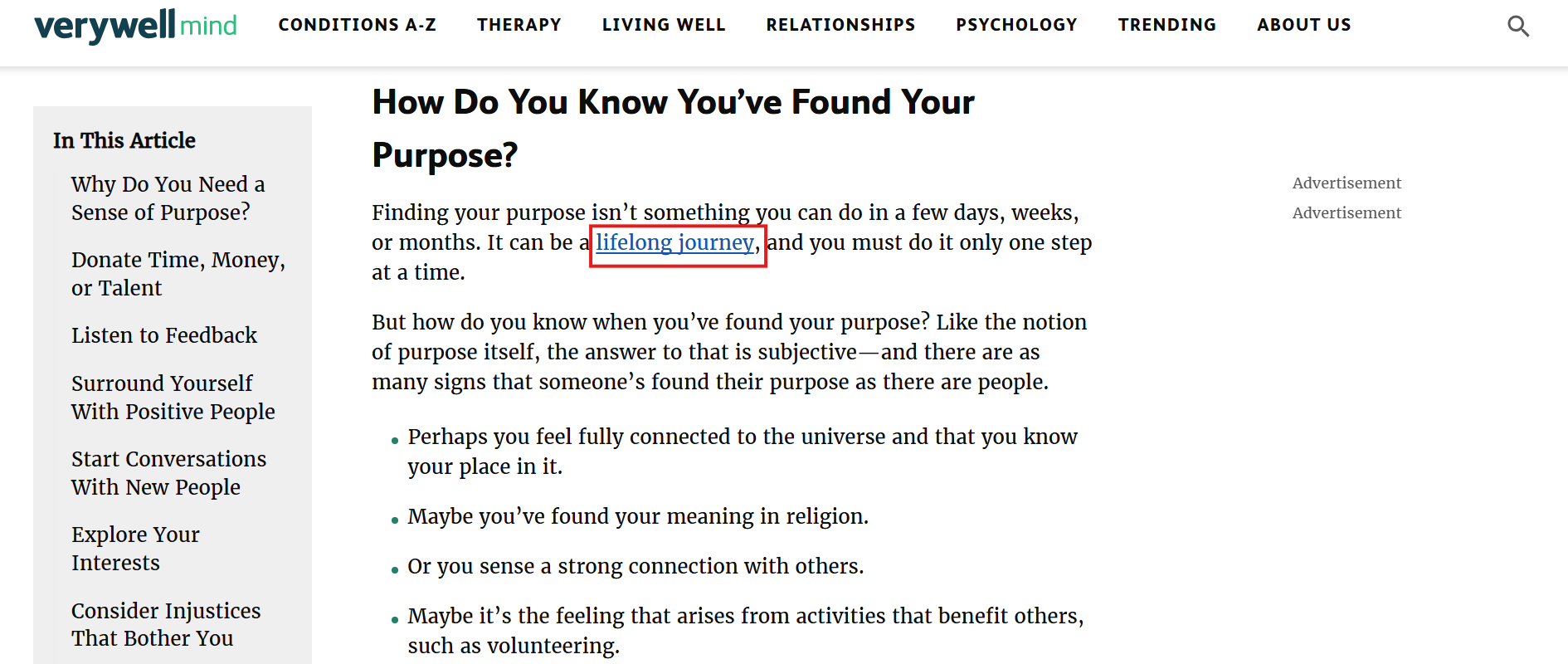
If every post on every platform links to your site using the same keyword phrase, Google flags that as a manipulation pattern.
Vary your anchor text: use your brand name sometimes, a short phrase describing the page, or an occasional partial match to the keyword phrase you’re targeting.
5. Maintain an Account That Looks Active
An account with one post and one link to the same site appears to be a link building shell account.
Publish multiple posts over time on different angles related to your topic, maintain consistency, and respond to comments (if the platform supports it).
An account with a real publishing history is harder to flag as manipulative, and its links are more likely to be treated as genuine.
When Building Web 2.0 Backlinks Makes Sense
Web 2.0 backlinks serve specific roles. They work best when:
- The site needs its first few links that Google indexes
- The existing link profile has become too narrow to look natural
- It wants to strengthen a high-value editorial link it’s already earned.
Pages ranking for competitive link building and SEO terms rarely lean on Web 2.0 links alone. When Web 2.0 links show up in a strong profile, they’re usually sitting alongside a heavier base of editorial links. This works as a supporting layer, rather than the driver.
1. Your Site Has No Backlinks Yet
If your site is brand new with zero backlinks, Web 2.0 links give Google’s crawlers a path to your content.
Google needs links to find and evaluate a new site. A site with no inbound links at all is harder for Google to assess. A handful of Dofollow links from real publishing platforms tells the crawler that other pages on the internet acknowledge your site’s existence.
At this stage, Web 2.0 links are about being found and crawled, rather than about competitive ranking. They fit well here.
2. Your Link Profile Has No Variety
If your site’s links all come from one source type, such as all guest blog posts or all directory listings, Web 2.0 links add variety to the profile.
A natural link profile looks like the kind of links a site accumulates when no one is actively thinking about link building.
It must be a mix of editorial mentions, forum links, profile citations, and platform publications. Web 2.0 links fit into the platform publication slot in that natural mix.
3. You Want to Strengthen an Existing Editorial Link
When a page on your site earns an editorial link from a publication, a Web 2.0 link can point to that publication’s article instead of your site. This strengthens the editorial link by passing more authority into it.
This is the core use case for link building through tier 2 methods: linking to pages that link to your website, giving those pages more authority to pass on. Web 2.0 properties are a reasonable choice for this specific role because they’re fast to build and the equity flow is legitimate.
When to Skip Web 2.0 Backlinks
Web 2.0 links don’t help in every situation. Spending time on them when you’re in the wrong situation is one of the most common mistakes new site owners make.
1. When the Top Results Have Strong Editorial Link Profiles
Web 2.0 backlinks are supporting links. They’re not the primary signal that moves a page from position 40 to position 5 when your competitors have strong editorial backlink profiles.
If the pages ranking above you have earned links from real publications, Web 2.0 links won’t close that gap. The ceiling on what Web 2.0 links can achieve is lower than many new site owners expect. And attempting to outrank pages with strong editorial profiles by building more Web 2.0 links is a poor use of time.
2. When You’re Building at Scale With Automation
The moment Web 2.0 link building becomes an automated process, the patterns it creates match exactly what Google’s spam detection looks for.
Multiple accounts posting similar content with the same link create a detectable pattern. Bulk Web 2.0 link building crosses into tactics Google treats as manipulative once you’re running it at scale with thin content and repeated anchor phrases.
3. When Editorial Outreach Is Already Within Your Reach
Building a Web 2.0 link properly takes real time: writing original content, maintaining an active account, and checking periodically that the link is still indexed.
Editorial outreach almost always produces better long-term results. If you have limited time and outreach strategy is a realistic option, spend it there. Web 2.0 links are a reasonable choice when editorial outreach isn’t realistic yet. Once it is, the math changes.
What Happens to Web 2.0 Links Over Time
Web 2.0 links decay in ways that editorial links don’t, and that maintenance reality changes the real cost of using them.
1. Accounts Get Suspended or Deactivated
Platforms can suspend accounts that violate their terms of service, and even legitimate accounts are sometimes caught in periodic enforcement sweeps targeting spam patterns.
If your account gets suspended, every link you published on that platform disappears. Platform policies change, enforcement improves, and what was acceptable behavior in 2023 is sometimes flagged in 2026. A link you built two years ago on a platform that has since tightened its policies may already be gone.
2. Platform Policies Change the Link Type
Platforms sometimes change whether their outbound links are Dofollow or nofollow across the board.
A platform that produced Dofollow links in 2022 may have added a blanket nofollow tag in 2024. The links don’t disappear, but they stop passing ranking credit. You’d still see them in a backlink analysis tool, but the equity they were delivering stops flowing.
Checking your existing web 2.0 links every 3 to 6 months for changes in link type and indexation status is the only way to know whether they’re still working.
3. Low-Activity Accounts Lose Link Value Over Time
An account that posted twice and then went quiet accumulates low engagement signals over time. Google assigns more weight to links from content that real readers engage with, and a dormant account produces diminishing returns.
This makes Web 2.0 links more like rented links than permanent ones. You have to keep the account active to maintain the value. That ongoing maintenance cost makes Web 2.0 links more expensive than they appear.
If you want strategies for link building that compound over time rather than decay, editorial links from publications that link to you without ongoing maintenance from your side are the more durable option.
Web 2.0 Links Are a Starting Point
Build your Web 2.0 links across the five platforms in this article, maintain the accounts, and check every few months to ensure the links are still indexed and followed.
Web 2.0 links are a reasonable starting point. The sites that rank for competitive keywords are the ones with editorial links from real publications that would link to strong content regardless of who made it.
Once you’re ready to build that layer, you need to understand strategies that produce editorial placements.
Ready to Build Links That Actually Hold Up?
Web 2.0 links start you off. Editorial links push you up the rankings. Talk to us, we’ll build the layer that compounds.
Are Web 2.0 backlinks black hat?
Web 2.0 backlinks aren’t black hat by default, but they become black hat when built at scale with thin content and repeated anchor text.
Building one or two genuinely useful posts on Medium or Substack, with a natural link to your site, is a legitimate practice. Creating hundreds of accounts across every Web 2.0 platform you can find, posting template content, and pointing them all at the same page is a link scheme that violates Google’s spam guidelines.
The difference is intent and execution. Legitimate Web 2.0 links are built the same way you’d build any real publishing presence.
How many Web 2.0 backlinks do I need?
Start with three to five well-built posts across two or three platforms, then expand once they’re indexed
Ten indexed, well-maintained links from high-authority platforms are more useful than 200 links from platforms that aren’t crawled. Start with three to five well-built posts across two or three platforms, verify that they’ve been indexed, and evaluate the results before expanding.
Do Web 2.0 backlinks help with AI search visibility?
Not directly, but they can play a supporting role. AI search tools tend to pull from sources with strong topical authority and consistent mentions across the web, not from any single backlink type.
Web 2.0 links won’t move the needle on their own, but a Substack or Medium post that gets cited or referenced elsewhere adds another data point that ties your brand to a topic.
If AI visibility is the goal, that’s better handled through a broader strategy like an established link building agency running editorial placements and brand mentions together, rather than Web 2.0 links in isolation.
Do Web 2.0 backlinks still work in 2026?
Yes, in limited circumstances. Web 2.0 links still work for new sites building their first backlinks, for adding variety to an existing link profile alongside forum-based link building, and as tier 2 support for editorial links.
They don’t work as a standalone strategy for ranking competitive keywords. Google’s systems have improved at detecting and discounting Web 2.0 links that look manufactured.
How long does it take for a Web 2.0 link to get indexed?
Indexation speed varies by platform and content quality. Medium and Substack tend to index quickly. WordPress.com and Tumblr take longer, typically a week or more.
Check indexation status by pasting your Web 2.0 post URL into Google using the site: operator. Type site:medium.com/your-post-url (replacing the URL with your actual post address) directly into Google’s search bar. If the post appears in results, the link is indexed.
A free Google index checker tool gives you the same result without opening a search tab manually.
Can I use Web 2.0 backlinks for a local business?
Yes, with one adjustment. The content you publish on Web 2.0 platforms should include your city, region, or service area where it fits naturally in the piece.
A local plumber writes a Medium post about identifying a water leak in an older home, mentions their service area, and links to their website. That post earns more value than one with no geographic relevance. Including location naturally in the content helps Google connect the Web 2.0 property to the location your site is trying to rank for.