A link wheel can look like a clever way to build authority until the linking pattern exposes the scheme.
A link wheel is a group of sites that link to each other and back to a central site, arranged in a loop rather than a straight line.
The risk comes from creating artificial links primarily to influence rankings rather than earning them through genuine editorial value. Understanding how the structure works makes it easier to spot the signals that can trigger Google’s spam systems.
What This Article Covers
- Learn how link wheels manipulate rankings through coordinated website networks.
- Understand how Google detects and penalizes artificial website linking patterns.
- Compare link wheels, private blog networks, and tiered link building.
- Learn to spot when someone sells you an SEO service that’s secretly a link wheel.
- Discover safer backlink strategies and steps for auditing existing links.
What a Link Wheel Actually Is
A link wheel connects a handful of separate websites in a circle, with each site linking to the next and each linking back to a central site.
The shape is where the name comes from. Like the spokes of a bike wheel, each site points back to a central hub, and the spokes usually link to each other as well.
The hub is the site someone is actually trying to rank, often called the money site.
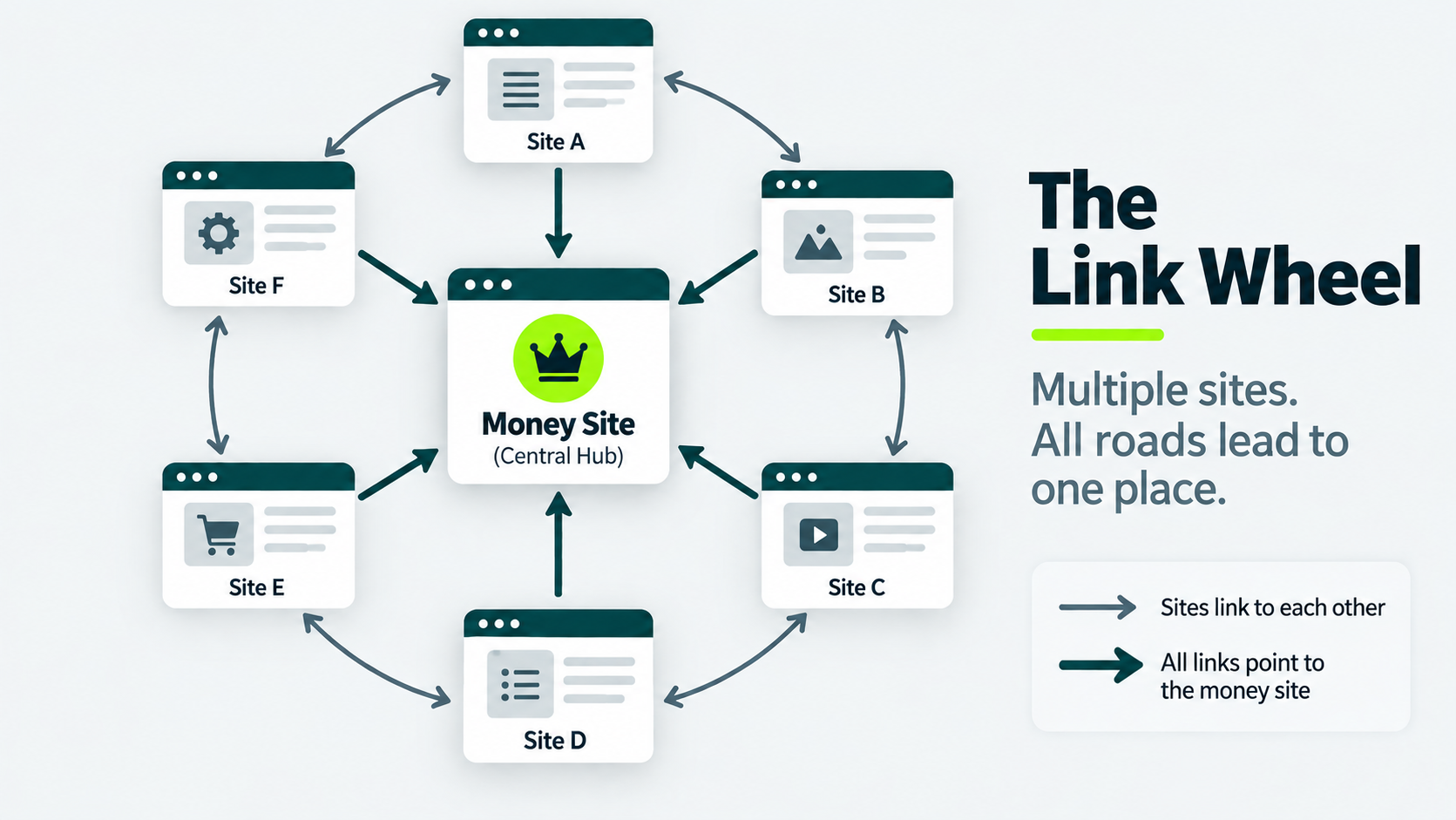
The spokes exist mainly to pass authority to it. The same person or agency usually owns or controls every site in the wheel, even when the domains, hosting, and design are made to look irrelevant.
That’s the detail that matters the most. A link wheel isn’t a coincidence of similar sites linking to each other. It’s a structure built with the purpose of moving ranking power to one place.
It’s one of several link tactics Google actively penalizes. Recognizing its shape is the first step to avoiding it.
Know How a Link Wheel Is Built, So You Can Recognize One
Link wheels are built from a small, deliberately structured set of domains that the operator registers or buys specifically to create and run the network.
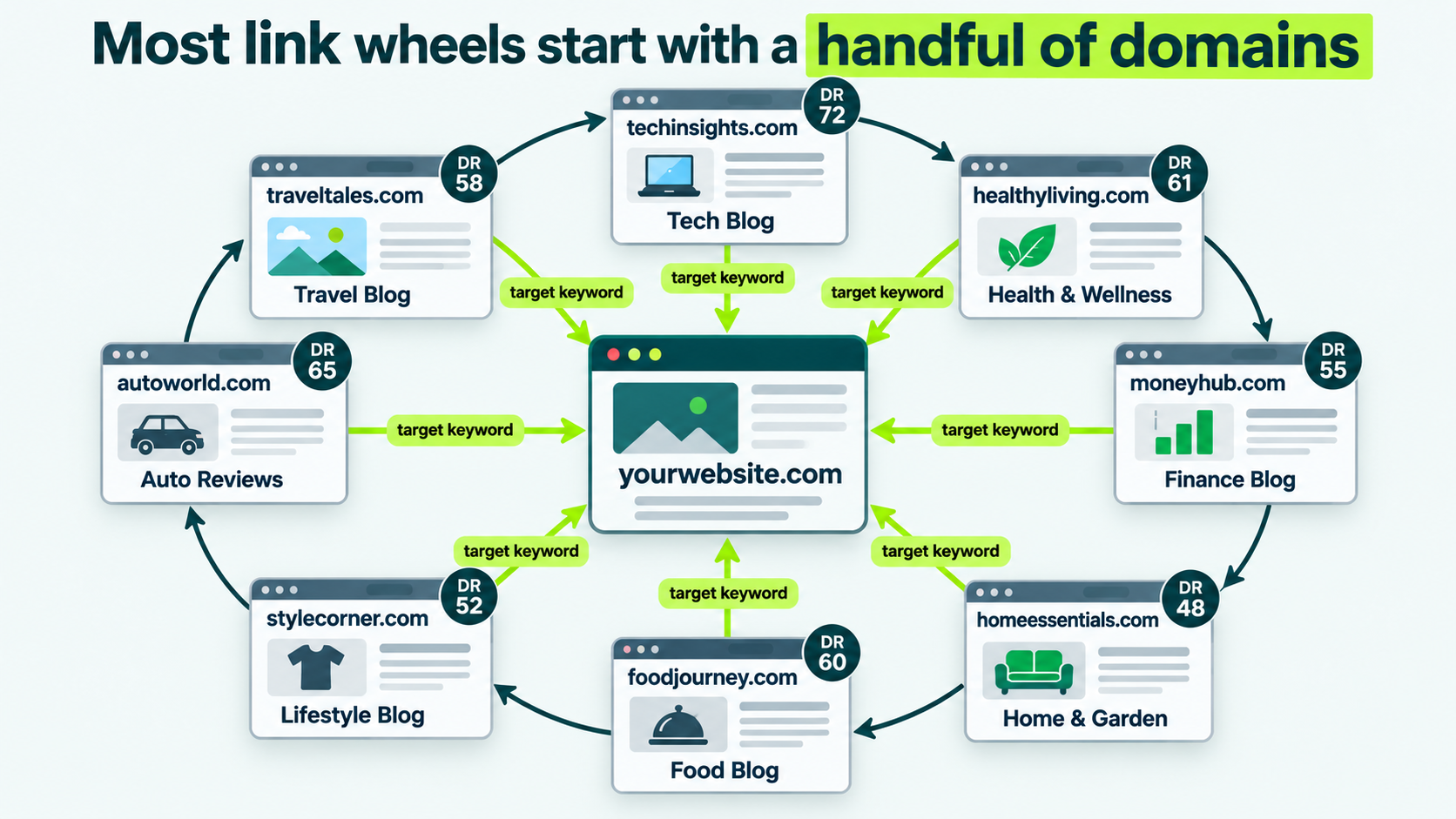
The person running it writes short articles or product reviews for each site, then links each one to the next site in the loop and back to the main site being promoted.
Anchor text, the clickable words in a hyperlink, often uses the same target keyword across the sites in the wheel. The goal is to use those links to push that keyword higher in search results.
Sellers often advertise each satellite site, a separate website created or used to support the main site in the link wheel, to make the wheel look more valuable than it actually is.
None of this requires the sites to look related on the surface.
Different themes, different writer names, different hosting providers on the outside, and the same handful of people running it all underneath.
Link Wheel vs. PBN vs. Tiered Link Building: What’s Actually Different
A link wheel gets confused with a Private Blog Network (PBN), a group of privately owned sites built mainly to sell backlinks, and tiered link building. All three involve multiple websites working toward the same page.
The shape and the intent are what actually separate them.
| TACTIC |
STRUCTURE |
WHO CONTROLS THE SITES |
GOOGLE’S VIEW |
|---|---|---|---|
| Link Wheel |
Each site links to the next one in a chain, forming a loop, and every site also links to one central site | Usually one person or agency, disguising the sites as irrelevant | A link scheme |
| PBN |
Sites link only to the central site, with little or no linking between the satellite sites | Usually one person or agency, disguising the sites as irrelevant | A link scheme |
| Tiered Link Building |
Layers of links, where outer links point to middle links, and middle links point to your real page | Can mix owned, earned, and outreach-built links across tiers | Legitimate when the link builder makes each tier with real content and real placements |
Tiered link building stays legitimate only if you earn or place the links the same way you’d earn any other backlink, rather than manufacturing them on sites built solely to pass authority upward.
Our approach to tiered links covers exactly where that line appears.
The 2026 Shift in How Link Wheels Get Caught
Google’s systems detect patterns across groups of linked sites, in addition to evaluating individual links, to identify manipulative link networks.
Google’s spam-fighting system, SpamBrain, is built to catch exactly this kind of coordinated pattern across many sites at once.
Digital Applied’s analysis of the March 2026 spam update found that Google can detect coordinated link patterns across connected sites. This includes dormant site networks, groups of websites that were inactive but are later reused, especially when they are paired with new AI-written content to make the sites appear active again.
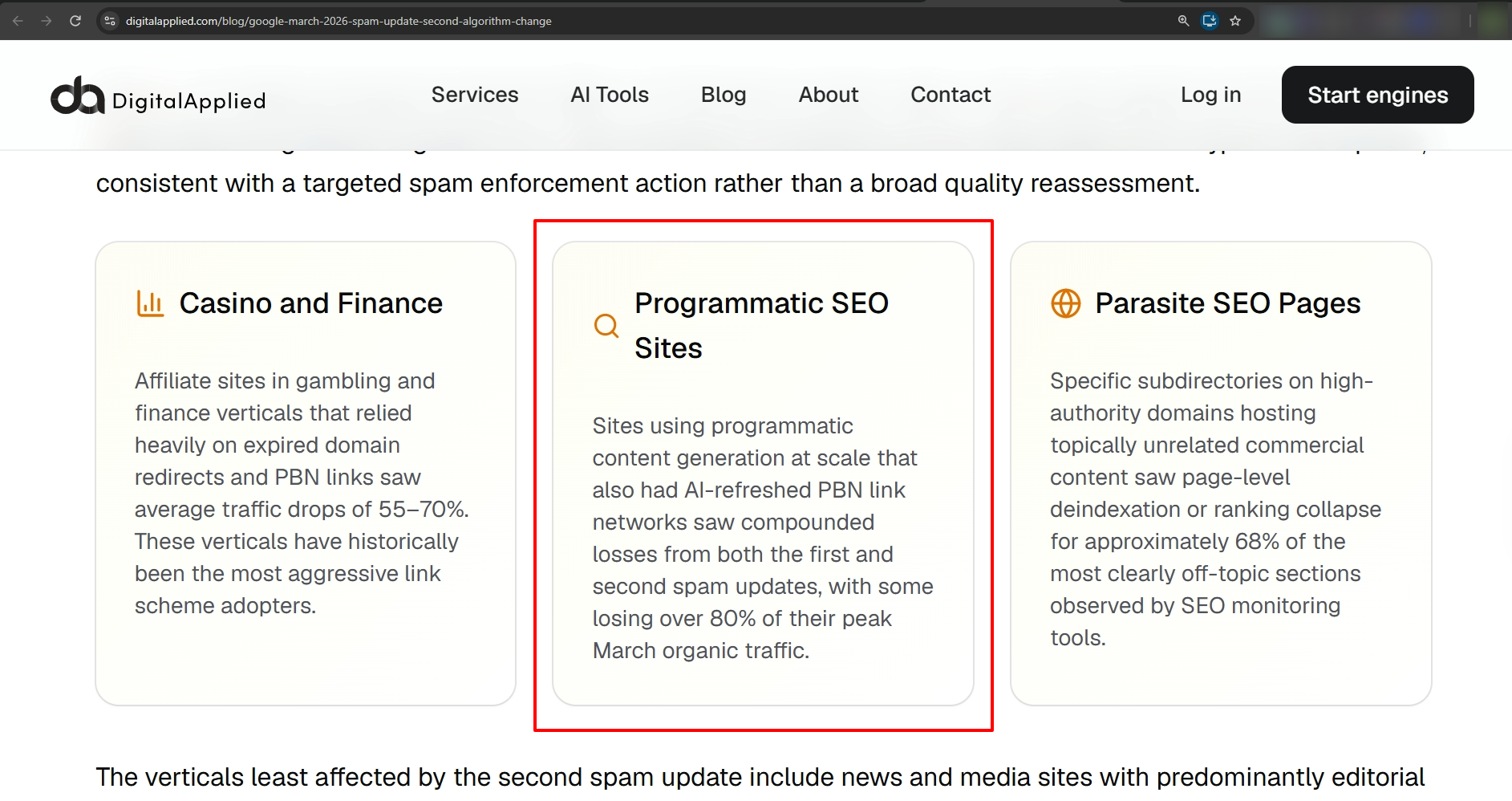
That’s a meaningfully higher bar than a link wheel had to clear even two years ago.
A wheel that might have slipped by earlier is far more likely to get caught now.
Why Google Classifies Link Wheels as a Manipulative Scheme
Google defines link spam as creating links to or from a site mainly to manipulate search rankings, and a link wheel fits that definition by design.
Google’s own spam policies name two of the exact behaviors a link wheel relies on: excessive link exchanges between sites and the use of automated programs to create links at scale.
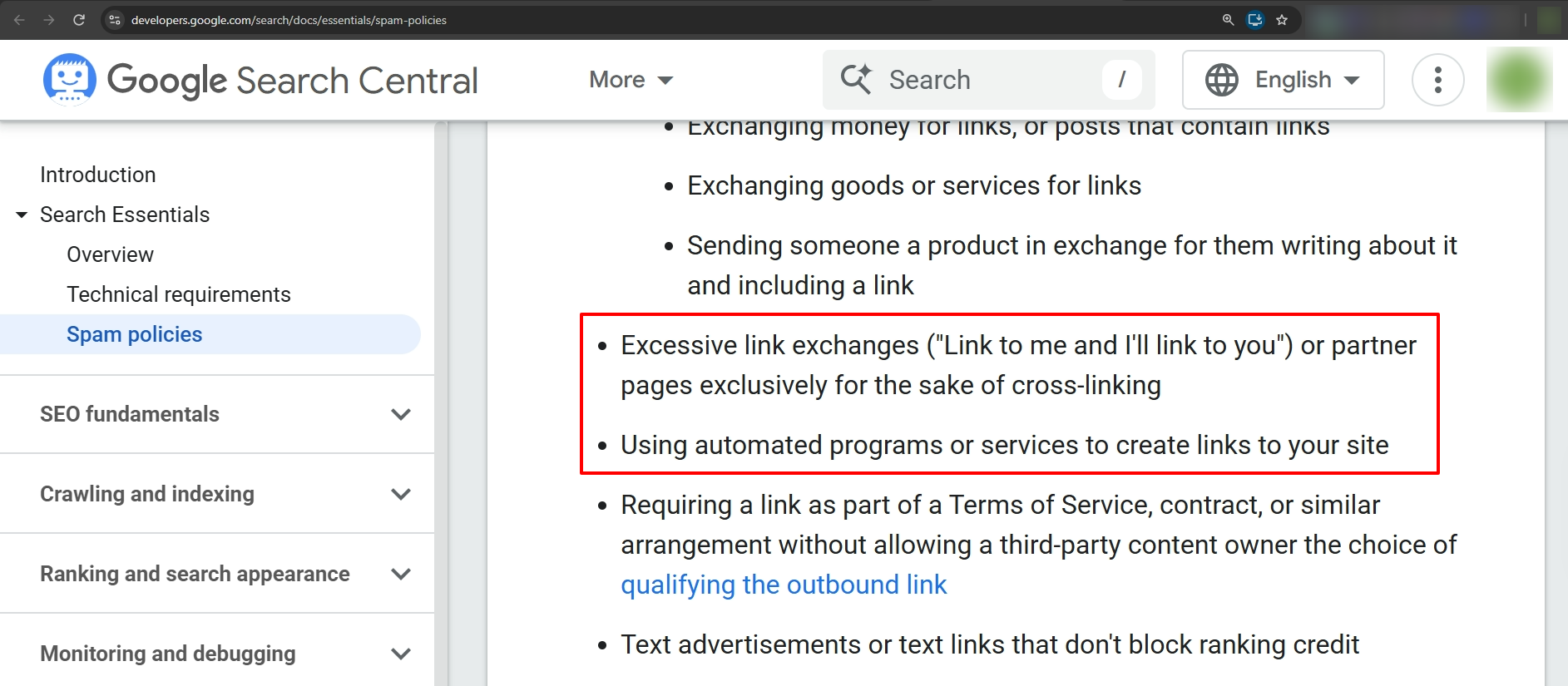
A link wheel is, structurally, a coordinated link exchange running across every site in the loop at once.
That’s not a borderline case of the rule. It’s close to a textbook example of it.
Good writing on every satellite site doesn’t change what the link structure is doing underneath it.
Google’s policy concerns the pattern of links, rather than the quality of the content on the pages they link to.
The Risk of Link Wheels and “White Hat” Claims
Getting caught usually looks like one of two things. Most of the time, Google’s system quietly stops counting the links.
Your rankings never move the way the seller promised, and nothing ever shows up to tell you why.
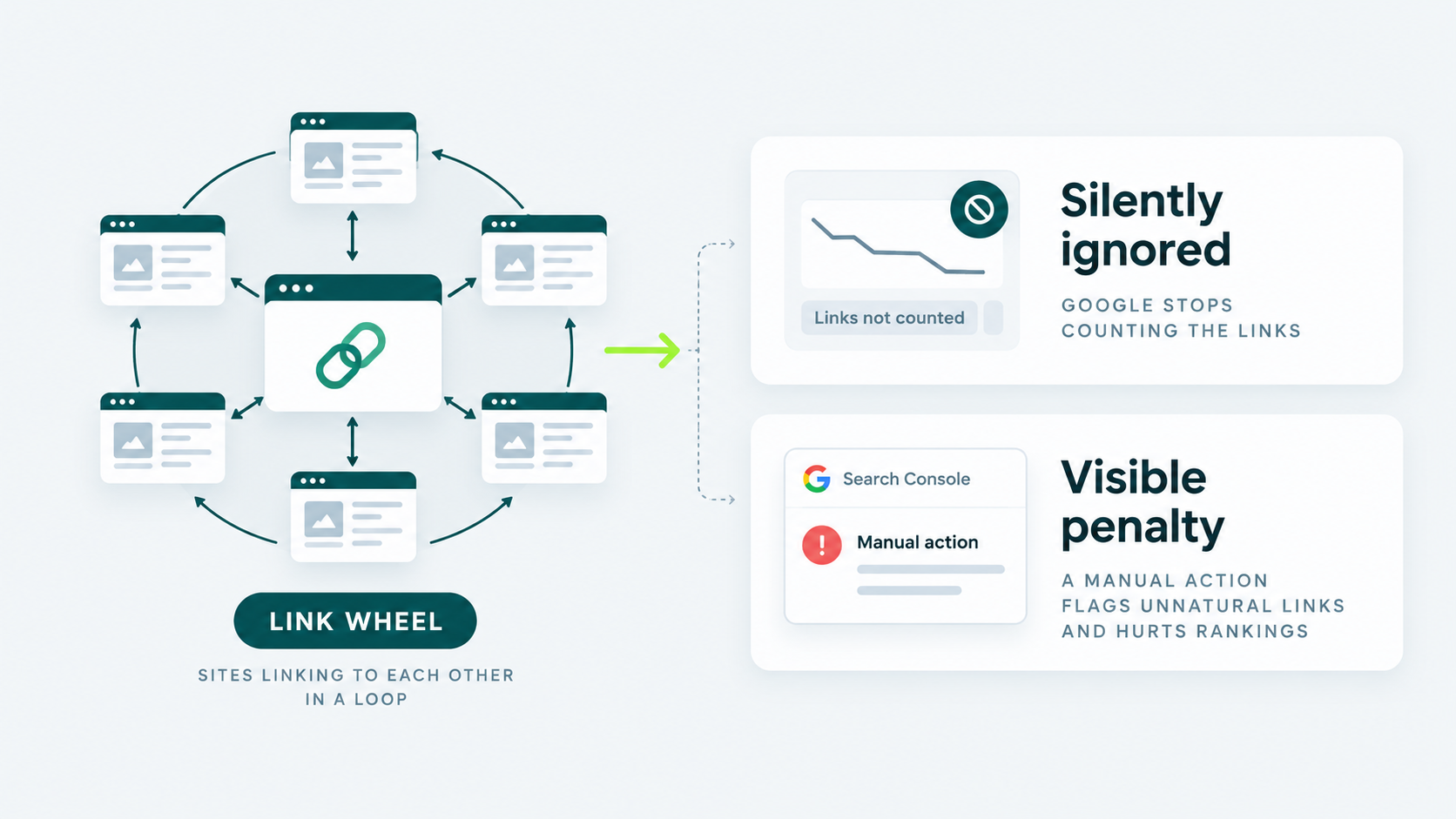
Less often, Google issues a visible manual action, a notice in Google Search Console that flags unnatural links pointing to your site and can drag down your rankings for affected pages or the whole domain until you fix it.
Either outcome costs you the money you spent and the time you waited to see results.
A network like this leaves behind harmful links, and an audit has to untangle them even after the wheel stops running.
There’s no white-hat version of this once the goal is to build sites that link to each other in a loop.
The moment that’s the design, it’s the scheme, no matter how good the writing on each site is. Unique themes and original content don’t make a link wheel safer.
They make it take longer for Google to notice, and that delay isn’t the same as safety.
How to Tell You’re Being Pitched One
Sellers rarely use words like “link wheel” anymore. Instead, listen for the shape sellers describe under a different name, such as a “web 2.0 network” or a bundle of guest posts that all link to each other and to you.
In our experience, prospects rarely call these packages a “link wheel.” They’re more likely to ask about PBNs (Private Blog Networks), networks of sites, or bundled link packages and want to know whether the offer is safe.
Prospects bring offers like this to Outreach Desk fairly often, usually asking whether it’s worth the risk before they say yes.
A few signs point to the same structure no matter what it’s called:
- Every site in the package links to every other site in the package.
- The seller offers you “exclusive placement” on sites that don’t look connected to each other.
- The seller can’t tell you who else links to those sites, or won’t show you the full network.
- The seller prices based on the number of sites in the bundle, not on the relevance or traffic of any single site.
Many of these bundled link offers are really paid link deals sold under a different name, packaged together to look more sophisticated than buying links outright.
What to Build Instead of a Link Wheel
The alternative isn’t complicated; it’s slower to start.
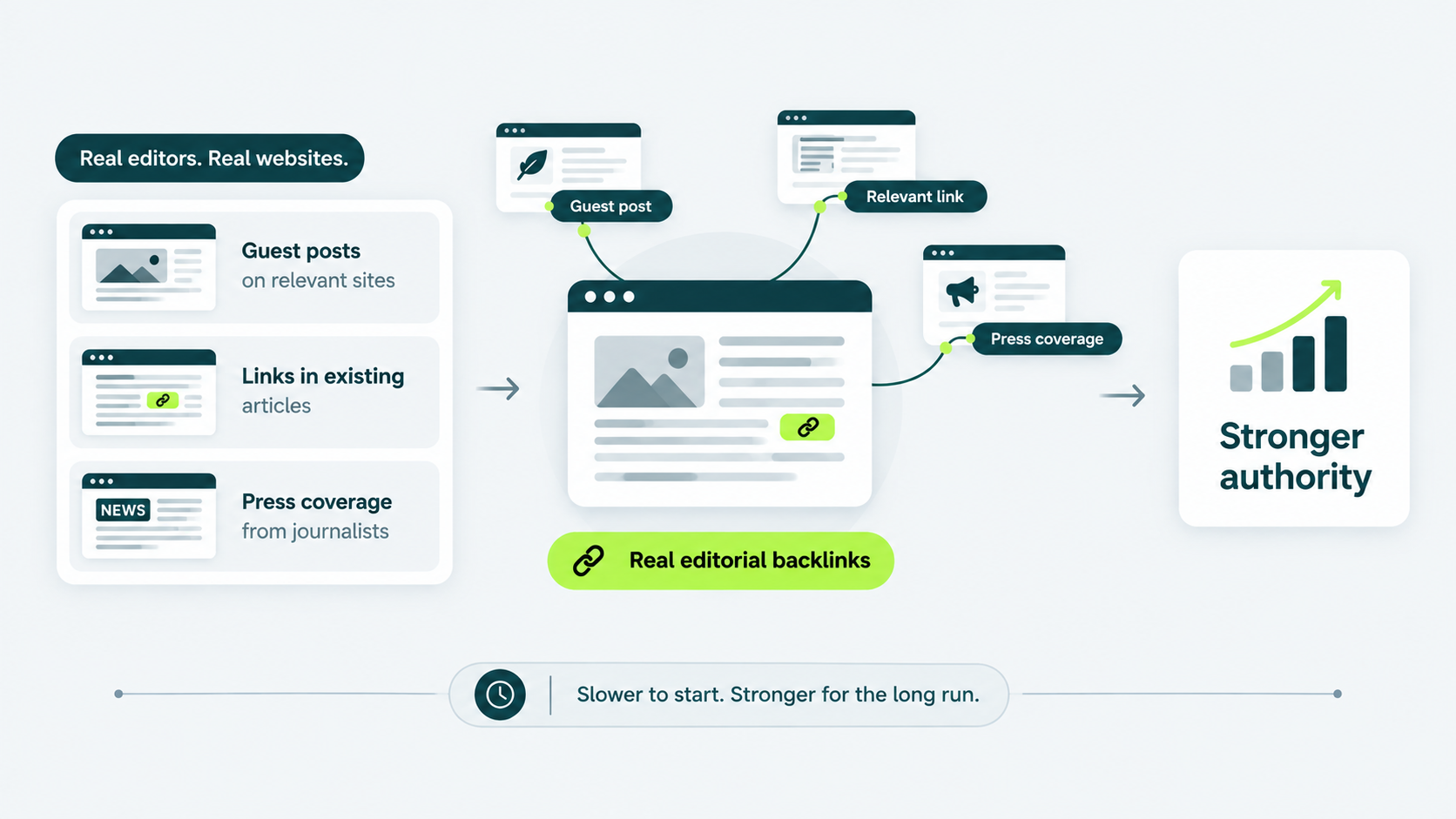
Build backlinks that real editors add because your content provides useful information for their readers. That includes guest posts on sites your audience already reads, contextual links from relevant articles, and press coverage a journalist chooses to write because your story is worth covering.
You didn’t earn that authority if a link-building tactic requires you to control every site that passes authority to your website.
The person controlling the network is simply deciding which sites link to yours.
Our guide to building white-hat links covers the specific approaches that hold up over years instead of months.
If You Think You Already Have One Pointing at Your Site
If you already agreed to a pitch like this, or you’re not sure what’s linking to your site, you don’t need to guess.
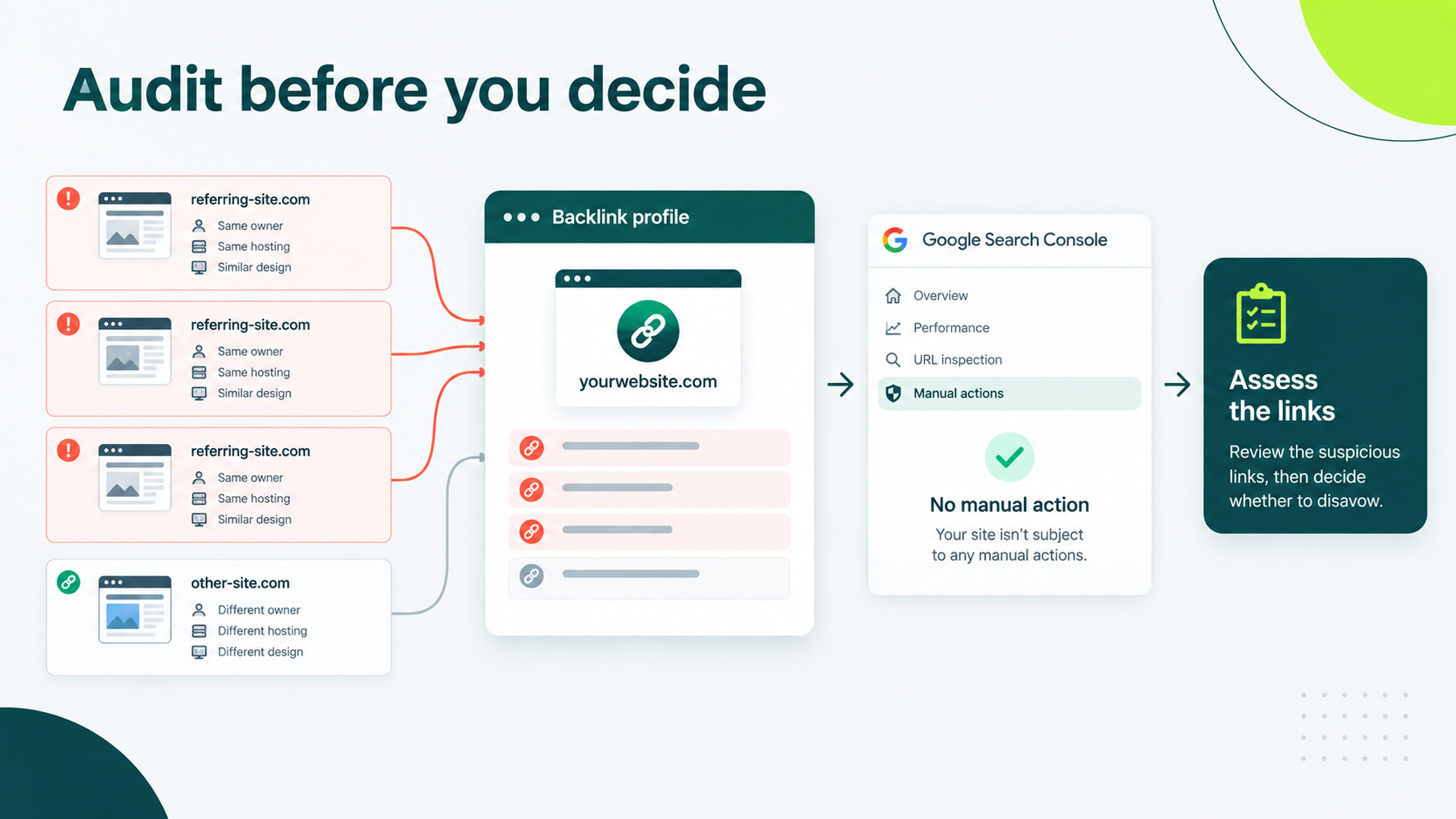
Pull your backlink profile in Ahrefs, Semrush, or Google Search Console and look for referring sites that share the same owner, the same hosting, or an oddly similar design.
Check the Manual Actions report in Search Console first.
If Search Console shows nothing there, Google’s system has likely already quietly devalued the links rather than issuing a visible penalty, which is common and still worth fixing.
From there, deciding whether to disavow those backlinks depends on specifics; our full guide walks through it step by step.
Know What’s Actually Linking to Your Site
Most link wheel pitches don’t use that phrase anymore, since most buyers who’d say yes have already heard it’s a problem.
Sellers rename, repackage, and resell them, but the shape underneath remains the same: a closed loop of sites built to move authority to one place rather than earn it.
If you’re not sure whether the links already pointing at your site follow that shape, our link audit service checks your full backlink profile and flags exactly that kind of pattern.
That’s a cleaner starting point than guessing.
Looking to build backlinks without relying on risky link schemes?
Get a strategy for earning relevant, authoritative links that support long-term SEO growth.
What’s the difference between a link wheel and a link chain?
A link chain connects sites in a straight line rather than a loop: link A points to link B, link B points to link C, and only the last site points to your main page.
A link wheel closes the line into a loop: each site links to the next and to the center, making the pattern easier for Google’s systems to spot.
What Should I Use Instead of a Link Wheel?
Instead of creating a network of sites to pass authority between each other, focus on earning relevant links from independent websites through useful content, genuine outreach, and editorial opportunities.
A professional link building agency can help build these links while keeping the campaign focused on relevance and natural placements.
Is there a safe number of sites that keeps a link wheel from getting caught?
No, detection doesn’t depend on how many sites sit in the network; it depends on the pattern of how they link to each other.
The same network-level analysis flags a 5-site wheel and a 50-site wheel alike, just at different speeds.
Does using only high-authority sites make a link wheel safer?
It doesn’t change the classification, though it can slow down how fast Google notices the pattern.
Google’s policy is about the link structure itself, not about how strong the individual sites in it are.
Are editorial links safe in a link wheel?
Editorial links can be valuable when they are earned naturally, but placing them within a coordinated link wheel changes the context. A link wheel is designed around deliberate link patterns and authority transfer rather than independent editorial decisions.
Can a link wheel include websites you don’t personally own?
Yes, some operators build link wheels through partnerships or paid collaborations rather than on sites they own outright, but whoever runs the network still needs coordinated control over the linking pattern for it to function as a wheel.
Shared control, even without ownership, is what Google’s pattern analysis looks for.